How To Wash Memory Foam Pillow: Easy Safe Steps

Memory foam pillows are a top choice for targeted neck and head support, but they require far gentler care than down or polyester fills. In my 10 years of testing and cleaning bedding, I’ve ruined more than one memory foam pillow by over-wetting it early on—these steps are the result of trial and error to keep foam supportive, fresh, and mold-free without damage. This guide covers safe, tested methods that preserve your pillow’s shape and lifespan, plus common mistakes to avoid and preventive care to cut down on deep cleaning altogether.
Why Memory Foam Requires Gentle Cleaning
Unlike traditional pillow fills, memory foam is made of open-cell polyurethane, a porous material designed to conform to your head and neck for pressure relief. This structure absorbs and traps water easily: if you fully submerge the pillow, moisture can remain trapped inside the foam core for 24 hours or longer, creating the perfect environment for mold, mildew, and bacterial growth. Over time, trapped water also breaks down the foam’s cell structure, leading to permanent sagging, lumps, and loss of support.
A common misconception is that "machine washable" memory foam labels refer to the foam core—they almost always only apply to the removable cover. The foam itself should never be fully submerged, machine washed, or tumble dried, as these actions will ruin its supportive properties in as little as one cleaning cycle. The Better Sleep Council notes that consistent, gentle cleaning is the most effective way to preserve memory foam’s supportive properties over time, as harsh cleaning methods degrade the foam’s open-cell structure within months. Unlike standard down or polyester pillows, memory foam’s care requirements differ significantly from other mattress and pillow differences you may be used to.
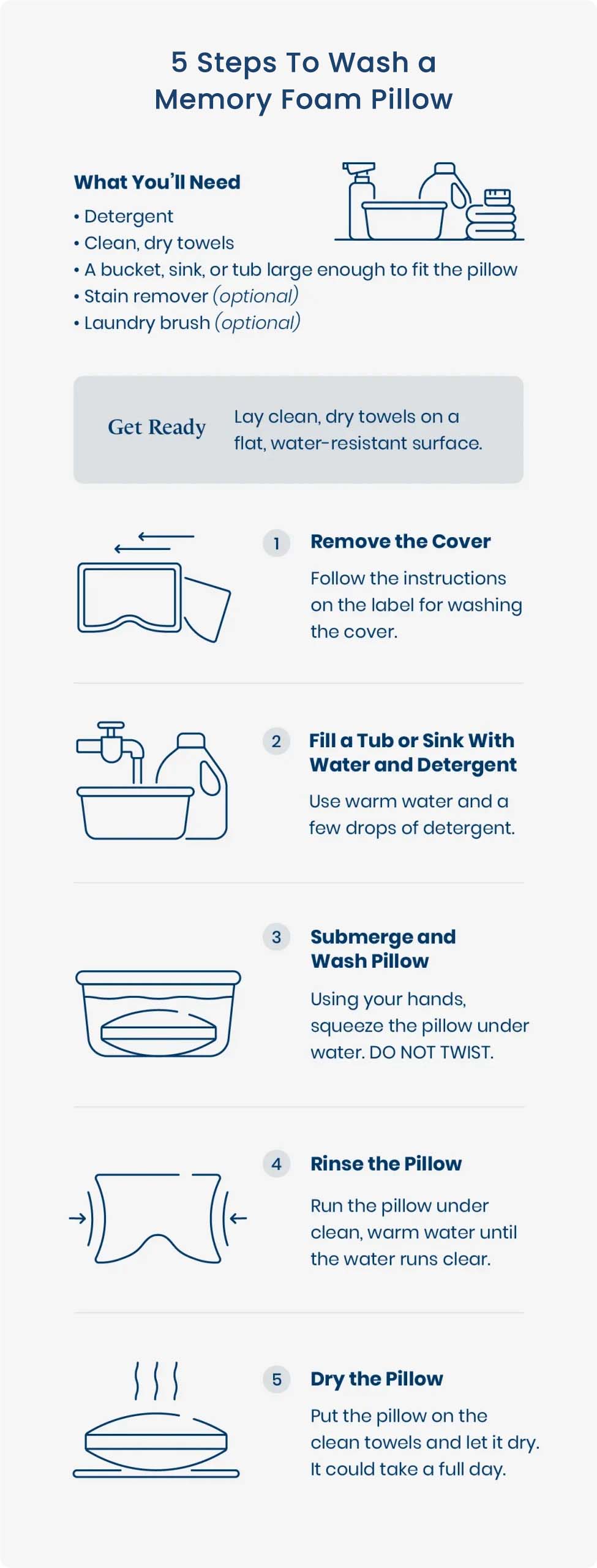 Memory foam’s porous structure makes it prone to water retention and mold if over-wetted
Pre-Cleaning Supplies You’ll Need
Gathering the right tools before you start will save time and prevent accidental damage to your pillow. Stick to gentle, non-abrasive products, and avoid harsh chemicals entirely:
- Mild, fragrance-free liquid detergent: dyes and strong fragrances can degrade foam and irritate skin; avoid bleach, ammonia, and abrasive cleaners completely.
- Baking soda: a natural odor neutralizer that lifts light surface dirt without adding moisture.
- White vinegar: diluted, it neutralizes tough odors and breaks down biological stains without leaving residue.
- Clean spray bottle: for precise application of diluted solutions, no oversaturation.
- Soft microfiber cloths: rough sponges or scrub brushes can tear the pillow’s outer cover and compress foam cells.
- Upholstery vacuum attachment: removes dust, dead skin, and crumbs before wet cleaning, preventing you from rubbing dirt into stains.
- Fan or well-ventilated, shaded drying space: speeds evaporation and prevents mold growth.
- Clean towel: for blotting excess moisture after cleaning.
If you’re looking for a sustainable protective barrier for your pillow, our guide to recyclable bed protectors breaks down eco-friendly choices that still offer maximum protection against sweat, oils, and spills.
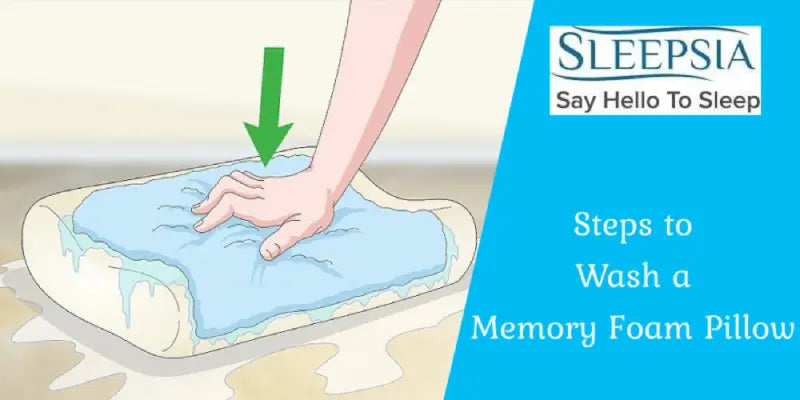 Use only mild, fragrance-free products to avoid degrading foam
Step-by-Step Safe Cleaning Process
Follow these steps for routine cleaning and minor stains, working patiently to avoid over-wetting the foam. Always test any cleaning solution on a small, hidden area of the pillow (like the underside) 24 hours before full use to check for discoloration or damage.
Step 1: Launder the Removable Cover First
If your pillow has a removable cover, unzip it and check the care label first. Most covers are machine washable in cold water with mild detergent, and safe to tumble dry on low heat. Pre-treat any visible stains on the cover with a small amount of detergent before washing, and avoid using bleach on colored fabrics to prevent fading. Washing the cover monthly will prevent dirt, oils, and sweat from seeping into the foam core, reducing how often you need to deep clean the pillow itself.
Step 2: Vacuum the Foam Core Thoroughly
Use the upholstery attachment on your vacuum to clean the entire surface of the foam, working in slow, overlapping passes. Pay extra attention to seams and edges, where dust, dead skin, and crumbs tend to accumulate. Vacuuming before any wet cleaning prevents you from rubbing dirt into stains, and removes allergens that can irritate respiratory systems. If possible, vacuum the pillow outside to avoid spreading dust around your bedroom.
Step 3: Spot Clean Stains Gently
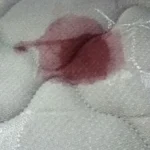
Mix 1 teaspoon mild liquid detergent with 1 cup warm (not hot) water in a spray bottle, or dip a clean microfiber cloth into the solution. Wring the cloth out until it is barely damp—never dripping, as excess water is the fastest way to damage memory foam. Blot the stained area gently, working from the outer edge inward to prevent the stain from spreading. For oily stains from hair products, face oils, or food, mix 1 teaspoon mild dish soap with 1 cup warm water, blot the stain, then wipe with a clean, damp cloth to remove soap residue. Never rub the stain, as this pushes it deeper into the foam and damages the cell structure.
Step 4: Deodorize With Baking Soda
Sprinkle a thin, even layer of baking soda over the entire surface of the pillow. Let it sit for 45–60 minutes (no longer, as it can leave a powdery residue that is difficult to vacuum out). Vacuum thoroughly with the upholstery attachment to remove all baking soda. This step neutralizes odors without adding any moisture, and lifts light surface dirt that vacuuming missed.
Step 5: Hand Rinse Only For Widespread Soil (Optional)
Only perform this step if spot cleaning is not enough to clean the entire pillow. Fill a large basin or bathtub with a few inches of lukewarm water, add ¼ cup mild detergent, and mix gently. Dip a clean microfiber cloth into the solution, wring it out until almost dry, then press it gently into the foam—never scrub. Work in small sections, rinsing the cloth frequently to avoid leaving soap residue. Follow up with a cloth dipped in plain lukewarm water, wrung out, to remove any remaining soap. Never submerge the entire pillow, and never let it soak.
Step 6: Remove Excess Moisture Carefully
Lay the pillow flat on a clean, dry towel. Press another dry towel gently on top of the pillow to absorb surface moisture. Do not wring, twist, or squeeze the pillow, as this compresses the foam cells permanently and causes lumps and loss of support. Press evenly across the entire surface to remove as much water as possible without damaging the pillow’s shape.
 Use a barely damp cloth to blot stains, never rub, to avoid pushing dirt into foam
Drying Best Practices To Avoid Mold And Damage
Improper drying is the #1 cause of memory foam pillow damage, leading to mold, mildew, and permanent musty odors. Follow these steps to dry your pillow safely and thoroughly:
- Lay the pillow flat on a drying rack or clean towel in a well-ventilated, shaded area. Direct, prolonged sunlight degrades the foam’s polyurethane structure, causing it to become brittle and lose support over time.
- Flip the pillow every 1–2 hours to ensure even drying on both sides.
- Point a fan directly at the pillow to increase airflow, which cuts drying time in half. Drying time varies by humidity and airflow, but expect 12–24 hours in average conditions, and up to 48 hours in high-humidity climates.
- Never use a hair dryer, space heater, clothes dryer, or direct midday sun to speed drying—high heat melts the foam’s cell structure, causing it to crumble and lose support.
- Only put the cover back on once the pillow is 100% dry to the touch, including the core. Damp foam trapped under a cover breeds mold and mildew within 24 hours.
The CDC warns that trapped moisture in bedding can lead to mold growth, which can trigger allergic reactions and respiratory issues, so thorough drying is non-negotiable for both your pillow and your health.
 Even airflow from a fan cuts drying time and prevents mold growth
Deep Cleaning Solutions For Tough Stains And Odors
For set-in stains or persistent odors that don’t respond to basic spot cleaning, use these safe, tested methods. Always test any solution on a hidden area of the pillow 24 hours before full application:
- Enzyme cleaner for biological stains: Use a cleaner formulated for upholstery or pet stains (enzymes break down protein-based stains like sweat, saliva, and urine without damaging foam). Apply a small amount to a clean cloth, blot the stain (do not oversaturate), then air dry fully.
- Diluted white vinegar for odors: Mix 1 part white vinegar with 2 parts water in a spray bottle, mist lightly over the pillow (do not soak), let sit for 10 minutes, then blot with a clean dry cloth. The vinegar smell will dissipate as it dries, taking bad odors with it.
- Limited sunlight for freshening: 1–2 hours of indirect, early morning or late afternoon sun can kill bacteria and reduce mild odors. Never leave the pillow in direct midday sun for more than 2 hours, as UV rays degrade the foam.
- Professional cleaning: For extremely stubborn stains, mold, or if you are uncomfortable cleaning the pillow yourself, professional cleaners have specialized equipment that cleans without over-wetting the foam, making it the safest option for high-value pillows.
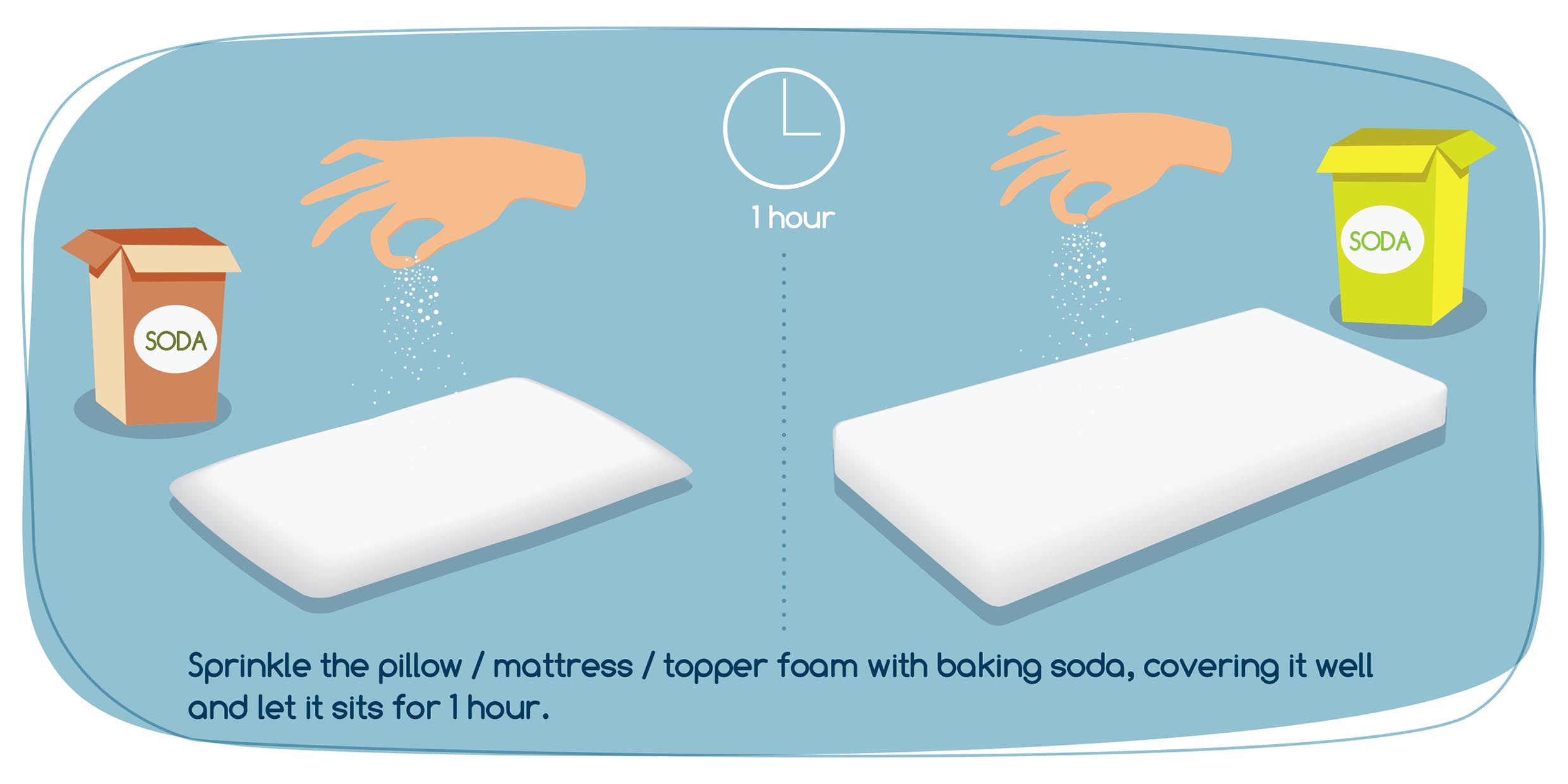 Baking soda neutralizes odors without adding moisture to the foam
Common Cleaning Mistakes That Ruin Your Pillow
A few simple errors can destroy a memory foam pillow in minutes. Avoid these common pitfalls:
- Machine washing or tumble drying: even on a gentle cycle, the agitator breaks foam cells, and water gets trapped in the core, leading to mold and permanent sagging. Heat from the dryer melts the foam’s structure.
- Using harsh chemicals: bleach, ammonia, abrasive cleaners, and strong-scented detergents degrade the polyurethane foam, cause it to break down faster, and can irritate skin and respiratory systems.
- Wringing or twisting the pillow: this compresses the foam cells permanently, causing lumps and loss of support.
- Using too much water: oversaturating the foam means it takes days to dry, giving mold and mildew time to grow inside the core, which you often can’t see until it’s too late.
- Skipping the pre-vacuum step: rubbing dirt into wet stains makes them permanent, and can push allergens deeper into the foam.
- Re-covering a damp pillow: trapped moisture leads to mold growth inside the cover and foam, causing musty odors and potential health issues.
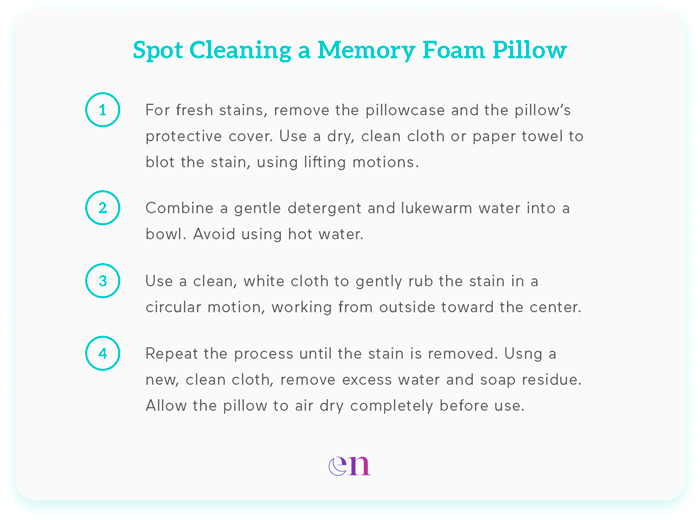 Wringing or twisting the pillow compresses foam cells and causes permanent lumps
 Community feedback highlights that over-wetting is the most frequent cause of pillow damage
Extend Your Pillow’s Cleanliness With Preventive Care
Preventive care is far easier than deep cleaning, and will extend your pillow’s lifespan by 6–12 months with proper use:
- Use a removable, machine-washable pillow protector: it acts as a barrier against sweat, oils, hair products, and spills. For brand-specific washing steps for your protector, follow the manufacturer’s instructions to avoid shrinking or damage.
- Wash your pillow cover weekly with your bedding, even if you use a protector, to prevent dirt from seeping through to the foam core.
- Spot clean stains as soon as they happen: the longer a stain sits, the harder it is to remove, and the more likely it is to seep into the foam.
- Air out your pillow once a week: lay it in a shaded, well-ventilated area for 30 minutes to air out odors and moisture, or fluff it gently to redistribute the foam cells.
- Avoid habits that transfer excess moisture to your pillow, like going to bed with wet hair. If you do sleep with damp hair, our tips for wet hair sleep best practices will help you avoid dampness buildup that leads to odors and mold. Many people also notice dry, damaged hair strands from friction against the pillow when sleeping with wet hair, in addition to extra grime buildup.
- If you own a non-memory foam pillow, our guide to alternative pillow material care covers safe cleaning methods for bamboo, down, and other popular fills.
Frequently Asked Questions
Can I machine wash a memory foam pillow?
No. Machine washing can break the foam’s cell structure and trap water inside the core, leading to mold, mildew, and permanent loss of support. Memory foam should only be spot cleaned or gently hand rinsed with minimal water.
How often should I clean my memory foam pillow?
Vacuum and deodorize with baking soda monthly. Spot clean stains as soon as they appear. Deep clean (including hand rinsing if needed) every 6–12 months, depending on use and how well you maintain the pillow with a protector.
Will baking soda damage memory foam?
No. Baking soda is a mild, natural cleaner that is completely safe for memory foam. Use a thin layer, let it sit for no more than 60 minutes, then vacuum thoroughly to remove all residue.
How long does a memory foam pillow take to dry?
Drying time varies based on humidity and airflow. With good ventilation and a fan, expect 12–24 hours of drying time. In high-humidity climates, drying may take up to 48 hours. Never re-cover the pillow until it is 100% dry to the touch, including the core.
Can I use vinegar on memory foam?
Yes, when diluted. Mix 1 part white vinegar with 2 parts water, spray lightly over the pillow (do not soak), let sit for 10 minutes, then blot with a clean dry cloth. The vinegar smell will dissipate as it dries, taking bad odors with it.
Is professional cleaning better for memory foam?
For heavy set-in stains, mold, or if you are uncomfortable cleaning the pillow yourself, professional cleaning is the safest option. Professional cleaners have specialized equipment that cleans without over-wetting the foam, avoiding the risk of mold growth inside the core.
Will sunlight damage memory foam?
Direct, prolonged sunlight (more than 2 hours of midday sun) can degrade the polyurethane foam, causing it to become brittle and lose support. Short periods of indirect sun (1–2 hours of early morning or late afternoon light) are safe for freshening and killing bacteria.
How do I remove set-in stains from a memory foam pillow?
First, try spot cleaning with a mild detergent solution and blotting. If the stain remains, use a small amount of upholstery-safe enzyme cleaner (test on a hidden area first) to break down the stain. If the stain still does not lift, take the pillow to a professional cleaner, or replace it if the stain is accompanied by a persistent musty odor (a sign of mold inside the foam).
Why does my memory foam pillow smell musty after cleaning?
A musty smell after cleaning almost always means the pillow was not fully dried before being re-covered, leading to mold growth inside the foam core. Air out the pillow with a fan for an additional 12–24 hours, and if the smell persists, the pillow will need to be replaced, as mold inside the foam cannot be fully removed.
How often should I replace my memory foam pillow?
With proper care and regular cleaning, most memory foam pillows last 1–2 years. Replace your pillow when you notice persistent sagging, lumps, loss of support, or odors that do not come out with cleaning, as these are signs the foam has broken down.
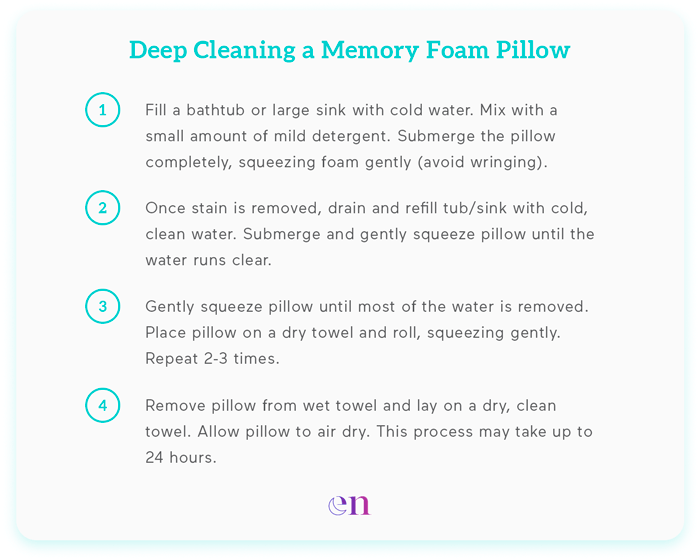 These are the most frequently asked questions about memory foam pillow care
Conclusion
Washing a memory foam pillow safely doesn’t have to be complicated: the key is using minimal water, gentle products, and thorough drying to preserve the foam’s open-cell structure and supportive properties. Avoid machine washing, harsh chemicals, and heat at all costs, and prioritize preventive care with a machine-washable pillow protector to cut down on deep cleaning altogether. Unlike standard polyester or down pillows, memory foam can last for years with proper maintenance, keeping your neck and head supported for better sleep night after night, enhancing your overall rest quality with every use.
Bookmark this guide for your next cleaning day, and browse our full library of bedding care resources to keep your entire sleep setup fresh, supportive, and hygienic for years to come.

Hey! I’m a passionate sleep and wellness enthusiast and a writer at SleepBehind.com. I love exploring sleep products, cozy bedding, and practical ways to improve sleep quality. Through helpful articles, product reviews, and easy-to-follow tips, I aim to help readers discover comfortable sleep solutions and build healthier bedtime routines for more restful nights.
Similar Posts