
Smoke smell often returns because the odor settles into seams, foam, bedding, and nearby room materials. How to Clean Smoke Smell From a Mattress works best when you match the method to the mattress type, odor level, and cover. Start by removing the smoke source and identifying where the odor is strongest.
Start with the source, then use a sealed HEPA vacuum. Under specified test conditions, a true HEPA filter captures at least 99.97% of airborne particles at 0.3 micrometers. That figure doesn’t mean every odor-forming gas is removed.
Your next choice depends on dry deodorizing, careful wet cleaning, or professional treatment.
How to Remove Smoke Smell from Your Mattress
Image source: Web (Bing) / tipsbulletin.com (Web image (fair-use with source credit))
Quick Answer
How to Clean Smoke Smell From a Mattress begins with source control. Remove washable covers, then vacuum every surface with a HEPA vacuum. Choose the least-moisture approved treatment for the mattress type.
Replace fire-damaged mattresses or use professional remediation for severe, persistent contamination.
What’s Causing the Odor: Your Mattress or the Whole Room?
Smoke odor is rarely confined to one object. Smoke residue may include fine particles and volatile organic compounds, or VOCs, that carry odor.
Check whether the smell follows the mattress or remains after you move it. If the odor stays, the box spring, carpet, curtains, paint, or bedding may be holding residue.
Is it cigarette and vape residue, or another type of smoke?
Cigarette and vape residue usually leaves a sharp chemical smell. Fireplace, candle, cooking, and wildfire smoke can also leave fine soot throughout the room.
Thirdhand smoke residue is chemical and particulate contamination left after tobacco smoke exposure. Vape aerosol can also settle into porous surfaces, even when the room looks clean.
If the odor appeared after a guest smoked, treat both the mattress and nearby fabrics. If you recently used a fireplace or candles, inspect the room for soot before cleaning the mattress.
| What you notice | Likely source | Best next move |
|---|---|---|
| Odor remains without the mattress | Walls, carpet, curtains, or stained furnishings | Clean the surrounding area first |
| Strong smell in seams and tufting | Residue in the cover or mattress padding | Vacuum and treat the mattress |
| Soot appears on nearby items | Fireplace, candle, cooking, or wildfire smoke | Address the entire room |
| Smell appeared after indoor smoking | Thirdhand smoke residue | Vacuum surfaces and clean soft furnishings |
Is the odor on the surface or inside the mattress?
Surface odor sits mainly on the cover, protector, or mattress pad. Core odor reaches the foam or spring structure and often returns as the mattress warms.
If the smell fades after removing the mattress, inspect everything underneath and around it. Don’t repeatedly wet-treat the mattress until you know it’s the main odor source.
Choose a Cleaning Method Based on Mattress Type and Odor Severity
Choose the least-moisture method that can reach the residue without damaging the mattress. As of 2026, care labels still differ by model, so use the instructions for your exact mattress.
Manufacturer specifications determine whether the cover can be washed, which temperature to use, and how it must dry. Foam, innerspring, latex, and hybrid mattresses can react very differently to water and heat.
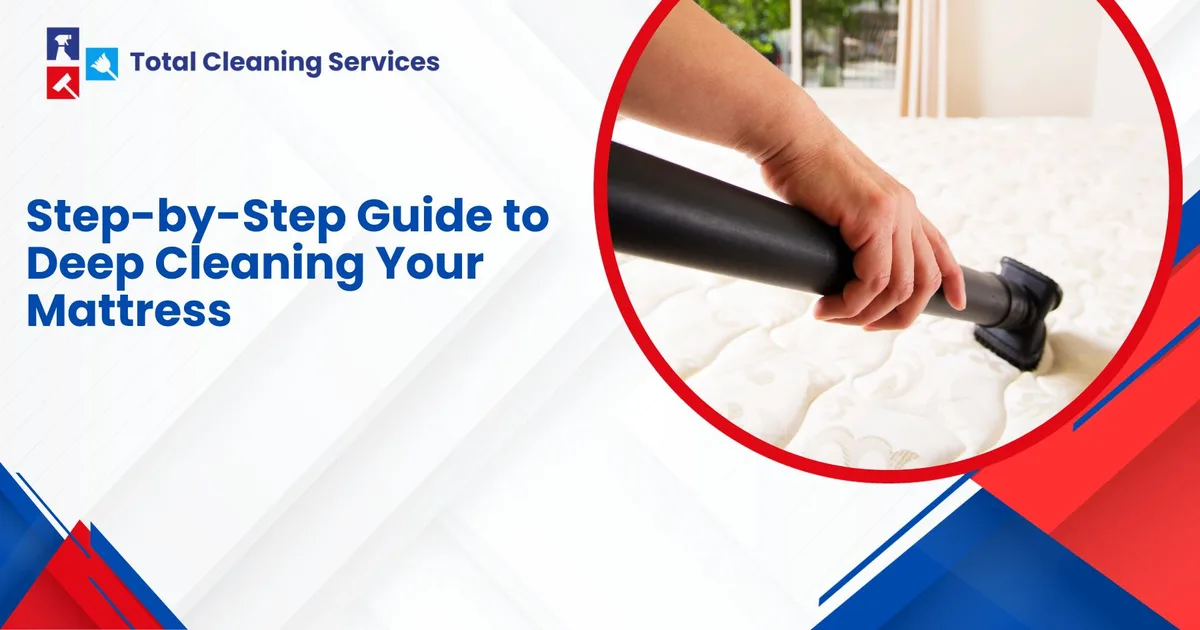
Image source: Web (Bing) / totalcleaningservices.com.my (Web image (fair-use with source credit))
| Mattress type or condition | Best starting point | Avoid |
|---|---|---|
| Removable, washable cover | Wash the cover and pad according to their labels | Unapproved hot water or dryer heat |
| Fixed or spot-clean-only cover | HEPA vacuum, then an approved surface cleaner | Soaking or removing the ticking |
| Innerspring | Dry vacuuming and controlled low-moisture treatment | Saturating internal padding |
| Memory foam or latex | Dry vacuuming and cautious surface treatment | Steam, saturation, and high heat |
| Hybrid | Follow the care label, especially for the foam layer | Assuming the whole mattress tolerates steam |
| Severe core odor or fire damage | Professional assessment or replacement | Handling charred or contaminated material |
Wash a removable cover only when its label permits it. Let the cover and mattress dry fully before reassembly. For a fixed cover, work from the outside inward using the least effective amount of moisture needed.
HEPA Vacuuming, Baking Soda, Charcoal, Enzymes, or Steam: What Actually Works?
HEPA vacuuming is the best universal first step. Baking soda, charcoal, enzymes, extraction, and steam each address a different part of the problem.
| Option | What it does | Best for | Main limitation |
|---|---|---|---|
| HEPA vacuum | Captures particles and loose residue | Every mattress type | Leaves most odor-forming gases inside |
| Baking soda | Mildly absorbs surface odors | Light odor on an approved surface | Has little deep-cleaning power |
| Activated charcoal | Holds some molecules on its surface | Temporary odor control when approved | Can be messy and won’t remove embedded soot |
| Smoke-targeted enzyme cleaner | Breaks down specified organic compounds | Residue matched to the product’s stated use | Doesn’t treat every smoke compound |
| Low-moisture extraction | Loosens deeper residue with limited water | Suitable foam or spring mattresses | Still requires complete drying |
| Steam cleaning | Applies heat and moisture | Only approved mattress surfaces | Can shrink, warp, or stain foam and fabric |
Adsorption means a material holds molecules on its surface. Neutralization changes the odor-forming chemicals. Fragrance masking only covers the smell temporarily and leaves the residue in place.
A HEPA air purifier can reduce airborne particles, but it won’t clean residue inside foam. The EPA’s indoor-air cleaner guidance also advises against ozone-generating air cleaners. Ozone can irritate the lungs and may create another odor without removing contamination.
How to Remove Smoke Smell from a Mattress Step by Step
Use this order: stop the source, identify the mattress, clean removable parts, vacuum, treat, dry, and reassess. Early steps often prevent repeated wet treatments.
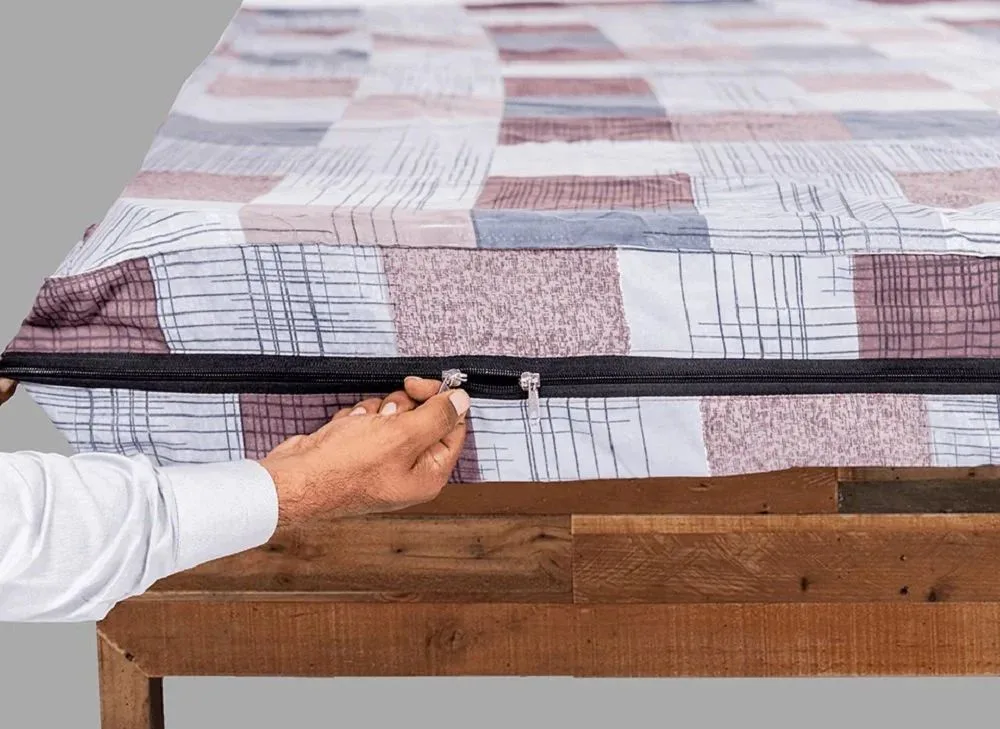
Image source: Web (Bing) / amazon.ca (Web image (fair-use with source credit))
Before starting, gather a sealed HEPA vacuum, an upholstery or crevice attachment, clean towels, and any cleaner approved by the manufacturer. You’ll also need a fan or controlled ventilation. A dehumidifier can help in humid conditions.
1. Stop the source and check for damage
Remove smoking, vaping, candles, fireplace use, and cooking smoke from the area. Check that your smoke and carbon monoxide alarms work.
If you see char, active smoke, unusual heat, or smoldering material, don’t clean the mattress. Leave the area and contact fire services.
2. Identify the mattress and test the cleaner
Read the care label before moving or applying anything. Note restrictions for water, detergent, solvents, agitation, temperature, and dryer use.
Apply a small amount of an approved cleaner to a hidden area. Wait for the stated contact time, then check for discoloration, stiffness, or surface damage.
3. Clean the removable parts
Remove the sheets, mattress pad, protector, and washable cover. Vacuum the pad and protector before washing them if their labels allow it.
Wash each item separately. Use only the stated wash cycle and temperature, then dry every piece fully.
4. Vacuum the entire mattress
Use slow passes over the top, sides, handles, seams, tufting, and underside. Pay extra attention to openings where residue can collect.
If the care label permits rotation, vacuum the underside before turning the mattress. Keep it fully supported during handling. Avoid aggressive brushing that can damage the ticking.
5. Apply the least-moisture effective treatment
For mild surface odor, use a manufacturer-approved cleaner sparingly. Apply it evenly without soaking the fabric, then blot with a clean towel.
Avoid steam on memory foam, latex, and hybrid comfort layers unless the manufacturer explicitly approves it. Don’t let cleaner pool in seams or tufting.
6. Dry the mattress and judge the result
Keep the mattress uncovered in a ventilated room with gentle airflow. Use a dehumidifier if humidity is high, but keep electrical equipment away from moisture.
Check after 24 hours and again after 48 hours. Thick foam or humid conditions may need 72 hours or longer. Reassess the odor only when every layer feels dry.
Get the Mattress Fully Dry and Clear Odor from the Surrounding Room
That final check tells you whether the remaining odor comes from the mattress or the room. Support the mattress flat, keep it uncovered, and circulate air across the full surface.
Image source: Web (Bing) / inthewash.co.uk (Web image (fair-use with source credit))
| Mattress condition | Drying approach | When to check |
|---|---|---|
| Thin innerspring | Fan and normal room ventilation | After 24 hours |
| Foam or hybrid | Fan plus controlled dehumidification | After 24 and 48 hours |
| Thick core or humid conditions | Dehumidifier and continuous airflow | Daily until fully dry |
A dehumidifier controls room moisture but won’t draw large amounts of water from soaked foam. Keep checking for cool, damp, or stiff areas. Don’t cover the mattress until its fabric, padding, and core feel dry.
What should you clean beyond the mattress?
Clean every nearby porous material that holds residue. Vacuum the box spring, carpet, curtains, upholstery, headboard, and fabric surfaces.
Wash bedding using its care labels. Replace a contaminated mattress pad or protector if it still smells after cleaning. Use an activated-carbon purifier to reduce airborne odor after cleaning, but don’t expect it to remove residue inside the foam.
Mistakes That Can Make the Smell Worse or Damage the Mattress
Most failed treatments involve too much moisture, heat, fragrance, or the wrong cleaner. Avoid these common errors:
Soaking absorbent foam. Memory foam and latex can retain water inside the core. Trapped moisture may create mildew or a musty smell.
Using unapproved steam. Heat and vapor can shrink fabric, distort foam, weaken adhesives, and drive moisture deeper.
Adding excess heat. Direct sun, radiators, and high dryer settings may damage ticking or waterproof finishes.
Leaving powder behind. Vacuum all baking soda or activated charcoal. Airborne powder can irritate breathing and settle elsewhere.
Covering odor with fragrance. Perfume and scented sprays don’t remove smoke residue from porous materials.
Using ozone generators. Ozone can irritate lungs and may damage some materials. Keep these devices away from people and pets.
Assuming a cleaner is mattress-safe. Vinegar, bleach, solvents, and acidic sprays can damage foam or discolor fabric unless the manufacturer approves them.
Never mix bleach with ammonia, vinegar, or acidic cleaners. Follow dilution and contact-time instructions, and check the cleaner’s Safety Data Sheet when needed.
When to Clean the Whole Room, Hire a Pro, or Replace the Mattress
Choose professional smoke remediation when odor affects several items, keeps returning after correct cleaning, or involves heavy soot. A specialist can assess porous materials before you spend money on another surface treatment.
| Situation | Best next step |
|---|---|
| Odor is limited to a removable cover and pad | Clean those parts and reassess |
| Mattress is sound, labeled washable, and lightly affected | Vacuum and treat the mattress |
| Strong odor remains in the core | Seek approved extraction or professional advice |
| Odor affects curtains, carpet, walls, and furniture | Treat the entire room |
| Wildfire smoke affected several rooms | Use professional smoke remediation |
| Mattress has charring, heat damage, or unstable seams | Replace it after a safety assessment |
Professional odor removal doesn’t prove every harmful exposure has disappeared. Smoke residue can remain even when the room no longer smells strong.
Replacement makes more sense when foam remains heavily contaminated, cleaning repeatedly fails, or the mattress has physical damage. After a fire, older building materials may contain asbestos or other hazardous substances. Don’t disturb suspect material before a qualified safety assessment.
Frequently Asked Questions
Can baking soda remove cigarette smell from a mattress?
Baking soda may reduce a light surface odor, but it can’t reliably remove residue trapped in foam. If dry deodorizing is compatible with the care instructions, apply it sparingly and vacuum it thoroughly. Strong or persistent odor usually needs targeted treatment or professional cleaning.
Can you steam-clean memory foam?
You shouldn’t steam-clean memory foam unless the manufacturer explicitly approves it. Heat and moisture can distort the foam, weaken adhesives, and remain trapped inside the core. Dry vacuuming and approved low-moisture products are safer starting points.
Does ozone kill smoke odor?
No. Ozone generators aren’t recommended for smoke odor removal. They can irritate the lungs, damage some materials, and leave an unpleasant smell without removing particles inside the mattress.
Source control, HEPA vacuuming, approved treatment, and proper drying work better.
How long does a mattress take to air out after cleaning?
Most lightly treated mattresses need at least 24 to 48 hours of drying. Thick foam, humid weather, or limited airflow can extend drying to 72 hours or longer. Smell alone isn’t a reliable test.
Check for cool or damp areas and keep the mattress uncovered.
When is replacing a mattress better than cleaning it?
Replace the mattress when it has charring, heat damage, structural harm, or deep odor that survives proper treatment. Severe wildfire contamination can also make replacement more practical when porous foam holds residue. Have fire-damaged materials assessed before moving or cleaning them.

Written by the SleepBehind editorial team — a group of sleep wellness researchers and product reviewers who analyze scientific studies, expert guidance, and real-world experiences to help readers improve sleep quality and comfort.