
How to Clean Dust Mites From a Mattress depends on the care label and mattress construction. The safest route uses approved heat and washing, thorough drying, and allergen-tight containment. Soaking a foam core can cause shrinkage, trapped moisture, odor, or mold.
House dust mites are microscopic arachnids that feed on shed skin, while their feces and body fragments carry allergen proteins. EPA guidance recommends at least 130°F/54°C for hot-washing washable bedding and a hot dryer for 15 to 20 minutes after washing, when care labels allow. As of 2026, that evidence-based routine still begins with checking what the mattress and its cover allow.
How to Clean Dust Mites From Your Mattress
Quick Answer
How to Clean Dust Mites From a Mattress starts with its care label. Wash approved bedding and mattress parts hot, then dry fully. Vacuum exposed surfaces with a HEPA-filter machine.
Seal non-washable mattresses in allergen-tight encasements. Control humidity and avoid damp or harsh chemicals.
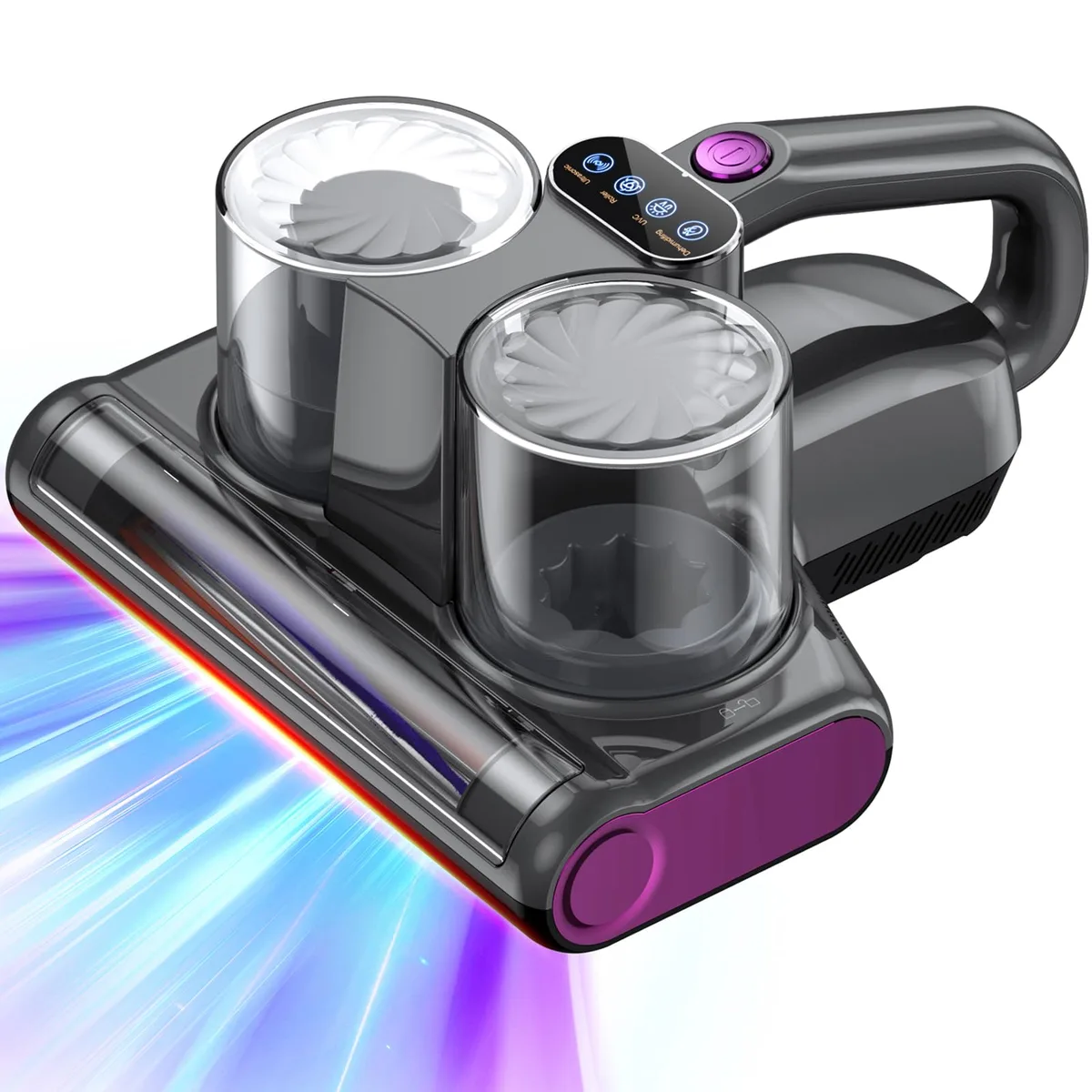
Image source: Web (Bing) / fado.vn (Web image (fair-use with source credit))
Why Dust Mites Linger in Mattresses After Surface Cleaning
How dust mites, skin flakes, and allergen particles become trapped
House dust mites, especially Dermatophagoides farinae and Dermatophagoides pteronyssinus, live mainly in bedding. They feed on microscopic flakes of shed human skin and thrive best in warm, humid conditions.
Allergen proteins, including Der f 1 and Der p 1, occur in their feces and body fragments. These particles work into foam, upholstery, fabric folds, seams, and tufting.
A mattress can look clean while still releasing allergen dust when someone sits or lies on it. Mites don't burrow into people or bite. The exposure comes mainly from inhaling or touching allergen-containing particles.
Why vacuuming alone doesn’t solve the problem
HEPA stands for high-efficiency particulate air. A sealed HEPA-filter vacuum captures fine dust from exposed surfaces, but it can't reliably pull allergen particles from foam or sealed upholstery.
Vacuuming also won't kill mites protected inside a mattress. It works best after removable bedding has been washed and dried.
Steam isn't a dependable replacement. Heat penetration varies across foam, fabric folds, and seams, and steaming can leave moisture behind.
Choose the Right Treatment for Your Mattress
Use the care label as your decision gate. If you can't confirm that a treatment is approved, don't apply water or high heat to the mattress core.

Image source: Web (Bing) / ihateironing.com (Web image (fair-use with source credit))
Machine-washable mattress with manufacturer approval
If the label approves whole-mattress washing, follow its cycle, water temperature, and drying instructions. Use detergent only as directed for the material.
Don't force a bulky mattress into a home washer. Some washable models require a commercial machine because of their size and weight.
Remove a fitted cover only if the manufacturer permits it. Once the core is completely dry, you can reinstall that cover or add an allergen-tight encasement.
Non-washable mattress with a removable cover
Launder the approved cover, sheets, pillowcases, and duvet cover first. This removes accumulated allergen particles before you handle the mattress itself.
Vacuum the exposed surface and spot-clean visible soil with minimal moisture. Let the mattress dry before installing an allergen-tight cover.
Foam, latex, hybrid, or innerspring differences
Mattress construction changes which cleaning methods are safe. Don't assume that a removable topper makes the whole mattress washable.
| Construction or feature | Safer approach |
|---|---|
| Foam or latex | Avoid soaking or dryer heat unless specifically approved |
| Hybrid or innerspring | Wash the cover, not the internal core, unless the label says otherwise |
| Permanently fitted cover | Don't remove it without manufacturer instructions |
| Sealed or waterproof layer | Avoid water unless the care label explicitly permits washing |
The care label always wins over general advice based only on the material name.
Damaged, damp, or heavily contaminated mattress
Stop the normal cleaning route if the mattress is saturated, deeply moldy, badly odorridden, or losing its shape. A sealed cover cannot repair damaged foam or contaminated padding.
Clean standing water and address the source quickly. Persistent dampness, extensive mold, or structural damage usually calls for professional assessment or replacement.
What Actually Removes Dust-Mite Allergens
No single method removes every mite and allergen particle from a mattress. Effective control combines laundering, containment, surface pickup, and moisture management.
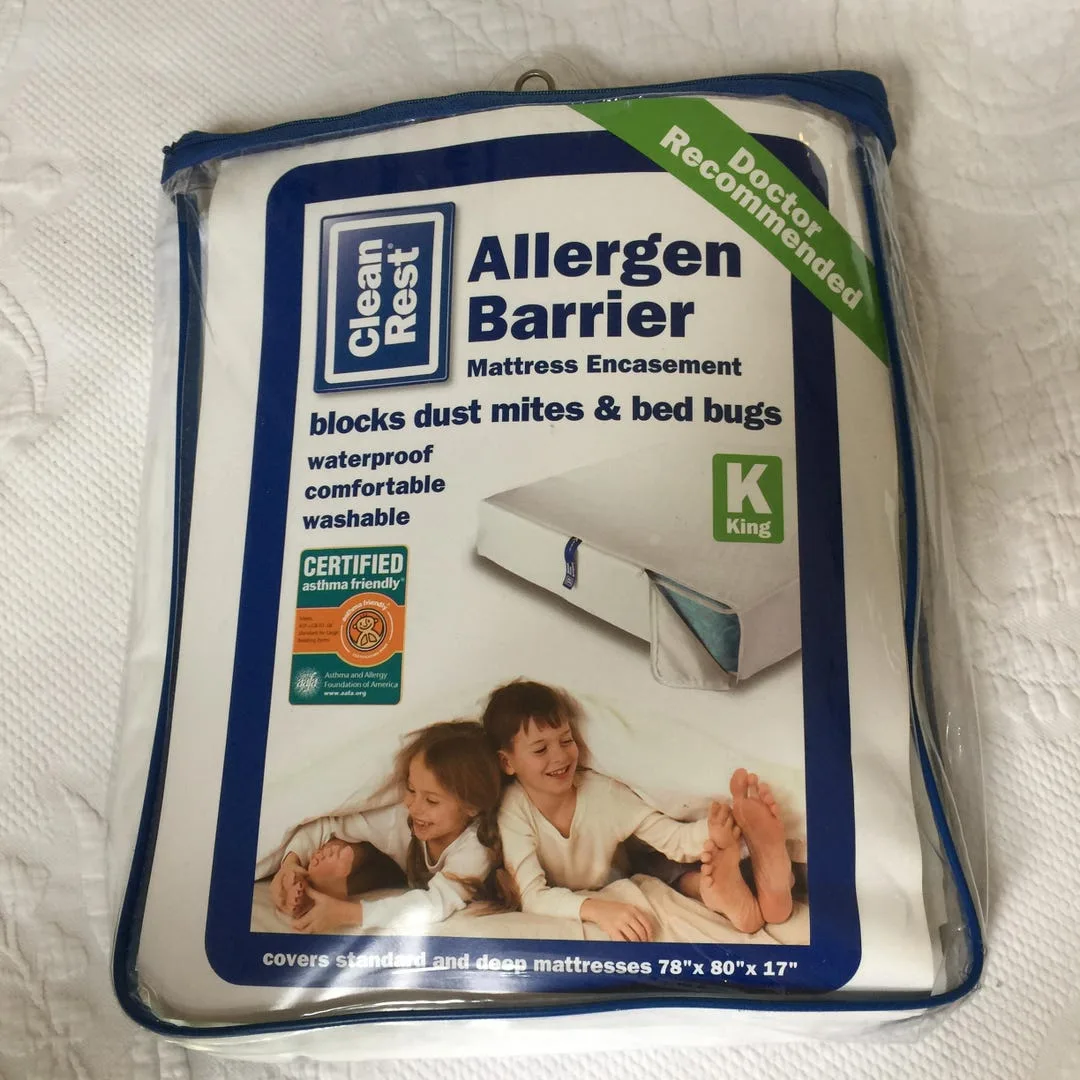
Image source: Web (Bing) / etsy.com (Web image (fair-use with source credit))
Hot-water laundering and high-heat drying
Hot water kills mites when the fabric can tolerate it, while detergent and rinsing wash allergen particles from removable bedding. Apply the EPA's 130°F/54°C benchmark only when care labels allow.
A high dryer cycle after washing can kill remaining mites. Bedding must tumble freely, and the center must dry completely before use.
Allergen-tight mattress encasements
An allergen-tight encasement is a sealed barrier designed to retain existing mites and allergen particles inside the mattress. Choose one that matches the exact length, width, and depth.
Check that the zipper closes across its full flap. Inspect seams and fabric for tears, because small gaps can release allergens into the room.
HEPA vacuuming
Use a HEPA-filter vacuum with a brush or crevice attachment. Make slow, overlapping passes across tufts, seams, piping, and mattress edges.
Vacuuming removes loose allergen-bearing dust but doesn't sterilize the core. It supports the main treatment rather than replacing approved laundering and encasement.
Bedroom humidity control
Relative humidity measures how much moisture is present in room air. Keep readings below 50%, with many homes aiming for roughly 30% to 50%.
Ventilation, air conditioning, or a dehumidifier can help in a persistently humid bedroom. Correct condensation and air leaks rather than relying on the dehumidifier alone.
How to Clean Dust Mites from a Mattress Step by Step
Check the care label and prepare the bedroom
- Read the care label and confirm whether the entire mattress or only its cover is washable.
- Identify the mattress material and note any warnings about water, heat, bleach, or dryer use.
- Remove all detachable bedding and launder it using the hottest safe settings.
- Inspect the mattress for dampness, mold, stains, tears, or crushed foam.
Don't begin by spraying or steaming. Those methods can add moisture or damage the material before you know whether they're approved.
Treat a washable mattress
- Check the washer and dryer capacity before moving the mattress or its approved components.
- Wash using the labeled cycle, detergent amount, and water temperature.
- Dry using the manufacturer's heat setting after washing.
- Treat the center as unfinished drying until no dampness remains.
- Reinstall the cover only when the mattress is fully dry.
Treat a non-washable mattress
- Attach the vacuum's brush head or crevice tool.
- Make slow, overlapping passes across the entire surface.
- Vacuum seams, tufts, piping, handles, and mattress edges.
- For visible soil, dampen a cloth with a material-compatible cleaner.
- Blot gently and improve airflow until the treated area dries.
Avoid scrubbing. It can abrade fabric, drive particles deeper, and spread moisture across the surface.
Dry the mattress and install the encasement
There's no reliable universal drying time. Foam can retain water internally long after the surface feels dry, especially in humid rooms.
Follow any stated drying period and check the underside, center, seams, and areas beneath pillows. If the mattress feels cool, damp, or musty, give it more time.
Never seal damp foam inside an encasement. Trapped moisture can encourage mildew and odors. Zip the cover fully only after the mattress is dry.
Tools, Settings, and Product Features That Matter
Your setup depends on the treatment route chosen earlier. Each tool has one specific job, and none works as a complete replacement for the others.
| Tool or setting | Function | Key requirement |
|---|---|---|
| Washer | Washes approved bedding and mattress parts | Use care-label-safe settings, often at least 130°F/54°C |
| Dryer | Kills remaining mites and removes moisture | Use approved heat and dry until the center is moisture-free |
| Allergen-tight encasement | Contains existing mites and allergen particles | Exact fit with a complete zipper seal |
| HEPA-filter vacuum | Captures fine particles from exposed surfaces | Brush head, crevice tool, and slow passes |
| Low-moisture cleaner | Treats visible soil | Confirm compatibility and test a hidden area |
| Hygrometer | Measures relative humidity | Look for readings below 50% |
| Dehumidifier | Removes moisture from humid rooms | Size it correctly and monitor the display |
Manufacturer specifications matter more than marketing language. A “hypoallergenic” label alone doesn't confirm that a cover provides a sealed allergen barrier.
Comparing encasements, toppers, sprays, steamers, and replacement
Encasements, toppers, sprays, and steamers solve different parts of the problem, while replacement becomes necessary when the mattress itself is no longer serviceable.
| Option | Best use | Limitation |
|---|---|---|
| Allergen-tight encasement | Containing existing mattress allergens | Must fit and seal correctly |
| Standard mattress protector | Blocking spills and everyday wear | Usually isn't an allergen barrier |
| Washable topper | Adding a removable cleaning layer | Alone doesn't contain the old mattress |
| Steam cleaner | Treating accessible surfaces | Uneven penetration and possible dampness |
| Mite spray | Treating an approved pesticide use | May irritate and won't reach embedded mites |
| Mattress replacement | Severe odor, mold, saturation, or damage | Doesn't address allergens elsewhere in the bedroom |
These options each have specific limitations, such as uneven penetration for steam or inadequate barriers for standard mattress protectors. Properly matching the selected method to the mattress's condition prevents further exposure.
Mistakes That Can Make the Problem Worse
Cleaning can fail when heat, moisture, or containment is handled poorly. The biggest risk is damaging the mattress while leaving allergens behind.
Using too little heat: A cool wash may remove dirt without reliably killing mites. If high heat would damage an item, complete the approved washing and drying process, then contain the mattress.
Overloading the dryer: Tightly packed bedding dries slowly. The center can remain warm and damp even when the outside feels ready.
Sealing damp foam: Moisture trapped inside an encasement can encourage mildew and odor. Wait until the mattress is fully dry before zipping it closed.
Confusing a protector with an encasement: A spill protector doesn't create the same allergen barrier. Check for an allergen-tight specification and a sealed closure.
Relying on one treatment: Vacuuming misses embedded particles. Baking soda may help with surface odor, but it doesn't reliably kill mites or remove allergens deep inside a mattress.
Ignoring product warnings: Don't mix cleaning chemicals or use pesticide products outside their registered directions. Care-label violations can also damage the mattress and affect its warranty.
Keep Dust Mites Under Control After Cleaning
One-time cleaning loses effectiveness as bedding collects fresh skin flakes and moisture. A consistent routine keeps allergens from building up again.
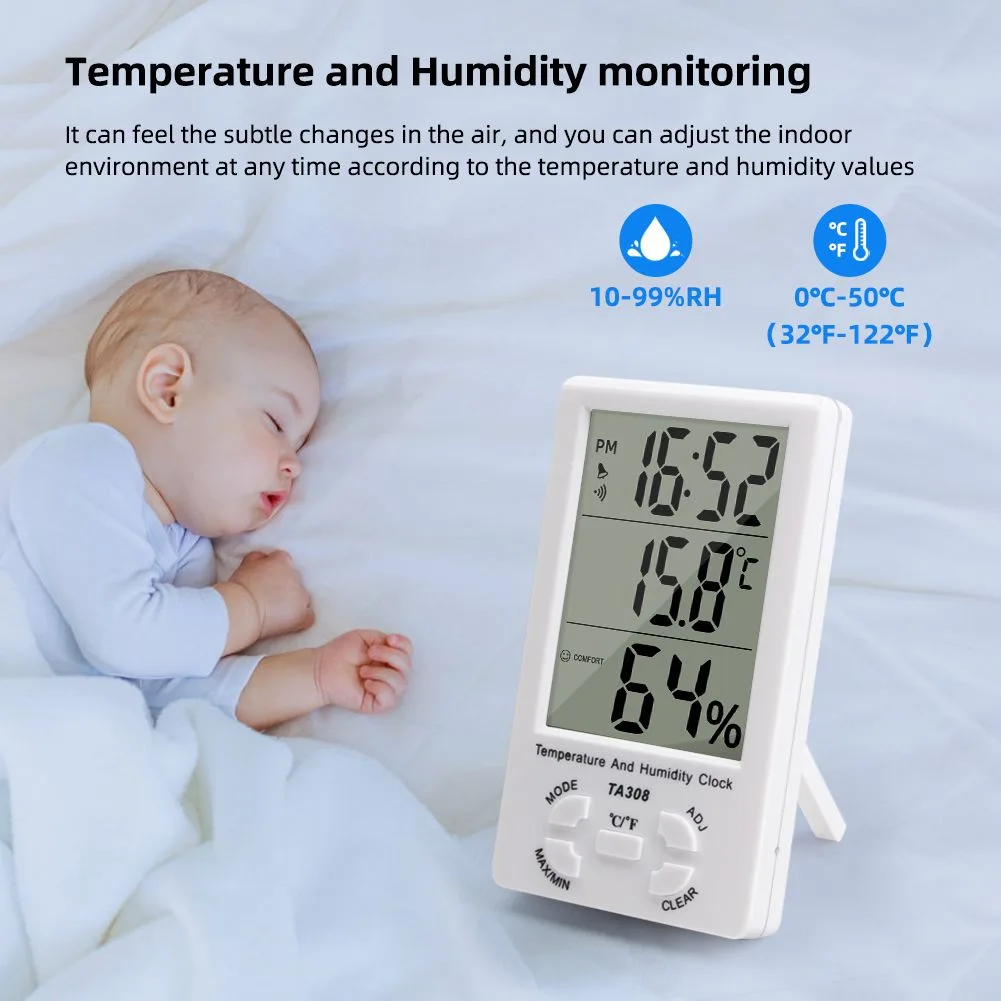
Image source: Web (Bing) / hedaometer.en.made-in-china.com (Web image (fair-use with source credit))
| Task | Practical frequency |
|---|---|
| Wash removable bedding | Weekly is a common benchmark in mite-sensitive homes |
| Vacuum the mattress | Weekly and whenever visible dust accumulates |
| Check relative humidity | Monthly and during seasonal weather changes |
| Inspect the encasement | Monthly and after moving or cleaning the bed |
Follow every bedding care label. Some fabrics need lower temperatures or air drying, so a fixed schedule shouldn't replace the manufacturer's instructions.
Keep the mattress and encasement dry. Repair small tears promptly, and replace a cover that no longer seals securely around the mattress.
Choose replacement for extensive mold, persistent odor, deep saturation, or major structural damage. Cleaning won't restore crushed foam or contaminated padding.
Don't donate an untreated mattress with a known allergen problem. Wrap discarded mattresses according to local waste rules and remove them from the home.
Frequently Asked Questions
Use the care label to choose one route before selecting a cleaner or appliance.
| Mattress situation | Correct treatment route |
|---|---|
| Entire mattress is washable | Wash and dry using the manufacturer's instructions |
| Only the cover is washable | Launder the cover and bedding, then vacuum and encapsulate |
| Non-washable and structurally sound | Vacuum, spot-clean if needed, dry fully, and encapsulate |
| Damp, moldy, or badly damaged | Stop routine cleaning and assess remediation or replacement |
Can you see dust mites?
Usually not. House dust mites are too small to identify with the naked eye, and small specks don't confirm an infestation. A clean-looking mattress can still hold allergen-bearing feces and body fragments.
Diagnosis depends on symptoms and, when needed, medical evaluation rather than visual inspection.
Does mattress steaming kill dust mites?
No single steaming pass reliably kills mites throughout a mattress. Heat penetration varies across foam, fabric folds, and seams, while steam can add moisture. If the manufacturer permits steaming, let the mattress dry fully.
Encapsulation and humidity control are still needed.
Are dust-mite sprays safe for children and pets?
Don't assume they're safe around children or pets. Some sprays irritate eyes, skin, noses, and lungs, and aerosol products may not reach mites inside the mattress. Follow any registered pesticide label exactly.
Start with laundering, low-moisture cleaning, and allergen-tight containment.
How long does it take for allergy symptoms to improve?
There's no guaranteed timeline. Symptoms depend on continuing exposure and individual sensitivity. Improvement may begin after bedding is washed and allergens are contained, but carpets, curtains, and upholstery can add exposure.
Persistent wheezing, breathing difficulty, or disrupted sleep warrants medical care.
Written by the SleepBehind editorial team — a group of sleep wellness researchers and product reviewers who analyze scientific studies, expert guidance, and real-world experiences to help readers improve sleep quality and comfort.