Sleep deprivation causes fatigue, poor focus, mood swings, slowed reactions, and weakened immunity.
I have studied sleep health for years and worked with people who struggle with sleep. This article explains sleep deprivation symptoms clearly. I will show what to watch for, why they happen, and what to do next. Read on if you want simple, practical steps that work.
What causes sleep deprivation?
Sleep deprivation happens when you get less sleep than your body needs. Many things can cause it. Some are quick and some build up over weeks or months.
- Shift work or long hours can cut sleep time and change your sleep cycle.
- Stress and anxiety make it hard to fall or stay asleep.
- Sleep disorders like insomnia, sleep apnea, and restless leg syndrome reduce sleep quality.
- Parenting, caregiving, and noisy environments interrupt sleep often.
- Caffeine, alcohol, and some medications can fragment sleep.
- Poor habits, like late screen time and irregular sleep schedules, make it worse.
People often ignore early sleep deprivation symptoms. Small losses add up. Over time, normal tasks feel harder. Knowing causes helps fix them faster.
:max_bytes(150000):strip_icc()/what-are-the-symptoms-of-sleep-deprivation-3015161_color4-5b42c4ddc9e77c00374089b8.png)
Recognizing sleep deprivation symptoms
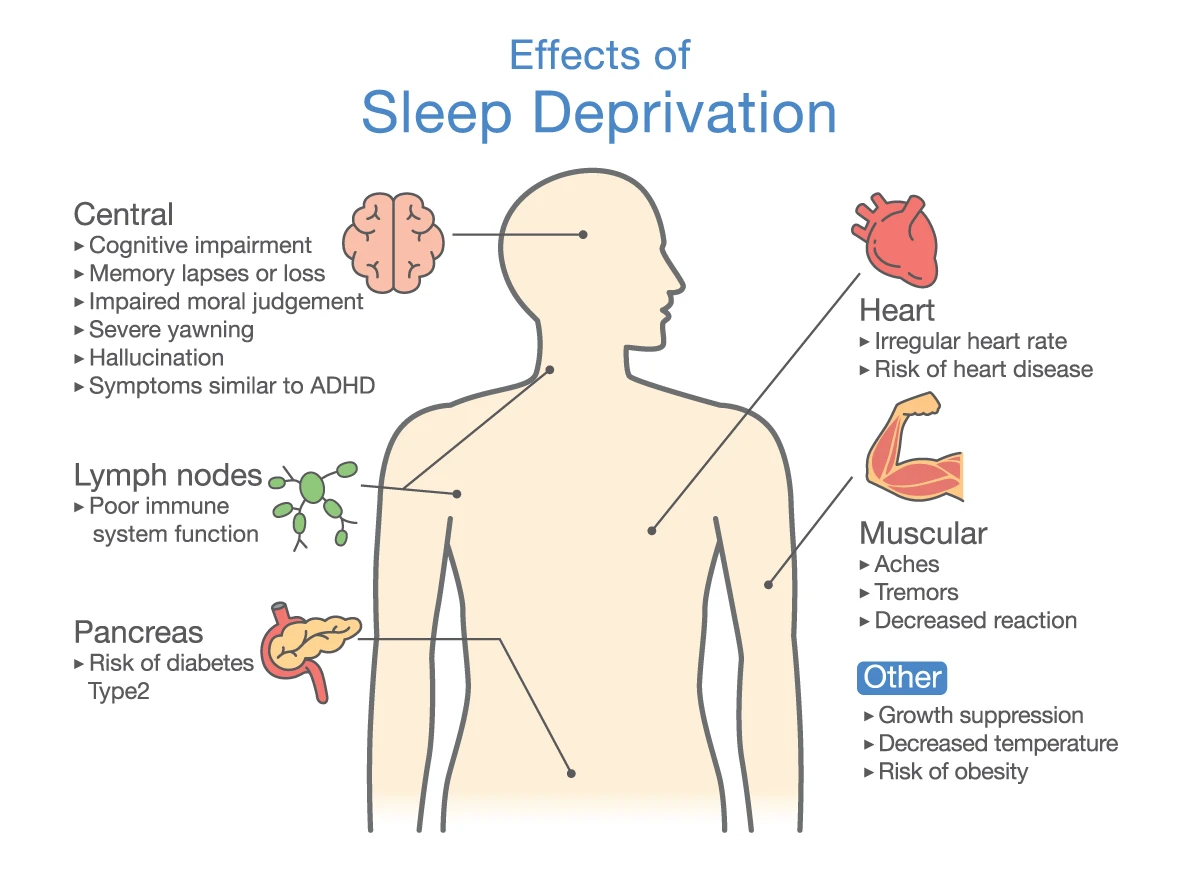
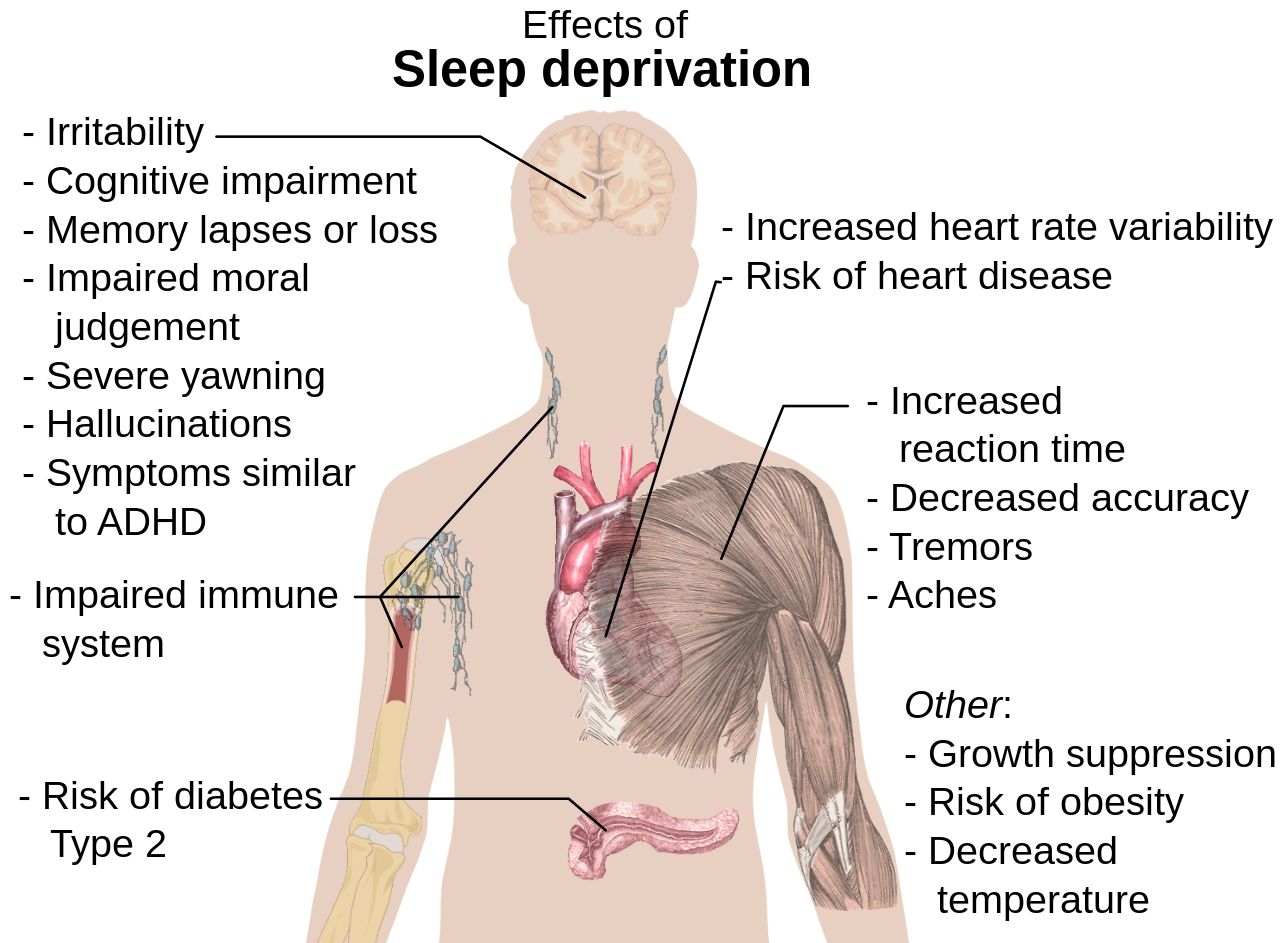
Sleep deprivation symptoms can be physical, mental, and emotional. They show up in many ways. Spotting them early prevents bigger problems.
- Tiredness and low energy during the day are the most common signs.
- Trouble concentrating and slow reaction times affect work and driving.
- Memory lapses and forgetfulness show when sleep is poor.
- Mood changes, such as irritability, anxiety, or low mood, grow over time.
- Increased appetite, especially for sugary or fatty foods, can occur.
- Headaches, dark circles under the eyes, and drooping eyelids are common.
- Lowered immune response leads to more frequent colds and infections.
If you notice several of these, you are likely experiencing sleep deprivation symptoms. Track your sleep for a week. A simple log helps link symptoms to sleep habits.

Short-term effects on daily life
Short-term sleep deprivation symptoms can show up within a single night. They reduce clear thinking and safety. You may not realize how much sleep loss affects you.
- Reduced alertness and slower reflexes increase accidents.
- Poor judgment and decision-making make simple choices harder.
- Irritability and social friction can harm relationships.
- Lowered work or school performance shows as mistakes and missed deadlines.
If you miss sleep for a few nights, your mood and focus dip quickly. Short fixes work for short-term loss. Yet repeated short-term loss leads to chronic problems.
Long-term health consequences
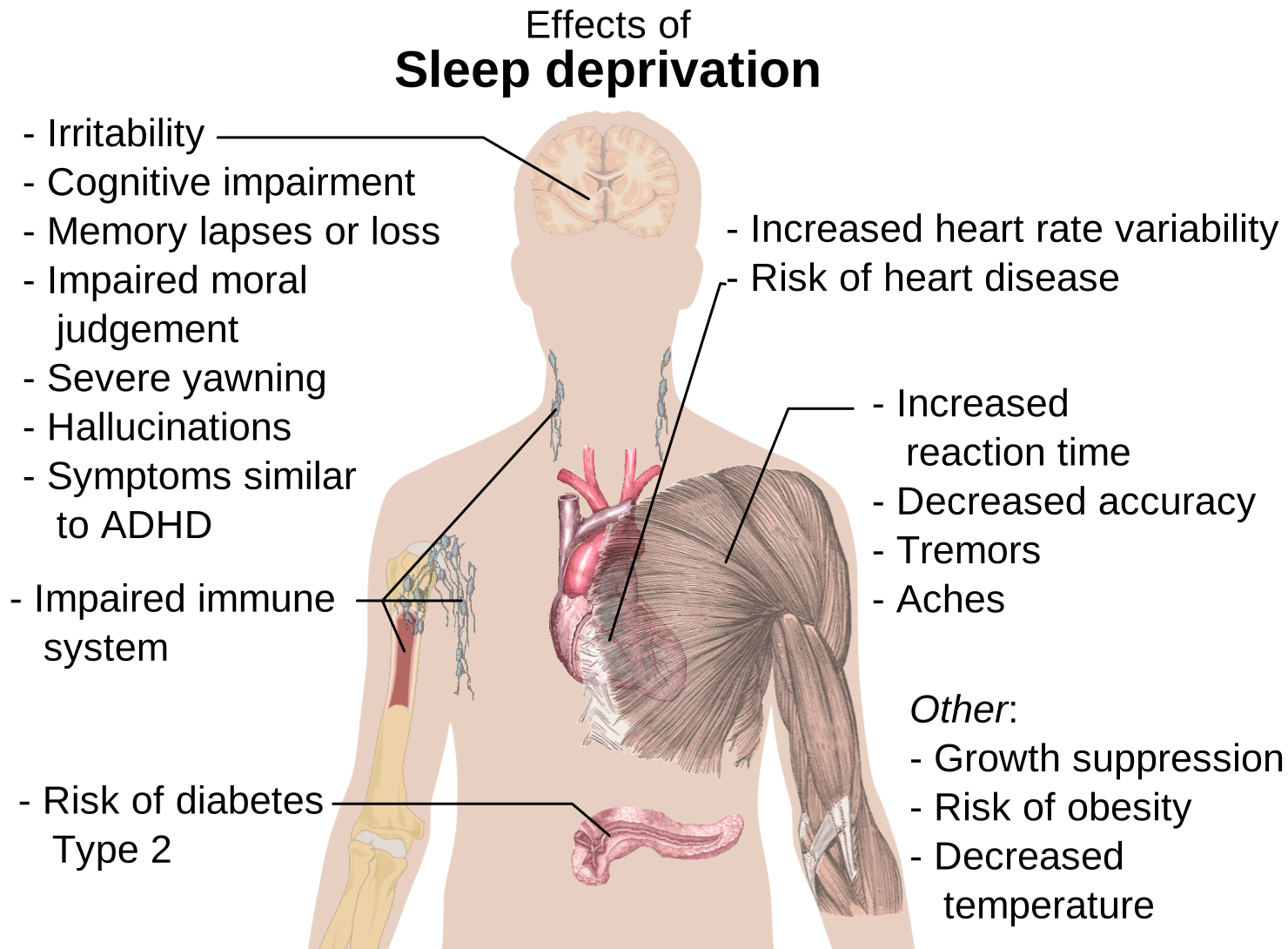
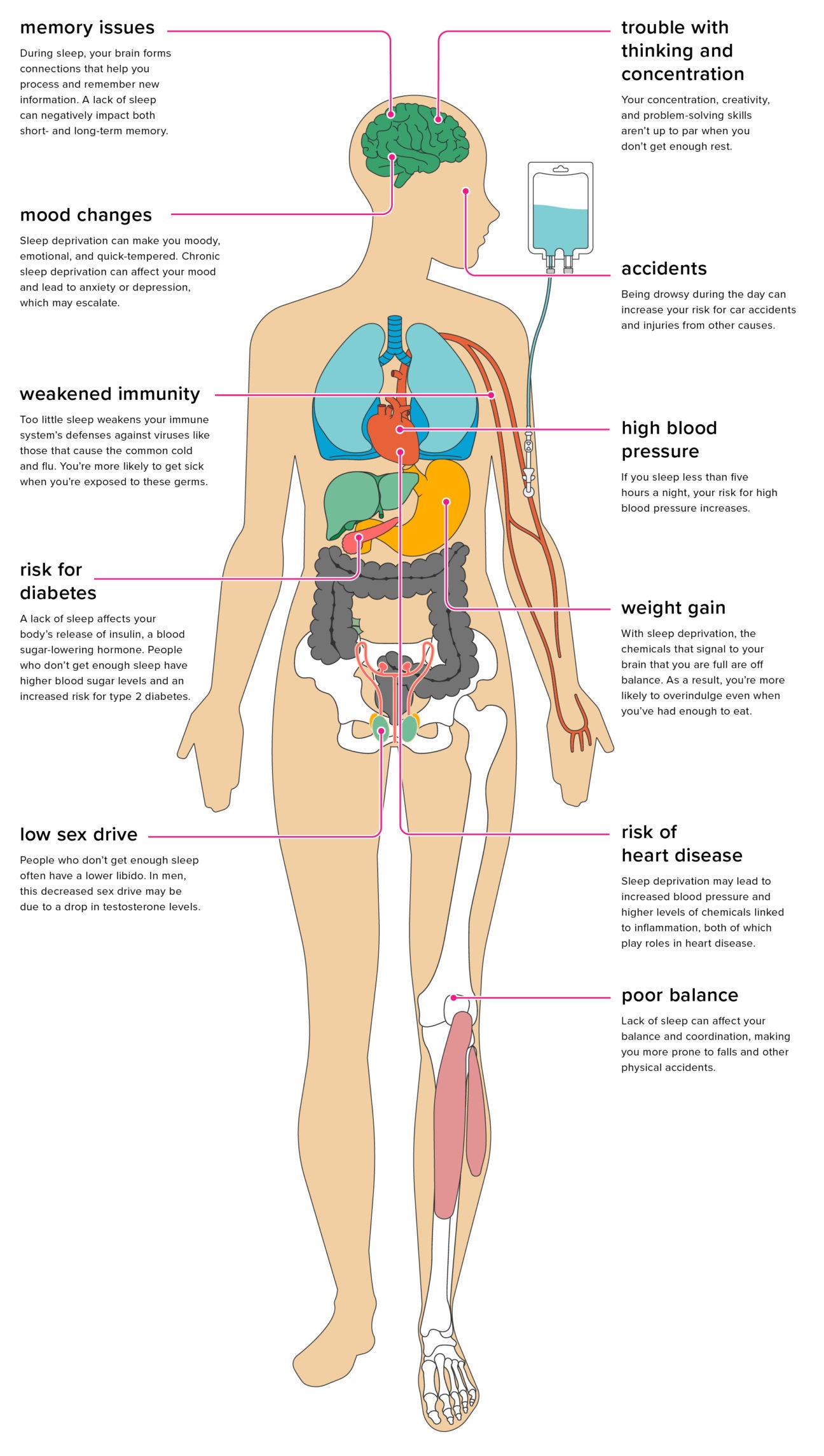
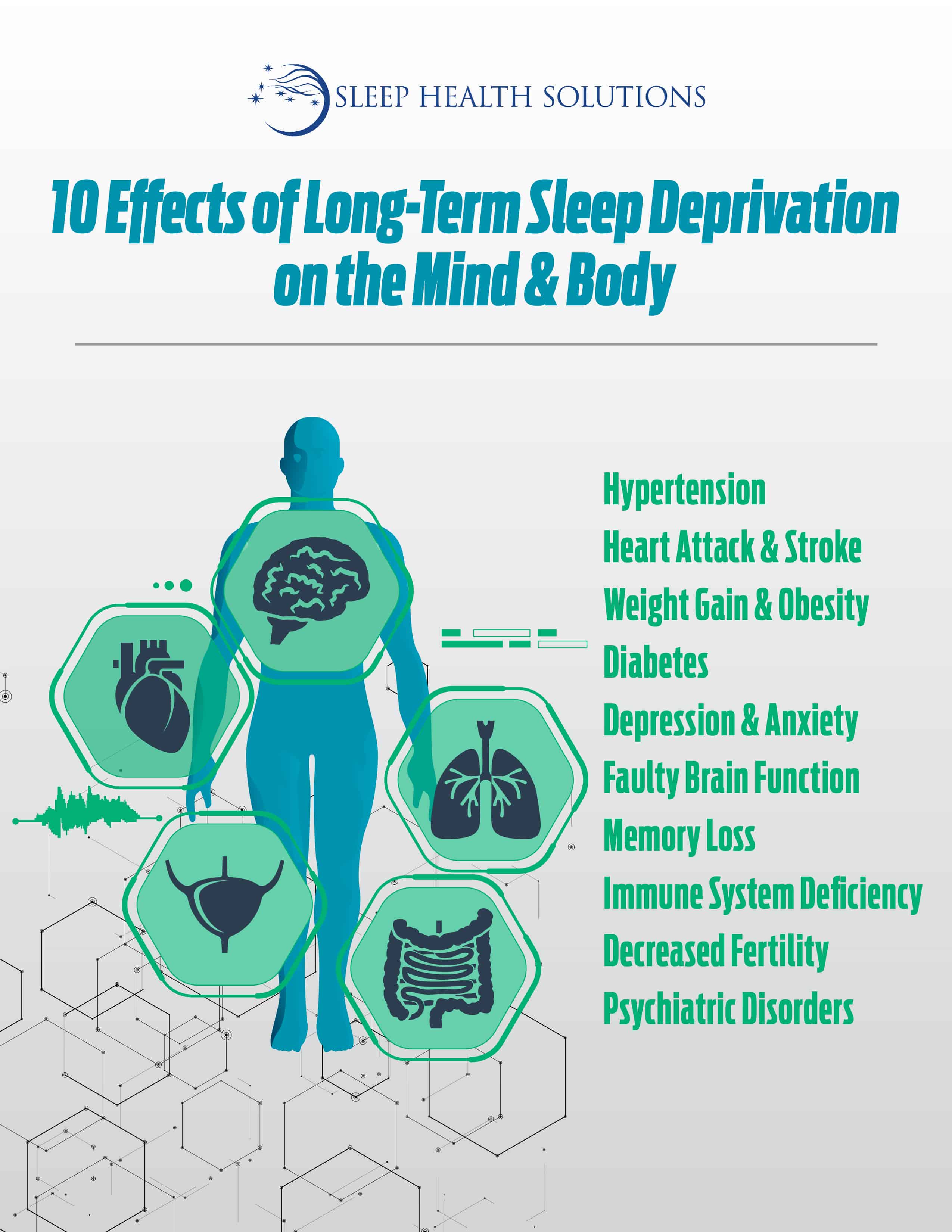
Chronic sleep loss causes more than fatigue. Long stretches of sleep deprivation symptoms can lead to major health risks. These risks are real and measurable.
- Increased risk of heart disease and high blood pressure occurs with long-term sleep loss.
- Weight gain and metabolic changes raise the chance of diabetes.
- Mood disorders like depression and anxiety become more likely.
- Cognitive decline and memory issues can appear over years.
- Hormone disruption affects appetite, stress response, and healing.
Treating sleep problems early lowers these risks. Think of sleep like maintenance for your body. Skipping it can cause breakdowns.
How professionals diagnose sleep deprivation
Doctors and sleep specialists use clear steps to diagnose sleep problems. Diagnosis helps tailor the right treatment.
- A sleep history and symptom log is the first step. You will discuss sleep time, naps, and daily routines.
- Questionnaires measure sleepiness and sleep quality. They help track severity.
- Sleep studies may be ordered if a sleep disorder is suspected. These test breathing, brain waves, and movement during sleep.
- Simple tests check daytime function and alertness.
Diagnosis separates sleep deprivation from other issues that look similar. Accurate diagnosis leads to better results.
Treatment and management strategies
Fixing sleep deprivation symptoms often starts with simple habits. Many people improve fast with basic changes. More severe cases may need therapy or medical care.
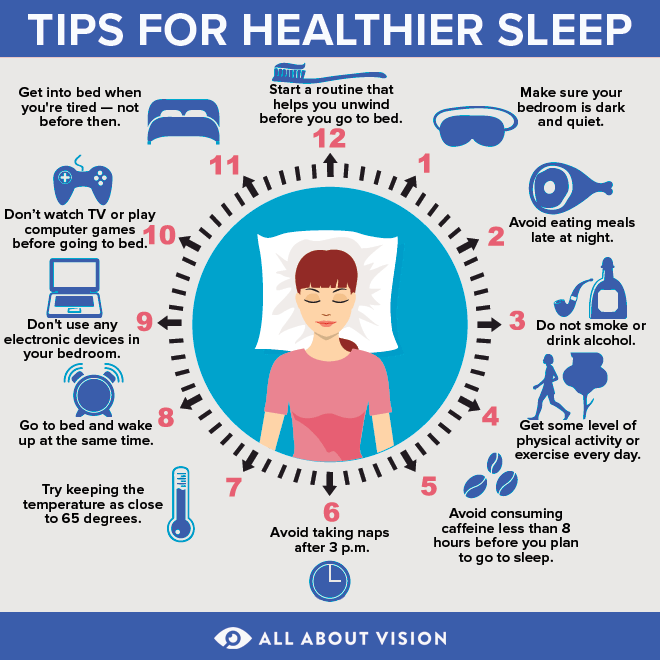
- Set a regular sleep schedule and stick to it every day.
- Create a calm bedroom: cool, dark, and quiet helps sleep.
- Limit caffeine after mid-afternoon. Replace late coffee with water or herbal tea.
- Cut screen time one hour before bed to reduce bright-light wake signals.
- Use short naps wisely. Limit naps to 20 minutes to avoid grogginess.
- Practice relaxation: breathing exercises, short stretches, or a short walk.
- For persistent insomnia, consider cognitive behavioral therapy for insomnia (CBT-I).
- If a sleep disorder like sleep apnea is found, follow medical treatment plans.
I have recommended these steps to friends and clients. Most see better sleep in two to four weeks. Stick with the plan and track progress.

Practical prevention and sleep hygiene
Good sleep habits stop sleep deprivation symptoms before they start. Small changes go a long way.
- Keep a consistent sleep and wake time, even on weekends.
- Make your bedroom a sleep-only zone when possible.
- Avoid heavy meals and alcohol close to bedtime.
- Get natural light in the morning to set your internal clock.
- Exercise regularly, but not right before bed.
- Wind down with a short routine: read, stretch, or practice breathing.
- Address stress with short daily practices: journaling or a quick walk.
If one strategy fails, try another. Prevention is a mix of habits that fit your life.
Personal experience and lessons learned
I once worked with a client who reported constant brain fog. Symptoms looked like poor focus and low mood. We tracked sleep for two weeks and found frequent night awakenings. Simple sleep hygiene fixes and a later caffeine cutoff cut the awakenings. Within three weeks, the client felt sharper and more upbeat.
Key lessons I learned:
- Small, consistent changes beat dramatic but short-lived fixes.
- Tracking sleep makes problems visible and solvable.
- Be patient. Real change often takes weeks, not days.
I share these tips like I would with a friend. They are practical, low-cost, and backed by clinical practice.
Frequently Asked Questions of sleep deprivation symptoms
What are the earliest signs of sleep deprivation symptoms?
Early signs include daytime tiredness, trouble focusing, and mood swings. You may also notice mild forgetfulness and slowed reactions.
Can sleep deprivation symptoms cause weight gain?
Yes. Sleep loss affects hormones that control hunger and can increase cravings for high-calorie foods. Over time, this can lead to weight gain.
How many hours of sleep will prevent sleep deprivation symptoms?
Most adults need 7 to 9 hours each night. Some people feel fine with slightly less, but regular short sleep raises the risk of symptoms.
Will caffeine fix sleep deprivation symptoms?
Caffeine can mask tiredness temporarily. It does not fix underlying sleep debt and can worsen sleep if used late in the day.
When should I see a doctor for sleep problems?
See a doctor if symptoms last more than two weeks, affect daily life, or if you snore heavily or stop breathing at night. These signs may need medical evaluation.
Conclusion
Sleep deprivation symptoms show up in simple ways: low energy, poor focus, mood shifts, and more. Many causes are fixable with clear steps like better sleep habits, a calm bedroom, and tracking your sleep. If problems persist, seek a professional for testing and therapy. Start one small habit tonight and track progress for two weeks. Share your results or questions below, or subscribe for more sleep tips and guides.

Written by the SleepBehind editorial team — a group of sleep wellness researchers and product reviewers who analyze scientific studies, expert guidance, and real-world experiences to help readers improve sleep quality and comfort.