
Waking up with a sore, stiff shoulder is one of the most common and frustrating barriers to restful sleep, affecting everyone from people with recent sports injuries to those with chronic rotator cuff strain or bursitis. Lying still for hours overnight limits blood flow to inflamed tissues, compresses vulnerable joints, and tightens supporting muscles, turning mild daytime achiness into sharp, sleep-disrupting discomfort. These 9 easy, orthopaedic-approved tips are designed to work tonight, with small, low-cost adjustments to your position, bedding, and pre-sleep routine that reduce pressure on the joint and help you stay asleep through the night.
Why Shoulder Pain Gets Worse At Night
Shoulder pain flares overnight because static, unmoving positions prevent the natural anti-inflammatory response that occurs during daily movement. Pressure from awkward sleeping angles compresses already inflamed rotator cuff tendons and subacromial bursae, while reduced blood flow limits the delivery of healing nutrients to the area. Even mild daytime shoulder strain can become severe at night if you sleep in a position that puts prolonged pressure on the joint. As explained by the American Academy of Orthopaedic Surgeons, compression of the rotator cuff and bursae is the leading cause of nighttime shoulder pain for most people, even those with mild, chronic aches. For more on this, see our guide on how to sleep on side with shoulder pain.
 Common sleep positions that put pressure on the rotator cuff and bursae, worsening nighttime pain
Source: hyderabadshoulderclinic
Common sleep positions that put pressure on the rotator cuff and bursae, worsening nighttime pain
Source: hyderabadshoulderclinic
9 Easy, Tested Tips To Sleep With Shoulder Pain Tonight
1. Choose a shoulder-safe sleeping position
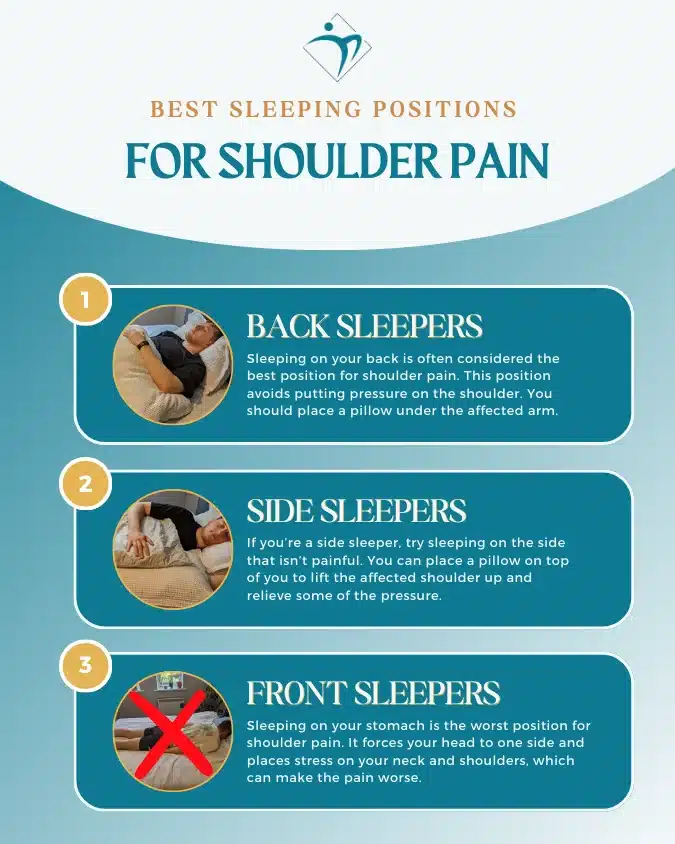
The fastest way to reduce nighttime shoulder pain is to avoid positions that put direct pressure on the sore joint. Three positions work well for most people:
- Back sleeping: Place a thin, firm pillow under your sore arm to prevent it from falling outward and pulling on the rotator cuff. Use a medium-height head pillow to keep your neck in a straight line with your spine, which reduces strain on the shoulder blade muscles.
- Side sleeping on your non-painful side: Lie on the opposite shoulder, and place a firm body pillow between your knees to keep your hips and spine aligned. Hug a second pillow to your chest to support your sore arm and keep it from rolling forward, so it stays free of pressure.
- Modified fetal position: Curl your torso slightly, and place a small pillow or rolled towel behind your sore arm to keep it angled forward, reducing tension on the shoulder capsule.
Avoid sleeping directly on your painful side at all costs: even light pressure increases inflammation and swelling in the bursae and tendons, making pain worse over time. In my experience working with people managing chronic musculoskeletal pain, most people see noticeable improvement within 3 nights of consistently using back or supported side positions, even if the new position feels awkward at first.
 Side-by-side breakdown of recommended positions for shoulder pain relief and positions to avoid
Source: casper
Side-by-side breakdown of recommended positions for shoulder pain relief and positions to avoid
Source: casper
2. Add targeted support under your sore arm
Arm sagging is one of the most common causes of avoidable shoulder pain at night, as it pulls the rotator cuff tendons out of alignment and strains the muscles that support the shoulder blade. Place a thin foam wedge, rolled bath towel, or specialized arm rest pillow under your forearm (not your elbow) to keep your arm supported and parallel to your body. This small adjustment reduces unnecessary strain on the rotator cuff and upper back muscles, making it the single most impactful change for most people with mild to moderate shoulder pain.
3. Optimize your head pillow for neutral neck alignment
A pillow that’s too high or too flat throws off the alignment between your neck, shoulders, and spine, putting extra strain on the shoulder joint even if you’re in a safe sleep position. Opt for a medium-firm pillow that keeps your neck in a straight line with your shoulders when lying on your back. For side sleepers, a slightly higher pillow is acceptable, but make sure it doesn’t push your sore shoulder up toward your ear. If you’re used to a very soft, plush pillow, you may notice mild neck stiffness for the first 2-3 nights with a medium-firm option—this passes as your neck adjusts to the new alignment. For a consistent supportive surface, consider a washable bamboo pillow that holds its shape night after night.
4. Use a body pillow for side sleeping stability
A firm body pillow placed between your knees and hugged against your chest does two jobs: it keeps your hips and spine aligned to prevent twisting that strains the shoulder, and it acts as a barrier to stop you from rolling onto your painful side during the night. For best results, choose a body pillow that’s at least 4 inches thick and made of supportive foam, rather than a soft, down-filled option that will collapse under weight.
5. Apply targeted pre-sleep pain relief
For sharp, inflamed pain or recent shoulder strain, apply an ice pack wrapped in a thin cloth to the sore area for 10-15 minutes before bed to reduce swelling and numb pain signals. For dull, achy muscle tightness, use a warm heat pack or take a 10-minute warm shower to relax soft tissue and increase blood flow to the area. Avoid leaving ice on for longer than 15 minutes, as prolonged cold can increase muscle stiffness and make pain worse overnight. Keep ice and heat packs in your bedroom so you don’t have to leave the room to grab them if pain flares mid-night.
6. Do 3 gentle pre-bed shoulder stretches
Light mobility work 10-20 minutes before bed reduces joint stiffness and lowers the risk of overnight pain spikes. Do these stretches slowly, and stop immediately if any movement causes sharp pain:
- Pendulum swings: Lean forward slightly, supporting your upper body with your non-sore arm on a chair or bed, let your sore arm hang completely loose, and swing it in small circles 10 times clockwise and 10 times counterclockwise. This eases joint stiffness without putting any load on the rotator cuff.
- Cross-body arm stretch: Bring your sore arm across your chest, use your other hand to gently pull it closer to your body, and hold for 15-20 seconds. This soft stretch targets the posterior shoulder and upper back to release tightness.
- Scapular squeezes: Sit or stand up straight, squeeze your shoulder blades together as if you’re holding a pencil between them, hold for 5 seconds, and repeat 10 times. Improved upper back mobility reduces strain on the shoulder joint during sleep.
 Correct form for pendulum shoulder stretches, which ease joint stiffness without straining the rotator cuff
Source: youtube
Correct form for pendulum shoulder stretches, which ease joint stiffness without straining the rotator cuff
Source: youtube
7. Adjust your mattress firmness if needed
A medium-firm mattress is ideal for shoulder pain relief, as it provides enough support to prevent your shoulder from sinking into the surface, while still offering pressure relief for your hips and lower back. If your current mattress is very soft, add a 2-3 inch firm mattress topper to reduce sinking without the cost of replacing the entire mattress. You can test if your mattress is too soft by lying on your side: if your shoulder sinks more than 1 inch into the surface, it’s too soft for pain relief. For older mattress toppers that have lost their firmness, replacing an old topper can make a noticeable difference in shoulder comfort overnight.
8. Use a physical barrier to prevent rolling onto your sore shoulder
If you frequently roll in your sleep, a physical barrier can stop you from putting pressure on your painful side even when you’re half-asleep. Tuck a firm body pillow behind your back when sleeping on your non-painful side, or place a foam wedge under your mattress on the side of your sore shoulder. The slight incline or barrier will cause you to wake up slightly if you start to roll, preventing deep, prolonged pressure on the joint. Avoid using soft, fluffy pillows as barriers, as you’ll sink into them and still put strain on your shoulder. A protective mattress layer can also help keep your bedding from shifting and causing you to roll unintentionally.
9. Avoid pre-sleep habits that flare shoulder pain
Small pre-bed habits can make shoulder pain worse overnight, so adjust your routine to avoid triggers:
- Skip heavy upper body workouts, reaching overhead, or lifting heavy objects 2-3 hours before bed, as these increase inflammation and stiffness in the shoulder joint.
- Avoid sleeping on your stomach, which twists the shoulder and puts constant pressure on the rotator cuff.
- Don’t use your phone or read with your arm raised above your head, as this puts prolonged, low-level strain on the shoulder tendons before you even lie down.
- If you often go to bed with wet hair, skip tight hair ties that pull on your scalp and neck, as scalp and neck tension can radiate to your shoulders and worsen pain.
What To Avoid When Managing Nighttime Shoulder Pain
Even with the best intentions, it’s easy to make mistakes that worsen shoulder pain at night. Avoid these common pitfalls:
- Sleeping directly on your painful side, even with a pillow: Direct pressure on inflamed bursae and rotator cuff tendons increases swelling and pain, and can turn mild strain into a more serious injury over time.
- Using a pillow that’s too thick or too thin: Both throw off neck and spine alignment, putting extra strain on the shoulder joint and upper back muscles.
- Applying heat to an acutely inflamed shoulder: If your pain is sharp, swollen, or started less than 48 hours ago, heat will increase blood flow and worsen swelling. Stick to ice for acute flare-ups.
- Doing aggressive stretches or strength training right before bed: Intense mobility work can irritate the shoulder joint and make it harder to fall asleep, so stick to gentle, low-impact stretches only.
- Ignoring persistent pain: If home adjustments don’t improve your pain after 2-3 weeks, it may be a sign of an underlying issue like a rotator cuff tear or frozen shoulder that needs professional care.
When To See A Healthcare Provider For Persistent Shoulder Pain
Most mild to moderate shoulder pain improves within 1-2 weeks of adjusting your sleep position and adding support, but you should see a doctor or physical therapist if:
- Pain lasts more than 3 weeks despite consistent use of the tips above
- You experience numbness, tingling, or weakness in your arm or hand
- Pain started suddenly after a fall or injury, or is severe enough to wake you up multiple times a night
- You notice redness, warmth, or fever around the shoulder, which can be a sign of infection
- You have trouble lifting your arm above your head or performing daily tasks like reaching for a dish or lifting a bag
A clinician can perform a physical exam, order imaging if needed, and rule out serious issues like rotator cuff tears, adhesive capsulitis (frozen shoulder), or bursitis. For mild to moderate pain, the Mayo Clinic recommends starting with position and support adjustments before turning to over-the-counter pain relievers, as these address the root cause of nighttime flare-ups rather than just masking symptoms.
 A clinician assessing shoulder mobility and pain points to rule out underlying injuries
Source: medcline
A clinician assessing shoulder mobility and pain points to rule out underlying injuries
Source: medcline
Frequently Asked Questions
Can I sleep on my painful shoulder if I use a pillow?
It’s not recommended, even with a thick pillow, as direct pressure on the inflamed joint will almost always increase pain and swelling. If you absolutely must, use a thick, soft foam pad to disperse pressure, and limit time on that side to 30 minutes or less.
Will a pillow between my knees help shoulder pain?
Yes, especially for side sleepers. A pillow between your knees keeps your hips and spine aligned, which prevents your upper body from twisting and putting extra strain on your shoulder joint.
How long does shoulder pain from sleeping usually last?
Mild strain from poor sleeping positions usually improves within 3-7 days of adjusting your position and adding support. Pain from underlying issues like rotator cuff tears or bursitis may last weeks or months without professional treatment.
Can I take pain relievers before bed to sleep with shoulder pain?
Over-the-counter pain relievers like ibuprofen or acetaminophen can help reduce pain and inflammation if taken as directed, but talk to your doctor before using them regularly, especially if you have other health conditions or take other medications.
Will sleeping with a shoulder brace help?
A soft, adjustable shoulder brace that holds your arm close to your body can reduce movement and pressure on the joint, but avoid rigid braces that restrict movement completely, as they can cause stiffness. Talk to a physical therapist before using a brace long-term.
Why does my shoulder hurt more at night than during the day?
Nighttime pain is common because lying still limits blood flow to inflamed tissues, preventing the natural anti-inflammatory response that occurs during movement. Pressure from sleeping positions also compresses the rotator cuff and bursae, worsening pain that’s mild during the day.
 Common questions and quick answers about managing shoulder pain at night
Source: youtube
Common questions and quick answers about managing shoulder pain at night
Source: youtube
Conclusion
Shoulder pain doesn’t have to ruin your sleep: small, consistent adjustments to your position, bedding, and pre-sleep routine can reduce pain and help you stay asleep through the night. Start with one or two of the tips above tonight—like adding a pillow under your sore arm or switching to back sleeping—and add more changes over the next few days as you adjust. If your pain persists for more than 3 weeks, or you notice red flags like numbness or weakness, schedule an appointment with a healthcare provider to rule out underlying injuries. For more practical tips to build a pain-free, restful sleep routine, check out our full library of sleep health guides.

Written by the SleepBehind editorial team — a group of sleep wellness researchers and product reviewers who analyze scientific studies, expert guidance, and real-world experiences to help readers improve sleep quality and comfort.