
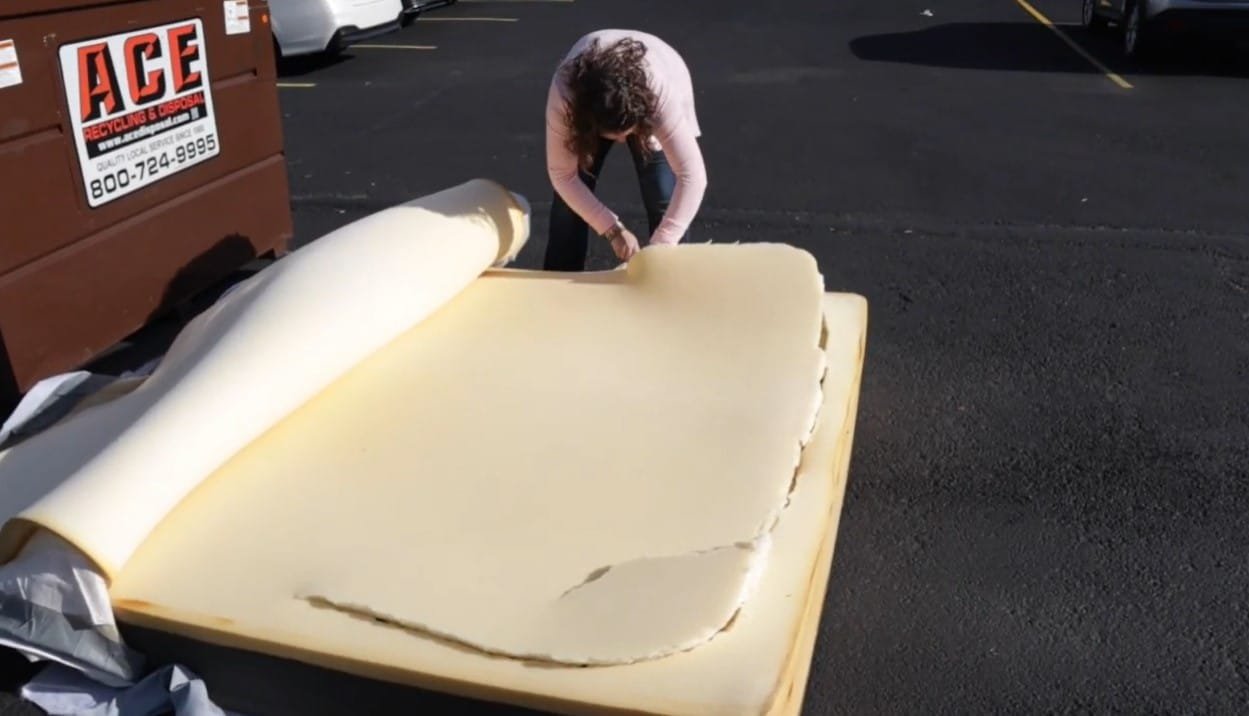
After coordinating mattress disposal for 12 home renovation projects and helping friends navigate move-out requirements across 8 states, I know how overwhelming the process can feel — especially with strict local rules and a growing push to reduce household waste. This 2026-updated guide breaks down every eco-friendly disposal option, step-by-step, so you can avoid fines, cut waste, and save money no matter your mattress condition, budget, or location.
Why Proper Mattress Disposal Matters
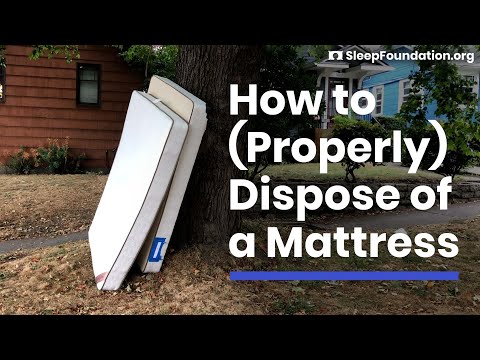
A single mattress can occupy up to 40 cubic feet of landfill space, and its foam, metal springs, and fabric can take 80 to 100 years to fully decompose, leaching microplastics and chemical flame retardants into soil and groundwater. According to the U.S. Environmental Protection Agency, improper disposal — like dumping a mattress on a curb, in a wooded area, or in a public dumpster — also attracts pests, spreads bed bugs, and can lead to fines of $100 to $1,000 in most U.S. municipalities. Many areas now have landfill bans on whole mattresses, so proper disposal is not just an environmental choice, but often a legal requirement. You can also read our guide on how to wash waterproof mattress protector.
 This infographic breaks down the volume of waste and chemical leaching from improperly discarded mattresses
Assess Your Mattress Before Choosing A Disposal Method
The first step to responsible disposal is evaluating your mattress’s condition to rule out ineligible options and avoid wasted trips. Check these four key factors first:
- Age: Most mattresses last 7 to 10 years; if yours is older than that, it is almost never eligible for donation, as most charities have strict age limits to protect recipients.
- Structural condition: Look for sagging that exceeds 1 to 2 inches (a sign of broken support coils), torn fabric, or broken frames that make the mattress unsafe to sleep on.
- Hygiene: Check for visible stains, mold, mildew, or a persistent musty odor, which can make a mattress ineligible for donation or recycling.
- Pest infestation: Inspect seams, box spring crevices, and the underside of the mattress for live bed bugs, exoskeletons, or dark fecal spots.
If you’re unsure about the condition of your mattress protector, check our guide to deep cleaning your protector to see if a thorough clean can extend its lifespan before you opt for disposal.
 Use this checklist to rule out donation eligibility and pick the right disposal method
Donate Or Sell Your Mattress (Most Sustainable First Step)
If your mattress is less than 5 to 7 years old, clean, stain-free, and free of pests, donating or selling it is the most eco-friendly option, as it extends the mattress’s usable lifespan and keeps it out of landfills entirely. For more on this, see our guide on how to dispose of mattress topper.
- Donation options: National charities like the Salvation Army, Goodwill, and Habitat for Humanity ReStore accept gently used mattresses in most areas, and many offer free curbside pickup for large items. Local homeless shelters, women’s shelters, and animal rescues also often take mattresses, especially if they are in like-new condition. If you itemize taxes, you can claim the fair market value of the mattress as a tax deduction — just ask for a written receipt from the organization at drop-off.
- Selling options: Facebook Marketplace, Craigslist, and OfferUp are the fastest platforms for local sales. List clear photos, note exact dimensions, disclose any flaws upfront, and offer local pickup only to avoid shipping costs. A queen-size mattress in good condition typically sells for $50 to $150, which can offset the cost of your new mattress.
A common mistake here is not confirming a charity’s current acceptance rules before dropping off — many temporarily pause mattress donations during high-volume periods like holidays or after natural disasters, so a quick call ahead saves you a wasted trip. If you’re also looking to refresh other bedding items, our tips for reviving a feather topper can help you get more use out of your current setup before investing in a new mattress.
 Donating a gently used mattress extends its lifespan and keeps it out of landfills
Mattress Recycling: The Most Eco-Friendly Post-Donation Option
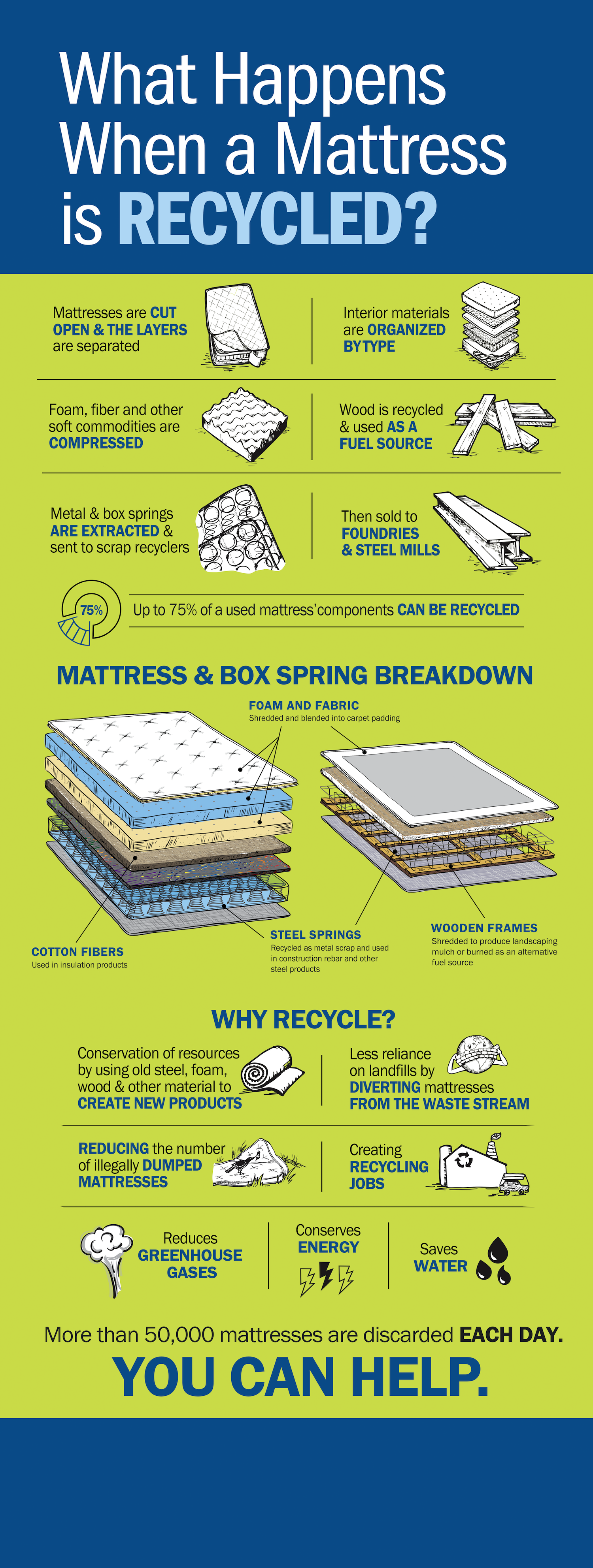
If your mattress is too old, stained, or damaged to donate, recycling is the next best sustainable choice. According to the Mattress Recycling Council, 80% of a mattress’s components are recyclable: steel springs are turned into construction rebar and appliance parts, foam is repurposed into carpet padding and underlay, wood frames are chipped for mulch or biomass fuel, and fabric is reprocessed into industrial rags. For more on this, see our guide on how to dispose of mattress protector. To find a certified recycler, use the Mattress Recycling Council’s public locator tool, or check with your city’s public works department — many municipalities partner with recyclers to offer free or low-cost drop-off for residents. Some major mattress retailers, including Casper and Saatva, offer free recycling when you purchase a new mattress from them, so ask about this at checkout. Note that mattresses with severe bed bug infestations or mold are usually not accepted by recyclers, as pests can spread to other materials during processing. If you’re wondering what to do with other bedroom textiles, check our guide to whether bed protectors are recyclable to make your entire sleep routine more sustainable.
 Recycling facilities separate springs, foam, and fabric to repurpose into new consumer and industrial products
Municipal Bulk Pickup And Curbside Rules
Most cities and counties offer scheduled bulk pickup for large items like mattresses, typically for a fee of $15 to $50 per item. Some areas offer free pickup for low-income residents, seniors, or during annual spring clean-up events. Rules vary widely by location, so always check your local public works website for exact requirements:
- Many cities require mattresses to be wrapped in 4-mil plastic sheeting and sealed with packing tape to prevent bed bug spread.
- Some require you to place bulk items curbside no earlier than 24 hours before your scheduled pickup.
- A small number of jurisdictions prohibit placing bulk items on public right-of-ways entirely, requiring drop-off at a designated facility.
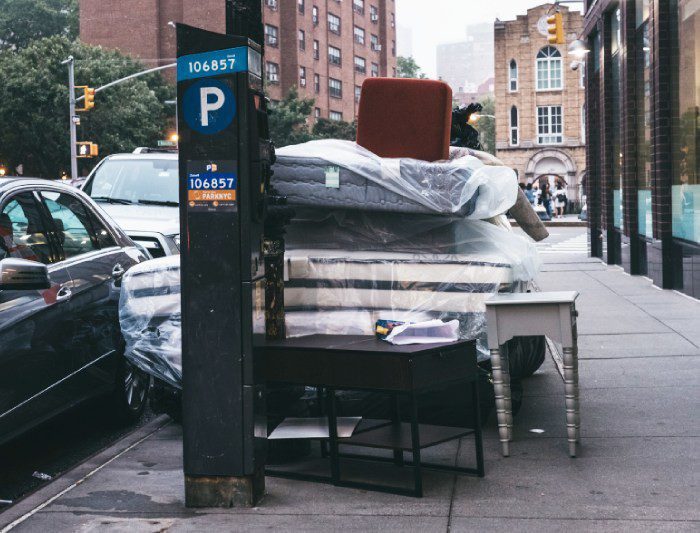
As of 2026, New York City requires all mattresses and box springs to be sealed in plastic and scheduled for pickup via 311, with a $25 fee per item, while Portland, Oregon offers free drop-off at its Metro recycling centers for all residents. A common mistake is leaving a mattress curbside without scheduling pickup first — in many areas, this counts as illegal dumping, even if you intend for it to be collected. For more on this, see our guide on washing instructions for cuddle bed mattress topper belk.
 Check your local rules for wrapping and scheduling requirements before placing a mattress curbside
Professional Mattress Disposal Services
If you have a heavy mattress, limited mobility, a tight timeline, or need to remove a mattress from a second floor or tight space, junk removal or specialized mattress disposal services are a convenient option. Companies like 1-800-GOT-JUNK and local hauling firms offer same-day or next-day pickup, and many include mattress recycling in their service for a small premium. Prices typically range from $75 to $250 depending on mattress size (twin vs. king), your location, and whether you need stairs removed. From my experience coordinating moves for friends and clients, the biggest avoidable cost is not asking about recycling inclusion upfront — many budget junk removal services send mattresses directly to landfills even if they advertise "eco-friendly" disposal, so always confirm the company partners with a certified Mattress Recycling Council partner before booking. This is the most expensive option, but eliminates heavy lifting and the hassle of coordinating with recyclers or charities, making it ideal for last-minute moves. For more on this, see our guide on hush mattress protector cleaning.
 Professional removal services handle all heavy lifting and ensure compliant, low-waste disposal
DIY Mattress Disassembly And Materials Salvage
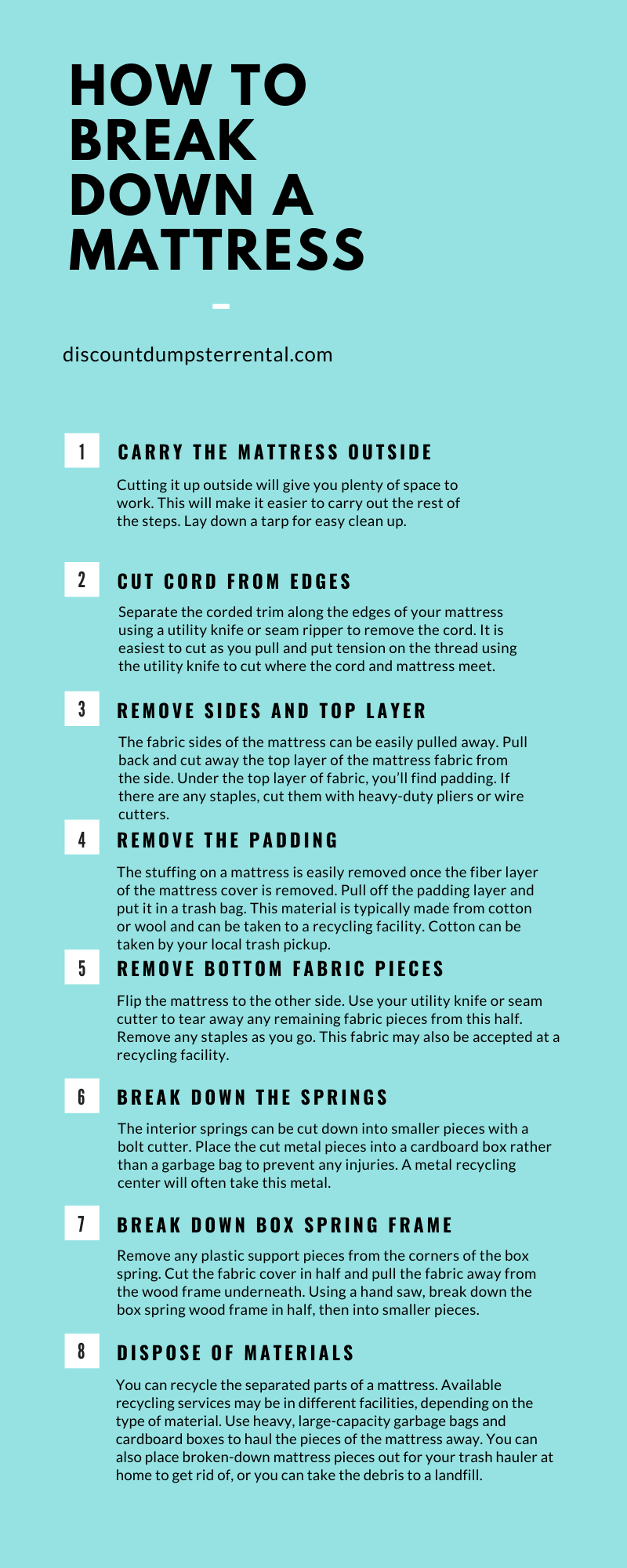
If you want to cut disposal costs and maximize recycling, disassembling your mattress yourself is a great option, especially if you have a truck to transport separated materials to local recycling streams.
- For innerspring mattresses: Use a utility knife to cut through the outer fabric, pull out the metal springs (which can be dropped off at most metal recycling facilities for free), and separate the foam and wood frame.
- For memory foam and latex mattresses: Cut the foam into 2×2 foot sections, which many carpet padding recyclers will accept for free.
- For wooden box springs: Disassemble the frame with a crowbar, recycle the wood as yard waste, and recycle metal staples with scrap metal.
Safety is critical here: Wear an N95 mask, work gloves, and eye protection, as mattress dust can contain allergens, dust mites, and old fire retardant chemicals. Work outdoors in a well-ventilated area to avoid inhaling particles. This method can cut disposal costs by 50% or more, and ensures nearly 100% of your mattress’s materials are diverted from landfills. If you have a plush mattress topper you’re also looking to repurpose, our guide to cutting a topper in half can help you resize it for guest beds or pet beds instead of throwing it away.
 Separating mattress components allows you to recycle each material through local scrap and yard waste streams
Safe Transport And Preparation Tips
Whether you’re hauling a mattress to a recycler, donation center, or curbside pickup, proper preparation prevents damage to your vehicle, avoids mess, and stops pest spread:
- Strip all bedding and vacuum the mattress surface thoroughly to remove dust mites and debris.
- Wrap the mattress tightly in 4-mil plastic sheeting, securing it with packing tape to seal in any pests or dust.
- If transporting in a truck or SUV, lay down a tarp or old blanket to protect your vehicle’s interior from dirt and exposed springs.
- Use ratchet straps or bungee cords to secure the mattress to your vehicle’s roof rack or in the bed to prevent shifting while driving.
- If moving the mattress down stairs or through narrow doorways, measure all passageways first — a standard king mattress is 76 inches wide, which will not fit through a 36-inch interior door without tilting.
A common mistake is wrapping the mattress too loosely, which can let bed bugs escape and infest your vehicle or a donation center. If you’re swapping out your old mattress for a new one, our guide to washing a bamboo pillow can help you keep your new bedding fresh from day one.
Proper wrapping prevents pest spread and keeps your vehicle clean during transport
Costs, Fines, And Environmental Impact
Disposal costs vary widely depending on the method you choose:
- Free options: Donation and no-cost recycling drop-off are available in most areas if you transport the mattress yourself.
- Low-cost options: Municipal bulk pickup typically costs $15 to $50 per item, with free service available for eligible low-income residents or seniors in many cities.
- High-cost options: Professional removal services range from $75 to $250, with higher prices for king mattresses, second-floor removals, or same-day service.
Illegal dumping (leaving a mattress in a wooded area, alley, or vacant lot) can result in fines of $100 to $1,000 in most U.S. jurisdictions, and you may be held liable for cleanup costs if the mattress is traced back to you. Environmentally, recycling a single mattress diverts up to 90% of its materials from landfills, reducing methane emissions (a potent greenhouse gas released as organic mattress materials decompose) and cutting the need for virgin raw materials. For context, recycling 1 million mattresses saves over 250,000 cubic yards of landfill space annually. A common mistake is choosing the cheapest option without verifying it won’t end up in a landfill — always ask providers about their disposal practices to ensure your eco-friendly goals are met.
 Compare the cost and environmental trade-offs of each disposal method to pick the best fit for your needs
Common Mistakes To Avoid
- Skipping local rule checks: Don’t assume your city accepts mattresses curbside — 30% of U.S. municipalities have specific rules or bans for whole mattress disposal, so always check your public works website first.
- Donating unqualified mattresses: Charities reject nearly 40% of donated mattresses due to stains, pests, or age, so confirm eligibility before hauling it to a drop-off location.
- Improper wrapping: Failing to seal a mattress in plastic when required can lead to bed bug spread, which may result in a fine or liability if an infestation occurs in a nearby building.
- Skipping disassembly safety: Cutting into a mattress without a mask and gloves can expose you to dust mites, mold, and fire retardant chemicals, so always wear protective gear.
- Illegal dumping: Even if you’re short on time, never leave a mattress on a random curb or in a park — not only is it harmful to the environment, but you can be fined or even charged with littering in severe cases. A common mistake is assuming a stained mattress can be donated, but most shelters have strict rules — if your mattress is too damaged to donate, check our guide to fixing a split feather topper to see if you can repurpose other bedding items instead of disposing of them.
Frequently Asked Questions
How long does mattress recycling take?
The physical processing of a mattress at a recycling facility takes 2 to 4 hours, but pickup or drop-off scheduling can take 3 to 14 days depending on your location and local demand. Some cities offer next-day drop-off at public works facilities for residents.
Can I put a mattress in my regular trash bin?
No — standard curbside trash services do not accept whole mattresses due to their size and bulk. Most areas require you to use bulk pickup, recycling, or a disposal service for mattress waste.
How much does professional mattress removal cost?
Prices range from $75 to $250 for a standard mattress, with higher costs for king-sized mattresses, second-floor removals, or same-day service. Many services offer discounts for seniors or low-income residents, so ask about eligibility when booking.
What mattress conditions make it ineligible for donation?
Most charities reject mattresses with visible stains, mold, mildew, bed bug infestations, or sagging exceeding 2 inches. Many also have age limits, requiring mattresses to be less than 5 to 7 years old. Always call ahead to confirm a charity’s specific requirements before dropping off.
Can I recycle a mattress with bed bugs?
No — most mattress recyclers do not accept infested mattresses, as bed bugs can spread to other materials during processing. Contact a licensed pest control provider to treat the mattress first, or follow your local waste authority’s guidelines for infested bulky item disposal.
Do I get a tax deduction for donating a mattress?
Yes, if you donate to a registered 501(c)(3) charity, you can claim the fair market value of the mattress as a tax deduction. Ask for a written receipt from the organization at the time of drop-off for your records.
Final Thoughts
Disposing of an old mattress doesn’t have to be wasteful or expensive — the right option depends on your mattress’s condition, your budget, and your local rules. For most people, the most sustainable first step is to check if your mattress is eligible for donation or recycling, as these methods keep up to 90% of materials out of landfills. If donation isn’t an option, schedule a bulk pickup or use a certified recycler to ensure compliant, low-waste disposal. Have you used one of these methods before? Share your tips or questions in the comments below to help other readers navigate the process.

Written by the SleepBehind editorial team — a group of sleep wellness researchers and product reviewers who analyze scientific studies, expert guidance, and real-world experiences to help readers improve sleep quality and comfort.