

A clean waterproof mattress cover is your first line of defense against spills, sweat, allergens, bedwetting, and moisture damage that can shorten your mattress’s lifespan by years. Improper washing is the #1 reason people replace covers early, even when the waterproof layer is still intact. This 2026-updated guide shares material-specific, step-by-step instructions to wash your cover safely, avoid common pitfalls, and keep it leak-free for as long as possible. I’ve tested these methods on dozens of covers for home and client use over the past decade, so you can trust the guidance is practical and proven.
 A clean, well-maintained waterproof cover blocks spills and allergens for years
Why Regular Cleaning Is Critical For Your Mattress And Cover
The average person sweats up to 1 liter per night, which can seep through sheets and pool against your mattress without a protective barrier. Spills from drinks, pet accidents, and kid messes also penetrate unprotected mattresses quickly, leading to stains, mold, and irreversible damage. Dust mites and allergens accumulate on unwashed covers too, triggering allergy and asthma symptoms. Damp, unwashed covers create ideal conditions for mold growth, which can cause respiratory issues per EPA indoor mold guidance. Regular washing stops stains from setting, keeps the waterproof membrane intact, and extends the life of both your cover and your mattress.
What You’ll Need Before Starting
Gather these supplies before you begin to avoid mid-process trips to the store:
- Mild, liquid laundry detergent (free of dyes and fragrances if you have sensitive skin)
- White vinegar (for deodorizing and stain treatment)
- Baking soda (for odor removal and stain lifting)
- Clean microfiber cloths
- Large mesh laundry bag (optional, for top-load washers with agitators)
- Rubber gloves (for spot-treating tough stains)
- Clean, flat drying surface or drying rack
Step 1: Check The Care Label And Prep Your Cover
The care tag on your cover is the final authority on safe washing practices, as materials and construction vary widely across brands. Look for standardized care symbols that indicate maximum water temperature, bleach compatibility, dryer safety, and ironing rules. Most waterproof covers have a crossed-out bleach symbol and a crossed-out iron symbol, and a maximum temperature of 40°C (104°F).
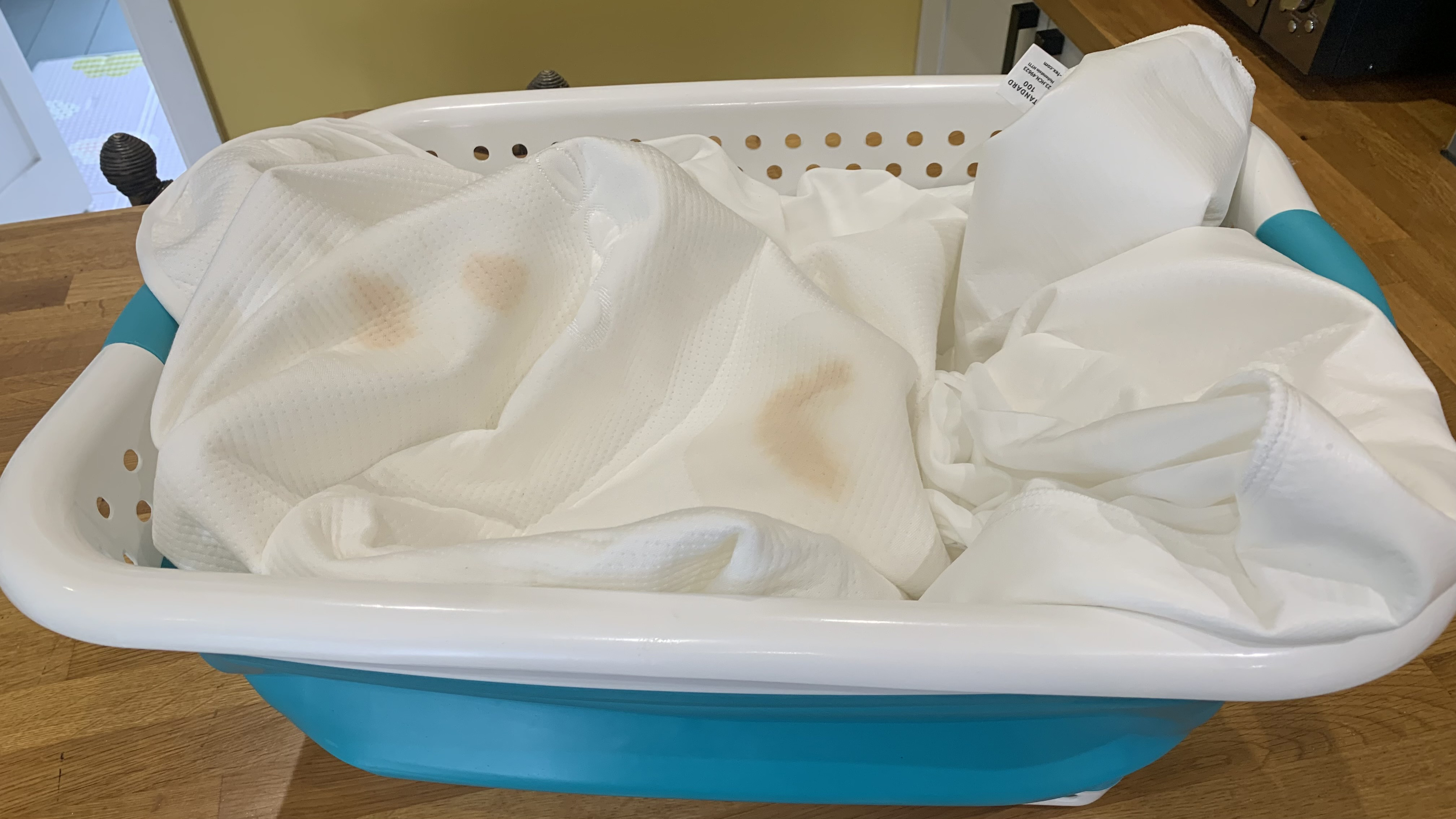 Care labels are the final authority on safe washing temperatures and settings
Before you start, zip or fasten all closures to prevent the cover from snagging during washing, and vacuum the surface to remove loose hair, crumbs, and dust mites. If you regularly sleep with wet hair, a waterproof cover is your first line of defense against moisture seeping into your mattress, reducing the risk of mold and odor buildup (learn more about avoiding moisture damage from wet hair). Spot-treat any obvious fresh stains before washing to improve results.
Step 2: Machine Washing Your Waterproof Mattress Cover (Easy Steps)
Machine washing is safe for most modern waterproof covers, as long as you follow the care label and use gentle settings to avoid damaging the membrane.
 Front-load washers are gentler on waterproof membranes than agitator models
Follow these steps for safe machine washing:
- Confirm your cover’s care label explicitly permits machine washing. Vintage vinyl-backed covers and delicate lace-trimmed styles may require hand washing only.
- If you use a top-load washer with a center agitator, place the cover inside a large mesh laundry bag to prevent snagging, tearing, or stretching. Front-load washers are gentler, so a bag is not required for most covers.
- Set the washer to cold (30°C/86°F) or warm (40°C/104°F) — never hot, as high heat can melt TPU membranes or delaminate vinyl backings.
- Select the delicate or permanent press cycle. Avoid normal or heavy-duty cycles, which agitate too harshly and can tear the cover or damage the waterproof layer.
- Use 1/4 the recommended amount of mild, liquid detergent. Powder detergents often leave residue that clogs the breathable pores of laminate waterproof layers, reducing their effectiveness over time.
- Skip bleach, fabric softener, and harsh stain remover sprays entirely — these chemicals break down the waterproof polymer and degrade fabric fibers.
- Remove the cover immediately when the cycle ends to prevent creasing and mildew growth.
A common mistake I see in client homes is overloading the washer with bulky bedding alongside the cover — this prevents proper rinsing, leaving detergent residue that degrades the waterproof layer over time. If you own a Hush brand protector, follow the brand’s specific Hush protector care steps to avoid voiding your warranty.
Step 3: Hand Washing For Delicate Or Older Covers
Hand washing is the safest option for vintage covers, vinyl-backed protectors, or styles with delicate trim that can snag in a machine. It’s also ideal for spot-treating set-in stains.
 Hand washing is ideal for delicate covers or small spot treatments
Follow these steps for effective hand washing:
- Fill a clean bathtub or large utility sink with cool to lukewarm water (no hotter than 40°C/104°F).
- Add 1-2 tablespoons of mild liquid detergent and swirl gently to mix.
- Submerge the cover fully, and agitate gently with your hands for 2-3 minutes, focusing on stained or soiled areas.
- Let the cover soak for 15-30 minutes for set-in stains or odors — don’t soak longer than 1 hour, as prolonged water exposure can weaken some waterproof membranes.
- Drain the tub, then rinse the cover under cool running water until all soap is gone (you’ll know it’s fully rinsed when water runs clear with no suds).
- Gently press out excess water with your hands — never wring, twist, or stretch the cover, as this can create tiny cracks in the waterproof layer that will leak over time.
For covers with non-removable inserts, avoid submerging the entire cover if the label specifies spot clean only — test any cleaning solution on a hidden seam first to check for discoloration.
Step 4: Drying And Storing To Preserve The Waterproof Layer
Drying is the most critical step for maintaining your cover’s waterproof integrity — improper drying is the #1 cause of premature cover failure.
 Air drying flat prevents stretching and damage to the waterproof layer
Follow these drying rules to avoid damage:
- Air dry is always the safest option. Lay the cover flat on a clean, dry surface (a drying rack, clean towel on the floor, or sturdy folding table) in a well-ventilated area, away from direct sunlight which can yellow fabric and degrade TPU membranes.
- If you must use a dryer (only if the care label explicitly permits it), set it to the lowest heat setting or air-only/fluff, and add 2-3 clean dry towels to the load to speed up drying and reduce harsh tumbling. Never use a high-heat setting, even for a short cycle, as this can melt or warp the waterproof backing.
- Drying time varies by material: thin polyester covers take 1-2 hours, while thicker cotton-backed covers take 4-6 hours. To check if it’s fully dry, run your hand along the entire surface — any cool, damp spots mean it needs more time.
- Store the cover only once it is 100% dry to prevent mold and mildew growth, which can spread to your mattress and cause musty odors that are impossible to remove.
If you store your cover over a feather topper, make sure both are fully dry to prevent mold growth — you can find tips for reviving worn feather toppers if moisture has caused clumping.
Material-Specific Care Cheat Sheet
Waterproof covers are made from a range of materials, each with unique care requirements. Use this cheat sheet to avoid damage:
 Different waterproof materials require tailored washing approaches to avoid damage
| Material Type | Washing Rules | Drying Rules | Common Pitfalls |
|---|---|---|---|
| TPU (thermoplastic polyurethane) | Machine wash cold, delicate cycle, mild detergent | Air dry only (high heat melts TPU) | Using hot water or dryer heat |
| Vinyl/PVC-backed | Hand wash only for most models, cool water | Air dry flat, never hang (stretches) | Machine washing (can tear seams) |
| Cotton/poly blend with laminate | Machine wash cold/warm, delicate cycle | Air dry or low-heat dryer if label allows | Using fabric softener (clogs laminate pores) |
| Bamboo-derived fabric | Machine wash cold, gentle cycle | Air dry flat, low heat if needed | High heat (shrinkage) |
When in doubt, always defer to your cover’s care label for material-specific guidance.
Stain Removal And Deep Cleaning Tips
Acting quickly on spills is the best way to avoid permanent stains, as most waterproof covers are treated to resist liquid penetration for the first 10-15 minutes after a spill. Use these gentle, membrane-safe tactics for common stains:
 Blotting (not rubbing) fresh spills prevents stains from setting into fabric
Fresh Liquid Stains (Coffee, Juice, Wine)
- Blot the spill immediately with a clean, dry microfiber cloth to absorb as much liquid as possible — never rub, as this pushes liquid deeper into the fabric and spreads the stain.
- Mix 1 part white vinegar with 2 parts cool water, dab the stain with a cloth dipped in the solution, then blot with a clean damp cloth to rinse.
- For stubborn stains, make a paste of baking soda and water, let sit on the stain for 10 minutes, then rinse thoroughly before washing the cover as normal.
Urine, Sweat, And Other Protein Stains
Protein stains set permanently if exposed to hot water, so always use cool water for these. Blot up excess liquid first, then wash the cover on a cold, delicate cycle with mild detergent. Add 1 cup of white vinegar to the rinse cycle to neutralize odors. For lingering smells, sprinkle baking soda over the damp cover after washing, let sit for 1 hour, then vacuum off before drying.
Mold And Mildew Spots
For small mold spots, mix 1 part 3% hydrogen peroxide with 2 parts water, dab on the spot, let sit for 10 minutes, then rinse thoroughly. For set-in mold, soak the cover in a solution of 1 part white vinegar to 4 parts water for 30 minutes before washing. For severe mold that won’t come out with cleaning, it’s best to replace the cover to avoid spreading spores to your mattress.
I once saved a client’s $80 cover from a red wine spill by blotting it immediately and using the vinegar solution — the stain lifted completely with no damage to the waterproof layer. Acting within 10 minutes of a spill is the key to avoiding permanent stains.
Never use chlorine bleach, citrus-based cleaners, or abrasive scrubs, as these will break down the waterproof membrane and cause discoloration.
How Often Should You Wash Your Waterproof Mattress Cover?
Wash frequency depends on your household’s use and exposure to spills, allergens, and moisture:
 Storing covers flat or loosely rolled avoids creases that weaken the waterproof barrier
- Baseline for most households: Every 3 months to remove accumulated sweat, dust mites, and surface dirt.
- Allergy or asthma sufferers: Wash monthly to reduce allergen buildup, per ISPA mattress care guidelines.
- Households with pets: Wash every 4-6 weeks to remove pet dander, hair, and accident residue.
- Bedwetting or heavy night sweats: Wash immediately after any accident, then monthly as routine care.
- Spot cleaning: Clean small spills immediately to avoid full washes as often.
If you also wash your bamboo pillow regularly, you can cut down on overall bedding allergen exposure by pairing it with a regularly cleaned waterproof cover (learn more about proper bamboo pillow cleaning).
Common Mistakes That Ruin Waterproof Mattress Covers
Avoid these errors to extend your cover’s lifespan by years:
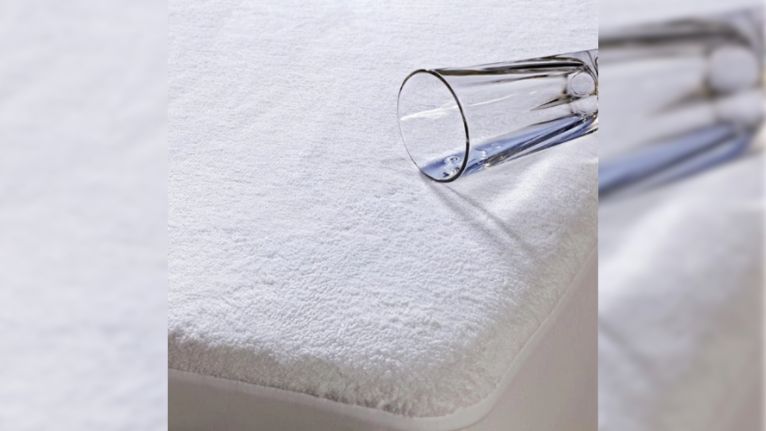 Heat damage and harsh chemicals are the top causes of premature cover failure
- Using hot water: Water above 40°C (104°F) can melt TPU membranes, delaminate vinyl backings, or shrink cotton backing, leading to leaks.
- Using bleach or fabric softener: Bleach breaks down the waterproof polymer, while fabric softener clogs the breathable pores of laminate layers, trapping moisture against the mattress.
- Wringing or twisting the cover: This creates tiny cracks in the waterproof layer that will leak over time, even if they aren’t visible at first.
- High-heat drying: Even a single 10-minute high-heat dryer cycle can melt or warp the waterproof backing, rendering the cover useless.
- Storing damp: Damp covers stored in closets develop mold and mildew within 48 hours, which can spread to your mattress and cause musty odors that are impossible to remove.
- Skipping the laundry bag (for agitator washers): Center agitators can snag, tear, or stretch the cover during washing, leading to premature failure.
- Overloading the washer: Bulky items prevent proper rinsing, leaving detergent residue that degrades the waterproof layer over time.
I once made the heat mistake with a client’s $120 protector, shrinking it so badly it no longer fit their mattress — always check the care label before hitting the dryer button.
When To Toss vs. Wash Your Waterproof Mattress Cover
Not every damaged cover can be saved. Replace your cover if you notice any of these signs:
- Visible cracks, tears, or punctures in the waterproof layer that let water seep through to the mattress.
- Persistent mold or mildew that won’t come out with cleaning, even after multiple washes.
- The cover no longer fits your mattress due to heat shrinkage or stretching from improper storage.
- The waterproof layer is peeling or delaminating from the fabric backing.
- The cover is over 5 years old: even with perfect care, most waterproof covers have a 3-5 year lifespan before the membrane degrades naturally.
If your waterproof cover is failing, check your underlying mattress pad for damage too — signs your mattress pad needs replacing can help you avoid costly mattress damage.
Recycling And Disposal Of Old Waterproof Covers
Most waterproof covers are made of a blend of fabric and plastic, so they can’t go in standard curbside recycling. Check with your local recycling facility for textile recycling programs, or look for manufacturer take-back programs that accept old covers for recycling. Some brands offer free recycling for their own products as part of sustainability initiatives. For more info on sustainable disposal options, check out our guide to recycling old bed protectors.
Frequently Asked Questions
How hot can I wash a waterproof mattress cover?
Almost all waterproof covers have a maximum recommended water temperature of 40°C (104°F). Hot water above this threshold can melt thermoplastic polyurethane (TPU) membranes, delaminate vinyl backings, or shrink natural fiber fabrics, leading to leaks and premature wear. Always defer to the care label on your specific cover for the exact temperature limit.
Can I use bleach to sanitize a waterproof mattress cover?
No, chlorine bleach and oxygen bleach will break down the waterproof polymer layer over time, causing it to become brittle and leak. For sanitizing, add 1 cup of white vinegar to the wash cycle, or use a mild, EPA-approved laundry sanitizer that is safe for waterproof fabrics (check the product label for compatibility).
Will machine washing ruin the waterproof layer?
Not if you follow care guidelines: use a gentle cycle, cold or warm water, mild liquid detergent, and avoid high-heat drying. If you have a top-load washer with a center agitator, use a large mesh laundry bag to prevent snagging and tearing. Front-load washers are gentler on waterproof membranes and don’t require a bag for most covers.
How do I remove urine stains and odors safely?
First, blot up as much liquid as possible with a clean, dry cloth — don’t rub, as this pushes urine deeper into the fabric. Wash the cover on a cold, delicate cycle with mild detergent, then add 1 cup of white vinegar to the rinse cycle to neutralize odors. For lingering smells, sprinkle baking soda over the damp cover after washing, let sit for 1 hour, then vacuum off before drying. For set-in stains, soak the cover in a solution of cool water and 1/2 cup vinegar for 30 minutes before washing.
Is it safe to tumble dry a waterproof mattress cover?
Only if the care label explicitly permits low-heat or air-only drying. For most TPU and vinyl-backed covers, air drying is the only safe option. If you do use a dryer, set it to the lowest heat setting (no higher than 40°C/104°F) or air-only, and add 2-3 clean dry towels to the load to speed up drying and reduce tumbling stress.
Can I iron a waterproof mattress cover?
No, ironing is almost always prohibited for waterproof covers, as the high heat of an iron can melt or warp the waterproof backing. If you need to remove creases after washing, lay the cover flat in a sunny, well-ventilated area for a few hours, or use a steamer on the lowest setting held 6+ inches away from the fabric — always test on a hidden seam first.
Can I wash a waterproof mattress cover with other bedding?
Yes, but only with other lightweight, delicate items (like pillowcases or sheets). Don’t wash it with bulky items like comforters or blankets, as this can cause excessive agitation, stretching, and poor rinsing that leaves detergent residue on the waterproof layer.
Conclusion
Caring for your waterproof mattress cover doesn’t have to be complicated. By following material-specific care rules, avoiding harsh chemicals and high heat, and addressing stains quickly, you can extend the life of your cover by 2-3 years, protecting your mattress from spills, allergens, and moisture damage for the long term. Have a tip for keeping your cover in great shape, or a question about a specific stain? Drop a comment below to share with other readers. For more sleep hygiene tips to keep your bed fresh and comfortable, browse our full library of sleep care guides.

Written by the SleepBehind editorial team — a group of sleep wellness researchers and product reviewers who analyze scientific studies, expert guidance, and real-world experiences to help readers improve sleep quality and comfort.