
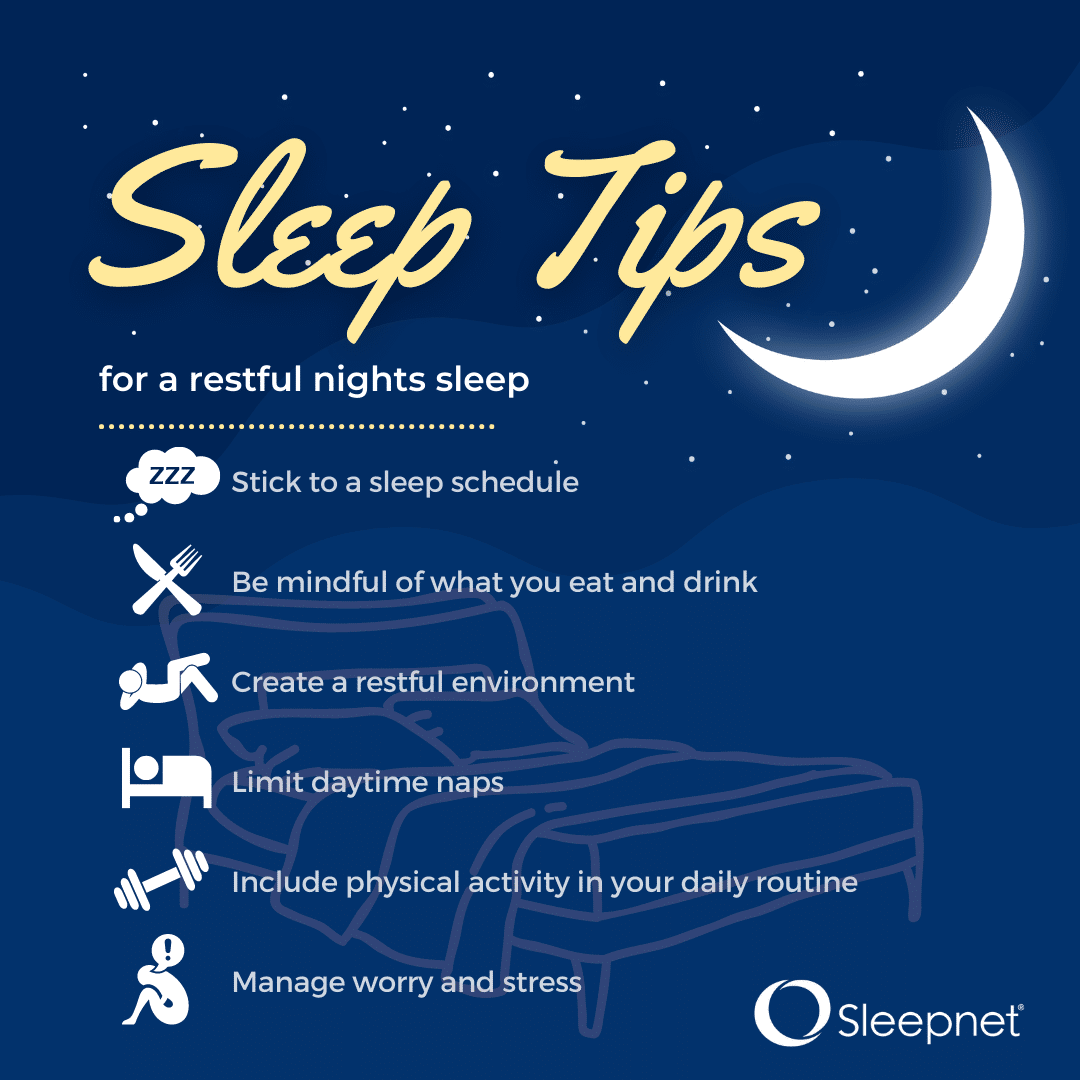
Waking up groggy after 8 hours of sleep, hitting snooze 5 times, and crashing hard at 2pm are all signs your body’s internal clock is out of sync. A strick (consistent) sleep schedule isn’t about punishing yourself with an unrealistic 9pm bedtime — it’s a low-effort, science-backed way to wake up feeling rested, reduce afternoon brain fog, and improve your overall health without extra coffee or supplements. This easy practical plan works for everyone, from shift workers and parents to college students and frequent travelers, and requires no expensive gear or extreme lifestyle changes. You can start implementing the first step tonight.
Why a Consistent Sleep Schedule Works (Science-Backed Benefits)
Your body runs on two core systems that regulate sleep: your daily biological rhythm (the 24-hour internal clock that responds to light and dark) and sleep homeostasis (the build-up of sleep pressure the longer you’re awake). When you go to bed and wake up at wildly different times every day, these systems get confused, leading to longer sleep latency (the time it takes to fall asleep), less restorative deep sleep, and chronic sleep debt that leaves you tired even after 8 hours in bed. The CDC links consistent sleep schedules to lower risk of chronic conditions including type 2 diabetes, heart disease, and obesity, making regularity one of the easiest long-term health investments you can make CDC sleep health guidelines. In practice, most people notice small improvements in energy within 3 days of sticking to a regular wake time, with steady benefits appearing after 2-4 weeks of consistency.
 Source: getsom.com
A consistent sleep schedule reduces morning grogginess and boosts daily energy levels.
Source: getsom.com
A consistent sleep schedule reduces morning grogginess and boosts daily energy levels.
Step 1: Set Your Realistic Target Bedtime and Wake Time
The foundation of a strick sleep schedule is two fixed times: a wake time you can stick to even on weekends, and a bedtime that gives you 7-9 hours of rest (the amount recommended for adults by the American Academy of Sleep Medicine). Start with your non-negotiable wake time (for work, school, childcare, or other commitments) and work backwards to calculate your target bedtime. Avoid the common mistake of picking a bedtime that’s too early for your natural sleep need. If you’re a natural night owl who doesn’t feel tired until 11:30pm, forcing a 9:30pm bedtime will lead to hours of lying awake frustrated, which makes you associate bed with stress instead of rest. If you’re currently struggling with extreme sleep irregularity, our guide to resetting a disrupted routine can help you get started before building your long-term consistent plan. Crucially, keep your wake time consistent even on weekends and days off. Sleeping in 2-3 hours on Saturday creates "social jetlag" that pushes your bedtime later on Sunday, making Monday morning just as rough as if you never adjusted your schedule at all.
Step 2: Ease Into Your New Schedule Gradually
Abruptly shifting your bedtime by 2+ hours in one night is the most common reason people quit a new sleep plan early. In practice, gradual 15-30 minute shifts every 2 days are far more sustainable and cause minimal grogginess. For example, if your current bedtime is 1am and your target is 11pm, go to bed 15 minutes earlier every 2 nights until you reach your goal, over the course of 2 weeks. Shift your wake time at the same pace if you’re adjusting it earlier, and get 10-30 minutes of natural bright light within 30 minutes of waking. Light is the strongest cue for your circadian rhythm, so stepping outside for a few minutes or sitting near a sunny window first thing in the morning will anchor your new wake time and make it easier to fall asleep at your target bedtime at night.
Step 3: Build a Non-Negotiable Pre-Bed Wind-Down Routine
A 45-60 minute wind-down routine signals to your brain that sleep is coming, making it easier to fall asleep quickly at your target bedtime. The rules are simple: no screens (blue light from phones, laptops, and TVs suppresses melatonin, the sleep hormone), dim overhead lights, and stick to low-effort, calming activities. Try a warm shower (the drop in your core body temperature after a warm shower helps trigger sleepiness), gentle stretching, reading a physical book, or sipping caffeine-free herbal tea. Avoid stimulating activities like intense workouts, work tasks, or emotional conversations during this window. If you wash your hair before bed, follow healthiest pre-bed hair routines to avoid damp hair causing discomfort or disrupting your sleep during the night.
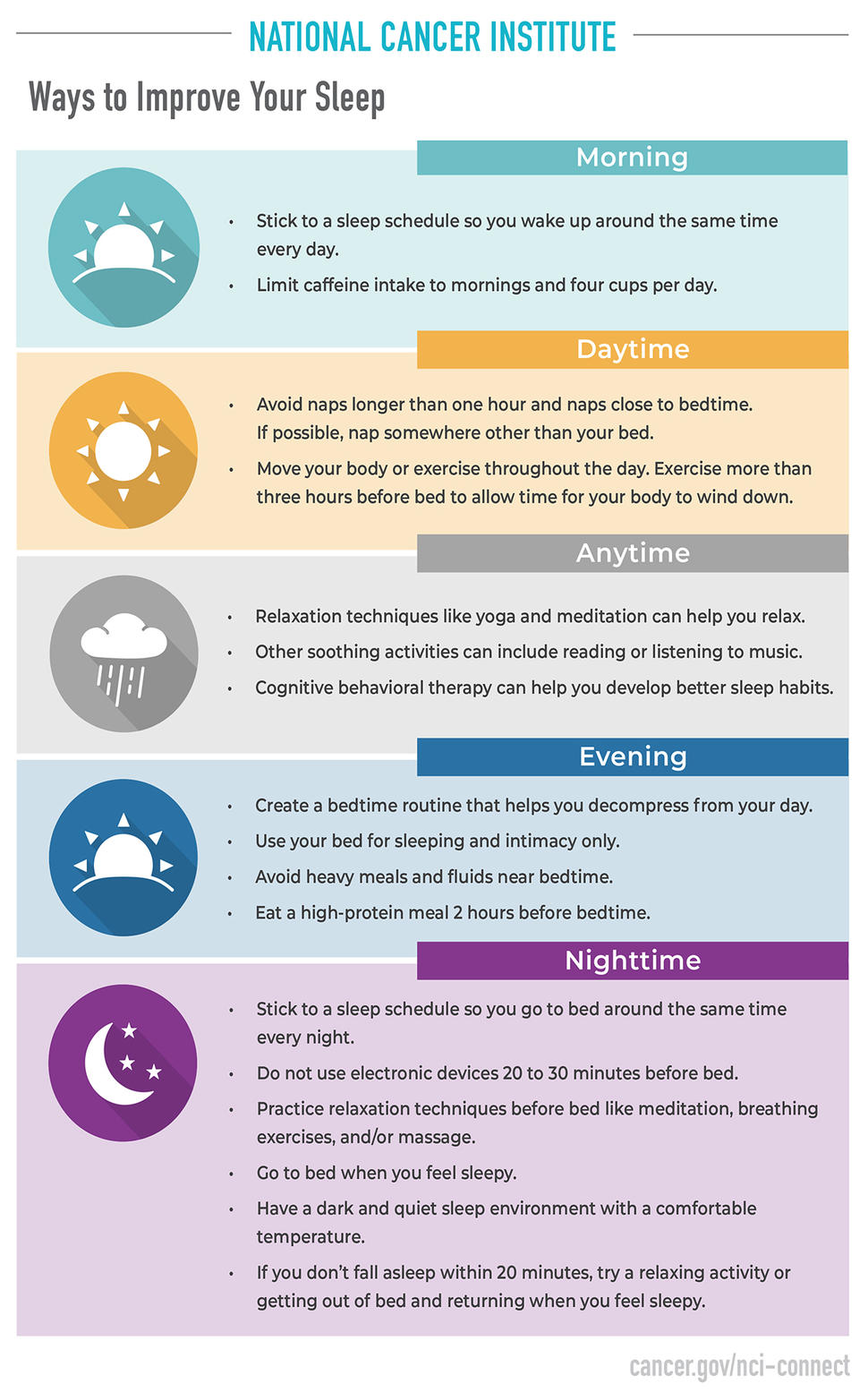 Source: cancer.gov
The National Cancer Institute outlines proven, low-effort strategies for better sleep hygiene.
Source: cancer.gov
The National Cancer Institute outlines proven, low-effort strategies for better sleep hygiene.
Step 4: Optimize Your Sleep Environment for Consistency
Your bedroom should be a dedicated space for rest only, so your brain associates it with sleep, not work or entertainment. Keep the room cool (60-67°F / 15-19°C is the ideal temperature for sleep per sleep experts), dark (use blackout curtains or a sleep mask to block streetlights), and quiet (a white noise machine can help block disruptive sounds). Keep your bed for sleep and intimacy only — no scrolling, working, or eating in bed. A clean, supportive bed also makes it easier to fall asleep: wash your bedding weekly, and follow keeping your sleep surface clean guidelines for pillows and toppers to avoid dust, allergens, and buildup that can cause discomfort. If you use a mattress protector, stick to maintaining a fresh, clean mattress surface care instructions to keep it effective for longer.
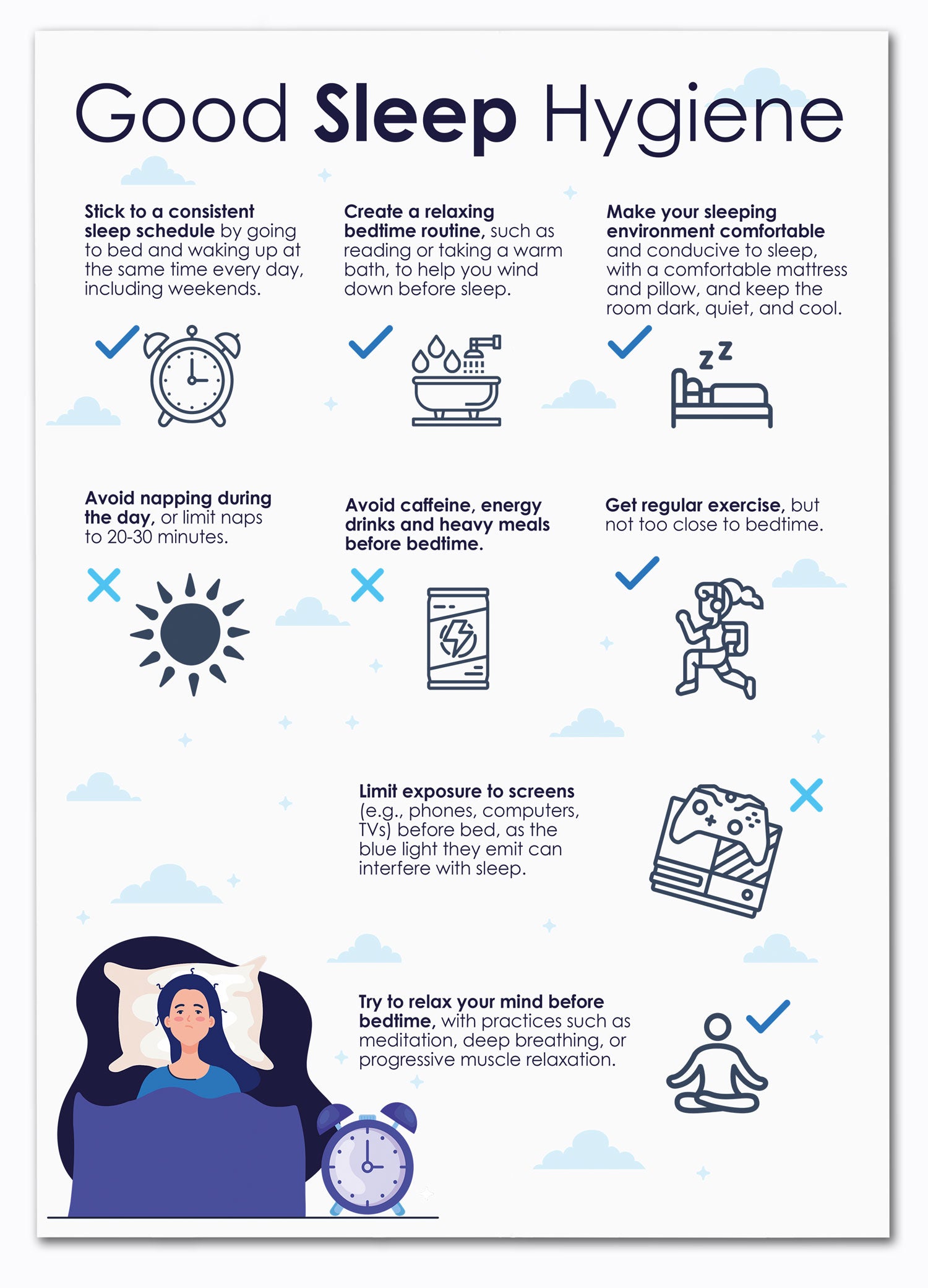 Source: doodle.ac
A sleep-friendly environment removes common barriers to falling and staying asleep.
Source: doodle.ac
A sleep-friendly environment removes common barriers to falling and staying asleep.
Step 5: Master Daytime Habits That Support Your Schedule
Your daytime choices have a huge impact on how easy it is to stick to your strick sleep schedule. The biggest disruptor is caffeine: it has a 6-hour half-life, meaning 50% of the caffeine you drink at 4pm is still in your system at 10pm, making it harder to fall asleep. Avoid caffeine entirely at least 6 hours before your target bedtime (so if you go to bed at 11pm, no coffee, soda, or energy drinks after 5pm). If you need a nap during the day, keep it under 20 minutes and before 3pm. Longer or later naps push your sleep pressure later, making it harder to fall asleep at your target bedtime. Finally, avoid vigorous exercise 2-3 hours before bed, as it raises your core body temperature and stimulates your nervous system, delaying sleep onset. If you often deal with pre-bed hair damage from wet hair, check out preventing hair damage from pre-bed routines to avoid extra frustration before bed.
Navigating Real-Life Obstacles (Social Events, Travel, Shift Work)
A strick sleep schedule doesn’t mean you can never stay out late, travel, or work non-traditional hours — the goal is consistency over time, not perfection. Here’s how to handle common disruptions without derailing your progress:
- Occasional late nights: If you stay out late for a birthday or event, wake up at your usual time the next morning, even if you only got 4-5 hours of sleep. Don’t sleep in to "catch up" — this pushes your bedtime later the next night, creating a cycle of sleep deprivation. If you’re extremely tired, a 20-minute nap before 3pm is okay, but avoid longer rests.
- Travel across time zones: Shift your schedule 15-30 minutes per day in the direction of the new time zone for 2-3 days before you travel. Once you arrive, get bright light in the morning if you’re traveling east, and avoid bright light in the evening if you’re traveling west to help your body adjust faster.
- Shift work or rotating schedules: Prioritize a consistent wake time even on your days off, and use blackout curtains and a white noise machine to block daylight when sleeping during the day. If your shifts rotate, try to keep your sleep schedule within 1-2 hours of your target even on workdays, and adjust gradually between shift changes.
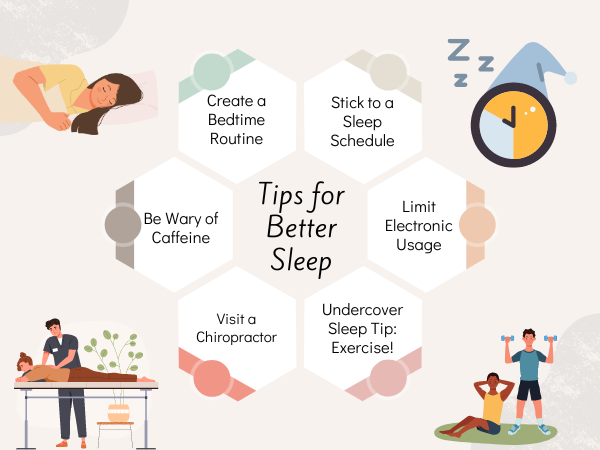 Source: procarefl.com
Small, intentional adjustments keep your schedule on track even during life’s disruptions.
Source: procarefl.com
Small, intentional adjustments keep your schedule on track even during life’s disruptions.
Track Progress and Adjust Without Stress
You don’t need a fancy sleep tracker to monitor your progress — a simple paper diary or notes app works perfectly. Track 4 simple metrics each day:
- Your target bedtime vs. the time you actually got in bed
- Your target wake time vs. the time you actually woke up
- How long it took you to fall asleep
- How rested you felt when you woke up, plus any factors that affected your sleep (late-night caffeine, a stressful work day, etc.) Review your diary once a week. If you’re consistently missing your bedtime by 1+ hour, adjust your target bedtime 15 minutes earlier until it’s realistic. Only change one variable at a time (e.g., adjust your bedtime first, then add a wind-down routine a week later) so you can clearly see what’s working. It takes 2-4 weeks for a new schedule to feel automatic, so don’t give up after a few off nights — consistency over time is what matters.
 Source: realsimple.com
Tracking simple metrics helps you identify what works for your unique routine.
Source: realsimple.com
Tracking simple metrics helps you identify what works for your unique routine.
Common Mistakes That Derail Your Progress
Even with the best intentions, small habits can throw off your strick sleep schedule. Avoid these common pitfalls:
- Shifting your schedule too fast: Trying to move your bedtime by 2+ hours in one night leads to insomnia, grogginess, and frustration, making most people quit the plan within a week. Stick to 15-30 minute shifts every 2 days.
- Sleeping in on weekends: Even 1-2 hours of extra sleep on Saturday messes up your circadian rhythm, making Monday morning just as rough as if you never adjusted your schedule.
- Using your bed for non-sleep activities: Working, scrolling, or watching TV in bed breaks the association between your bed and sleep, leading to longer sleep latency. If your mattress or topper is worn out and causing discomfort, use our guide to knowing when to replace worn sleep gear to decide if it’s time for an upgrade.
- Relying on the snooze button: The snooze button fragments your sleep, leaving you in a state of "sleep inertia" that makes you feel more tired than if you woke up at your first alarm. Place your alarm across the room if you need to force yourself to get up.
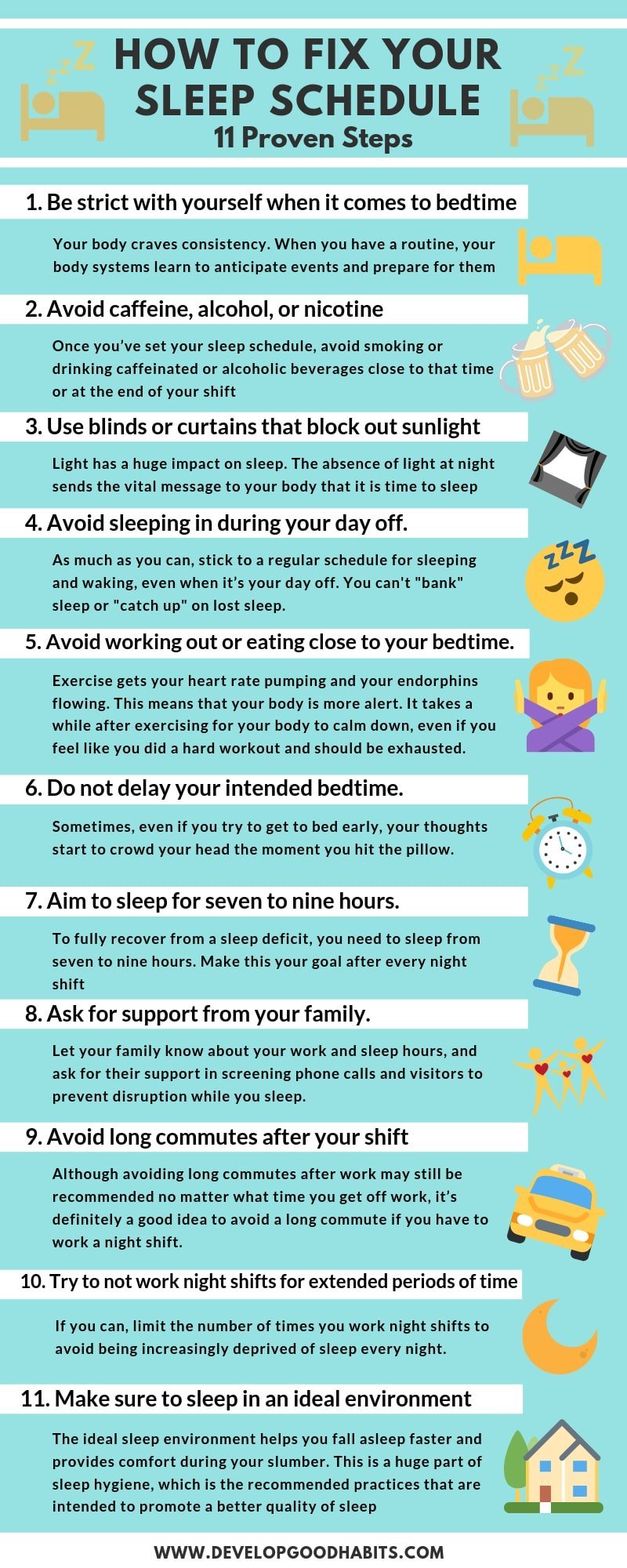 Source: developgoodhabits.com
Most people notice improved energy and focus within 2 weeks of sticking to a regular schedule.
Source: developgoodhabits.com
Most people notice improved energy and focus within 2 weeks of sticking to a regular schedule.
When to See a Sleep Specialist
A strick sleep schedule helps most people improve their sleep quality, but it’s not a fix for all sleep issues. If you’ve followed this plan consistently for 4+ weeks and still struggle to fall asleep, stay asleep, or wake up feeling unrefreshed, you may have an underlying sleep disorder. See a sleep specialist if you experience:
- Loud, chronic snoring or gasping for air at night (signs of sleep apnea)
- Insomnia that occurs 3+ nights a week for 3+ months
- Excessive daytime sleepiness that affects your work, driving, or daily safety The American Academy of Sleep Medicine recommends cognitive behavioral therapy for insomnia (CBT-I) as the first-line treatment for chronic insomnia, rather than relying on over-the-counter sleep aids AASM clinical guidelines. A sleep specialist can also rule out other issues like restless legs syndrome or circadian rhythm disorders that may be disrupting your rest.
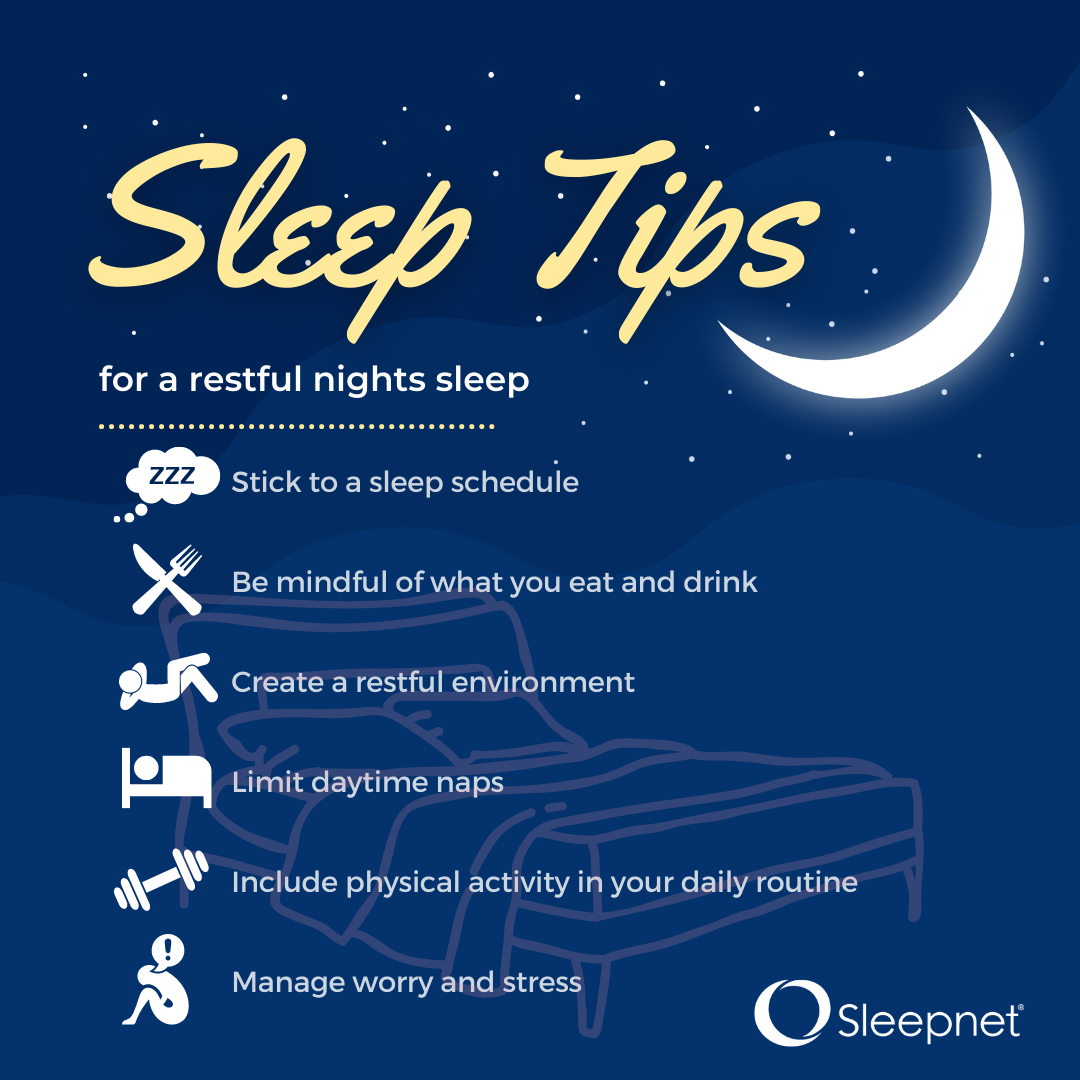 Source: sleepnetmasks.com
Understanding core sleep terms helps you troubleshoot issues faster.
Source: sleepnetmasks.com
Understanding core sleep terms helps you troubleshoot issues faster.
Frequently Asked Questions
Can I change my sleep schedule fast?
Small shifts of 15–30 minutes every 2 nights work best. Big jumps often fail and increase tiredness, leading most people to quit their plan within a week.
Is it ok to nap while keeping a strict schedule?
Short naps (20–30 minutes) before 3pm can help boost energy without interfering with nighttime sleep. Avoid naps later in the day, as they push your sleep pressure later and make it harder to fall asleep at your target bedtime.
How long until a new sleep routine sticks?
Expect 2–4 weeks for real change. Consistency matters more than perfection — small slip-ups won’t derail your progress as long as you return to your schedule the next day.
How soon will I see benefits from a strick sleep schedule?
You may notice small gains in energy within a week. Real, steady benefits including better deep sleep, reduced stress, and improved focus usually appear after two to four weeks of consistency.
Can a strict schedule fix insomnia?
A regular schedule helps many people reduce insomnia symptoms, but chronic insomnia may need therapy or a doctor’s care. Behavioral sleep therapy like CBT-I is often effective for long-term relief.
What if my job has changing shifts?
Focus on a steady wake time when possible and use bright light in the morning. For rotating shifts, make small timing shifts and prioritize sleep length over perfect timing on workdays.
Should I use alarms to enforce the schedule?
Yes. Use alarms to wake at the same time daily. Avoid heavy reliance on snooze to train your body to wake up feeling refreshed instead of groggy.
Is caffeine the main enemy of a strick sleep schedule?
Caffeine is a key disruptor when consumed late. Avoid caffeine at least six hours before your bedtime to protect your schedule, but pair this with a consistent routine for best results.
Do I have to stick to the schedule 100% of the time?
No — consistency is more important than perfection. Occasional late nights (once a week or less) won’t derail your progress, as long as you return to your regular wake time the next day. Aim for 80% consistency to build a sustainable habit.
 Source: diannshaddoxfoundation.org
Most concerns about strict sleep schedules have simple, actionable solutions.
Source: diannshaddoxfoundation.org
Most concerns about strict sleep schedules have simple, actionable solutions.
 Source: dailysabah.com
Sticking to a regular wake time is the most important anchor for your schedule.
Source: dailysabah.com
Sticking to a regular wake time is the most important anchor for your schedule.
Conclusion
A practical plan, steady routines, and small, consistent steps are the best way to learn how to have a strick sleep schedule. Start with one wake time and one bedtime, build a calm wind-down, and track progress. Be patient and adapt when life gets in the way — perfection is not required for results. Take one small action today: choose your wake time and set your alarm for the next 14 days, and add one 10-minute wind-down activity to your routine this week. For extra comfort while you adjust your schedule, check out our guide to back-sleeping tips for extra comfort to reduce morning aches and build a restful routine faster.

Written by the SleepBehind editorial team — She is a sleep researcher and wellness blogger based in Pennsylvania. Passionate about helping people optimize their sleep.