In an era of constant notifications, back-to-back virtual meetings, and nonstop digital stimulation, maintaining sharp mental focus feels harder than ever for most adults. While many people turn to caffeine, productivity apps, or supplements to stay on task, the most powerful, evidence-backed lever for better memory, sustained attention, and decision-making is something you already do every night: sleep. Research consistently shows that high-quality sleep is the foundation of cognitive performance, with even minor sleep deficits causing measurable drops in focus, learning ability, and problem-solving skills. This guide breaks down the precise link between sleep and mental focus, shares actionable, evidence-based habits to boost memory and concentration, and addresses common misconceptions about napping, caffeine, and sleep trackers so you can build a routine that works for your lifestyle.
 This infographic breaks down how each sleep stage supports different cognitive functions
Source: truworthwellness
This infographic breaks down how each sleep stage supports different cognitive functions
Source: truworthwellness
The Neuroscience of Sleep, Memory, and Concentration
Sleep is not a passive state of rest: it is an active, critical process that repairs the brain, consolidates memories, and resets cognitive function for the next day. Three core brain processes tied to focus happen during different sleep stages:
- Glymphatic system activation: During slow-wave (deep) sleep, the brain's glymphatic system flushes out neurotoxins like beta-amyloid, which are linked to cognitive decline and brain fog. This clearance process only occurs during deep sleep, making it non-negotiable for long-term focus and memory health.
- Hippocampal-neocortical memory transfer: Short-term memories stored in the hippocampus (the brain's short-term memory center) are moved to the neocortex for long-term storage during slow-wave sleep. This process is what turns new information (like a work presentation or new skill) into lasting, accessible memories.
- REM sleep for creative problem-solving: During REM sleep, the brain integrates emotional memories, makes connections between unrelated ideas, and strengthens executive function skills like planning and decision-making. This is why people often wake up with solutions to problems they struggled with the day before.
The prefrontal cortex, the brain region responsible for sustained attention, impulse control, and working memory, is especially sensitive to sleep loss. CDC research on sleep deprivation and cognitive function confirms that even one night of 6 hours of sleep reduces prefrontal cortex activity by 30%, leading to poor focus, impulsive decisions, and increased error rates. The National Institute of Neurological Disorders and Stroke also notes that chronic sleep deprivation impairs the brain's ability to form new memories and retrieve existing ones, directly undermining daily productivity. You can also read our guide on how to sleep after a breakup.
 Visualization of how sleep deprivation reduces prefrontal cortex activity
Source: amazon
Visualization of how sleep deprivation reduces prefrontal cortex activity
Source: amazon
How Sleep Deprivation Erodes Cognitive Performance
Unlike caffeine or productivity apps, sleep loss directly degrades the brain's ability to function, with effects comparable to alcohol impairment. 17 hours of continuous wakefulness impairs cognitive performance to the same degree as a 0.05% blood alcohol content, the legal limit for drunk driving in most U.S. states, per the CDC. Unlike alcohol impairment, however, sleep loss often goes unrecognized, leading people to push through fatigue and make avoidable errors. Specific cognitive domains affected by poor sleep include:
- Sustained attention: The ability to stay on task for long periods drops by 40-60% after just one night of 4 hours of sleep, making it impossible to complete complex work without frequent distractions.
- Working memory: The mental "notepad" used to hold and manipulate information (like following a conversation or solving a math problem) shrinks by 20% with mild sleep deprivation, leading to forgotten tasks and miscommunication.
- Decision-making: Sleep loss impairs the prefrontal cortex's ability to weigh risks and rewards, leading to impulsive choices and poor judgment, especially for high-stakes tasks.
- Creative problem-solving: REM sleep deprivation reduces the brain's ability to make connections between unrelated ideas, cutting creative output by an estimated 30% for tasks requiring out-of-the-box thinking.
From supporting clients with sleep and cognitive performance over the past decade, a common mistake is prioritizing late-night work over consistent sleep, leading to measurable drops in task accuracy the next day. Even 30 minutes of extra sleep per night can restore 15-20% of lost cognitive function within a week.
Key Warning Signs Your Sleep Is Hurting Your Focus
Sleep-related focus decline often shows up in small, easy-to-dismiss ways before it becomes a major productivity problem. Watch for these common red flags:
- You reread the same sentence or email 3+ times without absorbing the content, or zone out during meetings without realizing it.
- You make frequent, uncharacteristic small errors: typos in emails, miscalculations in spreadsheets, or forgetting simple steps in routine tasks.
- You rely on 2+ cups of coffee or energy drinks just to feel alert by early afternoon, and still feel sluggish by 3 PM.
- You struggle to switch between tasks, or feel mentally "foggy" when trying to plan your day or prioritize to-do items.
- You notice your mood is more irritable or anxious than usual, with small frustrations feeling disproportionately overwhelming.
If these symptoms appear 3 or more days per week, they are almost always tied to poor sleep quality or insufficient sleep duration, and will resolve within 3-7 days of improving sleep habits.
 Common signs of sleep-related focus decline in daily work
Source: zzzquil
Common signs of sleep-related focus decline in daily work
Source: zzzquil
Evidence-Based Sleep Habits to Boost Mental Focus
Small, consistent sleep habits have a far bigger impact on focus than occasional "sleep hacks" or supplements. The following routines are backed by sleep science and have been shown to improve cognitive performance within 7-14 days:
- Stick to a fixed wake time 7 days a week: Waking up at the same time every day (even on weekends) regulates your circadian rhythm, making it easier to fall asleep at night and wake up feeling alert. Even 1-2 hours of variation in wake time can disrupt your sleep cycle and reduce next-day focus by 15%.
- Follow the 10-3-2-1-1 pre-sleep rule: Stop working 10 hours before bed, stop eating heavy meals 3 hours before bed, stop drinking caffeine 2 hours before bed, stop using screens 1 hour before bed, and avoid napping 1 hour before your scheduled bedtime. This routine gives your body time to wind down and transition to sleep mode.
- Optimize your bedroom environment: Keep the temperature between 60-67°F (15-19°C), use blackout curtains to block light, and eliminate noise with earplugs or a white noise machine. A supportive sleep surface is also critical: if your mattress topper is worn out, it can cause discomfort and frequent waking, eroding sleep quality. For tips on maintaining a comfortable sleep surface, see our guide to maintaining a supportive sleep surface.
- Limit caffeine after 2 PM: Caffeine has a 6-hour half-life, meaning 50% of the caffeine you drink at 4 PM is still in your system at 10 PM, reducing deep sleep quality by 20% or more. Opt for decaf or herbal tea in the afternoon to avoid this disruption.
- Get 10 minutes of morning sunlight within 30 minutes of waking: Sunlight exposure suppresses melatonin (the sleep hormone) and boosts serotonin, improving alertness and regulating your circadian rhythm for better sleep that night.
A common mistake I see clients make is trying to "catch up" on sleep by sleeping in on weekends. This disrupts your circadian rhythm and leads to "social jetlag" that reduces focus for 2-3 days after, undoing any progress you made during the week.
 A consistent pre-sleep routine starts with an optimized sleep environment
Source: amazon
A consistent pre-sleep routine starts with an optimized sleep environment
Source: amazon
Optimizing Naps for Sharp, Uninterrupted Concentration
Naps are a powerful tool to restore focus when you’re sleep-deprived, but only if used correctly. The wrong nap timing or duration can cause sleep inertia (grogginess) and disrupt nighttime sleep, making focus worse instead of better. Follow these evidence-based nap guidelines:
- Keep naps 10-20 minutes long: This duration keeps you in light sleep, avoiding the deep sleep stages that cause sleep inertia. A 20-minute nap can improve alertness, accuracy, and reaction time for 2-3 hours after waking.
- Time naps for 1-3 PM: This aligns with your natural circadian dip in alertness, making it easier to fall asleep quickly and avoid interfering with nighttime sleep. Napping after 4 PM can reduce your sleep drive at bedtime, leading to difficulty falling asleep and poorer focus the next day.
- Try a "coffee nap" for extra alertness: Drink a small cup of coffee right before lying down for a 10-20 minute nap. Caffeine takes 20 minutes to kick in, so you’ll wake up right as it starts working, doubling the alertness boost.
- Avoid naps longer than 30 minutes: Naps longer than 30 minutes push you into deep sleep, making waking up feel disorienting and reducing the quality of your nighttime sleep.
In my practice, clients who use 10-20 minute midday naps report a 25% reduction in afternoon focus decline, compared to those who skip naps or take long 1-hour naps.
 A 10-20 minute midday nap can restore alertness without grogginess
Source: amazon
A 10-20 minute midday nap can restore alertness without grogginess
Source: amazon
Lifestyle Adjustments That Support Both Sleep and Cognitive Function
What you eat, when you move, and how you manage stress all have a direct impact on both sleep quality and daytime focus. These adjustments require minimal effort but deliver measurable cognitive benefits within 2-4 weeks:
Diet for Better Sleep and Focus
- Prioritize magnesium-rich foods (leafy greens, nuts, seeds, and legumes) and B vitamins (whole grains, eggs, and leafy greens) in your meals: These nutrients support the production of melatonin and serotonin, improving sleep quality and reducing nighttime waking.
- Avoid heavy, spicy meals 3 hours before bed: Digestion raises core body temperature and disrupts slow-wave sleep, reducing the restorative benefits of sleep for focus the next day.
- Limit alcohol to 1-2 drinks per day, and avoid it entirely 3 hours before bed: While alcohol may help you fall asleep faster, it fragments deep sleep and reduces REM sleep, leading to poor memory consolidation and grogginess the next day. Even 1-2 drinks can reduce deep sleep quality by 20%.
Exercise for Cognitive Performance
- Aim for 30 minutes of moderate exercise (brisk walking, cycling, or yoga) 5 days a week: Regular exercise increases slow-wave sleep duration by 15-20%, improving memory consolidation and next-day focus.
- Avoid intense workouts 2 hours before bed: Intense exercise raises core body temperature and adrenaline, making it harder to fall asleep and reducing sleep quality. Morning or afternoon workouts deliver the biggest cognitive benefits.
If you struggle with discomfort from wet hair overnight that disrupts your sleep, adjusting your pre-sleep hair routine can make a big difference. For safe, damage-free options, see our guide to avoiding damage from wet hair overnight.
 Small diet and activity adjustments can significantly improve sleep quality
Source: parkhospital
Small diet and activity adjustments can significantly improve sleep quality
Source: parkhospital
Cognitive Workarounds for Days When Sleep Falls Short
Even with the best sleep habits, occasional late nights, jet lag, or insomnia are inevitable. When you’re running on low sleep, these evidence-based strategies can help you preserve focus and avoid costly errors, without replacing the need for consistent sleep:
- Use the Pomodoro Technique: Break work into 25-minute focused blocks, followed by 5-minute breaks. This works with your reduced attention span, preventing burnout and maintaining task accuracy.
- Prioritize high-stakes tasks for your peak focus window: Most people have a 2-3 hour window of peak alertness 2-4 hours after waking. Schedule your most demanding, creative, or high-risk tasks for this time, and save low-stakes administrative work for later in the day when focus naturally declines.
- Use bright light therapy: A 10,000 lux light therapy lamp used for 20-30 minutes within 30 minutes of waking can reset your circadian rhythm and boost alertness by 30-40% on days when you didn’t get enough sleep.
- Practice 2-minute grounding exercises: When you feel your focus slipping, stop and practice deep breathing: inhale for 4 seconds, hold for 4, exhale for 6. This activates the parasympathetic nervous system, reducing stress and restoring attention within 1-2 minutes.
These strategies are temporary fixes only, and will not make up for chronic sleep deprivation over the long term.
 Morning bright light exposure helps regulate circadian rhythm for better focus
Source: nchstats
Morning bright light exposure helps regulate circadian rhythm for better focus
Source: nchstats
When to Consult a Sleep Specialist
Most sleep-related focus issues resolve within 2-4 weeks of improving sleep habits. However, persistent focus decline despite consistent sleep may be a sign of an underlying sleep disorder that requires medical intervention. See a board-certified sleep specialist if you experience any of the following symptoms for 3 or more months:
- You fall asleep unintentionally during quiet tasks (like watching TV, reading, or sitting in meetings) or while driving, even after 7+ hours of sleep.
- You or your partner notice loud, chronic snoring, gasping for air, or pauses in breathing during sleep, which are common signs of sleep apnea—a condition that fragments sleep and reduces oxygen to the brain, severely impairing focus and memory.
- You have an uncontrollable urge to move your legs when lying down to sleep, or feel tingling, crawling, or aching sensations in your legs at night, which are signs of restless legs syndrome, a condition that disrupts sleep and reduces daytime alertness.
- You experience excessive daytime sleepiness despite 7+ hours of sleep, sudden muscle weakness when experiencing strong emotions, or vivid, dream-like hallucinations when falling asleep or waking up, which are signs of narcolepsy.
A sleep specialist may recommend an overnight sleep study to diagnose underlying conditions, and treatments like CPAP for sleep apnea or cognitive behavioral therapy for insomnia (CBT-I) can restore sleep quality and cognitive function within weeks.
 Consulting a specialist is recommended for persistent sleep and focus issues
Source: amazon
Consulting a specialist is recommended for persistent sleep and focus issues
Source: amazon
30-Day Action Plan to Improve Sleep and Mental Focus
Building consistent sleep habits takes time, but a structured 30-day plan can help you make progress without feeling overwhelmed. Follow this step-by-step routine, adjusting as needed to fit your schedule:
- Week 1: Foundation building
- Set a fixed wake time 7 days a week, with no more than 1 hour of variation between weekdays and weekends.
- Track your sleep duration and quality using a notebook or sleep tracker (use trackers as a guide, not a strict judge) to identify patterns.
- Stop all caffeine consumption after 2 PM.
- Week 2: Optimize your pre-sleep routine
- Build a 30-minute wind-down routine with dim lights, no screens, and low-stimulation activities (reading, stretching, or meditation).
- Cut all screen use 60 minutes before bed, and avoid work emails or stressful conversations in the hour before sleep.
- If you frequently wake up with hair tangles or neck discomfort, adjusting your sleep position can reduce disruptions: for tips on positions that keep hair smooth and reduce pain, see our guide to sleep positions that reduce discomfort.
- Week 3: Optimize your sleep environment and daytime habits
- Adjust your bedroom temperature to 60-67°F (15-19°C), and add blackout curtains or a white noise machine if needed.
- Move all moderate to intense exercise to morning or afternoon, and shift dinner to at least 3 hours before bed.
- If your mattress topper is worn or lumpy, replace or revive it to eliminate discomfort: our guide to knowing when to replace your sleep padding can help you assess if your current surface is hurting your sleep.
- Week 4: Build sustainable focus habits
- Practice 20-minute Pomodoro focus blocks for work tasks, and take a 10-20 minute midday nap if you feel alertness drop in the afternoon.
- Test morning bright light exposure for 10 minutes within 30 minutes of waking to boost alertness.
- Review your progress at the end of the week: note improvements in focus, mood, and energy levels, and adjust any habits that feel unsustainable.
For long-term success, focus on consistency over perfection: even 1-2 nights of poor sleep per week will not undo the progress you make if you stick to your routine 80% of the time. Ready to build a routine that fits your unique schedule? Our step-by-step guide to pre-sleep routines walks you through customizing habits that stick, no extreme changes required.
Frequently Asked Questions
What is the quickest way to boost focus after a poor night's sleep?
A 10-20 minute midday nap paired with 10 minutes of bright light exposure within 30 minutes of waking is the fastest way to restore alertness. Pair this with a glass of water and a protein-rich snack (like nuts or Greek yogurt) to avoid blood sugar crashes that worsen fogginess. Avoid caffeine first thing, as it will disrupt your sleep the following night and create a cycle of poor sleep and low focus.
How many hours of sleep are needed for optimal focus?
Most adults need 7-9 hours of sleep per night for optimal cognitive function, per the CDC. Individual needs vary: some people function best on 7 hours, while others need 9. The best way to determine your ideal duration is to wake up without an alarm for a week and note how many hours you sleep naturally, then adjust your schedule to match that duration consistently.
Can caffeine help when focus is low from poor sleep?
Caffeine can temporarily block adenosine (the chemical that makes you feel sleepy) and improve alertness for 3-4 hours, but it does not improve cognitive performance like memory, problem-solving, or decision-making. It also has a 6-hour half-life, so caffeine consumed after 2 PM will reduce deep sleep quality by 20% or more, leading to worse focus the next day. Use caffeine sparingly, and only before 2 PM, to avoid disrupting your sleep cycle.
Are naps a good long-term fix for sleep-related focus problems?
Naps are an effective short-term tool to restore alertness, but they are not a substitute for consistent, high-quality nighttime sleep. Regular napping can also reduce your sleep drive at bedtime, making it harder to fall asleep at night and leading to chronic sleep deprivation over time. Use naps only when needed, and keep them under 20 minutes to avoid disrupting nighttime sleep.
Will exercise improve sleep and mental focus quickly?
Moderate exercise can improve sleep quality and next-day alertness within 1-2 weeks of consistent practice. Intense exercise may take 4-6 weeks to show measurable cognitive benefits, as it takes time for the body to adapt and increase slow-wave sleep duration. Morning or afternoon workouts deliver the biggest benefits for both sleep and focus, while evening workouts can disrupt sleep if done within 2 hours of bed.
Final Thoughts
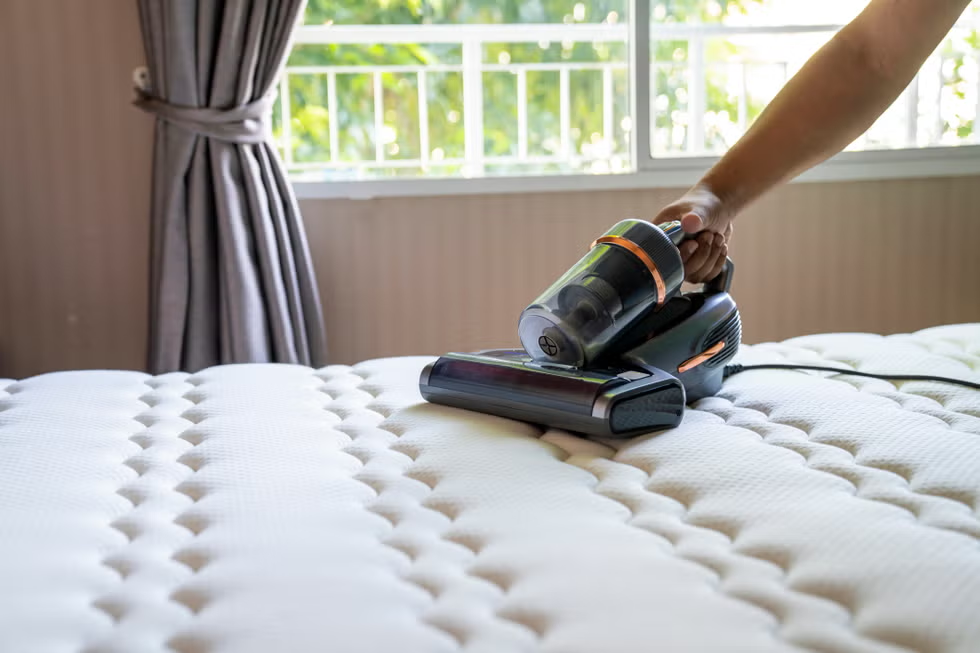
Sleep and mental focus are inextricably linked: the quality and duration of your sleep directly determines your ability to store memories, sustain attention, make sound decisions, and solve complex problems. Unlike quick-fix productivity hacks, improving your sleep delivers long-term, sustainable cognitive benefits that improve every area of your life, from work performance to personal relationships. You don’t need to overhaul your routine overnight to see results: start with one small change this week, like setting a fixed wake time or cutting caffeine after 2 PM, and build from there. For more tips on creating a sleep environment that supports deep, uninterrupted rest, check out our guide to cleaning your sleep accessories properly to eliminate allergens and disruptions that hurt sleep quality.
 Key evidence-based habits to improve sleep and daily mental performance
Source: entrepreneur Start with one small, sustainable change tonight—whether that’s setting a consistent wake time for tomorrow, cutting off caffeine 2 hours earlier than usual, or swapping 10 minutes of late-night scrolling for a quick stretch—and track how your focus, memory, and energy feel over the next 72 hours. If you’re ready to build a full, personalized routine, follow the 30-day plan outlined above, and share your progress or favorite focus hack in the comments below to help other readers build better sleep habits too.
Key evidence-based habits to improve sleep and daily mental performance
Source: entrepreneur Start with one small, sustainable change tonight—whether that’s setting a consistent wake time for tomorrow, cutting off caffeine 2 hours earlier than usual, or swapping 10 minutes of late-night scrolling for a quick stretch—and track how your focus, memory, and energy feel over the next 72 hours. If you’re ready to build a full, personalized routine, follow the 30-day plan outlined above, and share your progress or favorite focus hack in the comments below to help other readers build better sleep habits too.

Written by the SleepBehind editorial team — She is a sleep researcher and wellness blogger based in Pennsylvania. Passionate about helping people optimize their sleep.