You’ve tried counting sheep, scrolling through calming playlists, and even drinking chamomile tea, but you’re still staring at the ceiling at 1am wondering, “Why Can’t I Fall Asleep Fast?” If this sounds familiar, you’re not alone: per recent public health data, roughly 1 in 3 U.S. adults report regular difficulty falling asleep, a frustration that leaves you groggy, irritable, and less productive the next day.
Sleep onset latency (the technical term for the time it takes to fall asleep after closing your eyes) is influenced by a mix of biological rhythms, daily habits, environmental cues, and underlying health conditions. For most people, slow sleep onset isn’t a permanent flaw—it’s a signal that one or more of these systems is out of sync. This guide breaks down the root causes behind delayed sleep onset, explains what’s happening in your body when you can’t drift off, and shares practical, same-night quick fixes you can test starting tonight, no gimmicks or unproven supplements required. You can also read our guide on how blue light affects kids sleep.
What Does “Slow Sleep Onset” Actually Mean?
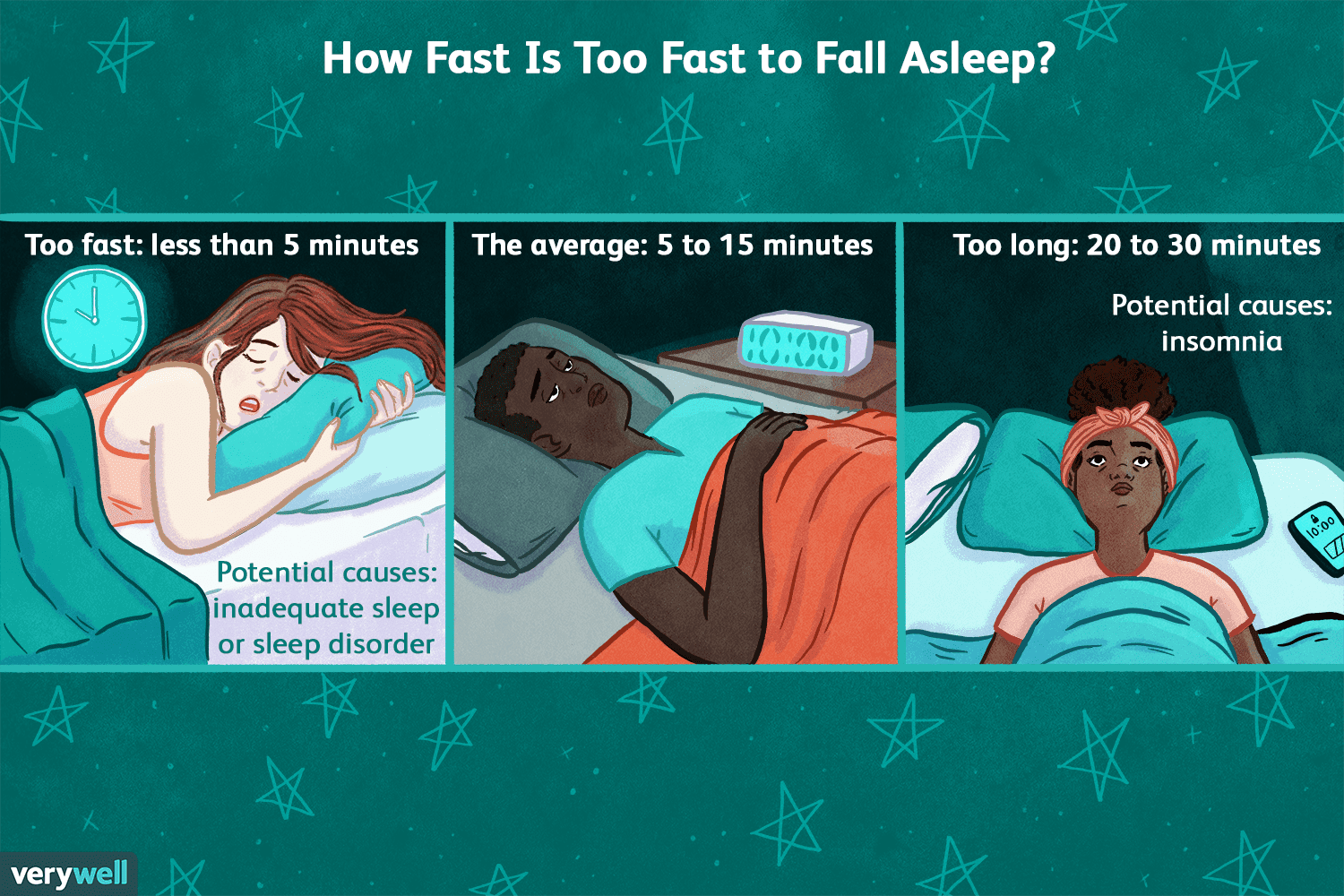
Before diving into causes, it helps to understand what “normal” sleep onset looks like. Per clinical sleep latency guidelines from the American Academy of Sleep Medicine (AASM), the gold standard for sleep medicine, healthy adults typically fall asleep within 10 to 20 minutes of lying down. Falling asleep in under 5 minutes consistently can indicate severe sleep debt, while taking longer than 30 minutes 3 or more nights a week for 3 or more consecutive months meets the clinical definition of chronic insomnia disorder.
Most people experience occasional slow sleep onset after a stressful day, a late caffeine intake, or a change in schedule. Persistent difficulty, though, almost always stems from a mix of four core cause categories: biological factors, lifestyle habits, environmental triggers, or underlying medical conditions. Identifying which of these is driving your specific issue is the first step to fixing it fast.
Biological Root Causes You Can’t “Think” Your Way Past
Your body’s internal systems control sleep timing far more than conscious willpower. If your biology is out of sync, no amount of “trying harder” to sleep will work until you address the root issue. The three most common biological drivers of slow sleep onset are:
- Disrupted circadian rhythm Your circadian rhythm is the 24-hour internal clock controlled by the suprachiasmatic nucleus in your brain, which responds to light cues to regulate melatonin (the sleep hormone), cortisol (the stress hormone), and core body temperature. Shift work, frequent weekend “social jetlag” (staying up late and sleeping in on weekends), or exposure to bright light after 9pm can shift your rhythm later, making you feel wired at bedtime even when you’re exhausted.
- Elevated evening cortisol Cortisol is supposed to peak in the morning to wake you up and drop sharply in the evening to make you sleepy. Chronic stress, late-night work, or even intense evening exercise can keep cortisol elevated at night, putting your brain in alert “fight-or-flight” mode and blocking melatonin release.
- Age-related sleep changes Teens have a naturally delayed circadian rhythm, making it biologically difficult for them to fall asleep before 11pm—this is not laziness, but a normal developmental shift. Older adults often experience an advanced sleep phase, where they get sleepy early in the evening and wake up at 4 or 5am, unable to fall back asleep if they go to bed too late.
In my experience coaching people on sleep, the most common biological mistake I see is ignoring your natural circadian window. Forcing a 10pm bedtime when your body is wired until 11:30pm will only lead to 45+ minutes of staring at the ceiling, no matter how tired you are. Small shifts to your light exposure and wake time can reset your rhythm in 3-5 days for most people.
Modifiable Lifestyle Habits That Delay Sleep Onset
Daily habits are the most common—and easiest to fix—cause of slow sleep onset. Many people overlook how small, consistent choices add up to push sleep onset later by 30 minutes or more. The most common culprits include:
- Irregular sleep schedules: Even 90 minutes of variation between your weekday and weekend wake times (known as social jetlag) disrupts your circadian rhythm, reduces deep sleep, and increases sleep onset latency. Consistency is far more important than total sleep time for regulating your sleep clock.
- Late caffeine or nicotine intake: Caffeine has a half-life of 5-6 hours, meaning a 4pm coffee still has 25% of its caffeine in your system at 10pm, enough to block adenosine (the chemical that builds up in your brain to create sleep pressure) and keep you wired. Nicotine is a stimulant with similar effects, and withdrawal during the night can also cause early waking.
- Heavy meals, alcohol, or vigorous exercise close to bed: Large, spicy, or sugary meals raise core body temperature and cause indigestion, both of which delay sleep onset. Alcohol may help you fall asleep faster initially, but it fragments sleep later in the night, reduces REM sleep, and often causes 2-3am waking with inability to fall back asleep. Vigorous exercise within 2 hours of bed raises cortisol and core temperature, pushing sleep onset later by 15-30 minutes for many people.
- Late-day napping: Napping after 3pm, or napping for longer than 30 minutes, reduces adenosine buildup so you don’t feel enough sleep pressure at bedtime. If you need a nap, limit it to 20 minutes before 2pm.
- High-arousal bedtime activities: Doomscrolling stressful news, answering work emails, or watching intense thrillers right before bed activates your brain’s threat detection system, releasing cortisol and blocking melatonin. Even if you’re not actively stressed, the cognitive arousal from these activities can delay sleep onset by 20+ minutes.
- Avoidable physical discomfort: Physical discomfort from damp bedding or a cold, wet pillow from sleeping with wet hair can also raise core temperature and cause neck tension that delays sleep onset—learning the healthiest wet hair sleep methods healthiest wet hair sleep methods can eliminate this avoidable barrier.
I once tracked my own caffeine intake for a week and found that my 3pm iced coffee was delaying my sleep onset by exactly 47 minutes on average. Cutting caffeine after 2pm alone dropped that time to 15 minutes within three days, no other changes needed. If you’re wondering “Why Can’t I Fall Asleep Fast?” start by auditing these daily habits first—they’re the low-hanging fruit for most people. Swapping high-arousal pre-bed activities for a structured pre-sleep routine structured pre-sleep routine cuts cognitive arousal and trains your brain to associate quiet time with sleep onset.
Stress, Anxiety, and the Sleep-Worry Feedback Loop
Worry and mood disorders are among the top reported reasons for persistent difficulty falling asleep, and they create a self-reinforcing cycle that makes sleep onset slower over time. This cycle, called psychophysiological insomnia, works like this: you have a bad night of sleep, you start worrying about not sleeping the next night, that worry raises your cortisol and keeps your brain alert, you can’t fall asleep, which reinforces the worry that you’ll never sleep well.
Common mental and emotional drivers of slow sleep onset include:
- Generalized anxiety: Racing thoughts about work deadlines, relationship stress, or to-do lists keep your brain’s default mode network (the part of the brain active during mind-wandering) engaged, which is the opposite of the relaxed state needed for sleep onset.
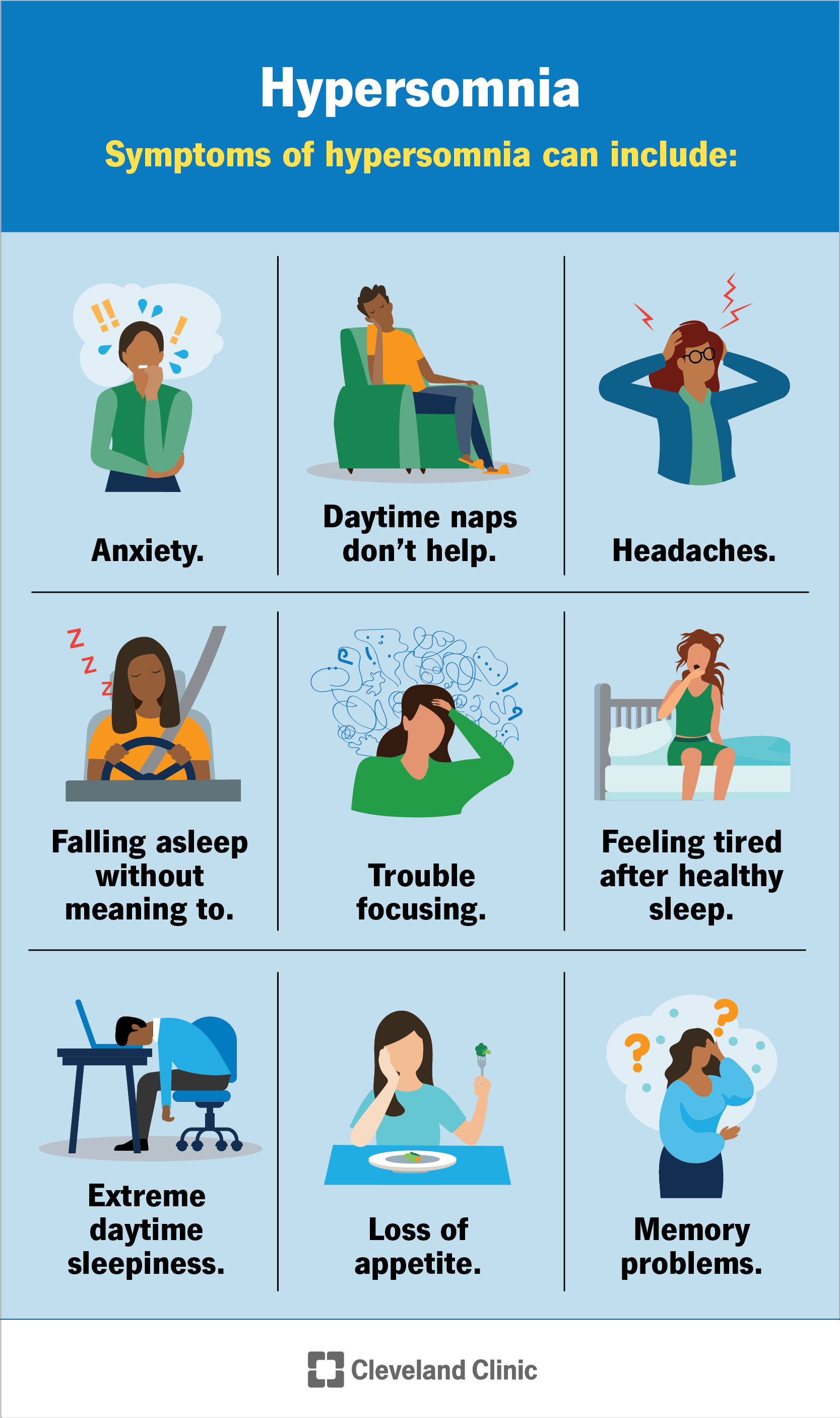
- Depression: Changes in serotonin and norepinephrine regulation can either cause insomnia (difficulty falling or staying asleep) or hypersomnia (excessive sleepiness), both of which disrupt normal sleep timing.
- Trauma or PTSD: Hypervigilance keeps your brain in constant “threat monitoring” mode, so even small, unnoticeable noises or shifts in light can trigger alertness and delay sleep onset for hours.
- Rumination about sleep itself: The more you fixate on how much sleep you need to get tomorrow, or how bad you’ll feel if you don’t fall asleep soon, the more your brain stays in alert mode, making the very outcome you’re worried about more likely.
I’ve worked with clients who turned their bedtime worry into a 5-minute brain dump ritual: they write down every to-do, worry, or unfinished thought in a notebook, then close it and tell themselves they’ll address the issues the next day. You don’t need to solve the problems—just get them out of your working memory so your brain can wind down. For persistent worry-driven insomnia, cognitive behavioral therapy for insomnia (CBT-I) is the gold standard treatment, with 70-80% of patients seeing significant improvement in sleep onset time, per AASM guidelines. It’s more effective long-term than sleep aids, with no side effects. Evidence-based proven sleep onset strategies proven sleep onset strategies are most effective when paired with addressing the underlying worry cycle first.
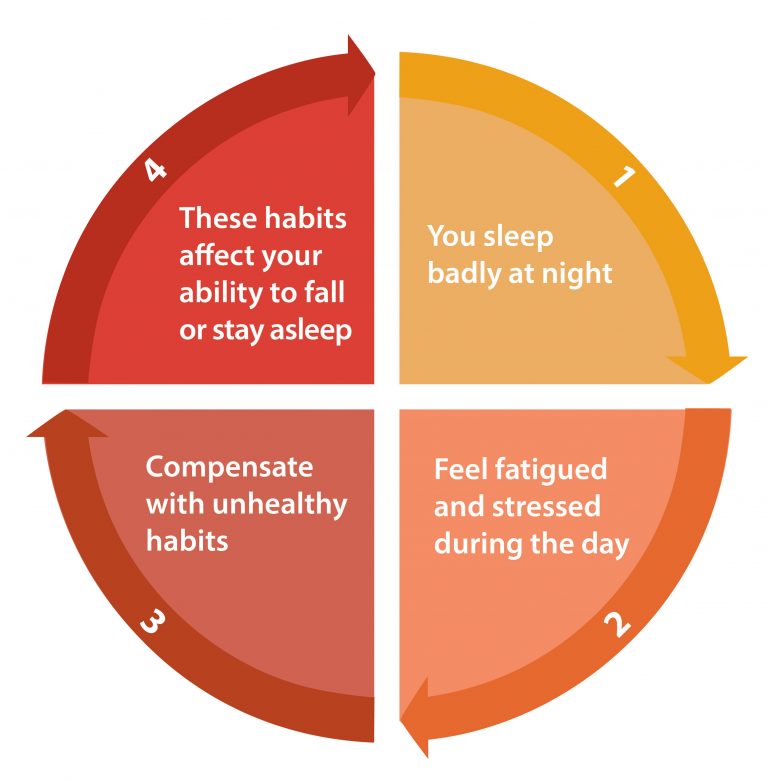 HelpGuide visual explaining how stress and anxiety create a cycle that worsens sleep onset problems.
Source: helpguide
HelpGuide visual explaining how stress and anxiety create a cycle that worsens sleep onset problems.
Source: helpguide
Environmental & Sleep Hygiene Fixes That Work Same-Night
Your bedroom environment and pre-bed routine send direct signals to your brain about whether it’s time to be alert or asleep. Poor sleep hygiene is one of the easiest causes of slow sleep onset to fix, often with changes that work the same night. Key environmental factors to address include:
- Light control: Even small amounts of blue light from a phone, LED night light, or streetlight outside your window can suppress melatonin production by up to 50%, per blue light's impact on melatonin research from Harvard Health. Use blackout curtains, turn off all screens 60-90 minutes before bed, and cover any small LED lights (from chargers, TVs, etc.) with tape.
- Temperature: Your core body temperature needs to drop 2-3°F to initiate sleep. Per the National Sleep Foundation, the ideal bedroom temperature for sleep onset is 60-67°F (15-19°C). If your room is too hot, your body can’t cool down enough to trigger sleep.
- Noise: Even 40 decibels (the sound of a quiet conversation) can disrupt sleep onset by triggering micro-arousals. Use earplugs, a white noise machine, or a fan to mask unpredictable sounds like traffic, neighbors, or a snoring partner.
- Bed association: If you work, scroll, watch TV, or eat in bed, your brain stops linking your bed to sleep. When you lie down, your brain stays in “alert” mode instead of shifting to wind-down mode. Fix this by only using your bed for sleep and intimacy—no work, no screens, no eating in bed.
- Pre-sleep routine: A consistent 15-30 minute wind-down routine trains your brain to transition from alert to relaxed. This could include dim reading, light stretching, a warm shower, or listening to calm music.
For total light blockage, a comfortable light-blocking eye cover comfortable light-blocking eye cover works even if you can’t install blackout curtains in your space. A client of mine who lived in a noisy apartment building installed blackout curtains and used a $10 white noise machine, and her sleep onset time dropped from 45 minutes to 12 minutes in one week—no other changes needed. For a full breakdown of core sleep hygiene principles core sleep hygiene principles, our dedicated guide walks you through small, cumulative changes that improve sleep quality over time.
Underlying Medical & Physiological Causes That Need Professional Support
If you’ve tried 2-3 weeks of consistent lifestyle and sleep hygiene changes and see no improvement in your sleep onset time, an underlying medical condition may be the root cause. Common medical drivers of delayed sleep onset include:
- Chronic insomnia disorder: Persistent difficulty falling or staying asleep at least 3 nights a week for 3+ months, not caused by another condition or substance. First-line treatment is CBT-I, not sleep aids, per first-line insomnia treatment guidelines from the AASM.
- Restless Legs Syndrome (RLS): An uncomfortable tingling, crawling, or urge to move your legs that worsens at rest and in the evening, often delaying sleep onset by an hour or more. It’s often linked to iron deficiency or pregnancy.
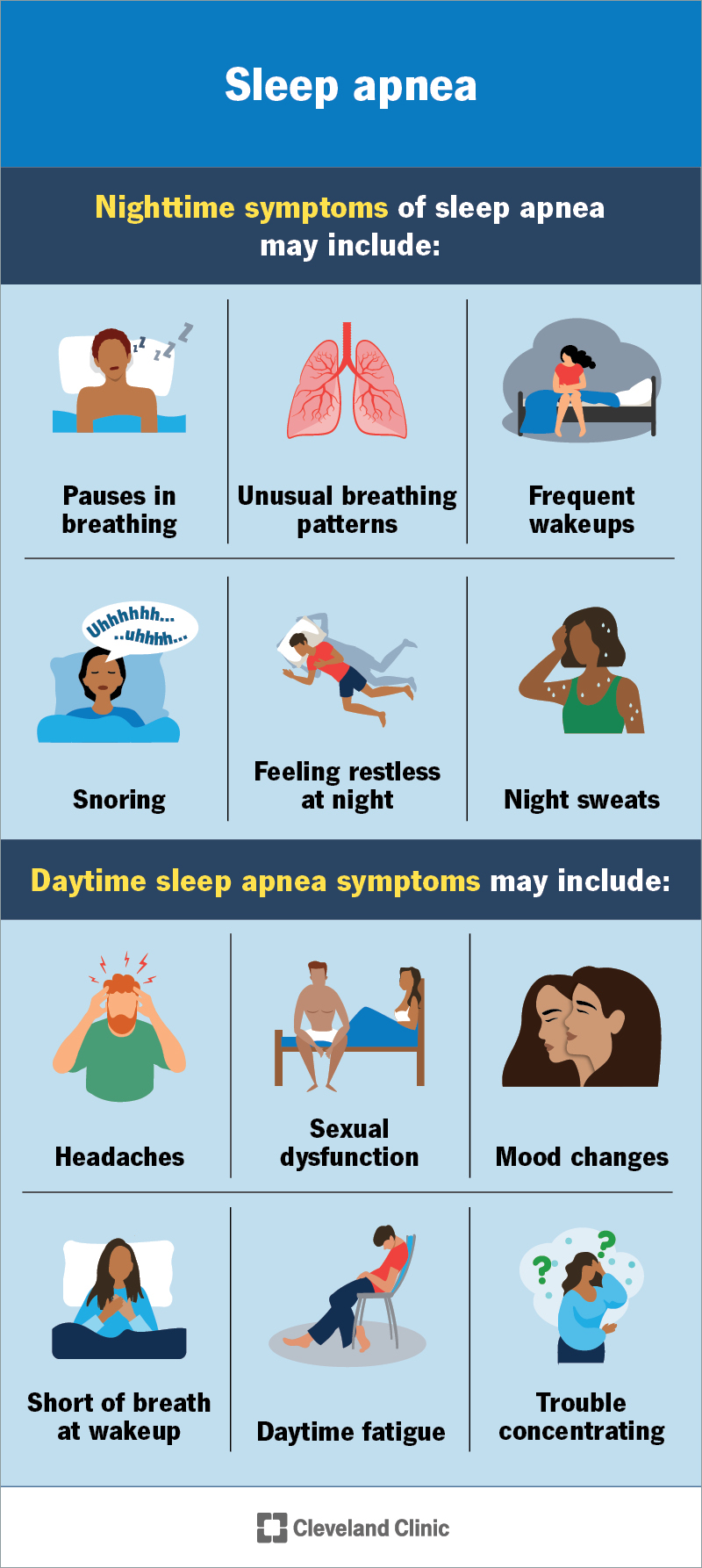
- Sleep apnea: Pauses in breathing during sleep cause frequent micro-arousals, even if you don’t remember waking up. These disruptions delay sleep onset and reduce deep sleep, leaving you tired even after 8 hours in bed.
- Chronic pain: Arthritis, fibromyalgia, back pain, or other chronic pain conditions make it hard to get comfortable, and constant pain signals keep your brain in alert mode.
- Medication side effects: Common culprits include SSRIs and SNRIs (antidepressants), steroids, decongestants, beta-blockers, and even some over-the-counter pain relievers that contain caffeine. Always review your medications with your provider if you’re having trouble sleeping.
- Hormonal changes: Hyperthyroidism (overactive thyroid) increases metabolism and alertness, while menopause and perimenopause often cause night sweats and hot flashes that disrupt sleep onset.
A common mistake I see people make is self-diagnosing insomnia when the root cause is untreated sleep apnea or RLS. Sleep hygiene fixes and quick tips won’t work for these conditions, so a visit to your primary care provider or a sleep study is necessary to get effective, targeted treatment.
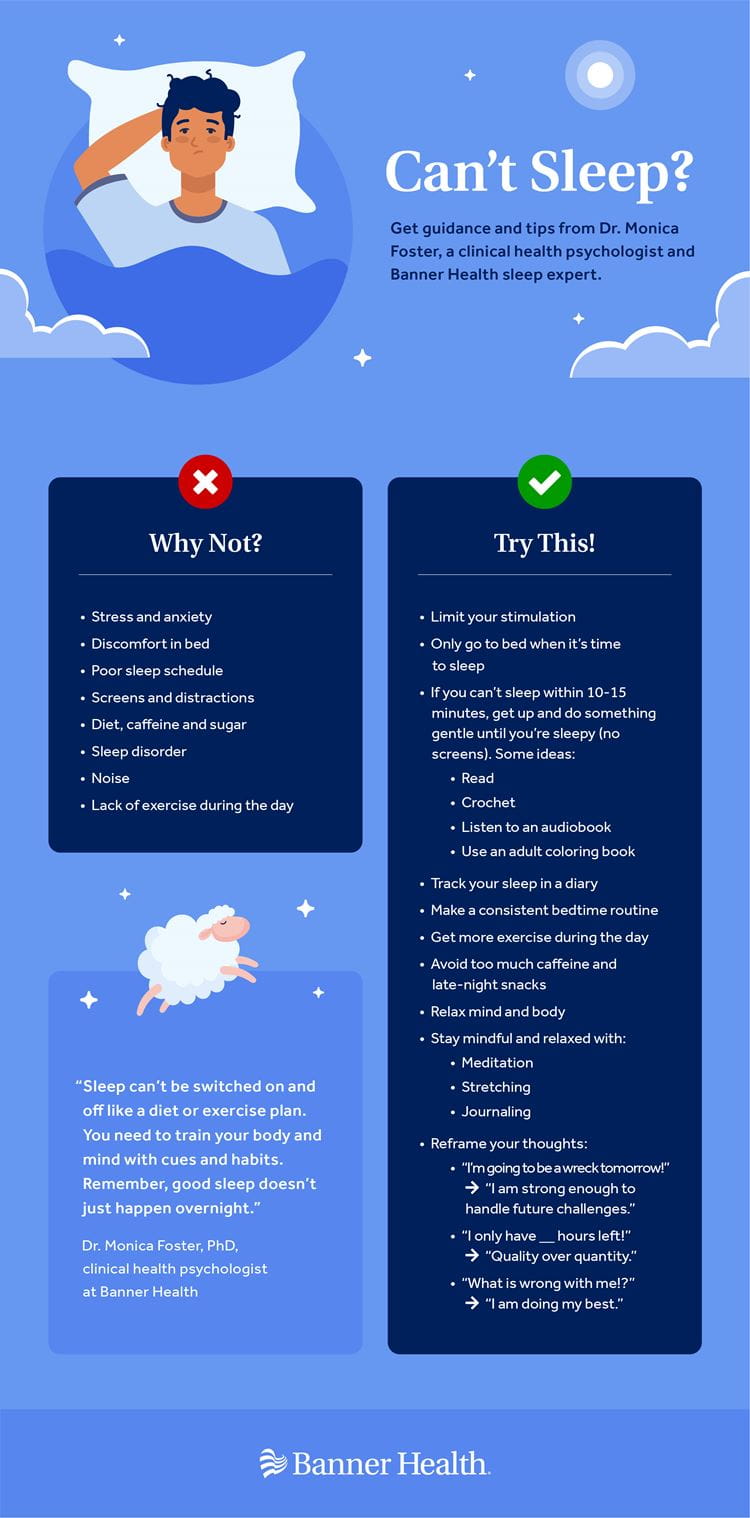
 Sleep Foundation overview of health conditions and medications that interfere with falling asleep.
Source: sleepfoundation
Sleep Foundation overview of health conditions and medications that interfere with falling asleep.
Source: sleepfoundation
Same-Night Quick Fixes to Fall Asleep 20+ Minutes Faster
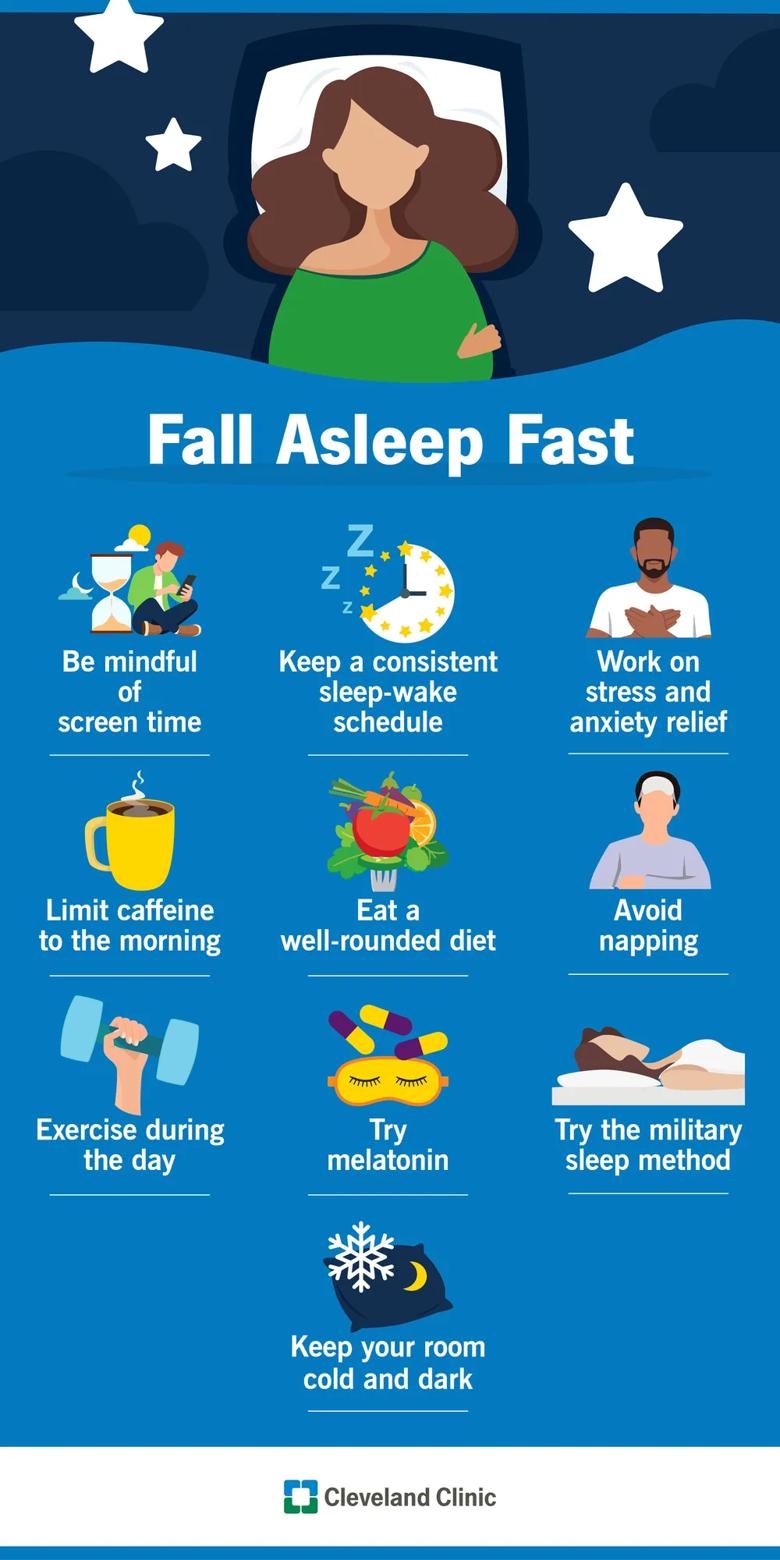
If you’re struggling to fall asleep tonight, try these evidence-backed, low-effort fixes that work for most people. Pick 1-2 to test first—drastic overhauls of your routine are less likely to stick than small, consistent changes:
- Try the 4-7-8 breathing technique Inhale quietly through your nose for 4 seconds, hold your breath for 7 seconds, then exhale slowly through pursed lips for 8 seconds. Repeat 4-5 times. This technique activates your parasympathetic nervous system (the “rest and digest” system), lowering your heart rate and cortisol to quiet your mind.
- Do a 5-minute brain dump Write down every to-do, worry, or unfinished thought running through your head. You don’t need to solve the problems—just get them out of your working memory so your brain can stop ruminating.
- Follow the 20-minute rule If you can’t fall asleep after 20 minutes, get out of bed and go to a dimly lit room. Do a boring, low-stimulation activity (fold laundry, read a physical book you’ve already read, sort a junk drawer) until you feel sleepy. Don’t lie in bed awake—this prevents your brain from associating bed with frustration and alertness.
- Take a warm shower 90 minutes before bed Raising your core body temperature with a warm shower or bath triggers a natural temperature drop 90 minutes later, which signals your body it’s time to sleep.
- Stick to your wake time even if you only slept 3 hours Waking up at the same time every day (even on weekends) anchors your circadian rhythm. After 2-3 days of consistent wake times, your body will start releasing melatonin earlier in the evening, making it easier to fall asleep at your desired bedtime.
These fixes work best when paired with addressing the root cause of your slow sleep onset, rather than just masking symptoms. If you’re dealing with chronic sleep issues, CBT-I is the most effective long-term solution, with no risk of dependency or side effects.
When to See a Healthcare Provider for Persistent Sleep Issues
Most cases of slow sleep onset can be fixed with lifestyle and environmental changes, but some cases require professional support. Schedule an appointment with your primary care provider if:
- You have trouble falling asleep at least 3 nights a week for 3 or more consecutive months, even after trying consistent sleep hygiene and lifestyle changes.
- Daytime sleepiness is affecting your work, school, or safety (e.g., you fall asleep while driving or operating machinery).
- You snore loudly, gasp for air, or stop breathing during sleep (signs of sleep apnea).
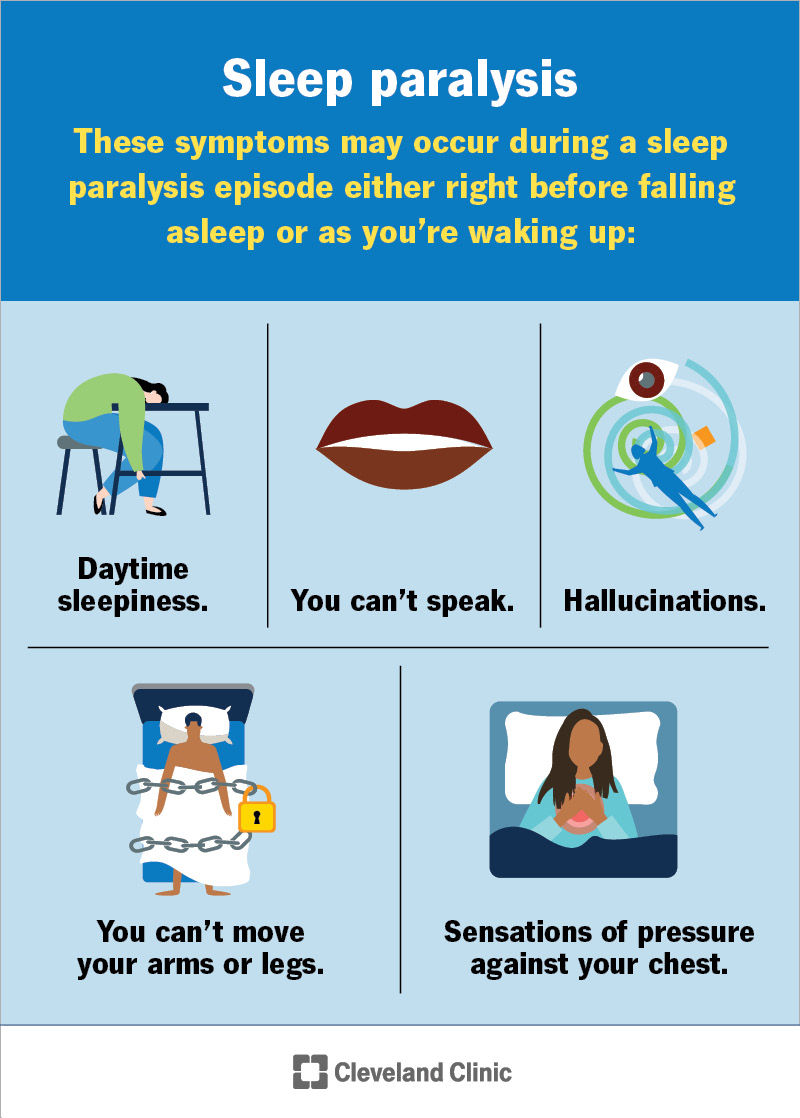
- You have leg tingling, crawling sensations, or an uncontrollable urge to move your legs at bedtime (signs of RLS).
- You’re experiencing mood changes (depression, anxiety) that last more than 2 weeks and are paired with sleep issues.
Your provider can assess for underlying medical conditions, adjust medications that may be interfering with sleep, and refer you to a sleep specialist or CBT-I therapist if needed. Early intervention can prevent months of lost sleep and reduce your risk of long-term health issues linked to chronic sleep deprivation, like heart disease and diabetes.
Illustration of the frustration of chronic difficulty falling asleep, a sign to seek professional care.
Source: unitypoint
Frequently Asked Questions
What is a normal time to fall asleep?
Normal sleep latency for healthy adults is 10 to 20 minutes, per AASM guidelines. Falling asleep in under 5 minutes consistently may indicate severe sleep debt, while taking longer than 30 minutes 3+ nights a week for 3+ months meets the clinical definition of chronic insomnia.
Can blue light really stop me from falling asleep fast?
Yes. Short-wavelength blue light (460-480 nanometers) from phones, laptops, and LED screens suppresses melatonin production by up to 50% when exposure occurs in the 2 hours before bed, per Harvard Health research. Even dim screen light can delay sleep onset by 30+ minutes in sensitive people.
Is caffeine the main reason I can’t fall asleep fast?
Caffeine is one of the most common modifiable causes of delayed sleep onset. It blocks adenosine, the chemical that builds up in your brain to create sleep pressure, and has a half-life of 5-6 hours. A 4pm coffee will still have 25% of its caffeine in your system at 10pm, enough to reduce sleep drive for many people.
Does exercise help or hurt falling asleep quickly?
Moderate aerobic exercise (walking, cycling, swimming) completed 3+ hours before bed improves sleep onset latency and deep sleep quality. Vigorous exercise (HIIT, weightlifting) within 2 hours of bed raises core body temperature and cortisol, which can delay sleep onset by 15-30 minutes in some people.
Can worrying about sleep make it worse?
Yes. The “sleep worry feedback loop” is a well-documented driver of chronic insomnia. When you lie in bed worrying about not falling asleep, your brain releases cortisol and activates the sympathetic nervous system (fight-or-flight mode), which directly counteracts the melatonin and parasympathetic activity needed for sleep onset. Breaking this loop is the core of CBT-I treatment.
Can certain foods help me fall asleep faster?
Small, sleep-promoting snacks 30-60 minutes before bed can help if mild hunger is keeping you awake. Options include a small banana (high in magnesium and potassium, which relax muscles), a handful of almonds, or warm herbal tea (chamomile, valerian root). Avoid large, heavy, spicy, or sugary snacks, which can cause indigestion and raise core temperature.
Conclusion
Falling asleep fast rarely comes from a single “magic fix”—it’s almost always the result of small, aligned changes to your biology, habits, environment, and stress management. Start by auditing the four core cause categories to identify your biggest barriers: if you’re drinking caffeine after 2pm, cut that first; if your bedroom is too bright, add blackout curtains or an eye mask; if you’re worrying about sleep, try the 5-minute brain dump before bed.
Pick one small change to test for the next 7 days, and track your sleep onset time in a journal or app to see what works. If you don’t see improvement after 2-3 weeks of consistent changes, don’t hesitate to reach out to a healthcare provider to rule out underlying medical causes.
Ready to build a consistent, personalized sleep routine that cuts your sleep onset time in half? Our step-by-step bedtime routine framework bedtime routine framework walks you through customizing a wind-down process that fits your schedule, preferences, and unique sleep barriers.

Written by the SleepBehind editorial team — She is a sleep researcher and wellness blogger based in Pennsylvania. Passionate about helping people optimize their sleep.