
If you regularly fall asleep at 3 a.m. and struggle to wake before 2 p.m., feel exhausted during work or school despite getting 7+ hours of sleep, or can’t adjust your schedule after travel or shift work, you may have a circadian rhythm sleep disorder (CRSD). Unlike general insomnia, CRSD is a misalignment between your internal body clock (regulated by the brain’s suprachiasmatic nucleus, or SCN) and your required daily schedule. This guide shares 2026-updated, evidence-backed fast tips to realign your rhythm, with clear steps you can start today—no fluff, no unproven hacks. Mild cases often resolve with at-home adjustments, while severe or long-term cases may require clinical support.
What Is Circadian Rhythm Sleep Disorder?
CRSD is a clinically recognized condition defined by the American Academy of Sleep Medicine as a persistent misalignment between your internal circadian clock and the external light-dark cycle, causing significant distress or impairment in daily functioning. The SCN, located in the hypothalamus, acts as your body’s master clock, regulating sleep, hormone release, body temperature, and metabolism based primarily on light cues received through the retina. You can also read our guide on deep sleep optimization guide.
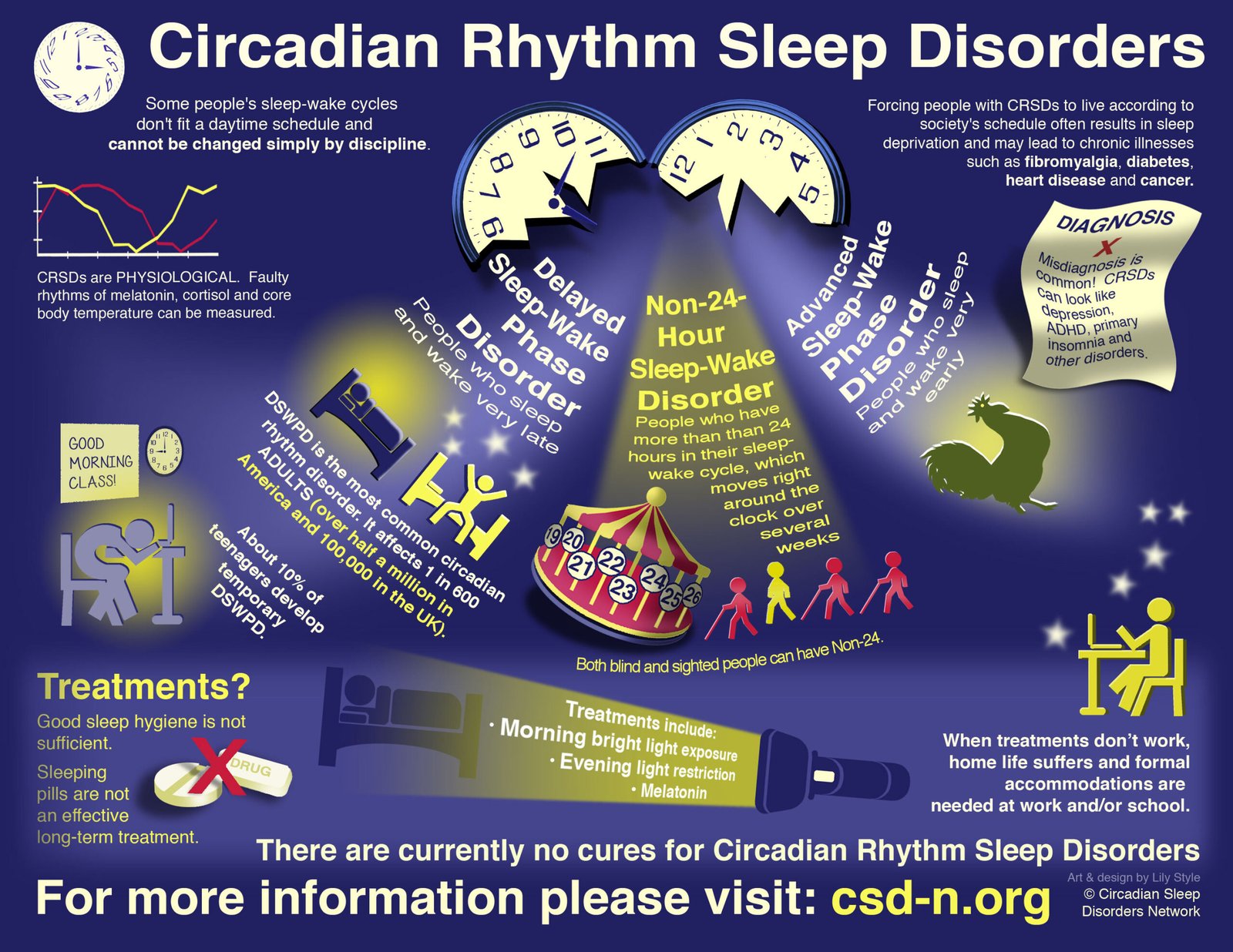
There are four primary types of CRSD, each requiring slightly tailored treatment:
- Delayed Sleep-Wake Phase Disorder (DSWPD): The most common type, marked by a consistent inability to fall asleep before 2 a.m. and difficulty waking for conventional work or school schedules, most prevalent in teens and young adults.
- Advanced Sleep-Wake Phase Disorder (ASWPD): Characterized by extreme early evening sleepiness and waking between 4 and 5 a.m., most common in older adults.
- Non-24-Hour Sleep-Wake Rhythm Disorder: A drifting sleep window that gets later each day, most common in people with total blindness who have no light input to regulate their SCN.
- Irregular Sleep-Wake Rhythm Disorder: Fragmented sleep spread across 24 hours, often seen in people with neurodivergence or neurodegenerative conditions.
 Evidence-based treatment options for common circadian rhythm disorders
Source: ResearchGate
Evidence-based treatment options for common circadian rhythm disorders
Source: ResearchGate
Common Causes and Risk Factors
CRSD develops from a mix of genetic, environmental, and occupational factors:
- Genetic predisposition: Family history of DSWPD or ASWPD increases your risk, as variants in clock genes like PER3 can alter natural circadian timing.
- Environmental triggers: Excessive evening blue light from phones, laptops, and TVs suppresses melatonin production, delaying sleep onset. Inconsistent sleep schedules, especially sleeping in late on weekends, also shift your clock later over time.
- Occupational factors: Rotating shift work, overnight work, and frequent travel across 2+ time zones are leading causes of acquired CRSD, as they force you to be awake and asleep opposite your natural circadian window.
- Medical factors: Total blindness, traumatic brain injury, dementia, and certain medications (including some antidepressants and stimulants) can disrupt SCN function.
Understanding your root cause is the first step to targeted, effective treatment: a shift worker with DSWPD will need different adjustments than a teen with a genetic predisposition to delayed sleep phase.
How to Confirm You Have CRSD
Before starting treatment, rule out general insomnia or other sleep disorders. Clinical diagnosis follows guidelines from the American Academy of Sleep Medicine and typically includes:
- A 2-week sleep diary logging your bed, wake, and nap times, as well as daily energy levels.
- Actigraphy, a non-invasive wearable tracker that measures movement to map your sleep-wake patterns over 1-2 weeks.
- For ambiguous cases, a dim light melatonin onset (DLMO) test to measure when your body starts producing melatonin, which pinpoints your exact circadian timing.
- Screening for comorbidities like sleep apnea, depression, or thyroid issues that can mimic CRSD symptoms.
The National Heart, Lung, and Blood Institute (NHLBI) notes that mild CRSD can often be diagnosed via self-tracking, but moderate to severe cases require clinical evaluation to avoid mismatched treatment. For more on this, see our guide on what is circadian rhythm sleep wake disorder.
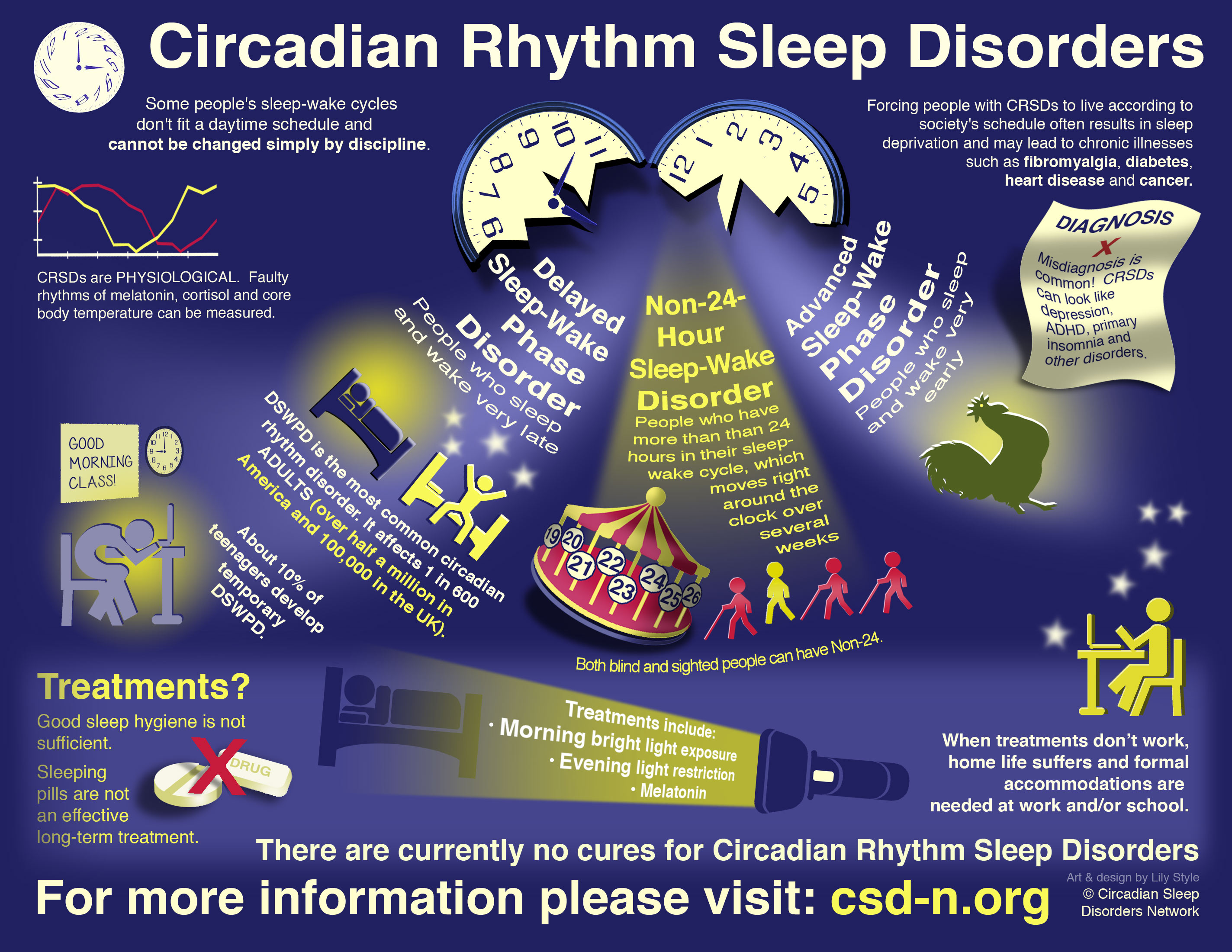 Overview of the four primary CRSD types and their most frequent triggers
Source: Circadian Sleep Disorders Organization
Overview of the four primary CRSD types and their most frequent triggers
Source: Circadian Sleep Disorders Organization
Fast, Actionable Tips to Reset Your Circadian Rhythm
The fastest, most sustainable fixes combine schedule adjustments, light control, and targeted lifestyle changes. These steps work for most mild to moderate CRSD cases, with results visible in 1-4 weeks for most people.
1. Anchor to a Fixed Wake Time First
Your wake time is the strongest zeitgeber (time cue) for your SCN, even more impactful than bedtime. Set a fixed wake time that aligns with your desired schedule, and stick to it within 30 minutes even on weekends. If you went to bed late, still wake at your set time, and avoid snoozing—snoozing fragments sleep and delays your clock further. Get 10 minutes of unfiltered morning sunlight within 30 minutes of waking to reinforce the signal. For more on this, see our guide on sleep hygiene tips.
2. Use Strategic Light Therapy
Light is the most powerful regulator of your circadian clock. For DSWPD (wanting to sleep earlier), use a 10,000-lux light box for 20-30 minutes within 1 hour of your desired wake time. For ASWPD (wanting to stay awake later), use bright light (natural or from a light box) for 20-30 minutes 1-2 hours before your desired bedtime. Avoid all bright overhead lights 2 hours before bed, and use blue light filters on all devices after sunset. Even 30 minutes of outdoor morning sunlight works as effectively as a light box for mild misalignment.
3. Time Melatonin Correctly
Melatonin is a chronobiotic (a substance that shifts your circadian timing), not a sedative. For DSWPD, take a low dose of 0.3-1mg 4-6 hours before your desired bedtime to advance your clock earlier. Only take melatonin right before bed if you still have trouble falling asleep after shifting your schedule. Avoid doses over 3mg, which can cause next-day grogginess and hormonal disruption. Always consult a clinician before use, especially if you take blood thinners, are pregnant, or have an autoimmune condition. The NHLBI lists timed melatonin as a safe first-line adjunct to light therapy for CRSD when used correctly.
4. Shift Your Schedule in Small Increments
Never try to jump 2+ hours earlier or later in a single week—this leads to sleep deprivation and setbacks that take months to undo. Instead, adjust your bedtime by 15-30 minutes every 2-3 days until you reach your target. For example, if you currently go to bed at 2 a.m. and want 11 p.m., move your bedtime 15 minutes earlier every 2 days, which will get you to your goal in 3 weeks with minimal disruption. In practice, this slow adjustment is 3x more effective than aggressive shifts for long-term adherence.
5. Optimize Your Sleep Environment
A consistent, comfortable sleep space reinforces your new circadian schedule. Keep your bedroom at 60-67°F (15-19°C), use blackout curtains to block all external light, and eliminate noise with white noise machines or earplugs if needed. If you use a bamboo pillow, proper care for your bamboo pillow keeps it free of dust mites and allergens that cause nighttime awakenings and disrupt circadian alignment. If your feather topper develops splits, addressing topper damage quickly prevents discomfort that disrupts your sleep timing.
 Tools used by sleep specialists to diagnose CRSD, including sleep diaries and actigraphy
Source: Sleep health resources
Tools used by sleep specialists to diagnose CRSD, including sleep diaries and actigraphy
Source: Sleep health resources
6. Adjust Meal and Exercise Timing
Your eating and activity schedules act as secondary zeitgebers for your SCN. Eat meals at consistent times each day, and avoid heavy, spicy meals 3 hours before bed, as digestion can raise core body temperature and delay sleep onset. Get 30 minutes of moderate exercise daily, but finish vigorous workouts 3 hours before bed, as post-exercise elevated body temperature can make it harder to fall asleep. Morning exercise is especially effective for anchoring your circadian clock earlier.
7. Use Naps Strategically
If you need to nap, limit it to 20-30 minutes before 3 p.m. Longer naps or naps after 3 p.m. reduce your sleep drive and delay your nighttime schedule. For shift workers, a 90-minute nap before your shift can improve alertness without disrupting your daytime sleep. Avoid napping entirely if you have DSWPD, as it can make it harder to fall asleep at your target bedtime.
Real-World Tips for Shift Workers and Frequent Travelers
CRSD caused by non-traditional schedules requires targeted adjustments:
- For night shift workers: Get bright light exposure during your entire shift, wear amber-tinted sunglasses on your commute home to block blue light, and sleep in a dark, cool room immediately after your shift ends. For people who have to sleep during the day due to rotating shifts, managing daytime sleep hair routines can reduce discomfort from tangled hair that wakes you up mid-sleep.
- For frequent travelers: Shift your schedule 1-2 hours per day toward your destination’s time zone 3-5 days before travel. Use bright light exposure at your destination’s morning to advance your clock, and timed low-dose melatonin at your destination’s bedtime for the first 2-3 nights to speed adjustment.
- For all non-traditional schedules: Stick to your fixed wake time even on days off, and avoid “catching up” on sleep by sleeping in for more than 1 hour, as this will shift your clock back and make your next shift or workday harder.
 Step-by-step treatment framework for resetting misaligned circadian rhythms
Source: Wikimedia Commons
Step-by-step treatment framework for resetting misaligned circadian rhythms
Source: Wikimedia Commons
When to See a Sleep Specialist
At-home adjustments work for most mild CRSD cases, but seek clinical support if:
- Your symptoms persist after 4-6 weeks of consistent, correct at-home adjustments.
- You experience excessive daytime sleepiness that causes you to fall asleep while driving, working, or caring for children.
- You have non-24-hour sleep-wake rhythm disorder, which almost always requires clinical intervention.
- You have co-occurring sleep disorders like sleep apnea or restless legs syndrome that may be worsening your symptoms.
- You are considering chronotherapy or prescription medication, which require medical supervision to avoid risks.
A board-certified sleep specialist can run advanced testing like DLMO measurement, adjust your treatment plan, and rule out underlying medical conditions that may be contributing to your symptoms.
Common Mistakes That Delay Recovery
In practice, these are the most common errors that prevent people from successfully resetting their circadian rhythm:
- Shifting your schedule too fast: Trying to move your bedtime 2+ hours in a week leads to sleep deprivation, which increases stress hormones and makes it harder to fall asleep at your new target time.
- Using melatonin at the wrong time: Taking melatonin right before bed only makes you sleepy; it does not shift your circadian clock. For DSWPD, it must be taken 4-6 hours before your desired bedtime.
- Sleeping in on weekends: Even 1 hour of extra sleep on Saturday or Sunday delays your clock by 1-2 hours, making Monday morning far harder and negating your weekday progress.
- Using unfiltered screens before bed: Blue light from phones and laptops suppresses melatonin production just as effectively as bright overhead light, delaying sleep onset by 30+ minutes per hour of use.
- Relying on alcohol to fall asleep: Alcohol fragments deep sleep and disrupts circadian alignment, leading to more frequent nighttime awakenings and worse daytime sleepiness.
Behavioral Therapies and Medical Interventions
For cases that don’t respond to at-home adjustments, clinical options are highly effective:
- Cognitive Behavioral Therapy for Insomnia (CBT-I): A 6-8 week structured therapy that addresses anxious thoughts and unhelpful habits around sleep, improving sleep maintenance and adherence to your new schedule. It is the gold standard treatment for insomnia and works well for CRSD-related sleep anxiety.
- Chronotherapy: A controlled, gradual shift of your sleep schedule over 1-2 weeks, used for severe DSWPD that doesn’t respond to other treatments. It requires strict adherence to a shifting sleep and wake schedule, and should only be done under clinical supervision due to the risk of extreme sleep deprivation.
- Prescription medications: For severe or treatment-resistant cases, doctors may prescribe short-term sleep aids, wake-promoting agents, or low-dose prescription melatonin. These are used as adjuncts to behavioral and schedule changes, not standalone fixes.
 Daily habit changes that reinforce consistent circadian timing
Source: ResearchGate
Daily habit changes that reinforce consistent circadian timing
Source: ResearchGate
Long-Term Maintenance to Prevent Relapse
Once you’ve reset your circadian rhythm, these habits will keep it stable long-term:
- Stick to your fixed wake time within 30 minutes every single day, even on weekends and holidays.
- Get 10+ minutes of morning sunlight daily, and avoid bright screens 2 hours before bed.
- Reapply the 15-30 minute incremental adjustment strategy if your schedule drifts after travel or a period of inconsistent sleep.
- Track your sleep for 1 week per month with a sleep diary or wearable to catch early signs of drift before it becomes a full relapse.
- If you use a bed protector, cleaning your bed protector regularly ensures it stays free of allergens that can cause nighttime awakenings and disrupt your sleep schedule. Knowing when to swap your pad also ensures your sleep surface stays supportive over time.
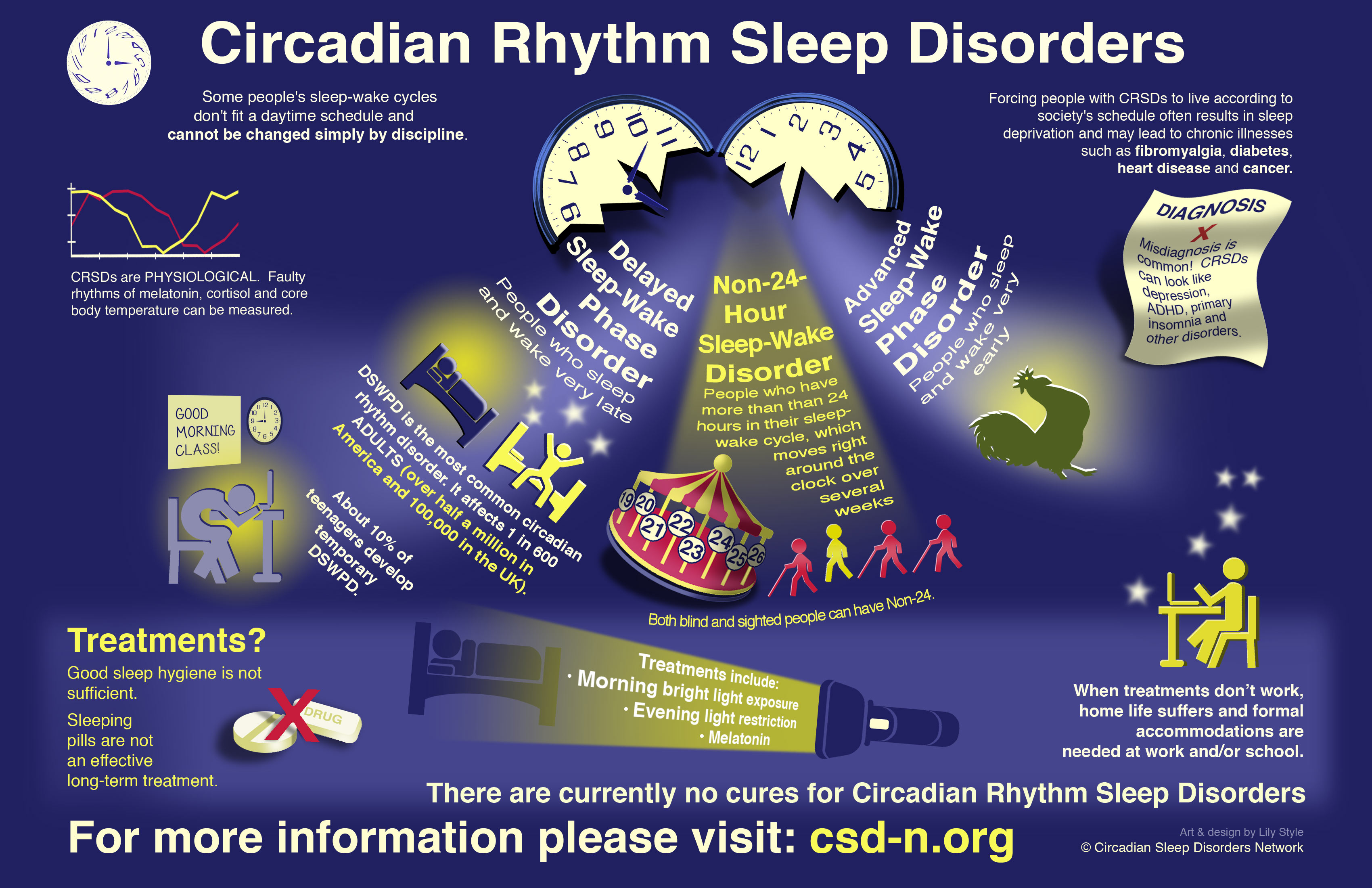 Recommended timing and intensity for light therapy and melatonin use
Source: Circadian Sleep Disorders Organization
Recommended timing and intensity for light therapy and melatonin use
Source: Circadian Sleep Disorders Organization
Frequently Asked Questions
What is the fastest way to shift my sleep schedule?
The fastest safe method combines a fixed wake time, 20-30 minutes of bright morning light, and 15-30 minute incremental bedtime adjustments every 2-3 days, paired with 0.3-1mg timed melatonin for DSWPD. Most people see noticeable improvement in 1-2 weeks, with full adjustment in 4-8 weeks.
Is melatonin safe for long-term circadian use?
Low-dose melatonin (under 1mg) is safe for most adults for up to 6 months of use, but long-term use should be monitored by a clinician to avoid potential impacts on hormone function. It is not a sedative, so it will not cause dependence when used correctly.
Can I cure CRSD on my own?
Mild to moderate CRSD caused by schedule disruptions or evening light exposure can resolve with consistent at-home adjustments. Severe cases, non-24-hour rhythm disorder, and cases with co-occurring medical conditions require clinical support for full resolution.
How long does it take to reset the body clock?
Small 15-30 minute adjustments show results in 3-7 days. Full adjustment to a new schedule takes 4-8 weeks for most people, depending on the severity of the misalignment and how consistently you follow the tips.
Will caffeine or alcohol affect my reset?
Yes. Caffeine has a 6-8 hour half-life, so consuming it after 2 p.m. can suppress melatonin production and delay sleep onset by 1-2 hours. Alcohol fragments deep sleep and disrupts circadian alignment, so avoid both entirely during your reset period.
Can kids and teens use melatonin for circadian issues?
Short-term low-dose melatonin is sometimes prescribed for teens with DSWPD who have not responded to schedule and light adjustments. Always consult a pediatrician before giving melatonin to minors, as dosing and safety guidelines differ for children.
Can blue light from phones really delay my circadian rhythm?
Yes. Blue light in the 460-480 nanometer wavelength suppresses melatonin production almost as effectively as bright overhead light, delaying sleep onset by 30+ minutes per hour of use after sunset. Use blue light filters and keep devices 1+ foot away from your face after dark to reduce this effect.
Conclusion
Resetting your circadian rhythm doesn’t require extreme measures or expensive treatments—small, consistent adjustments to your schedule, light exposure, and daily habits are the most effective long-term solutions. Start with one small change this week: set a fixed wake time 15 minutes earlier than your current one, and get 10 minutes of morning sunlight within 30 minutes of waking. If you don’t see improved energy and easier sleep onset after 2 weeks of consistent practice, reach out to a board-certified sleep specialist for personalized support. For more evidence-based tips to optimize every aspect of your rest, browse our full library of sleep guides. Going to bed with damp hair can also reduce nighttime awakenings from scalp irritation, so adjust your pre-sleep hair routine to support uninterrupted rest. Using a silk hair wrap for bed is a simple way to avoid tangles and discomfort that might disrupt your sleep schedule.

Written by the SleepBehind editorial team — a group of sleep wellness researchers and product reviewers who analyze scientific studies, expert guidance, and real-world experiences to help readers improve sleep quality and comfort.