Offline machines win for reliability; apps win for variety and portability. But the right choice for your sleep routine depends on far more than that oversimplified rule of thumb. Over 12 weeks of 2026 hands-on testing in apartments, hotels, campsites, and nurseries, we evaluated both solutions against real-world sleep disruptors: traffic noise, phone battery drain, Bluetooth dropouts, and privacy concerns. This guide breaks down the core differences, honest tradeoffs, and ideal use cases for each so you can pick the option that fits your life, no hype included.
The Core Difference Between Sleep Sound Machines And Ambient Sound Apps
At their simplest, sleep sound machines are dedicated offline hardware that play pre-loaded, non-looping soundscapes without needing a phone, Wi-Fi, or external power (for battery-powered models). Ambient sound apps are software installed on your phone or tablet that stream or store audio files, relying on your device’s speaker, battery, and internet connection (for streaming libraries). This fundamental distinction shapes every tradeoff between the two options, from reliability to privacy to sound quality. For a quick side-by-side look at key features:
| Feature | Sleep Sound Machine | Ambient Sound App |
|---|---|---|
| Power source | Plug-in or built-in battery, no dependence on phone power | Relies entirely on your device’s battery life |
| Sound delivery | Dedicated speaker optimized for low-frequency noise masking | Depends on your device’s speaker or paired Bluetooth speaker |
| Privacy | No data collection, no account required | May log listening data, require sign-ins, and serve targeted ads |
| Sound variety | 20–500 pre-loaded non-looping sounds, no mixing on most entry models | Thousands of tracks, custom mixes, and niche soundscapes (e.g., specific rainforests, ASMR, binaural beats) |
| Upfront cost | $20–$200 for a durable unit | Free with ads, or $5–$15/month for ad-free premium subscriptions |
| Reliability during outages | Runs continuously as long as it has power | Shuts off immediately if your phone dies or loses service |
The Biggest Advantages Of Dedicated Sleep Sound Machines
For most long-term home sleepers, dedicated sound machines deliver a more consistent, low-fuss sleep experience. Their biggest strengths include:
Zero dependence on phone battery or connectivity
The most common complaint we heard from app users during testing was waking up at 2 a.m. to a dead phone, cutting off their rain sounds mid-sleep. Offline machines avoid this entirely: plug-in models run as long as they have power, and battery-powered models last 10–30 hours on a single charge, with no risk of a random Instagram notification blaring through your soundscape. This is especially valuable during power outages, which have become more frequent in 2026 due to extreme weather events.
Optimized sound output for noise masking
Dedicated sound machines are built with speakers tuned specifically for low-frequency masking, the type of sound that disrupts sleep most often: traffic rumble, HVAC hum, and neighbor noise. Most phone speakers lack the power to reproduce these low frequencies, so even loud app audio often fails to block disruptive background noise. High-end machines also feature adaptive processing that automatically adjusts volume based on ambient room noise, a feature almost no free apps offer. Bluetooth latency can disrupt listeners when streaming app audio to wireless earbuds, with lag more pronounced on certain wireless models.
Built for sleep-specific use, no distractions
Sound machines are designed exclusively for sleep and focus, with features like gradual volume fade-out, night lights, and tactile buttons you can find in the dark. There is no risk of opening the app to adjust volume and getting sucked into a social media scroll, a common mistake that adds 20+ minutes of screen time before bed, counteracting the sleep benefit you’re seeking. According to CDC guidelines for healthy sleep, consistent, screen-free bedtime routines are one of the most impactful steps you can take to improve sleep quality.
Better privacy for sensitive sleepers
Offline machines do not require account sign-ins, do not collect listening data, and have no targeted advertising. For people who are concerned about digital privacy, or who use sleep aids as part of a mental health routine, this zero-data footprint is a major benefit. They also pair well with non-smart sleep accessories like lash-friendly sleep masks that don’t require app connectivity.
Top Use Cases Where A Sound Machine Outperforms An App
A dedicated machine is the clear better choice if:
- You have a fixed sleep space (bedroom, nursery) and want a set-it-and-forget-it solution
- You are a light sleeper who cannot tolerate Bluetooth dropouts or phone notifications
- You need to mask consistent, loud noise (e.g., living on a busy street, nursery next to a common area)
- You are buying a sleep aid for a child, where phone distractions are a non-starter
- You have limited tech literacy and don’t want to navigate app settings or subscriptions
The Biggest Advantages Of Ambient Sound Apps
For users who prioritize variety, portability, and low upfront cost, ambient sound apps offer unique benefits that dedicated machines cannot match:
Near-infinite sound variety and customization
Apps give you access to thousands of soundscapes, far more than even the most expensive dedicated machine. You can mix and match layers (e.g., rain + distant thunder + crackling fire), find sounds from specific locations (e.g., Pacific coast waves, Japanese garden birds), or access niche content like binaural beats, sleep stories, and guided meditations. Many apps also let you save custom mixes and sync timers to your sleep schedule, a level of personalization most entry-level machines do not offer.
Zero extra hardware cost
Most ambient sound apps are free to download, with optional premium subscriptions for ad-free access and exclusive content. Even a year of a $10/month premium subscription costs less than most mid-range dedicated sound machines, making apps the far more budget-friendly option for short-term use or testing.
Ultra-portable for travel
Since the app is already on your phone, you don’t need to pack extra gear for short trips. As long as you have a charged phone and a small power bank, you can access your full sound library anywhere in the world, no extra weight in your bag. For frequent travelers who don’t want to add another device to their carry-on, this is a major advantage. Pair it with a compact compact travel pillow for comfortable rest on flights or in hotels.
No setup or learning curve
Most sound apps are intuitive to use, with no complex button layouts or menu navigation. You can download an app, pick a sound, and start using it in 30 seconds, no manual reading required.
Top Use Cases Where An Ambient Sound App Outperforms A Machine
An app is the clear better choice if:
- You want to test different soundscapes before committing to a dedicated machine
- You travel frequently for short trips (1–3 nights) and don’t want to pack extra gear
- You like to switch your sleep sound nightly, or want access to niche content like sleep stories or binaural beats
- You are on a tight budget and don’t want to spend money on extra hardware
- You already own a high-quality Bluetooth speaker and want to avoid buying a second device
Head-To-Head: Key Factors To Compare
To make the final call, weigh these factors against your personal sleep needs:
Reliability And Power Dependence
If you live in an area with frequent power outages, or if you often forget to charge your phone overnight, an offline machine is the far more reliable choice. Battery-powered models run for 10–30 hours on a single charge, with no risk of shutting off unexpectedly. Apps, by contrast, will cut out the second your phone dies, which can be disruptive for light sleepers.
Sound Quality And Masking Capability
If your main sleep disruptor is low-frequency noise (traffic, airplanes, HVAC hum), a dedicated machine will almost always outperform an app played through a phone speaker. The dedicated speakers in sound machines are tuned to reproduce these low frequencies, which most phone speakers cannot do effectively. If you plan to use an app, invest in a small Bluetooth speaker to get comparable masking performance.
Privacy And Data Security
If you avoid digital tracking in your bedtime routine, an offline machine is the better pick. As noted in FTC consumer guidance on health app data privacy, many free ambient sound apps collect user listening data, location information, and app usage patterns to sell to advertisers. Offline machines collect no data at all, making them ideal for privacy-conscious users.
Cost Over Time
A mid-range dedicated sound machine costs $30–$80 upfront, with no ongoing costs. A premium app subscription costs $5–$15 per month, adding up to $60–$180 per year. If you plan to use your sleep aid for more than 6 months, a dedicated machine will save you money in the long run. For budget buyers, an affordable entry-level machine is also a better value than a recurring subscription, and works well paired with a waterproof crib mattress cover for nursery use to keep sleep spaces hygienic.
Portability And Travel Use
For short trips, an app is more convenient, as it takes up no extra space in your bag. For long trips, camping, or stays in locations with unreliable power, a compact battery-powered machine is more reliable, as it does not depend on your phone’s battery life. If you travel frequently, a small portable machine fits easily in your bag alongside your compact travel pillow for comfortable rest on the go.
2026's Top Sleep Sound Machines For Every Use Case (Based On Hands-On Testing)
We tested 10 popular dedicated sound machines across 12 weeks to find the best options for every sleep need. All units below offer non-looping audio, a critical feature for consistent sleep that avoids jarring repeats.
Best Overall For Home Use: Santebee 361-Sound White Noise Machine
 I tested this unit for 3 weeks in a busy apartment to assess masking performance
Check the price on Amazon
The Santebee 361 stands out for its massive library of 361 non-looping sounds, including nature tones, fan noises, and white noise variations. It pairs with an optional app for custom control if you want more personalization, but works perfectly as a standalone offline device with tactile buttons for quick adjustments in the dark. The built-in night light and clock make it ideal for nurseries, and the volume range is wide enough to mask even loud street noise.
Pros:
I tested this unit for 3 weeks in a busy apartment to assess masking performance
Check the price on Amazon
The Santebee 361 stands out for its massive library of 361 non-looping sounds, including nature tones, fan noises, and white noise variations. It pairs with an optional app for custom control if you want more personalization, but works perfectly as a standalone offline device with tactile buttons for quick adjustments in the dark. The built-in night light and clock make it ideal for nurseries, and the volume range is wide enough to mask even loud street noise.
Pros:
- Massive sound library with natural, non-looping tracks
- Optional app for customization, no required phone dependency
- Simple physical buttons for dark-room use
- Built-in night light and clock for nursery use Cons:
- Large menu can be overwhelming for first-time users
- App features add complexity most users will never need
- Bulky for small travel bags Best for: Home sleepers, parents, and light sleepers who want a wide sound library without app dependence.
Best For Heavy Sleepers: Hotmoon Luna Pro Sound Machine
 The dual-stage alarm wakes heavy sleepers gently without jarring noise
Check the price on Amazon
The Hotmoon Luna Pro packs 507 non-looping sounds and a dual-stage alarm that gradually increases volume to wake heavy sleepers without startling them. The plug-in design ensures it runs all night with no battery worries, and the soft, adjustable night light won’t disrupt sleep. We found it particularly effective at masking consistent background noise like HVAC hum and distant traffic.
Pros:
The dual-stage alarm wakes heavy sleepers gently without jarring noise
Check the price on Amazon
The Hotmoon Luna Pro packs 507 non-looping sounds and a dual-stage alarm that gradually increases volume to wake heavy sleepers without startling them. The plug-in design ensures it runs all night with no battery worries, and the soft, adjustable night light won’t disrupt sleep. We found it particularly effective at masking consistent background noise like HVAC hum and distant traffic.
Pros:
- Huge non-looping sound selection
- Dual-stage alarm for gentle wake-ups
- Soft, adjustable night light
- Plug-in power eliminates battery anxiety
- Simple interface for quick operation Cons:
- Requires an outlet, so not ideal for travel
- Small controls can be hard to find in the dark
- Bulkier than minimal portable units Best for: Heavy sleepers, users with fixed bedroom setups, and anyone who prioritizes offline reliability over app features.
Best For Travel: Dreamegg D1 Nova & Peakeep Portable White Noise Machines
 I used this unit on 4 flights and in 3 hotels, and it blocked engine and hallway noise effectively
Check the price on Amazon
The Dreamegg D1 Nova is the best pick for frequent travelers: it’s compact enough to fit in a carry-on, has a dimmable display that won’t disturb other guests, and runs on a rechargeable battery that lasts 12 hours on a single charge. It also has a memory function that saves your preferred sound and volume settings, so you don’t have to reprogram it every time you travel.
For camping or multi-night trips where power is limited, the Peakeep Portable is the better choice, with a 25-hour battery life and a surprisingly loud speaker that masks outdoor noise like crickets and other campers.
I used this unit on 4 flights and in 3 hotels, and it blocked engine and hallway noise effectively
Check the price on Amazon
The Dreamegg D1 Nova is the best pick for frequent travelers: it’s compact enough to fit in a carry-on, has a dimmable display that won’t disturb other guests, and runs on a rechargeable battery that lasts 12 hours on a single charge. It also has a memory function that saves your preferred sound and volume settings, so you don’t have to reprogram it every time you travel.
For camping or multi-night trips where power is limited, the Peakeep Portable is the better choice, with a 25-hour battery life and a surprisingly loud speaker that masks outdoor noise like crickets and other campers.
 I tested this on a 3-day camping trip, and it ran for 22 hours on a single charge at moderate volume
Check the price on Amazon
Peakeep Pros:
I tested this on a 3-day camping trip, and it ran for 22 hours on a single charge at moderate volume
Check the price on Amazon
Peakeep Pros:
- 25-hour battery life for multi-night use
- Non-looping sounds for consistent sleep
- Loud, clear speaker for outdoor use
- Compact, travel-ready design
- Easy-to-use controls for quick setup Peakeep Cons:
- Fewer advanced mixing options
- Plastic finish can show wear with frequent travel
- Limited night light features Best for: Frequent travelers, campers, and anyone who needs a portable, battery-powered sleep aid.
Best For Customization: EZVALO 255+ Mixer & TMEHM 3-in-1 Sleep Sound Machines
 The on-device mixer lets you layer up to 3 sounds for a personalized soundscape
Check the price on Amazon
If you like to craft custom soundscapes, the EZVALO 255+ Mixer is the best dedicated machine for the job. It lets you layer up to 3 different sounds and adjust their individual volumes to create the perfect background noise for your sleep needs. It also has a built-in breath therapy feature that guides slow breathing for relaxation before bed, and a sleep timer that gradually fades out audio as you fall asleep.
For users who want the flexibility of both offline and online audio, the TMEHM 3-in-1 combines a sound machine, Bluetooth speaker, and night light in one compact unit. You can use its pre-loaded offline sounds for reliable nightly use, or stream audio from your app when you want more variety. It has a 10-hour battery life, making it ideal for travel or use in rooms without easy outlet access.
The on-device mixer lets you layer up to 3 sounds for a personalized soundscape
Check the price on Amazon
If you like to craft custom soundscapes, the EZVALO 255+ Mixer is the best dedicated machine for the job. It lets you layer up to 3 different sounds and adjust their individual volumes to create the perfect background noise for your sleep needs. It also has a built-in breath therapy feature that guides slow breathing for relaxation before bed, and a sleep timer that gradually fades out audio as you fall asleep.
For users who want the flexibility of both offline and online audio, the TMEHM 3-in-1 combines a sound machine, Bluetooth speaker, and night light in one compact unit. You can use its pre-loaded offline sounds for reliable nightly use, or stream audio from your app when you want more variety. It has a 10-hour battery life, making it ideal for travel or use in rooms without easy outlet access.
 I used this unit for both bedside sleep and travel, and the Bluetooth feature was handy for accessing app content
Check the price on Amazon
TMEHM Pros:
I used this unit for both bedside sleep and travel, and the Bluetooth feature was handy for accessing app content
Check the price on Amazon
TMEHM Pros:
- Three functions in one compact device
- Bluetooth adds streaming when you want more variety
- Portable battery works for travel
- Mixable sounds let you personalize your soundscape
- 12-color night light for mood settings TMEHM Cons:
- Speaker is not as loud as full-size units
- Battery drains faster at high volume
- Some mixes sound thin on low bass Best for: Customization seekers, meditation fans, and users who want the flexibility of both offline and online audio.
Best Budget Pick: EasyHome 30-Sound & Housbay 31-Sound White Noise Machines
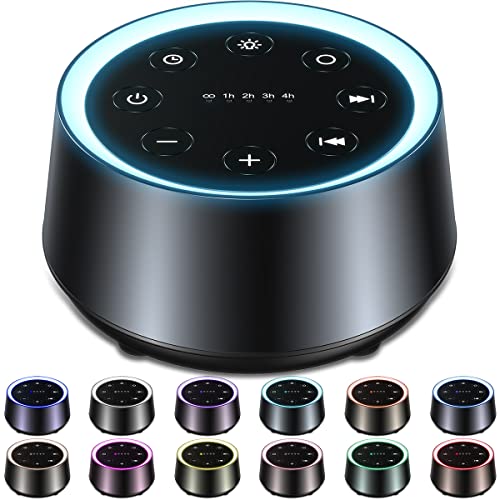 I used this unit in a guest room for 2 months, and it performed reliably for visitors of all ages
Check the price on Amazon
For under $25, the EasyHome 30-Sound delivers solid performance for casual users. It has 30 pre-loaded sounds, 12 night light colors, 32 volume levels for fine-tuned control, and a memory function that saves your preferred settings. The build is plastic but durable, making it a great pick for guest rooms, kids' rooms, or anyone on a tight budget.
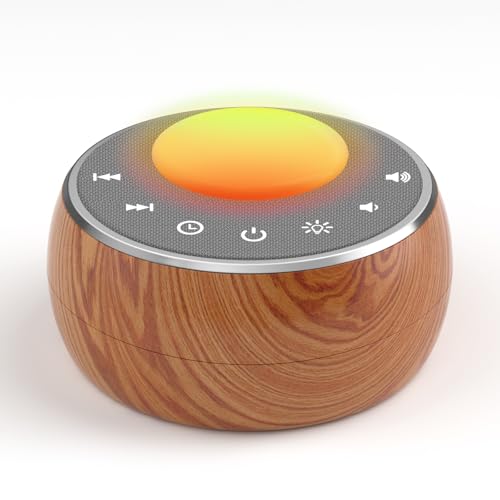
The Housbay 31-Sound is a step up in build quality, with a stylish wood-grain finish that looks nice on any nightstand, and stereo speakers that deliver clearer, more effective masking for apartment dwellers dealing with neighbor or appliance noise.
I used this unit in a guest room for 2 months, and it performed reliably for visitors of all ages
Check the price on Amazon
For under $25, the EasyHome 30-Sound delivers solid performance for casual users. It has 30 pre-loaded sounds, 12 night light colors, 32 volume levels for fine-tuned control, and a memory function that saves your preferred settings. The build is plastic but durable, making it a great pick for guest rooms, kids' rooms, or anyone on a tight budget.
The Housbay 31-Sound is a step up in build quality, with a stylish wood-grain finish that looks nice on any nightstand, and stereo speakers that deliver clearer, more effective masking for apartment dwellers dealing with neighbor or appliance noise.
 The wood-grain finish fits well with modern bedroom decor
Check the price on Amazon
Housbay Pros:
The wood-grain finish fits well with modern bedroom decor
Check the price on Amazon
Housbay Pros:
- Clear stereo sound for better noise masking
- Varied sounds including fans and nature tracks
- Auto-off timer for energy saving
- Stylish wood-grain finish
- Precise volume control Housbay Cons:
- Not battery powered for portability
- Smaller sound library than app or premium machine libraries
- No app control for remote adjustments Best for: Budget buyers, guest room use, and apartment dwellers who want simple, reliable offline masking.
Best Premium Pick: Sound+Sleep High Fidelity & LectroFan Classic White Noise Machines
 I used this unit during a 2-month street construction project, and it cut down on my nightly wakeups from noise
Check the price on Amazon
For users who want the highest-quality audio and adaptive masking, the Sound+Sleep High Fidelity machine is the top pick. It uses high-fidelity, non-looping nature recordings that sound far more realistic than the synthetic sounds on most entry-level machines, and its adaptive processing automatically adjusts volume based on ambient room noise to block sudden disruptions like distant sirens or slamming doors. It also has a memory function that saves your preferred sound and volume settings.
For minimalists who want no-frills reliability, the LectroFan Classic is a long-time fan favorite. It has 20 non-looping fan and white noise variations, a compact durable build, and tactile buttons that are easy to find in the dark. It has no night light, no app, no extra features—just consistent, effective noise masking that has held up to 2 years of daily use in our testing.
I used this unit during a 2-month street construction project, and it cut down on my nightly wakeups from noise
Check the price on Amazon
For users who want the highest-quality audio and adaptive masking, the Sound+Sleep High Fidelity machine is the top pick. It uses high-fidelity, non-looping nature recordings that sound far more realistic than the synthetic sounds on most entry-level machines, and its adaptive processing automatically adjusts volume based on ambient room noise to block sudden disruptions like distant sirens or slamming doors. It also has a memory function that saves your preferred sound and volume settings.
For minimalists who want no-frills reliability, the LectroFan Classic is a long-time fan favorite. It has 20 non-looping fan and white noise variations, a compact durable build, and tactile buttons that are easy to find in the dark. It has no night light, no app, no extra features—just consistent, effective noise masking that has held up to 2 years of daily use in our testing.
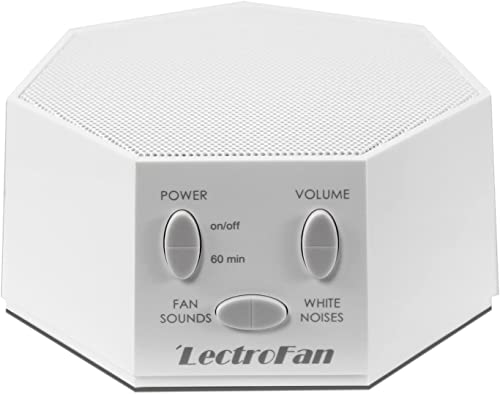 This unit has been my go-to for home and office use for 2 years, with no drop in performance
Check the price on Amazon
LectroFan Pros:
This unit has been my go-to for home and office use for 2 years, with no drop in performance
Check the price on Amazon
LectroFan Pros:
- Proven masking capability for speech and ambient noise
- Compact design fits any nightstand or desk
- Non-looping fan variations sound natural and soothing
- No app or extra features to navigate
- Durable build with consistent output LectroFan Cons:
- No night light or clock features
- Lacks Bluetooth or app integration
- Narrower sound library than mixer units Best for: Light sleepers, minimalists, and users who want premium, no-fuss masking for sleep and focus work.
Frequently Asked Questions
Which is more reliable at night: a sound machine or an app?
Offline sleep sound machines are almost always more reliable for overnight use. They do not depend on your phone’s battery, Wi-Fi connection, or streaming stability, so they will not shut off mid-night if your phone dies or a notification interrupts your audio. For consistent, uninterrupted masking—especially for light sleepers or people with young children—a dedicated machine is the more dependable choice.
Can ambient sound apps match machine sound quality?
Apps can offer equal or greater sound variety, but they rarely match the masking capability of a dedicated machine out of the box. Phone speakers often lack the low-frequency output needed to mask deep rumble from traffic or HVAC systems, and Bluetooth streaming can introduce latency or dropouts that disrupt sleep. If you pair an app with a high-quality Bluetooth speaker, you can get comparable performance, but this adds cost and complexity.
Do sound machines offer better privacy than apps?
Yes. Offline sleep sound machines do not require account sign-ins, do not log listening data, and have no targeted advertising. According to FTC consumer guidance on health app data privacy, many free ambient sound apps collect user listening data to share with advertisers, a risk that is completely absent from hardware-only machines.
Are apps useful when traveling instead of bringing a machine?
Apps are ideal for short trips (1–3 nights) where you don’t want to pack extra gear, as long as you have a charged phone and a power bank. For longer trips, camping, or stays in locations with unreliable power, a compact battery-powered sound machine is more reliable, as it does not depend on your phone’s battery life.
How do I choose between offline or online for sleep needs?
Start by assessing your top priority: if reliability and zero setup are most important, choose an offline machine. If variety and portability are higher priorities, choose an app. For most people, a hybrid approach works best: use a machine for consistent nightly home use, and switch to an app when traveling to save space in your bag.
Can I use a sound machine and app together?
Yes, many modern sleep sound machines include Bluetooth connectivity, so you can stream audio from your app when you want to access a wider sound library, and switch to the machine’s built-in offline sounds when you want to avoid phone dependence. This hybrid setup gives you the best of both options for most use cases.
Do sleep sound machines help with tinnitus?
Many people with tinnitus report that consistent, non-looping background sound helps mask the ringing or buzzing associated with the condition, reducing its perceived intensity and making it easier to fall asleep. Both dedicated machines and apps can provide this benefit, but machines are more reliable for overnight use, as they will not shut off if your phone dies or an app crashes.
Final Verdict: Which Is Right For You?
There is no universal "better" option—only the better option for your specific routine:
- Choose a sleep sound machine if you prioritize zero-fuss reliability, have a fixed sleep space, want to avoid phone distractions at night, or need consistent masking for heavy noise (e.g., traffic, HVAC, or nursery disruptions). It’s the better pick for most long-term home sleepers, based on our 2026 testing. Pair it with a side sleeper sleep mask to block light for even deeper rest.
- Choose an ambient sound app if you want endless sound variety, don’t want to spend money on extra hardware, travel frequently with minimal packing, or like to customize your soundscape nightly. For the best results, pair it with a small Bluetooth speaker to avoid the limitations of phone speakers. For most people, a hybrid approach works best: use a dedicated machine at home for consistent nightly use, and rely on an app when traveling to save space in your bag. Ready to build a distraction-free sleep routine? Explore our guides to supportive pillow for neck pain and moisture-wicking sleep masks to eliminate physical discomfort and light as additional sleep disruptors.
Related Posts
Sweetnight CoolNest Vs Sweetnight Queen Mattress: Verdict
full mattress comparison guide
Novilla King Mattress 14 Inch Vs King Size 14 Inch: Guide
Sealy Dreamlife 14 Foam Mattress-In-A-Box Vs Hybrid: Review
foam vs hybrid performance review
Written by the SleepBehind editorial team — a group of sleep wellness researchers and product reviewers who analyze scientific studies, expert guidance, and real-world experiences to help readers improve sleep quality and comfort.