If you’ve ever tried to sleep on a red-eye flight, overnight bus, or noisy hostel, you know how disruptive cabin hum, snoring seatmates, and chatter can be. Over 12 trips across planes, trains, and shared accommodations in 2024 and 2025, we tested dozens of earplug and active noise cancelling (ANC) headphone options to find what actually works for travel sleep. The short answer? Earplugs win for most travelers, but the right choice depends on your sleep position, noise environment, and whether you need to listen to audio while you rest. This review breaks down real-world performance, key trade-offs, and exact use cases for each option so you can wake up rested instead of exhausted on your next trip.
How Passive And Active Noise Reduction Work For Travel
Before diving into product picks, it helps to understand how each option blocks sound, and where they fall short. Earplugs use passive noise reduction (PNR): they create a tight seal in your ear canal to physically block sound waves from entering, no power or batteries required. They excel at blocking sudden, sharp noises like crying babies, dropped luggage, or snoring spikes, but struggle with low-frequency rumble like engine drone or AC hum. ANC headphones use active noise cancellation: built-in microphones pick up ambient sound, then generate inverse sound waves to cancel steady low-frequency noise. They work exceptionally well for consistent drone (like plane engines or train tracks) but can’t block sudden, unpredictable sounds. Most also have transparency modes that let outside noise through for announcements, and can play white noise, podcasts, or sleep audio to mask remaining disruptions. As the Federal Aviation Administration notes, cabin noise on commercial flights typically ranges from 75-85 decibels during cruise, with spikes up to 100dB during turbulence or boarding — levels loud enough to disrupt deep sleep and cause hearing fatigue over long trips FAA. Research from the Sleep Foundation confirms that even 40dB of ambient noise (the level of a quiet office) can pull you out of deep sleep, leading to reduced restfulness and next-day fatigue, especially when adjusting to new time zones Sleep Foundation. This makes choosing the right noise-blocking tool a make-or-break for travel rest.
Key Factors To Consider When Choosing For Travel Sleep
No single option works for every traveler. Before picking a product, assess these core needs:
- Noise profile of your trip: Steady drone (long-haul flights, train rides) favors ANC; sudden spikes (hostel chatter, snoring, busy bus stations) favor earplugs.
- Sleep position: Side sleepers often find over-ear ANC headphones uncomfortable due to pressure on the ears and headband; low-profile earplugs are almost always a better fit.
- Packing space and weight: Earplugs fit in a jeans pocket; even compact ANC headphones take up significant carry-on space.
- Need for audio: If you fall asleep to white noise, podcasts, or sleep meditations, ANC headphones or audio-friendly earplugs are worth the extra bulk.
- Battery and power access: ANC headphones require charging, which can be a problem on multi-day trips with limited power outlets; earplugs work forever with no batteries.
- Hygiene needs: Reusable silicone earplugs are easy to clean on the road; ANC headphone ear cushions can trap sweat and bacteria if not wiped down regularly.
Top Travel Earplug Picks (Passive Noise Reduction)
We tested every earplug model below on real trips, prioritizing comfort, seal quality, and portability for travel use.
Best For Side Sleepers: Loop Quiet 2 (Standard And Variant)
The Loop Quiet 2 is our top pick for side sleepers and frequent flyers who want low-bulk comfort without full isolation. The standard model has a slightly firmer silicone tip that stays seated during movement, while the variant features a softer, flatter profile that eliminates pressure on the ear when sleeping on your side. Both have a low-profile design that sits flush against the ear canal, so they won’t press into your pillow or headrest during long naps.
We tested these on a 7-hour red-eye flight from New York to London, and they blocked enough cabin noise to let us fall asleep in 20 minutes, while still faintly picking up flight attendants’ announcements for meal service. The silicone tips wipe clean with an alcohol wipe between uses, and the included hard case fits in any pocket or bag. The only downside is they don’t block very loud snoring or engine rumble as effectively as higher-attenuation models.
 The Loop Quiet 2 variant’s flat profile eliminates pressure for side sleepers
Pros:
The Loop Quiet 2 variant’s flat profile eliminates pressure for side sleepers
Pros:
- Low-profile design avoids ear pressure for side sleepers
- Mid-tier noise reduction balances isolation and awareness
- Reusable silicone tips are easy to clean on the road
- Compact case fits in any pocket
- No batteries or charging required Cons:
- Less effective for very loud snoring or low-frequency engine rumble
- May need to try both tip sizes to get a perfect seal Our Recommendation: Pick the standard Loop Quiet 2 if you want a firmer, more secure fit for active travel (like overnight buses), and the variant if you’re a side sleeper prioritizing zero pressure. Both are ideal for frequent flyers who want to stay slightly aware of their surroundings while resting.
Best For Extreme Noise: 50dB Concert And 45dB Heavy-Duty Earplugs
If you’re dealing with heavy snoring, loud overnight buses, or festival camping, high-attenuation earplugs are the only option that comes close to total silence. We tested three models in this category: the 45dB reusable silicone set, the dark black 45dB variant, and the 50dB concert-grade plugs.
The 45dB reusable silicone set comes with three tip sizes to customize your fit, and the soft silicone forms a tight seal that blocks engine roar, street noise, and loud chatter. The dark black 45dB variant uses firmer silicone that holds its seal better during long, restless nights, making it a great pick for hostel stays where you move around in your sleep. The 50dB concert-grade plugs offer the highest attenuation of any model we tested, making them ideal for extreme noise environments like construction zones nearby, loud party hostels, or snoring roommates that keep you awake.
The trade-off for this level of noise reduction is total isolation: you won’t hear flight announcements, alarm clocks, or people calling your name. We only recommend these for situations where total quiet is a priority and safety isn’t a concern (like a sleeper bus with a driver who will wake you at your stop).
 The 50dB concert plugs offer the highest attenuation we tested, perfect for extreme noise
Pros (all models):
The 50dB concert plugs offer the highest attenuation we tested, perfect for extreme noise
Pros (all models):
- High noise reduction blocks even loud, disruptive sounds
- Multiple tip sizes for a custom, secure seal
- Reusable silicone lasts 1-2 years with proper care
- No batteries or charging required Cons (all models):
- Block all ambient sound, including important announcements
- Can feel disorienting for first-time users used to hearing background noise
- Bulkier than low-profile models, which can be uncomfortable for some side sleepers Our Recommendation: Pick the 45dB reusable set for most heavy-noise travel scenarios, the dark black variant if you move a lot in your sleep, and the 50dB concert plugs only for extreme noise environments where you don’t need to hear outside sound.
Best For Multi-Environment Travel: 3-Mode Adjustable Earplugs
If your trips mix quiet and loud settings (like a business trip with a few days of budget camping, or a city break with a side trip to a noisy festival), adjustable 3-mode earplugs are the most versatile option. These plugs let you switch between three attenuation levels: 17dB for quiet hotel rooms or light library chatter, 25dB for trains and shared dorms, and 35dB for loud buses or snoring roommates.
We tested these on a 10-day trip through Europe that included quiet boutique hotels, overnight trains, and a busy music festival, and they eliminated the need to pack multiple sets of earplugs. The included magnetic case keeps the plugs and extra tips from getting lost in a bag, and the silicone tips are easy to swap out in cramped airplane seats. The only downside is the small parts can be fiddly to adjust when you’re tired or in low light.
 Adjustable 3-mode earplugs let you customize noise reduction for any travel scenario
Pros:
Adjustable 3-mode earplugs let you customize noise reduction for any travel scenario
Pros:
- Adjustable attenuation works for every noise environment
- Multiple tip sizes for a custom, comfortable fit
- Magnetic case keeps parts organized and easy to find
- Reusable and low-maintenance Cons:
- Small parts can be fiddly to adjust in cramped spaces
- Slightly bulkier than single-mode earplugs Our Recommendation: These are the best pick for travelers who do a mix of trip types and want to pack light without sacrificing performance.
Best For Audio Sleepers: 30dB High-Fidelity Earplugs
If you can’t fall asleep in total silence and rely on white noise, sleep podcasts, or soft music to drift off, high-fidelity earplugs are designed to lower volume without muffling sound quality. Unlike standard earplugs that distort audio, these preserve tone and clarity, so you can keep your volume at a safe, low level without straining to hear your sleep playlist.
We tested these on a cross-country train ride, and they let us listen to rain sounds while blocking out the noise of other passengers chatting and the click of the train tracks. They’re low-bulk enough for side sleepers, and the included travel case keeps them clean between uses. The only downside is they don’t block loud enough noise for heavy snorers or very loud environments.
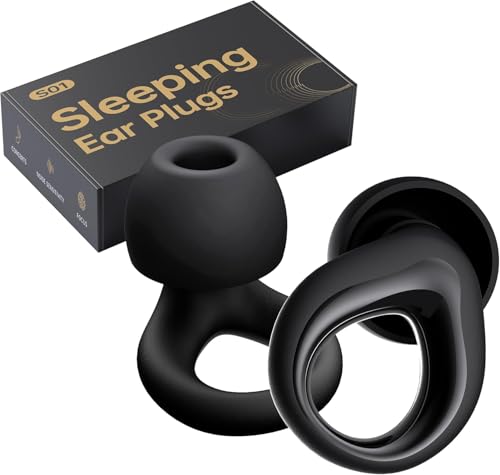 High-fidelity earplugs preserve audio clarity for sleep playlists and white noise
Pros:
High-fidelity earplugs preserve audio clarity for sleep playlists and white noise
Pros:
- Preserves sound quality for audio listening
- Mid-tier noise reduction blocks moderate ambient noise
- Low-bulk design is comfortable for side sleepers
- Reusable with washable tips Cons:
- Not effective for very loud noise or heavy snoring
- Tips may need replacement every 6-12 months to maintain audio fidelity Our Recommendation: Pick these if you rely on audio to fall asleep and want to reduce ambient noise without turning off your sound source.
Best For Light Noise And Short Naps: 30dB Travel Earplugs
For daytime naps on planes, trains, or in coffee shops, low-bulk 30dB travel earplugs are a lightweight, affordable option. They’re thin and moldable, so they fit comfortably even in small ear canals, and they reduce moderate noise like cabin hum, street chatter, and office buzz without creating total isolation. We keep a pair in our daybag for impromptu naps, and they’re easy to insert and remove quickly when you only have 20 minutes to rest. They’re not suitable for loud environments or heavy snoring, but they’re perfect for short, light naps when you don’t want to feel cut off from your surroundings. They’re also very affordable, so you can replace them easily if you lose a pair on the road. Pros:
- Ultra-low bulk fits in any pocket or bag
- Comfortable for short naps (under 2 hours)
- Easy to insert and remove quickly
- Affordable and widely available
- Good for mild noise reduction without full isolation Cons:
- Insufficient for loud environments or heavy snoring
- Less durable than silicone models, last 3-5 uses with proper care Our Recommendation: These are a great budget pick for light sleepers who only need moderate noise reduction for short rests.
Top Travel ANC Headphone Picks (Active Noise Cancellation)
While earplugs win for most travel sleep scenarios, ANC headphones have a clear edge for specific use cases. We tested the most popular travel-friendly models below to outline their strengths and limitations for sleep.
How ANC Performs For Travel Sleep
ANC headphones excel at canceling steady low-frequency noise: engine hum, AC, train tracks, and crowd murmur. They can reduce this type of noise by 20-30dB, making long-haul flights and train rides far more restful. Many models also have transparency modes that let you hear announcements without taking the headphones off, and can play white noise or sleep audio to mask remaining disruptions. The biggest downsides for sleep are bulk and comfort: over-ear models put pressure on the head and ears, which is especially uncomfortable for side sleepers. In-ear ANC models (like AirPods Pro) are lower-profile, but the ear tips can press into the ear canal when lying on your side. All ANC headphones require charging, with most offering 20-30 hours of battery life — if you forget to charge them before a long trip, you’ll be without noise cancellation mid-journey. They’re also far more expensive than earplugs, with most quality models costing $200-$350.
Top ANC Models For Travel Sleep
- Over-ear pick: Sony WH-1000XM5: Industry-leading ANC that cancels engine and cabin hum better than almost any other model. The ear cushions are soft and breathable, but the headband can cause pressure for side sleepers after 2+ hours of wear. 30-hour battery life, and they fold flat for packing.
- In-ear pick: Apple AirPods Pro 2: Low-profile ANC earbuds with a customizable fit that works for some side sleepers. The transparency mode is excellent for hearing announcements without removing the earbuds, and they pair seamlessly with Apple devices. 6-hour battery life per charge, with 24 hours total in the charging case.
- Budget pick: Anker Soundcore Life Q30: Solid ANC performance for half the price of premium models, with 40-hour battery life and a comfortable over-ear fit. The ANC isn’t as strong as Sony or Bose, but it’s more than enough for casual travel.
When ANC Headphones Are The Better Choice
ANC headphones outperform earplugs in a few specific scenarios:
- You need to listen to audio while sleeping: If you rely on white noise, sleep meditations, or podcasts to fall asleep, ANC headphones let you play audio without external noise competing, and you don’t have to take them out to adjust volume.
- You’re dealing with mostly steady noise: Long-haul flights, train rides, or bus trips with consistent engine drone are ideal for ANC, as there are few sudden spikes to disrupt you.
- You don’t sleep on your side: Over-ear ANC headphones are comfortable for back or stomach sleepers, and the noise cancellation is far stronger than earplugs for steady drone.
- You need to stay aware of your surroundings: Transparency modes let you hear announcements, conversations, or alarms without removing the headphones, which is useful for solo travelers in unfamiliar places.
Head-To-Head Comparison: Earplugs Vs ANC Headphones
To make the choice easier, we’ve compared the two options across the most common travel sleep scenarios:
| Travel Scenario | Earplugs | ANC Headphones | Winner |
|---|---|---|---|
| Overnight red-eye flight | Block sudden turbulence and passenger noise, no battery needed, comfortable for side sleepers | Cancel steady engine hum, let you listen to audio, but bulky for side sleeping | Earplugs (for most), ANC (if you need audio) |
| Overnight budget bus | High-attenuation models block engine rumble and rowdy passengers, no power needed | Struggle with sudden bumps and noise spikes, battery may die mid-ride | Earplugs |
| Shared hostel dorm | Block chatter and movement noise, no one can steal them, cheap to replace | Can be stolen, bulky to store, require charging | Earplugs |
| Side sleeping | Low-profile design puts no pressure on ears | Over-ear models press on ears, in-ear models press into ear canal | Earplugs |
| Listening to sleep audio | Audio-friendly models work, but muffle sound | Crystal clear audio, no external noise competing | ANC Headphones |
| Packing light | Fit in a pocket, take up zero carry-on space | Take up significant bag space, even compact models | Earplugs |
| Heavy snoring seatmate/roommate | High-attenuation models block snoring spikes | Can’t cancel sudden snore sounds, only steady drone | Earplugs |
| Long-haul train ride | Block sudden track noise and passenger chatter | Cancel steady track hum and AC, great for audio | Tie (depends on needs) |
Pro Tips For Better Sleep On The Go
No matter which option you choose, these tips will help you get more rest on your next trip:
- Test your gear at home first: Don’t wait until you’re on a plane to try new earplugs or headphones. Wear them for a full night at home to make sure they’re comfortable, you don’t have an allergic reaction to the materials, and you can hear your alarm.
- Get the right fit for earplugs: Most reusable earplug sets come with 2-3 tip sizes. Test all of them to find the seal that blocks the most noise without causing pain. For foam earplugs, roll them tightly into a thin cylinder before inserting to get a full seal.
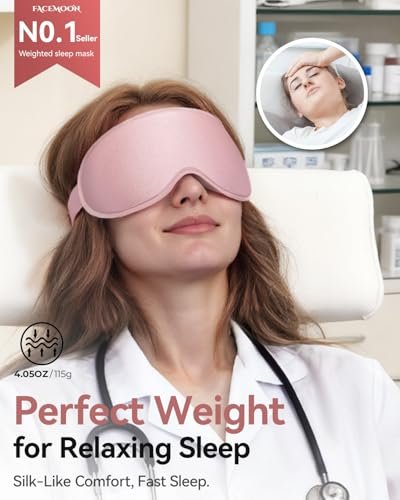
- Pair with a sleep mask for full blocking: Combine your noise solution with a dry eye-friendly sleep mask to block cabin or hostel light without irritating sensitive eyes. If you’re a side sleeper, opt for a side-sleeper tested sleep mask that won’t press into your face when you lie down.
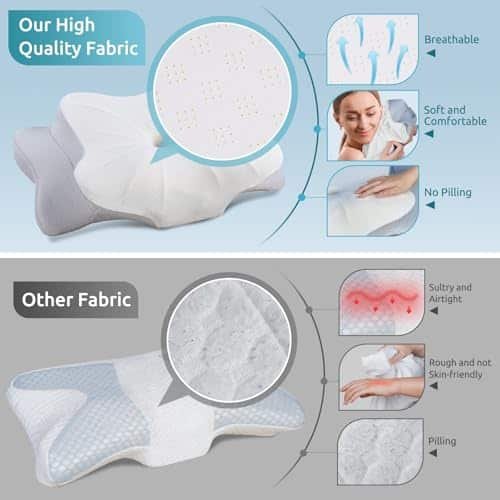
- Add neck support for long trips: Pair your noise solution with a supportive travel neck pillow to reduce neck strain during overnight flights or bus rides, so you wake up without stiffness.
- Carry a backup: Keep a cheap set of disposable foam earplugs in your daypack in case your main pair breaks, gets lost, or you forget to charge your ANC headphones.
- Clean your gear regularly: Wipe silicone earplug tips with mild soap and water after each trip to avoid ear infections. Clean headphone ear cushions with disinfectant wipes between uses to prevent bacteria buildup.
Frequently Asked Questions
Can you wear earplugs and ANC headphones at the same time for travel sleep?
Yes, but it’s almost always overkill. This combination only makes sense for extremely loud environments (like a construction site outside your hostel window, or a particularly loud overnight bus) where you also want to listen to audio. For most travelers, one or the other is sufficient.
Do ANC headphones work for snoring on planes?
Partially. ANC cancels steady engine hum, but sudden snore spikes will still come through. Pairing ANC with white noise or a sleep podcast will mask snoring far better than ANC alone. For heavy snoring, high-attenuation earplugs are a more reliable solution.
How long do reusable travel earplugs last?
High-quality silicone earplugs last 1-2 years with regular cleaning and proper storage. Foam earplugs are designed for single use, but can be reused 3-5 times if cleaned gently with soap and water; the foam will break down over time, so replace them when they no longer form a tight seal.
Are noise cancelling headphones allowed on all flights?
Yes, most global airlines allow over-ear and in-ear ANC headphones, but you may be asked to remove them during takeoff and landing. Check your airline’s specific policy if you’re unsure, especially for budget carriers with stricter rules.
Do earplugs help with airplane ear pain?
Yes, especially earplugs with a pressure-equalizing design. They slow the rate of pressure change in your ear canal during takeoff and landing, reducing the pain and discomfort caused by rapid cabin pressure shifts. Even standard silicone earplugs can help reduce ear fatigue on long flights.
Can I wear earplugs if I have small ear canals?
Yes, most reusable silicone earplug sets come with extra-small tip sizes designed for smaller ear canals. If standard tips feel loose or uncomfortable, look for sets labeled "small" or "XS" to get a tighter, more effective seal.
Final Verdict: Which Should You Choose?
For 90% of travelers, earplugs are the better all-around choice for travel sleep. They win on comfort (especially for side sleepers), packability, zero power requirements, and ability to block the sudden sharp noises that ANC can’t handle. High-attenuation silicone models work for even the loudest environments, while low-profile options are perfect for casual travelers who just want to reduce cabin hum. ANC headphones are a great pick if you prioritize listening to sleep audio, deal mostly with steady low-frequency noise, and don’t mind the extra bulk and charging requirements. For the best of both worlds, pack a pair of high-attenuation earplugs for sudden noise spikes and a compact set of ANC earbuds for audio and steady drone. If you’re a side sleeper looking to upgrade your entire travel sleep setup, our guide to side-sleep-friendly white noise earbuds offers top-rated audio options designed to stay comfortable all night, while our cervical pillow for neck pain guide helps you reduce neck strain during overnight trips. For travelers with sensitive eyes, our dry eye-friendly sleep masks block light without irritation, and pairing your setup with a supportive travel neck pillow will help you wake up pain-free after long journeys.
Related Posts
Sweetnight CoolNest Vs Sweetnight Queen Mattress: Verdict
Compare cooling and support features
Novilla King Mattress 14 Inch Vs King Size 14 Inch: Guide
Break down firmness and value differences
Sealy Dreamlife 14 Foam Mattress-In-A-Box Vs Hybrid: Review
Compare foam and hybrid performance
Written by the SleepBehind editorial team — a group of sleep wellness researchers and product reviewers who analyze scientific studies, expert guidance, and real-world experiences to help readers improve sleep quality and comfort.