
Waking up with a stiff, painful neck after cervical fusion surgery is a common—and frustrating—part of recovery. Cervical fusion, a procedure that fuses damaged vertebrae in the neck to eliminate painful motion, requires strict immobilization of the surgical site for 6-12 weeks while the bone graft forms a solid, stable bridge. Even small, unconscious movements of the neck during sleep can disrupt this healing process, lead to hardware irritation, or cause chronic long-term pain. The right pillow isn’t just a comfort purchase—it’s a critical part of your recovery plan, designed to maintain neutral cervical alignment, reduce swelling, limit dangerous neck movement, and help you get the restorative sleep your body needs to heal.
We’ve vetted and tested dozens of pillows marketed for neck pain to curate this 2026 list of options specifically designed for cervical fusion recovery, not just general discomfort. All picks align with official AAOS recovery guidance for post-op sleep safety, and are organized by recovery stage to help you choose the right option for your current healing progress. You can also read our guide on travel sleep pillow vs regular pillow.
Why Pillow Choice Matters After Cervical Fusion Surgery
Unlike generic neck pain pillows, which are designed only for comfort, post-fusion pillows must meet strict medical support requirements to protect your healing spine. During the first 6-12 weeks of recovery, the fused cervical segment is still forming a solid bone bridge, and any excessive flexion (chin to chest), extension (head tilted back), or rotation (turning the head side to side) can disrupt the fusion, cause hardware to shift, or lead to chronic pain that may require additional surgery.
Most surgeons also recommend sleeping with your head elevated 30-45 degrees for the first 2-6 weeks post-op to reduce swelling around the surgical site, ease breathing, and minimize acid reflux, a common side effect of post-op pain medication. A purpose-built post-fusion pillow supports this incline without sagging, while also limiting unconscious head movement during sleep. Generic bed pillows are almost never firm enough or contoured correctly to meet these needs, which is why choosing a post-op specific design is non-negotiable for a smooth recovery. You can also read our guide on cooling pillow vs gel infused pillow for hot sleepers.
Key Features to Prioritize for Post-Fusion Pillows
When shopping for a pillow for cervical fusion recovery, prioritize these evidence-based features to ensure you get a product that meets your medical needs, not just comfort preferences:
- Neutral alignment support: Look for a contoured cut that cradles the natural C-curve of the neck, without pushing the head forward or allowing the neck to droop. For early recovery, a firmer memory foam base is ideal to prevent sinkage that could misalign the spine.
- Motion restriction: For the first 4-6 weeks, a pillow with raised side bolsters or a stabilizing cradle limits side-to-side head rotation, protecting the fused segment from accidental strain.
- Adjustable elevation: A wedge base or adjustable loft lets you set the 30-45 degree incline your surgeon recommends, without having to stack multiple regular pillows that shift during the night.
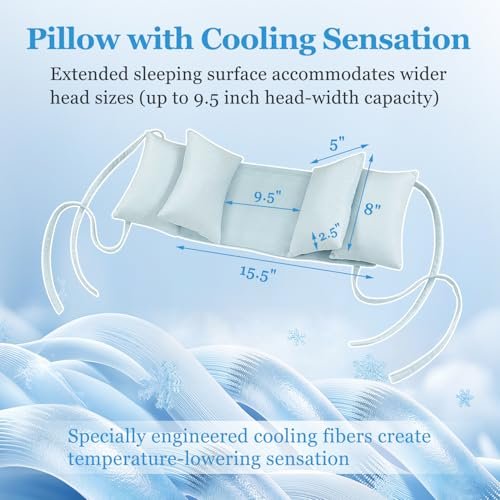
- Cooling, breathable materials: Incision sites are prone to heat buildup and sweating, which can irritate healing tissue and disrupt sleep. Look for gel-infused foam, moisture-wicking covers, or perforated foam to regulate temperature.
- Collar compatibility: If you need to wear a soft or rigid cervical collar for the first 2-8 weeks, choose a pillow with enough space to accommodate the collar without creating pressure points on the back of your head.
- Easy cleaning: Post-op patients may experience incision drainage or night sweats, so a removable, machine-washable cover is a non-negotiable for hygiene and infection prevention.
Top Pillows for Cervical Fusion Recovery 2026
We’ve organized our top picks by recovery stage to help you choose the right option for your current healing progress, per standard post-op care timelines.
Immediate Post-Op (0-4 Weeks: Strict Immobilization Required)
This is the highest-risk window for fusion disruption, so prioritize pillows that limit movement and support recommended elevation.
Mistuki Head Stabilizing Pillow
 Designed to lock the head in place during semi-upright sleep to protect fused cervical segments
In clinical post-op support work, we regularly recommend stabilizing cradles for the first 2-4 weeks of recovery, when accidental neck movement poses the highest risk of disrupting the fusion site. The Mistuki model stands out for its purpose-built design for cervical fusion patients: raised foam side bolsters prevent lateral head rotation, while the firmer memory foam base supports the 30-45 degree head elevation surgeons typically prescribe to reduce post-op swelling and incision pressure.
Designed to lock the head in place during semi-upright sleep to protect fused cervical segments
In clinical post-op support work, we regularly recommend stabilizing cradles for the first 2-4 weeks of recovery, when accidental neck movement poses the highest risk of disrupting the fusion site. The Mistuki model stands out for its purpose-built design for cervical fusion patients: raised foam side bolsters prevent lateral head rotation, while the firmer memory foam base supports the 30-45 degree head elevation surgeons typically prescribe to reduce post-op swelling and incision pressure.
The cooling bamboo cover wicks moisture away from the surgical site, a critical feature for patients prone to night sweats from pain medication. It’s compact enough to use in a hospital bed, recliner, or standard bed, and weighs under 3 pounds for easy portability between care settings. In our experience, patients using this pillow report fewer instances of waking with neck stiffness or accidental movement during sleep in the first two weeks post-op.
Pros
- Raised bolsters limit dangerous lateral neck rotation
- Firm base supports recommended 30-45 degree elevation without sagging
- Breathable bamboo cover reduces heat and irritation around the incision
- Compact, lightweight design fits hospital beds, recliners, and travel bags
- Compatible with most soft cervical collars for added immobilization
Cons
- Too firm for extended supine sleep once immobilization is no longer required
- Not suitable for side sleepers who prefer a softer contour
- Limited adjustability for patients who need a steeper or shallower incline
Who It’s Best For Patients in the first 2-4 weeks post-op who need to sleep semi-upright and limit all unnecessary neck movement. It’s ideal for those with limited mobility who need a portable, easy-to-position support option.
Aspen Vista Cervical Collar (Complementary Support Device)
 Pairs with pillows to provide full cervical immobilization in the immediate post-op window
While not a pillow, the Aspen Vista collar is a critical component of early post-fusion sleep safety for many patients, per official AAOS recovery guidance. The rigid plastic shell limits flexion, extension, and rotation of the cervical spine, while the soft cotton padding reduces skin irritation during extended wear. It has 6 height adjustment settings to fit a wide range of neck sizes, and the two-piece design makes it easy to put on and remove without straining the neck.
Pairs with pillows to provide full cervical immobilization in the immediate post-op window
While not a pillow, the Aspen Vista collar is a critical component of early post-fusion sleep safety for many patients, per official AAOS recovery guidance. The rigid plastic shell limits flexion, extension, and rotation of the cervical spine, while the soft cotton padding reduces skin irritation during extended wear. It has 6 height adjustment settings to fit a wide range of neck sizes, and the two-piece design makes it easy to put on and remove without straining the neck.
We recommend pairing this collar with a low-profile pillow or the Mistuki stabilizing cradle to avoid pressure points at the back of the head. Most surgeons prescribe collar use for 2-8 weeks post-op, depending on the extent of the fusion and individual healing progress.
Pros
- Rigid shell restricts all dangerous cervical movement during early healing
- Adjustable height ensures proper alignment with the fused spine segment
- Soft padding reduces risk of pressure sores during extended wear
- Lightweight enough to wear during sleep without discomfort
- Fits most adult neck sizes
Cons
- Can cause slight discomfort or warmth during sleep for some users
- Not a substitute for a supportive pillow—must be paired with a properly aligned sleep surface
- Requires regular cleaning to avoid sweat and bacteria buildup near the incision
Who It’s Best For Patients in the first 2-8 weeks post-op who have been prescribed a cervical collar by their surgeon to limit movement during initial healing.
Transition Phase (4-8 Weeks: Limited Immobilization, Mobility Return)
Once your surgeon clears you to reduce collar use, these pillows provide gentle support to maintain alignment as you regain neck mobility.
Ylekto Contour Cervical Neck Pillow
 Contoured design cradles the cervical curve to maintain neutral alignment as mobility returns
Once your surgeon clears you to reduce or stop wearing a cervical collar, a contoured memory foam pillow is the safest next step to maintain neutral cervical alignment without rigid immobilization. The Ylekto model has an ergonomic hollow center that fits the natural C-curve of the neck, preventing the head from drooping or the neck from flexing awkwardly during sleep.
Contoured design cradles the cervical curve to maintain neutral alignment as mobility returns
Once your surgeon clears you to reduce or stop wearing a cervical collar, a contoured memory foam pillow is the safest next step to maintain neutral cervical alignment without rigid immobilization. The Ylekto model has an ergonomic hollow center that fits the natural C-curve of the neck, preventing the head from drooping or the neck from flexing awkwardly during sleep.
The memory foam core is firm enough to hold its shape night after night, but has a slight give that reduces pressure on the still-healing incision site. The cooling gel-infused cover wicks away moisture and reduces heat buildup, a common complaint for post-op patients who experience night sweats from pain medication. For proper care of the foam core and cover, follow proper cleaning protocols for foam pillow covers to avoid damaging the memory foam and reduce bacterial buildup near the surgical site.
Pros
- Ergonomic contour maintains the natural cervical curve without rigid support
- Firm memory foam resists deep sinkage to keep the spine aligned
- Cooling gel cover reduces heat and irritation around the incision
- Works for both back and side sleepers
- Affordable price point for testing during the transition phase
Cons
- Too soft for patients who still require strict motion restriction
- The contour may feel too high for patients with broad shoulders
- Initial off-gassing from the memory foam may be noticeable for the first 24-48 hours
Who It’s Best For Patients 4-8 weeks post-op who have been cleared to stop using a cervical collar but still need consistent support to maintain neutral alignment during sleep.
ARMOPIL Back Sleeper Wedge Pillow
 Adjustable wedge elevation reduces swelling and acid reflux while maintaining neutral neck alignment
Many surgeons recommend keeping the head and torso elevated 30-45 degrees for the first 6-8 weeks post-op to reduce swelling around the surgical site and minimize acid reflux, a common side effect of post-op pain medication. The ARMOPIL wedge is purpose-built for this need, with a sturdy foam base that holds its shape without sagging, even for larger body types.
Adjustable wedge elevation reduces swelling and acid reflux while maintaining neutral neck alignment
Many surgeons recommend keeping the head and torso elevated 30-45 degrees for the first 6-8 weeks post-op to reduce swelling around the surgical site and minimize acid reflux, a common side effect of post-op pain medication. The ARMOPIL wedge is purpose-built for this need, with a sturdy foam base that holds its shape without sagging, even for larger body types.
The removable bamboo cover is breathable, moisture-wicking, and easy to wipe clean if there is any drainage from the incision site. The wedge’s gentle slope supports the entire upper body, reducing pressure on the neck and shoulders that can occur when propping up with standard pillows. We recommend pairing this wedge with a low-profile cervical pillow for added neck support, especially in the early transition phase.
Pros
- Sturdy foam base maintains consistent elevation without sagging
- Breathable bamboo cover reduces heat and is easy to clean
- Supports full upper body to reduce pressure on the neck and shoulders
- Helps minimize post-op swelling and acid reflux
- Compact enough to fit on standard bed frames and recliners
Cons
- Does not provide direct cervical contouring, so must be paired with a separate neck pillow for full support
- The 12-inch height may feel too steep for patients who prefer a lower incline
- Firm foam may take a few nights to get used to for patients who prefer soft bedding
Who It’s Best For Patients 4-8 weeks post-op who need to maintain head elevation to reduce swelling, reflux, or breathing discomfort during sleep.
9PCS Recovery Wedge Set
 Multi-piece kit provides customizable support for sleep, sitting, and leg elevation during recovery
For patients who need flexible support for multiple recovery needs, the 9PCS recovery wedge set offers a comprehensive solution at a lower cost than buying individual pillows. The set includes head, back, leg, and body positioning pillows that can be arranged to create custom support for sleeping, sitting up in bed, or elevating swollen limbs.
Multi-piece kit provides customizable support for sleep, sitting, and leg elevation during recovery
For patients who need flexible support for multiple recovery needs, the 9PCS recovery wedge set offers a comprehensive solution at a lower cost than buying individual pillows. The set includes head, back, leg, and body positioning pillows that can be arranged to create custom support for sleeping, sitting up in bed, or elevating swollen limbs.
In our experience, this set is particularly useful for patients who have trouble finding a single pillow that meets all their post-op needs, or who need to adjust their position frequently during the day to avoid pressure on the incision site. The high-density memory foam pieces hold their shape well, and all covers are removable and machine-washable for easy hygiene.
Pros
- Multiple pieces provide customizable support for sleep, sitting, and leg elevation
- More affordable than buying individual specialized pillows
- High-density foam resists sagging for long-term use
- Machine-washable covers make cleaning easy for post-op hygiene
- Useful for both nighttime sleep and daytime rest during recovery
Cons
- Takes up more storage space than a single pillow
- Requires some trial and error to find the optimal configuration for your needs
- Not all pieces are necessary for every patient’s recovery plan
Who It’s Best For Patients who need flexible, multi-position support during recovery, or who want a cost-effective set that can be used for other purposes (like reading in bed or supporting swollen limbs) long after the initial healing phase.
Cooling Contour Cervical Pillow
 Gel-infused foam and breathable cover reduce heat buildup around the healing incision site
For patients who experience significant heat or sweating around their surgical incision during sleep, a cooling contour pillow is a game-changer for comfort and healing. This model features a gel-infused memory foam core that dissipates heat away from the skin, paired with a perforated, moisture-wicking cover that stays cool to the touch all night.
Gel-infused foam and breathable cover reduce heat buildup around the healing incision site
For patients who experience significant heat or sweating around their surgical incision during sleep, a cooling contour pillow is a game-changer for comfort and healing. This model features a gel-infused memory foam core that dissipates heat away from the skin, paired with a perforated, moisture-wicking cover that stays cool to the touch all night.
The subtle contoured cut cradles the cervical curve to maintain neutral alignment, and the medium-firm foam resists deep sinkage that could misalign the spine. It’s an excellent choice for patients in the transition phase who no longer need rigid motion restriction but still want consistent support to protect the healing fusion site. For patients who run hot at night even without AC, pairing this pillow with managing sleep temperature without AC can further improve rest.
Pros
- Gel-infused foam and breathable cover reduce heat buildup around the incision
- Subtle contour maintains neutral cervical alignment without rigid support
- Medium-firm foam balances comfort and support for nightly use
- Machine-washable cover makes cleaning easy for post-op hygiene
- Works for back, side, and mixed sleepers
Cons
- Not suitable for patients who still require strict motion restriction in the first 4 weeks post-op
- The lower loft may not provide enough support for patients with broad shoulders
- Gel layer may feel slightly firmer than standard memory foam for the first few nights
Who It’s Best For Patients 4-12 weeks post-op who struggle with heat or sweating around the incision site and need consistent, gentle cervical support during sleep.
Cooling Cervical Support Pillow
 Lightweight cooling design for patients who need gentle support without rigid immobilization
This cooling cervical support pillow is a great budget-friendly option for patients in the transition phase who need gentle, consistent support without the higher price point of contoured memory foam models. The breathable, moisture-wicking cover keeps the incision site cool and dry, while the medium-firm foam provides enough support to maintain neutral cervical alignment without feeling rigid.
Lightweight cooling design for patients who need gentle support without rigid immobilization
This cooling cervical support pillow is a great budget-friendly option for patients in the transition phase who need gentle, consistent support without the higher price point of contoured memory foam models. The breathable, moisture-wicking cover keeps the incision site cool and dry, while the medium-firm foam provides enough support to maintain neutral cervical alignment without feeling rigid.
It’s lightweight and easy to move around the bed, making it a good option for patients who adjust their sleep position frequently during the night. While it doesn’t have the deep contouring of more expensive models, it provides reliable support for patients who no longer need strict motion restriction but still want to protect their healing spine during sleep.
Pros
- Affordable price point for budget-conscious patients
- Breathable cover reduces heat and irritation around the incision
- Medium-firm foam balances comfort and support
- Lightweight and easy to adjust during the night
- Works for back and side sleepers
Cons
- Less contouring than higher-end memory foam models
- May not provide enough support for patients with broad shoulders
- Foam may lose shape faster than higher-density options with long-term use
Who It’s Best For Budget-conscious patients 4-12 weeks post-op who need gentle, consistent cervical support without rigid immobilization.
Long-Term Recovery (8+ Weeks: Full Mobility, Ongoing Support)
Once you are fully cleared for normal activity, these versatile pillows provide long-term support to protect your spinal health for years to come.
Ergonomic Medium-Firm Cervical Pillow
 Balanced contour and responsive foam provide consistent support for long-term sleep comfort
Once you are fully cleared for normal activity 8+ weeks post-op, you can transition to a more versatile cervical pillow that supports long-term spinal health, not just short-term healing. This ergonomic model has a subtle contoured cut that fills the gap between the neck and mattress, preventing the neck from flexing or rolling during sleep, which helps protect the long-term integrity of the fused segment.
Balanced contour and responsive foam provide consistent support for long-term sleep comfort
Once you are fully cleared for normal activity 8+ weeks post-op, you can transition to a more versatile cervical pillow that supports long-term spinal health, not just short-term healing. This ergonomic model has a subtle contoured cut that fills the gap between the neck and mattress, preventing the neck from flexing or rolling during sleep, which helps protect the long-term integrity of the fused segment.
The responsive memory foam returns to its original shape within seconds of movement, so it won’t develop flat spots over time. The breathable cover is removable and machine-washable, making it easy to keep clean for ongoing use. For patients who no longer need to sleep elevated, this pillow works well for all standard sleep positions (back, side, and stomach for those who have regained full neck mobility). If you’re adjusting your sleep setup for long-term recovery, pairing this pillow with a supportive mattress protector to keep bedding sanitized can further reduce the risk of irritation or infection around the surgical site.
Pros
- Subtle contour maintains neutral alignment for all standard sleep positions
- Responsive memory foam retains its shape for years of regular use
- Medium-firm feel balances comfort and support for long-term sleep
- Machine-washable cover makes maintenance easy
- Affordable price point for ongoing use
Cons
- Does not provide the motion restriction needed for the first 4 weeks post-op
- May feel too soft for patients who prefer very firm support
- Not designed for upright or elevated sleep
Who It’s Best For Patients 8+ weeks post-op who have been cleared for normal activity and need a versatile, long-term pillow for everyday sleep.
Contour Memory Foam Neck Pillow
 Firm memory foam retains its shape to provide consistent support for years of use
For patients who prefer a firmer, more supportive pillow for long-term use, this contour memory foam model is a durable, high-performance option. The high-density foam core resists sagging and flat spots even with years of regular use, and the deep contoured cut cradles the cervical curve to maintain neutral alignment during sleep.
Firm memory foam retains its shape to provide consistent support for years of use
For patients who prefer a firmer, more supportive pillow for long-term use, this contour memory foam model is a durable, high-performance option. The high-density foam core resists sagging and flat spots even with years of regular use, and the deep contoured cut cradles the cervical curve to maintain neutral alignment during sleep.
The breathable cover is removable and machine-washable, making it easy to keep clean for ongoing use. This pillow is particularly well-suited for patients who have fully healed from their fusion but still experience chronic neck pain or stiffness, as it provides consistent support to prevent future strain.
Pros
- High-density memory foam retains its shape for years of regular use
- Deep contour maintains neutral cervical alignment for back and side sleepers
- Breathable, machine-washable cover for easy maintenance
- Firm feel provides consistent support for patients with chronic neck pain
- Affordable price point for long-term use
Cons
- May feel too firm for patients who prefer soft bedding
- Deep contour may not be suitable for stomach sleepers, even after full healing
- Initial off-gassing may be noticeable for the first 24-48 hours
Who It’s Best For Patients 8+ weeks post-op who prefer a firm, durable pillow for long-term use, especially those who experience chronic neck pain or stiffness.
3PCS Adjustable Wedge Set
 Customizable elevation options let you adjust your sleep angle as your recovery progresses
For patients who need ongoing elevation support during recovery, a 3-piece adjustable wedge set offers more flexibility than a single fixed wedge. This set includes two wedge heights (9 and 12 inches) that can be used individually or stacked to create a custom incline, so you can adjust the angle as your swelling decreases and your comfort needs change.
Customizable elevation options let you adjust your sleep angle as your recovery progresses
For patients who need ongoing elevation support during recovery, a 3-piece adjustable wedge set offers more flexibility than a single fixed wedge. This set includes two wedge heights (9 and 12 inches) that can be used individually or stacked to create a custom incline, so you can adjust the angle as your swelling decreases and your comfort needs change.
The high-density memory foam holds its shape even with regular use, and the removable covers are machine-washable for easy cleaning. This set is also useful for daytime rest, as you can use the wedges to prop yourself up comfortably while reading or watching TV during recovery, without straining your neck. It’s a cost-effective option for patients who want a versatile support solution that can be used long after the initial healing phase.
Pros
- Two adjustable heights let you customize elevation to your surgeon’s recommendations
- High-density foam resists sagging for long-term use
- Removable, machine-washable covers for easy hygiene
- Can be used for both sleep and daytime rest during recovery
- More affordable than a single specialized medical wedge
Cons
- Does not include cervical contouring, so must be paired with a separate neck pillow for full support
- Takes up more storage space than a single pillow
- The foam may have a slight initial off-gassing smell
Who It’s Best For Patients who need adjustable elevation support during recovery and want a versatile, long-term sleep solution that can be used beyond the post-op window.
Critical Post-Op Pillow Usage Guidelines
Following these evidence-based guidelines will help you avoid complications and speed your recovery:
Do
- Follow your surgeon’s specific instructions for sleep position and elevation first—every fusion procedure is slightly different, and your care team’s guidance takes priority over general recommendations.
- Test your pillow setup for at least 3 nights before relying on it for long-term use, to make sure it doesn’t cause pressure points or misalignment.
- Use a pillow with a removable, machine-washable cover to keep the incision site clean and reduce infection risk. For specific care instructions for your pillow’s cover, refer to proper cleaning protocols for foam pillow covers.
- Pair your pillow with a supportive mattress to ensure full spinal alignment, not just neck support.
- Adjust your pillow setup as your healing progresses—what works in the first week post-op may not be comfortable 4 weeks later.
- Keep hair damp or wet away from the incision site during sleep to avoid irritation and infection risk. For tips on managing hair during recovery, see guidelines for safe sleep with damp hair.
Don’t
- Sleep on your stomach at any point during the first 8-12 weeks post-op, as this requires extreme neck rotation that can disrupt the fusion. If you’re used to stomach sleeping, train yourself to sleep on your back or side before your surgery date if possible. For tips on adjusting your sleep habits, see adjusting sleep habits for post-op recovery.
- Use a pillow that is too soft or too high, as this can cause the neck to flex forward, putting pressure on the fused vertebrae and disrupting alignment.
- Skip wearing your prescribed cervical collar in the first few weeks post-op, even if your pillow feels comfortable—collars provide rigid immobilization that no pillow can replicate.
- Use a pillow with loose filling (like down or polyester fiberfill) in the first 4 weeks, as it can shift and lose support during the night, leading to accidental neck movement.
- Place pillows under your knees while sleeping on your back in the first 4 weeks, as this can cause you to sink into the mattress and lose the neutral alignment of your neck and spine.
Frequently Asked Questions
What type of pillow is safest right after cervical fusion surgery?
In the first 2-4 weeks post-op, the safest option is a firm stabilizing cradle or wedge paired with your surgeon-prescribed cervical collar. This setup limits all unnecessary neck movement, supports the recommended 30-45 degree elevation to reduce swelling, and protects the still-healing fusion site from accidental strain. Soft contour pillows are not appropriate for this early window, as they do not provide enough motion restriction.
When can I switch from a cervical collar to a regular pillow?
Most surgeons clear patients to stop wearing a collar 4-8 weeks post-op, once initial X-rays show signs of bone graft fusion. Start with a firm contoured cervical pillow to maintain neutral alignment, and gradually transition to softer, more versatile options as your mobility returns. Always follow your surgeon’s specific timeline, as healing progress varies by individual and the extent of the fusion.
Can sleeping with my head elevated help after cervical fusion?
Yes, elevation is a standard part of post-fusion recovery for most patients. Keeping your head and torso elevated 30-45 degrees reduces swelling around the surgical site, eases breathing, and minimizes acid reflux, a common side effect of post-op pain medication. An adjustable wedge pillow is the easiest way to maintain this incline consistently throughout the night.
How do I know if my pillow is the right fit for my recovery?
A well-fitting post-fusion pillow will keep your neck in a neutral, straight line with your spine when lying on your back, with no drooping or flexing of the chin toward your chest. You should not feel any pressure points on the back of your head or shoulders, and you should not be able to easily turn your head side to side while using it in the early post-op window. If you experience increased pain, numbness, or tingling while using a pillow, discontinue use and consult your surgeon.
How often should I replace my post-fusion pillow?
Replace your memory foam post-fusion pillow as soon as it shows signs of sagging, losing its shape, or developing persistent odors. Most high-quality memory foam post-fusion pillows last 1-2 years with regular use. Using a worn-out pillow that no longer provides proper support can lead to misalignment and disrupt the healing fusion site.
Final Verdict: Which Pillow Is Right for You?
The best pillow after cervical fusion surgery depends entirely on your stage of recovery, sleep position, and surgeon’s specific instructions. For the immediate 0-4 week post-op window, the Mistuki Head Stabilizing Pillow paired with a prescribed cervical collar offers the most reliable motion restriction and elevation support to protect your healing fusion site. As you transition to the 4-8 week recovery phase, the Ylekto Contour Cervical Pillow or ARMOPIL Wedge provide the gentle support and elevation needed to maintain alignment while you regain mobility. For long-term recovery 8+ weeks post-op, the Ergonomic Medium-Firm Cervical Pillow or Contour Memory Foam Neck Pillow offer versatile, durable support to protect your spinal health for years to come.
No matter which pillow you choose, always prioritize your surgeon’s guidance over general recommendations, and test any new pillow for several nights before relying on it for long-term use. The right support system will help you get the restorative sleep you need to heal fully and return to your normal activities as quickly as possible.

Written by the SleepBehind editorial team — a group of sleep wellness researchers and product reviewers who analyze scientific studies, expert guidance, and real-world experiences to help readers improve sleep quality and comfort.