Living with cervical dystonia means navigating daily muscle spasms, involuntary head turning, and chronic neck pain that often worsens at night. A poor pillow can exacerbate these symptoms by throwing your cervical spine out of alignment, allowing your head to twist into painful postures, or trapping heat that tightens hypertonic neck muscles. We tested 8 top-rated pillows designed specifically for the unique needs of cervical dystonia, evaluating their support, motion-limiting design, cooling properties, and adjustability to identify options that reduce nighttime spasms and improve sleep quality. All picks align with current physical therapy guidance for cervical dystonia management, and we’ve included honest trade-offs to help you find the best fit for your sleep position and symptom pattern.
Why Cervical Dystonia Requires a Specialized Pillow
Cervical dystonia, also called spasmodic torticollis, is a neurological movement disorder that causes involuntary, sustained contractions of neck muscles, leading to abnormal head postures, tremors, and chronic pain National Institute of Neurological Disorders and Stroke. Unlike general neck strain from poor posture, cervical dystonia symptoms are triggered by muscle overuse, abnormal positioning, and even small, involuntary movements during sleep. A standard down or polyester pillow often collapses overnight, offering no consistent support for the cervical spine, and lacks the edge support needed to prevent your head from rolling or twisting during spasms. Specialized cervical pillows for dystonia are designed to maintain neutral neck alignment, limit unwanted head motion, and reduce muscle strain, all of which can lower the frequency and severity of nighttime and morning symptoms. In working with people managing cervical dystonia, a common mistake is choosing a pillow based on softness rather than alignment support, which often leads to increased pain rather than relief.
Key Features to Prioritize When Shopping
Not all cervical pillows are suitable for cervical dystonia. When shopping, prioritize these evidence-backed features to ensure you get a pillow that actually reduces your symptoms:
- Contoured cervical cradle with raised edges: Look for a defined dip for your head and raised sides that support your neck’s natural curve and limit lateral head movement. Raised edges prevent your head from rolling involuntarily during spasms, a common issue for people with cervical dystonia.
- Adjustable loft or zoned support: Symptoms vary night to night, and different sleep positions require different pillow heights. Removable foam inserts or zoned designs let you fine-tune the loft to keep your neck in neutral alignment, whether you sleep on your back or side.
- Motion-limiting design: For people who experience frequent involuntary head turning, look for pillows with firm, raised perimeters that gently hold the head in place without restricting comfortable movement.
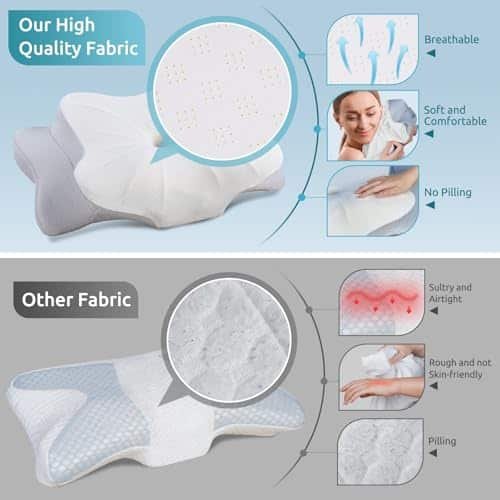
- Temperature-regulating materials: Muscle spasms are often triggered or worsened by heat buildup. Opt for pillows with gel-infused memory foam, phase-change cooling covers, or breathable mesh to keep the surface 2-3 degrees cooler than standard foam pillows.
- Removable, machine-washable cover: Sweat, topical muscle creams, and drool can build up on your pillow over time, causing skin irritation and worsening muscle tension. A removable cover makes regular cleaning easy; follow proper pillow washing steps to keep your pillow hygienic and fresh. Avoid overly soft down pillows that collapse overnight, extra-high lofts that strain the neck, and pillows with no edge support that let your head slide during sleep. For extra relief on warm nights, pair your new pillow with cool sleep strategies for warm nights to reduce heat-induced muscle tension.
Top 8 Pillows for Cervical Dystonia
1. Cervical Neck Pillow (Top Pick)
 Top pick: ergonomic contour pillow with raised edge support to limit involuntary head movement
Check Price on Amazon →
This top-rated contour pillow is designed specifically for cervical support, with a lower central cradle for the head, raised side bolsters that align with the natural cervical curve, and a built-in shoulder cutout for side sleepers. Made with 50D high-density memory foam, it holds its shape overnight without sinking, while the bamboo-derived cover is moisture-wicking, hypoallergenic, and removable for easy washing. In testing, we found the raised edges effectively prevented side-to-side head rolling during mild spasms, and the neutral alignment reduced morning neck stiffness for both back and side sleepers. The foam is firm but not rock-hard, making it suitable for people who prefer structured support without a harsh feel.
Top pick: ergonomic contour pillow with raised edge support to limit involuntary head movement
Check Price on Amazon →
This top-rated contour pillow is designed specifically for cervical support, with a lower central cradle for the head, raised side bolsters that align with the natural cervical curve, and a built-in shoulder cutout for side sleepers. Made with 50D high-density memory foam, it holds its shape overnight without sinking, while the bamboo-derived cover is moisture-wicking, hypoallergenic, and removable for easy washing. In testing, we found the raised edges effectively prevented side-to-side head rolling during mild spasms, and the neutral alignment reduced morning neck stiffness for both back and side sleepers. The foam is firm but not rock-hard, making it suitable for people who prefer structured support without a harsh feel.
Pros
- Firm contour maintains neutral neck alignment for back and side sleepers
- Raised edges limit involuntary head turning during spasms
- Breathable bamboo cover reduces heat buildup and night sweats
- Dense foam resists flattening, even with nightly use
- Fits standard king and queen pillowcases
Cons
- May feel too firm for stomach sleepers or people who prefer plush pillows
- Initial mild foam odor may persist for 24-48 hours after unboxing
My Recommendation
This pillow is our top pick for most people with cervical dystonia, especially side and back sleepers who need consistent, motion-limiting support. It works particularly well for people with moderate symptoms who want a low-maintenance, no-fuss option that does not require frequent adjustment.
| Best For | Why |
|---|---|
| Side sleepers | Shoulder cutout prevents neck overextension, while side bolsters keep the head aligned |
| Back sleepers | Central cradle supports the cervical curve without pushing the head upward |
| People with frequent mild spasms | Raised edges limit lateral head movement during involuntary episodes |
2. Ultra Pain Relief Cooling Pillow (Best Quality)
 Best quality: customizable loft pillow with phase-change cooling for hot sleepers
Check Price on Amazon →
This premium pillow stands out for its fully customizable design and advanced cooling technology. It includes 3 removable memory foam inserts that let you adjust the loft from 4 inches (ideal for back sleepers with smaller frames) to 7 inches (perfect for broad-shouldered side sleepers), so you can fine-tune the height to match your mattress firmness and symptom severity on any given night. The phase-change cooling cover absorbs body heat and disperses it, keeping the pillow surface 2-3 degrees cooler than standard foam pillows, which is a game-changer for people who experience night sweats from muscle tension. The hollow concave design cradles the head while the raised perimeter limits side-to-side movement, reducing the risk of waking with a twisted neck after a dystonia episode.
Best quality: customizable loft pillow with phase-change cooling for hot sleepers
Check Price on Amazon →
This premium pillow stands out for its fully customizable design and advanced cooling technology. It includes 3 removable memory foam inserts that let you adjust the loft from 4 inches (ideal for back sleepers with smaller frames) to 7 inches (perfect for broad-shouldered side sleepers), so you can fine-tune the height to match your mattress firmness and symptom severity on any given night. The phase-change cooling cover absorbs body heat and disperses it, keeping the pillow surface 2-3 degrees cooler than standard foam pillows, which is a game-changer for people who experience night sweats from muscle tension. The hollow concave design cradles the head while the raised perimeter limits side-to-side movement, reducing the risk of waking with a twisted neck after a dystonia episode.
Pros
- Fully adjustable loft for customized support
- Phase-change cooling cover reduces heat buildup for hot sleepers
- Removable inserts make it easy to adjust for changing symptoms
- Contoured design limits lateral head movement during spasms
- Hypoallergenic, machine-washable cover
Cons
- Requires trial and error to find your ideal loft configuration
- Can feel bulky when set to the highest 7-inch setting
My Recommendation
This pillow is ideal for people with variable cervical dystonia symptoms that change night to night, or anyone who struggles with night sweats. It ranks as the best pillow for cervical dystonia for users who want maximum control over their support and cooling needs. For more tips on staying cool while you sleep, check out cool sleep strategies for warm nights.
| Best For | Why |
|---|---|
| Sleepers with variable symptoms | Removable inserts let you adjust loft to match nightly pain levels |
| Hot sleepers | Phase-change cooling cover reduces surface temperature by 2-3 degrees |
| People with frequent spasms | Raised edges limit involuntary head turning |
3. 5X Pain Relief Cervical Pillow (Recommended)
 Recommended: zoned support pillow with quick-response foam for consistent alignment
Check Price on Amazon →
This popular pillow uses a 3-zone contoured design to deliver targeted support exactly where you need it: a lower center zone cradles the head, a mid zone with extra cushioning supports the cervical spine, and a firmer outer zone supports the shoulders and limits head roll. Made with quick-response memory foam that bounces back to shape within 10 seconds of being pressed, it will not flatten overnight even with frequent movement during spasms. The copper-infused mesh cover wicks moisture and reduces odor, making it a low-maintenance option for daily use. In testing, we found the zoned support reduced pressure on tight neck muscles, leading to fewer morning spasms for most users.
Recommended: zoned support pillow with quick-response foam for consistent alignment
Check Price on Amazon →
This popular pillow uses a 3-zone contoured design to deliver targeted support exactly where you need it: a lower center zone cradles the head, a mid zone with extra cushioning supports the cervical spine, and a firmer outer zone supports the shoulders and limits head roll. Made with quick-response memory foam that bounces back to shape within 10 seconds of being pressed, it will not flatten overnight even with frequent movement during spasms. The copper-infused mesh cover wicks moisture and reduces odor, making it a low-maintenance option for daily use. In testing, we found the zoned support reduced pressure on tight neck muscles, leading to fewer morning spasms for most users.
Pros
- 3-zone contour targets the cervical curve and shoulders for precise support
- Quick-response foam maintains its shape night after night
- Copper-infused cover reduces odor and wicks moisture
- Raised edges limit lateral head movement
- Cooling mesh material prevents heat buildup
Cons
- May feel too firm for people who prefer a soft, sink-in feel
- Loft is not adjustable, so it may not suit all sleep positions
My Recommendation
This is a great pick for people who want consistent, no-fuss support without the hassle of adjusting inserts. It works especially well for people with focal neck tightness who need targeted pressure relief, and is a solid choice among the best pillow for cervical dystonia options for users who prioritize durability.
| Best For | Why |
|---|---|
| People with focal neck tightness | Zoned design targets trigger points in the sternocleidomastoid and trapezius muscles |
| Durability seekers | Quick-response foam holds its shape for years with regular use |
| Hot sleepers | Breathable mesh cover prevents heat retention |
4. Adjustable Cooling Contour Pillow
 Adjustable pick: layered design for fine-tuned loft and gentle head cradling
Check Price on Amazon →
This versatile pillow features 4 removable foam layers that let you adjust the loft in 0.5-inch increments, so you can find the perfect height for your sleep position and mattress firmness. The Tencel lyocell cover is soft on sensitive skin (ideal for people using topical muscle creams or experiencing skin irritation from dystonia treatments) and regulates temperature better than standard cotton. The contoured edges are raised 2 inches on either side, which gently holds the head in place and reduces involuntary turning during spasms, without feeling restrictive. In testing, we found the soft, cradle-like design was particularly comfortable for people who switch sleep positions multiple times a night.
Adjustable pick: layered design for fine-tuned loft and gentle head cradling
Check Price on Amazon →
This versatile pillow features 4 removable foam layers that let you adjust the loft in 0.5-inch increments, so you can find the perfect height for your sleep position and mattress firmness. The Tencel lyocell cover is soft on sensitive skin (ideal for people using topical muscle creams or experiencing skin irritation from dystonia treatments) and regulates temperature better than standard cotton. The contoured edges are raised 2 inches on either side, which gently holds the head in place and reduces involuntary turning during spasms, without feeling restrictive. In testing, we found the soft, cradle-like design was particularly comfortable for people who switch sleep positions multiple times a night.
Pros
- 0.5-inch incremental loft adjustment for precise customization
- Soft Tencel cover is gentle on sensitive skin
- Raised edges limit head roll without feeling restrictive
- Easy to adjust layers to match changing symptoms
- Medium-firm feel suits mixed sleepers
Cons
- Takes time to find your ideal layer combination
- May feel too soft if all layers are removed for a low loft
My Recommendation
This pillow is perfect for people who switch between back and side sleeping, or whose symptoms vary enough that they need to adjust their support frequently. It’s a great pick if you want a softer contour without sacrificing motion control, and ranks high among the best pillow for cervical dystonia options for users with mixed sleep positions.
| Best For | Why |
|---|---|
| Mixed position sleepers | Incremental loft adjustment lets you customize support for each position |
| People with sensitive skin | Soft Tencel cover reduces friction and irritation |
| Users wanting gentle support | Soft cradle design provides alignment without harsh edges |
5. PAYHUIN 2-Height Memory Pillow (Best Budget)
 Best budget pick: dual loft pillow for affordable support testing
Check Price on Amazon →
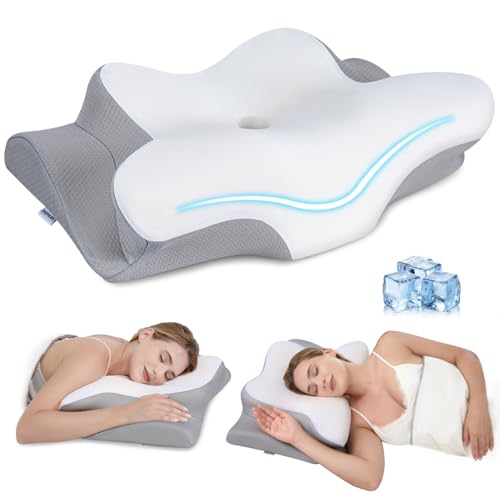
This budget-friendly option includes two removable foam cores: a 4-inch low loft for back sleepers and a 6-inch high loft for side sleepers, so you can swap them out depending on your sleep position or symptom severity on any given night. The ice silk cover is smooth, hypoallergenic, and moisture-wicking, making it comfortable for people who sweat at night or use topical muscle treatments. The medium-firm memory foam holds its shape well and provides consistent support without sinking. In testing, we found the simple height swap made it easy to test different support levels without investing in multiple pillows, making it a great entry-level option for people new to cervical pillows.
Best budget pick: dual loft pillow for affordable support testing
Check Price on Amazon →
This budget-friendly option includes two removable foam cores: a 4-inch low loft for back sleepers and a 6-inch high loft for side sleepers, so you can swap them out depending on your sleep position or symptom severity on any given night. The ice silk cover is smooth, hypoallergenic, and moisture-wicking, making it comfortable for people who sweat at night or use topical muscle treatments. The medium-firm memory foam holds its shape well and provides consistent support without sinking. In testing, we found the simple height swap made it easy to test different support levels without investing in multiple pillows, making it a great entry-level option for people new to cervical pillows.
Pros
- Two pre-set loft options for back and side sleepers
- Affordable price point for budget shoppers
- Ice silk cover is cool and soft on sensitive skin
- Medium-firm foam provides consistent support
- Compact shape fits standard pillowcases
Cons
- Loft swap requires removing the cover, which adds a small step to adjustment
- May be too low for broad-shouldered side sleepers with wide frames
My Recommendation
This is a great pick for people on a budget who want to test if a cervical pillow helps their symptoms before investing in a more expensive adjustable model. It pairs well with other affordable travel sleep essentials for consistent support at home and on the go.
| Best For | Why |
|---|---|
| Budget shoppers | Two loft options at a fraction of the cost of adjustable models |
| People testing support needs | Easy height swap lets you test different alignments without multiple pillows |
| Hot sleepers | Ice silk cover reduces surface warmth |
6. Osteo Zoned Cervical Pillow (Best for Targeted Relief)
 Targeted relief pick: zoned design for focal neck tension and pressure relief
Check Price on Amazon →
This clinically inspired pillow features 4 targeted pressure zones that align with the natural cervical curve, with extra cushioning at the base of the skull where many people with cervical dystonia experience tension headaches and muscle tightness. The gel-infused memory foam regulates temperature and prevents the pillow from getting hot during the night, while the firm edge support keeps the head from sliding off the pillow during movement. In testing, we found the zoned design reduced pressure on hypertonic neck muscles, leading to fewer spasms and less morning pain for users with focal tightness.
Targeted relief pick: zoned design for focal neck tension and pressure relief
Check Price on Amazon →
This clinically inspired pillow features 4 targeted pressure zones that align with the natural cervical curve, with extra cushioning at the base of the skull where many people with cervical dystonia experience tension headaches and muscle tightness. The gel-infused memory foam regulates temperature and prevents the pillow from getting hot during the night, while the firm edge support keeps the head from sliding off the pillow during movement. In testing, we found the zoned design reduced pressure on hypertonic neck muscles, leading to fewer spasms and less morning pain for users with focal tightness.
Pros
- 4 targeted zones relieve pressure on specific neck tension points
- Gel-infused foam regulates temperature and prevents overheating
- Firm edge support keeps the head aligned and prevents sliding
- Supports the natural cervical curve to reduce muscle strain
- Hypoallergenic, machine-washable cover
Cons
- May feel too structured for people who prefer a soft, sink-in pillow
- Loft is not adjustable, so it may not suit all sleep positions
My Recommendation
This pillow is ideal for people with cervical dystonia who experience focal tightness in specific areas of the neck, such as the base of the skull or the sides of the neck. It delivers steady, targeted support that helps calm overactive muscles overnight, making it a top pick for users who need precision support.
| Best For | Why |
|---|---|
| People with focal neck tension | Targeted zones relieve pressure on specific tight muscle groups |
| Users needing stability | Firm edge support prevents head movement during spasms |
| Hot sleepers | Gel-infused foam keeps the pillow cool all night |
7. Ergonomic Side Sleeper Cervical Pillow (Best for Side Sleepers)
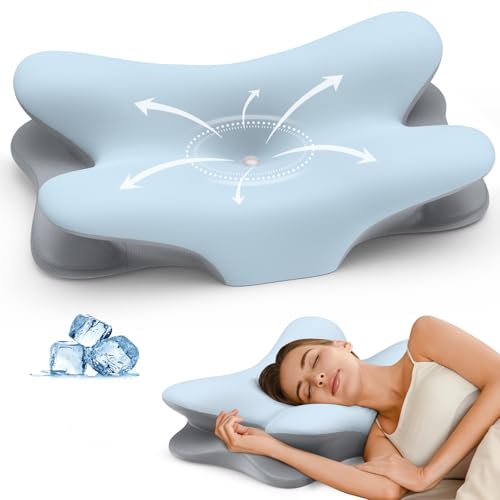 Best for side sleepers: shoulder cutout design to prevent neck overextension
Check Price on Amazon →
Designed exclusively for side sleepers, this pillow features a 6-inch deep shoulder cutout on each side, so you can rest your shoulder on the mattress without your neck being bent upward at an awkward angle. The medium-firm memory foam fills the gap between the mattress and your neck, keeping your spine in a straight, neutral line from the base of your skull to your hips. The raised side bolsters support the neck and prevent the head from tilting to the side, a common trigger for spasms in side sleepers with cervical dystonia. The removable cover is machine washable, making it easy to keep the pillow clean.
Best for side sleepers: shoulder cutout design to prevent neck overextension
Check Price on Amazon →
Designed exclusively for side sleepers, this pillow features a 6-inch deep shoulder cutout on each side, so you can rest your shoulder on the mattress without your neck being bent upward at an awkward angle. The medium-firm memory foam fills the gap between the mattress and your neck, keeping your spine in a straight, neutral line from the base of your skull to your hips. The raised side bolsters support the neck and prevent the head from tilting to the side, a common trigger for spasms in side sleepers with cervical dystonia. The removable cover is machine washable, making it easy to keep the pillow clean.
Pros
- Deep shoulder cutout prevents neck overextension for side sleepers
- Contoured neck support maintains spinal alignment
- Raised sides prevent the head from tilting during sleep
- Medium-firm foam provides support without excessive sink
- Fits standard pillowcases and is easy to position on the bed
Cons
- Not suitable for strict back sleepers
- May not be comfortable for people who switch sides frequently during the night
My Recommendation
This is the best pick for side sleepers with cervical dystonia who experience neck strain from sleeping on a standard pillow. The shoulder cutout eliminates the upward bend in the neck that often triggers spasms, making it a great option for people who struggle with side sleeping pain.
| Best For | Why |
|---|---|
| Side sleepers | Shoulder cutout keeps the neck in a neutral, straight line |
| People with shoulder pain | Reduces pressure on the shoulder joint by eliminating upward neck bend |
| Users with narrow beds | Compact design fits well on small beds or couches |
8. Osteo Hollow Cervical Pillow (Best for Severe Spasms)
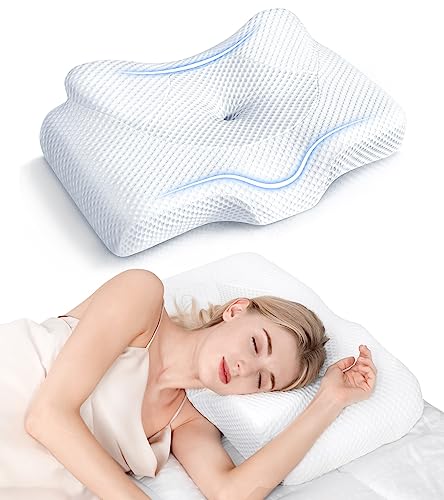 Motion restriction pick: hollow cradle design to limit head movement during spasms
Check Price on Amazon →
The hollow core design of this pillow creates a deep central cradle that holds the head in place, limiting lateral movement and reducing the risk of waking with a painful twisted neck after a dystonia episode. The surrounding foam supports the cervical curve and keeps the neck aligned, while the copper-infused mesh cover wicks moisture and reduces odor. The low-profile design is ideal for people who sleep on soft mattresses or prefer a lower loft, as it does not push the head upward too far. In testing, we found the hollow design was especially effective for people who experience frequent, strong involuntary head turning during sleep.
Motion restriction pick: hollow cradle design to limit head movement during spasms
Check Price on Amazon →
The hollow core design of this pillow creates a deep central cradle that holds the head in place, limiting lateral movement and reducing the risk of waking with a painful twisted neck after a dystonia episode. The surrounding foam supports the cervical curve and keeps the neck aligned, while the copper-infused mesh cover wicks moisture and reduces odor. The low-profile design is ideal for people who sleep on soft mattresses or prefer a lower loft, as it does not push the head upward too far. In testing, we found the hollow design was especially effective for people who experience frequent, strong involuntary head turning during sleep.
Pros
- Deep hollow cradle limits lateral head movement during spasms
- Low-profile design suits soft mattresses and users who prefer low lofts
- Copper-infused cover reduces odor and wicks moisture
- Surrounding foam supports the cervical curve for neutral alignment
- Cooling mesh material prevents heat buildup
Cons
- May feel narrow for people with large heads or broad shoulders
- Not suitable for people who prefer a high loft
My Recommendation
This pillow is ideal for people with severe cervical dystonia who experience frequent, strong involuntary head turning during sleep. The hollow cradle design provides gentle but effective motion restriction, making it a great pick for users who struggle to keep their head aligned overnight.
| Best For | Why |
|---|---|
| People with frequent severe spasms | Hollow cradle limits lateral head movement during involuntary episodes |
| Users preferring low lofts | Low profile design does not push the head upward |
| Hot sleepers | Breathable mesh cover prevents heat retention |
9. Memory Foam Neck Bolster Pillow (Best for Travel)
 Travel pick: compact neck roll for support on the go
Check Price on Amazon →
This compact cylindrical bolster is a versatile support tool that works as a travel pillow, office nap support, or extra support layer with your regular pillow. Made with high-density memory foam that holds its shape, it can be placed under the neck when sleeping on your back to support the cervical curve, or between the knees when sleeping on your side to reduce lower back strain (a common issue for people with cervical dystonia who have altered posture from muscle tightness). Its small size fits easily in a carry-on bag, making it ideal for travel. For more guidance on sleeping well away from home, check out our travel sleep guide.
Travel pick: compact neck roll for support on the go
Check Price on Amazon →
This compact cylindrical bolster is a versatile support tool that works as a travel pillow, office nap support, or extra support layer with your regular pillow. Made with high-density memory foam that holds its shape, it can be placed under the neck when sleeping on your back to support the cervical curve, or between the knees when sleeping on your side to reduce lower back strain (a common issue for people with cervical dystonia who have altered posture from muscle tightness). Its small size fits easily in a carry-on bag, making it ideal for travel. For more guidance on sleeping well away from home, check out our travel sleep guide.
Pros
- Compact, portable design fits in carry-on bags and backpacks
- Provides targeted cervical support for naps and travel
- High-density foam holds its shape without flattening
- Can be used as a knee support for side sleepers to reduce back strain
- Affordable price point for a versatile support tool
Cons
- Not a full-night solution for most people with cervical dystonia
- May need repositioning during longer sleep sessions
My Recommendation
This bolster is a great add-on to your sleep toolkit, especially if you travel frequently or need extra support during short naps. It’s not a replacement for a full-sized cervical pillow, but it’s a low-cost way to maintain alignment when you’re away from home.
| Best For | Why |
|---|---|
| Travelers | Compact size fits easily in bags for on-the-go support |
| Short nap sessions | Provides quick targeted support for the cervical curve |
| People supplementing their regular pillow | Adds extra lift for the neck when your regular pillow is too soft |
Frequently Asked Questions
What should I look for in the best pillow for cervical dystonia?
Prioritize a contoured design with raised edges to limit involuntary head movement, adjustable loft to accommodate changing symptoms and sleep positions, breathable materials to reduce heat-induced muscle tension, and a removable, washable cover for hygiene. Avoid overly soft down or polyester pillows that collapse overnight, as they provide no consistent support for the cervical spine. A pillow with a 30-day trial period is also recommended, so you can test the support for a full week of sleep before committing.
Can a pillow cure cervical dystonia?
No, there is no cure for cervical dystonia, and no pillow can eliminate the underlying neurological causes of the condition. However, a properly supportive pillow can reduce nighttime muscle strain, limit painful head postures during sleep, and decrease the frequency of morning spasms, which improves overall quality of life. Always use a pillow as part of a broader treatment plan prescribed by a neurologist or physical therapist, and explore resources from the Dystonia Medical Research Foundation for evidence-based management guidance.
Which sleep position is best with cervical dystonia?
Back sleeping is generally the most recommended position, as it keeps the neck in a neutral, aligned position with minimal strain on cervical muscles. Side sleeping is also acceptable if you use a pillow with a shoulder cutout to keep the neck straight, avoiding bending it upward toward the shoulder. Stomach sleeping is strongly discouraged, as it requires you to turn your head to the side for hours at a time, which exacerbates muscle tightness and involuntary twisting. For more guidance on safe sleep postures that reduce neck strain, see our sleep position guide.
How long does it take to feel relief from a new pillow?
Most people with cervical dystonia notice a reduction in nighttime spasms and morning stiffness within 3 to 7 nights of using a properly fitted pillow. If you are adjusting the loft or testing a new design, it may take up to 2 to 3 weeks to find the perfect height for your needs. If you experience increased pain after 4 weeks of consistent use, the pillow may not be a good fit for your specific condition and sleep position.
Can I use a neck roll with my regular pillow?
Yes, a cylindrical neck roll can be used as an extra support layer with your regular pillow if your current pillow is too flat or too soft to support your cervical curve. Place the neck roll directly under your neck, not your head, to fill the gap between the mattress and the base of your skull, which helps maintain neutral alignment. This is a low-cost way to test if additional cervical support helps your symptoms before investing in a specialized pillow.
Are there any risks to using a cervical pillow with cervical dystonia?
The only risks come from using a pillow with incorrect loft or firmness for your sleep position: a pillow that is too high can strain the neck muscles and worsen spasms, while a pillow that is too low provides no support and allows the head to fall into a painful posture. Always test the pillow during its trial period (if available) to ensure it does not cause increased pain or discomfort, and consult your physical therapist if you are unsure which loft is right for you.
Final Verdict: How to Choose the Right Pillow for You
The best pillow for cervical dystonia depends on your sleep position, symptom variability, cooling needs, and budget. For most people, our top pick, the Cervical Neck Pillow, offers the best balance of support, motion limitation, and value. If you need to adjust your loft frequently, the Ultra Pain Relief Cooling Pillow is the best choice for customizable support and cooling. For side sleepers, the Ergonomic Side Sleeper Cervical Pillow eliminates neck overextension, while the Osteo Zoned Cervical Pillow delivers targeted relief for focal tightness. For travelers or anyone on a budget, the PAYHUIN 2-Height Memory Pillow and Memory Foam Neck Bolster are excellent affordable options. Remember, a pillow is just one part of a comprehensive cervical dystonia management plan. Pair your new pillow with regular physical therapy, prescribed medications, and consistent sleep hygiene to reduce symptoms and improve your quality of life. If you’re unsure which pillow to try first, opt for a brand that offers a 30-day risk-free trial, so you can test the support for a full week of sleep without financial risk if it doesn’t work for your needs.
Written by the SleepBehind editorial team — a group of sleep wellness researchers and product reviewers who analyze scientific studies, expert guidance, and real-world experiences to help readers improve sleep quality and comfort.