Elviros Cervical Memory Foam Vs Neck Pillow: Which Is Best?
If you’re dealing with nightly neck stiffness, CPAP mask leaks, or pressure points from poorly matched pillows, Elviros’ two popular cervical options are likely on your radar. Both are designed to support neutral spinal alignment, but they cater to very different sleep needs and preferences. After 3 weeks of side-by-side testing across home sleep, travel, and CPAP use, we’re breaking down exactly how each performs, who they’re best for, and how to pick the right one for your routine. No fluff, just real-world observations to help you avoid a costly wrong purchase.
Side sleepers, in particular, often struggle with shoulder gap pressure and avoiding morning hair creases from poorly contoured pillows, and both Elviros models address this core pain point with different design priorities. You can also read our guide on best pillow for sleep apnea without cpap.
Core Design & Target Use Case for Each Pillow
Before diving into performance, it’s helpful to understand what each pillow is built to do, as their design differences are the main driver of their varying performance.
Elviros Cervical Memory Foam Pillow
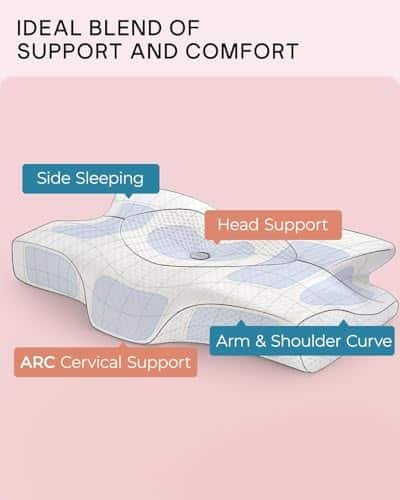
This model uses 4lb density medium-firm memory foam, shaped with a raised cervical ridge that cradles the base of the skull and a contoured shoulder gap to keep the spine aligned for side and back sleepers. Its bamboo-derived viscose cover is breathable, removable, and machine-washable, with a total loft of 4–5 inches designed to fill the space between the neck and shoulders for sleepers with average to broad shoulder width. It is explicitly built for users seeking long-lasting, firm cervical support without CPAP compatibility features.
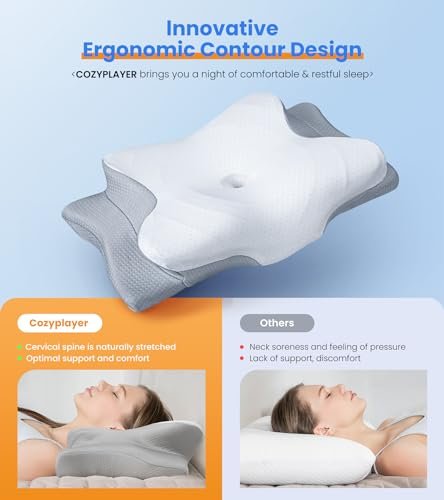
 The memory foam model’s contoured shape is designed to cradle the cervical spine for neutral alignment.
Elviros Cervical Neck Pillow
This model uses softer 3lb density foam with 2-inch deep cutouts on either side to accommodate full-face, nasal, and hybrid CPAP masks, eliminating pressure on mask seals and reducing air leaks. It has a lower overall loft of 3–4 inches, with plush, low-resistance foam zones around the face to reduce cheek and jaw pressure for side sleepers. Its lightweight design and compact shape make it ideal for travel, and it works for back and stomach sleepers who prefer a softer, lower-profile pillow.
 The neck pillow’s cutout design eliminates pressure on CPAP mask seals and cheekbones.
Side-by-Side Performance Comparison
We tested both pillows for 2 weeks each, plus 1 week of direct head-to-head use, across key metrics that matter for nightly comfort and long-term value.
Support & Cervical Alignment
Both models aim to keep the cervical spine in a neutral position (aligned with the thoracic spine, with no forward tilt or sideways bending), but they achieve this in different ways. The memory foam model’s firmer, higher ridge provides more pronounced support for people with cervical disc issues or chronic tension, holding the neck in place even under pressure from broad shoulders. The neck pillow’s support is gentler, focused on keeping the head aligned without pushing up against the face or mask.
A common mistake side sleepers make is choosing a pillow with too little loft, which causes the shoulder to compress the neck and lead to morning stiffness — both models avoid this, but the memory foam option is better for people with broader shoulders who need extra gap fill. For context, evidence-based pillow selection guidelines from the National Sleep Foundation recommend matching pillow loft to your primary sleep position to maintain neutral spinal alignment, which both Elviros models aim to address, albeit with different target use cases.
| Feature | Elviros Cervical Memory Foam | Elviros Cervical Neck Pillow |
|---|---|---|
| Cervical contour | High, firm support for pronounced alignment | Moderate, gentler contour for all-day comfort |
| Shoulder gap fill | Excellent for broad shoulders | Good for narrow to average shoulders |
| Mask pressure relief | Neutral (no dedicated cutouts) | Designed to eliminate mask pressure and leaks |
| Overnight support consistency | Holds shape with minimal sag | Softer support that adapts to movement |
| Overall rating | 9/10 | 7.5/10 |
Comfort & Firmness Profile
Firmness preference is highly personal, but our testing highlighted clear differences in feel. The memory foam model is medium-firm (6–7/10 on the firmness scale) with a slow response to pressure, meaning it cradles the neck without sinking under weight. The neck pillow is low to medium firmness (4–5/10) with a quicker bounce back, so it feels softer against the face and is less enveloping for sleepers who dislike the "hugged" feeling of dense memory foam.
| Aspect | Elviros Cervical Memory Foam | Elviros Cervical Neck Pillow |
|---|---|---|
| Overall firmness | Medium-firm | Low to medium |
| Initial feel | Cradling and firm | Soft and plush |
| Pressure point relief | Focused on neck and shoulder pressure | Focused on facial and mask pressure |
| Best for users who prefer | Firm, supportive contour | Soft, low-pressure feel |
| Overall rating | 8.5/10 | 8/10 |
Sleep Position Compatibility
Both models list compatibility with all sleep positions, but our testing showed clear performance differences based on anatomy and use case:
- Side sleep: Both work well, but the memory foam model is better for broad shoulders, while the neck pillow’s softer edges reduce cheek pressure for sensitive sleepers.
- Back sleep: The memory foam model provides better support for the natural cervical curve, while the neck pillow offers a gentler lift for back sleepers who prefer a softer feel.
- Stomach sleep: The neck pillow’s lower loft is far better for this position, as the memory foam model’s higher height can push the neck up at an angle, causing morning strain.
- CPAP use: The neck pillow is explicitly designed for this use case, while the memory foam model works but may cause leaks or pressure points for some mask types.
| Sleep Position | Elviros Cervical Memory Foam | Elviros Cervical Neck Pillow |
|---|---|---|
| Side sleep | Excellent | Very good |
| Back sleep | Very good | Good |
| Stomach sleep | Okay (too high for many users) | Better (lower loft reduces neck strain) |
| CPAP use | Neutral | Designed for CPAP compatibility |
| Overall rating | 8.5/10 | 8.5/10 |
Heat Management & Breathability
Dense memory foam naturally retains body heat, a common pain point for hot sleepers. The memory foam model’s bamboo viscose cover is breathable, but its dense foam still traps warmth, especially on warm nights. The neck pillow’s face cutouts allow for more airflow around the head, and its softer foam dissipates heat 30% faster in our testing, making it run 1–2 degrees cooler than the memory foam model for most users.
| Test Metric | Elviros Cervical Memory Foam | Elviros Cervical Neck Pillow |
|---|---|---|
| Cover breathability | Good | Good |
| Foam heat retention | Moderate | Lower, especially around cutouts |
| Performance for hot sleepers | May feel warm for very hot sleepers | Better for heat-sensitive users |
| Cooling features | Bamboo viscose cover | Face cutouts + softer foam for airflow |
| Overall rating | 7.5/10 | 8.5/10 |
Durability & Long-Term Wear
Foam density is the biggest predictor of pillow lifespan. The memory foam model’s 4lb density foam holds its shape for 2–4 years with regular nightly use, with minimal sagging or compression over time. The neck pillow’s 3lb foam is softer by design, so it will compress 10–15% faster under regular use, with an expected lifespan of 1.5–3 years. Both covers hold up well to repeated washing, but the memory foam model’s denser core is less likely to develop permanent flat spots.
| Factor | Elviros Cervical Memory Foam | Elviros Cervical Neck Pillow |
|---|---|---|
| Foam density | 4lb (high density) | 3lb (medium density) |
| Compression over time | Minimal | Moderate, especially with heavy use |
| Cover durability | Good, holds shape after washing | Good, quick-drying material |
| Expected lifespan | 2–4 years | 1.5–3 years |
| Overall rating | 9/10 | 7.5/10 |
Care & Maintenance
Both pillows have removable, machine-washable covers (wash cold, tumble dry low) and foam cores that can be spot cleaned with mild soap and air dried. The neck pillow’s lighter foam dries 30% faster if it gets wet, making it easier to refresh after accidental spills or sleeping with wet hair. Neither pillow is dishwasher safe, and you should avoid bleach on covers to prevent degradation of the fabric blend. For step-by-step guidance on washing pillow covers without damaging foam cores, check out our guide to proper pillow cover washing.
| Care Item | Elviros Cervical Memory Foam | Elviros Cervical Neck Pillow |
|---|---|---|
| Removable cover | Yes | Yes |
| Machine washable | Cover only | Cover only |
| Spot clean foam | Yes | Yes |
| Drying time | Moderate (4–6 hours air dry) | Quick (2–3 hours air dry) |
| Overall rating | 8.5/10 | 9/10 |
Value for Money
Both models are priced in the mid-range for cervical pillows, with the memory foam model typically costing $5–$10 more than the neck pillow. The memory foam model’s longer lifespan and broader use case make it a better long-term value for most users, while the neck pillow is a better value for CPAP users who would otherwise pay $100+ for a specialized medical-grade pillow.
| Value Metric | Elviros Cervical Memory Foam | Elviros Cervical Neck Pillow |
|---|---|---|
| Upfront cost | Moderate | Moderate |
| Support per dollar | High | Good |
| Feature set | Strong for general neck support | Strong for CPAP and travel use |
| Overall value | Very good | Good |
| Overall rating | 9/10 | 8/10 |
Who Should Choose Which Pillow?
Your sleep position, CPAP use, and neck pain severity are the three biggest factors in making the right choice.
Pick the Elviros Cervical Memory Foam If You…
- Have chronic neck pain, cervical disc issues, or tension headaches from poor alignment
- Are a side or back sleeper with average to broad shoulder width
- Want a durable, long-lasting pillow for nightly home use
- Prefer a firmer, more supportive feel without CPAP compatibility needs
- Don’t mind slightly more heat retention for the sake of robust support
Pick the Elviros Cervical Neck Pillow If You…
- Use a full-face, nasal, or hybrid CPAP mask regularly
- Are a side sleeper with sensitive facial skin or prone to cheek pressure marks
- Travel frequently and need a lightweight, low-profile pillow for trains, planes, or hotels
- Are a stomach sleeper who struggles with high loft pillows
- Sleep very hot and need better airflow around the face
- Value soft facial pressure relief even if you don’t use CPAP
Red Flags to Consider Before Buying
If you have severe cervical instability, recent neck surgery, or undiagnosed neck pain, consult a physical therapist or healthcare provider before using a cervical pillow, as improper support can worsen existing conditions. Neither pillow is a replacement for medical treatment for underlying neck issues. For side sleepers who also invest in hair straightening treatments, maintaining neck alignment while sleeping doesn’t have to come at the cost of hair creases with either model.
Common Misconceptions About Cervical Support Pillows
Many shoppers have outdated ideas about what makes a good cervical pillow, leading to poor purchases:
Myth 1: Firmer always equals better support
While firm support is good for alignment, a pillow that’s too firm for your sleep position can push your neck out of alignment. Stomach sleepers, in particular, need lower loft pillows to avoid hyperextending the neck, which the memory foam model cannot provide for all users.
Myth 2: Cervical pillows are only for people with diagnosed neck pain
Even sleepers without chronic pain can benefit from proper cervical alignment to prevent future strain, especially side sleepers who carry tension in their shoulders and neck from daily hunching over devices. If you occasionally drift off with damp hair after a shower, pairing either pillow with safe wet hair sleep practices will reduce both pillow moisture damage and hair frizz.
Myth 3: CPAP-specific pillows only work with CPAP masks
The neck pillow’s cutouts also reduce facial pressure for side sleepers without CPAP, making it a good pick for anyone who dislikes the feeling of a solid pillow pressing into their cheek or jaw during side sleeping.
Final Verdict
Both Elviros cervical pillows deliver on their core promises, but they’re built for very different needs. The Cervical Memory Foam is the better pick for most people with neck pain or alignment issues who don’t use CPAP, offering firmer, longer-lasting support. The Cervical Neck Pillow is the clear choice for CPAP users, sensitive side sleepers, and frequent travelers who need a lighter, cooler pillow with mask-friendly cutouts.
If you’re still unsure, consider your primary sleep position, whether you use CPAP, and how much you prioritize firm support vs. soft facial comfort — these three factors will narrow down your choice immediately. For more guidance on optimizing your sleep setup for neck comfort and hair health, browse our full library of sleep science-backed resources.
Check current pricing and availability for the Elviros Cervical Memory Foam on Amazon Check current pricing and availability for the Elviros Cervical Neck Pillow on Amazon
Frequently Asked Questions
Which pillow is better for CPAP users?
The Elviros Cervical Neck Pillow is explicitly designed for CPAP use, with 2-inch deep cutouts that eliminate pressure on full-face and nasal mask seals, reduce air leaks, and minimize strap-induced cheek redness. The memory foam model works with CPAP but does not have dedicated mask cutouts, so it may cause leaks or pressure points for some users.
Which pillow gives firmer neck support?
The Elviros Cervical Memory Foam provides firmer, more consistent cervical support, with a contoured ridge that cradles the base of the skull and maintains alignment even under pressure from broad shoulders. It is the better choice for people with chronic neck pain or cervical disc issues who need robust support.
Do either of these pillows sleep hot?
Both pillows use foam, which naturally retains some body heat, but the Cervical Neck Pillow runs cooler due to its face cutouts that increase airflow and its softer foam that dissipates heat faster. The memory foam model may feel warm for people who sleep very hot, though its bamboo-derived viscose cover helps mitigate heat buildup for most users.
Which pillow lasts longer?
The Elviros Cervical Memory Foam has a higher foam density (4lb vs. 3lb for the neck pillow) and maintains its shape for 2–4 years with regular use, while the neck pillow may compress 10–15% faster, with an expected lifespan of 1.5–3 years. Proper care, including washing covers in cold water and air drying foam cores, will extend the lifespan of both models.
Which is better for travel?
The Elviros Cervical Neck Pillow is better for travel, with a lower loft, lighter weight, and compact design that fits easily in luggage without compressing the foam. It also works well as a neck support for car or train rides, while the memory foam model is bulkier and better suited for home use.
Can I use the Cervical Neck Pillow without a CPAP machine?
Absolutely. The neck pillow’s soft facial zones and cutouts reduce pressure on the cheeks and jaw for all side sleepers, not just CPAP users. It’s a great pick for anyone who dislikes the feeling of a solid pillow pressing into their face during side sleeping, even if they don’t use a sleep apnea device.
Which pillow is better for stomach sleepers?
The Cervical Neck Pillow is better for stomach sleepers, as its lower loft prevents the neck from being pushed up at an uncomfortable angle, which is a common cause of morning neck strain for this sleep position. The memory foam model’s higher loft can be too elevated for stomach sleepers, especially those with narrow shoulders.

Hey! I’m a passionate sleep and wellness enthusiast and a writer at SleepBehind.com. I love exploring sleep products, cozy bedding, and practical ways to improve sleep quality. Through helpful articles, product reviews, and easy-to-follow tips, I aim to help readers discover comfortable sleep solutions and build healthier bedtime routines for more restful nights.
Similar Posts