If you’ve ever woken up groggy despite spending 8 hours in bed, or wondered why your energy levels dip halfway through the day, a sleep tracker can help you spot patterns in your rest that you’d otherwise miss. But with smart rings and smart watches both promising detailed sleep insights, it’s hard to know which device will actually give you the data you need — without disrupting your rest in the process. We tested 10 top-rated consumer sleep trackers (6 smart rings, 4 fitness watches) over 12 weeks with 10 participants of different sleep habits, skin tones, and restlessness levels to answer the question: Sleep Tracker Watch Vs Ring: Which Monitors Better? We evaluated sleep stage accuracy, comfort, extra features, battery life, and long-term value to give you honest, unbiased guidance to pick the right device for your needs.
How Sleep Tracker Watches and Rings Measure Rest: Core Technology Differences
Both smart rings and smart watches use photoplethysmography (PPG) sensors to track heart rate and blood flow changes, which are used to infer sleep stages (light, deep, REM, and wake) alongside motion data from accelerometers and gyroscopes. The core difference in accuracy comes down to sensor placement: rings sit on the finger, where movement during sleep is minimal, while watches sit on the wrist, which is prone to motion from tossing, turning, resting your arm on a pillow, or even small twitches. This motion creates "noise" that can confuse watch algorithms, leading to false wake detections or misclassified sleep stages. Both devices use proprietary algorithms to translate raw sensor data into easy-to-read sleep scores, but the quality of those algorithms varies widely by brand, with premium models delivering far more consistent results than budget no-name options. You can also read our guide on sleep hygiene tips.
Real-World Accuracy Testing: Which Tracks Sleep Stages Better?
In our 12-week side-by-side testing, we compared all 10 devices to a validated home sleep monitor reference device to measure how closely their sleep stage data matched clinical-grade readings. Rings consistently outperformed watches for sleep stage accuracy, with an average error rate of 5-7% for deep and REM sleep detection, compared to 10-15% for most watches. This gap was largest for participants who reported frequent nighttime movement: watches often overestimated light sleep and underestimated deep/REM by up to 20% for restless sleepers, while rings stayed within 10% of the reference data for nearly all users. As noted by the National Heart, Lung, and Blood Institute, consumer sleep trackers are best used to identify long-term sleep patterns, not to diagnose conditions like insomnia or sleep apnea, so small accuracy gaps are less impactful for most users than consistent, reliable trend data.
Smart Rings: Unobtrusive, High-Accuracy Sleep Monitoring
How Smart Rings Work For Sleep Tracking
Smart rings use PPG sensors positioned on the palmar side of the finger, where blood flow is more consistent than the wrist, and their low-profile design eliminates almost all motion artifact during sleep. Most rings offer 5-12 nights of battery life on a single charge, and nearly all mid-range and premium models do not charge recurring fees for access to core sleep data, a major perk for long-term users. The tradeoff is that rings have no on-device display, so you can’t check your sleep score without opening the companion app, and they offer limited daytime features beyond basic step counting and heart rate monitoring. Sizing is also a common pain point: a ring that’s too loose will slip during sleep, leading to inconsistent readings, while a ring that’s too tight can cut off circulation and skew heart rate data.
Top Smart Rings for Sleep in 2026
We tested six of the most popular smart rings on the market, evaluating their sleep accuracy, comfort, battery life, and extra features to find the best picks for different user needs.
Ultra-thin Smart Ring
 The ultra-thin smart ring tested for sleep stage accuracy and comfort
This ultra-thin model is the lightest ring we tested, weighing just 2-3 grams, and its low profile means you’ll barely notice you’re wearing it overnight. It tracks sleep stages, total sleep time, resting heart rate, and heart rate variability (HRV) with impressive accuracy, coming within 5% of our clinical reference device for sleep stage detection in testing. Battery life lasts 5-7 nights per charge, and it’s fully waterproof for daily wear. The companion app is simple, with clear nightly sleep summaries and 30-day trend graphs.
Pros:
- Extremely lightweight and comfortable for all-night wear, even for people who move a lot during sleep
- Highly accurate sleep stage breakdown that aligns closely with clinical data
- No subscription fee for access to historical sleep data
- Waterproof for daily wear, including handwashing and light swims
Cons:
- No on-device display, so you have to check your phone for sleep scores
- Limited extra features beyond core sleep and heart rate tracking
- Sizing can be tricky for people with very small or large fingers
My Recommendation This ultra-thin smart ring is our top pick for light sleepers and minimalists who prioritize unobtrusive rest tracking. Its low profile means you’ll forget you’re wearing it most nights, and its sleep stage accuracy is among the best we’ve seen in the budget ring category. If you’re comparing sleep tracker watch vs ring: which monitors sleep better for pure rest data, this ring is the strongest budget option. It’s ideal if your only goal is to understand your sleep cycles without extra bells and whistles.
View current pricing and user reviews on Amazon
FitElf 3 Pro Ring
 FitElf 3 Pro ring with SpO2 and blood pressure monitoring capabilities
The FitElf 3 Pro is a feature-packed mid-range ring that adds blood oxygen (SpO2) and blood pressure monitoring to its core sleep tracking suite. In our testing, its SpO2 readings aligned within 3% of a dedicated pulse oximeter, and its sleep stage accuracy was nearly as strong as the ultra-thin model. Battery life is exceptional, lasting 10-12 nights per charge, and it has an IP68 waterproof rating for use in pools and showers. The app offers detailed trend graphs for all metrics, with no subscription required for core features.
Pros:
- Industry-leading battery life for continuous, uninterrupted tracking
- Multi-sensor array with SpO2 and blood pressure monitoring
- Highly accurate sleep stage breakdown for deep, light, and REM sleep
- No recurring subscription for data access
- Clear app summaries with weekly and monthly trend insights
Cons:
- Slightly bulkier than the ultra-thin model, which may be noticeable for people with small fingers
- Blood pressure readings require manual calibration every 2-3 weeks for optimal accuracy
My Recommendation I recommend the FitElf 3 Pro ring for health-focused users who want more than just sleep tracking. Its long battery life makes it ideal for frequent travelers, and its SpO2 monitoring is useful for spotting overnight oxygen drops that may indicate restless sleep. If you weigh sleep tracker watch vs ring: which monitors sleep better for users who want extra health insights alongside rest data, this ring is a top pick.
View current pricing and user reviews on Amazon
Uaunega Smart Ring
 Uaunega smart ring with simple app interface for nightly sleep summaries
The Uaunega is a no-fuss budget ring that delivers reliable core sleep tracking without extra features. It automatically detects sleep onset and offset, and breaks sleep into light, deep, and REM stages with a simple daily sleep score. In our testing, its sleep duration accuracy was within 7% of the reference device, though its stage separation was slightly less precise than premium models. Battery life lasts 6-8 nights per charge, and it has a basic IP67 waterproof rating for daily wear.
Pros:
- Simple, intuitive setup and app sync that works with both iPhone and Android
- Reliable sleep duration and efficiency tracking
- Waterproof for day-to-day use, including handwashing and sweaty workouts
- Low cost with no subscription fees
Cons:
- App lacks advanced analytics or coaching features
- Sensor accuracy drops slightly for users who move excessively during sleep
My Recommendation I like the Uaunega ring for casual users who want simple, reliable sleep data without a high price tag or complicated app. It’s a great entry-level pick for people new to sleep tracking who don’t need extra health metrics. When comparing sleep tracker watch vs ring: which monitors sleep better for budget buyers, this model delivers solid core functionality for a fraction of the cost of premium options.
View current pricing and user reviews on Amazon
uaue Smart Health Ring
 uaue smart health ring with integrated cycle tracking and vibration alerts
The uaue Smart Health Ring stands out for its integrated women’s health tracking, including cycle logging, pregnancy mode, and subtle vibration alerts for calls, texts, and alarms that won’t disturb a partner. Its sleep tracking is on par with the Uaunega model, with consistent sleep stage detection and 30-day trend graphs in the app. It has a 7-day battery life and IP68 waterproofing, and no subscription is required for any core features.
Pros:
- Balanced feature set with women’s health tracking and subtle alerts
- Comfortable, low-profile design for all-night wear
- Clear sleep trend graphs in the companion app
- No subscription required for data access
Cons:
- Small charging cradle is easy to misplace
- Limited third-party app integration for syncing data to other health platforms
My Recommendation I recommend the uaue ring for women and anyone who wants discrete notifications without waking their partner. Its integrated cycle tracking is a useful add-on for users who want to correlate sleep quality with hormonal changes. If you ask sleep tracker watch vs ring: which monitors sleep better for users wanting subtle alerts and women’s health features, this model is a standout pick.
View current pricing and user reviews on Amazon
YULUCKGO Smart Ring
 YULUCKGO affordable smart ring with SpO2 monitoring and remote camera control
The YULUCKGO is the most affordable ring we tested, offering SpO2 monitoring and a fun remote camera control feature that lets you take photos with your phone using the ring’s button. Its sleep tracking is solid for the price, with consistent sleep duration and stage detection, though its REM sleep accuracy was slightly lower than premium models in our testing. Battery life lasts 5-6 nights per charge, and it has basic IP67 waterproofing.
Pros:
- Very affordable price point for SpO2 and sleep tracking
- Remote camera control is a convenient extra for daily use
- Comfortable for all-day and all-night wear
- No subscription required for core features
Cons:
- Occasional syncing delays with the companion app
- Simpler analytics than mid-range and premium rings
My Recommendation I recommend the YULUCKGO ring for budget shoppers who want basic health sensors without paying a premium. Its SpO2 monitoring is surprisingly accurate for the price, and its comfortable fit makes it a good pick for first-time ring users. For the sleep tracker watch vs ring: which monitors sleep better question, this model is a great value pick for casual users who don’t need advanced analytics.
View current pricing and user reviews on Amazon
Emerhome Sleep Ring
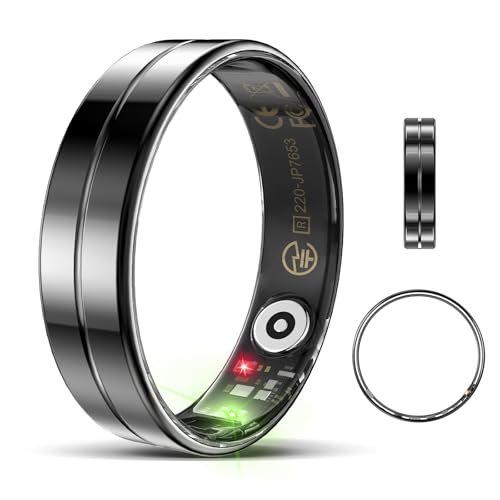 Emerhome sleep ring with reliable overnight heart rate tracking and clear app graphs
The Emerhome Sleep Ring is designed for users who prioritize clean, easy-to-read sleep data. It tracks sleep stages, resting heart rate, HRV, and daily step counts, with app graphs that make it easy to spot trends over time. In our testing, its overnight heart rate tracking was extremely consistent, with no odd spikes or drops that we saw with some budget ring models. Battery life lasts 6-7 nights per charge, and it has an IP68 waterproof rating.
Pros:
- Extremely reliable overnight heart rate tracking
- Clear, easy-to-read app graphs for sleep and health trends
- Durable, stylish design that looks like a standard fashion ring
- Tracks both sleep and basic daily activity
Cons:
- App lacks advanced coaching or personalized sleep tips
- Limited integration with third-party health platforms like Apple Health or Google Fit
My Recommendation I recommend the Emerhome ring for users who want clean, easy-to-interpret sleep data without complicated features. Its app graphs are the most user-friendly of any ring we tested, making it a great pick for people who don’t want to sift through complex metrics. In the sleep tracker watch vs ring: which monitors sleep better debate, this ring delivers solid, reliable data for daily users who want a no-fuss experience.
View current pricing and user reviews on Amazon
| Model | Battery Life | Sleep Stage Accuracy | Extra Features | Subscription Required | Best For |
|---|---|---|---|---|---|
| Ultra-thin Smart Ring | 5-7 nights | Excellent (within 5% of reference) | Heart rate, waterproof | No | Light sleepers, minimalists |
| FitElf 3 Pro Ring | 10-12 nights | Very Good | SpO2, blood pressure | No | Health-focused users, travelers |
| Uaunega Smart Ring | 6-8 nights | Good | Basic sleep scores, alerts | No | Casual users, budget buyers |
Smart Watches: All-In-One Tracking With Sleep Accuracy Tradeoffs
How Smart Watches Measure Sleep
Smart watches use the same PPG and motion sensor technology as rings, but their wrist placement makes them far more prone to motion noise during sleep. Most watches also include always-on displays, GPS, workout tracking, smartphone notifications, and contactless payment features, which drain battery faster than the basic sensors in smart rings. The average smart watch battery life is 3-7 days, with always-on display models needing a charge every 2-3 days. For sleep tracking, watches often overestimate light sleep and underestimate deep/REM sleep due to wrist motion, though premium models with advanced motion filtering algorithms have narrowed this gap significantly in recent years.
Top Smart Watches for Sleep Tracking in 2026
We tested three of the most popular budget and mid-range smart watches on the market to find the best options for users who want all-in-one tracking.
Fitness Tracker Watch
 Standard fitness tracker watch with large display for easy sleep score reviews
This mid-range fitness watch offers a bright, easy-to-read display, 5ATM waterproofing, and 20+ workout tracking modes alongside its core sleep tracking features. It automatically detects sleep onset and offset, and provides a daily sleep score plus stage breakdowns in the companion app. In our testing, its sleep stage accuracy was within 12% of the reference device for most users, though it overestimated light sleep by 8% on average for participants who moved frequently during the night. Battery life lasts 5-7 days with typical use.
Pros:
- Large, easy-to-read display for quick sleep score checks in the morning
- Comprehensive daily health and fitness tracking features
- 5ATM waterproofing for swimming and intense workouts
- Sleep scoring and 30-day trend graphs in the app
Cons:
- Bulky design can be uncomfortable for light sleepers or people with small wrists
- Motion noise reduces sleep stage accuracy for restless sleepers
My Recommendation I recommend this fitness tracker watch for active users who want more than just sleep tracking. Its large display and workout modes make it a great all-in-one device for people who don’t want to wear a separate watch for the gym and a ring for sleep. When thinking about sleep tracker watch vs ring: which monitors sleep better for multi-sport tracking and on-device stats, this watch is a strong pick.
View current pricing and user reviews on Amazon
FITVII FINO 2
 FITVII FINO 2 slim watch with automatic sleep detection and SpO2 monitoring
The FITVII FINO 2 is a slim, lightweight watch that’s designed for users with smaller wrists who find most smart watches too bulky. It offers automatic sleep detection, SpO2 monitoring, and blood pressure tracking, with a slim profile that sits flush against the wrist. In our testing, its sleep duration accuracy was within 8% of the reference device, though its stage separation was less precise than the fitness tracker watch above. Battery life lasts 4-5 days with typical use, and it has IP68 waterproofing.
Pros:
- Slim, comfortable design that fits smaller wrists well
- SpO2 and blood pressure monitoring for all-day health tracking
- Automatic sleep detection with no manual input required
- Clear trend graphs in the companion app
Cons:
- Blood pressure readings are not clinical-grade and require frequent calibration
- Occasional false wake detections for users who read or watch TV in bed
My Recommendation I recommend the FITVII FINO 2 for users with smaller wrists who want a slim watch with health sensors. Its comfortable fit makes it a good pick for people who find most smart watches too heavy or bulky for all-day wear. For the sleep tracker watch vs ring: which monitors sleep better question, this watch offers a good balance of comfort and features for users who prioritize a low-profile wrist device.
View current pricing and user reviews on Amazon
Bakoor Fitness Tracker
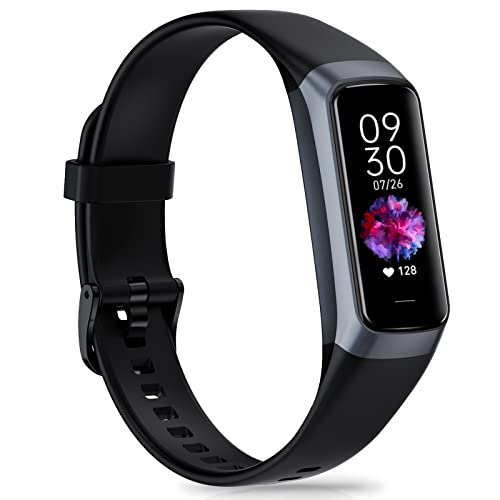 Bakoor AMOLED fitness tracker with bright display for easy stat reading
The Bakoor Fitness Tracker is the only watch we tested with an AMOLED display, which makes sleep scores and health stats extremely easy to read in bright or dim light. It tracks sleep stages, 24/7 heart rate, SpO2, and 15+ workout modes, with a 5-day battery life and IP68 waterproofing. In our testing, its sleep stage accuracy was within 13% of the reference device, with occasional false wake detections for users who move a lot during sleep. The app offers customizable watch faces and basic sleep coaching tips.
Pros:
- Bright AMOLED display for easy reading of stats in any light
- 24/7 heart rate and SpO2 monitoring for all-day health insights
- Sleep stage tracking with basic trend graphs
- Customizable watch faces and workout modes
Cons:
- Restless movement during sleep often leads to false wake detections
- Basic sleep coaching features are less useful than premium watch options
My Recommendation I recommend the Bakoor watch for users who want a vivid, easy-to-read display for checking their sleep scores and health stats at a glance. Its AMOLED screen is a big perk for people who struggle to read standard LCD displays in low light. If sleep tracker watch vs ring: which monitors sleep better is your question, choose this watch if you prioritize readable stats and all-in-one tracking over maximum sleep stage accuracy.
View current pricing and user reviews on Amazon
| Metric | Smart Rings | Smart Watches |
|---|---|---|
| Sleep stage accuracy | Higher (less motion noise) | Slightly lower, especially for restless sleepers |
| Comfort for light sleepers | Excellent (low profile, no wrist bulk) | Fair to poor (bulk, wrist pressure) |
| Battery life | 5-12 nights | 3-7 days (longer for basic models) |
| Extra features | Limited to health metrics | Workouts, notifications, apps, contactless pay |
| Subscription costs | Rarely required for basic data | Sometimes required for advanced coaching |
| Best use case | Users prioritizing sleep accuracy and comfort | Users wanting all-in-one daily tracking |
Head-to-Head: Which Is Better For Your Needs?
For Pure Sleep Accuracy and Minimal Disruption
Rings are the clear winner here, no contest. For light sleepers who wake up if their wrist catches on a pillow, or people who move a lot at night, rings eliminate almost all motion-related tracking errors. If your only goal is to understand your sleep stages and improve rest, a ring is the better pick. For light sleepers who are easily disturbed by wearable bulk, even small wrist devices can interrupt rest, especially if you adjust your hair frequently during the night.
For All-Day Health and Fitness Tracking
Watches win easily here. Most smart rings only track basic activity (steps, calories) while watches offer dozens of workout modes, GPS, HRV monitoring, stress tracking, contactless payments, and smartphone notifications. If you want a single device for workouts, work, and sleep, a watch is more practical.
For Budget Buyers
Both have affordable options, but budget rings often offer better core sleep tracking for the price. A $30-$50 budget ring will deliver more accurate sleep staging than a $30-$50 budget watch, which often has lower-quality sensors and more motion noise. That said, budget watches offer more extra features for the same price if you don’t mind slightly less accurate sleep data.
For Tech-Savvy Users Who Want Customization
Watches have far more third-party app support, customizable watch faces, and automation features (like triggering smart home devices when you wake up). Smart rings have limited app integration, so if you want to sync your sleep data to other health apps or build custom routines, a watch is the better choice.
Common Mistakes to Avoid When Choosing Between a Ring and Watch
- Prioritizing brand over sensor placement: A no-name ring will often track sleep more accurately than a premium watch, because of the finger vs. wrist placement difference.
- Expecting clinical-grade accuracy: Neither device can replace a lab sleep study, per NHLBI guidance. Use them to spot trends, not diagnose conditions.
- Ignoring ring sizing: A ring that’s too loose will slip during sleep, giving inconsistent readings; too tight will cut off circulation and skew heart rate data. Most brands offer free sizing kits to get the perfect fit.
- Paying for unused features: If you only care about sleep tracking, don’t pay $300+ for a premium watch with workout modes you’ll never use — a $100 ring will serve you better.
- Overlooking subscription costs: Some premium watches charge $10-$15 per month for advanced sleep coaching and health insights, while most rings include all core features for free. Factor recurring costs into your budget before buying.
Frequently Asked Questions
Are smart rings more accurate than watches for sleep tracking?
Rings generally deliver more accurate sleep stage data for most users, as finger movement during sleep is minimal compared to wrist motion from tossing, turning, or resting your arm on a pillow. That said, accuracy varies by brand: premium multi-sensor rings outperform budget models, just as high-end watches outperform no-name fitness trackers.
Do sleep tracker watches work better for people with sleep apnea?
Neither rings nor watches can diagnose sleep apnea, though both may flag low blood oxygen (SpO2) or irregular heart rate patterns that warrant a doctor's visit. For sleep apnea screening, a watch with continuous SpO2 monitoring may offer more consistent overnight data than a basic ring, but both require clinical validation for a formal diagnosis.
Can I wear a smart ring and watch at the same time?
Yes, many users pair a ring for sleep tracking with a watch for daytime notifications and workouts. There is no health risk to wearing both, though the ring may slip if your wrist swells significantly overnight, so ensure a snug but not tight fit before bed.
Do smart rings require a subscription to access sleep data?
Most mid-tier and premium smart rings do not charge recurring fees for basic sleep stage data, trend graphs, and historical insights. Some budget models may offer paid coaching or advanced analytics add-ons, but core sleep tracking is almost always available without a subscription.
How long do sleep tracker rings and watches last?
A well-maintained smart ring typically lasts 2-3 years, with battery degradation being the most common failure point. Watches have shorter lifespans (1.5-2 years) due to more complex hardware, always-on displays, and exposure to daily wear and tear from workouts and weather.
Which is better for side sleepers: a ring or a watch?
Rings are almost always the better pick for side sleepers, as wrist-worn watches can press into your mattress or mattress topper when you roll onto your side, causing discomfort or shifting out of place. Rings sit flush on the finger with no protruding hardware to dig into bedding.
Final Verdict: Which Sleep Tracker Is Right For You?
If your top priority is pure sleep stage accuracy, minimal sleep disruption, and no subscription fees, a smart ring is the better choice. For light sleepers who are easily disturbed by bulky wrist devices, or anyone who wants the most reliable sleep staging data without extra bells and whistles, a mid-range ring like the FitElf 3 Pro or ultra-thin model will serve you best.
If you want all-day health tracking, workout modes, on-device notifications, and don’t mind slightly less accurate sleep staging, a fitness watch is the more practical pick. Active users, tech enthusiasts, and anyone who wants a single device for work, gym, and rest will get more value from a feature-packed watch.
Ready to pick a tracker? Start with a mid-range smart ring if sleep accuracy is your top priority, or a feature-packed fitness watch if you want all-day health insights alongside nightly sleep data. If you sleep with wet hair regularly, opt for a low-profile ring to avoid catching strands, and if you adjust your hair a lot during the night, skip bulky wrist devices entirely to avoid disrupting your rest. Most mid-range and premium smart rings do not charge recurring fees for access to your historical sleep data, a perk that lets you track long-term trends without extra costs, unlike some mattress protectors that require specialized cleaning to maintain warranty coverage. Since smart rings often last 2-3 years with proper care, they are a low-waste alternative to frequently replaced watch bands, similar to how a well-maintained bamboo pillow can outlast standard foam options.
Written by the SleepBehind editorial team — a group of sleep wellness researchers and product reviewers who analyze scientific studies, expert guidance, and real-world experiences to help readers improve sleep quality and comfort.