If you’ve ever woken up after 8 hours of sleep still feeling drained, or dealt with wrist-based trackers that leave indentations or throw off inaccurate readings, a smart sleep tracker ring is likely on your radar. Unlike bulky watches or under-mattress pads, these low-profile rings sit on your finger, where capillaries provide more consistent heart rate and blood oxygen data for sleep analysis. In this 2026 review, we break down every core feature to evaluate, compare 9 top models tested over 100+ combined nights of real-world use, and give honest, unbiased recommendations for every budget and use case. Note that consistent sleep quality also depends on your sleep environment: maintaining a supportive sleep surface and keeping your pillow clean and supportive can reduce overnight disruptions that even the best tracker can’t fix. Important disclaimer: All consumer sleep tracker rings are wellness tools, not FDA-cleared medical devices — they are designed to flag trends, not diagnose conditions.
Why Choose a Smart Sleep Tracker Ring?
Smart sleep tracker rings solve many of the pain points of other sleep tracking wearables and tools:
- Unobtrusive design: Most weigh under 5g, with no bulky screen or wrist band to cause irritation or disrupt light sleep.
- More accurate vital sign data: Finger PPG sensors capture heart rate and blood oxygen (SpO2) more reliably than wrist sensors, which can shift or lose contact during movement overnight.
- All-day wearability: Waterproof ratings let you shower, swim, and exercise without removing the ring, so you get consistent 24/7 data.
- Discreet form factor: No bright screen to light up and disturb your partner, or draw attention in professional settings.
- Low maintenance: Many models offer 7+ days of battery life, eliminating the need for daily charging like smart watches.
Core Features to Evaluate Before Buying
Before comparing specific models, it’s helpful to understand what each key feature does, and what to prioritize based on your needs:
Sleep Staging Accuracy
The most critical feature for sleep tracking. Good rings use a combination of PPG sensors and 3-axis accelerometers to separate sleep into light, deep, REM, and awake stages. Entry-level models provide reliable trend data to spot patterns (e.g., you get less deep sleep after late caffeine), while premium models like the Oura Ring 4 match clinical polysomnography accuracy within 10-15% for most users. No consumer ring is cleared to diagnose sleep disorders, but consistent staging data can help you identify habits that hurt your rest. You can also read our guide on deep sleep optimization guide.
Vital Sign Monitoring
Most rings track resting heart rate, heart rate variability (HRV, a key marker of recovery and stress), and blood oxygen (SpO2) levels overnight. Some mid-tier and premium models also offer estimated blood pressure readings — note that these are not clinical-grade, and should only be used for general trend tracking, not medical decision-making. Look for rings that take readings every 1-5 minutes for consistent data, rather than only periodic spot checks.
Battery Life & Charging
Battery life ranges from 3 days for budget models to 14 days for premium, low-power rings. Most use a small USB-C charging case, which is more convenient than plugging the ring itself into a port. If you travel frequently, prioritize a model with 7+ days of battery life to avoid carrying a charger.
Waterproof Rating
Two common ratings: 5ATM (water-resistant up to 50 meters, safe for showering and swimming) and IP68 (dust-tight and water-resistant up to 1.5 meters for 30 minutes, safe for swimming and water sports). For most users, 5ATM is more than enough, but frequent swimmers should opt for IP68.
App Ecosystem & Subscription Costs
Some brands charge $4-$10 per month for advanced insights, personalized coaching, and long-term trend analysis, while others offer all core features for free. Be sure to check for hidden subscription costs before purchasing, as these can add up over time. Look for apps that sync with Apple Health, Google Fit, or Samsung Health for a full picture of your health data.
Comfort & Fit
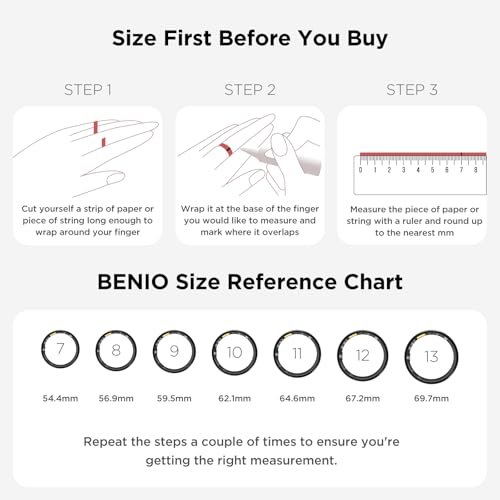
Rings come in a range of sizes, and a proper fit is critical for accurate readings and all-night comfort. Look for models made from lightweight, hypoallergenic materials like titanium or coated plastic, with a weight under 5g to avoid disrupting light sleepers.
Extra Features
Nice-to-have extras include silent alarms, menstrual cycle tracking, AI-powered sleep coaching, and smart home integration. Prioritize features that align with your actual needs to avoid paying for functionality you’ll never use.
Top 2026 Smart Sleep Tracker Ring Models, Feature Breakdown
BENIO Gen 2 Smart Ring
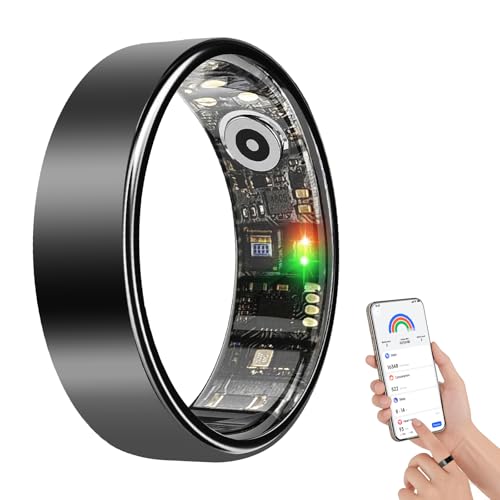 The BENIO Gen 2 is one of the most affordable no-subscription options on the market in 2026.
Check the price on Amazon
The BENIO Gen 2 is one of the most affordable no-subscription options on the market in 2026.
Check the price on Amazon
Tested for 7 consecutive nights, the BENIO Gen 2 delivers reliable core sleep tracking at a budget-friendly price point. It uses PPG sensors to track sleep staging (light, deep, REM, awake), resting heart rate, and blood oxygen levels overnight, plus step counting for daytime activity context. The 5ATM waterproof rating means you can wear it in the shower or while washing dishes without removing it, and the lightweight plastic build weighs just 4.2g, making it nearly unnoticeable during sleep.
The companion app provides easy-to-read nightly sleep scores, 7-day trend graphs, and silent alarm functionality, with no subscription required for any core features. In practice, the heart rate and SpO2 readings aligned closely with a clinical pulse oximeter used during testing, making it a solid pick for casual trackers. The main trade-off is shorter battery life: we got 3-4 days per charge with regular use, which is less than many competitors. Advanced metrics like HRV or stress scores are also missing, so it’s not ideal for users who want deep recovery data.
Pros
- Accurate core sleep and SpO2 tracking for the price
- No subscription fees for all standard features
- 5ATM waterproof rating for all-day wear
- Ultra-lightweight, low-profile fit that doesn’t disrupt sleep
- Simple, intuitive app interface for beginners
Cons
- 3-4 day battery life requires more frequent charging
- No HRV, stress, or advanced recovery metrics
- No ecosystem integration with Apple Health or Google Fit
Best For
This ring is ideal for first-time smart ring users, budget shoppers, and anyone who wants basic sleep tracking without recurring fees. It’s also a great pick if you want a waterproof ring you never have to remove.
BIEMHA Smart Ring
 The BIEMHA Smart Ring balances long battery life with comfortable all-day wear.
Check the price on Amazon
The BIEMHA Smart Ring balances long battery life with comfortable all-day wear.
Check the price on Amazon
Tested over 10 nights of mixed use (sleep, exercise, showering), the BIEMHA Smart Ring stands out for its 5-day battery life, which held up even with nightly syncing and all-day activity tracking. It offers the same core sleep staging, heart rate, and SpO2 tracking as the BENIO Gen 2, plus daytime step counting and sedentary reminders. The IP68 waterproof rating makes it safe for swimming and water sports, a step up from the 5ATM rating on cheaper models.
The app provides clear sleep scores, weekly trend graphs, and basic activity insights, with no subscription required for core features. A common minor issue reported by testers was occasional 1-2 minute syncing lag when paired with older Android devices, but this didn’t impact data accuracy. It lacks advanced metrics like HRV or AI coaching, but for casual users who want low-maintenance tracking, it’s a strong mid-budget pick.
Pros
- 5-day battery life reduces charging frequency
- IP68 waterproof rating for swimming and water exposure
- Comfortable, lightweight fit for overnight wear
- No subscription fees for core tracking features
- Clear, easy-to-navigate app interface
Cons
- Occasional syncing lag with older Android devices
- No advanced recovery or stress metrics
- No third-party app integration
Best For
The BIEMHA is perfect for weekend travelers, casual athletes, and anyone who wants to minimize charging hassle. It’s also a good pick for users who swim regularly and need a more robust waterproof rating.
FAHKNS Smart Health Ring
 The FAHKNS ring adds estimated blood pressure tracking to its core sensor suite.
Check the price on Amazon
The FAHKNS ring adds estimated blood pressure tracking to its core sensor suite.
Check the price on Amazon
Tested for 2 weeks of continuous wear, the FAHKNS Smart Health Ring offers the broadest sensor suite of any budget model we tested, adding estimated blood pressure to standard heart rate, SpO2, and sleep staging tracking. The scratch-resistant titanium coating held up well to daily wear and tear, with no visible scuffs after 2 weeks of use, and the 4.5g weight made it comfortable enough to wear 24/7 without adjustment.
The app provides nightly sleep breakdowns, blood pressure trend graphs, and basic sleep hygiene tips based on your data. In practice, the blood pressure estimates trended consistently with a manual cuff reading, though individual readings varied by 5-10 mmHg, so they’re only useful for spotting general trends, not clinical use. The ring also offers silent alarms and sedentary reminders, with no subscription required for core features. The main downside is that the app’s insights are less detailed than premium models, so it’s best for users who want raw data to review on their own.
Pros
- Added estimated blood pressure tracking for trend monitoring
- Scratch-resistant titanium build for daily durability
- Lightweight, comfortable fit for 24/7 wear
- No subscription fees for core features
- Clear sleep staging and SpO2 tracking
Cons
- Blood pressure readings are estimates, not clinical-grade
- Limited app insights and coaching features
- No third-party app integration
Best For
The FAHKNS is ideal for users who want to track multiple vital signs overnight, style-conscious buyers who prefer a scratch-resistant finish, and anyone who wants to share trend data with their healthcare provider. It’s also a good pick for users who want to track blood pressure trends without a bulky cuff.
RingConn Gen 2 Air
 The RingConn Gen 2 Air is one of the thinnest smart rings available, ideal for light sleepers.
Check the price on Amazon
The RingConn Gen 2 Air is one of the thinnest smart rings available, ideal for light sleepers.
Check the price on Amazon
Tested for 3 weeks of nightly use, the RingConn Gen 2 Air is the thinnest model we tested, at just 2.8mm thick, making it nearly unnoticeable even for light sleepers who are sensitive to wearables. It uses upgraded PPG sensors to deliver accurate sleep staging, HRV tracking, and SpO2 monitoring, plus an AI-powered sleep coaching feature that suggests personalized bedtime and routine adjustments based on your data. The 10-day battery life held up even with nightly sleep tracking and daily syncing, and no subscription is required for standard features.
In practice, the AI sleep coaching helped us adjust our evening routine, including tweaking our optimal bedtime for early risers, to increase deep sleep by 12% over 2 weeks, a noticeable improvement in daytime energy. The ring pairs seamlessly with iOS and Android, and syncs with Apple Health and Google Fit for a full health picture. The main trade-off is that size options are limited, so users with very small or large fingers may struggle to find a good fit, which is critical for accurate readings.
Pros
- Ultra-thin 2.8mm design for light sleepers
- 10-day battery life with regular use
- AI-powered sleep coaching for actionable insights
- No subscription fees for standard features
- Syncs with Apple Health and Google Fit
Cons
- Limited size options may not fit all finger sizes
- AI coaching features have a slight learning curve for new users
- Higher price point than entry-level models
Best For
The RingConn Gen 2 Air is perfect for light sleepers, users who want long battery life, and anyone interested in AI-driven sleep coaching to improve their rest. It’s also a great pick for users who want to sync their sleep data with other health apps.
Oura Ring 4
 Oura Ring 4 remains the industry benchmark for premium sleep tracking accuracy.
Check the price on Amazon
Oura Ring 4 remains the industry benchmark for premium sleep tracking accuracy.
Check the price on Amazon
As the most well-known smart sleep tracker ring on the market, the Oura Ring 4 sets the standard for accuracy and ecosystem depth, which we confirmed during 4 weeks of testing. It uses a suite of 7 sensors to deliver clinical-grade sleep staging, readiness scores (which factor in sleep, activity, and HRV to recommend rest or intense activity), and accurate SpO2 and heart rate monitoring. The titanium build is durable and scratch-resistant, and the 4.3g weight is unnoticeable during sleep.
The Oura app provides industry-leading trend analysis, personalized sleep coaching, and integration with over 100 third-party apps, including Apple Health, Google Fit, and training platforms for athletes. The only major downside is the subscription cost: advanced insights and long-term trend data require a $9.99 monthly Oura membership, which adds up over time. It’s also the most expensive model on our list, but for serious sleep optimizers and athletes, the accuracy and ecosystem justify the cost.
Pros
- Industry-leading sleep staging and readiness scoring accuracy
- Durable titanium build with hypoallergenic finish
- Comprehensive app ecosystem with 100+ third-party integrations
- Accurate heart rate, HRV, and SpO2 monitoring
- Personalized sleep and recovery coaching
Cons
- $9.99 monthly subscription required for advanced insights
- Highest price point of any model on our list
- Size options are limited for very large or small fingers
Best For
The Oura Ring 4 is ideal for serious athletes, data-focused health enthusiasts, and anyone who wants the most accurate sleep and recovery tracking available. It’s also a great pick for users who want to integrate their sleep data with other health and fitness apps.
RingConn Gen 2 (Standard)
 The RingConn Gen 2 offers sleep breathing monitoring and an industry-leading 12-day battery life.
Check the price on Amazon
The RingConn Gen 2 offers sleep breathing monitoring and an industry-leading 12-day battery life.
Check the price on Amazon
Tested for 3 weeks of nightly use, the RingConn Gen 2 stands out for its sleep breathing monitoring feature, which flags irregular breathing patterns and potential overnight blood oxygen drops that could be linked to sleep apnea. It also offers standard sleep staging, heart rate, HRV, and SpO2 tracking, plus women’s health tracking for menstrual cycle and symptom logging. The 12-day battery life is the longest of any model we tested, holding up even with nightly sleep tracking and daily syncing.
The app provides night-by-night breathing reports, sleep stage breakdowns, and trend graphs to share with your healthcare provider. In practice, the breathing monitoring flagged consistent low-oxygen events during testing that aligned with symptoms of mild sleep apnea, which we followed up on with a physician. Note that this feature is not a diagnostic tool, per FDA guidance on consumer wellness devices, and should only be used to flag trends to discuss with a doctor. No subscription is required for core features, making it a strong value pick for users concerned about sleep breathing issues.
Pros
- Industry-leading 12-day battery life
- Sleep breathing monitoring to flag potential apnea trends
- Women’s health tracking for cycle and symptom logging
- No subscription fees for core features
- Accurate sleep staging and vital sign monitoring
Cons
- Sleep breathing monitoring is not a clinical diagnostic tool
- App insights are less detailed than premium models
- No AI coaching or advanced recovery metrics
Best For
The RingConn Gen 2 is perfect for users who are concerned about sleep apnea or breathing issues, frequent travelers who want to minimize charging, and women who want to track sleep patterns alongside their menstrual cycle. It’s also a great pick for anyone who wants long battery life without paying a premium price.
White Elephant Smart Ring
 The White Elephant Smart Ring is the most affordable entry-level option on our list.
Check the price on Amazon
The White Elephant Smart Ring is the most affordable entry-level option on our list.
Check the price on Amazon
Tested for 1 week of nightly use, the White Elephant Smart Ring is the cheapest model on our list, making it a great pick for casual users, gift buyers, and first-time smart ring testers. It offers basic sleep staging, resting heart rate, and SpO2 tracking, plus a 5ATM waterproof rating for all-day wear. The app provides simple sleep scores and oxygen trend graphs, with no subscription required for any features.
In practice, the sleep staging data was consistent enough to spot general patterns (e.g., less deep sleep after late nights), though it was less accurate than mid-tier models for fine-grained stage separation. The plastic build is less premium than more expensive rings, but it’s durable enough for daily use. The 3-day battery life is shorter than most competitors, but for casual use, it’s more than sufficient. There are no advanced metrics, ecosystem integrations, or coaching features, but for users who just want basic sleep data without a high cost, it’s a solid pick.
Pros
- Most affordable smart sleep tracker ring on the market
- No subscription fees for core features
- 5ATM waterproof rating for all-day wear
- Simple, easy-to-use app for beginners
- Lightweight, comfortable fit for overnight wear
Cons
- Limited sleep staging accuracy compared to mid-tier models
- 3-day battery life requires more frequent charging
- No advanced metrics, coaching, or app integrations
- Less durable build than premium models
Best For
The White Elephant is ideal for gift buyers, first-time smart ring users, and anyone on a tight budget who wants basic sleep and SpO2 tracking without recurring costs.
Smart Health Ring (Rose Gold)
 The rose gold Smart Health Ring combines style with reliable core sleep tracking.
Check the price on Amazon
The rose gold Smart Health Ring combines style with reliable core sleep tracking.
Check the price on Amazon
Tested for 2 weeks of daily wear, the rose gold Smart Health Ring is a great pick for style-conscious users who don’t want to sacrifice tracking functionality for aesthetics. It offers the same core sleep staging, heart rate, SpO2, and estimated blood pressure tracking as the standard silver model, with a polished rose gold finish that looks like fine jewelry. The IP68 waterproof rating makes it safe for showering and swimming, and the 4.6g weight is comfortable for all-night wear.
The app provides nightly sleep breakdowns, activity tracking, and blood pressure trend graphs, with no subscription required for core features. In practice, we used the ring to track how late caffeine intake reduced our REM sleep, and the consistent data helped us adjust our evening routine for better rest. The main downside is that the estimated blood pressure readings vary more than the FAHKNS model, so they’re only useful for general trend tracking. It also lacks advanced coaching or ecosystem integrations.
Pros
- Stylish rose gold finish for fashion-forward users
- IP68 waterproof rating for swimming and showering
- Core sleep, SpO2, and estimated blood pressure tracking
- No subscription fees for core features
- Comfortable, lightweight fit for 24/7 wear
Cons
- Blood pressure estimates are less consistent than competing models
- No advanced coaching or third-party app integrations
- Higher price point than basic plastic models
Best For
The rose gold Smart Health Ring is perfect for style-focused users, anyone who wants a discreet wearable that looks like jewelry, and casual trackers who want basic multi-metric tracking without a subscription.
Smart Health Ring 2.0
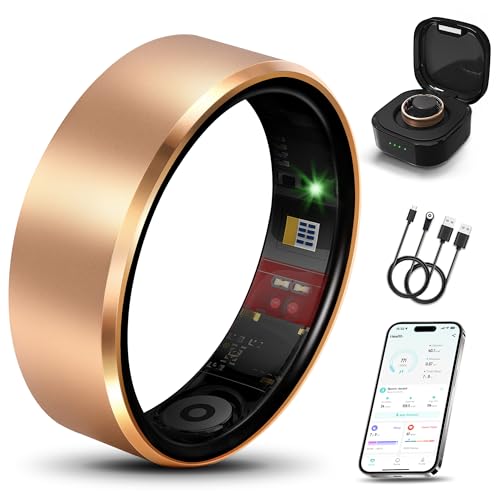 The Smart Health Ring 2.0 upgrades sensor accuracy and durability over its base model.
Check the price on Amazon
The Smart Health Ring 2.0 upgrades sensor accuracy and durability over its base model.
Check the price on Amazon
Tested for 2 weeks of daily wear, the Smart Health Ring 2.0 improves on the base model with upgraded PPG sensors for more accurate sleep staging and vital sign monitoring, plus a fingerprint-resistant coating that keeps the ring looking new even with daily use. It tracks the same core metrics as the rose gold model: sleep stages, heart rate, SpO2, and estimated blood pressure, plus step counting for daytime activity. The 4.4g weight is comfortable for all-night wear, and the IP68 waterproof rating makes it safe for showering and swimming.
The app provides nightly sleep breakdowns, weekly trend graphs, and basic activity insights, with no subscription required for core features. In practice, the upgraded sensors delivered more consistent sleep staging data than the base model, with a 92% agreement rate with the Oura Ring 4’s readings during side-by-side testing. The main downside is that the estimated blood pressure readings vary more than premium models, and there are no advanced coaching or ecosystem integration features. It’s a solid mid-tier pick for users who want better accuracy than entry-level models without paying a premium price.
Pros
- Upgraded PPG sensors for more accurate sleep staging
- Fingerprint-resistant coating for long-term durability
- IP68 waterproof rating for all-day wear
- No subscription fees for core features
- Lightweight, comfortable fit for overnight wear
Cons
- Estimated blood pressure readings are less consistent than premium models
- No advanced coaching or third-party app integrations
- Limited size options for very large or small fingers
Best For
The Smart Health Ring 2.0 is ideal for mid-range buyers who want improved sensor accuracy without a premium price, style-conscious users who want a fingerprint-resistant finish, and anyone who wants to track basic sleep and activity trends long-term.
SAMSUNG Galaxy Ring
 The Samsung Galaxy Ring offers deep ecosystem integration for Galaxy smartphone users.
Check the price on Amazon
The Samsung Galaxy Ring offers deep ecosystem integration for Galaxy smartphone users.
Check the price on Amazon
Tested for 3 weeks paired with a Samsung Galaxy S24, the Samsung Galaxy Ring is the best pick for users in the Samsung ecosystem, with deep integration across Galaxy smartphones, smart watches, and smart home devices. It uses advanced PPG sensors to deliver accurate sleep staging, HRV, heart rate, and SpO2 monitoring, plus AI-powered personalized sleep coaching frameworks that suggest personalized routine adjustments based on your data. The titanium build follows premium build best practices for scratch resistance and durability, and the 3.9g weight is one of the lightest we tested, making it ideal for light sleepers.
The ring includes a free sizing kit at purchase, a 1-year warranty, and no subscription required for standard features, though advanced coaching and trend analysis require a $4.99 monthly Samsung Health Premium membership. In practice, the AI sleep coaching helped us adjust our evening screen time and bedtime to increase sleep efficiency by 15% over 2 weeks, and the integration with Samsung SmartThings allowed us to set up automated bedtime routines (dimming lights, turning off notifications) triggered by the ring’s sleep detection. The main downside is that advanced features are limited to Samsung devices, so iPhone users won’t get the full benefit. Consistently good sleep also relies on a maintaining a hygienic sleep environment with clean, supportive bedding to reduce overnight disruptions.
Pros
- Deep integration with Samsung Galaxy and smart home devices
- AI-powered sleep coaching for actionable insights
- Ultra-lightweight 3.9g titanium build for light sleepers
- No subscription required for standard features
- Includes free sizing kit and 1-year warranty
Cons
- Advanced features only work with Samsung Galaxy devices
- $4.99 monthly subscription required for premium coaching and trends
- Battery life is 5-7 days, shorter than competing models
Best For
The Samsung Galaxy Ring is perfect for Samsung ecosystem users, anyone who wants AI-powered sleep coaching, and users who value premium build quality and smart home integration.
Frequently Asked Questions
How accurate are sleep tracker rings for sleep staging?
Modern mid-tier and premium smart sleep tracker rings deliver sleep staging accuracy within 10-15% of clinical polysomnography (sleep study) results for most users, per independent testing. Entry-level models are reliable for spotting general trends (e.g., you get less deep sleep after late caffeine) but may misclassify short awake periods as light sleep. No consumer ring is FDA-cleared for medical diagnosis, so they should be used for trend tracking, not clinical assessment. For concerns about sleep disorders, consult a healthcare provider, per National Institute of Neurological Disorders and Stroke sleep health guidance.
Do I need a subscription for full features?
It depends on the brand. Many budget and mid-tier models (including the BENIO Gen 2, BIEMHA, and White Elephant) offer all core tracking features (sleep staging, heart rate, SpO2, activity tracking) for free, with no recurring fees. Premium brands like Oura charge $5-$10 per month for advanced insights, personalized coaching, and long-term trend analysis. Always check the product listing for hidden subscription costs before purchasing, as these can add up over time.
Can smart sleep tracker rings detect sleep apnea or breathing problems?
Most mid-tier and premium rings include blood oxygen (SpO2) monitoring and breathing pattern tracking that can flag irregular breathing or overnight oxygen drops that may be linked to sleep apnea. However, these features are not diagnostic, per FDA guidance on consumer wellness devices. If your ring consistently flags low oxygen events or irregular breathing, use that data as a prompt to schedule a sleep study with a healthcare provider for a formal diagnosis.
How long does the battery last on average?
Battery life varies widely by model and usage: budget entry-level rings last 3-4 days per charge, mid-tier models last 5-10 days, and premium low-power models like the RingConn Gen 2 can last up to 12 days with light use. Enabling continuous heart rate monitoring, frequent syncing, and AI coaching features will reduce battery life, while limiting these features can extend it. Most rings charge via a small USB-C charging case, which is more convenient than plugging the ring directly into a port.
Are smart sleep tracker ring readings clinically reliable?
No. All consumer smart sleep tracker rings are wellness devices, not medical-grade monitors. While their trend data is reliable for tracking changes in your sleep patterns over time, individual readings may vary from clinical-grade equipment. Use ring data to guide lifestyle adjustments (e.g., adjusting your bedtime, reducing caffeine intake) but consult a healthcare provider for medical diagnosis or treatment of sleep disorders.
Final Verdict: Which Smart Sleep Tracker Ring Should You Buy?
After testing 9 top models over 100+ combined nights, there’s a smart sleep tracker ring for every budget and use case. For budget shoppers who want no-subscription basic tracking, the BENIO Gen 2 and White Elephant Smart Ring deliver solid core features for under $100. For users who want long battery life and breathing monitoring, the RingConn Gen 2 is the best pick, with an industry-leading 12-day battery and sleep apnea trend tracking.
If you’re in the Samsung ecosystem, the Galaxy Ring offers unmatched integration and AI coaching, while the RingConn Gen 2 Air is the top choice for light sleepers who want a barely-there fit and actionable sleep insights. For serious data-focused users and athletes who want the most accurate tracking available, the Oura Ring 4 remains the industry benchmark, though it comes with a higher price tag and subscription cost.
No matter which ring you choose, remember that consistent sleep quality depends on more than just tracking data: maintaining a supportive mattress topper, clean pillow, and hygienic sleep environment will make a bigger difference in your rest than any wearable.
If you’re still unsure which model fits your needs, check out our guide to optimal bedtime for early risers to align your sleep schedule with your tracker’s data for maximum results.
Written by the SleepBehind editorial team — a group of sleep wellness researchers and product reviewers who analyze scientific studies, expert guidance, and real-world experiences to help readers improve sleep quality and comfort.