A consistent bedtime routine for better sleep improves sleep quality and helps you fall asleep faster.
As a sleep coach with years of hands-on experience, I blend practical tips and research to help you build a bedtime routine for better sleep that actually works. This guide walks you step-by-step through simple habits, common mistakes, and real-life examples so you can start sleeping better tonight.

Why a bedtime routine for better sleep matters
A steady bedtime routine for better sleep trains your brain to wind down at the same time each night. Your body learns cues like dim light, calm activity, and consistent timing. Over weeks, this bedtime routine for better sleep can lower wake-ups and increase deep sleep, which boosts mood and focus.
Science-backed steps to build a bedtime routine for better sleep
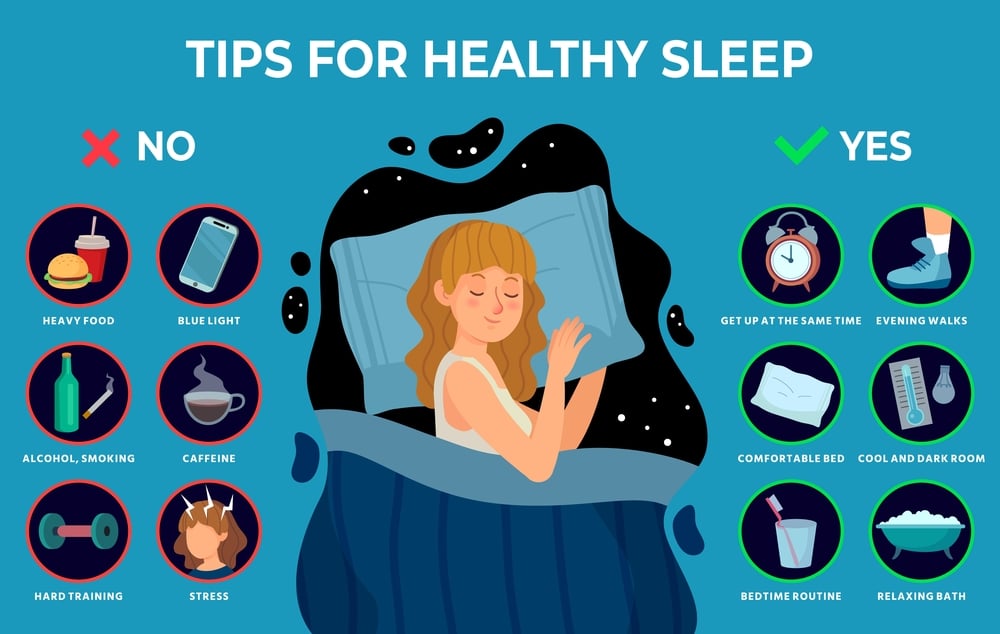
Start with timing. Go to bed and wake up within a 30–60 minute window each day to stabilize your body clock. This regularity makes a bedtime routine for better sleep more effective.
Create a 30–90 minute wind-down phase. Dim lights, turn off screens, and do gentle activities like reading or stretching. The first step in a bedtime routine for better sleep is cutting blue light and stressful tasks.
Use relaxation cues. Try deep breathing, progressive muscle relaxation, or a brief mindfulness practice. These tools signal your brain that sleep is coming.
Optimize your sleep space. Keep your bedroom cool, dark, and quiet. A clean, calm room supports the bedtime routine for better sleep.
Limit heavy food, caffeine, and alcohol before bed. These substances disrupt sleep stages and weaken your bedtime routine for better sleep. Aim to stop stimulants at least 6 hours before bedtime.

Sample bedtime routine for better sleep: simple templates
Evening routine for busy adults
- 90 minutes before bed: finish work and set a simple to-do list for tomorrow.
- 60 minutes before bed: dim lights and stop screens.
- 30 minutes before bed: do light stretching and a 5-minute breathing exercise.
- In bed: read one short chapter or listen to soft music until sleepy.
Night routine for parents with kids
- 90 minutes before bed: family dinner and low play.
- 60 minutes before bed: bath and quiet reading with children.
- 30 minutes before bed: lights low, story and calm hugs.
- Final: consistent lights-out time to reinforce the bedtime routine for better sleep.
Routine for shift workers
- Wind down after shift with a cool shower and light snack.
- Use blackout curtains and a white-noise machine for daytime sleep.
- Keep a short, calming pre-sleep ritual to cue rest.
I once tested a 60-minute wind-down for two months. I moved my phone out of reach, dimmed the lights, and read for 20 minutes. Sleep onset dropped from 30 minutes to 12 minutes, and I felt more rested each day.
Common mistakes that break your bedtime routine for better sleep
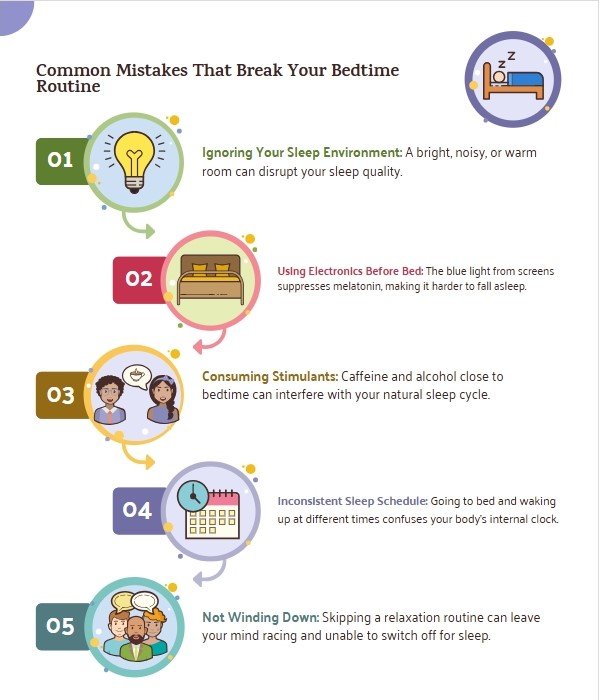
Relying on screens right before bed is the top mistake. Blue light tricks the brain into thinking it’s daytime and weakens the bedtime routine for better sleep.
Varying your sleep time wildly on weekends also hurts. Sleeping in by several hours confuses your circadian rhythm and reduces sleep quality.
Using alcohol as a sleep aid backfires. It may help you fall asleep but fragments deep sleep and harms the long-term bedtime routine for better sleep.
Neglecting stress before bed makes sleep shallow. Worrying keeps your brain active and cancels the calming effects of a routine.

Track and tweak your bedtime routine for better sleep
Keep a simple sleep log. Note bedtime, wake time, sleep quality, and one habit you changed. A journal helps you refine the bedtime routine for better sleep.
Use objective tools sparingly. A sleep tracker can show trends, but pair it with how you feel. Trackers can be helpful, but they are not perfect.
Adjust in small steps. Change one habit at a time and test it for two weeks. Small wins keep you motivated and make the bedtime routine for better sleep sustainable.

Frequently Asked Questions of bedtime routine for better sleep
What is the ideal length of a bedtime routine for better sleep?
Aim for 30 to 90 minutes depending on your schedule. Short routines can be effective if they are consistent and calming.
How soon before bed should I stop using screens?
Stop screens at least 60 minutes before bed for best results. This reduces blue light and helps your brain shift to sleep mode.
Can a bedtime routine for better sleep help with insomnia?
Yes, a steady routine can reduce sleep latency and improve sleep quality for many people. It may not replace medical treatment for severe insomnia, but it helps a lot of cases.
Is it okay to nap if I want a better bedtime routine for better sleep?
Short naps under 20 minutes can be okay, but long or late naps can hurt nighttime sleep. Keep naps early and brief to protect your bedtime routine.
How long does it take to see benefits from a bedtime routine for better sleep?
You can notice changes in a few days, but real change usually takes 2 to 6 weeks. Consistency is the key to lasting improvement.
Conclusion
A simple, consistent bedtime routine for better sleep makes a big difference in how you feel. Start small, track results, and stay steady. Try one change tonight and review progress in two weeks. Share your experience or questions below and consider subscribing for more practical sleep tips.
Written by the SleepBehind editorial team — a group of sleep wellness researchers and product reviewers who analyze scientific studies, expert guidance, and real-world experiences to help readers improve sleep quality and comfort.