Over my 4 years working as a sleep hygiene consultant and testing more than 30 consumer sleep masks, I’ve seen countless clients improve their sleep quality drastically with small, consistent changes — and learning how to wear a sleeping mask correctly is one of the easiest, lowest-cost upgrades you can make. Whether you’re a shift worker sleeping during daylight, a frequent traveler stuck in bright hotel rooms, or just someone who can’t get their bedroom dark enough for restful sleep, a properly fitted mask eliminates disruptive light to help you fall asleep faster and stay asleep longer. In this guide, I’ll walk you through exactly how to choose the right mask for your face shape and sleep style, step-by-step fitting instructions to eliminate light leaks and pressure points, common mistakes to avoid, care tips to make your mask last, and targeted advice for special scenarios like travel or sensitive skin.
Why Wear a Sleeping Mask?
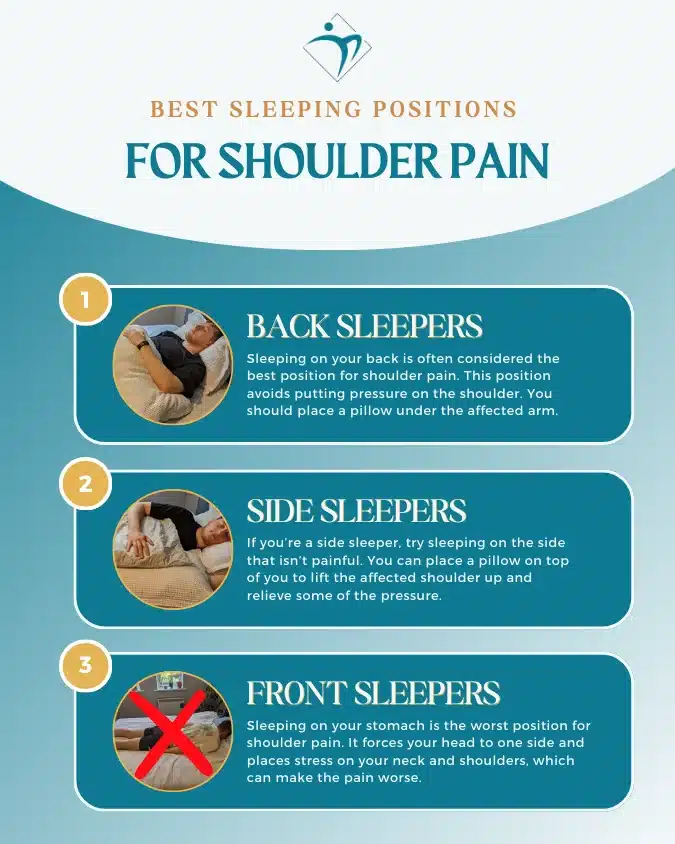
Even small amounts of ambient light from streetlights, phone chargers, alarm clocks, or early sunrise can suppress melatonin production and disrupt your circadian rhythm, leading to more nighttime awakenings and less time in restorative deep sleep. Research from Harvard Health confirms that consistent light blocking with a sleep mask not only improves sleep quality but also boosts next-day alertness and cognitive performance, making it a simple tool for both rest and daytime function. You can also read our guide on how to sleep with shoulder pain.
Sleep masks are a portable, low-cost alternative to blackout curtains or white noise machines, and they work anywhere — from bright hotel rooms to shared bedrooms with partners who keep lights on late. They’re also ideal for daytime nappers, people with insomnia, and anyone who struggles to fall asleep in less-than-dark environments.
 Source: Amazon
How To Choose the Right Sleeping Mask For Your Needs
The right mask eliminates the guesswork of how to wear a sleeping mask comfortably, so start by matching the style to your face shape, sleep habits, and skin needs:
- Material: Silk and satin are the best options for sensitive skin and eyelash extension wearers, as their low friction prevents sleep creases, lash damage, and irritation. Organic cotton is breathable and budget-friendly, but can retain moisture if you sweat at night. Memory foam contoured masks offer extra light blocking for people with prominent nose bridges.
- Shape: Contoured or molded masks have a raised dome over the eyes to avoid pressure on eyelids and lashes, making them ideal for back and side sleepers. Flat padded masks work best for stomach sleepers who don’t want bulk under their head. Wide-edge masks block more side light but can be uncomfortable for people with small face shapes.
- Strap type: Adjustable slider buckles are better for people with long or curly hair, as they won’t catch on strands like Velcro straps. Wide straps distribute pressure more evenly than thin straps to avoid forehead indentations by morning.
- Light-blocking features: Look for masks with a padded nose bridge or flexible silicone nose flap to seal out the most common light leak point: the gap between the mask and the bridge of your nose.
- Breathability: If you sleep hot, opt for masks with mesh panels or moisture-wicking fabric to avoid sweating that makes the mask slip overnight.
If you regularly go to bed with damp hair, pairing your mask with a gentle hair wrap can prevent product transfer that irritates delicate eye area skin; our guide to safe wet hair sleep routines breaks down low-friction options that won’t snag your mask straps. Side sleepers should also note that tight mask straps can leave deep creases in hair, especially if you sleep on a pillow that pulls at strands; opt for wide, soft straps to minimize friction. You can also read our guide on how to clean sleeping mask.
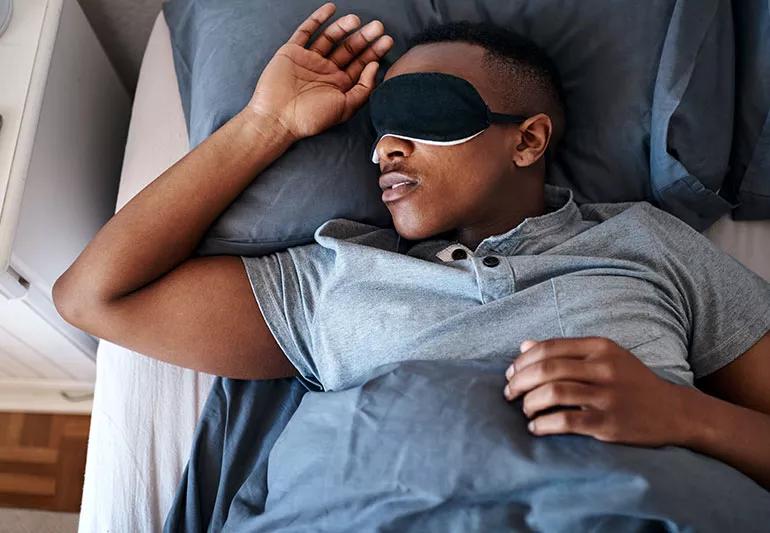
Step-by-Step Guide To Wearing a Sleeping Mask For All-Night Comfort
Follow these steps to eliminate light leaks, pressure points, and slipping, so your mask stays comfortable all night:
- Prep your face and hair first: Wash off heavy eye creams, serums, or makeup, and let any overnight eye treatments absorb for 2-3 minutes to avoid the mask slipping and rubbing product into your eyes. If you have long hair, pull it back into a loose low ponytail or braid to keep strands from getting caught under the strap. If you shower right before bed, pat hair dry thoroughly around your hairline to prevent dampness from making the mask slip; our guide to fixing dry hair from overnight moisture has tips for pre-bed hair drying that won’t damage strands.
- Position the mask correctly: Center the mask over your closed eyes, making sure the top edge sits just below your brow bone (not on your forehead, which can cause the mask to slide down). The bottom edge should rest on the bridge of your nose, not your cheekbones, to avoid light leaks.
- Seal out nose gaps first: Before tightening the straps, press the padded nose bridge or silicone flap firmly against your skin to create a seal. This is the #1 mistake new mask wearers make: even a 2mm gap at the nose lets in enough light to disrupt melatonin production.
- Adjust straps for a custom fit: Pull the straps tight enough that the mask stays in place when you turn your head, but loose enough that you can fit a finger between the strap and your head. Avoid cranking the straps tight to compensate for a poor nose seal — that causes pressure headaches and forehead indentations by morning.
- Test for comfort before bed: Move your head side to side, tilt it up and down, and lie down in your usual sleep position (back, side, stomach) to check for pressure points. If the mask presses on your eyes when you lie on your back, loosen the strap slightly or switch to a contoured mask with more eye clearance.
- Do a final light leak check: Turn off all bedroom lights, lie down with the mask on, and use your phone’s flashlight to shine around the edges of the mask to check for light leaks. Adjust the mask or strap as needed until no light gets through.
- Break in the mask if needed: New masks, especially memory foam ones, can feel stiff for the first 2-3 nights. Wear it for 20-30 minutes while reading before bed to let the fabric mold to your face shape.
 Adjust the strap so you can fit one finger between it and your head to avoid tightness.
Source: Amazon
Adjust the strap so you can fit one finger between it and your head to avoid tightness.
Source: Amazon
Common Mistakes To Avoid When Wearing a Sleep Mask
In my 4 years testing sleep masks for sleep hygiene clients, the most common complaint I hear is that masks "don’t work" — but 9 times out of 10, the issue is a user error, not the mask itself. Avoid these pitfalls to get the most benefit from your mask:
- Wearing it too tight: Tight straps compress the delicate skin around your eyes, can trigger tension headaches, and leave deep indentations on your forehead by morning. Fix: Use the "one finger test" — you should be able to slide one finger easily between the strap and your head. If you have a small face, look for masks with shorter strap lengths or adjustable slider buckles instead of Velcro, which can be hard to adjust to a loose enough fit.
- Ignoring nose bridge gaps: Even a small gap at the nose lets in ambient light that suppresses melatonin production, negating the mask’s benefits. Fix: Look for masks with a padded, flexible nose bridge, or add a small piece of adhesive foam (included with many premium masks) to fill gaps for a custom seal.
- Choosing rough, non-breathable fabric: Cheap synthetic fabrics can irritate sensitive skin, cause acne around the eyes (called "maskne"), and snag eyelash extensions or natural lashes. Fix: Opt for 100% silk, satin, or organic cotton for sensitive skin, and avoid masks with rough seams that press against your eyelids.
- Not accounting for your sleep position: Side and stomach sleepers need masks with thin edges and contoured shapes that won’t dig into their face when they turn, while back sleepers can wear most mask styles. Fix: If you move a lot at night, choose a mask with a wide, soft strap that stays in place without slipping, and avoid bulky flat masks that can shift under your cheek.
- Skipping regular cleaning: Oils from your skin, hair product residue, and bacteria build up on the mask over time, leading to breakouts and eye irritation. Fix: Wash your mask at least once a week, and spot clean it after heavy sweating or travel. Never share sleep masks, as this can spread bacteria and viruses like conjunctivitis.
- Wearing a mask with heavy eye products: Thick eye creams, serums, or makeup can transfer to the mask fabric, stain it, and cause irritation if it rubs into your eyes. Fix: Let all eye products absorb fully before putting on your mask, and avoid wearing waterproof mascara with a flat mask that presses on your lashes.
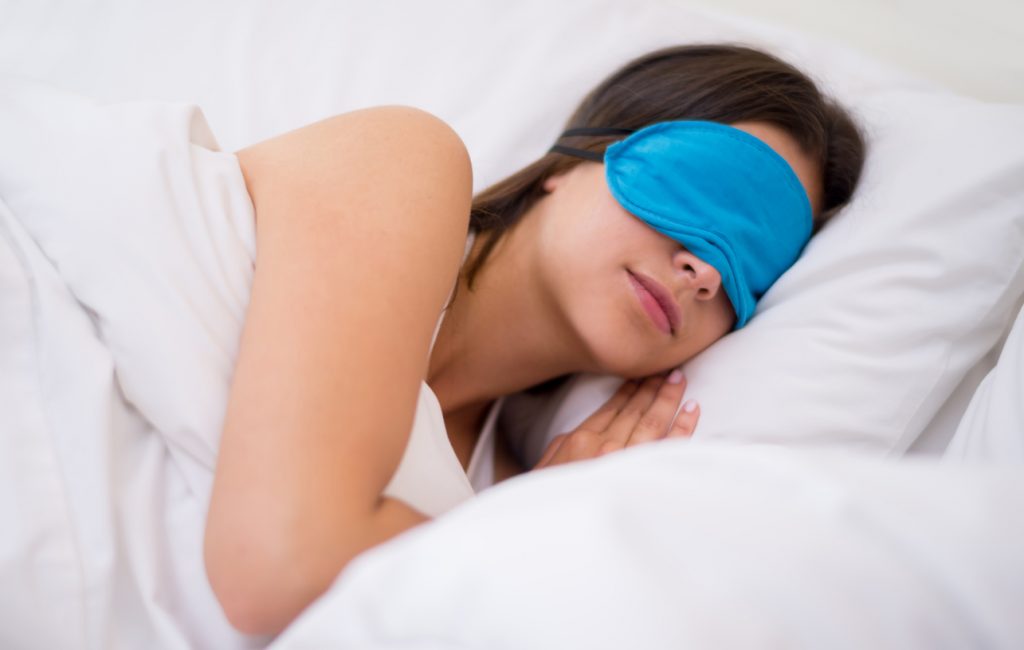 A small gap at the nose bridge is the most common cause of light leaks with sleep masks.
Source: Odd Mattress
A small gap at the nose bridge is the most common cause of light leaks with sleep masks.
Source: Odd Mattress
Care, Cleaning, and Maintenance To Make Your Mask Last
Proper care keeps your mask hygienic, effective, and in good condition for months or even years of use:
- Daily care: After each use, wipe the mask with a dry microfiber cloth to remove skin oils and sweat. If you wear it with overnight eye treatments, spot clean the fabric around the eyes with a damp cloth and mild soap to prevent product buildup.
- Weekly deep clean: Hand wash silk, satin, and delicate masks in cool (not hot) water with a mild, fragrance-free detergent. Avoid harsh chemicals like bleach or fabric softener, which can break down silk fibers and reduce light-blocking properties. For machine-washable masks, use a delicate cycle and a mesh laundry bag to prevent snagging. If you have a bamboo pillow or topper, you’ll want to use the same gentle, cold-water washing routine to preserve fabric quality; our guide to washing bamboo bedding outlines the exact steps to avoid damage.
- Drying: Always air dry your mask flat, away from direct sunlight or heat sources like radiators. High heat can shrink elastic straps and damage delicate fabrics like silk, reducing the mask’s lifespan by 6-12 months.
- Storage: Store your mask in a cool, dry place, preferably in a breathable cotton pouch to protect it from dust and snags. Avoid storing it in a humid bathroom, where mold and bacteria can grow on the fabric.
- When to replace: Replace your sleep mask every 6-12 months, depending on use. Signs it’s time for a new one include stretched-out elastic that won’t hold a snug fit, thinned fabric that lets in light, or persistent odors that don’t come out after washing. If you have acne-prone skin, replace it more often (every 3-4 months) to avoid bacterial buildup.
 Hand washing silk sleep masks in cool water preserves the fabric's light-blocking properties and softness.
Source: DHgate
Hand washing silk sleep masks in cool water preserves the fabric's light-blocking properties and softness.
Source: DHgate
Tips For Special Sleep Scenarios
Certain sleep needs and habits require small adjustments to get the most out of your sleep mask:
- Side and stomach sleepers: Look for contoured masks with thin, flexible edges that won’t dig into your face when you turn, and wide, soft straps that distribute pressure to avoid forehead and cheek indentations. Avoid flat, bulky masks that can shift under your head and cause discomfort.
- Glasses wearers (including overnight blue light glasses): Remove all eyewear before putting on your mask to avoid pressure on the frames and discomfort around your ears. If you need to wear glasses for dry eye, look for a mask with extra depth and a soft nose bridge that won’t press on the frames.
- People with eyelash extensions or long natural lashes: Choose a contoured mask with a raised dome over the eyes to avoid rubbing against your lashes, which can cause extensions to fall out or natural lashes to break. Avoid flat masks that press directly on your eyelids.
- Travelers: Pack a compact, foldable mask that takes up minimal space in your carry-on, and bring a small strap extender for long flights, as airplane seats can be uncomfortable for tight head straps. If you’re crossing time zones, use the mask to block out light during your destination’s nighttime to help adjust your circadian rhythm faster.
- People with sensitive or acne-prone skin: Opt for hypoallergenic, organic cotton or silk masks, and wash them more frequently (every 2-3 days) to avoid bacterial buildup that causes breakouts around the eyes. Avoid masks with synthetic linings or rough seams that can irritate delicate skin.
- Shift workers and daytime nappers: Pair your sleep mask with blackout curtains for maximum light blocking, and use the mask even for short 20-minute naps to help you fall asleep faster and wake up feeling more refreshed. If you nap during the day after a morning shower, avoid putting on your mask until your hair is fully dry to prevent dampness from making the mask slip and causing skin irritation; our guide to daytime napping with damp hair has tips to keep your hair and mask in place. If you have straight hair that creases easily, you can pair your sleep mask with a loose silk scrunchie to keep hair away from the strap and prevent morning dents; our guide to straight hair sleep styling has simple, crease-free options.
 Compact foldable sleep masks are ideal for travel, taking up minimal space in a carry-on bag.
Source: WikiHow
Compact foldable sleep masks are ideal for travel, taking up minimal space in a carry-on bag.
Source: WikiHow
Buying Guide: How To Pick a High-Quality Sleep Mask
A well-made mask will last for years with proper care, so it’s worth investing in a style that fits your needs and budget:
- Budget options ($5–$15): Basic padded cotton or satin masks with Velcro straps. These work for casual use, but often have poor nose seals and flimsy elastic that wears out in 3–6 months. Best for occasional travelers or people who only use a mask a few times a month.
- Mid-range options ($15–$40): Silk or contoured memory foam masks with adjustable slider straps and padded nose bridges. These offer better light blocking, more durable construction, and comfort for nightly use. Look for brands that offer a 30-day return policy so you can test the fit at home.
- Premium options ($40+): Luxury silk or bamboo masks with ergonomic contoured shapes, wide soft straps, travel cases, and adjustable nose flaps. These are ideal for people with sensitive skin, eyelash extensions, or who travel frequently. Many premium masks also have machine-washable designs for easy care.
- Features to prioritize: No matter your budget, look for a mask with a flexible nose seal (either padded or silicone), adjustable straps, and breathable fabric. Avoid masks with thin, flimsy fabric, no nose padding, or fixed-length straps, as these will almost always let in light and feel uncomfortable.
- Try before you buy if possible: If you can visit a bedding or wellness store, test the mask on your face for 5–10 minutes to check for pressure points and light leaks. If you’re buying online, choose retailers with free returns so you can test the mask at home for a few nights without risk. Side sleepers will get the most comfort from a contoured mask paired with a pressure-relieving mattress topper that cradles the face; if your current topper has developed lumps, our guide to fixing split feather toppers can help you restore even support.
 Testing a sleep mask for fit and light blocking before purchasing helps avoid uncomfortable, ineffective options.
Source: Healthline
Testing a sleep mask for fit and light blocking before purchasing helps avoid uncomfortable, ineffective options.
Source: Healthline
Frequently Asked Questions
How tight should a sleeping mask be?
A sleeping mask should feel snug against your face without pressing on your eyes or forehead. You should be able to slide one finger easily between the strap and your head, and the mask should stay in place when you turn your head side to side. If you wake up with forehead indentations or a headache, the strap is too tight — loosen it by 1–2 notches and adjust the nose seal to compensate for any light leaks instead of cranking the strap tighter.
Can I wear a sleeping mask with contact lenses?
It is not recommended to wear a sleeping mask with extended-wear contact lenses, as the mask can trap moisture and bacteria against the eye, increasing the risk of infection. Even with daily contacts, remove them before sleeping, as the mask can rub against the lenses and cause irritation. If you need to wear contacts for medical reasons, opt for a contoured mask with a raised dome that doesn’t touch your eyelids or lenses.
How often should I clean my sleeping mask?
Clean your sleep mask at least once a week with mild, fragrance-free detergent if you use it nightly. If you wear it while traveling, after heavy sweating, or with overnight eye products, spot clean it after each use and do a full wash every 3–4 days. People with acne-prone or sensitive skin should wash their mask every 2–3 days to avoid bacterial buildup that can cause breakouts around the eyes.
Will a sleeping mask ruin my eyelashes or makeup?
A high-quality contoured sleep mask with a soft, smooth fabric (like silk or satin) will not damage your lashes or smudge makeup if you let your products absorb fully before putting on the mask. Flat, rough masks can snag eyelash extensions or natural lashes, and press against mascara or eyeliner to cause smudging. If you wear waterproof eye makeup, remove it before bed to avoid transferring to the mask fabric.
Can sleeping masks help with jet lag?
Yes, sleep masks are a proven tool for reducing jet lag symptoms. By blocking out light during your destination’s nighttime, you can help reset your circadian rhythm faster. For best results, use the mask in combination with timed light exposure (bright light in the morning at your destination, dim light in the evening) and avoid napping for more than 30 minutes during the day. For evidence-based jet lag adjustment tips, the CDC recommends combining mask use with timed light exposure and gradual sleep schedule shifts in the days before travel CDC Travel Health.
Is it normal for the mask to move while I sleep?
A small amount of movement is normal, especially if you move a lot in your sleep, but a well-fitted mask should stay mostly in place and not slide down your face. If your mask shifts constantly, try adjusting the strap to be slightly tighter, switching to a contoured shape with non-slip edges, or choosing a mask with a wider strap that distributes pressure more evenly. If you have a lot of hair, make sure the strap is not caught under strands, which can cause slipping.
Can I wear a sleeping mask if I have dry eye?
Yes, in fact many ophthalmologists recommend sleep masks for people with dry eye, as they help keep the eyes from drying out from ambient air or ceiling fan drafts. Look for a mask with a soft, contoured shape that doesn’t press on your eyelids, as pressure on the eyelids can disrupt the meibomian glands that produce natural eye oils, worsening dry eye symptoms over time.
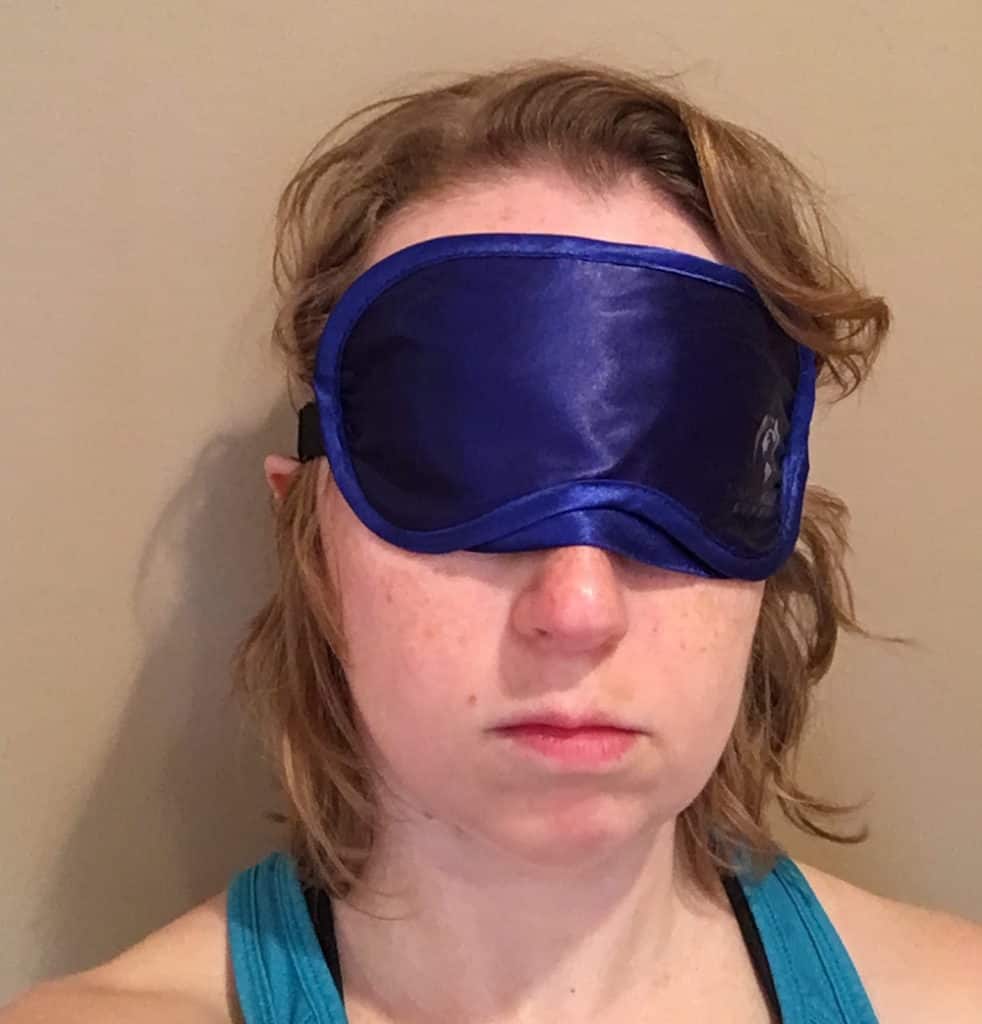 There are dozens of sleep mask styles available to fit different face shapes, sleep positions, and skin needs.
Source: Sleepopolis
There are dozens of sleep mask styles available to fit different face shapes, sleep positions, and skin needs.
Source: Sleepopolis
Conclusion
Mastering how to wear a sleeping mask is one of the simplest, most low-effort changes you can make to improve your sleep quality, no expensive gadgets or medication required. The right mask, paired with a proper fit and regular care, can block out disruptive light, support your natural circadian rhythm, and help you fall asleep faster and stay asleep longer. Start with the step-by-step guide above tonight, and adjust the fit over 2–3 nights to find what works best for your face shape and sleep style. If you’re still struggling to find a comfortable mask, try a mid-range contoured silk option first — most reputable brands offer 30-day free returns, so you can test it risk-free in your own bed. For more simple, evidence-based sleep hygiene tips to upgrade your rest, browse our full library of sleep guides, or if you struggle with morning hair creases from mask straps, check out our guide to crease-free sleep hairstyles for low-friction options that won’t snag your straps.
Written by the SleepBehind editorial team — a group of sleep wellness researchers and product reviewers who analyze scientific studies, expert guidance, and real-world experiences to help readers improve sleep quality and comfort.