Start your day with sunlight, steady wake times, light movement, and limited caffeine for better sleep.
I write about morning habits for good sleep from years of testing routines, reading sleep science, and coaching people. I know what works and why. This guide explains which morning habits for good sleep matter most. You will get clear steps, real-life tips, and a simple plan to try tomorrow.

Why morning habits matter for good sleep
Morning habits set your body’s clock. Good morning habits for good sleep strengthen your circadian rhythm. A strong rhythm makes falling asleep easier and sleep deeper. Small morning changes often lead to big improvements at night.
I have seen clients cut time to fall asleep in half by changing morning cues. The right morning habits for good sleep help you feel alert by day and tired at night. Think of the morning as the daily signal that tells your brain when to sleep.

Core morning habits for good sleep
Here are the most powerful morning habits for good sleep. Use these steps in order. Start simple and add one habit at a time.
Get natural sunlight within 30 minutes of waking
Natural light tells your brain it’s daytime. Aim for 10 to 30 minutes outside. If you cannot go outdoors, sit by a bright window.Wake at the same time every day
A steady wake time anchors your sleep-wake cycle. Keep it within 30 minutes even on weekends. This is one of the most important morning habits for good sleep.Move your body gently each morning
Light exercise boosts mood and helps sleep. Walk, stretch, or do yoga for 10 to 20 minutes. Avoid heavy workouts too close to bedtime.Limit caffeine after mid-morning
Caffeine stays in your system for hours. Drink coffee early and avoid extra doses after 11 a.m. This supports deeper sleep later.Hydrate and eat a balanced breakfast
Water and a high-protein, moderate-carb breakfast stabilize energy. Skip heavy or late morning eating that can disrupt sleep patterns.Manage stress with a short morning routine
Use 5 minutes for breathing, journaling, or planning. Reducing morning stress lowers evening hyperarousal and promotes sleep.Avoid long naps late in the day
If you nap, keep it short and early. Daytime naps over 20 minutes and late naps can make falling asleep harder.
These morning habits for good sleep work best together. Try one change a week and track sleep time and quality.
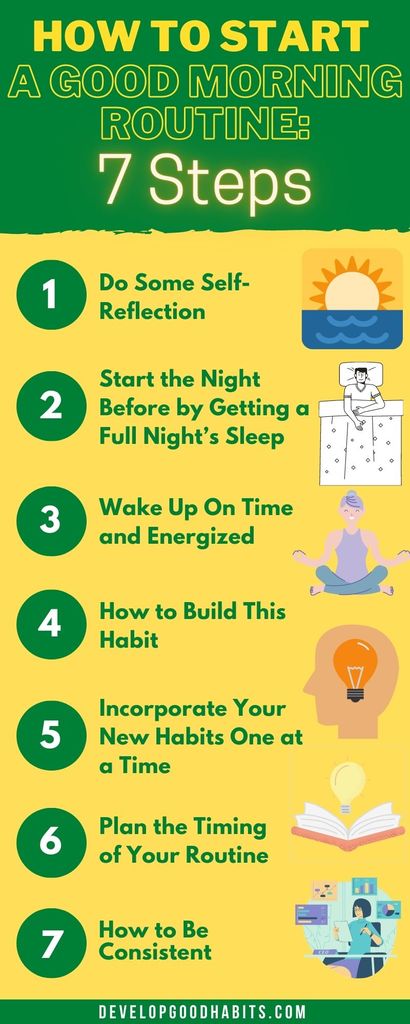
A sample 7-day morning plan to improve sleep
Follow this simple plan to build morning habits for good sleep. It is easy to follow and practical.
Day 1
- Wake at your target time.
- Spend 10 minutes outside or by a window.
Day 2
- Add 10 minutes of light stretching.
- Drink a glass of water before coffee.
Day 3
- Practice 5 minutes of breathing or journaling.
- Have a protein-rich breakfast.
Day 4
- Keep caffeine to the morning only.
- Track how long it takes to fall asleep.
Day 5
- Add a 15-minute walk outdoors first thing.
- Note mood and energy levels.
Day 6
- Maintain the same wake time on the weekend.
- Avoid screen use for 30 minutes after waking.
Day 7
- Review the week and keep the habits that felt best.
- Plan a consistent sleep schedule for next week.
Repeat the cycle and adjust for your life. These steps form lasting morning habits for good sleep.

Troubleshooting common problems
If sunlight is hard to get, try a bright light box for 20 minutes in the morning. If early caffeine is not possible, reduce late drinks and choose low-caffeine teas. When stress keeps you up, increase morning stress checks and move evening wind-down earlier. If you still struggle after a month, consult a sleep specialist. Medical issues can affect sleep and need a professional approach.
From personal experience, I learned not to rush habit change. I once tried to overhaul my whole morning. It failed. Small steps work. Build one morning habit for good sleep at a time.

Evidence and why these habits work
Morning light and steady wake times align melatonin release and body temperature to natural day-night cycles. Research shows consistent wake times lower insomnia risk and improve sleep depth. Morning movement boosts mood and reduces bedtime restlessness. Early caffeine limits and balanced meals stabilize sleep hormones and energy levels. These links are well supported in sleep science and clinical observations.
I use these findings in coaching and in my own life. After shifting my wake time and morning sun exposure, I felt calmer at night. The science and the practice match well.

Practical tips to stick with morning habits for good sleep
- Start small and add one habit per week.
- Use alarms with light or sound that mimic sunrise.
- Pair a new habit with an existing one, like stretching right after brushing teeth.
- Track sleep in a simple journal for two weeks.
- Reward consistency, not perfection.
These tips make the morning habits for good sleep easier to keep. Consistency matters more than intensity.

Frequently Asked Questions of morning habits for good sleep
What is the single best morning habit for good sleep?
A consistent wake time is the best single habit. It stabilizes your internal clock and helps nighttime sleep.
How much morning sunlight do I need for better sleep?
Aim for 10 to 30 minutes of natural light soon after waking. Even indirect light through a window helps.
Can morning exercise improve my sleep quality?
Yes. Light to moderate morning exercise boosts sleep drive and mood. Avoid intense late-night workouts close to bedtime.
Will skipping breakfast affect my sleep?
Skipping breakfast can disrupt energy and hunger hormones. A balanced morning meal supports steady energy and sleep at night.
How long until morning habits improve my sleep?
Many people see changes in 1 to 3 weeks. For lasting change, stick with habits for 6 to 8 weeks.
Conclusion
Morning habits for good sleep give your body clear signals. Start with consistent wake times, morning light, light movement, and early caffeine limits. Build one habit at a time and track your progress. Small, steady changes lead to better nights and brighter days. Try these steps for the next two weeks and notice the difference. Share your results, subscribe for more tips, or leave a comment about what worked for you.

Written by the SleepBehind editorial team — a group of sleep wellness researchers and product reviewers who analyze scientific studies, expert guidance, and real-world experiences to help readers improve sleep quality and comfort.