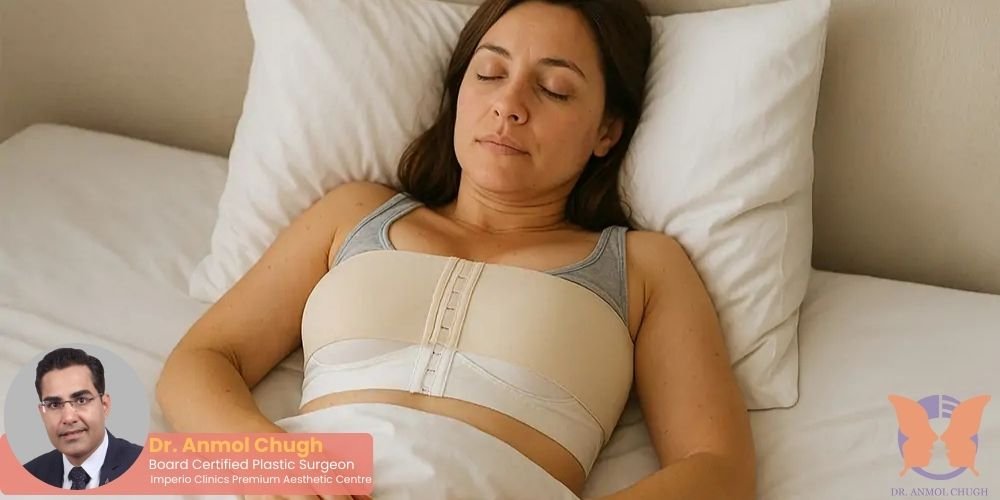
Sleep on your back with your upper body elevated for the first 2–4 weeks after surgery.
I’ve helped many patients and spoken with surgeons about how to sleep after breast reduction. This guide gives clear, practical steps you can use tonight. I explain safe positions, supports, pain tips, and common hiccups. Read on to learn simple, evidence-aligned habits that protect your healing and help you rest.

Postoperative sleep timeline
First 48 to 72 hours after surgery, sleep will be hardest. You will be sore and swollen. Plan to sleep on your back with the head raised. This reduces swelling and strain on the chest.
Weeks 1 to 2 are focused on comfort and safety. Continue back sleeping with elevation. Use a surgical bra or compression garment as directed. Limit movement in bed to avoid tugging at incisions.
Check out Surgical Bra on Amazon to BUY

Weeks 3 to 6 let you shift slowly. You may recline more but avoid full side or stomach sleep. By 6 to 8 weeks many people can return to normal sleep positions. Always follow your surgeon’s timeline.
How to sleep after breast reduction changes over time. Stick to stage-appropriate positions to avoid complications and to speed healing.

Best sleep positions after breast reduction
Choosing the right position is the core of how to sleep after breast reduction. Here are safe options and why they work.
On your back with head and chest elevated
Keeps pressure off incisions. Helps fluid drain properly. Use a wedge or stacked pillows.Slightly reclined in a chair or recliner
Good for the first few nights if moving in bed hurts. Keeps upper body raised without rolling.Gradual move to side sleeping after clearance
Wait until your surgeon says it’s safe. Use pillows to support your chest when you switch.Avoid sleeping on your stomach
Stomach sleep puts direct pressure on breasts. That can hurt incisions and slow healing.
How to sleep after breast reduction means planning positions ahead. Try each option before surgery to see what feels best.
Pillows, bras, and supports to help you sleep
Right gear makes how to sleep after breast reduction much easier. Small changes add big comfort.
Surgical or compression bra as your surgeon recommends
Wear it while sleeping if advised. It stabilizes tissues and reduces movement.Wedge pillow or incline pillow
Keeps your torso at 20–45 degrees. Easier than propping many small pillows.Body pillow or pregnancy-style pillow
Offers side support when you return to side sleeping. Tuck it around your body for stability.Soft, breathable fabrics
Choose cotton or bamboo to avoid skin irritation at incision sites.Ice packs and non-adhesive dressings as advised
Use ice to control swelling, but follow instructions for safe application.
Choosing supportive gear is a key part of learning how to sleep after breast reduction. Test items before surgery for fit and comfort.

Managing pain, medications, and breathing while you sleep
Good pain control helps you rest. That is central to how to sleep after breast reduction.
Take pain meds on schedule at first
Staying ahead of pain helps you sleep longer and shift less in bed.Use non-opioid options when possible
Ask your doctor about acetaminophen or NSAIDs. Use opioids only as prescribed and be cautious with sleepiness.Avoid alcohol and sedating antihistamines
These can alter breathing and interact with pain meds.Practice calm, slow breathing and short walks in the day
Gentle movement lowers stiffness and improves sleep quality.Watch for breathing issues
If you have sleep apnea, tell your surgeon. Adjustments may be needed for safe sleep after surgery.
How to sleep after breast reduction is partly about safe pain control. Clear, simple routines help you rest without risk.

Sleeping environment and sleep hygiene
A calm sleep space supports healing. Small changes make it easier to follow how to sleep after breast reduction.
Keep room cool and dark
Lower temperature and minimal light help you fall asleep faster.Create a short wind-down routine
Try light reading, breathing exercises, or a warm shower before bed.Arrange pillows for easy movement
Place essential items near the bed so you don’t reach or twist at night.Limit late food and screens
They can worsen sleep and slow healing.Plan naps strategically
Short day naps help if nights are interrupted, but avoid long naps late in the day.
A tidy, predictable sleep routine makes it simpler to sleep in safe positions and to protect your incisions.

When to contact your surgeon
Knowing warning signs helps you sleep with confidence. Contact your surgeon if you notice:
- Increasing pain that does not ease with prescribed meds
- Redness, warmth, or heavy drainage at the incision
- Fever over 100.4°F (38°C) or chills
- Sudden swelling, shortness of breath, or chest pain
- Any new numbness or unusual symptoms that worry you
If sleep is impossible due to severe pain or breathing trouble, seek urgent care. Better safe than sorry when healing and sleep are at stake.

Frequently Asked Questions of how to sleep after breast reduction
How long should I sleep on my back after a breast reduction?
Most surgeons recommend sleeping on your back for at least 2 to 4 weeks. Follow your surgeon’s specific timeline because healing varies.
Can I use a recliner to sleep after breast reduction?
Yes, a recliner is often helpful in the first few nights. It lets you keep your upper body elevated without rolling.
When can I sleep on my side after breast reduction?
Many people wait 4 to 6 weeks before side sleeping, but always get clearance from your surgeon. Use extra pillow support when you switch.
Will sleeping position affect scarring or breast shape?
Keeping pressure off incisions helps reduce stress on scars early on. Long-term shape is more linked to surgical technique and healing than one night’s position.
Can I wear a regular bra to bed after surgery?
Only wear a regular bra if your surgeon gives the OK. Early on, a surgical/compression bra is safest for sleep and support.
What helps reduce swelling so I can sleep better?
Elevation, cold packs as instructed, and taking anti-inflammatory meds if allowed can lower swelling. Gentle movement during the day also helps.
Conclusion
Rest is a part of recovery. Back-sleeping with elevation, proper supports, good pain control, and a calm sleep space will make how to sleep after breast reduction much easier. Follow your surgeon’s advice, be patient with timelines, and adapt tools that fit your body. Take one careful night at a time, and you’ll protect your healing while getting better sleep.
Try one change tonight: test a wedge or recliner and wear your recommended support. Share how it goes or ask a question below.

Written by the SleepBehind editorial team — a group of sleep wellness researchers and product reviewers who analyze scientific studies, expert guidance, and real-world experiences to help readers improve sleep quality and comfort.