If you’ve ever dragged yourself through an afternoon slump after a full 8 hours of sleep, or stared at the ceiling exhausted but unable to fall asleep, your circadian rhythm is likely out of sync. Often called your body’s internal 24-hour clock, this biological system does far more than time your sleep: it regulates hormone release, body temperature, metabolism, cognitive function, and even immune response. In this guide, we’ll break down circadian rhythm explained in clear, practical terms, covering how it works, what disrupts it, and simple, evidence-based sleep tips and real-world advice you can try tonight. We’ll also share common mistakes to avoid and answer frequently asked questions to help you build a routine that works for your lifestyle, no extreme overhauls required.
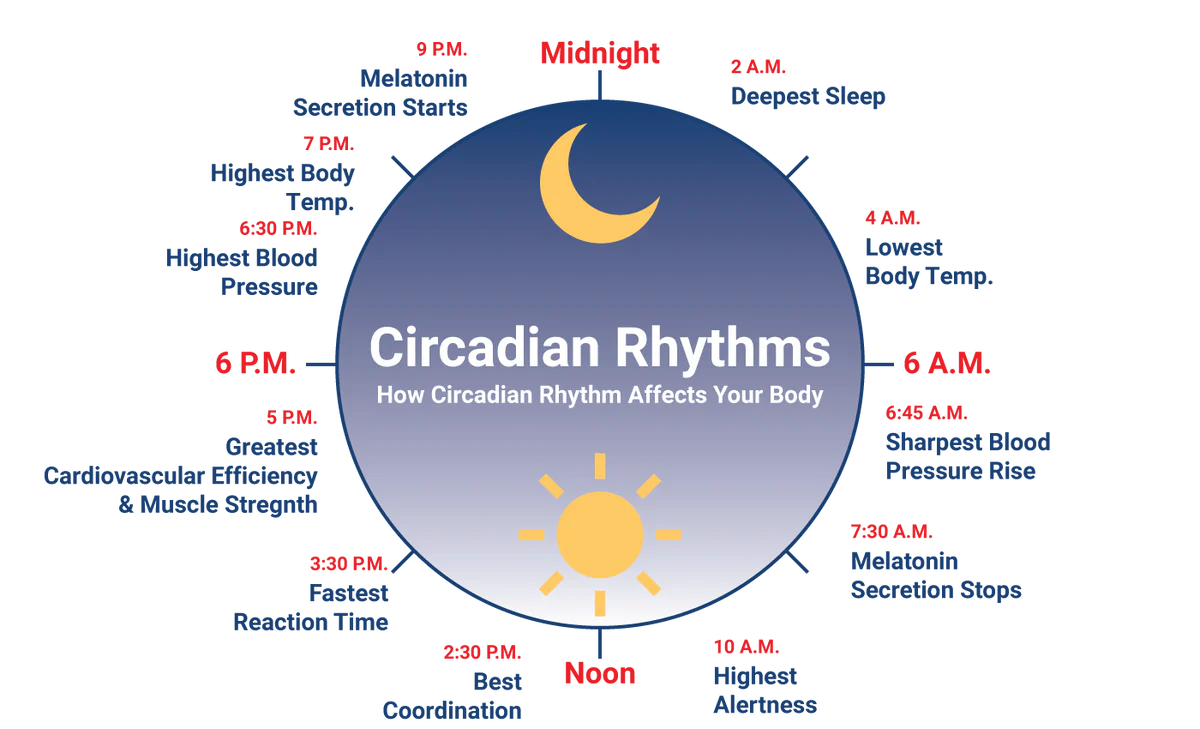
 A simplified 24-hour cycle of circadian hormone fluctuations and energy levels
Source: carex
A simplified 24-hour cycle of circadian hormone fluctuations and energy levels
Source: carex
What Exactly Is Your Circadian Rhythm?
Your circadian rhythm is a natural, roughly 24-hour internal cycle that coordinates nearly every function in your body. It is driven by a "master clock" in your brain that synchronizes smaller, tissue-specific clocks in your organs, muscles, and gut. Unlike the homeostatic sleep drive (the build-up of sleep pressure the longer you’re awake), your circadian rhythm rises and falls on a predictable daily schedule, dictating when you feel alert, when you feel drowsy, and when your body releases key hormones.
This system is not unique to humans: almost all living organisms, from plants to fungi to animals, have circadian rhythms that help them adapt to daily light and dark cycles. When your rhythm is aligned with your environment and schedule, you’ll fall asleep easily, wake up refreshed, and maintain steady energy throughout the day. When it’s out of sync, even small disruptions to your routine can lead to poor sleep, brain fog, and long-term health risks.
How Your Circadian Clock Works, Biologically
The master circadian clock, called the suprachiasmatic nucleus (SCN), sits in a region of the brain called the hypothalamus. It receives direct light signals from specialized cells in your retina called intrinsically photosensitive retinal ganglion cells, which detect even small amounts of bright light, especially blue-wavelength light. Each morning, light resets the SCN to match the 24-hour day, keeping your internal clock aligned with your environment.
Individual cells throughout your body also have their own tiny circadian clocks, regulated by core "clock genes" (including PER and CLOCK genes) that turn on and off in a predictable 24-hour cycle. These peripheral clocks control functions like liver metabolism, gut digestion, and muscle recovery, and are kept in sync with the master SCN by cues like meal times, activity, and social interaction. As outlined in foundational circadian biology research from the National Institute of General Medical Sciences foundational circadian biology, misalignment between the master clock and peripheral clocks is a key driver of circadian-related health issues.
Key hormones regulated by your circadian rhythm include:
- Melatonin: Released by the pineal gland in response to darkness, it signals to your body that it’s time to sleep. Levels stay low during the day and rise sharply 1–2 hours before your typical bedtime.
- Cortisol: Peaks 30–60 minutes after waking to boost alertness and energy, then gradually declines throughout the day to prepare for sleep.
 Core biological pathways that regulate the body's master circadian clock
Source: nih
Core biological pathways that regulate the body's master circadian clock
Source: nih
Key Factors That Throw Your Rhythm Off Balance
While light is the strongest cue for your circadian clock, dozens of daily habits and environmental factors can advance (shift earlier) or delay (shift later) your internal timing. The most common disruptors include:
- Inconsistent light exposure: Evening blue light from phones, laptops, and bright overhead fixtures suppresses melatonin production, delaying sleep onset. Conversely, getting no bright light first thing in the morning can push your wake time later over time.
- Irregular meal times: Eating late at night sends "awake" signals to the peripheral clocks in your gut and liver, delaying full sleep readiness. Shift workers who eat during nighttime hours often report poorer sleep quality even when they sleep during the day.
- Caffeine and alcohol: Caffeine blocks adenosine, the chemical that builds sleep pressure, and its half-life of 5–6 hours means an afternoon coffee can still be 50% active in your system at 10pm. Alcohol may make you drowsy initially, but it fragments sleep and disrupts circadian hormone production, reducing deep sleep by 20–30% even at moderate doses.
- Social jet lag: Staying up 1–2 hours later and sleeping in on weekends creates a weekly circadian shift that makes Monday mornings feel like jet lag. This is one of the most common disruptors for people with 9–5 schedules.
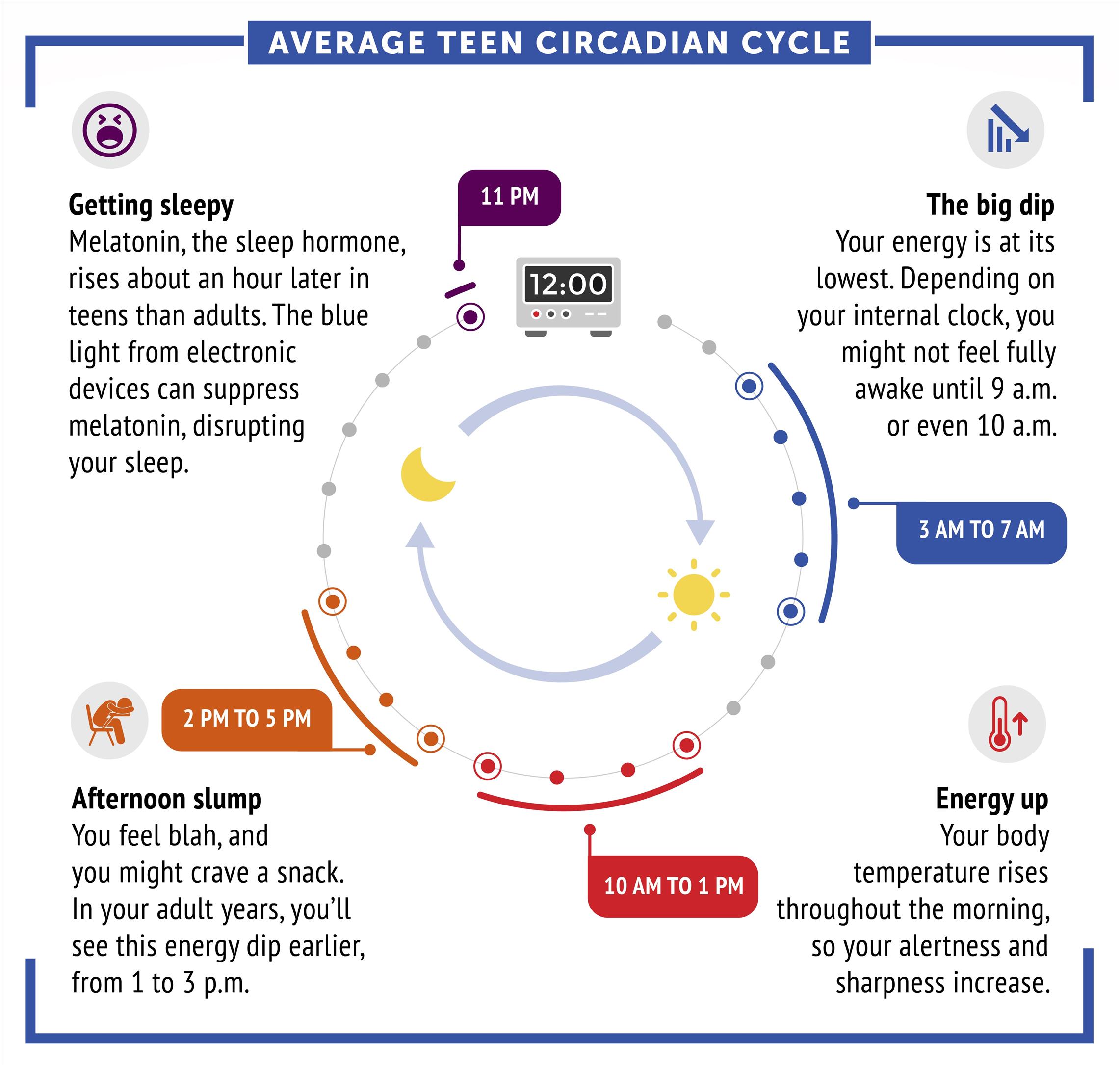
- Age and life stage: Teenagers experience a natural 1–2 hour delay in their circadian rhythm during puberty, making early school start times particularly challenging. Older adults often see an earlier shift, waking earlier and feeling drowsier in the evening.
- Travel and shift work: Crossing time zones or working overnight shifts directly conflicts with your natural light-dark cycle, requiring deliberate adjustment to realign.
 Key lifestyle and environmental factors that advance or delay your internal clock
Source: sleepfoundation
Key lifestyle and environmental factors that advance or delay your internal clock
Source: sleepfoundation
Real Health Impacts of Circadian Misalignment
Short-term circadian disruption leads to obvious symptoms: difficulty falling asleep, frequent nighttime waking, morning grogginess, afternoon energy crashes, and impaired focus. But chronic misalignment has far more serious long-term consequences. Research links ongoing circadian disruption to:
- Increased risk of mood disorders, including depression and anxiety
- Metabolic issues like insulin resistance, weight gain, and type 2 diabetes
- Elevated risk of cardiovascular disease, particularly for long-term shift workers
- Weakened immune function, making you more susceptible to common illnesses
- Impaired cognitive performance, including slower reaction times and reduced memory consolidation
Even one night of poor circadian alignment (e.g., staying up 3 hours later than usual) can impair next-day driving performance as much as a blood alcohol concentration of 0.05%, per sleep safety research. For people with chronic circadian disorders like delayed sleep phase disorder (DSPD), where the internal clock is shifted 2+ hours later than the norm, untreated misalignment can significantly impact work, school, and social functioning.
 How circadian alignment impacts multiple body systems beyond sleep
Source: wikipedia
How circadian alignment impacts multiple body systems beyond sleep
Source: wikipedia
7 Evidence-Based Steps to Align Your Circadian Rhythm
Resetting your circadian rhythm does not require a complete lifestyle overhaul. Small, consistent changes to your daily routine are far more effective than extreme, short-term fixes. These strategies, refined through coaching and clinical sleep guidance, will help you align your clock for better sleep and steady energy:
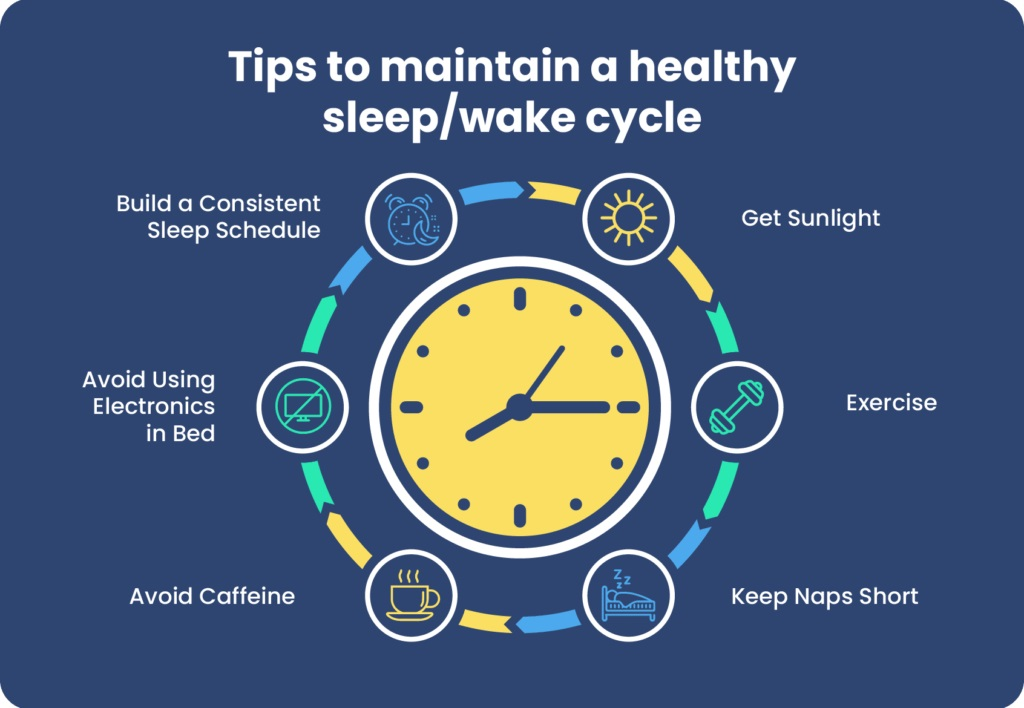
- Get bright light within 1 hour of waking: Aim for 20–30 minutes of outdoor light, even on cloudy days (clouds filter only 20% of bright light, so you’ll still get enough signal to reset your SCN). If you can’t go outside, sit near a bright window or use a 10,000-lux light therapy box.
- Keep a consistent wake time (±30 minutes max): This is the single most powerful habit for anchoring your circadian rhythm. Wake up at the same time every day, even on weekends, to avoid social jet lag. If you need to adjust your wake time, shift it by 15–30 minutes every 2–3 days until you reach your target. A steady wake time is the most powerful anchor for your circadian rhythm, and resetting your sleep schedule with small, gradual shifts is far more sustainable than drastic changes resetting your sleep schedule.
- Dim lights 90 minutes before bed: Switch off bright overhead lights, use warm, low-wattage lamps, and avoid screens if possible. If you must use devices, enable blue light filters and lower the brightness to the minimum setting—note that filters only reduce blue light by 30–50%, so they are not a replacement for dimming lights entirely.
- Time meals to daylight hours: Finish eating 2–3 hours before bed, and keep meals consistent from day to day. This synchronizes your peripheral gut and liver clocks with your master clock, improving both sleep quality and metabolism. Avoid large, heavy meals right before bed, as they can raise core body temperature and disrupt sleep.
- Schedule intense exercise for earlier in the day: Moderate to high-intensity workouts raise your core temperature and cortisol, which can delay sleep onset if done within 1–2 hours of bed. Aim to finish intense exercise by early afternoon; gentle movement like walking or stretching is fine in the evening.
- Limit caffeine after 2pm: Caffeine’s half-life means a 4pm coffee will still have 50% of its active ingredient in your system at 10pm, blocking adenosine production and delaying sleep. Opt for decaf or herbal tea in the afternoon and evening.
- Use short, early naps if needed: If you feel drowsy during the day, limit naps to 20–30 minutes and take them before 3pm. Longer or later naps reduce your homeostatic sleep drive, making it harder to fall asleep at night.
Pairing your wind-down routine with a properly cleaned bamboo pillow can reduce nighttime discomfort that delays sleep onset properly cleaned bamboo pillow, and adopting neck-pain-free sleep positioning can further improve rest neck-pain-free sleep positioning. If you occasionally go to bed with wet hair, following safe wet hair routines can prevent scalp irritation and discomfort that interferes with rest safe wet hair routines.
In practice, clients who adjust their wake time by 15–30 minutes every 2–3 days report far better long-term adherence than those who try to shift by 2+ hours in a single week. One client I worked with struggled to wake before 9am for years; by shifting their wake time 20 minutes earlier every three days, they were consistently up by 6:30am within 6 weeks, with no mid-afternoon crashes and 45 minutes more deep sleep per night, per their sleep tracker data.
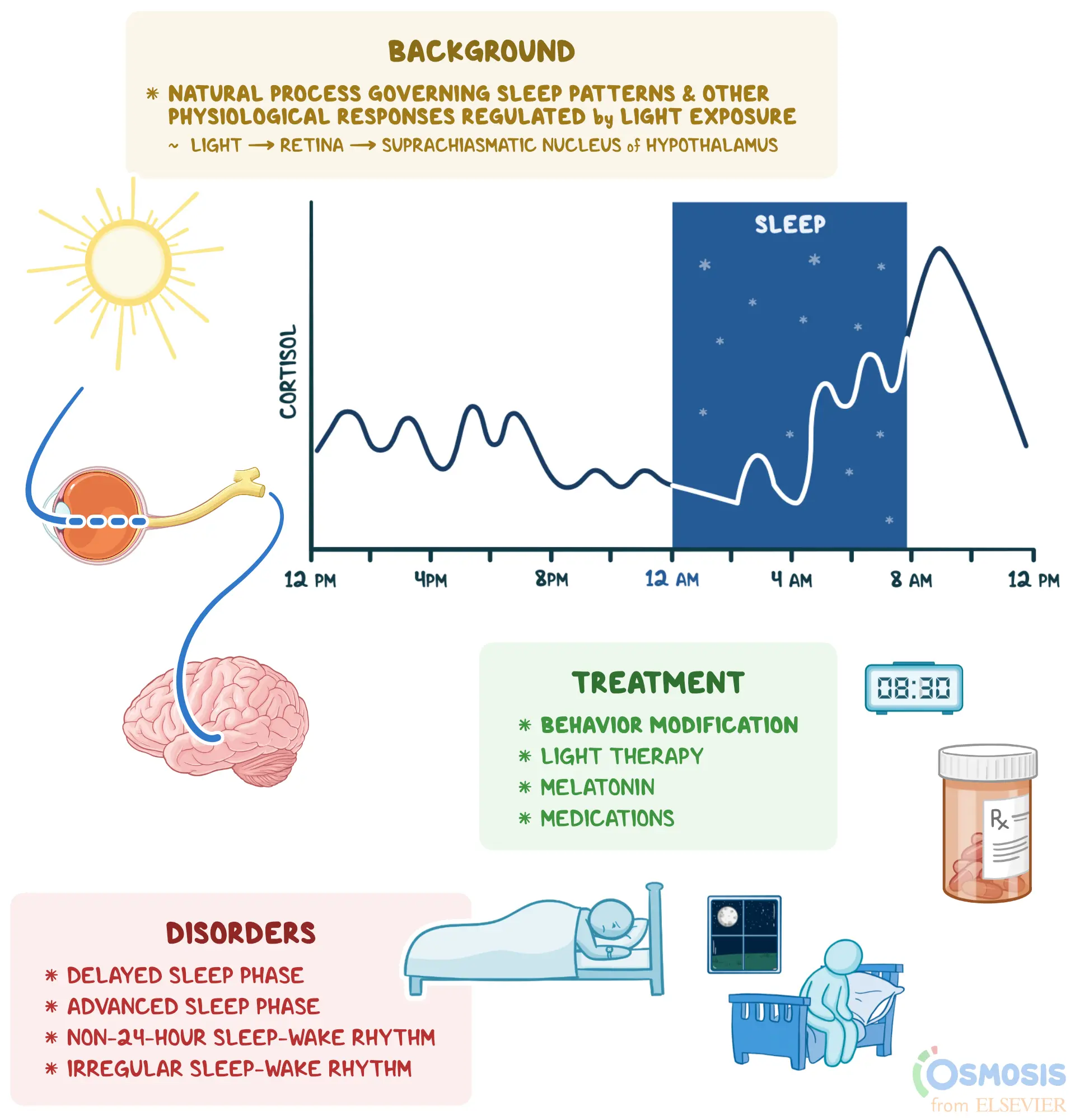 Actionable, science-backed steps to reset your rhythm for better sleep and energy
Source: osmosis
Actionable, science-backed steps to reset your rhythm for better sleep and energy
Source: osmosis
Common Mistakes That Derail Your Progress
Even with good intentions, small, overlooked habits can throw your circadian rhythm off balance. Avoid these common missteps:
- Trying to fix everything at once: Overhauling your routine, screen time, meal times, and wake schedule all at once is overwhelming and hard to maintain. Start with one change (usually your wake time) and add others gradually.
- Using your bed for work or scrolling: Associating your bed with alertness, stress, or screen use makes it harder for your brain to connect the space with sleep. Keep beds for sleep and intimacy only.
- Drinking alcohol before bed: While alcohol may make you drowsy, it fragments sleep, reduces deep sleep, and disrupts circadian hormone production, leaving you tired the next day even if you slept 8 hours.
- Skipping morning light after late nights: If you stayed up late, it’s tempting to sleep in and avoid light, but this pushes your rhythm later. Get 10 minutes of bright light as soon as you wake to anchor your clock.
- Ignoring sleep surface comfort: A lumpy topper or unsupportive pillow can cause frequent nighttime waking that fragments your sleep and disrupts circadian alignment. A well-maintained sleep surface, like a revived feather topper, can reduce pressure points that cause disruption revived feather topper.
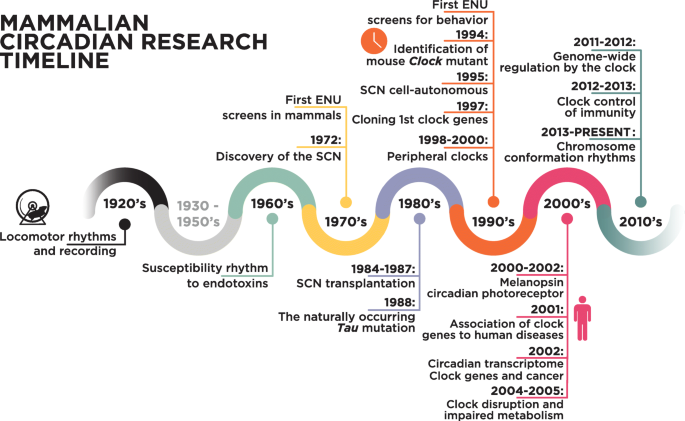 Frequent missteps that delay progress when resetting your sleep schedule
Source: biomedcentral
Frequent missteps that delay progress when resetting your sleep schedule
Source: biomedcentral
Tracking Your Progress and When to See a Specialist
As you adjust your habits, tracking simple metrics can help you spot patterns and measure progress. For 2–4 weeks, log:
- Your wake time and bedtime (including weekend variations)
- How long it takes to fall asleep
- Daytime energy levels (rate 1–10, note slumps)
- Caffeine intake and timing
- Evening light exposure and screen use
- Meal times
You can use a sleep app, a wearable tracker, or a simple paper notebook. Review your log weekly to see which habits have the biggest impact on your sleep and energy. Wearable trackers can provide useful trend data, but they are not as accurate as clinical sleep studies for diagnosing sleep disorders.
If you’ve adjusted your habits consistently for 4+ weeks and still experience persistent insomnia, excessive daytime sleepiness, or irregular sleep patterns that interfere with work or relationships, schedule a consult with a board-certified sleep specialist. They can rule out underlying conditions like sleep apnea or circadian rhythm disorders, and may recommend treatments like cognitive behavioral therapy for insomnia (CBT-I), timed light therapy, or low-dose melatonin.
For people who work non-traditional hours, using easy-to-clean protectors can reduce allergen exposure that worsens sleep quality and circadian disruption easy-to-clean protectors.
 Simple metrics to monitor as you adjust your daily habits
Source: com
Simple metrics to monitor as you adjust your daily habits
Source: com
Frequently Asked Questions
What is the circadian rhythm?
Your circadian rhythm is your body’s internal 24-hour clock that regulates sleep, hormone release, body temperature, metabolism, and other core functions. It is present in almost all living organisms, and relies on light and daily routine cues to stay aligned with the 24-hour day.
How does light affect the circadian rhythm?
Light is the strongest cue for your master circadian clock. Bright, blue-wavelength light in the morning suppresses melatonin and boosts cortisol, signaling your body to wake up and be alert. Even small amounts of bright light in the evening (from screens, overhead lights, or streetlights) can suppress melatonin production by up to 50%, delaying sleep onset and shifting your rhythm later over time.
Can meal timing change my circadian rhythm?
Yes. Your gut and liver have their own peripheral circadian clocks that are synchronized by food intake. Eating at consistent times during daylight hours strengthens these clocks and improves overall circadian alignment. Eating late at night sends "awake" signals to these peripheral clocks, delaying sleep readiness and potentially disrupting metabolism.
How long does jet lag take to fix?
Most people adjust to a 1-hour time zone change in 1–2 days, but full recovery depends on the direction of travel, your natural circadian preference, and your light exposure. Traveling east (moving ahead in time) is harder than traveling west, as it requires shifting your rhythm earlier against your natural tendency to stay up later. Getting bright morning light at your destination and avoiding evening light can speed recovery by 30–50%.
Are there medical treatments for circadian rhythm disorders?
Yes. Common treatments for diagnosed circadian disorders (like delayed sleep phase disorder or shift work disorder) include timed bright light therapy, low-dose melatonin supplements, and structured behavioral plans. These are prescribed and monitored by a board-certified sleep specialist to match your specific circadian pattern and needs.
Does age change the circadian rhythm?
Yes. Adolescents experience a natural 1–2 hour delay in their circadian rhythm during puberty, driven by changes in melatonin and cortisol timing, which is why early school start times are linked to sleep deprivation in teens. Older adults often see an earlier shift, waking earlier and feeling drowsier in the evening, as the SCN becomes less responsive to light cues over time. Aligning your sleep surface to these shifts—like knowing when to replace a worn mattress protector—can improve rest replacing worn sleep protectors.
 Common questions about circadian rhythm and practical solutions
Source: wiley
Common questions about circadian rhythm and practical solutions
Source: wiley
Conclusion
Circadian rhythm explained in simple terms comes down to this: timing matters as much as sleep duration. Your internal clock coordinates every part of your body, and small, consistent adjustments to your light exposure, meal times, and sleep schedule can deliver outsized improvements to your sleep quality, daytime energy, mood, and long-term health. The biggest mistake people make is trying to overhaul their routine overnight—start with one small change, like a consistent wake time or 10 minutes of morning light, and build from there. If you’re ready to build a consistent, restorative sleep routine, explore our guide to evidence-based falling asleep tips for more actionable, no-fluff guidance evidence-based falling asleep tips.

Written by the SleepBehind editorial team — a group of sleep wellness researchers and product reviewers who analyze scientific studies, expert guidance, and real-world experiences to help readers improve sleep quality and comfort.