Off-the-shelf mattress covers rarely fit deep pillow-top models, extra-thick toppers, or non-standard mattress sizes like RV or crib mattresses, and custom-branded covers can cost $30 to $100 for a single fitted sheet. Many toppers require specific cover care to avoid damage, so sewing your own ensures you follow the right guidelines for topper-safe cover care while getting a perfect fit. This 2026 guide walks you through the entire process, from measuring your mattress correctly to adding waterproofing and zippers, with troubleshooting tips for common beginner mistakes. We’ve tested these steps on everything from 8-inch innerspring mattresses to 16-inch deep gel toppers, so the guidance works for all common mattress types.
Sewing a custom cover also extends the lifespan of high-end bedding: a well-made fitted cover protects premium toppers from spills, dust, and friction, so you won’t need to replace an expensive protect premium toppers as often.
Materials & Tools You’ll Need
Gather all supplies before you start cutting fabric to avoid mid-project trips to the craft store. All tools are low-cost and reusable for other sewing projects.
 All basic sewing supplies work for this project; no specialized equipment required.
Source: youtube
All basic sewing supplies work for this project; no specialized equipment required.
Source: youtube
Core Supplies
- Fabric: Choose fabric based on your needs:
- Medium-weight cotton or canvas: best for beginners, durable and easy to sew
- Linen or bamboo: breathable for hot sleepers, soft enough for sensitive skin
- Waterproof polyurethane laminate (PUL): machine washable, crinkle-free, ideal for spill protection
- Hypoallergenic tightly woven cotton (400+ thread count): blocks dust mites and allergens
- Waterproof liner (optional): Add a separate PUL or vinyl liner between the outer fabric and mattress for extra spill protection
- Thread: Polyester thread for stretch and durability; match thread color to your fabric for a seamless finish
- Closure: 1–2 yards of 1/4-inch or 1-inch elastic for a fitted cover, or a separating zipper (length equal to your mattress perimeter + 2 inches) for a removable cover
If you tend to sleep with wet hair, opt for a soft, breathable cotton or bamboo fabric to sleep comfortably with wet hair without trapping moisture against your scalp. If you have straight hair that snags easily on rough fabrics, choose a smooth sateen or soft cotton to protect straight hair while sleeping and reduce breakage. If you opt for a bamboo cover, follow proper care for bamboo bedding to keep it soft and stretchy for years.
Tools
- Universal sewing machine needles (size 90/14 for medium fabrics, 100/16 for canvas or waterproof layers)
- Measuring tape, fabric marker (chalk-based for easy removal)
- Fabric shears, rotary cutter and cutting mat (for faster, straighter cuts)
- Pins or fabric clips (clips work better for thick or slippery fabrics)
- Seam ripper, iron, walking foot (optional, for sewing waterproof or stretchy fabric)
How To Measure Your Mattress Correctly
Accurate measurements are the foundation of a well-fitted cover. A common mistake is measuring only the main mattress body and forgetting the pillow top, which leads to a cover that’s too short and pops off during the night.
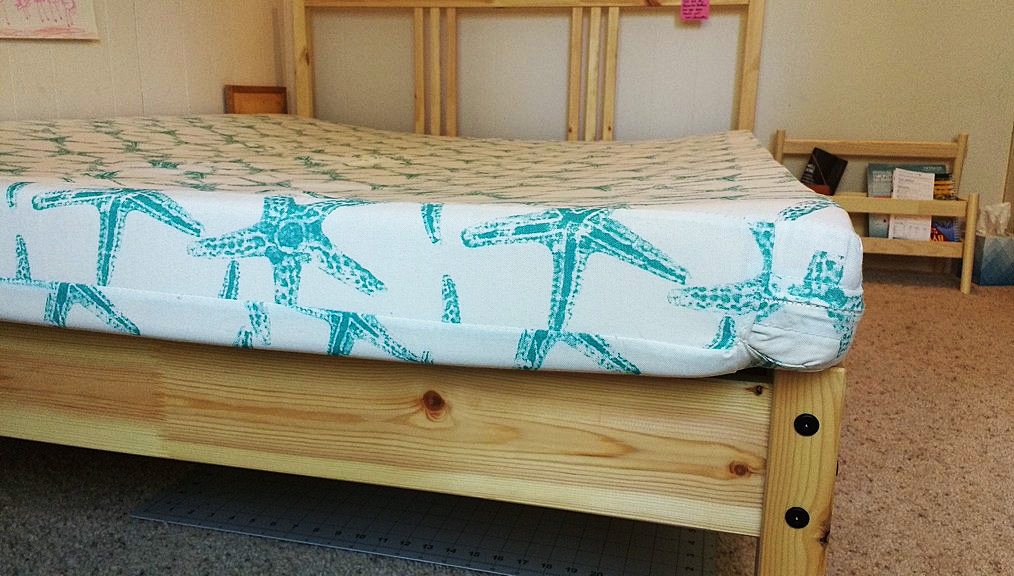 Always measure the mattress height at its tallest point, including pillow tops and mattress toppers.
Source: sewingmachinesplus
Always measure the mattress height at its tallest point, including pillow tops and mattress toppers.
Source: sewingmachinesplus
Take three core measurements, and write them down to reference while cutting:
- Length: Measure from the head of the mattress to the foot, along the longest side
- Width: Measure from one long edge to the other, at the widest point
- Depth/height: Measure from the bottom of the mattress to the highest point of the pillow top or topper, at the tallest corner
Add seam allowances and extra fabric for closures:
- For a fitted cover with elastic: add 1 inch to length and width for seams, 2 inches to depth for the elastic casing, plus an extra 1/2 inch if you’re adding a zipper
- For a loose zippered slipcover: add 2 inches to all sides for ease of removal
For standard seam allowance best practices, follow verified sewing guidelines from the University of Minnesota Extension to ensure your cover fits perfectly and holds up to repeated washes.
Planning & Cutting Your Fabric Panels
A little pre-planning before cutting saves hours of frustration and wasted fabric. Most fitted mattress covers use three core panel types:
 Label all fabric panels immediately after cutting to avoid mix-ups during assembly.
Source: youtube
Label all fabric panels immediately after cutting to avoid mix-ups during assembly.
Source: youtube
- Top panel: Cut to your mattress length + 1 inch seam allowance, by mattress width + 1 inch seam allowance
- Side panel strip: Cut one long strip equal to your mattress perimeter (2x length + 2x width) + 1 inch seam allowance for joining the ends. The height of the strip equals your mattress depth + 1 inch seam allowance + 1 inch for the bottom hem
- Bottom panel: Cut to the same dimensions as the top panel, or add an extra 1/2 inch if you’re inserting a zipper
Before cutting:
- Align fabric nap or pattern direction so all panels match (especially important for minky, fleece, or printed fabrics)
- Pre-wash natural fabrics (cotton, linen, bamboo) to avoid shrinkage after sewing
- Use a rotary cutter and cutting mat for long, straight side panel cuts, and label each panel immediately with a fabric marker to avoid mix-ups
Step-By-Step: Sew A Fitted Box-Style Mattress Cover
This method creates a snug, durable cover that stays in place even on active sleepers, and works for all mattress depths from 6-inch crib mattresses to 18-inch pillow-top models.
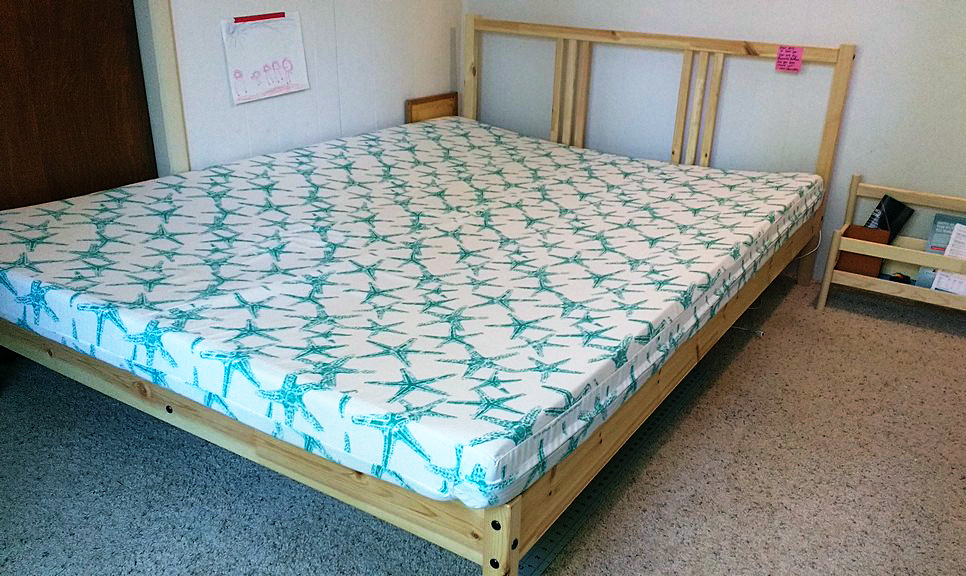 A box-style fitted cover stays securely in place even on active sleepers.
Source: sewingmachinesplus
A box-style fitted cover stays securely in place even on active sleepers.
Source: sewingmachinesplus
Follow these steps in order for the best results:
- Finish raw edges: Run a zigzag stitch or serger along the raw edges of all fabric panels to prevent fraying, especially if you’re using loose-weave fabrics like linen
- Sew the side loop: Place the two short ends of the side panel strip right sides together, sew with a 1/2-inch seam allowance, and press the seam open. This creates the "wall" of the fitted cover
- Attach the top panel: Pin the top panel to one open edge of the side loop, right sides together, matching side seams. Pin every 2 inches to avoid shifting, then sew with a 1/2-inch seam allowance, backstitching at the start and end
- Attach the bottom panel: Repeat the process with the bottom panel on the remaining open edge of the side loop. Trim the corners of the seam allowance to 1/4 inch to reduce bulk
- Create box corners (optional for extra-deep mattresses): Pinch each corner of the cover so the side seam and top/bottom seam align. Measure down from the corner the exact depth of your mattress + 1/2 inch seam allowance, mark with a fabric marker, and sew across the marked line. Trim excess fabric from the corner and turn the cover right side out
- Add elastic for a fitted fit: Fold the bottom edge of the cover up 1 inch to create a casing, and sew along the edge leaving a 2-inch gap. Cut elastic to the length of the bottom edge + 2 inches, attach a safety pin to one end, and thread it through the casing. Pull the elastic slightly taut (10-15% stretch) as you sew the gap closed, so the cover hugs the mattress snugly
- Test the fit: Slip the cover over your mattress before adding a zipper, and adjust the elastic or seam allowances if it’s too tight or loose
- Add a zipper (optional for removable covers): If you want a removable cover, insert a separating zipper along one of the side seams before attaching the top or bottom panel, or along one short end of the side loop. Pin the zipper right sides together, sew with a zipper foot, then fold the seam allowance under and topstitch close to the teeth for a clean finish
- Finish and press: Reinforce high-stress points (corners, zipper edges) with a second line of stitching, press all seams flat with an iron, and topstitch 1/8 inch from the edge around the entire cover for extra stability
Add Custom Features: Zippers, Waterproofing & Allergen Protection
Customize your cover to match your specific sleep needs with these easy upgrades.
 A separating zipper makes removing the cover for washing far easier.
Source: youtube
A separating zipper makes removing the cover for washing far easier.
Source: youtube
Installing A Removable Zipper
A separating zipper lets you remove the cover completely for washing, which is ideal for people with allergies or kids’ beds that see frequent spills.
- Add an extra 1/2 inch to your mattress perimeter measurement to account for the zipper seam allowance
- Sew the side panels together first, leaving a 1/2 inch gap at the top for the zipper
- Pin the zipper tape to the right side of the gap, with the teeth facing inward, and sew slowly with a zipper foot to keep the teeth aligned
- Test the zipper to make sure it opens and closes smoothly before sewing the final seam
A common error when installing zippers is sewing the teeth facing outward, which causes it to catch on sheets and skin. Always test the orientation before finishing the seam.
Waterproof & Allergen-Proof Upgrades
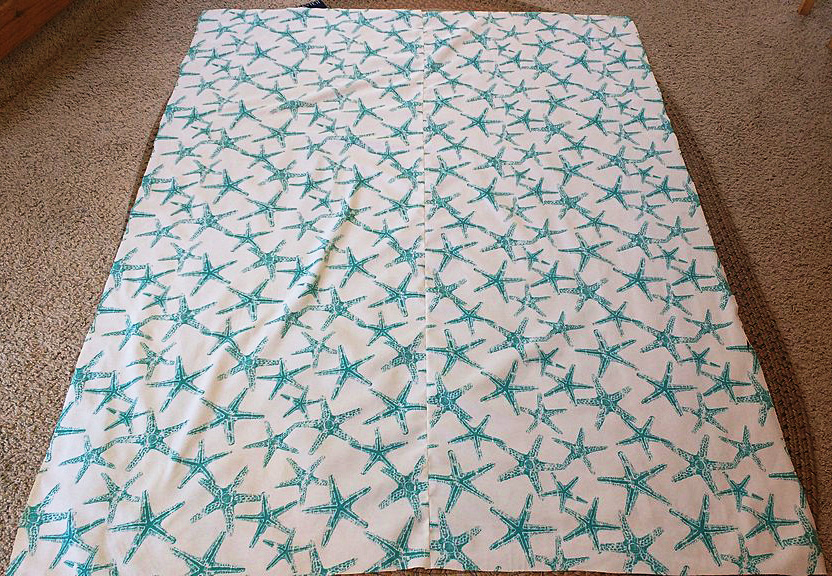 Waterproof laminate fabric blocks spills and allergens while remaining breathable.
Source: sewingmachinesplus
Waterproof laminate fabric blocks spills and allergens while remaining breathable.
Source: sewingmachinesplus
If you need protection from spills, bedwetting, or allergens, these modifications work for any cover style:
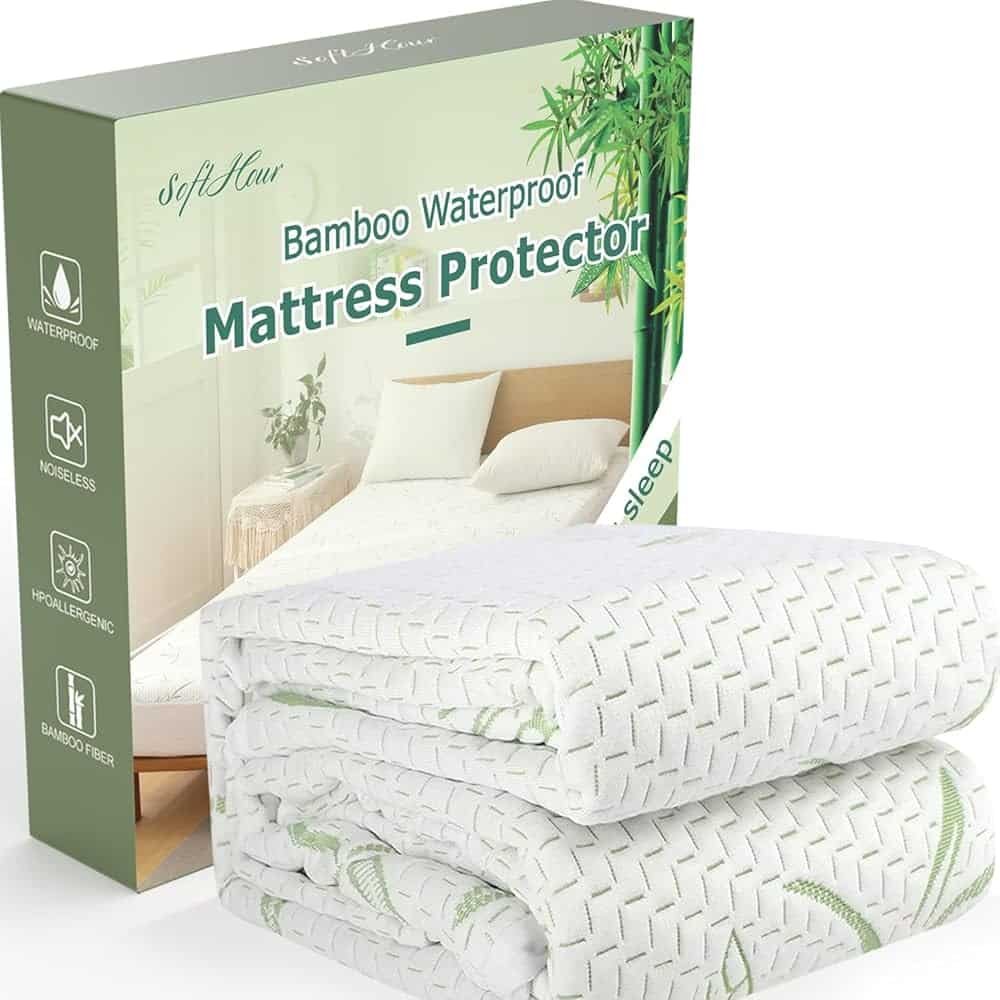
- For waterproofing: Use PUL (polyurethane laminate) fabric, which is machine washable, breathable, and crinkle-free, unlike plastic sheeting. Place the PUL layer as the bottom panel of the cover, facing the mattress, and use a walking foot to sew it to avoid slipping. Test a scrap of PUL with your machine first to adjust stitch length and needle type. If you’re adding waterproofing to protect a gel or foam mattress pad, check the manufacturer’s guidelines first to avoid voiding warranties, and know when to swap your pad if it’s already showing signs of wear. If you’re using a waterproof laminate, opt for products certified under EPA Safer Choice standards to avoid harmful chemical off-gassing, especially if the cover will be used for children’s mattresses or for people with chemical sensitivities.
- For allergen protection: Use tightly woven cotton (400+ thread count) or a certified allergen-barrier fabric, and make sure the zipper (if using) is fully sealed to prevent dust mites from entering. You can also add a thin layer of cotton batting between the outer fabric and waterproof layer for extra softness.
Troubleshooting & Long-Term Maintenance
Small fixes extend the life of your cover by years, and most common issues are easy to resolve.
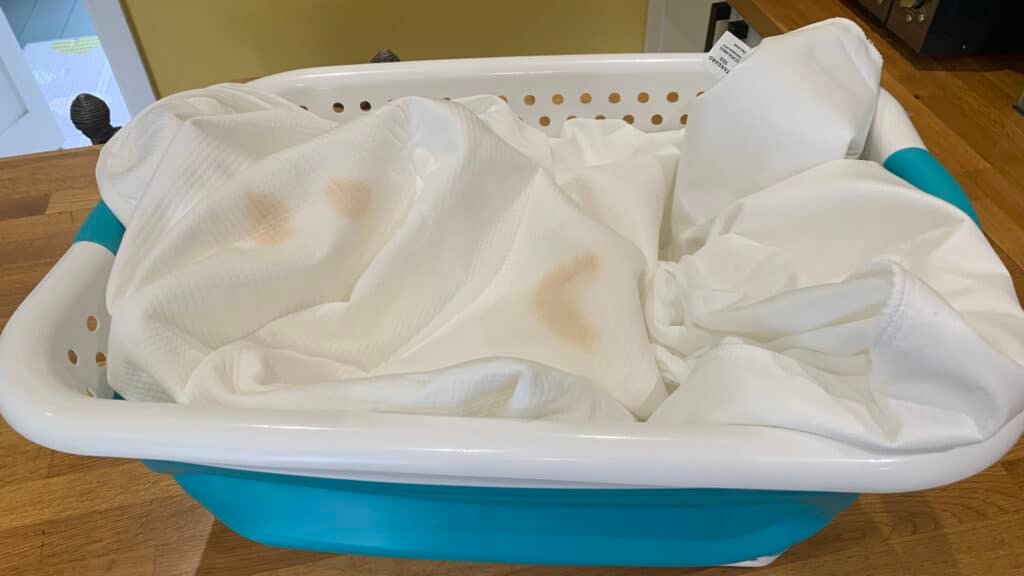
 Small tears can be repaired with an iron-on patch or simple topstitch.
Source: youtube
Small tears can be repaired with an iron-on patch or simple topstitch.
Source: youtube
- Puckering seams: Lower your stitch length to 2.0 mm, use fabric clips instead of pins for thick fabrics, and switch to a walking foot if you have one
- Cover is too tight: Add a 1-inch gusset to the side panels, or replace the elastic with a larger size. For extra-deep mattresses, add 1-2 inches to the depth measurement when cutting panels
- Zipper sticks: Rub a bar of soap or zipper lubricant along the teeth to reduce friction. If the zipper teeth are broken, replace it with a new separating zipper for $2-$3
- Seams are coming undone: Reinforce high-stress points with a second line of stitching, and use polyester thread for extra strength
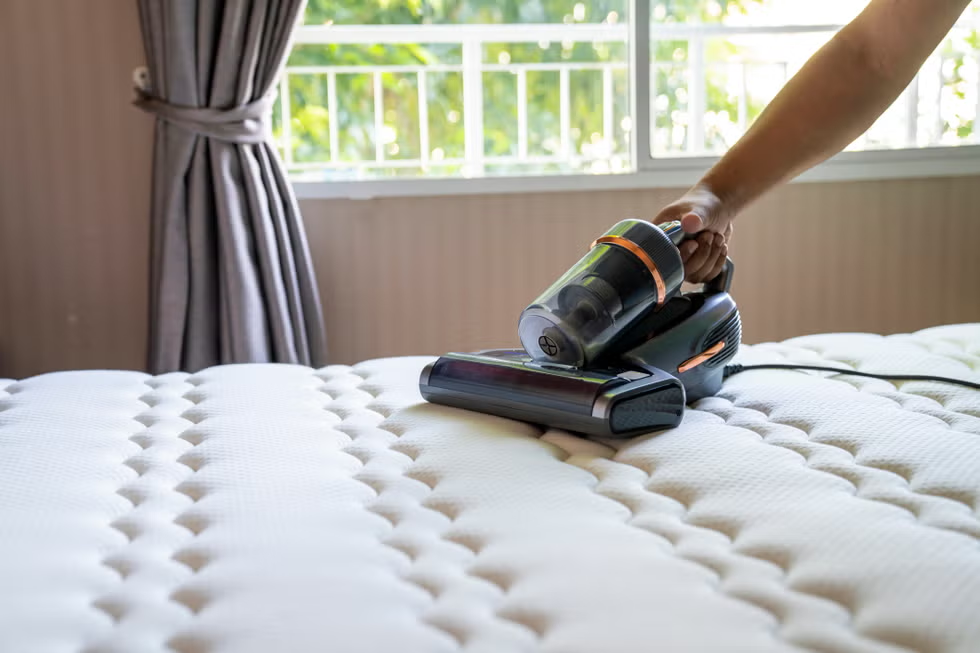
- Care instructions: Wash the cover in cold water on a gentle cycle, avoid bleach on waterproof fabrics, and air dry to prevent damage to elastic and PUL layers. For extra-deep mattresses or mattress toppers, a fitted cover with stretch elastic will proper fit for deep bedding and won’t shift during the night, even if you sleep with a weighted blanket or multiple toppers. Washing your cover regularly alongside your other bedding will keep bedding fresh longer and reduce dust and allergen buildup.
Frequently Asked Questions
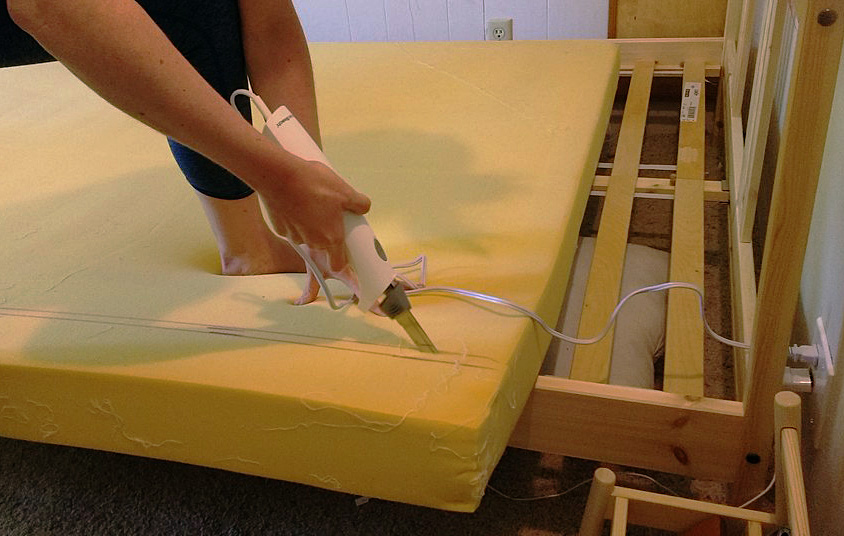 Custom covers let you match your bedroom decor exactly.
Source: sewingmachinesplus
Custom covers let you match your bedroom decor exactly.
Source: sewingmachinesplus
What fabric is best for a beginner sewing a mattress cover?
Medium-weight cotton or canvas is ideal for first-time projects: it’s stable, doesn’t slip while sewing, and is easy to work with. Avoid slippery fabrics like satin or stretchy minky until you have more experience sewing fitted pieces.
Do I need to pre-wash fabric before sewing?
Yes, for natural fabrics like cotton, linen, and bamboo. Pre-washing removes manufacturing sizing and pre-shrinks the fabric, so your cover won’t shrink 1/2 inch or more after your first wash. Synthetic fabrics like PUL or fleece do not need pre-washing.
Can I sew a waterproof mattress cover at home?
Absolutely. Use PUL fabric for the bottom panel, or add a separate waterproof liner inside the cover. Sew slowly with a walking foot to avoid slipping, and test a scrap of fabric first to adjust your stitch length. PUL is fully machine washable, so you can launder the cover as needed.
How long does it take to sew a mattress cover?
A basic fitted box-style cover takes 2–4 hours for beginners, including measuring, cutting, and sewing. Adding a zipper, waterproofing, or box corners adds 1–2 extra hours. Hand-sewing the entire cover takes 6–8 hours.
Should I use elastic or a zipper for my cover?
Use elastic for a snug fitted cover that stays in place on the mattress, ideal for daily use. Use a separating zipper if you want to remove the cover completely for washing, or if you need to protect the mattress from frequent spills or allergens. You can also combine both: elastic for fit, and a zipper for easy removal.
How do I prevent bulky corners?
Trim seam allowances to 1/4 inch at all corners, press the seams flat before turning the cover right side out, and use the box corner technique to reduce fabric buildup. Avoid sewing more than two layers of fabric in the same spot, as this creates bulk and uneven seams.
Can I make a mattress cover without a sewing machine?
Yes, you can hand-sew a fitted cover, but it will take 6–8 hours and the seams will be less durable than machine-sewn versions. Use a sturdy denim needle and thick polyester thread for hand sewing, and backstitch all seams for extra strength.
Conclusion
Sewing a custom mattress cover is a simple, rewarding DIY project that saves you money, gives you full control over fabric and fit, and extends the life of your mattress and toppers. Start with a basic fitted box-style cover using medium-weight cotton for your first project to build confidence, then add custom features like zippers, waterproofing, or box corners as you gain skill. Most beginners complete their first cover in a single weekend, and the skills you learn can be used to sew pillowcases, crib sheets, and other bedding accessories.
If you’re ready to start your project this weekend, pick a soft, breathable fabric for your first cover to avoid frustration with slippery or thick materials, and share your finished project in the comments below if you’d like feedback. For more DIY bedding and sleep care guides, browse our full library of tutorials to customize every part of your sleep setup.

Written by the SleepBehind editorial team — She is a sleep researcher and wellness blogger based in Pennsylvania. Passionate about helping people optimize their sleep.