
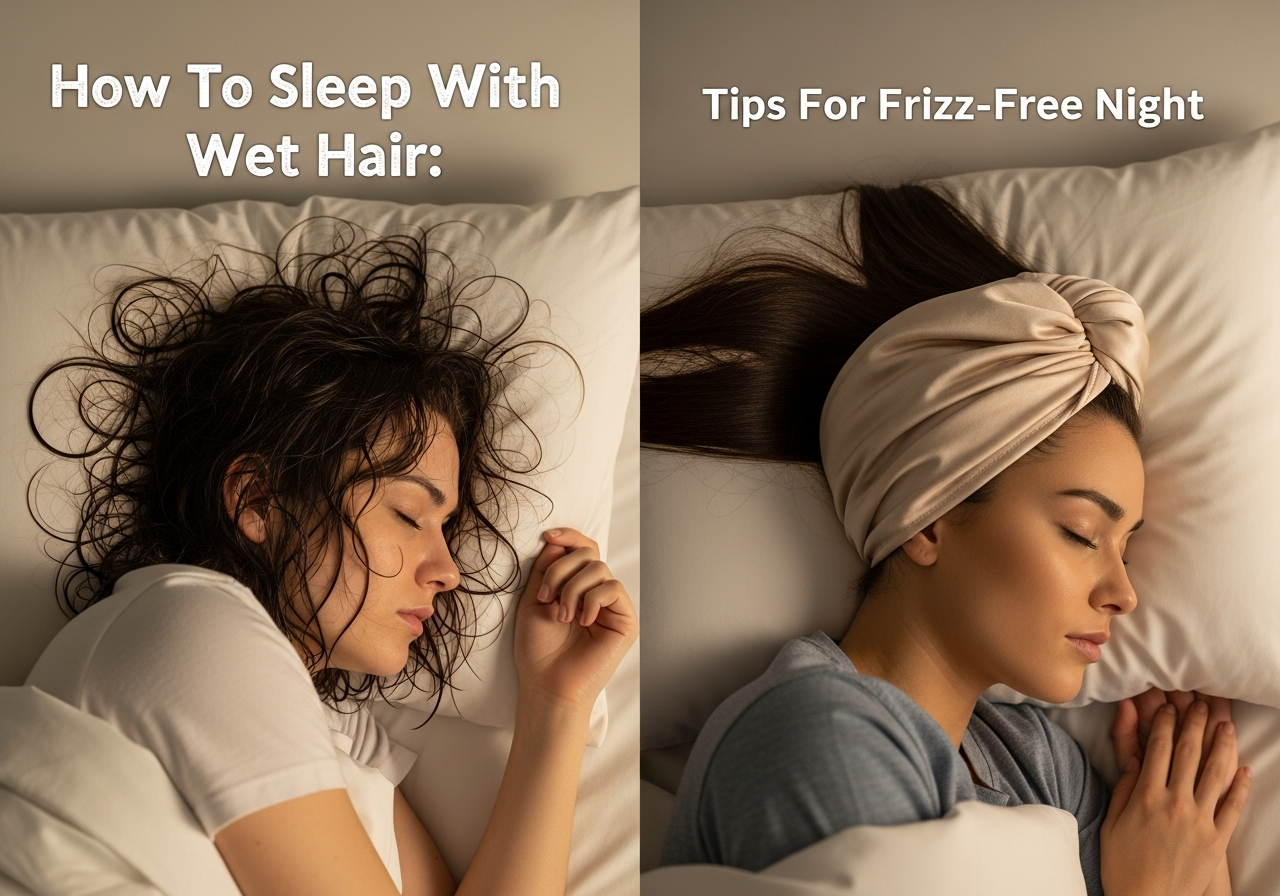
Waking up to frizzy, tangled hair after sleeping with wet hair is a universal frustration—especially when you washed your hair at night to save time in the morning or to create heat-free waves without damage. The good news is that sleeping with wet hair doesn’t have to mean broken strands, frizz, or an irritated scalp. With the right prep, protective styling, and low-friction tools, you can wake up with smooth, defined hair while avoiding long-term damage. This guide covers evidence-based tips, step-by-step routines, and hair-type specific advice to help you sleep with wet hair for a frizz-free night, every time.
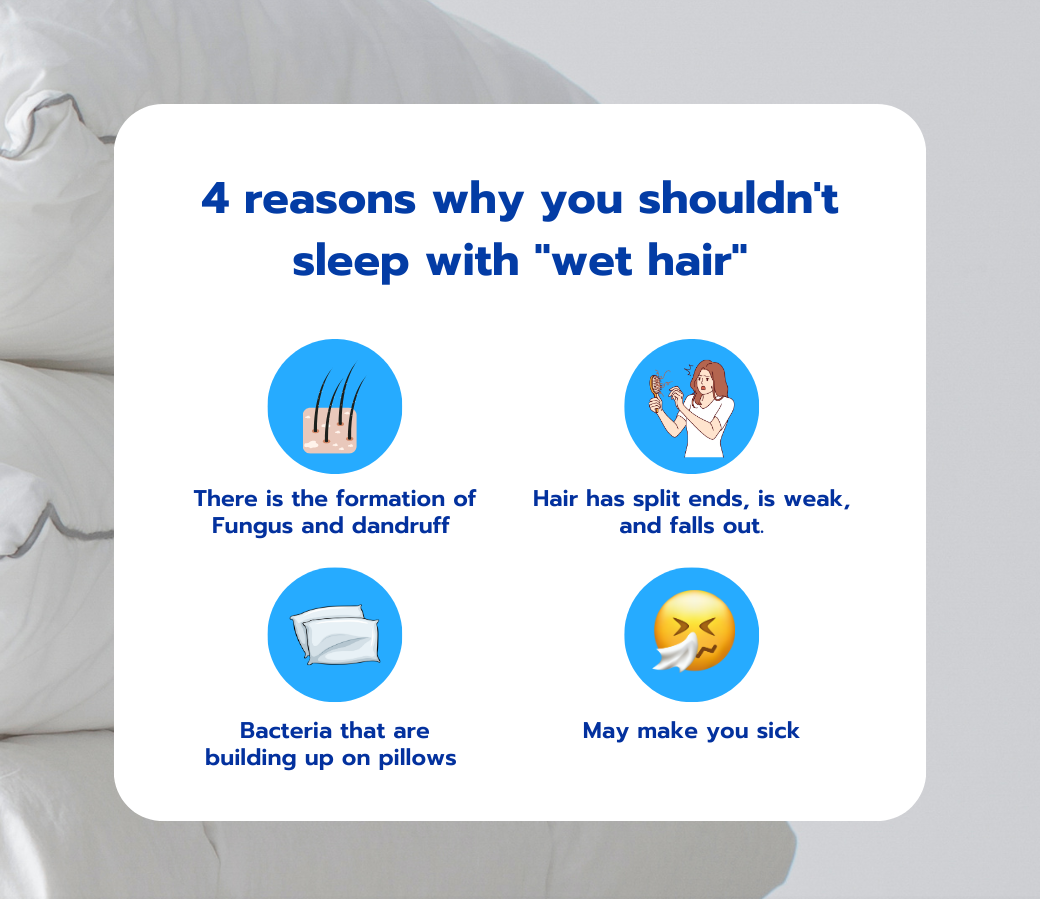
 Infographic from Reequil highlighting common risks of unprotected wet hair sleep
Is It Safe To Sleep With Wet Hair?
Many people worry that sleeping with wet hair will cause permanent damage, but the risk depends entirely on how you prepare your hair and protect it overnight. Wet hair is more fragile than dry hair: the outer cuticle layer lifts slightly when the hair cortex absorbs water, making the shaft more elastic but also weaker. According to the American Academy of Dermatology, wet hair breaks at 30% less force than dry hair, so friction from tossing and turning against a rough pillowcase or tight styling can cause breakage and split ends over time. You can also read our guide on sleep hygiene tips.
That said, short-term unprotected sleep (once or twice a month) won’t cause permanent harm for most people, and following the steps below makes nightly wet hair sleep low-risk for all hair types. For people with sensitive scalps or conditions like seborrheic dermatitis, consistently damp scalp overnight can create a moist environment that worsens irritation, so extra prep is recommended for this group.
Common Reasons People Sleep With Wet Hair
People choose to sleep with wet hair for a range of practical and stylistic reasons, all of which are valid if you follow safe practices:
- Time savings: Washing hair at night eliminates the morning rush to dry and style hair before work, school, or other commitments, which is a huge perk for busy professionals, parents, or anyone with a tight schedule.
- Heat-free styling: Damp hair sets into the shape you secure it in overnight, so you can create soft waves, defined curls, or smooth straight hair without using heat tools that cause long-term damage.
- Comfort: In warm, humid weather, blow drying hair can make you feel overheated, so sleeping with damp hair keeps your scalp cooler and more comfortable through the night.
- Versatility: For people with curly or coily hair that takes hours to air dry, sleeping with damp hair cuts down on total drying time while preserving your natural texture.
The main tradeoffs are risk of frizz, tangles, and breakage if you skip prep, and potential scalp discomfort if your hair is soaking wet when you go to bed. Knowing these tradeoffs helps you pick the right routine for your needs. You can also read our guide on fix sleep schedule.
 Screenshot from a hair care tutorial demonstrating gentle towel-drying techniques
Pre-Bed Prep Steps To Prevent Frizz And Damage
Good prep is the foundation of a frizz-free wet hair night. Follow these steps to minimize damage and lock in your desired style:
- Gently towel dry: Pat or squeeze excess water out of hair with a microfiber towel or soft cotton t-shirt, never rub with a rough terry cloth towel. Rubbing lifts the cuticle and causes frizz and breakage, while gentle patting absorbs water without friction.
- Apply a leave-in product: Choose a formula matched to your hair type: a lightweight, water-based leave-in for fine or straight hair, a moisturizing curl cream for wavy or curly hair, or a rich hair butter for coily or color-treated hair. Focus the product on your mid-lengths and ends, avoiding the scalp if you have oily roots.
- Detangle gently: Use a wide-tooth comb or detangling brush to work through knots, starting at the ends and working up to the roots in small sections. Never pull or yank at tangles, as wet hair breaks easily.
- Let hair air dry for 5-10 minutes: If your hair is dripping wet after washing, let it air dry for a few minutes before styling to reduce excess water that can soak into your pillowcase and make your scalp cold.
- Prep your sleep space: Make sure your pillowcase is silk or satin, or have a silk bonnet ready to put on after styling your hair. If you use a bamboo pillow, make sure it’s clean to avoid product buildup transferring to your hair; you can find a full guide to washing your bamboo pillow for proper care.
In practice, adding even 5 minutes of extra air drying time before bed cuts down on morning frizz by a noticeable amount for most people, and is one of the easiest changes to make to your routine.
Best Protective Styles For Frizz-Free Wet Hair Overnight
Protective styles keep your hair contained, reduce friction, and lock in the shape you want for morning styling. All styles should be secured loosely—never pull tight, as tension on wet hair causes breakage along the hairline over time. Here are the most effective options for all hair lengths and textures:
- Loose 3-strand braid: The most versatile option for all hair types. Divide hair into 3 equal sections, braid loosely, and secure with a silk scrunchie 2 inches from the ends to allow ends to move and dry evenly. In the morning, undo the braid for soft, beachy waves.
- Loose low bun: Ideal for straight or fine hair that wants volume. Gather hair at the nape of your neck, twist loosely, and secure with a silk tie, leaving 2-3 face-framing pieces out to avoid dents. This style keeps hair off your face and prevents flatness.
- Two-strand twists: Perfect for curly, coily, or kinky hair for maximum curl definition. Section hair into 4-8 equal sections, twist each section tightly from root to end, and secure with a small silk scrunchie. In the morning, undo twists for defined, frizz-free curls.
- Half-up space buns: Great for medium-length hair that you want to keep off your face while creating voluminous waves. Divide hair into two sections at the crown, twist each into a loose bun, and secure with silk ties. Undo in the morning for bouncy, face-framing waves.
If you have a silk pillowcase like the Blissy, you can skip the bonnet entirely and lay your styled hair directly on the pillowcase for zero friction. For more tips on sleeping on a Blissy pillow with wet hair, check out our dedicated guide. A common mistake I see new clients make is using tight elastic bands to secure styles, which causes breakage and headaches overnight—opt for soft silk scrunchies instead, which don’t dig into hair or scalp. You can also read our guide on how to clean mattress topper foam.
 Visual guide to low-tension protective styles for overnight wear
Step-By-Step Overnight Routine For Wet Hair
Follow this simple routine for consistent, frizz-free results every time you sleep with wet hair:
Pre-Bed Steps
- Wash or dampen your hair as desired, then pat dry with a microfiber towel until hair is damp, not dripping.
- Apply your chosen leave-in product to mid-lengths and ends, avoiding the scalp if you have oily roots.
- Detangle gently with a wide-tooth comb, starting at the ends and working up to the roots.
- Choose your protective style and secure it loosely with a silk scrunchie or tie.
- If you don’t have a silk pillowcase, put on a loose silk bonnet to keep hair contained and off cotton bedding.
- Sleep on your back or side, avoiding stomach sleeping which presses hair against the pillow and causes tangles.
Morning Steps
- Undo your style gently with your fingers first, then use a wide-tooth comb only if needed to remove tangles.
- Spritz frizzy sections with a 1:1 mix of water and leave-in conditioner, then scrunch with your hands to redefine waves or curls.
- Apply a tiny amount of hair oil or serum to the ends to tame flyaways and add shine.
- For flat roots, use a blow dryer on the cool setting to lift roots at the hairline, or apply a light volumizing dry shampoo.
If you wear a gel cast for your wavy hair and don’t want to wear a bonnet overnight, we have a full guide to sleeping with wavy hair in a gel cast without a bonnet to help you preserve your style without frizz.
 Step-by-step checklist for a frizz-free wet hair night routine
Hair-Type Specific Tips For Zero Frizz
Every hair type has unique needs when sleeping with wet hair. Use these tailored tips to get the best results for your texture:
- Fine/straight hair: Use a lightweight, water-based leave-in to avoid weighing roots down. A loose low bun will give you volume in the morning without flatness. Skip heavy oils or butters, as they will make hair greasy by morning.
- Wavy hair: Use a curl-enhancing leave-in or light gel to define waves before braiding or twisting. Sleep on a silk pillowcase to preserve your wave pattern, and scrunch with a tiny bit of gel in the morning to refresh.
- Curly/coily/kinky hair: Use a thick, moisturizing leave-in cream or hair butter on ends to prevent overnight dryness. Two-strand twists or loose Bantu knots give the best curl definition. If you have a sensitive scalp, wrap hair in a loose silk scarf first to avoid irritation from dampness.
- Thick/long hair: Section hair into 2-4 loose braids to ensure even drying and prevent tangling. Use a rich hair mask once a week to strengthen the hair cuticle and reduce breakage risk. Prop your head up slightly with an extra pillow to help hair dry faster overnight.
- Color-treated/high-porosity hair: Use a protein-infused leave-in to strengthen the hair cuticle, which is more porous after coloring. Avoid tight styles that can cause color to rub off on pillowcases.
- Low-porosity hair: Use a lightweight, water-based product that won’t sit on the hair shaft and cause buildup overnight. Braiding helps products absorb evenly into the hair cuticle.
Adapting your routine to your hair type is one of the easiest ways to cut down on frizz and damage, and I’ve seen clients with 4c hair go from waking up with matted tangles to defined, moisturized curls just by switching to two-strand twists and a silk pillowcase. You can also read our guide on morning habits for good sleep.
 Breakdown of tailored care tips for different hair textures
Essential Tools To Protect Wet Hair Overnight
The right tools make all the difference in preventing frizz and breakage. Here’s what to look for:
- Microfiber towel or soft cotton t-shirt: Absorbs excess water without friction, unlike rough terry cloth towels that lift the cuticle and cause frizz. Avoid rubbing hair with these towels—pat or squeeze instead.
- Wide-tooth comb or detangling brush: Detangles wet hair without pulling, which is critical because wet hair breaks much more easily than dry hair. Look for a brush with flexible bristles for thick or curly hair.
- Silk or satin pillowcase/bonnet: Reduces friction by up to 70% compared to cotton pillowcases, which prevents cuticle damage and frizz. 100% mulberry silk is the smoothest, most durable option, though satin blends work well for budget buyers.
- Silk scrunchies or ties: Secure protective styles without pulling, unlike elastic bands that dig into hair and cause breakage. Avoid metal clips, as they can snag wet hair.
- Leave-in conditioner or light styling product: Choose a formula matched to your hair type: water-based for fine hair, moisturizing cream for curly hair, smoothing serum for straight hair. Avoid products with high alcohol content, as they will dry out hair overnight.
If you don’t have a silk pillowcase, an old cotton t-shirt wrapped around your hair as a makeshift bonnet works in a pinch, though it’s less effective at reducing friction.
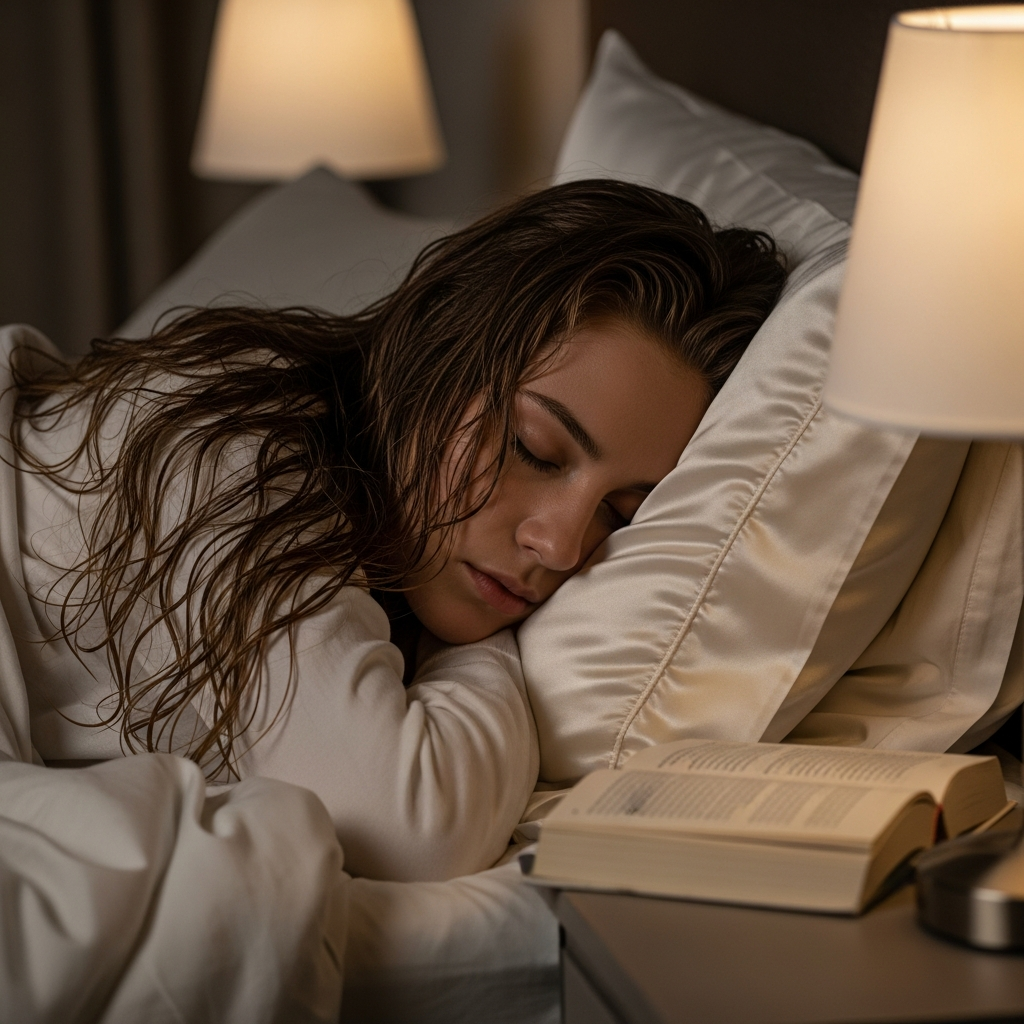 Example of a safe, low-friction wet hair sleep setup
 Moisturizing overnight hair mask application for wet hair
Common Mistakes That Cause Frizz And Damage
Even small missteps can lead to big hair damage when sleeping with wet hair. Avoid these common mistakes:
- Sleeping with hair soaking wet: Excess water soaks into your pillowcase, making your scalp cold and increasing the risk of fungal growth, and the weight of wet hair can pull at roots and cause breakage. Fix: Pat hair until it’s damp, not dripping, before bed.
- Using tight elastics or clips: Tight styles pull on wet hair, which is more elastic and prone to breakage, leading to split ends and hair loss over time. Fix: Use loose silk scrunchies and secure styles 2-3 inches away from your roots.
- Rough towel-drying: Rubbing hair with a terry cloth towel lifts the cuticle, causing frizz and breakage that takes weeks to reverse. Fix: Pat or squeeze hair with a microfiber towel or soft t-shirt to remove excess water.
- Skipping leave-in product: Wet hair is more porous, so skipping leave-in conditioner leaves the cuticle open, leading to frizz and split ends. Fix: Apply a small amount of leave-in to mid-lengths and ends before styling.
- Sleeping on a cotton pillowcase: Cotton creates friction against wet hair, lifting the cuticle and causing tangles and frizz. Fix: Use a silk or satin pillowcase, or wear a silk bonnet.
- Sleeping with hair loose: Loose wet hair tangles as you move in your sleep, leading to breakage and unmanageable frizz in the morning. Fix: Always use a loose protective style.
- Using heat tools right before bed: Blow drying or straightening wet hair right before bed can cause heat damage if you don’t let it cool completely, and residual heat can dry out your scalp. Fix: If you use heat, let hair cool completely before bed, or air dry until damp.
The Science Behind Wet Hair Overnight Damage
Understanding why wet hair is more vulnerable helps you make informed choices about your routine. The outer layer of your hair, called the cuticle, is made of overlapping scales that lie flat when hair is dry, giving it shine and protecting the inner cortex. When hair gets wet, the cortex absorbs water and swells, pushing the cuticle scales up slightly. This makes the hair shaft more elastic—it can stretch up to 30% more when wet—but also weaker: wet hair breaks at 30% less force than dry hair, per the American Academy of Dermatology.
When you toss and turn in your sleep, friction between wet hair and your pillowcase pulls at the lifted cuticle, causing it to break off, leading to frizz, split ends, and breakage over time. Sleeping with damp hair for 6-8 hours doesn’t cause permanent damage if you follow the prep steps above, but consistently skipping protection will lead to long-term hair wear. For a full breakdown of low-risk wet hair habits, check out our guide to the healthiest way to sleep with wet hair. Additionally, a damp scalp overnight creates a warm, moist environment that may exacerbate scalp conditions like dandruff or fungal infections for people prone to them, so if you have a sensitive scalp, let hair air dry until barely damp before bed, and consider wrapping it in a loose silk scarf to keep the scalp dry.
 Visual explanation of how water affects hair cuticle integrity
Troubleshooting: How To Fix Morning Frizz And Tangles
Even with the best prep, you might wake up with minor frizz or tangles if you moved a lot in your sleep or forgot a step. These quick fixes will salvage your hair in 5 minutes or less:
- Minor frizz: Spritz a small amount of water mixed with leave-in conditioner (1:1 ratio) on frizzy sections, then scrunch with your hands to redefine waves or curls. Avoid brushing, as this will cause more frizz.
- Tangled hair: Start at the ends and gently work a wide-tooth comb or detangling brush up to the roots, applying a tiny bit of hair oil or serum to stubborn knots to loosen them. Never pull at tangles, as this will cause breakage.
- Flat roots: Use a blow dryer on the cool setting to lift roots at the hairline, or apply a light volumizing dry shampoo to add body without weighing hair down.
- Damp scalp: Blot the scalp with a dry microfiber towel, then apply a light dry shampoo to absorb excess moisture and prevent irritation.
If you consistently wake up with frizz even after following prep steps, try letting your hair air dry for 10-15 minutes longer before bed, or use a stronger hold styling product to lock in your style overnight.
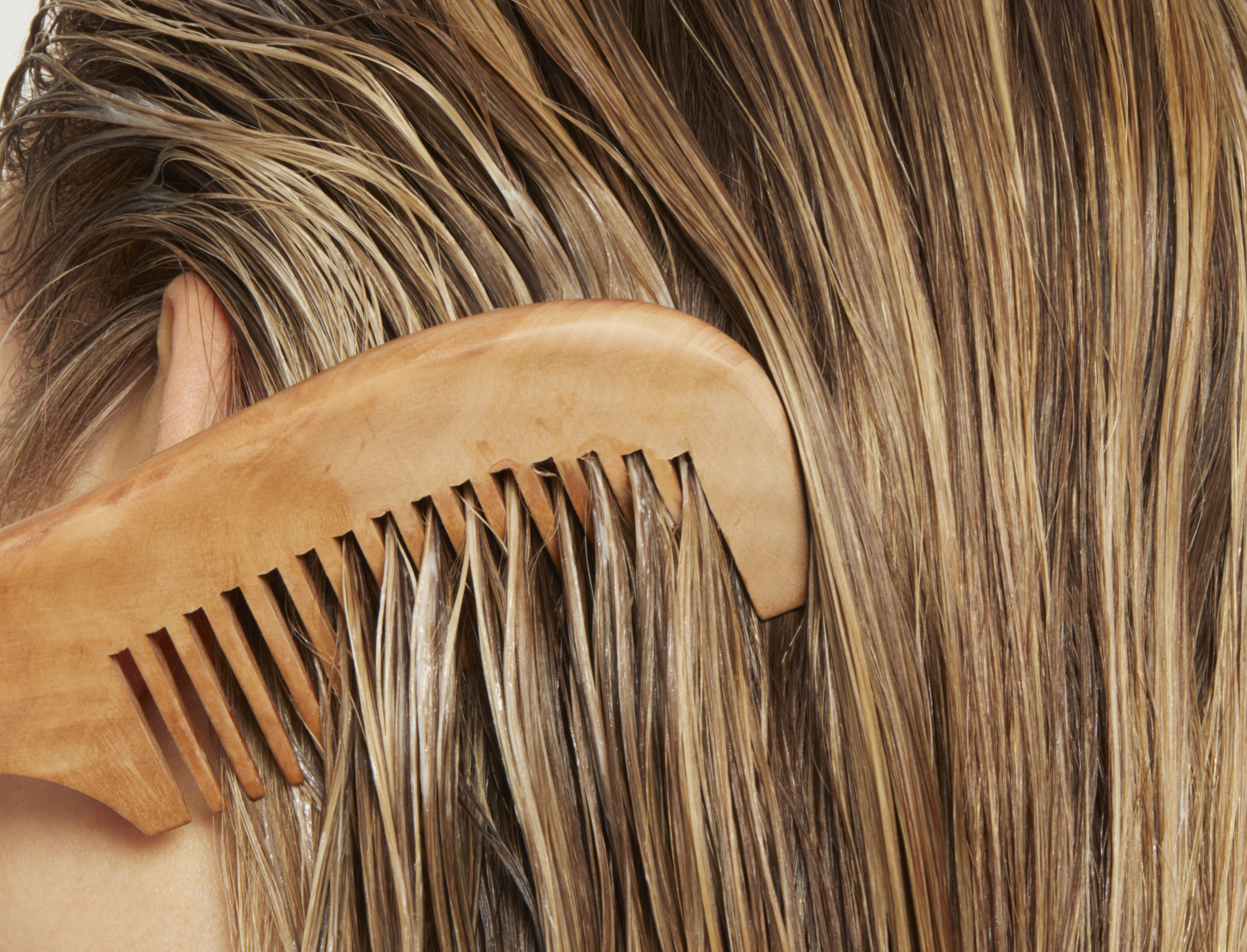 Example of a pre-bed scalp treatment for sensitive skin
Frequently Asked Questions
Is it bad to sleep with wet hair every night?
Sleeping with wet hair every night is not inherently bad, as long as you follow proper prep steps: gently towel dry, use a protective style, and sleep on a silk pillowcase. Consistently skipping these steps can lead to increased breakage, frizz, and split ends over time, but with proper care, it’s safe for most hair types.
Will sleeping with wet hair cause hair loss?
No, sleeping with wet hair does not directly cause hair loss. However, tight protective styles or rough handling of wet hair can cause traction alopecia over time, so always secure styles loosely and detangle gently. If you notice excessive shedding, it’s likely related to other factors like diet, stress, or genetics, not sleeping with wet hair.
Can I sleep with wet hair if I have a sensitive scalp?
Yes, but it’s best to let your hair air dry until it’s barely damp (not soaking wet) before bed if you have a sensitive scalp or conditions like seborrheic dermatitis. Dampness can create a moist environment that exacerbates scalp irritation, so you may also want to wrap your hair in a loose silk scarf to keep the scalp dry.
How long does it take for wet hair to dry overnight?
For most people, damp hair (not dripping) will dry fully in 6-8 hours of sleep, depending on hair thickness, length, and bedroom humidity. Thick, long, or coily hair may take longer, so you can prop your head up slightly with an extra pillow to help it dry faster.
Do I need a silk pillowcase if I sleep with wet hair?
A silk pillowcase is highly recommended, as it reduces friction by up to 70% compared to cotton, which prevents cuticle damage and frizz. If you don’t have one, a loose silk bonnet works as a good alternative to keep hair contained and off of cotton pillowcases.
Can I use a hair mask overnight if my hair is wet?
Yes, applying a deep conditioning hair mask to wet hair before bed and securing it in a loose bun or braid with a silk scrunchie is a great way to boost moisture. Just make sure the mask is formulated for overnight use, and wash it out in the morning to avoid buildup. For product recommendations and tips for repairing dry, damaged hair from unprotected wet sleep, check out our guide to reviving dry hair after sleeping with wet hair.
Will sleeping with wet hair make my hair straight?
Sleeping with wet hair alone won’t permanently straighten your hair, but loose styles like a low bun or braid can temporarily reduce wave or curl pattern while the hair dries. If you want to maintain your natural curl pattern, opt for twists or braids that match your hair's texture, and avoid pressing hair flat against the pillow. For more tips on maintaining straight hair overnight, check out our guide to sleep positions that keep hair straight.
What is the best hairstyle to sleep in with wet hair?
The best hairstyle depends on your hair type and desired morning result: loose braids for soft waves, two-strand twists for curly hair, and low buns for straight hair that wants volume. For more style ideas, check out our guide to the best hairstyles for wet hair sleep.
Conclusion
Sleeping with wet hair doesn’t have to mean frizzy, damaged hair in the morning. By following the simple prep steps, choosing a low-tension protective style, and using the right low-friction tools, you can wake up with smooth, defined hair while saving time on your morning routine. If you’re new to this routine, start with one small change at a time—swap your cotton pillowcase for silk first, then add a loose braid, and build from there. For more hair and sleep tips to optimize your entire bedtime routine, browse our full library of guides covering everything from mattress care to heat-free styling hacks.
Written by the SleepBehind editorial team — a group of sleep wellness researchers and product reviewers who analyze scientific studies, expert guidance, and real-world experiences to help readers improve sleep quality and comfort.