Clean a mattress protector by machine washing on gentle cycle and air drying.
I have cleaned dozens of mattress protectors in my work and at home. I will show clear, simple steps for how to clean a mattress protector safely and well. I combine hands-on experience with best practices so you can protect your mattress and extend the life of your protector. Read on for step-by-step guidance, stain fixes, drying tips, and mistakes to avoid.
:max_bytes(150000):strip_icc()/how-to-wash-mattress-protector-5220415-01-695e0b05a7464531a0a5a8e58a9b55a9.jpg)
Why clean a mattress protector
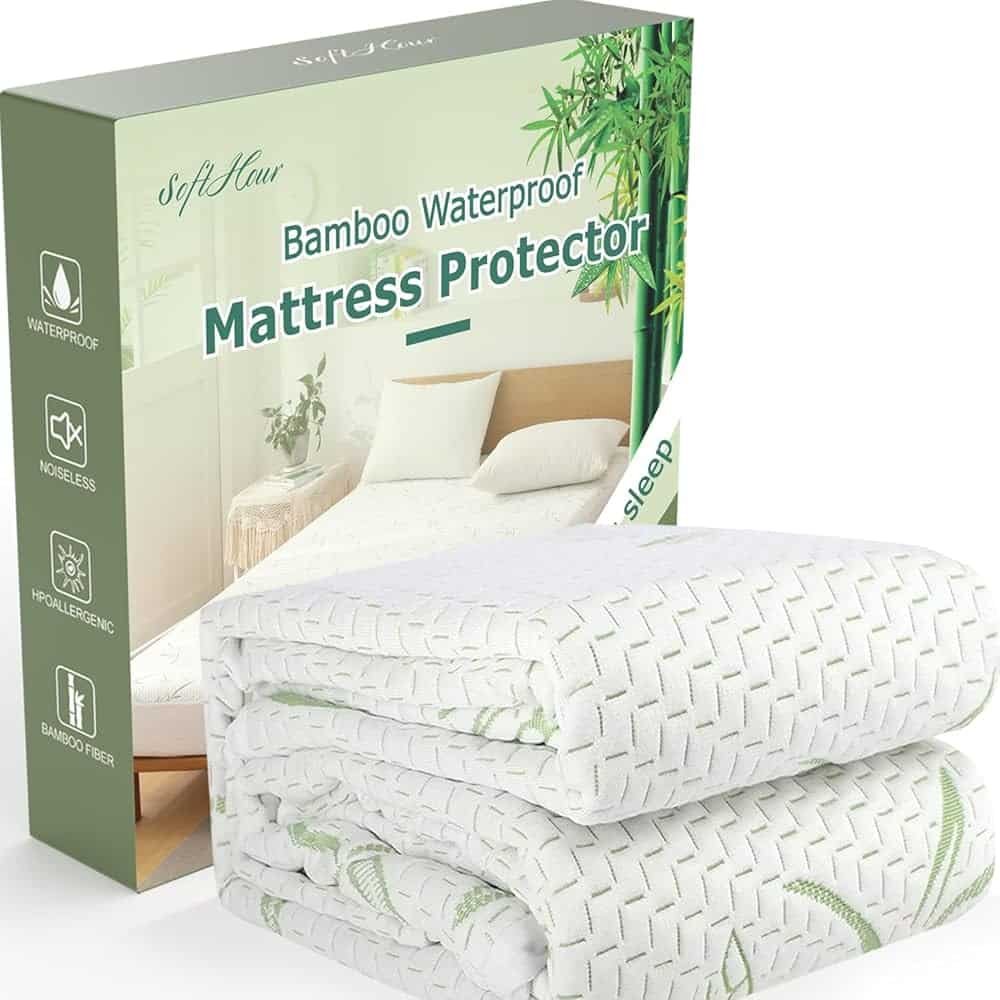
A clean mattress protector keeps your bed fresh and reduces allergens. It stops sweat, spills, dust mites, and pet hair from reaching your mattress. Cleaning also prevents odors and extends the life of both the protector and the mattress beneath.
I have seen protectors look and feel like new after one proper wash. Regular care saves money and improves sleep quality. Learning how to clean a mattress protector is quick and often easy.
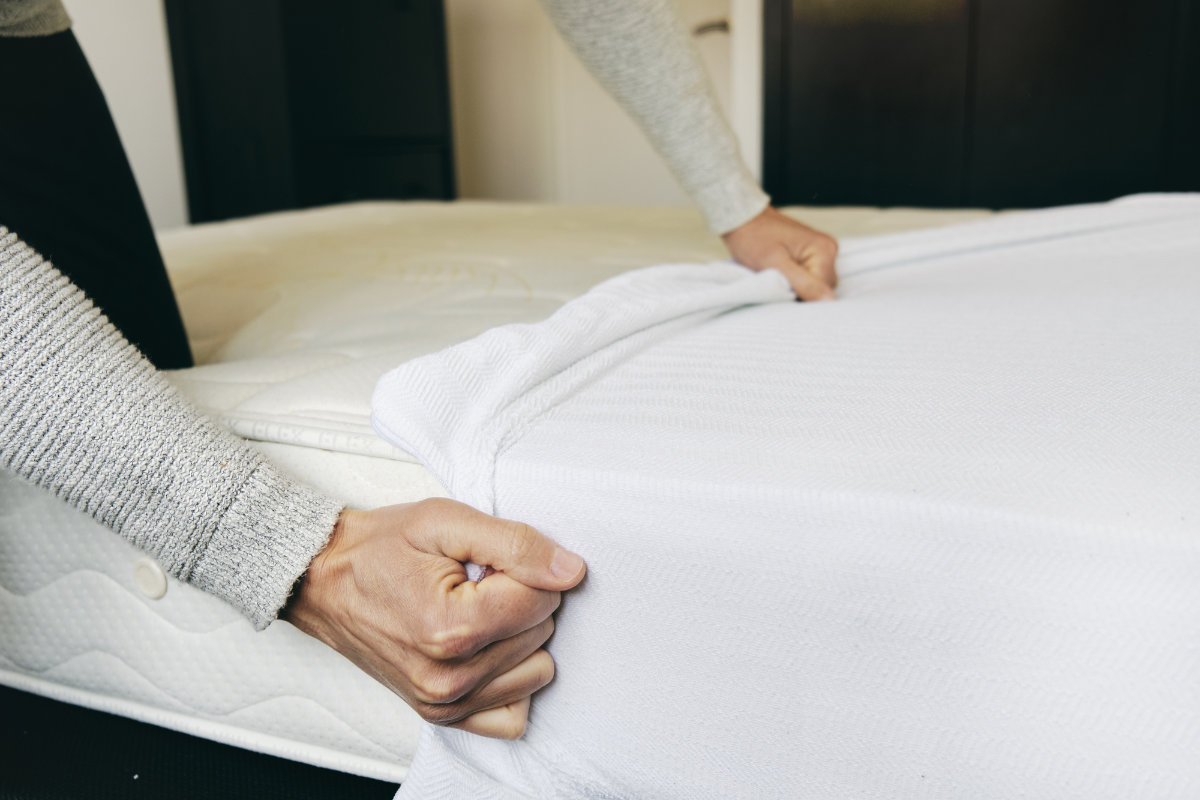
Types of mattress protectors and how they affect cleaning
Different materials need different care. Knowing the type helps you choose the right wash method.
- Cotton protectors often tolerate machine washing on warm water and a gentle cycle. Check the tag first.
- Polyester and blend protectors usually wash on cool or warm with gentle detergent.
- Waterproof protectors have a thin membrane. Many are machine washable but need gentler cycles and air drying.
- Fitted, zippered, or encasement-style protectors may require removal of bed hardware or special care. Remove zippers and close them before washing.
I once ruined a waterproof protector by using hot water and a heavy cycle. The membrane puckered and became noisy. That taught me to always read labels and choose gentle settings.
/how-to-wash-mattress-protector-5220415-05-4aed9eee4652482ea04bfc8fb40bf7a6.jpg)
Step-by-step: how to clean a mattress protector
Follow these steps to clean a mattress protector safely and effectively.
-
Inspect the care label.
Read the tag for temperature limits and machine-wash guidance. The label tells you if the protector is machine washable or hand only. -
Shake and spot treat first.
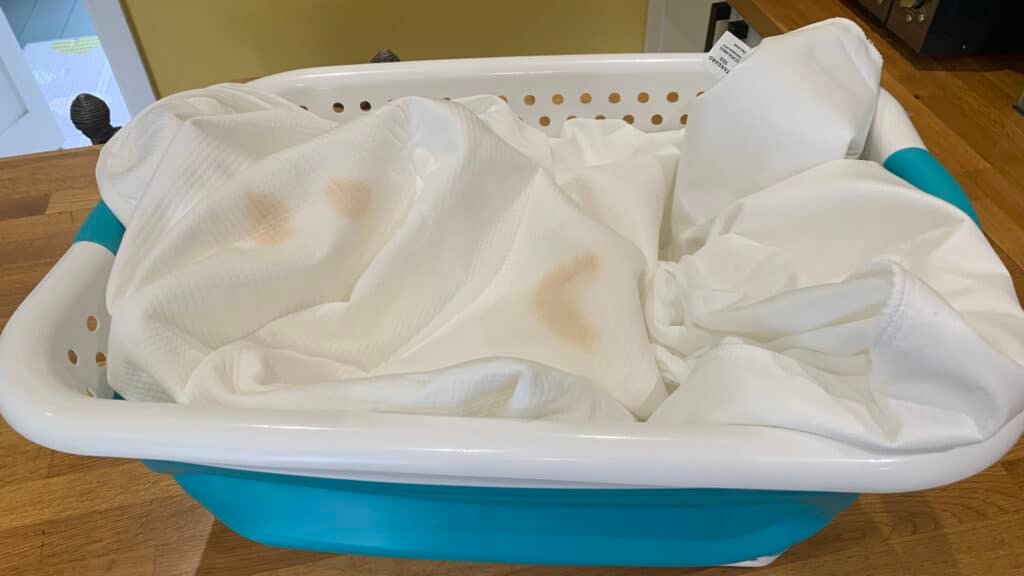
Shake out crumbs and hair outside. For stains, mix mild detergent with water and blot gently. Use a soft brush only if needed. -
Pre-treat tough stains.
For urine or sweat, use an enzyme cleaner or a mix of baking soda and water. Apply gently, wait 10 minutes, then blot. -
Choose the right detergent.
Use mild, fragrance-free detergent. Avoid bleach and fabric softener unless the label allows it. Fabric softener can clog waterproof membranes. -
Machine wash on gentle.
Wash on a gentle or delicate cycle with cool or warm water. Wash a protector alone or with a few towels to balance the load. This is the core step for how to clean a mattress protector in a machine. -
Rinse twice if needed.
Run an extra rinse to remove all soap. Leftover soap can irritate skin and trap odors. -
Dry carefully.
Air dry flat or hang to dry when possible. If using a dryer, select low heat or tumble no heat. High heat can ruin waterproof layers. -
Finish and inspect.
Smell and feel the protector after drying. If it still smells, repeat a gentle wash. Replace if damage or persistent odors remain.
I learned the rinse-twice trick after guests complained about detergent smell. It works. These steps cover how to clean a mattress protector for most homes.
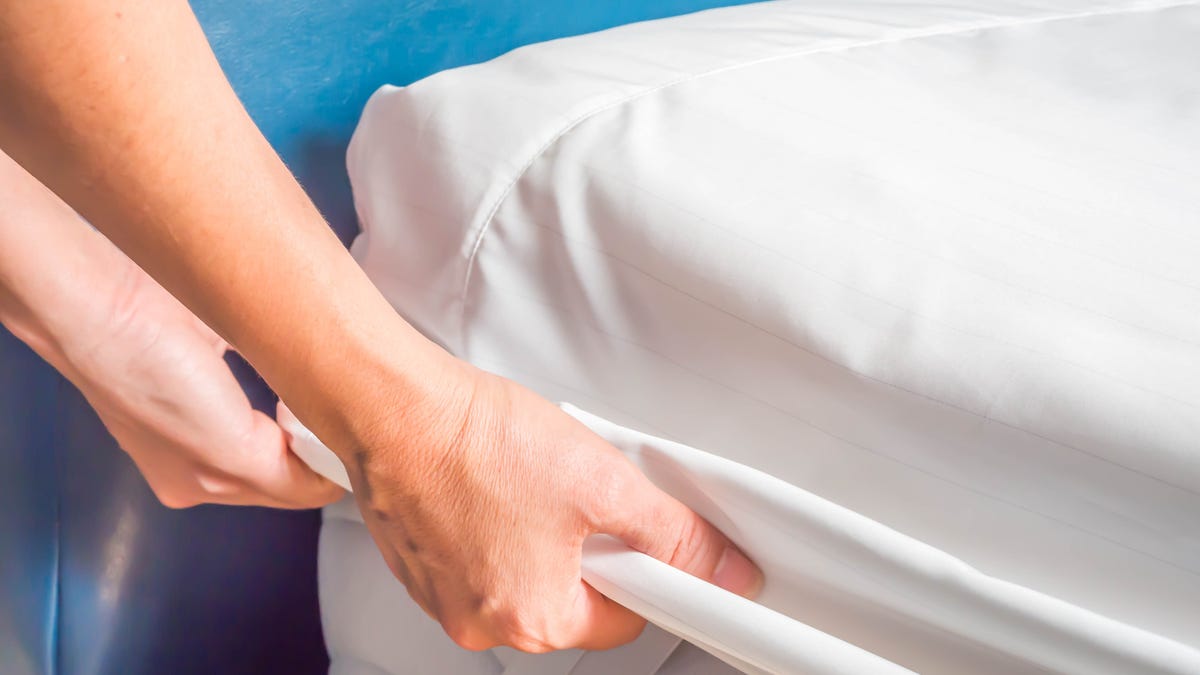
Machine washing versus hand washing
Choose the method that best fits your protector and home setup.
- Machine washing is quick and thorough for many fabric and waterproof protectors. Use gentle settings.
- Hand washing is safer for delicate protectors or those with handmade elements. Soak in mild detergent, rinse well, and air dry.
- When in doubt, hand wash. It is less likely to damage membranes or seams.
I hand washed a delicate organic cotton protector once. It kept the fabric soft and the shape intact. That taught me to use gentle care when the label is unclear.

Drying and long-term care
Drying matters as much as washing for how to clean a mattress protector.
- Air dry to preserve waterproof membranes. Hang or lay flat out of direct sunlight.
- Use low heat if using a dryer and only when the label allows. High heat melts membranes.
- Store clean, dry protectors in a breathable bag. Avoid plastic for long storage.
Rotate and wash every few months for regular use. If you have pets, allergies, or spills, wash more often. Regular care keeps protectors working well.
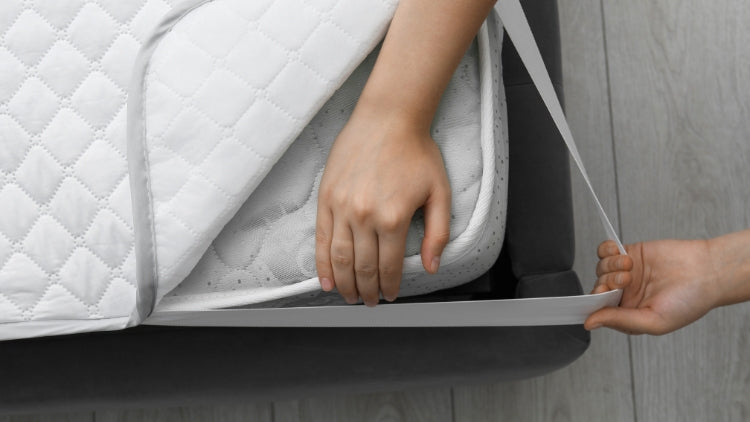
Common mistakes to avoid
Avoid these errors when you clean a mattress protector.
- Using bleach on waterproof protectors. It can damage membranes and fabric.
- Using fabric softener. It can block breathability and reduce waterproof performance.
- Drying on high heat. This shrinks and warps membranes and elastic.
- Skipping the care label. The label is your guide to safe cleaning.
- Washing too infrequently. Long gaps let stains set and odors build.
I once used fabric softener to make a protector feel softer. It lost its waterproofing and had to be replaced. That cost more than simple care would have.
How often to clean and when to replace
Frequency depends on use and risk factors.
- Wash every 1 to 3 months for regular use. This keeps dust and sweat at bay.
- Wash monthly if you have pets, allergies, or sweat heavily. More dirt needs more cleaning.
- Spot clean spills right away. Immediate action stops stains.
- Replace if the protector has tears, holes, or persistent odors after cleaning.
A protector can last several years with care. I replace mine every 2 to 4 years depending on wear. Clean care extends useful life and protects your mattress investment.

Frequently Asked Questions of how to clean a mattress protector
Can I wash a waterproof mattress protector in the washing machine?
Yes. Most waterproof protectors are machine washable on a gentle cycle with cool or warm water. Use mild detergent and skip fabric softener and bleach.
Will hot water damage a mattress protector?
Hot water can damage waterproof membranes and elastic. Use cool or warm water unless the care label specifically allows hot water.
How do I remove urine stains from a mattress protector?
Pre-treat with an enzyme cleaner or a baking soda paste, let it sit, then blot and wash on a gentle cycle. Rinse well and air dry for best odor removal.
Can I tumble dry a mattress protector?
Some protectors can be tumble dried on low heat. Check the label first. Air drying is safer for waterproof membranes.
How often should I wash a mattress protector if I have allergies?
Wash every 1 to 2 months to reduce dust mites and allergens, and wash more often during allergy season. Use hot water only if the protector label allows it.
Is it okay to iron a mattress protector?
Most protectors do not need ironing and heat can damage waterproof layers. Avoid ironing unless the care label explicitly permits it.
Conclusion
You can keep your bed cleaner and healthier by learning how to clean a mattress protector properly. Read the care label, pre-treat stains, wash on gentle cycles with mild detergent, and air dry when possible. Small steps prevent damage and extend life. Try a fresh wash this week, and share your tips or questions in the comments — I’d love to hear your experience.

Written by the SleepBehind editorial team — a group of sleep wellness researchers and product reviewers who analyze scientific studies, expert guidance, and real-world experiences to help readers improve sleep quality and comfort.