It’s 2 a.m. You’re staring at the ceiling, replaying that awkward work meeting from 8 hours ago, or worrying about tomorrow’s deadline, unable to turn off your racing mind. If this sounds familiar, you’ve experienced one of the most common, yet widely misunderstood, side effects of stress: destroyed sleep. But stress doesn’t just keep you awake lying in bed. It actively rewires your brain, disrupts your hormones, and fragments your sleep cycles in ways you may not even notice, leaving you tired even after 8 hours in bed. Below, we break down the simple, science-backed mechanisms behind this process, plus the little-known "shocking truths" about how stress erodes your rest, and actionable, evidence-based steps to break the cycle.
 Many people experience sleeplessness from stress, but the biological causes go far beyond racing thoughts.
Credit: www.amazon.com
Many people experience sleeplessness from stress, but the biological causes go far beyond racing thoughts.
Credit: www.amazon.com
The Biological Chain Reaction: How Stress Hijacks Your Brain for Alertness
Stress triggers a cascade of biological changes that flip your body’s natural "rest" switch to "alert" mode, even when you’re safe in bed. Understanding this chain reaction is the first step to undoing its damage. You can also read our guide on fix sleep schedule.
HPA Axis, Amygdala, and Hippocampus: Your Brain’s Stress Alarm System
Think of the hypothalamic-pituitary-adrenal (HPA) axis as your body’s internal alarm system. When you encounter a stressor (a looming deadline, a fight with a loved one, even a stressful news segment), your hypothalamus sends a signal to your pituitary gland, which then tells your adrenal glands to release cortisol and adrenaline – the primary stress hormones. In short bursts, this system is lifesaving: it gives you the focus and energy to handle a threat. But when stress is chronic, or you’re stressed right before bed, this alarm system stays flipped on when it should be off.
At the same time, your amygdala – the brain’s fear and threat detection center – goes into overdrive, making you hyper-aware of potential dangers (even small, low-stakes ones). Meanwhile, chronic cortisol exposure can shrink the hippocampus, the part of your brain responsible for regulating emotions and memory, making it even harder to calm your thoughts at night. This combination leaves your brain stuck in survival mode even when you’re safe in bed. You can also read our guide on sleeping with pain guide.
| Brain Area | Normal Role | Effect of Stress |
|---|---|---|
| HPA Axis | Controls stress hormone release | Stays activated, elevates cortisol at night |
| Amygdala | Processes fear and threat detection | Becomes overactive, heightens worry and alertness |
| Hippocampus | Regulates emotions and memory | Reduced function, makes it harder to calm racing thoughts |
In practice, most people with stress-related sleep disruption report that they don’t feel actively anxious right before bed – they’re just unable to quiet their thoughts, not realizing their body is still in fight-or-flight mode from stress earlier in the day. A common mistake is trying to "force" yourself to relax the second your head hits the pillow, but your brain’s alarm system can stay activated for 1-2 hours after a stressful event ends.
How Stress Rewires Your Sleep Cycles (It’s Not Just "Lying Awake")
A full night of rest cycles through 4 distinct stages: light sleep (transition), deep slow-wave sleep (physical and mental repair), and REM sleep (memory consolidation and emotional processing). Stress doesn’t just delay the time it takes you to fall asleep – it actively sabotages each of these critical stages, leaving you with low-quality rest even if you sleep for 7-9 hours. You can also read our guide on effects of poor sleep.
Clinical research consistently shows that stress reduces time spent in deep slow-wave sleep by 15-30%, and cuts REM sleep duration by 20% per night. This leads to:
- 2-3x longer sleep onset latency (time to fall asleep)
- 3-4x more nighttime awakenings
- Waking up feeling unrefreshed, even after a full night in bed
The most shocking truth most people don’t realize: if you’re spending less time in deep and REM sleep, you’re getting the same restorative benefit as if you only slept 4-5 hours, even if you’re in bed for 8. This chronic sleep loss isn’t just annoying – it leads to the same wider health impacts of fragmented rest as consistent sleep deprivation, including impaired cognitive function and weakened immunity.
| Sleep Stage | Normal Function | Effect of Stress |
|---|---|---|
| Light Sleep | Transition to deeper rest | More frequent awakenings, less stable sleep |
| Deep Slow-Wave Sleep | Physical repair, immune function, memory consolidation | Reduced duration, less restorative benefit |
| REM Sleep | Emotional processing, memory consolidation | Shortened and fragmented, leading to mood instability |
 This infographic breaks down how stress disrupts each core stage of the sleep cycle.
Credit: spice.alibaba.com
This infographic breaks down how stress disrupts each core stage of the sleep cycle.
Credit: spice.alibaba.com
The Cortisol-Melatonin Tug-of-War That Steals Your Sleep
Cortisol, your primary stress hormone, and melatonin, your sleep hormone, are supposed to work in sync like a well-rehearsed dance. Cortisol peaks around 8 a.m. to help you wake up alert, then gradually drops throughout the day, hitting its lowest point around 10 p.m. to signal your body it’s time to sleep. Melatonin does the opposite: it starts rising after sunset, peaks around 2 a.m., and drops again before morning. You can also read our guide on sleep anxiety.
When you’re stressed, cortisol spikes at the wrong times – especially in the evening, right when it should be dropping. This elevated evening cortisol effectively blocks your body’s natural sleep signal, suppressing melatonin production and making you feel wide awake even when you’re exhausted. Another underdiscussed fact: even low-level, chronic stress (like constant work deadlines or caregiving responsibilities you’ve normalized) can keep cortisol elevated in the evening, even if you don’t feel "stressed" right before bed. Many people write off their constant tiredness as "just how I am" when it’s actually caused by background stress they’ve learned to ignore.
| Hormone | Normal Nighttime Level | Effect of Stress |
|---|---|---|
| Melatonin | High, peaks during sleep | Lowered due to cortisol suppression |
| Cortisol | Very low | Elevated, blocks sleep signals |
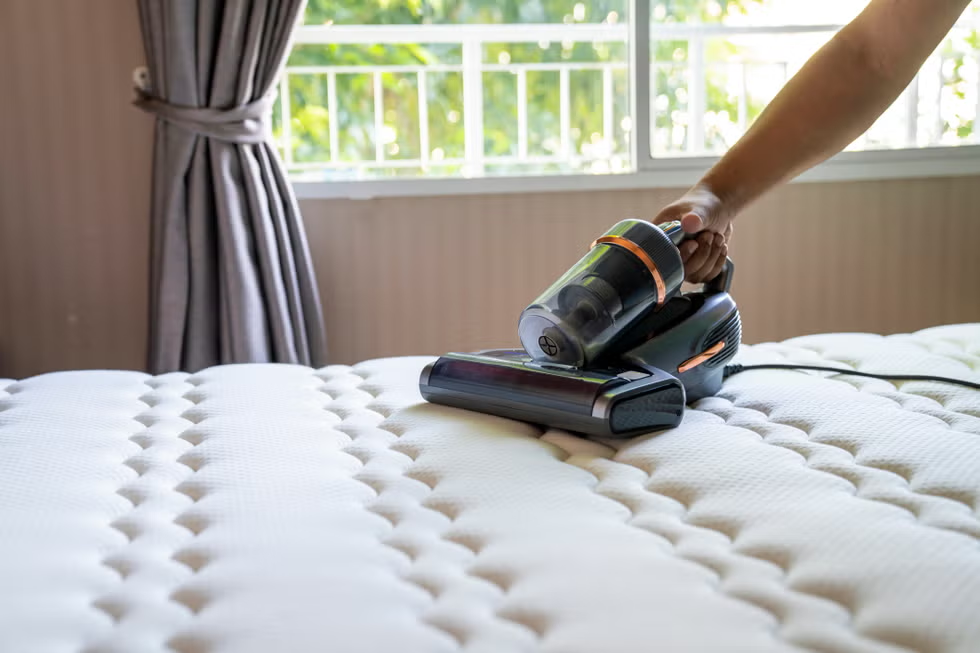
Part of protecting your melatonin rhythm is eliminating physical stressors in your sleep environment that keep your brain on high alert. For example, sleeping with wet hair can cause scalp discomfort and frizz that adds minor, unspoken stress, while a dirty, lumpy mattress topper can create physical tension that mirrors mental stress. Building low-friction pre-sleep hair habits and keeping your sleep surface clean and supportive removes these hidden stressors that make it harder to wind down. You can also read our guide on morning habits for good sleep.
Physical Stress Signals That Keep You Tossing and Turning
Stress doesn’t just live in your head – it creates real, physical tension that makes rest impossible. Even if you manage to quiet your racing thoughts, your body may still be stuck in alert mode, leading to restless, fragmented sleep.
Muscle Tension and Restless Sleep
Stress causes your muscles to stay partially contracted (even when you’re asleep) as a protective measure, leading to tossing and turning, waking up with sore shoulders or a tight jaw. Bruxism (teeth grinding) is a common, often unnoticed side effect of stress that disrupts sleep and causes jaw pain in the morning. Simple fixes like gentle stretching or a warm bath 1 hour before bed can signal to your muscles that it’s safe to relax. You can also read our guide on sleep disorders guide.
Heart Rate and Breathing Disruptions
Stress activates your sympathetic nervous system (fight-or-flight), which keeps your heart rate 10-20 beats per minute higher than normal during sleep, and makes your breathing shallow and irregular. This prevents you from entering deep, restorative sleep stages, because your body thinks it needs to stay alert for danger. This is why people often wake up with a racing heart after a stressful day, even if they didn’t have a nightmare.
If your feather mattress topper has lost its loft or developed clumps, it can create pressure points that keep your muscles tense all night, adding to physical stress. Regularly washing your mattress topper and protector eliminates allergens and odors that can cause subtle physical stress while you sleep. You can also read our guide on why cant i fall asleep fast.
 Mental hyper-arousal from stress is one of the most common causes of delayed sleep onset.
Credit: bebodywise.com
Mental hyper-arousal from stress is one of the most common causes of delayed sleep onset.
Credit: bebodywise.com
The Little-Known "Shocking Truths" About Stress and Sleep
The title of this guide promises shocking truths, and these three widely overlooked facts explain why stress-related sleep disruption is so pervasive, and so hard to fix:
Truth 1: You Don’t Need to Be "Stressed Out" for Stress to Ruin Your Sleep
Even low-grade, chronic stress (like constant work pings, caregiving, or financial worry you’ve normalized) elevates cortisol enough to disrupt sleep, even if you don’t feel actively anxious. Many people write off their poor sleep as "just how I am" when it’s actually caused by unaddressed background stress they’ve learned to ignore.
Truth 2: One Bad Night of Stress-Induced Sleep Makes the Next Day’s Stress Worse
Poor sleep impairs the prefrontal cortex, the part of your brain that regulates emotions and handles stress. So after a night of bad sleep, small stressors feel 2-3x more overwhelming, which leads to more stress that night, and so on. This creates a self-reinforcing cycle of sleep-related anxiety that’s hard to break without intentional intervention.
Truth 3: Stress-Related Sleep Damage Isn’t Reversible with "Catching Up" on Sleep
Sleeping in on weekends doesn’t fix the damage of stress-induced sleep loss. The fragmented, low-quality sleep you get when stressed doesn’t provide the restorative benefits of deep and REM sleep, so catching up on duration doesn’t make up for the lost quality. Worse, sleeping in disrupts your circadian rhythm, making the next night’s sleep even worse.
The Vicious Cycle: How Stress and Sleep Feed Into Each Other
Stress and sleep have a two-way, self-reinforcing relationship: stress ruins sleep, and poor sleep makes you more sensitive to stress. This cycle is the core reason why so many people struggle with long-term sleep problems even after their initial stressor has passed.
When you’re stressed, elevated cortisol and adrenaline delay sleep onset and fragment your rest. That poor sleep then impairs your brain’s ability to regulate emotions, making small stressors feel overwhelming and raising your cortisol levels even more the next day. Long-term clinical data shows that people with chronic stress-related sleep disruption are significantly more likely to develop anxiety and mood disorders over time, as poor sleep erodes your natural stress resilience.
| Effect | Stress Impact | Sleep Impact |
|---|---|---|
| Hormones | Cortisol rises, melatonin drops | Circadian rhythm disruption, delayed sleep onset |
| Brain | Heightened threat detection, reduced emotional regulation | Racing thoughts, hyper-arousal at bedtime |
| Body | Muscle tension, elevated heart rate | Restlessness, frequent nighttime awakenings |
Breaking this cycle requires addressing both stress and sleep at the same time – you can’t fix one without the other.
Evidence-Based Ways to Break the Stress-Sleep Cycle
The good news is that stress-related sleep disruption is highly treatable with small, consistent changes to your routine and environment. These strategies are backed by clinical sleep research, and work for most people within 2-4 weeks of consistent practice.
Calm Your Nervous System 60 Minutes Before Bed
The goal of your pre-sleep routine is to activate your parasympathetic nervous system (rest-and-digest) to lower cortisol and signal to your brain that it’s safe to sleep. Try these evidence-based techniques:
- 4-7-8 breathing: Inhale through your nose for 4 seconds, hold for 7 seconds, exhale slowly through pursed lips for 8 seconds. Repeat 4-5 times. This simple practice lowers heart rate and cortisol levels within minutes.
- Progressive muscle relaxation: Starting at your toes, tense each muscle group for 5 seconds, then release for 10 seconds, working up to your head. This releases built-up physical tension you may not even notice you’re holding.
- Brain dump journaling: Write down every to-do, worry, or thought looping in your head for 5 minutes before bed. This gets thoughts out of your head and onto paper, so your brain doesn’t feel the need to replay them when you’re trying to sleep.
Optimize Your Sleep Environment to Eliminate Hidden Stressors
Small, unaddressed discomforts in your sleep space can add minor, unspoken stress that makes it harder to wind down. Fix these first:
- Keep your bedroom between 60-67°F (15-19°C): A cooler room lowers your core body temperature, which signals your body it’s time to sleep.
- Block all light: Even small LED lights from chargers or TVs can suppress melatonin. Use blackout curtains or a comfortable sleep mask.
- Remove work materials: Don’t bring laptops or work documents into bed – this trains your brain to associate bed with stress, not rest.
- Fix physical discomfort: If your mattress topper is lumpy, torn, or dirty, it adds minor physical stress that keeps you tense. For example, if you have a feather topper that’s lost its loft, addressing these small issues removes hidden stressors that keep you tense.
Build Consistent Routines to Regulate Your Circadian Rhythm
Your body relies on consistent cues to know when to be awake and when to sleep. Stick to these habits to anchor your natural rhythm:
- Wake up at the same time every day, even on weekends (within 30 minutes). This anchors your circadian rhythm, making it easier to fall asleep at night.
- Get 10-15 minutes of natural light within 30 minutes of waking up: This signals your brain to stop producing melatonin and start producing cortisol for the day, which helps your cortisol curve drop naturally in the evening.
- Avoid caffeine after 2 p.m.: Caffeine has a 6-8 hour half-life, so an afternoon coffee will still be in your system at bedtime, raising cortisol and blocking melatonin.
- Pairing consistent wake times with simple consistent morning routines can dramatically improve your circadian rhythm over 2-3 weeks, making it easier to wind down at night.
Frequently Asked Questions
How does stress affect sleep quality, exactly?
Stress doesn’t just make it harder to fall asleep – it actively degrades the quality of the sleep you do get. By elevating cortisol and activating your brain’s threat detection centers, stress reduces the amount of time you spend in deep slow-wave and REM sleep, the two stages most critical for physical repair, memory consolidation, and emotional regulation. Even if you sleep for a full 8 hours, stress-induced sleep fragmentation can leave you feeling as tired as if you only slept 4-5 hours, with impaired focus, irritability, and reduced stress resilience the next day.
Why does stress cause insomnia?
Insomnia is the most common sleep disorder linked to stress, and it stems from the overactivation of your sympathetic nervous system (fight-or-flight). When you’re stressed, your brain stays in alert mode, making it impossible to enter the relaxed state needed to fall asleep. Over time, this can develop into chronic insomnia, where your brain learns to associate bed with stress and alertness, rather than rest. As noted in CDC’s official sleep health resources, stress-related insomnia affects 1 in 3 adults at some point in their lives, and is a key risk factor for long-term sleep disorders.
Can stress cause nightmares or vivid dreams?
Yes. Stress increases activity in the amygdala during REM sleep, the stage where most dreaming occurs. This leads to more intense, vivid, and often distressing dreams or nightmares, which can cause you to wake up suddenly and make it harder to fall back asleep. Frequent stress-induced nightmares are also a common symptom of underlying anxiety, and addressing the root stress often reduces their frequency.
How long does it take for stress-related sleep problems to go away?
Acute stress (like a one-time work deadline) may cause short-term sleep disruption for a few days to a week, which typically resolves on its own once the stressor passes. Chronic stress, however, can cause long-term sleep disruption that persists for months or years if left unaddressed. The good news is that most people see improvements in sleep quality within 2-4 weeks of implementing consistent stress management and sleep hygiene practices, per clinical guidance from the National Institute of Neurological Disorders and Stroke.
Is it possible to sleep well when you’re stressed?
Yes, but it requires intentional practices to counteract your body’s natural stress response. Small, consistent steps like a pre-sleep relaxation routine, a cool dark bedroom, and avoiding screens before bed can significantly reduce stress’s impact on sleep, even during high-stress periods. The key is to build these habits before stress hits, so they’re second nature when you need them most.
Conclusion
Stress doesn’t have to be a permanent sleep thief. While the biological mechanisms behind stress-induced sleep disruption are powerful, they’re not unbeatable. The "shocking truth" most people don’t realize is that small, consistent changes to your routine and environment can reverse even long-term stress-related sleep problems in as little as a few weeks. Start with one small step tonight: try 5 minutes of 4-7-8 breathing before bed, or clear your bedroom of work materials and bright lights. If you’re struggling with persistent sleep issues, reach out to a healthcare provider to rule out underlying sleep disorders, and explore evidence-based therapies like CBT-I (cognitive behavioral therapy for insomnia) that target the root of stress-related sleep disruption. Better sleep isn’t just a luxury – it’s the foundation of better stress resilience, mood, and overall health. Take the first step tonight, and wake up feeling rested, focused, and ready to handle whatever comes your way.

Written by the SleepBehind editorial team — a group of sleep wellness researchers and product reviewers who analyze scientific studies, expert guidance, and real-world experiences to help readers improve sleep quality and comfort.