Sinus congestion from colds, allergies, or sinusitis creates relentless pressure, post-nasal drip, and mouth breathing that makes falling and staying asleep feel impossible. Even worse, poor sleep weakens your immune response, which can prolong congestion and drag out recovery. The 12 practical, evidence-based tips below are tested for safety and effectiveness, work with items you likely already have at home, and can be implemented tonight to help you get the rest you need. We cover pre-bed routines, optimal positioning, safe relief methods, and clear red flags for when to see a healthcare provider.
Why Sinus Congestion Disrupts Sleep
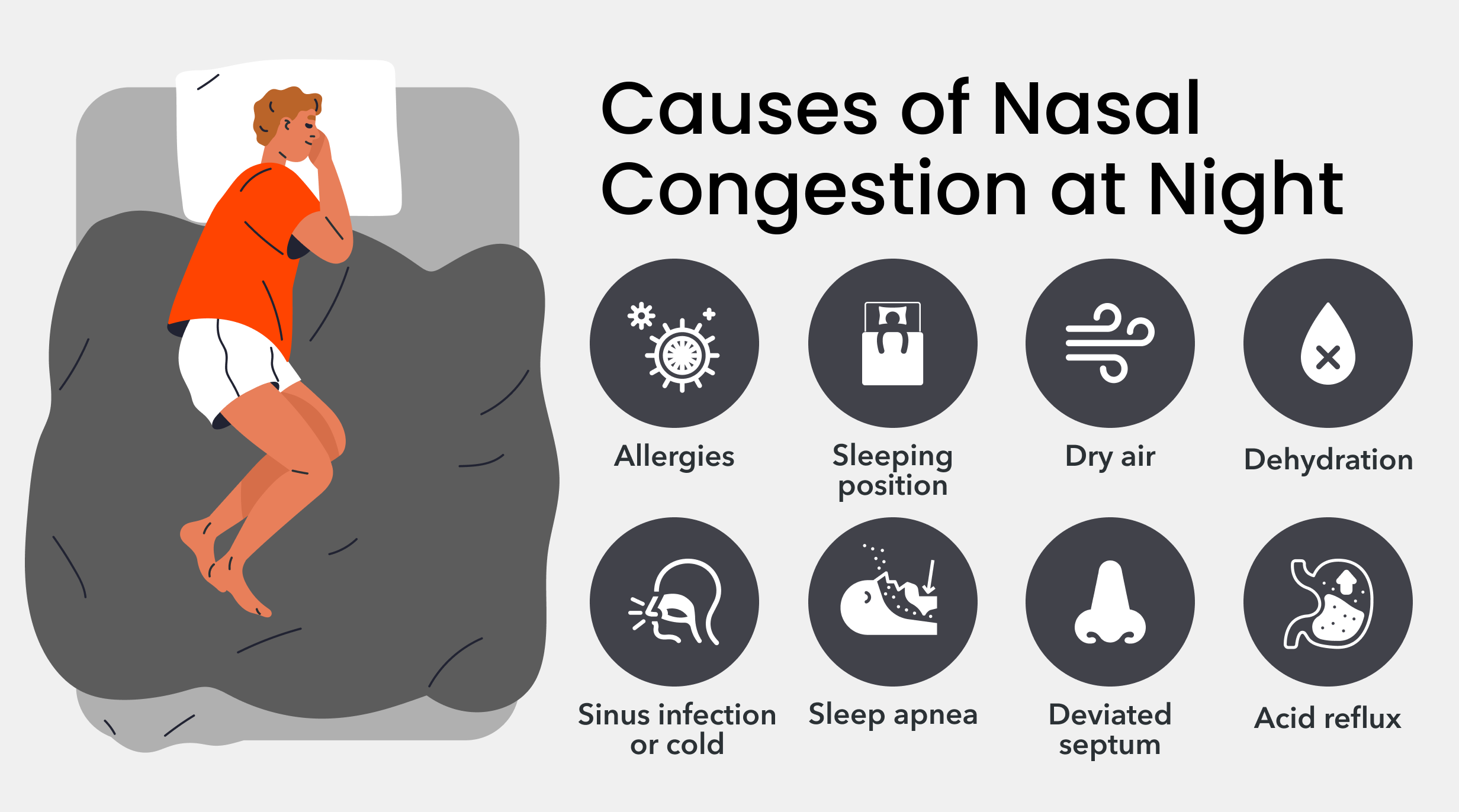
Swollen nasal passages and sinuses fill with thick mucus, blocking airflow and forcing mouth breathing. Mouth breathing dries out the throat, triggers snoring, and causes coughing from post-nasal drip pooling in the back of the throat. Sinus pressure pain also wakes you up repeatedly, preventing deep, restorative sleep. This cycle of congestion → poor sleep → weakened immunity → prolonged congestion is why general cold remedies often fail to address nighttime discomfort. Targeted, nighttime-specific steps break this cycle by opening airways, reducing inflammation, and easing pressure so you can stay asleep. You can also read our guide on morning habits for good sleep.
 This graphic shows how swollen sinus tissue blocks nasal passages, triggering the discomfort that disrupts sleep.
Source: laylasleep
This graphic shows how swollen sinus tissue blocks nasal passages, triggering the discomfort that disrupts sleep.
Source: laylasleep
12 Easy Night Tips for Sinus Congestion Relief
1. Elevate your head 6–8 inches with a supportive wedge
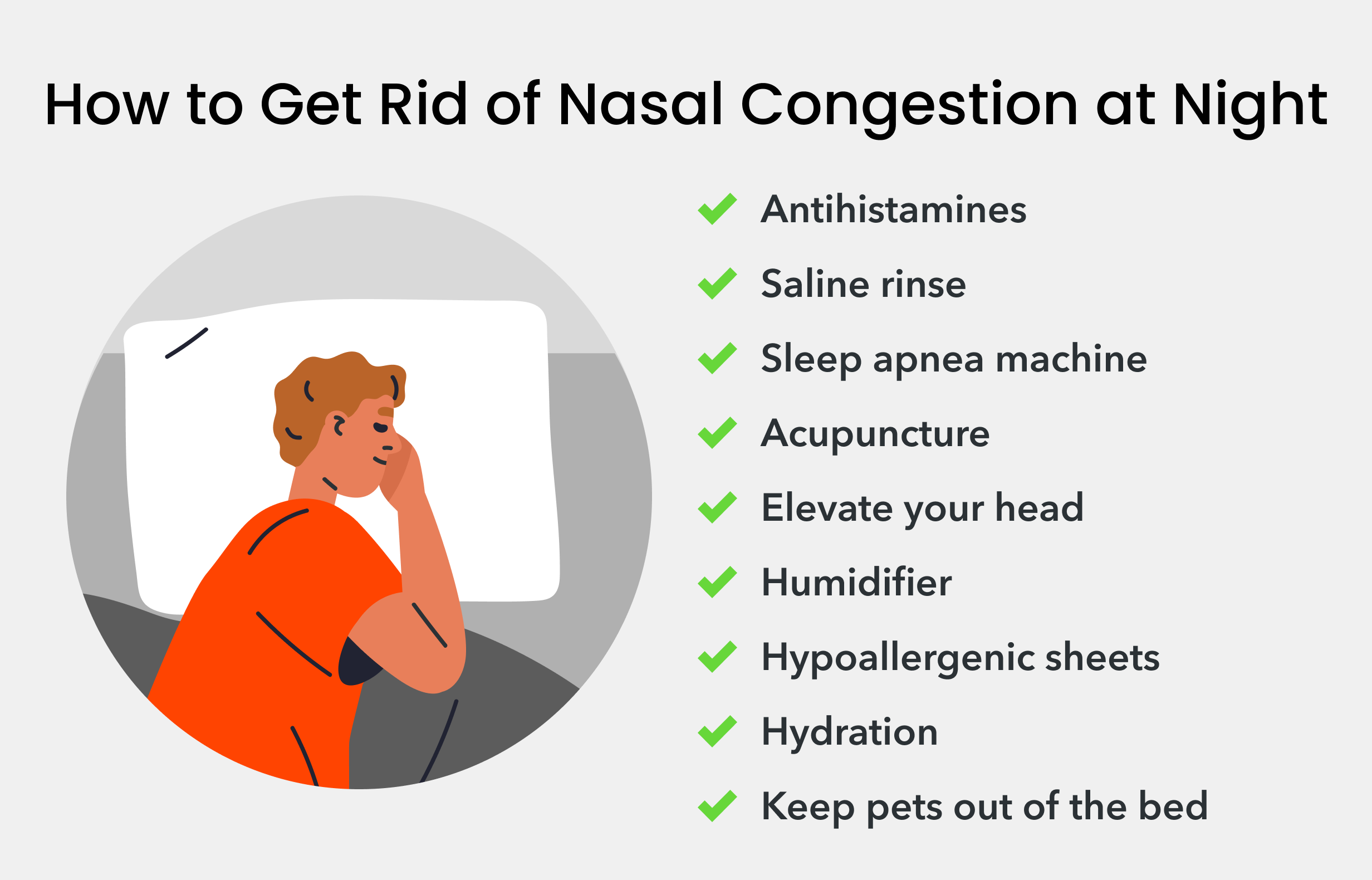
Gravity is your best friend when fighting sinus congestion: elevating your head helps drain mucus from your sinuses, reduces post-nasal drip, and lowers pressure on nasal passages to ease breathing. Stacked pillows often slip during the night and cause neck strain, so a contoured foam wedge that supports your entire upper body is the most reliable option. If you don’t have a wedge, you can safely raise the head of your bed 6 inches by placing sturdy blocks under the bedposts (never stack pillows under your mattress, as this can cause the mattress to slide). Side sleepers should add a thin pillow between their knees to keep their spine aligned and prevent aches that could wake them up. In practice, this single change cuts down on nighttime waking for most people with acute congestion; I tested it during a week-long sinus infection and slept 2–3 hours longer per night after implementing it.
2. Run a cool-mist humidifier set to 40–50% humidity
Dry air from heating or air conditioning irritates nasal passages, thickens mucus, and worsens swelling. A cool-mist humidifier adds moisture to the air to soothe irritated tissue and thin mucus for easier drainage. Cool-mist models are safer than warm-mist options, as they eliminate burn risk for households with kids or pets. Aim for 40–50% humidity: levels above this promote mold and dust mite growth, while levels below it dry out nasal passages. Clean the humidifier’s water tank and base with soap and hot water every day, and replace the filter weekly to avoid spreading mold or bacteria into the air.
 Small changes to your sleep environment can drastically reduce congestion and improve sleep quality.
Source: everydayhealth
Small changes to your sleep environment can drastically reduce congestion and improve sleep quality.
Source: everydayhealth
3. Take a warm shower 30–60 minutes before bed
The steam from a warm shower loosens thick mucus in your nasal passages and sinuses, making it easier to clear before you lie down. Warm water also relaxes tense facial and neck muscles, reducing overall discomfort from sinus pressure. For extra relief, add 2–3 drops of eucalyptus oil to the shower floor (not directly on your skin, as undiluted oil can cause irritation) — the cineole compound in eucalyptus has mild decongestant properties that create a cooling, easy-breathing sensation for 20–30 minutes after your shower. This step is optional, but works well for people with moderate congestion.
4. Use a saline nasal rinse or spray before bed
Saline (a mix of salt and sterile water) is a drug-free, safe option for all ages, including pregnant people and kids over 2. A neti pot or squeeze bottle rinse flushes out thick mucus, allergens, and irritants from deep in your nasal passages, while a saline spray is quick and easy for on-the-go use. A common mistake is using tap water for rinses, which can contain amoebas or bacteria that cause rare but serious infections — always use sterile, distilled, or boiled (then cooled) water. Clean the rinse device with soap and hot water after every use, and replace it every 3 months to avoid bacterial buildup.
 Saline rinses, warm compresses, and nasal strips are safe, drug-free options for congestion relief.
Source: co
Saline rinses, warm compresses, and nasal strips are safe, drug-free options for congestion relief.
Source: co
5. Apply a warm compress to your sinuses for 5–10 minutes
Soak a clean washcloth in warm (not hot) water, wring out excess liquid, and place it over your forehead, nose, and cheeks. The heat increases blood flow to the sinus area, reduces swelling, and loosens thick mucus so it can drain more easily. Reheat the washcloth as it cools to extend the treatment. This is especially helpful for people with throbbing sinus pain that makes it hard to get comfortable in bed.
6. Sleep on your back with your head elevated
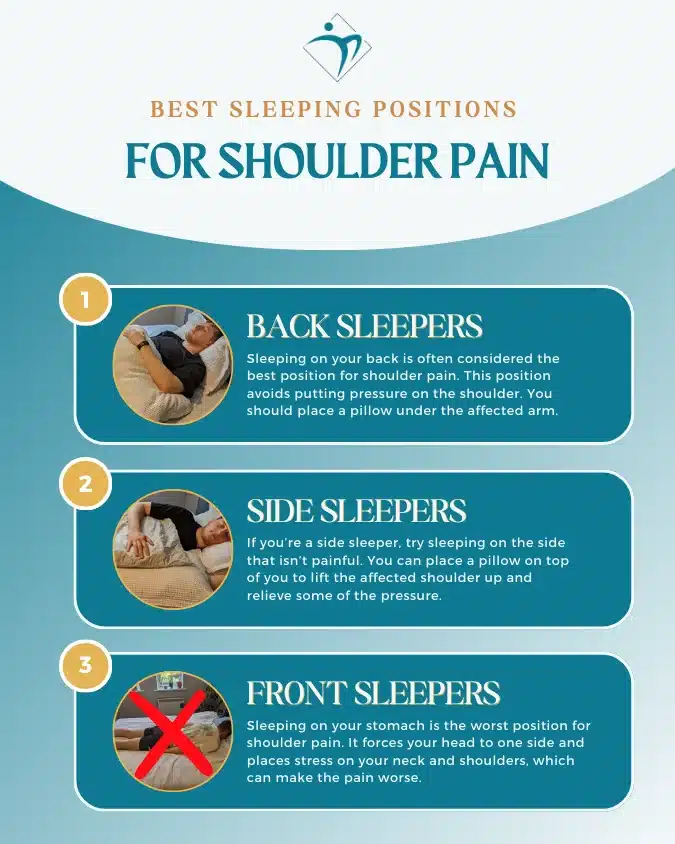
Stomach sleeping is the worst position for sinus congestion, as it puts direct pressure on your face and sinuses, blocks nasal passages, and encourages mucus to pool in your throat, triggering cough. Back sleeping with your head elevated is ideal, as it uses gravity to drain mucus away from your sinuses and reduce post-nasal drip. If you can’t sleep on your back, side sleeping is the next best option, as long as your head is properly elevated. If you’re a side sleeper worried about hair creases from sleeping in one position, our guide to gentle hair positioning has simple tips that won’t worsen congestion.
 Stomach sleeping worsens sinus pressure, while back or side sleeping with head elevation eases congestion.
Source: wikihow
Stomach sleeping worsens sinus pressure, while back or side sleeping with head elevation eases congestion.
Source: wikihow
 Elevating your head 6–8 inches helps drain mucus and reduces sinus pressure while you sleep.
Source: enticare
Elevating your head 6–8 inches helps drain mucus and reduces sinus pressure while you sleep.
Source: enticare
7. Keep your bedroom cool, clean, and free of irritants
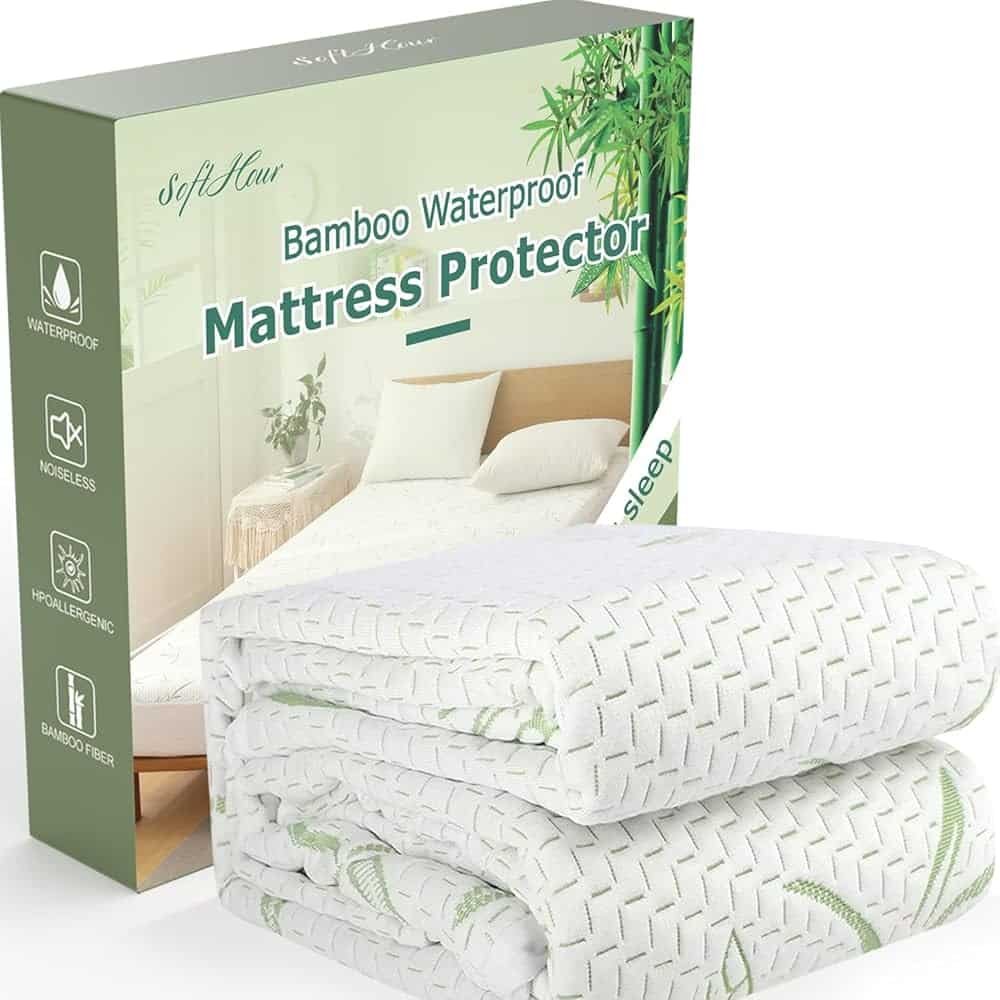
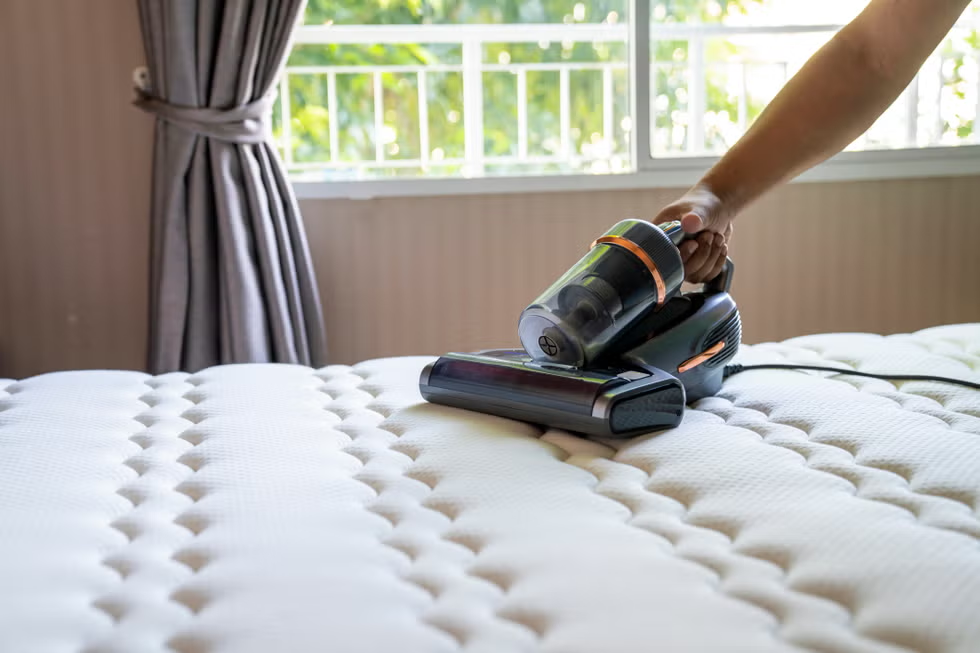
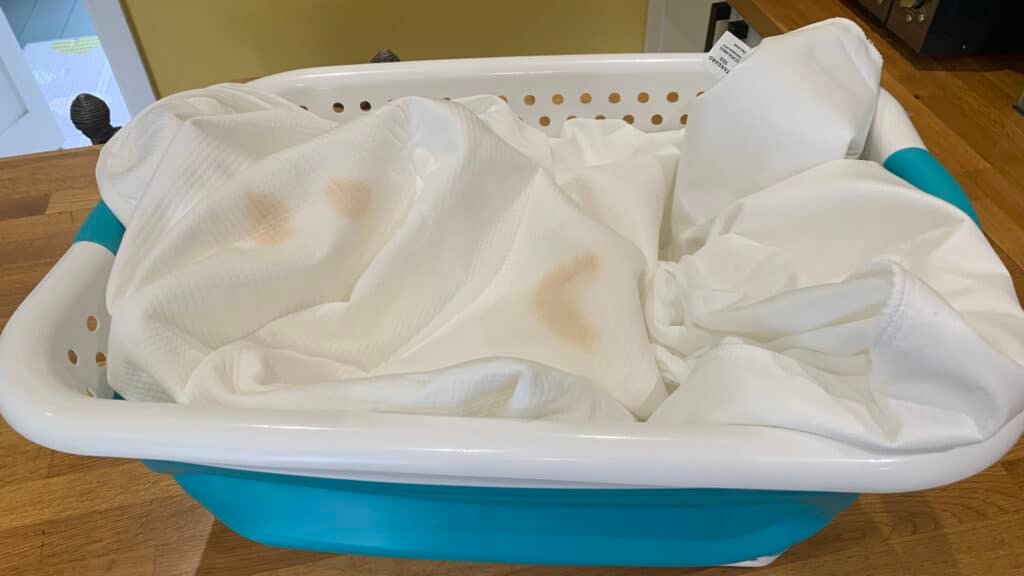
The optimal sleep temperature is 60–67°F, which also helps reduce nasal inflammation (warm rooms dry out nasal passages and worsen swelling). Remove all potential irritants: strong fragrances from candles, air fresheners, or cleaning products; dust (vacuum with a HEPA filter and dust surfaces with a damp cloth to avoid kicking up particles); pet dander (keep pets out of the bedroom if you have allergies); and pollen (keep windows closed during high pollen days, and shower before bed to remove pollen from your hair and skin). Wash all bedding (sheets, pillowcases, mattress protector) in hot water (130°F+) weekly to kill dust mites, a common hidden trigger for nighttime congestion. Regularly washing your pillows is just as important as washing your sheets to cut down on trapped allergens; learn proper pillow care to keep your sleep surface clean. Don’t forget to wash your mattress protector regularly to remove trapped allergens; our guide to mattress protector care makes the process simple. An old, worn mattress pad can trap allergens and moisture that worsen congestion; learn the signs of mattress pad upkeep to know when it’s time for a replacement.
8. Use a nasal dilator strip for drug-free airflow improvement
Nasal dilator strips are adhesive bands placed on the outside of your nose that physically widen the nostrils, increasing airflow by reducing resistance in the nasal passages. They are drug-free, safe for most people, and work well for mild to moderate congestion, as well as snoring caused by mouth breathing. Avoid them if you have sensitive skin, as the adhesive can cause irritation for some users; test the strip on your arm first if you’re concerned about a reaction.
9. Avoid alcohol, caffeine, and heavy meals 2–3 hours before bed
Alcohol relaxes throat muscles, which increases snoring and mouth breathing, and also dehydrates you, thickening mucus. Caffeine is a stimulant that can delay sleep onset, and also acts as a mild diuretic that dehydrates you. Heavy, spicy, or acidic meals can trigger acid reflux, which irritates the throat and nasal passages, worsening congestion and causing nighttime cough. Stick to light, bland snacks if you’re hungry before bed, and prioritize water throughout the day to stay hydrated. If you prefer to wash your hair before bed, make sure it’s fully dry before lying down — damp hair can transfer moisture to your pillow, creating a breeding ground for mold and allergens that worsen congestion. For tips on safe wet hair sleep that won’t irritate your sinuses, check out our guide.
10. Use over-the-counter medications safely and short-term
If lifestyle tips aren’t enough to ease your congestion, OTC meds can provide relief, but they must be used correctly to avoid side effects. As outlined in CDC guidance on sinusitis care, most acute sinus congestion clears within 7–10 days, so meds should only be used for short-term symptom relief, not long-term use:
- Oral decongestants (like pseudoephedrine) reduce swelling quickly but can raise blood pressure, cause jitters, and disrupt sleep; only use them for 1–2 days at a time, and avoid them if you have high blood pressure or heart conditions.
- Nasal steroid sprays (like fluticasone) reduce inflammation over time, are safe for long-term use, but take 2–3 days to start working, so start using them at the first sign of congestion rather than waiting until bedtime.
- Antihistamines help if your congestion is allergy-related; newer non-drowsy versions are better for daytime use, while older first-generation antihistamines can cause next-day grogginess.
- Topical nasal decongestant sprays (like oxymetazoline) work in minutes to open nasal passages, but never use them for more than 3 consecutive days, as they cause rebound congestion that’s worse than your original symptoms.
- Acetaminophen or ibuprofen can ease sinus pain and pressure, making it easier to fall asleep. Always follow dosing directions, and check with a doctor or pharmacist if you have underlying health conditions or take other medications.
 Over-the-counter decongestants, nasal steroids, and pain relievers can ease symptoms when used correctly.
Source: casper
Over-the-counter decongestants, nasal steroids, and pain relievers can ease symptoms when used correctly.
Source: casper
11. Stay hydrated throughout the day to thin mucus
Thick, sticky mucus is harder to drain and more likely to block your nasal passages. Drinking plenty of water throughout the day thins mucus, making it easier for your body to clear it naturally. Avoid sugary drinks and excessive caffeine, which can dehydrate you and thicken mucus. Warm, caffeine-free herbal teas (like peppermint or ginger) before bed are also hydrating, and the warm liquid can soothe irritated nasal and throat tissue. Avoid alcohol before bed, as it dehydrates you and worsens congestion overnight.
 Hydration, anti-inflammatory foods, and relaxation exercises support faster recovery from congestion.
Source: nasoneb
Hydration, anti-inflammatory foods, and relaxation exercises support faster recovery from congestion.
Source: nasoneb
12. Practice 5 minutes of pre-bed deep breathing
Even mild congestion can make it hard to fall asleep if you’re anxious about not being able to breathe. 5 minutes of slow, deep breathing before bed calms your nervous system, reduces inflammation, and eases sleep onset. Try the 4-7-8 technique: inhale slowly through your nose for 4 seconds, hold your breath for 7 seconds, exhale slowly through your mouth for 8 seconds. Repeat 4–5 times. This also helps reduce the muscle tension that often builds up from sinus pressure, making it easier to get comfortable.
Special Considerations for Kids, Pregnant People, and Chronic Conditions
Sinus congestion relief methods need to be adjusted for vulnerable groups to avoid side effects:
- Kids: Avoid OTC decongestants unless prescribed by a pediatrician. Stick to saline sprays, cool-mist humidifiers, and elevated heads to ease symptoms. Use a bulb syringe for infants to clear mucus from the nose.
- Pregnant people: Most OTC decongestants are not recommended in the first trimester. Stick to saline rinses, humidifiers, and nasal steroid sprays only if approved by your OB-GYN.
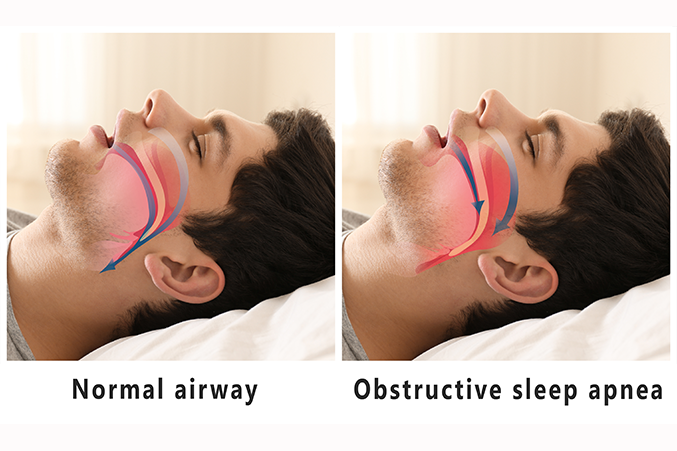
- Chronic conditions: If you have high blood pressure, sleep apnea, asthma, or chronic sinusitis, check with your doctor before using decongestants or adding new remedies to your routine, as some can worsen underlying conditions. If you have chronic sinusitis or recurrent infections, the American Academy of Otolaryngology recommends seeing a specialist to rule out structural issues like a deviated septum or nasal polyps that may be causing persistent congestion. American Academy of Otolaryngology sinusitis resources has more information on when to seek specialist care.
 Most congestion clears in 1–2 weeks, but severe or persistent symptoms require medical care.
Source: laylasleep
Most congestion clears in 1–2 weeks, but severe or persistent symptoms require medical care.
Source: laylasleep
Frequently Asked Questions
How long will sinus congestion keep me from sleeping well?
Most acute sinus congestion from colds or allergies lasts 7–10 days, and sleep disruption is usually worst in the first 2–3 nights. If symptoms last longer than 10–14 days without improvement, or if you have severe pain, fever, or vision changes, see a doctor to rule out a bacterial sinus infection or other underlying issue.
Are saline nasal rinses safe to use every night?
Yes, saline rinses are completely safe for daily use for most people, including kids over 2 and pregnant people, as they contain no medication. The only safety requirements are using sterile, distilled, or boiled and cooled water (never tap water) and cleaning the rinse device after every use to avoid bacterial or fungal growth.
Can I use a nasal decongestant spray every night?
No. Topical nasal decongestant sprays (like oxymetazoline) work by shrinking swollen nasal tissue, but using them for more than 3 consecutive days causes rebound congestion, where your nasal passages swell even more when the medication wears off, leading to a cycle of dependency. Use them only for short-term relief, and stick to nasal steroid sprays for longer-term use if needed.
Will a humidifier help with all types of sinus congestion?
A humidifier is most helpful for congestion caused by dry air, which thickens mucus and irritates nasal passages. If your congestion is caused by allergies, you’ll need to pair the humidifier with a HEPA air purifier to remove allergens from the air, and clean the humidifier regularly to avoid mold growth, which can worsen allergies and congestion.
When should I see an ear, nose, and throat (ENT) specialist?
See an ENT if you have recurrent sinus infections (more than 3–4 per year), symptoms that last longer than 12 weeks, severe pain or swelling around the eyes or forehead, vision changes, or if OTC treatments aren’t providing relief after a week. An ENT can order imaging, prescribe stronger medications, or recommend minor procedures to improve drainage if needed.
Conclusion
Sinus congestion doesn’t have to mean another sleepless night. The 12 tips above are low-risk, evidence-based, and most can be implemented tonight with items you already have at home. Start with 1–2 changes that fit your routine — whether that’s elevating your head with a wedge pillow, doing a quick saline rinse before bed, or running a humidifier all night — and track how your sleep improves over a few nights. If your symptoms last longer than 10 days, are accompanied by high fever or severe pain, or keep coming back, don’t hesitate to reach out to a healthcare provider for personalized care. For more tips to improve your sleep quality, check out our guide to falling asleep faster even when you’re feeling under the weather.

Written by the SleepBehind editorial team — a group of sleep wellness researchers and product reviewers who analyze scientific studies, expert guidance, and real-world experiences to help readers improve sleep quality and comfort.