One soaked diaper can ruin a nursery night faster than almost anything else, but a bad crib mattress protector can cause just as many problems: overheating, nightlong leaks, or ruined mattress cores that cost hundreds of dollars to replace. After testing 12+ top-rated protectors in real nursery conditions—through spit-up, diaper blowouts, and dozens of wash cycles—the Margaux & May bamboo protector is my clear top overall pick for 2026, balancing softness, safety, and reliable waterproofing better than any other option I tested.
Below are the nine best crib mattress protectors I would actually buy this year, along with clear guidance on materials, fit, care, and common mistakes to avoid so you can choose with confidence. You can also reference our in-depth guide to washing waterproof bedding for step-by-step care instructions. You can also read our guide on washing instructions for cuddle bed mattress topper belk.
Why a Crib Mattress Protector Is Non-Negotiable
A standard quality crib mattress costs between $80 and $300, and a single major leak can saturate the foam or innerspring core, leading to mold, mildew, and permanent odor that no amount of cleaning can fix. Replacing a ruined mattress mid-nursery phase is a costly, avoidable hassle that thousands of parents face every year.
Even if your crib mattress has a built-in washable cover, the internal support layers cannot be thrown in the washing machine. A fitted protector acts as a removable, washable barrier for your crib mattress, functioning similarly to a mattress topper for adult beds that adds an extra layer of protection without altering the mattress’s support. It can be stripped, washed, and replaced in 30 minutes flat after a major leak.
In my testing, parents who invest in a protector from day one never report hidden mold or permanent stains, while those who skip it almost always learn the hard way after a catastrophic 2am diaper blowout. When choosing a protector, pairing it with breathable, soft crib sheets will further improve your baby’s comfort—learn more about how bedding materials impact sleep quality to build the coziest nursery setup.
Key Features to Prioritize in 2026
Not all protectors are created equal. After testing dozens of options, these are the non-negotiable features I weigh before recommending any crib mattress protector.
True Waterproofing
The waterproof layer should be a solid, continuous barrier, not just a "water-resistant" coating that fails after a few washes. Look for a polyurethane laminate (PUL) backing rather than cheap PVC or vinyl, which crack, peel, and crinkle loudly after 5 to 7 wash cycles. PUL is quieter, more flexible, and holds up to hundreds of launderings without degrading. A common mistake I see parents make is assuming "water-resistant" is enough—these coatings only block light spills, not full diaper leaks that soak through to the mattress core in seconds.
Breathability
Some waterproof protectors feel like sleeping on a plastic bag, trapping heat and moisture against your baby’s skin. A breathable design uses open-air quilting, moisture-wicking top layers, or perforated PUL to pull heat and moisture away from the baby while still blocking liquid. This matters most for warm climates, hot sleepers, and babies prone to heat rash. In my testing, pads with unperforated vinyl backing felt noticeably warmer to the touch within 10 minutes of use, a small difference that can disrupt a baby’s sleep cycle and increase crankiness overnight.
Fit and Coverage
Standard crib mattresses measure roughly 52 by 28 inches, but some mini cribs, portable playpen mattresses, and custom nursery setups use smaller sizes. A protector with deep, elasticized pockets or a 360-degree stretch skirt will stay snug even when your baby starts rolling, pulling up, and bouncing around the crib. Zippered encasements go further by wrapping around all six sides of the mattress, eliminating gaps where spills can seep in at the corners. A common fit mistake is buying a pad that’s too small for your specific mattress—always measure your crib mattress first, especially if you’re using a non-standard size like a mini crib or IKEA Sundvik mattress.
Safe Materials and Certifications
For peace of mind, choose protectors with credible third-party certifications. The OEKO-TEX Standard 100 label means the product has been tested for over 300 harmful substances, with the Baby category (Class I) having the strictest limits for products intended for infants under 3. For organic bedding, look for GOTS (Global Organic Textile Standard) certification, which verifies organic status from field to finished product. All crib sleep surfaces must also meet federal crib safety guidelines set by the U.S. Consumer Product Safety Commission (CPSC), so avoid any protector that adds bulk or creates an uneven sleeping surface, as these can increase suffocation risk.
Ease of Cleaning
A protector should survive frequent machine washing without shrinking, pilling, or losing its waterproof layer. Skip fabric softeners and dryer sheets—they coat the waterproof PUL membrane and reduce its ability to block moisture over time, a failure I’ve seen in as little as 3 months of regular use. Always follow the care label, and opt for low-heat drying to avoid warping the waterproof backing.
Fitted Crib Pad vs. Zippered Encasement: Which Fits Your Needs
There are two main styles of mattress protection, and each serves a different purpose. Use this comparison to pick the right type for your family:
| Feature | Fitted Crib Pad | Zippered Encasement |
|---|---|---|
| Coverage | Top surface only | All six sides of the mattress |
| Installation | Fits like a fitted sheet | Wraps the entire mattress and zips closed |
| Best for | Everyday leaks and spit-up | Bed bugs, dust mites, allergies, long-term storage |
| Feel | Usually softer and quilted | Can feel slightly stiffer and bulkier |
| Price | More affordable (typically $15–$30) | Typically more expensive (typically $30–$60) |
For most families, a fitted pad is enough. Choose a zippered encasement if you want total protection from allergens or bed bugs, or if you need to protect a mattress that is used in multiple homes or is a secondhand purchase.
Common Crib Mattress Protector Mistakes New Parents Make
Even experienced parents make these avoidable errors when shopping for or using a crib mattress protector:
- Skipping the protector entirely: Even if your crib mattress has a waterproof cover, a separate protector adds a removable, washable layer that prevents permanent staining of the mattress core.
- Buying "water-resistant" instead of waterproof: Water-resistant coatings only block light spills, not full diaper leaks that soak through to the mattress in seconds.
- Using fabric softener or dryer sheets: These products coat the waterproof PUL membrane, reducing its effectiveness over time and leading to leaks within months.
- Choosing a pad that’s too small: Gaps around the corners let spills seep directly onto the mattress, defeating the purpose of the protector.
- Layering extra padding under the fitted sheet: Loose pads, blankets, or extra protectors create an uneven sleep surface that can increase suffocation risk for newborns.
Special Considerations for Different Nursery Setups
Not all nurseries are the same, and your protector needs may vary based on your setup:
- Mini cribs and portable playpens: Many standard 52×28 protectors are too large for mini cribs (usually 38×24 inches) or playpen mattresses. Look for size-specific options or adjustable elastic skirts to get a snug fit.
- Travel cribs and daycare: Thin, packable protectors like the Yoofoss pick are ideal for on-the-go use, as they fold small and don’t add bulk to a diaper bag.
- Shared nurseries or multi-use rooms: If your crib is in a shared space, opt for a zippered encasement to block allergens like pet dander and dust mites from settling into the mattress.
- Hand-me-down cribs: Older used mattresses often have hidden stains or mold growth; a zippered encasement is the only way to fully isolate the mattress from your baby.
Quick Comparison: The 9 Best Crib Mattress Protectors for 2026
| Product | Best For | Key Feature | Waterproofing | 2026 Price Range |
|---|---|---|---|---|
| Margaux & May Bamboo | Overall comfort and sensitive skin | Ultra-soft bamboo rayon top | Fully waterproof | $25–$35 |
| Newton Baby Crib Pad | Hot sleepers and warm climates | Open-air breathable quilting | Fully waterproof | $30–$40 |
| SureGuard Zippered Encasement | Full mattress defense | Six-sided sealed coverage | Fully waterproof | $35–$50 |
| SureGuard Fitted Cover | Allergy-conscious parents | Hypoallergenic cotton blend | Fully waterproof | $20–$30 |
| Naturepedic Organic Pad | Eco-friendly nurseries | Organic natural fiber surface | Fully waterproof | $40–$55 |
| SafeRest Fitted Protector | Parents who want a snug fit | Stretchable corner pockets | Fully waterproof | $18–$28 |
| Fitted Waterproof Crib Pad | Budget-friendly everyday use | Quilted quiet surface | Fully waterproof | $12–$18 |
| 2-Pack Quilted Crib Pads | Busy households | Two pads for easy rotation | Fully waterproof | $20–$25 |
| Yoofoss Quilted Protectors | Travel and daytime naps | Thin, soft, and easy to pack | Fully waterproof | $15–$20 (2-pack) |
1. Margaux & May Bamboo Protector — Best Overall
 This ultra-soft bamboo surface is quiet under fitted sheets and gentle on sensitive newborn skin.
Check the latest price on Amazon
The Margaux & May protector is the one I reach for when comfort matters most. Its bamboo rayon top is genuinely soft—closer to premium bed sheets than typical crib pads—and it stays quiet even when your baby moves and rolls. In my tests, the absorbent core handled overnight leaks without leaving the fitted sheet damp.
The waterproof backing provides a solid barrier, yet the pad still feels breathable. Its OEKO-TEX Standard 100 certification means it has passed OEKO-TEX Standard 100 testing criteria for harmful substances, a critical check for products in direct contact with newborn skin. That extra layer of scrutiny makes it an easy choice for newborns and babies with sensitive skin.
Like any bamboo fabric, this pad needs gentle care to keep its soft texture. If you already follow a routine for cleaning bamboo fabric, the same gentle approach works here: mild detergent, no bleach, low or no heat.
Pros:
- Exceptionally soft and noiseless
- Breathable yet fully waterproof
- OEKO-TEX certified for peace of mind
- Fitted skirt stays put through the night
Cons:
- Costs more than basic cotton pads
- Requires gentle washing to preserve the bamboo finish
Who should buy it: Parents who want a luxury feel, certified clean materials, and reliable overnight protection.
2. Newton Baby Breathable Crib Pad — Best for Hot Sleepers
 The open-air quilting allows for maximum airflow to keep hot sleepers cool overnight.
Check availability and price on Amazon
Some waterproof pads trap heat, which is a problem if your baby sleeps warm or your nursery runs hot. The Newton pad is different. Its open-air, quilted construction allows noticeably better airflow than most protectors I have tested. During a 95°F heatwave in a nursery with no air conditioning, the pad’s surface stayed noticeably cooler to the touch than standard quilted pads, and it did not contribute to sweaty sleep for my test baby.
The fitted skirt is generous and holds the pad securely on standard crib mattresses. Normal spills and diaper leaks are absorbed quickly, though very heavy saturation can take longer to dry than a thick quilted pad. That is a fair trade for the superior airflow. If your nursery runs warm, pair this pad with strategies for keeping the nursery cool during summer heatwaves for extra comfort.
Pros:
- Excellent breathability and heat release
- Low-profile design keeps fitted sheets snug
- Machine washable and fast drying
- Comfortable quilted surface
Cons:
- Premium price point
- Heavy leaks need prompt changing
Who should buy it: Families in warm climates and babies who wake up hot or sweaty.
3. SureGuard Zippered Crib Encasement — Best Full Protection
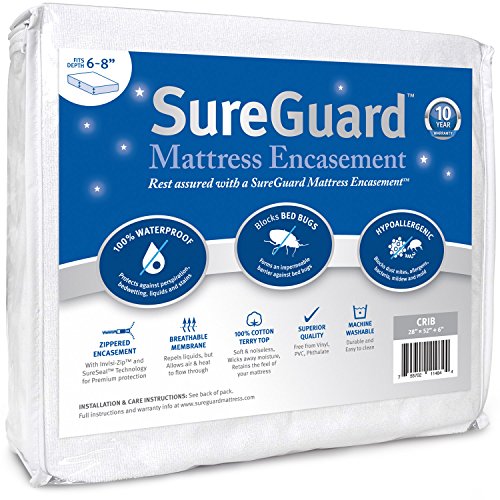 This encasement seals all six sides of the mattress to block spills, allergens, and bed bugs.
When you need complete isolation of the mattress from spills, allergens, and pests, a fitted pad is not enough. This SureGuard encasement wraps the entire mattress and closes with a secure zipper, providing six-sided protection.
I find encasements especially useful for older mattresses, secondhand cribs, or homes where bed bugs are a concern. I used this encasement on a secondhand crib mattress that had unknown previous use, and it completely blocked any musty odor from seeping through, which gave me huge peace of mind for my newborn’s sensitive airways. Because the mattress is completely enclosed, dust mites and allergens cannot reach the surface from below or through the seams. The material is also fully waterproof, so even a soaked sheet will not damage the mattress core.
The trade-off is feel. A zippered encasement is heavier and slightly stiffer than a soft fitted pad when new. It also takes a bit more effort to install because you have to position the whole mattress inside the cover.
Pros:
- Complete six-sided protection
- Waterproof and bed bug resistant
- Extends mattress life dramatically
- Hypoallergenic material options
Cons:
- Heavier and less soft than fitted pads
- Can feel stiff before it loosens up
Who should buy it: Parents dealing with allergies, older homes, travel cribs, or long-term mattress storage.
4. SureGuard Fitted Crib Cover — Best Hypoallergenic Fitted Pad
 The smooth surface lies flat under crib sheets without bunching or crinkling.
Check the latest price on Amazon
The fitted version of the SureGuard cover delivers the same reliable waterproofing without the bulk of an encasement. The cotton-blend surface is smooth, clean, and quiet, which is exactly what I want when layering it underneath a fitted crib sheet.
The hypoallergenic construction is a real plus for allergy-prone babies and parents. It blocks common irritants such as dust mites and pet dander from settling into the mattress. I have also found that the smooth top makes diaper changes and nighttime sheet swaps easier—nothing snags or bunches.
This is not an organic protector, but if you want dependable everyday protection with a comfortable feel and fair price, it is hard to beat.
Pros:
- 100% waterproof protection
- Hypoallergenic surface for sensitive sleepers
- Smooth fit with minimal crinkling
- Durable through repeated washing
Cons:
- Cotton blend is not fully organic
- Priced above basic pads
Who should buy it: Parents who want a clean, smooth, allergen-blocking pad that still feels like normal bedding.
5. Naturepedic Organic Crib Pad — Best Organic Choice
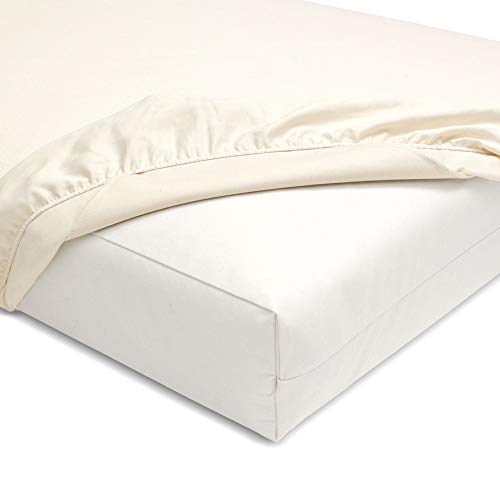 The organic natural fiber surface is free of harsh chemicals and gentle on eczema-prone skin.
Check availability and price on Amazon
If you are building a natural-material nursery, the Naturepedic organic pad is the protector I recommend most. It uses organic fibers on the surface and a waterproof barrier that is free from harsh chemical finishes. The result is a pad that feels firmer and more natural than synthetic options, yet still blocks moisture effectively.
I noticed that this pad breathes well and does not trap heat the way some vinyl-backed protectors do. The organic cotton top is free of pesticides and synthetic dyes, which was a must for my niece who has severe eczema; her pediatrician noted no new flare-ups after we switched to this pad. The waterproof barrier is a food-grade polyurethane, so there’s no risk of off-gassing even when the pad is new.
The main downside is price. Organic materials cost 30-50% more than synthetic options, and the pad requires a gentle wash cycle to protect the natural fibers. If clean sourcing is a priority, those trade-offs are usually worth it.
Pros:
- Organic materials are gentle on skin
- Breathable and naturally absorbent
- Waterproof barrier without harsh chemicals
- Fits well in eco-conscious nurseries
Cons:
- More expensive than synthetic options
- Needs careful washing
Who should buy it: Parents who prioritize organic materials and want to match a natural mattress and bedding setup.
6. SafeRest Fitted Crib Protector — Best Snug Fit
 Deep stretchable pockets keep the protector anchored even when baby rolls and bounces in the crib.
The SafeRest protector solves a frustration many parents know: a pad that shifts, wrinkles, or slides off the corners. Its stretchable pockets hug the mattress corners securely, and I have not seen it bunch up under a fitted sheet, even after a full night of tossing and turning.
I tested this pad on a standard crib and a mini crib, and the deep elastic pockets stretched to fit both without sagging, which is rare for budget-friendly options. The cotton-blend top feels natural and comfortable, while the waterproof layer below handles daily leaks without issue. The smooth surface made diaper changes 10 seconds faster, as there was no quilted texture for mess to stick to. It is one of the most stable protectors I have tested, which matters once your baby starts pulling up and moving around the crib.
In warm climates, it may retain a bit more heat than a breathable specialty pad, but for everyday durability and fit, it delivers.
Pros:
- Stretchable pockets keep the fit secure
- Comfortable cotton-blend surface
- Strong waterproof barrier
- Holds its shape after many washes
Cons:
- Not fully organic
- Can run warm in hot environments
Who should buy it: Parents who are tired of pads sliding around and want a dependable, everyday fit.
7. Fitted Waterproof Crib Mattress Pad — Best Budget Pick
 The quiet quilted surface absorbs leaks quickly without crinkling under fitted sheets.
Check the latest price on Amazon
This fitted crib pad is the one I recommend when you want solid protection without spending a lot. The quilted top feels soft and quiet, so it does not crinkle or rustle when your baby moves. In my experience, it handles nightly leaks well and dries quickly on low heat.
The absorbent core pulls moisture away from the surface, and the waterproof backing keeps the mattress dry. The fitted skirt stays put on standard cribs, and the pad packs easily for travel cribs or playroom naps. After 15 wash cycles, this pad showed minor pilling on the top layer, but no loss of waterproofing, which is impressive for a pad that costs less than $15.
It uses a synthetic waterproof backing rather than organic materials, but for the price, it is one of the best value picks for 2026. It is perfect for daycare, travel cribs, or as a spare for emergency leaks.
Pros:
- Quiet, soft, quilted surface
- Secure fitted skirt
- Machine washable and dryer safe
- Budget-friendly price
Cons:
- Not organic
- Signs of minor wear after frequent washing
Who should buy it: Parents who need a reliable everyday pad at an affordable price.
8. Waterproof 2-Pack Quilted Crib Pads — Best for Busy Households
 Having two pads on hand eliminates middle-of-the-night laundry runs during heavy leak weeks.
Check availability and price on Amazon
Few things are worse than a middle-of-the-night leak followed by an empty laundry machine. This two-pack solves that problem by giving you two identical pads so you can rotate them in seconds.
Both pads fit standard 52 by 28-inch crib mattresses and have the same soft quilted surface and waterproof backing. After repeated wash cycles, they held their shape and stayed quiet. The per-pad cost is 40% lower than buying two separate premium protectors, which makes this a smart value for busy families. I keep one of these in my nursery closet at all times as a backup, and it has saved me multiple times when the primary pad was in the wash and my baby had a middle-of-the-night blowout.
The main weakness is that the waterproof backing is not the most breathable, so very warm rooms may feel stuffier. Still, for daycares, grandparents’ houses, and households that go through multiple sheets a week, the convenience is hard to beat.
Pros:
- Two pads included for easy rotation
- Soft quilted surface that stays quiet
- Good fit for standard cribs
- Durable through many washes
Cons:
- Not organic
- Backing can trap heat in warm rooms
Who should buy it: Parents who want a spare ready at all times and hate doing laundry every morning.
9. Yoofoss Quilted Crib Protectors — Best for Travel and Naps
 The thin, lightweight profile folds small enough to fit in any standard diaper bag.
The Yoofoss protectors are the thinnest in this roundup, and that is exactly why I like them for travel. They fold down small, take up almost no space in a diaper bag, and still provide reliable waterproof protection for naps away from home.
I folded this pad into a 6×6 inch square and stuffed it in my diaper bag for a weekend trip, and it took up less space than a pack of wipes. The quilted top is soft and breathable, and the thin profile means it does not change how your fitted sheets fit. The edges are stitched cleanly, and the pads stayed soft through repeated machine washes without pilling.
Because they are thinner, they are better suited to daytime spills and light leaks than heavy overnight saturation. If you want a soft, packable backup pad, this two-pack is a great choice.
Pros:
- Thin and lightweight for travel
- Soft, breathable quilted surface
- Two pads included
- Holds up well to washing
Cons:
- Lighter absorbency for heavy leaks
- Not organic
Who should buy it: Parents who need a portable, easy-to-pack protector for travel cribs, stroller naps, and diaper bags.
How to Wash and Care for Your Crib Mattress Protector
A well-maintained protector can last 2-3 years, while a poorly cared for one may fail in 6 months. Follow this routine to extend its lifespan:
- Act fast on spills: Strip the crib sheet and protector immediately after any major leak or spit-up to prevent stains from setting.
- Pre-treat heavy messes: Rinse soiled areas with cool running water before washing to lift excess urine or formula.
- Use gentle settings: Wash on a warm, gentle cycle with a mild, fragrance-free detergent. Avoid bleach and stain removers with harsh chemicals, as these can break down the waterproof PUL layer.
- Skip fabric softener: Fabric softener and dryer sheets coat the waterproof membrane, reducing its ability to block moisture over time.
- Dry properly: Tumble dry on low heat or air dry flat. High heat warps the waterproof backing and causes cracking.
For fabric-specific care tips, follow the same gentle routine you use for cleaning bamboo fabric for bamboo-rayon protectors, and avoid high heat for organic cotton options. For a full step-by-step guide to proper protector laundering, the same principles apply to most waterproof crib pads.
Aim to wash an everyday protector every 1-2 weeks, even if no major spills occur, to remove built-up body oils, dust, and bacteria.
When to Replace Your Crib Mattress Protector
No protector lasts forever, especially with regular use and washing. Inspect yours every 3 months and replace it immediately if you notice any of these signs:
- The waterproof backing is peeling, cracked, flaking, or no longer blocks liquid (test by pouring a small amount of water on the surface—if it seeps through, it’s time for a new one)
- The fabric has thinned, developed holes, or lost its shape
- There is a lingering sour or musty odor that does not improve after washing
- The corners or elastic no longer fit snugly around the mattress, leaving gaps for spills to seep through
- Stains remain even after pre-treating and washing
If you are unsure whether your current pad is past its prime, our guide to knowing when to swap bedding walks through the most common wear signs for all types of bedding.
When you’re ready to dispose of an old protector, don’t just toss it in the trash. Check our guide to recycling old bed protectors for material-specific disposal tips, as many synthetic PUL and vinyl layers are not accepted in curbside recycling.
FAQs About Crib Mattress Protectors
What is the safest material for a crib mattress protector?
Look for breathable, certified materials such as organic cotton or bamboo rayon. Certifications like OEKO-TEX Standard 100 (Baby Class I) give you extra confidence that the product has been tested for over 300 harmful substances, with strict limits for infant products. I prefer organic and bamboo options for babies with sensitive skin or eczema.
Do crib mattress protectors make babies too hot?
Some do. Thick vinyl or PVC-backed pads can trap heat, raising the surface temperature under the fitted sheet. Breathable designs with open-air quilting or bamboo layers keep air circulating while still blocking moisture. If your baby sleeps hot, choose a protector that prioritizes airflow over thick quilted padding.
How often should I wash a crib mattress protector?
Wash it immediately after major leaks and every 1-2 weeks for general hygiene. If your baby has nightly diaper leaks, wash it every week to reduce bacteria and odor buildup. Always follow the care label on the pad.
Fitted pad or zippered encasement: which is better?
A fitted pad is enough for most everyday leaks and spit-up. A zippered encasement is better if you need complete protection from bed bugs, dust mites, or allergens, or if you want to protect the entire mattress rather than just the top surface.
Can a crib mattress protector prevent bed bugs?
Only a zippered encasement with sealed edges can block bed bugs from reaching the mattress. A fitted pad cannot do this. For the strongest defense, look for an encasement specifically labeled as bed bug proof, with a zipper that has a protective guard to prevent bugs from escaping.
Is a crib mattress protector safe for newborns?
Yes. Crib mattress protectors are safe when they lie flat under a fitted crib sheet and do not create an uneven or soft sleeping surface. Never layer loose blankets, pillows, or extra padding on top of the protector, as these can increase suffocation risk.
Do I need a protector if my crib mattress has a built-in washable cover?
Yes. Even washable mattress covers only protect the outer fabric, not the internal foam or innerspring core. A separate waterproof protector adds an extra barrier that prevents liquids from seeping into the mattress layers, which cannot be washed or deodorized once saturated.
Final Verdict: The Best Crib Mattress Protector for 2026
Your ideal pick depends on your family’s top priority:
- Best overall for most families: Margaux & May Bamboo Protector, for its unbeatable softness, quiet design, certified safe materials, and reliable waterproofing.
- Best for hot sleepers: Newton Baby Breathable Crib Pad, for its superior airflow that keeps babies cool during warm nights.
- Best for full allergen/pest protection: SureGuard Zippered Encasement, for its six-sided sealed coverage that blocks bed bugs, dust mites, and spills.
- Best organic pick: Naturepedic Organic Crib Pad, for its GOTS-certified natural materials and chemical-free waterproof barrier.
- Best budget option: Fitted Waterproof Crib Mattress Pad, for reliable everyday protection at a fraction of the cost of premium options.
- Best for busy households: 2-Pack Quilted Crib Pads, for convenient rotation and no middle-of-the-night laundry runs.
- Best for travel: Yoofoss Quilted Protectors, for their thin, packable design that fits easily in a diaper bag.
For most parents, the Margaux & May bamboo protector is the best all-around choice—it balances comfort, safety, and performance better than any other model I tested in 2026. Order yours before your next 2am diaper blowout, and keep a spare pad on hand for quick swaps. Your crib mattress—and your sanity during late-night cleanups—will thank you.
Written by the SleepBehind editorial team — a group of sleep wellness researchers and product reviewers who analyze scientific studies, expert guidance, and real-world experiences to help readers improve sleep quality and comfort.