Waking up every 30 minutes with a stuffy nose, pounding headache, and fever sweat is one of the worst parts of having the flu. While rest is the single most important thing you can do to fight the virus and recover faster, flu symptoms make sleeping feel impossible. This evidence-based guide covers practical, safe tips to help you sleep through the night, reduce symptom discomfort, and get back to your normal routine as quickly as possible.
The CDC confirms that adequate rest is a core part of flu recovery, as it supports your immune system’s production of infection-fighting cytokines and antibodies. CDC flu recovery guidance Sleep deprivation, by contrast, can prolong illness, intensify aches and congestion, and lower your pain threshold, making even mild symptoms feel unbearable. The tips below are designed to work with your body’s natural healing processes, not against them, and are safe for most adults and children over 6 months old (always check with a healthcare provider for high-risk groups). You can also read our guide on how to clean wool mattress topper.
 Image source: everydayhealth
Adequate rest supports immune function to help fight off the flu virus faster
Image source: everydayhealth
Adequate rest supports immune function to help fight off the flu virus faster
Why Sleep Is Non-Negotiable For Flu Recovery
When you have the flu, your body is working overtime to fight off the virus. Sleep is not a luxury during this time—it is a critical part of the healing process. During deep sleep, your body releases cytokines, proteins that target infection and reduce inflammation. Without enough rest, your body can’t produce these proteins at the levels needed to shorten the duration of your illness.
Flu symptoms themselves are designed to disrupt sleep: fever spikes raise your core body temperature, post-nasal drip triggers coughing fits, and body aches make it hard to get comfortable. Small, targeted changes to your environment, routine, and symptom management can cut through this disruption, helping you get the 10–12 hours of sleep per night your body needs to recover. Most people find their sleep improves significantly within 3–5 days as symptoms start to fade, and full recovery is often faster when you prioritize rest early in your illness. You can also read our guide on sleep hygiene tips.
Prep Your Sleep Space For Flu Recovery
The first step to sleeping better with the flu is setting up your bedroom to reduce symptom discomfort and cue your body to rest. Focus on temperature, air quality, light, and easy access to essentials so you don’t have to get up multiple times a night.
Optimize Temperature And Air Quality
Keep your room temperature between 60–67°F (15–19°C) to counteract fever spikes and prevent overheating, which is a common cause of nighttime wake-ups. Use a cool-mist humidifier to add moisture to dry air, which loosens thick mucus, soothes a dry, scratchy throat, and reduces coughing fits. Clean your humidifier every 24 hours with a vinegar solution to prevent mold and bacteria buildup, which can worsen congestion. You can also read our guide on deep sleep optimization guide.
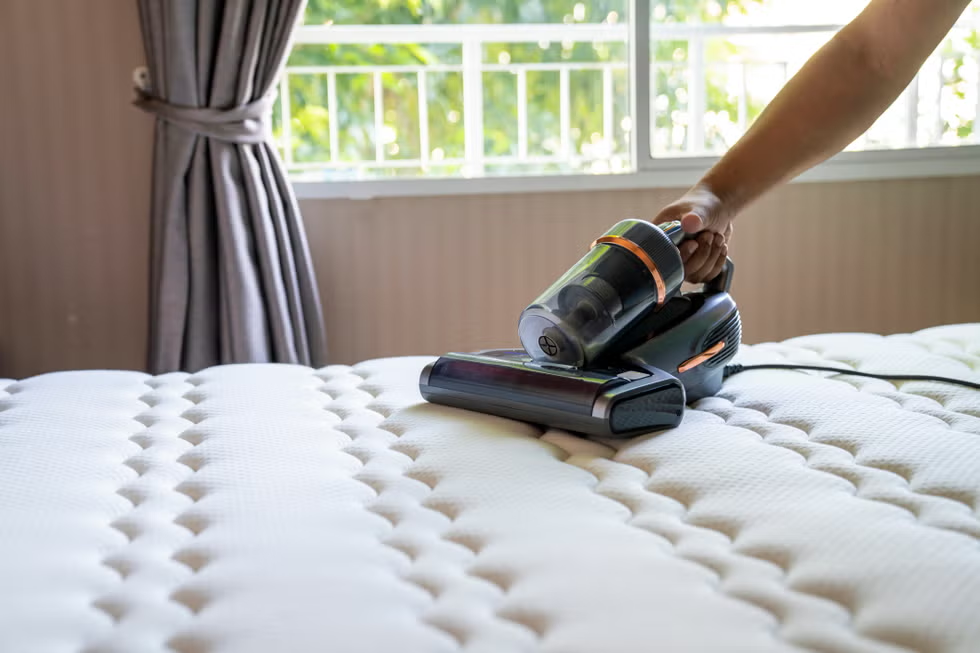
If you use a feather mattress topper, follow these care steps to keep it fluffy and supportive for comfortable inclined sleeping. Opt for smooth, breathable fabrics like cotton for sheets and pillowcases, and if you use a bamboo pillow, follow proper cleaning guidelines to avoid irritation from trapped allergens. If your hair is damp from a shower or night sweats, opt for a loose sleep hairstyle to keep it off your neck and reduce dampness that can make you chilled and disrupt rest.
Reduce Light And Noise Disruptions
Use blackout curtains or a sleep mask to block out light, which suppresses melatonin production and makes it harder to fall asleep even when you’re exhausted. If you live with other people or have a cough that wakes you up, a white noise machine or earplugs can block disruptive sounds. For more on this, see our guide on deep sleep tips.
Stock Your Bedside Table
Keep all essentials within arm’s reach so you don’t have to get out of bed multiple times a night:
- Lotion-infused tissues to reduce irritation from frequent nose blowing
- A full glass of water to stay hydrated and soothe a dry throat
- Any nighttime medications you’ve cleared with a healthcare provider
- A small trash can for used tissues
- A saline nasal spray for quick congestion relief
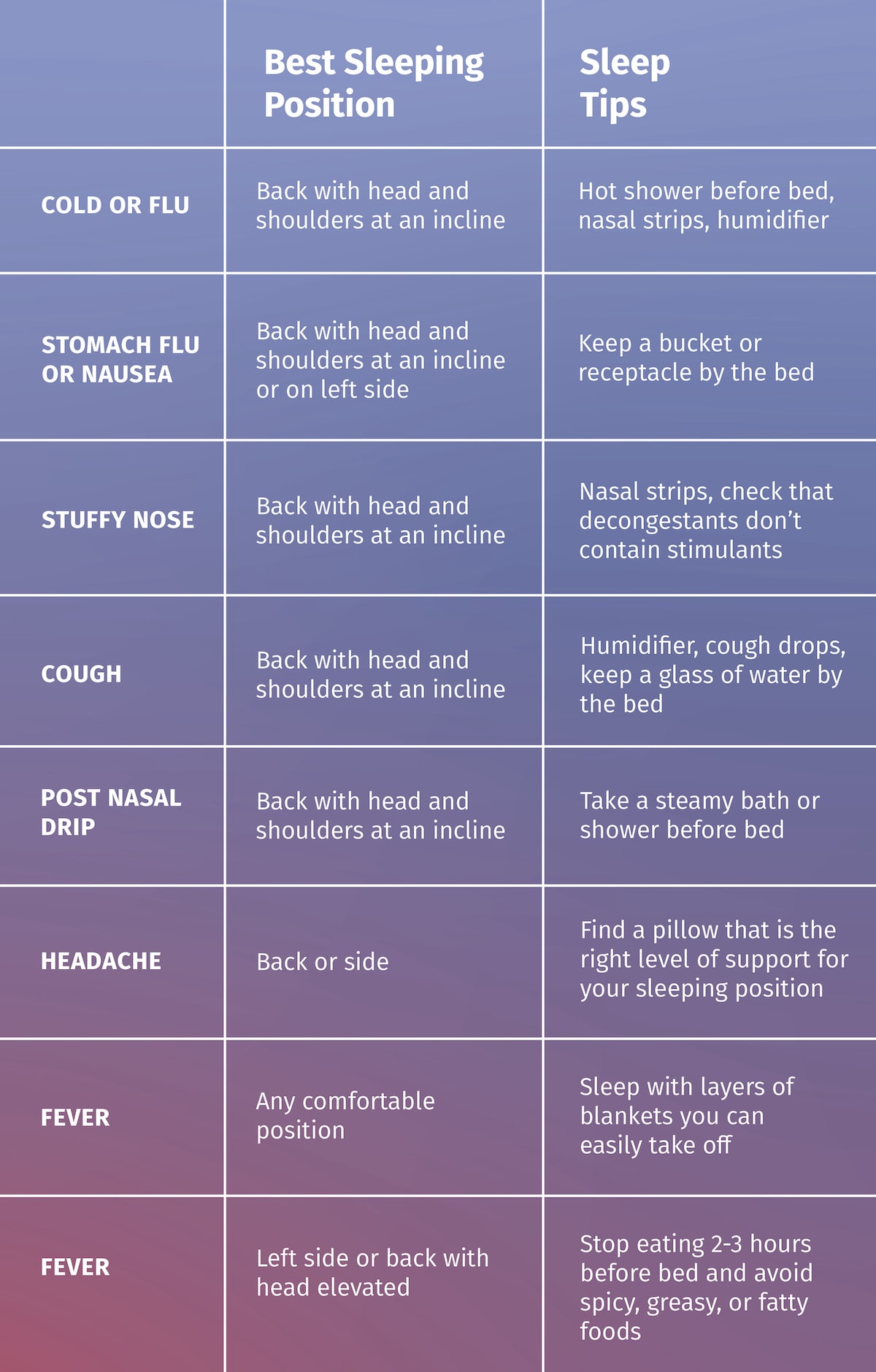 Image source: mattressclarity
Key steps to reduce flu symptoms and create a restful sleep environment
Image source: mattressclarity
Key steps to reduce flu symptoms and create a restful sleep environment
Optimal Sleep Positions To Ease Flu Symptoms
How you sleep has a huge impact on how bad your congestion, cough, and body aches feel at night. The goal is to keep your airways open, reduce mucus pooling, and avoid strain on your sore muscles.
Best Positions For Flu Symptom Relief
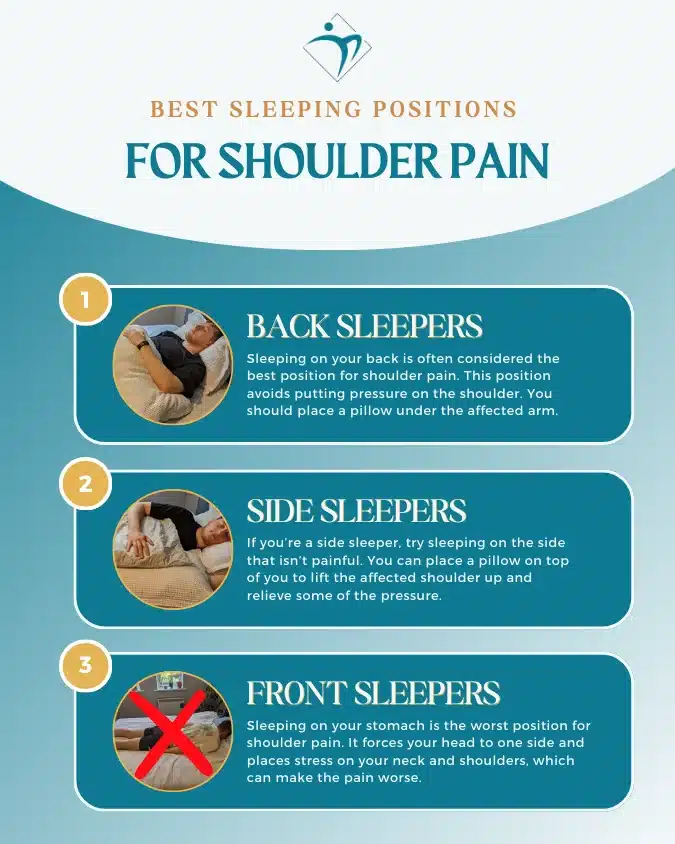
- Inclined back sleep: Stack 2–3 standard pillows or use a wedge pillow to raise your head and chest 15–30 degrees. This uses gravity to prevent post-nasal drip from pooling in the back of your throat, which is the main cause of nighttime coughing fits. Avoid propping only your head, as this can strain your neck and create new aches that keep you up. If your current topper has lumps or splits, follow these repair steps to restore even support, so inclined sleeping doesn’t cause neck strain.
- Side sleeping: If you have a severe cough that’s worse when lying on your back, or if you’re nauseous from flu medications, side sleeping is a good alternative. Place a pillow between your knees to keep your spine aligned and reduce pressure on your hips and lower back, which can be achy from fever.
- Avoid stomach sleeping: This position twists your neck, worsens congestion by pressing your face into the pillow, and puts pressure on your chest, making it harder to breathe if you have a cough.
A common mistake people make is sleeping completely flat to “rest easier,” but this almost always makes congestion and coughing worse. Even a small incline can cut nighttime coughing fits by half for most people with flu.
 Image source: wsj
An elevated sleep position reduces post-nasal drip and eases nighttime coughing
Image source: wsj
An elevated sleep position reduces post-nasal drip and eases nighttime coughing
Safe Symptom Relief For Better Flu Sleep
Over-the-counter (OTC) and natural remedies can drastically reduce flu symptoms that keep you up at night, but it’s critical to use them safely to avoid side effects or accidental overdose.
Over-The-Counter Medications
- Pain and fever reducers: Acetaminophen (paracetamol) or ibuprofen can ease fever, body aches, and headaches, making it easier to get comfortable. Never exceed the maximum daily dose, and avoid taking multiple cold/flu medications at once, as many contain overlapping acetaminophen, which can cause liver damage.
- Cough suppressants: If you have a dry, hacking cough that wakes you up repeatedly, a single-dose nighttime cough suppressant with dextromethorphan can help. Avoid multi-symptom cold medications unless you have all the symptoms they treat, to avoid unnecessary ingredients.
- Decongestants: Pseudoephedrine or phenylephrine clear nasal passages, but they are stimulants that can cause insomnia if taken too close to bedtime. Take them 4–6 hours before bed, and never use decongestant nasal sprays for more than 3 days, as they can cause rebound congestion that is worse than your original stuffy nose.
Natural, Non-Medication Remedies
- Honey: 1–2 teaspoons of honey in warm (not hot) herbal tea soothes a sore throat and reduces coughing. The American Academy of Pediatrics confirms honey is as effective as some OTC cough suppressants for children over 1 year old, with no harmful side effects. safe pediatric cough remedies Never give honey to infants under 1 year old, as it carries a risk of botulism.
- Saline nasal rinse: Use a neti pot or squeeze bottle with distilled or boiled (then cooled) water 30 minutes before bed to flush out mucus and reduce congestion.
- Steam inhalation: Lean over a bowl of hot water with a towel over your head for 10 minutes, or take a hot shower before bed to loosen thick mucus in your nasal passages and throat.
Safety Notes
Always check with a healthcare provider before taking any flu medications if you are pregnant, have a chronic condition (like high blood pressure, liver disease, or asthma), or are giving medications to children under 6. Never mix alcohol with flu medications, as it increases the risk of liver damage and worsens dehydration. If you’re also struggling with appetite loss during your illness, our flu nutrition support guide offers additional tips to maintain energy and speed recovery.
 Image source: portcitydaily
Always check medication labels for overlapping ingredients to avoid accidental overdose
Image source: portcitydaily
Always check medication labels for overlapping ingredients to avoid accidental overdose
Simple Bedtime Routines To Calm Flu Symptoms
A short, low-effort bedtime routine signals to your body that it’s time to wind down, even when you’re feeling unwell. Keep your routine simple to avoid expending extra energy, and focus on actions that reduce symptom discomfort:
- Drink a cup of warm, decaffeinated herbal tea (with honey, if you’re over 1) 30–60 minutes before bed to soothe your throat and stay hydrated.
- Use steam from a hot shower or humidifier for 10–15 minutes before lying down to loosen mucus.
- Do 2–3 slow, deep breaths to ease anxiety and slow your heart rate, which can be elevated from fever.
- Avoid screens for 30 minutes before bed, as blue light suppresses melatonin production and makes it harder to fall asleep.
- Blow your nose and use a saline spray right before getting into bed to clear congestion so you don’t have to fumble with tissues in the dark later.
 Image source: verywellhealth
A short, consistent routine signals your body it’s time to rest, even when you’re feeling unwell
Image source: verywellhealth
A short, consistent routine signals your body it’s time to rest, even when you’re feeling unwell
Daytime Habits That Improve Nighttime Flu Sleep
What you do during the day has a huge impact on how well you sleep at night, even when you’re sick. Small, intentional choices can reduce symptom severity and help you stay on a consistent sleep schedule.
- Prioritize hydration: Fever and sweating cause you to lose extra fluids, and dehydration thickens mucus, making congestion and cough worse at night. Aim for 8–10 ounces of water, broth, or herbal tea every 2 hours while awake. Avoid sugary drinks, caffeine, and alcohol, as all of these worsen dehydration and disrupt sleep.
- Eat light, easy-to-digest foods: Stick to small, frequent meals of broth, toast, bananas, rice, applesauce, and yogurt. Avoid heavy, fatty, or spicy foods, which can cause indigestion and make it harder to get comfortable.
- Move gently if you can: If your fever is below 101°F (38.3°C) and you feel up to it, 10–15 minutes of gentle movement (like walking around your house, stretching) can boost circulation, reduce body aches, and help you sleep better at night. You don’t need to push yourself—even sitting outside for a few minutes to get fresh air can help.
- Limit naps: If you need to rest during the day, keep naps under 30 minutes and before 3 PM. Longer or later naps push back your nighttime sleep window, making it harder to fall asleep even when you’re exhausted. To reduce allergen exposure while you rest, follow simple mattress protector care steps to keep your bedding free of dust and dander that can irritate a raw throat or congested nose.
 Image source: mucinex
Small daytime choices reduce nighttime discomfort and help you sleep more soundly
Image source: mucinex
Small daytime choices reduce nighttime discomfort and help you sleep more soundly
Common Mistakes To Avoid When Sleeping With The Flu
Even with good intentions, it’s easy to make choices that make your sleep worse when you have the flu. Avoid these common pitfalls:
- Taking decongestants right before bed: Many OTC decongestants contain stimulants that can keep you awake for hours, even if they clear your nose. Take them 4–6 hours before bed instead.
- Overbundling when you have a fever: Extra blankets raise your core body temperature, cause excessive sweating, and lead to shivering when the sweat dries. Wear light, layered cotton pajamas and keep an extra blanket nearby to add if you get cold.
- Ignoring persistent cough or worsening symptoms: If your cough keeps you up for more than 2 nights in a row, or if you’re coughing up green or yellow mucus, this could be a sign of a secondary bacterial infection like bronchitis or pneumonia that requires medical treatment.
- Pushing through fatigue: Many people try to work, do chores, or socialize when they have the flu, but this prolongs recovery and makes symptoms worse, leading to even more lost sleep. Give yourself permission to rest fully.
- Using expired or leftover medications: Check expiration dates on all OTC medications, and never use leftover antibiotics from a previous illness—flu is viral, so antibiotics are ineffective and contribute to antibiotic resistance when used unnecessarily.
- Sleeping with wet hair: If your hair is damp from a shower or night sweats, sleeping on it can make you chilled, worsen congestion, and lead to a stiff neck in the morning. If you need to sleep with damp hair, opt for a loose, breathable style to keep it off your skin.
People with pre-existing sleep conditions like sleep apnea may experience more severe flu symptoms, including worse congestion and more frequent nighttime wake-ups. If you have a diagnosed sleep condition, check in with your provider early in your illness to adjust your treatment plan if needed.
 Image source: apneamed
People with pre-existing sleep conditions may experience more severe flu symptoms and should seek care early
Image source: apneamed
People with pre-existing sleep conditions may experience more severe flu symptoms and should seek care early
When To See A Healthcare Provider
Most people recover from the flu at home with rest and symptom relief, but flu can lead to serious complications, especially for high-risk groups. Seek immediate medical care if you experience any of the following:
- Difficulty breathing, shortness of breath at rest, or chest pain/pressure
- Fever above 103°F (39.4°C) that doesn’t respond to acetaminophen or ibuprofen, or a fever that lasts more than 3 days
- Confusion, dizziness, or fainting
- Severe dehydration (dry mouth, no urination for 8+ hours, dark urine, dizziness when standing)
- Symptoms that improve, then suddenly get much worse (a sign of a secondary infection like pneumonia)
If you are in a high-risk group (adults over 65, children under 5, pregnant people, or people with chronic conditions like asthma, diabetes, or heart disease), seek care as soon as you notice flu symptoms. Antiviral medications like oseltamivir (Tamiflu) are most effective when taken within 48 hours of symptom onset, and can reduce the duration and severity of your illness.
 Image source: mattressclarity
Seek medical attention right away if you experience difficulty breathing or persistent high fever
Image source: mattressclarity
Seek medical attention right away if you experience difficulty breathing or persistent high fever
Frequently Asked Questions About Sleeping With The Flu
 Image source: restonic
Common flu symptoms like congestion and fever are the top causes of sleep disruption during illness
Image source: restonic
Common flu symptoms like congestion and fever are the top causes of sleep disruption during illness
How long does flu-related insomnia last?
Most people find their sleep improves within 3–5 days as symptoms like fever, congestion, and body aches start to fade. If you’re still struggling to sleep after 7–10 days, or if your symptoms worsen after an initial improvement, see a healthcare provider to rule out a secondary infection.
Is it safe to take sleep aids with flu medications?
Over-the-counter nighttime cold/flu medications often already contain a sleep aid (like diphenhydramine), so don’t take additional sleep aids unless a provider tells you to. Mixing multiple sedatives can cause excessive drowsiness, dizziness, and slowed breathing, especially if you’re already dehydrated or feverish.
Can I sleep with a fever?
Yes, as long as you take steps to stay cool: keep the room temperature between 60–67°F, wear light clothing, and drink water regularly. If your fever is above 103°F, or you’re experiencing confusion or severe chills, seek medical care instead of trying to sleep it off.
Should I sleep alone if I have the flu?
If you live with other people, sleeping in a separate room reduces the risk of spreading the virus to others, and also lets you control the room temperature, light, and noise to suit your needs without disturbing others.
Will sleeping more help me get over the flu faster?
Yes. Aim for 10–12 hours of sleep per night, plus short 20–30 minute naps during the day if you need them. Extra rest gives your immune system the energy it needs to fight the virus, and can reduce the duration of your illness in many cases.
Conclusion
Sleep is one of the most powerful, underused tools you have to recover from the flu faster. By prepping a cool, dark sleep space, using inclined positions to ease congestion, using symptom relief safely, avoiding common mistakes, and knowing when to see a doctor, you can reduce nighttime discomfort and get the rest your body needs to heal.
If you’re also looking to optimize your sleep environment long-term, explore our guides to choosing supportive bedding and keeping bedding fresh to reduce nighttime discomfort even when you’re well.

Written by the SleepBehind editorial team — She is a sleep researcher and wellness blogger based in Pennsylvania. Passionate about helping people optimize their sleep.