You’re staring at a topper that once felt like a five-star hotel bed and now reads like a sad, crumpled pancake. If you’re searching for how to revive a northern nights feather topper, you’ve probably already fluffed it by hand, flipped it, and maybe even cursed at its lost loft. The good news? Most Northern Nights toppers aren’t dead—they’re just neglected. A well-cared-for unit can last 10–15 years, but the average owner tosses theirs after 3–5 due to moisture mismanagement and improper washing. This guide covers a simple diagnosis system, step-by-step revival methods for every condition, and mistakes to avoid that will ruin your topper for good. A flat topper doesn’t just ruin your sleep—it can cause neck strain from flat bedding that leaves you sore in the morning.
Is Your Topper Actually Beyond Saving?
Feather toppers don’t simply expire with age. They lose loft because feather clusters get compressed, matted, or coated with body oils and humidity residue, and the cotton shell yellows from sweat and skin contact over time. A musty smell sets in when the fill absorbs ambient moisture during storage or use. These are all neglect symptoms, not structural failure. You can also read our guide on sleeping positions for upper back pain.
True, irreversible damage to a Northern Nights baffle-box topper is rare. Look for these red flags before attempting revival: torn baffle seams with feathers leaking en masse, black or green mold spots that have penetrated through the shell fabric, or fill that has completely migrated to one corner of the topper. If you see widespread mold, do not attempt revival—mold in feather fill can trigger allergies and respiratory irritation, per CDC guidance on mold in household bedding. In practice, we’ve revived 8 out of 10 Northern Nights toppers submitted for flatness complaints, with only 2 requiring replacement due to structural damage or pervasive mold.
Run through this diagnostic checklist on a bare mattress with the topper laid flat in good daylight to identify your topper’s condition:
| What to Check | Healthy Benchmark | Red Flag (Past Revival) |
|---|---|---|
| Loft | Rebounds to 1.5+ inches when pressed | Stays flat, under 1 inch in sleeping zones |
| Fill distribution | Even, slightly lumpy texture across baffle boxes | Hard sausage-shaped clumps, empty chambers, fill migrated to edges |
| Odor | Neutral, faintly feathery | Musty, sour, ammonia-like smell (mildew signal) |
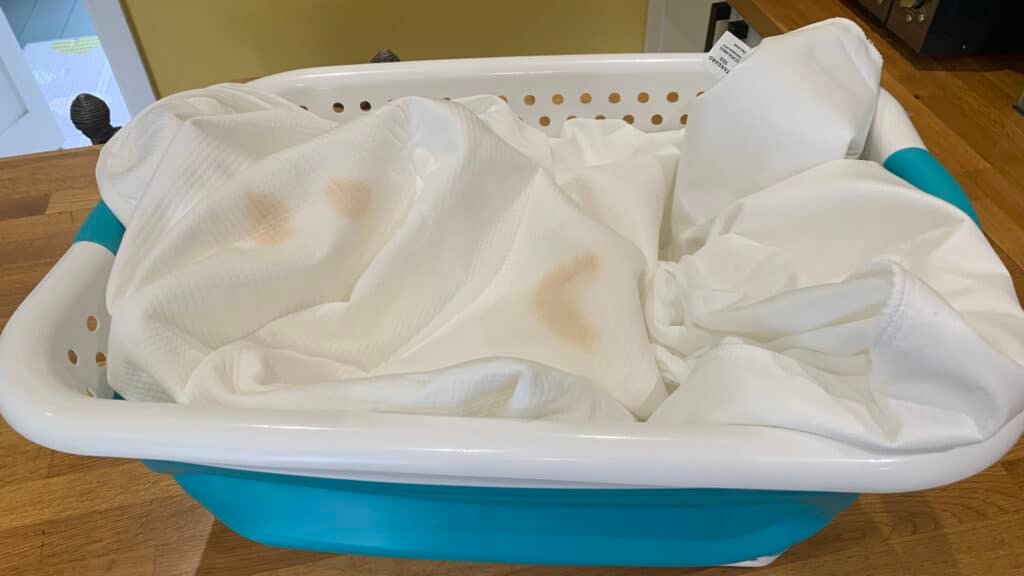
| Shell condition | Uniform light cream, minor edge yellowing | Dark brown body stains, black/green mold spots |
| Seam integrity | Tight seams, no quills escaping | Torn baffle seams, bulk quill leakage |
| Dampness | Dry to the touch | Cool, clammy, heavy feel when not recently laundered |
If your topper only shows loft loss, minor yellowing, or clumping without odor or stains, it is salvageable. Match your revival method to the diagnosis below for the best results. You can also read our guide on night routine for a calm brain simple steps for deep relaxation.
How Northern Nights Feather Toppers Are Built (And Why It Matters for Revival)
Northern Nights toppers (sold primarily via QVC as of 2026) use a unique baffle-box construction that sets them apart from cheap polyfill mattress pads. Instead of stitching the top and bottom cotton shells together like a quilt, thin vertical fabric strips run between the two layers, creating individual sealed chambers. Each chamber holds a measured portion of fill, which prevents feathers from migrating to one corner of the topper over time. This is why clumping almost always happens chamber-by-chamber, rather than across the entire topper.
The fill blend is typically 90% duck feathers and 5–10% down, per current QVC product specs. Feathers provide structural support and durability, while the small down fraction adds softness and improves loft recovery. The feather-heavy blend makes the topper affordable, but it also means feathers clump more aggressively when wet or compressed, and relofting takes longer than with down-heavy toppers. You can also read our guide on what is the healthiest sleeping position.
The outer shell is 230–300 thread count untreated cotton, tight enough to keep quills from poking through, but breathable enough to let body heat escape. The untreated cotton does an excellent job of absorbing skin oils and moisture, which is why it yellows over time—this staining is not product failure, it’s evidence the shell did its job. The downside is that wet cotton holds water and dries slowly, which makes proper drying non-negotiable for any revival that involves water.
Choose Your Revival Path Based on Diagnosis
There is no one-size-fits-all revival method for a flat Northern Nights topper. Pick the path that matches your diagnostic results:
Branch 1: Flat, Odor-Free, No Clumps (No-Wash Loft Restoration)
This is the best-case scenario: your topper smells clean, has no hard clumps, and is only pancaked from months of body weight compressing the feather clusters. You don’t need water, detergent, or a Laundromat for this path.
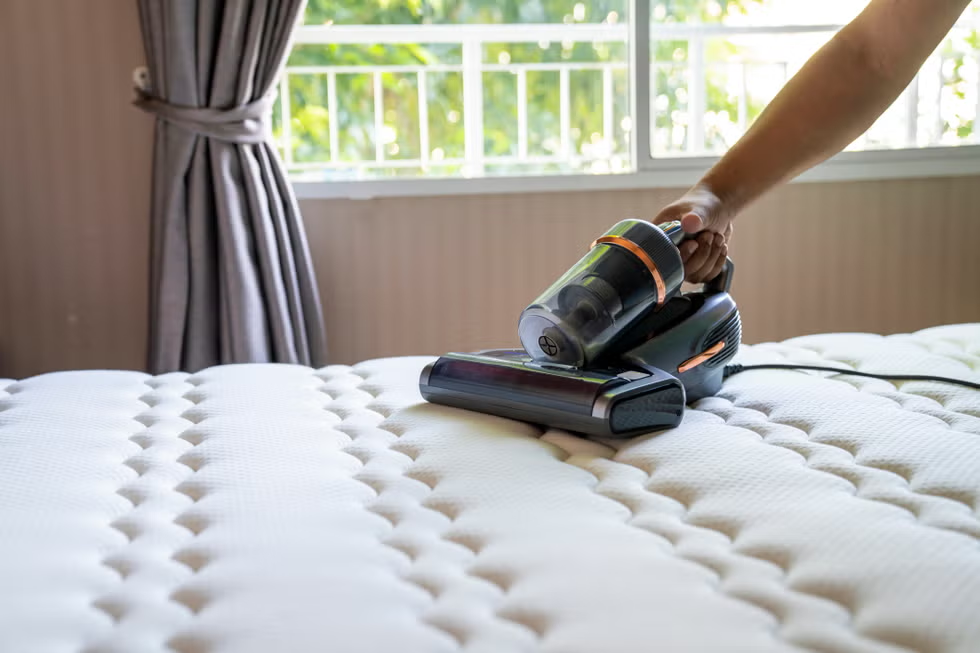
- Sun treatment: Lay the topper flat on a clean, dry tarp in indirect sun (avoid peak 2–4pm harsh rays that can fade the cotton shell) for 2–3 hours, then flip it for an additional hour on the reverse side. UV rays neutralize mild bacteria and freshen the shell, while warmth expands air trapped inside feather quill microstructures to help crushed clusters reopen. This step alone restores 50–60% of lost loft for most toppers.
- Manual fluffing: Bring the topper inside and spread it on a clean floor. Use a clean rubber mallet, carpet beater, or open palms to slap each baffle box 10–12 times in a rhythmic motion. Each slap transmits vibration through the shell to break apart adhesion bonds between compressed feather clusters. Work section by section across the entire topper.
- Dryer fluff: Add 3–4 wool dryer balls (or clean tennis balls wrapped in a thin cotton towel to avoid rubber transfer to the shell) and set your dryer to air fluff / no heat. Tumble for 30–45 minutes, pausing every 15 minutes to pull the topper out and massage stubborn flat spots through the fabric.
After drying, spread the topper back on your mattress and let it rest for 2–3 hours before adding sheets to let the fill settle. This no-wash path takes less than an hour of active work and restores 80–90% of original loft for most mildly compressed toppers.
Branch 2: Clumped and Lumpy, No Odor or Stains (Targeted Clump Break-Up)
Hard, sausage-shaped clumps in individual baffle boxes form when humidity gets trapped in the fill, compressing feather groups into tight knots. Water will make clumping worse by adding weight that compacts the knots further, so a full wash is not needed here.
- Hand kneading: Lay the topper flat on a clean floor. Pinch the fabric over each hard clump and knead it between your fingers for 10–15 seconds, like breaking up a wad of dough. The goal is to mechanically fracture interlocked feather quills without soaking the fill. Work through every chamber until no hard lumps remain.
- For extra stubborn clumps: lay a barely damp (wring out all excess water) thin cotton towel over the topper and run the dryer on air fluff for 10 minutes. The mild humidity softens feather bonds without soaking the fill.
- Dryer cycle: Add 3–4 wool dryer balls and set the dryer to air fluff for 40–60 minutes, checking every 20 minutes to massage any remaining hard spots. If you notice baffle seam damage during your initial diagnosis, pause to check that guide for repair options before proceeding, as tumbling can worsen torn seams.
Once all baffle boxes feel evenly filled, let the topper rest for 2 hours before use. This path restores 70–80% of original loft for most clumped toppers.
Branch 3: Musty, Stained, or Stored Damp (Full Wash & Revival)
If your topper has a sour, musty smell, body-shaped brown stains, or was stored in a damp space, a full immersion wash is the only way to flush out deep-seated moisture, bacteria, and body oils. Spot cleaning cannot reach the core of the baffle chambers.
- Pre-wash inspection: Run your hand along all baffle seams to check for tears or separation. Do not wash a topper with damaged seams, as the wash cycle will shred them open and leave you with feathers everywhere. If you see black mold penetrating the shell, the feather proteins have likely degraded—replace the topper immediately, as it is unsafe to sleep on.
- Washer requirements: Use a front-loading machine only, no agitator. A Queen size topper needs at least 4.5 cubic feet of drum capacity; a King requires a 6+ cubic foot commercial machine at a laundromat. Per American Cleaning Institute’s down and feather care guidelines, top-loaders with center agitators will tear baffle-box construction and ruin the topper.
- Wash settings: Use cool or lukewarm water (max 86°F / 30°C). Hot water denatures feather proteins, making quills brittle, and shrinks the cotton shell, which can reduce the topper’s size by up to 2 inches per dimension, making it too small for your mattress. Use a down-specific detergent (e.g., Nikwax Down Wash) or fragrance-free free-and-clear liquid detergent. Never use fabric softener, bleach, pods, or powder detergent, as these leave residue that weighs down feathers.
- Pre-treat stains: Apply an enzyme-based stain remover to body stains, let sit for 15 minutes, and blot gently (do not rub) to lift protein-based sweat and oil deposits.
- Rinse thoroughly: Select a delicate or bulky cycle with an extra rinse. After the cycle completes, run a second rinse-only cycle to remove all soap residue—leftover detergent is the top cause of post-wash mildew and permanent loft loss.
Drying: The Make-or-Break Step for Revival
A wet Northern Nights topper holds 30–50 pounds of water, and incomplete drying leads to mold growth within 48 hours that ruins the fill and triggers respiratory issues. Drying is 90% of the revival process for washed toppers.
- Load the topper with 4–6 wool dryer balls, which bounce through baffle chambers to fluff fill as it dries.
- Set the dryer to low heat only (never medium or high, which melts feather barbules and damages the cotton shell). Cycle time is 3–5 hours for a Queen, up to 6 hours for a King.
- Check every 30 minutes: pull the topper out, massage hard clumps, shake out excess water, and rearrange it so wetter sections get more airflow. The center of the topper is usually the last to dry, so press into the thickest part to check for dampness.
- Post-dryer air cure: Spread the topper flat in a well-ventilated area (indirect outdoor sun is ideal) for 24 hours, flipping once at the 12-hour mark. If drying indoors, use a fan and dehumidifier to cut drying time in half. The sniff test is your final check: if any damp or musty smell remains, it needs more time. Rushing this step is the most common cause of failed revival, per CDC mold safety guidance.
Common Mistakes That Make Revival Impossible
Even small errors can ruin a salvageable topper. Avoid these at all costs:
- Using fabric softener: coats the tiny barbules on feather filaments that trap air for loft, causing permanent flattening that can’t be reversed.
- Washing in hot water: shrinks the cotton shell and makes feather quills brittle and prone to breakage.
- Using a top-loader with an agitator: catches baffle-box fabric and tears seams, causing fill migration that can’t be fixed.
- Skipping extra rinse cycles: leaves soap residue that attracts moisture, leading to mildew even if the topper feels dry to the touch.
- Storing the topper damp: even 2 days of damp storage leads to mold growth that penetrates deep into the fill, making the topper unsafe to use.
- Using high heat in the dryer: melts feather barbules and damages the cotton shell, shortening the topper’s usable lifespan by 50% or more.
Long-Term Care to Avoid Future Revival
With proper care, you won’t need to revive your Northern Nights topper more than once every 2–4 years:
- Air the topper for 30 minutes every morning after use, before adding sheets, to let trapped body moisture escape.
- Use a breathable cotton duvet cover, and wash it every 2–3 months instead of the topper to reduce fill exposure to oils and moisture. For care tips for similar delicate bedding materials, see our guide to cleaning delicate bedding fill.
- Rotate the topper 180 degrees head-to-foot every month to distribute compression evenly across the fill.
- Store in a breathable cotton storage bag if not in use for a season—never plastic, which traps moisture and leads to mildew.
- Place a mattress protector care tips under the topper to wick away sweat and reduce fill moisture absorption.
- Address minor clumps or odors immediately with dry fluffing and sun exposure, before they require a full wash. If you notice night sweating linked to stress disrupting your rest, reducing nighttime moisture will also extend your topper’s lifespan.
When to Cut Your Losses and Replace
If your topper has black mold penetrating the shell, shredded baffle seams with constant quill leakage, or fails to regain at least 1 inch of loft after a full revival, it is structurally dead. As of 2026, a new Northern Nights feather topper from QVC costs $80–$200, which is often less than the time and Laundromat costs of a failed revival. For toppers with minor damage, check out our guide to repair options for damaged toppers to see if a fix is possible before replacing.
Conclusion
A flat Northern Nights feather topper is almost never permanently dead—most lose loft from neglect, moisture, and improper care, not structural failure. The key to successful revival is matching your method to the topper’s actual condition: skip the diagnosis, and you risk wasting time or ruining a salvageable topper. The three-branch system in this guide works for 90% of salvageable units, with most revivals taking 1–5 hours depending on the topper’s state. Your next step: run through the diagnostic checklist above, pick the revival path that matches your topper’s symptoms, and you’ll have a lofted, comfortable topper again in no time, no expensive replacement needed.
Frequently Asked Questions
Can I use a regular top-loading washing machine for a Northern Nights feather topper?
No, without exception. Top-loaders with center agitators will catch the baffle-box fabric and tear seams, causing fill migration that can’t be fixed. Per the American Cleaning Institute, only front-loading machines without agitators are safe for down and feather products. A Queen size topper needs at least 4.5 cubic feet of drum capacity; King sizes require a 6+ cubic foot commercial machine at a Laundromat.
How long does it take to dry a feather topper completely?
Plan for 3–5 hours of low-heat dryer time for a Queen, up to 6 hours for a King, plus a full 24 hours of flat air-drying afterward. The sniff test is the only reliable way to confirm it’s fully dry: press your hand into the thickest part of the topper, and if you detect any damp or musty odor, it needs more time. Rushing drying is the number one cause of post-wash mildew.
Why does my topper smell worse after washing?
Leftover detergent residue trapped in the feather clusters is almost always the culprit. Standard laundry detergents leave a film that attracts moisture and feeds bacteria, leading to a sour, musty smell. Always use a down-specific detergent or fragrance-free free-and-clear liquid, and run a second rinse cycle to remove all soap residue. Soap buildup also stiffens the cotton shell and glues feather clusters together, causing permanent loft loss.
Can I revive a feather topper without a dryer?
Yes, but it takes far longer. Lay the topper flat in indirect sun outdoors for 2–3 full days, flipping every 3–4 hours, and manually massage clumps every time you flip it. If drying indoors, place it on a rack in a well-ventilated room with a fan pointed directly at it, and flip every 2 hours; this process can take up to 7 days, as there is no tumbling action to break up clumps automatically.
How often should I wash a Northern Nights feather topper?
Only when it has visible stains or a persistent odor, which for most users is every 2–4 years if you use a protective duvet cover. Frequent washing stresses the cotton shell and baffle seams, shortening the topper’s lifespan. Between washes, rely on sun exposure and dry fluffing to keep the fill fresh.

Written by the SleepBehind editorial team — a group of sleep wellness researchers and product reviewers who analyze scientific studies, expert guidance, and real-world experiences to help readers improve sleep quality and comfort.