

Upper back pain—discomfort in the thoracic spine between your neck and lower back—is one of the most common reasons people wake up feeling stiff and unrested. It often stems from daytime hunching over desks, phones, or heavy bags, but the wrong sleep position can leave that strain in place overnight, slowing muscle repair and worsening flare-ups. The right sleeping setup, however, can reduce pressure on your upper back, ease muscle tension, and help you wake up with less pain. This guide shares practical, experience-backed tips for adjusting your sleep position, support tools, and nightly routine to find relief, no expensive upgrades required.
Why Upper Back Pain Worsens At Night
Upper back pain often starts from poor posture during the day: sitting hunched at a desk, looking down at a phone, or carrying heavy bags on one shoulder strain the thoracic spine and surrounding muscles (including the trapezius, rhomboids, and erector spinae), per Cleveland Clinic’s upper back pain guidance. Nighttime is when your muscles repair, so if your sleep position keeps the thoracic spine twisted, rounded, or under uneven pressure, you’ll wake with increased stiffness and soreness. You can also read our guide on surgical pillow for neck support. Unlike the flexible lower back, the thoracic spine is designed for stability, not range of motion, so it’s more prone to strain from prolonged awkward positioning. In rare cases, upper back pain at night can signal a more serious issue like a herniated disc, spinal stenosis, or referred pain from internal organs, which is why it’s important to track symptoms and seek care if pain persists.

Best Sleeping Positions For Upper Back Pain Relief
Choosing the right sleep position is one of the fastest ways to ease upper back discomfort. Below are the most effective positions, how to set them up correctly, and common mistakes to avoid. Back sleeping is the most research-backed position for reducing musculoskeletal pain during sleep, as it keeps the thoracic spine neutral and avoids twisting, according to NIH research on sleep posture and discomfort. You can also read our guide on donama cervical pillow for neck and shoulder.
Back Sleeping (Supine)
Back sleeping is the top recommendation for most people with upper back pain, as it distributes weight evenly across the spine and prevents the mid-back from twisting or rounding during the night.
- Use a thin, medium-firm pillow that keeps your head aligned with your spine: your ear should line up straight with your shoulder when lying flat, no tilting forward or backward.
- Place a small, firm pillow or rolled towel under your knees to reduce lower back strain, which can pull the thoracic spine out of alignment.
- If you have noticeable thoracic kyphosis (hunching of the mid-back), add a small, soft lumbar roll just below your shoulder blades for gentle support to keep the spine from collapsing into the mattress. In practice, most people see reduced nighttime stiffness within 3 to 5 nights of switching to back sleeping with proper support. A common mistake is using a too-thick pillow, which tilts the head forward and strains the neck and upper back.
Side Sleeping (Fetal Or Straight-Aligned)
Side sleeping is a great alternative for people who find back sleeping uncomfortable, especially if you have coexisting shoulder or neck pain that contributes to upper back discomfort.
- Use a pillow tall enough to fill the gap between your ear and shoulder (usually 4 to 6 inches for most adults) to keep your neck aligned with your spine.
- Hug a firm body pillow to keep your top shoulder from rolling forward, which prevents the thoracic spine from twisting.
- Place a thin pillow between your knees to keep your hips aligned, so your spine doesn’t sag or rotate during the night. If you have scoliosis or uneven shoulders, use a slightly thicker pillow on the side of your lower shoulder to keep your spine straight. A common mistake is using a too-soft pillow that collapses under your head, leading to misalignment and increased strain.
Stomach Sleeping (Prone) — Temporary Workarounds Only
Stomach sleeping is the least recommended position for upper back pain, as it forces your neck to turn 90 degrees to one side for hours, straining the cervical and upper thoracic vertebrae, and arches the lower back, pulling the mid-back out of alignment. If you absolutely cannot break the habit of stomach sleeping, use these temporary adjustments to reduce strain:
- Use a very thin, flat pillow (or no pillow at all) under your head to reduce neck strain.
- Place a thin, firm pillow under your hips to reduce the arch in your lower back, taking pressure off the thoracic spine. Note that these are stopgap measures only. Retraining to back or side sleeping will deliver far better long-term relief for upper back pain.
 Side sleeping with a body pillow and knee cushion prevents spinal twisting and shoulder roll-forward.
Source: cloudfront.net
Side sleeping with a body pillow and knee cushion prevents spinal twisting and shoulder roll-forward.
Source: cloudfront.net
Pillow And Mattress Adjustments For Spinal Alignment
Small changes to your support tools can make a big difference in reducing upper back pain during sleep, even if your sleep position stays the same.
- Pillow height: The right pillow keeps your head in line with your spine. Too tall or too flat strains the neck and upper back. Side sleepers usually need a taller pillow than back sleepers to fill the gap between the ear and shoulder.
- Pillow firmness: Medium-firm pillows work best for most side sleepers, while back sleepers prefer low to medium firmness to avoid tilting the head forward. Memory foam contours to the neck for extra support, while latex or down offers a softer feel for back sleepers.
- Mattress firmness: A medium-firm mattress supports the spine and prevents sagging that twists the upper back. If you sleep on your side, look for a medium mattress with a plush top layer to cushion your shoulders. Test mattress support by lying on your back and sliding a hand under your lower back: if there’s a large gap, the mattress is too firm; if your hand can’t fit at all, it’s too soft.
- Specialty pillows: Cervical contour pillows or small thoracic rolls can provide extra support for people with chronic upper back pain or spinal conditions like kyphosis.
- Replacement timeline: Most standard pillows need replacing every 12 to 18 months, as flattened fill loses support and can worsen spinal misalignment. If you use a bamboo pillow, follow proper cleaning guidelines to extend its lifespan and maintain loft. Mattresses typically need replacing every 7 to 10 years, as sagging can cause uneven spinal alignment. In practice, testing one pillow or adjustment at a time for 3 to 4 nights is the best way to find what works for your body, rather than overhauling your entire setup at once. If your mattress is sagging, a high-quality topper can add support without the cost of a full replacement. A protective mattress layer also guards against spills and wear that can degrade support over time.
 Proper pillow height fills the gap between the ear and shoulder to keep the neck aligned with the spine.
Source: hopkinsmedicine.org
Proper pillow height fills the gap between the ear and shoulder to keep the neck aligned with the spine.
Source: hopkinsmedicine.org
Nighttime Routine And Sleep Hygiene To Reduce Stiffness
Good sleep habits reinforce the benefits of proper sleep positioning by relaxing tense muscles and improving overall sleep quality, which supports tissue repair.
- Gentle pre-bed stretch: Do 2 to 3 minutes of thoracic mobility work before bed to counteract daytime hunching. Try seated thoracic rotations: sit on the edge of a chair, place your hands behind your head, and gently rotate your upper torso left and right, holding each stretch for 10 seconds. You can also do cat-cow stretches on all fours to release mid-back tension.
- Heat therapy: Use a warm heating pad or take a warm shower for 10 to 15 minutes before bed to ease tight muscles and improve circulation to the upper back.
- Position check: Take 30 seconds before lying down to arrange your pillows and position yourself in your chosen sleep position, so you don’t toss and turn for 20 minutes trying to get comfortable.
- Avoid pre-bed screen time: Scrolling on your phone in bed encourages forward head posture, which strains the upper back before you even lie down. Avoid screens for 30 minutes before bed, or use blue light filters if you must use them.
- Consistent sleep schedule: Going to bed and waking up at the same time every day helps your body repair muscle tissue more efficiently, reducing overall stiffness.
- Reduce nighttime tossing and turning: If you often wake with your hair messy from shifting positions, adjusting your sleep setup can help you keep hairstyles intact while reducing upper back strain. If you often go to bed with damp hair, adopting a gentle nighttime hair routine can reduce scalp irritation and discomfort that might cause you to shift into awkward, pain-inducing positions during the night. From hands-on experience, a warm shower followed by 5 minutes of gentle thoracic extension (leaning back slightly with hands behind your head while seated) reduces next-morning stiffness for most people with upper back pain. Stick with a simple, consistent routine for the best results.
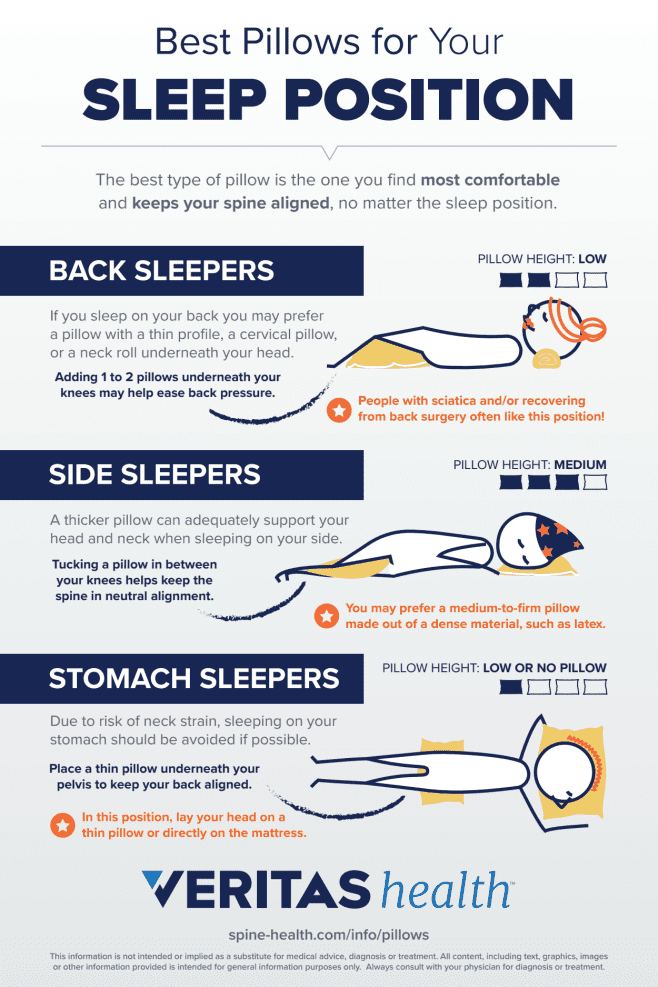 This infographic breaks down pillow selection criteria for different sleep positions.
Source: cloudinary.com
This infographic breaks down pillow selection criteria for different sleep positions.
Source: cloudinary.com
Common Mistakes To Avoid When Adjusting Your Sleep Setup
Many people make small errors when trying to adjust their sleep for upper back pain that can worsen discomfort or delay relief. Avoid these common pitfalls:
- Overhauling your setup all at once: Changing your pillow, mattress, and position all in the same week makes it impossible to tell what’s helping. Adjust one variable at a time, test for 3 to 4 nights, then make another change if needed.
- Ignoring neck alignment: Many people focus only on lower back support, but a misaligned neck pulls the entire upper spine out of position, worsening upper back pain.
- Using old, flattened pillows: Most pillows lose their support after 12 to 18 months of use. A flattened pillow tilts the head and strains the neck and upper back, even if it feels comfortable at first.
- Sleeping on a couch or recliner long-term: These surfaces don’t support the spine evenly and often cause the mid-back to hunch, worsening pain over time.
- Sleeping on a mattress that’s too soft or too firm: A too-soft mattress lets your spine sag, while a too-firm mattress puts pressure on the upper back. Use the hand test outlined above to find your ideal firmness. For feather topper owners, simple fill restoration steps can add support without replacing the entire mattress.
When To See A Doctor Or Physical Therapist
Most upper back pain from poor sleep position resolves within 4 weeks of consistent adjustments to your setup, but some cases require professional care. Seek medical attention if you experience any of the following:
- Pain that wakes you up multiple times a night, even after adjusting your sleep position and support tools
- Numbness, tingling, or weakness in your arms or hands
- Pain that spreads to your chest, or is accompanied by shortness of breath, fever, or unintentional weight loss
- Loss of bladder or bowel control (this is a medical emergency, as it can indicate spinal cord compression) If you have a history of spinal injury, osteoporosis, arthritis, or other chronic conditions, consult your doctor before making major changes to your sleep setup to avoid aggravating underlying issues. A physical therapist can assess your posture, provide targeted exercises to strengthen the muscles supporting your thoracic spine, and recommend custom support tools like specialized cervical pillows or nighttime back braces for long-term relief.
 Red flags that indicate upper back pain may require professional medical evaluation.
Source: sleepfoundation.org
Red flags that indicate upper back pain may require professional medical evaluation.
Source: sleepfoundation.org
Frequently Asked Questions
What is the best sleeping position for upper back pain?
Back sleeping with a thin, supportive pillow and a pillow under the knees is the most recommended position for most people, as it keeps the thoracic spine neutral. Side sleeping with proper neck and knee support is a great alternative for those who find back sleeping uncomfortable.
Can a mattress cause upper back pain?
Yes. A mattress that is too soft lets your spine sag, while one that is too firm puts excess pressure on the upper back. A medium-firm mattress usually supports a neutral spine best for people with upper back pain.
How long does it take to see relief from changing sleep positions?
Many people notice reduced nighttime stiffness within 3 to 5 nights of adjusting their position and support tools. Full relief, as muscles relax and adapt to the new position, usually takes 2 to 4 weeks of consistent use.
Are special pillows worth the cost?
Specialized pillows (like cervical contour pillows or thoracic rolls) can be worth the investment if you have chronic upper back pain or a spinal condition like kyphosis, as they provide targeted support that standard pillows don’t. Test any specialty pillow for at least 2 weeks before deciding if it works for you.
Can exercises help if I sleep badly?
Yes. Daily thoracic mobility and posture exercises (like seated rotations and chest openers) strengthen the muscles that support your upper back, making any sleep position more comfortable and reducing pain long-term. A physical therapist can create a safe, personalized exercise plan for your needs.
Is it bad to sleep on my side if I have upper back pain?
No, side sleeping is not bad for upper back pain if you use a pillow that keeps your neck aligned with your spine and support between your knees to keep your hips aligned. It’s especially helpful for people whose upper back pain is linked to shoulder or neck strain.
Should I sleep with a pillow under my upper back if I have kyphosis?
Yes, a small, firm pillow placed vertically along the thoracic spine can provide gentle support to reduce rounding, but avoid overly thick pillows that force your spine into an unnatural curve.
Can sleeping on a wedge pillow help upper back pain?
A wedge pillow can help if you have acid reflux that worsens pain when lying flat, but a steep wedge can arch your back and increase strain. Opt for a 6 to 8 inch wedge if you use one, and pair it with a thin pillow for your head to keep your neck aligned.
 Common questions about sleep position and upper back pain, answered with evidence-aligned guidance.
Source: nih.gov
Common questions about sleep position and upper back pain, answered with evidence-aligned guidance.
Source: nih.gov
Conclusion
Improving your sleep position for upper back pain doesn’t require a complete bedroom overhaul—small, consistent changes deliver the best results. Start with one adjustment this week: either switch to back sleeping with a knee pillow, or add a supportive body pillow to your side sleeping setup. Track your pain levels each morning for 2 to 3 weeks to see what works for your body. Pair position changes with short pre-bed stretches, heat therapy, and a consistent sleep schedule for the best outcomes. If pain persists after a month of consistent changes, schedule an appointment with a physical therapist to get a personalized care plan. If you’ve found a sleep position that eases your upper back pain, share your tips in the comments below to help others find relief.

Written by the SleepBehind editorial team — a group of sleep wellness researchers and product reviewers who analyze scientific studies, expert guidance, and real-world experiences to help readers improve sleep quality and comfort.