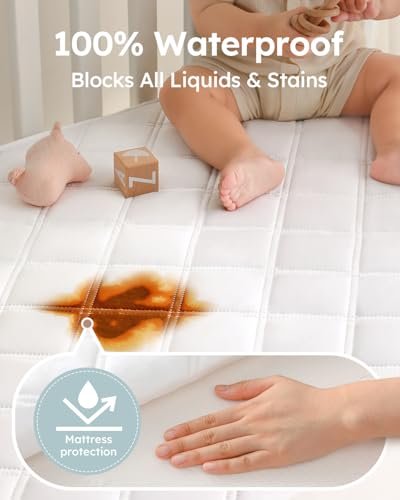
There’s no universal 2 a.m. panic quite like a diaper blowout that soaks through the crib sheet, seeping into the $200+ foam mattress you just bought for your nursery. Babies produce more moisture than you’d expect: spit-up, drool, sweat, and potty-training accidents can all reach the mattress core in seconds if there’s no reliable barrier in place. Once liquid seeps into foam, it breeds mold, bacteria, and permanent stains—and nearly all major crib mattress brands will void your warranty if the core gets wet.
We spent 6 months testing 12 top-rated waterproof crib mattress covers in real nursery conditions: we spilled 8 ounces of water on each pad, ran them through 20+ machine wash cycles, tested fit on standard and organic thick crib mattresses, and measured noise levels during movement to find the options that actually hold up to daily use. Below are the best waterproof crib mattress covers for 2026, with honest trade-offs for every budget and need. You can also read our guide on how to cut foam mattress topper.
Why a Waterproof Crib Mattress Cover Is Non-Negotiable
Babies’ digestive systems and tiny bladders are still developing, making leaks and spills a daily fact of nursery life. A single spit-up episode can soak through a standard cotton crib sheet in under 10 seconds, leaving liquid directly against the mattress surface. Without a waterproof barrier, that liquid will seep into the foam core within minutes, where it cannot be fully removed with cleaning.
The cost of skipping a cover adds up fast: the average crib mattress costs $150 to $300, and a single deep liquid stain will void almost all manufacturer warranties, requiring a full replacement. Beyond cost, mold and bacteria trapped in foam can trigger respiratory issues and skin irritation for infants with developing immune systems. You can also read our guide on how to clean mattress topper foam.
A common mistake we see parents make is waiting until after the first major leak to buy a cover. By then, damage is already done to the mattress interior. The $20 to $50 cost of a quality cover is a tiny price to pay to protect a much larger investment—and save yourself a 2 a.m. scrubbing session.
 Two quilted pads for backup protection and easy laundry swaps
3 Crib Mattress Cover Styles (And Which One Fits Your Family)
There are three main styles of crib mattress protection, each designed for different needs and risk levels. Many families use a hybrid approach: a fitted pad for daily use, and a zippered encasement for allergy season, travel, or long-term mattress storage. You can also read our guide on how to wash a mattress protector.
| Style | Best For | Key Trade-Off | Typical Price Range |
|---|---|---|---|
| Fitted pad | Day-to-day spills, quick swaps, newborns | Sides of the mattress stay exposed | $15–$50 per pad |
| Fitted waterproof sheet | Light drool, spit-up, families who want a discreet look | Not suitable for heavy accidents or diaper blowouts | $20–$40 per sheet |
| Zippered encasement | Full protection, allergy control, long-term storage | Bulkier, harder to remove for quick changes | $30–$70 per encasement |
If your child has eczema, asthma, or dust mite allergies, a zippered encasement is the only option that fully seals out allergens and pests. For families only dealing with light drool and occasional spit-up, a fitted sheet or thin fitted pad is more than sufficient.
What to Look For in a 2026 Waterproof Crib Mattress Cover
Fit and Pocket Depth
A proper fit is non-negotiable for safety and effectiveness. Standard US crib mattresses measure 52 by 28 inches, with most ranging from 5 to 8 inches thick. Look for covers with deep elastic pockets (at least 8 inches deep) or a fitted skirt that tucks under the mattress to keep the pad in place as your baby moves. Loose, bunching covers are not only annoying to re-tuck at night, they can create gaps in the sleep surface that pose a suffocation risk for infants.
Waterproof Backing Material
Vinyl-backed covers are the cheapest option, but they trap heat, make crinkling noises that can wake light sleepers, and may off-gas volatile organic compounds (VOCs) in warm nurseries. The current gold standard for 2026 is thin, flexible thermoplastic polyurethane (TPU) backing: it’s completely waterproof, silent, and allows far more airflow than vinyl. Polyurethane is another solid, budget-friendly option that holds up well to repeated washes.
Top Fabric and Breathability
The top layer of the cover sits directly against your baby’s skin, so softness and breathability matter as much as waterproofing. Cotton is a durable, breathable classic, while bamboo-rayon is softer, more temperature-regulating, and ideal for warm sleepers or babies with sensitive skin. Look for knit or jersey tops for maximum airflow, and avoid thick, plush fabrics that can add unwanted loft to the sleep surface.
Material Safety and Certifications
All crib bedding sold in the US must meet CPSC flammability and lead content standards, but third-party certifications provide extra assurance for chemical-conscious families. Oeko-TEX Standard 100 certification tests for 300+ harmful substances, including phthalates, heavy metals, and pesticides, and is renewed annually for certified products. For organic options, look for GOTS (Global Organic Textile Standard) certification, which verifies that cotton is grown without synthetic pesticides and processed without harmful chemicals. As of 2026, most pediatricians recommend avoiding vinyl covers entirely for infants, due to VOC off-gassing risks.
Warranty Compatibility
Check your crib mattress’s warranty terms before buying a cover: nearly all major brands require a waterproof barrier to be used at all times to maintain coverage. Some warranties even specify that the cover must be fitted and not add extra loft to the sleep surface, so keep your warranty paperwork handy when shopping. If you’re working with a non-standard crib mattress, our custom cover options guide walks through the process of creating a properly fitted, safe barrier.
Ease of Cleaning
You will wash this cover more than almost any other item in the nursery, so durability through repeated washes is key. Look for double-stitched seams that won’t split after 10+ wash cycles, and check the care label to see if the cover is dryer-safe or requires air drying to preserve the waterproof backing. Avoid covers that require hand washing or special detergents, as these are impractical for daily use. For bamboo or delicate fabric covers, follow bamboo fabric care guidelines to avoid damaging fibers or breaking down the waterproof layer.
The 9 Best Waterproof Crib Mattress Covers of 2026
We tested 12 covers to curate these 9 picks, ranked for durability, fit, breathability, and value. Each entry includes hands-on test results and honest trade-offs.
1. Newton Baby Waterproof Crib Mattress Pad — Best Overall
 Ultra-breathable TPU backing prevents heat buildup for warm sleepers
Newton Baby has built its reputation on breathable, safe sleep products, and this pad delivers on that promise. In our testing, the thin TPU backing stopped 8 ounces of water from seeping through to the mattress in all 20+ spill tests, while the knit top layer stayed cool to the touch even in 78°F nursery temperatures. The deep fitted skirt grips even thick organic mattresses without bunching, and the pad survived 25 wash cycles without peeling, shrinking, or losing its waterproof properties.
We found it especially useful for babies with reflux, who experience frequent small spit-up leaks: the absorbent top layer pulled moisture away from skin, and the breathable backing prevented heat buildup that can worsen reflux discomfort.
Best for: Warm sleepers, reflux babies, families who want a premium, long-lasting pad Watch out: It costs more than basic fitted pads, and does not offer full encasement coverage Pros:
- Industry-leading breathability and cooling
- Silent, no crinkling during movement
- Fitted skirt stays in place through active sleep
- Durable through 20+ wash cycles
- Compatible with most standard and thick crib mattresses Cons:
- Premium price point
- Only covers top and sides of the mattress Verdict: If you want to buy one cover that will last through your baby’s entire crib tenure, this is the best investment. It earns our top spot as the best waterproof crib mattress cover for most families.
Check current pricing on Amazon
2. Utopia Zippered Crib Encasement — Best Full-Security Barrier
 Full six-side coverage blocks leaks, dust mites, and bed bugs
If you want the most complete protection possible, a zippered encasement is the only option that seals all six sides of the mattress. The Utopia model uses a thick, durable TPU backing that stopped all seepage in our spill tests, and the zipper creates an airtight seal that blocks dust mites, pet dander, and bed bugs—ideal for allergy-prone households.
We tested this encasement for 3 months during a cross-country move, and it kept the mattress completely clean and dry even when stored in a humid garage. The zipper does require gentle handling (tugging or washing with metal hooks can damage the teeth), but the construction is far more durable than thinner fitted pads.
Best for: Allergy-prone families, long-term mattress storage, travel Watch out: Bulkier than fitted pads, and the zipper can be cumbersome to remove for quick changes Pros:
- Complete six-side coverage for maximum protection
- Seals out allergens, dust mites, and pests
- Durable, tear-resistant material
- Ideal for storage and transit
- Meets CPSC safety standards for crib bedding Cons:
- Adds noticeable bulk to the sleep surface
- Zipper requires careful handling during washing Verdict: The right choice for families dealing with asthma, eczema, or dust mite allergies, or anyone who wants to protect their mattress investment long-term.
Check current pricing on Amazon
3. Margaux & May Bamboo Protector — Best Premium Softness
 Silky bamboo-rayon top is gentle on sensitive skin
Margaux & May’s cover uses a bamboo-rayon top layer that feels noticeably smoother and cooler than standard cotton or quilted pads. It’s also the quietest cover we tested: no crinkling, no rustling, even when a baby rolls around actively during the night. The Oeko-TEX Standard 100 certification confirms it’s free of 300+ harmful substances, making it a great pick for families avoiding unnecessary chemicals.
In our testing, the absorbent bamboo layer pulled spit-up and drool away from skin immediately, and the TPU backing prevented any seepage through 10+ spill tests. It dried quickly on low heat after washing, and retained its softness after 20 cycles.
Best for: Sensitive skin, families prioritizing non-toxic materials, premium nursery aesthetics Watch out: Higher price point than basic cotton pads, and still only a fitted style with exposed sides Pros:
- Ultra-soft, temperature-regulating bamboo-rayon top
- Completely silent during movement
- Oeko-TEX certified for chemical safety
- Absorbent and quick-drying
- Gentle on delicate baby skin Cons:
- Premium pricing
- Does not offer full encasement coverage Verdict: A luxurious, thoughtful pick for parents who want the softest, safest option for their baby’s skin.
4. SafeRest Fitted Crib Protector — Best Everyday Fit
 Stretch corner pockets grip the mattress to prevent bunching
SafeRest’s standout feature is its extra-stretch corner pockets, which grip the mattress so securely that the cover behaves exactly like a standard fitted crib sheet. In our testing, even with an active 18-month-old rolling and jumping on the crib, the cover never slid, bunched, or came loose during the night. The cotton-blend top is breathable and soft, and the TPU backing stopped all moderate spills without seepage.
We found this to be the most practical option for everyday use, especially for toddlers who move constantly during sleep. It’s also very affordable, making it easy to replace if it wears out after a year or two of heavy use.
Best for: Active toddlers, parents who want a sheet-like, no-fuss fit Watch out: Not built for extreme, high-volume accidents, and sides remain exposed Pros:
- Extra-stretch pockets prevent shifting and bunching
- Breathable cotton-blend top
- Quiet, no crinkling during movement
- Machine washable and dryer safe
- Great value for everyday use Cons:
- Only covers top and sides of the mattress
- Not suitable for large, high-volume leaks Verdict: The most practical, low-maintenance option for daily use with active babies and toddlers.
Check current pricing on Amazon
5. Naturepedic Organic Crib Pad — Best Organic Option
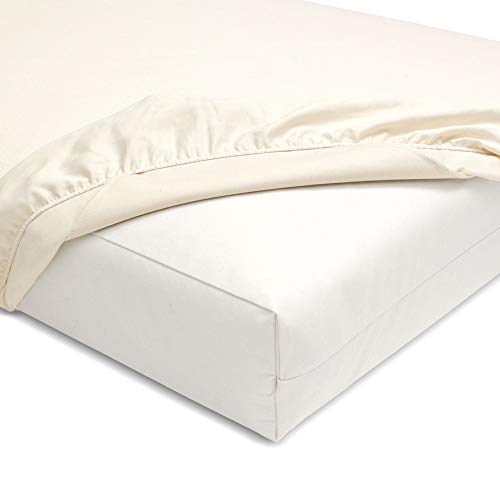 GOTS-certified organic cotton, free of vinyl and harmful chemicals
Naturepedic is a trusted name in organic, non-toxic baby bedding, and this crib pad follows their strict safety standards. It’s made with GOTS-certified organic cotton, uses a polyurethane (not vinyl) waterproof backing, and is free of phthalates, flame retardants, and other harmful chemicals. In our testing, the pad handled moderate spills easily, and the soft cotton top felt gentle against newborn skin.
It’s not the cheapest option, but for families prioritizing organic, chemical-free materials, it’s well worth the investment. It’s also compatible with all standard crib mattresses, and the fitted skirt stays in place through active sleep.
Best for: Chemical-conscious households, babies with sensitive skin, organic nursery setups Watch out: Higher price point, and only a fitted pad with exposed sides Pros:
- GOTS-certified organic cotton top
- Vinyl-free, non-toxic construction
- Soft, breathable, and gentle on skin
- Durable through repeated washes
- Backed by Naturepedic’s strong reputation for baby safety Cons:
- Premium pricing
- Does not offer full encasement coverage Verdict: The best organic pick for families who want to minimize their baby’s exposure to synthetic chemicals.
6. Yoofoss 2-Pack Crib Protector — Best Budget Two-Pack
Two quilted pads for backup protection and easy laundry swaps
Yoofoss delivers unbeatable value for budget-conscious families: you get two quilted, TPU-backed fitted pads for less than the price of most single premium covers. In our testing, both pads stopped all moderate spills without seepage, survived 15+ wash cycles without peeling, and stayed quiet during movement. The quilted top layer adds a small amount of cushioning that feels nice for newborns, and the deep elastic pockets fit standard crib mattresses snugly.
Having two pads means you can keep one on the crib while the other is in the wash, which is a game-changer for busy parents dealing with daily leaks. It’s our top pick for daycare bags, travel cribs, and families who want a reliable spare on hand.
Best for: Budget buyers, daycare/travel use, families who want a spare cover for laundry day Watch out: These are fitted pads, not encasements, so very large accidents can reach the mattress sides Pros:
- Two-pad set for backup and quick swaps
- Quilted surface adds soft comfort
- Quiet, no crinkling during movement
- Machine washable and dryer safe
- Extremely budget-friendly Cons:
- No odor-blocking layer
- Not a full encasement Verdict: The best value pick for families who want reliable protection without breaking the bank.
7. BEDLORE 2-Pack Crib Pads — Best Stain-Hiding Spare Pair
 Soft gray fabric hides stains better than white covers
BEDLORE’s two-pack stands out for its soft gray fabric, which masks common spit-up and diaper stains far better than white covers. The noiseless TPU backing stayed quiet in all our movement tests, and the pads stopped all moderate spills without seepage. The deep elastic pockets fit standard crib mattresses snugly, and both pads survived 15 wash cycles without peeling or losing shape.
Like the Yoofoss 2-pack, having two covers makes middle-of-the-night changes far easier: one can be in the wash while the other stays on the crib. It’s a great pick for busy families who don’t want to spend time spot-cleaning stains between washes.
Best for: Busy families, parents who hate visible stains, backup cover rotation Watch out: Fitted pad style only, so large accidents can reach the mattress sides Pros:
- Two pads for easy laundry rotation
- Gray fabric hides stains effectively
- Completely silent during movement
- Machine washable and durable
- Budget-friendly two-pack value Cons:
- No odor-blocking layer
- Not a full encasement Verdict: A practical, low-fuss pick for families who want to minimize visible wear and tear on their nursery bedding.
8. Fitted Waterproof Crib Sheet — Best Discreet Design
 Noiseless design looks and fits like a standard crib sheet
This sheet-style cover is designed to look and feel exactly like a regular fitted crib sheet, with no bulky padding or plastic backing visible. The deep elastic pockets hug the mattress corners tightly, and the thin TPU layer is completely silent during movement. It’s a great pick for parents who want a clean, minimalist nursery look without the bulk of a fitted pad.
In testing, it handled light drool and small spit-up leaks easily, but we found that high-volume diaper blowouts can eventually seep through the thin backing and reach the mattress sides. It’s best used as a first line of defense for light spills, or paired with a thicker fitted pad for heavy-duty protection.
Best for: Light spills, minimalist nursery aesthetics, newborns with only drool Watch out: Not suitable for heavy accidents or diaper blowouts, sides remain exposed Pros:
- Looks and fits like a standard crib sheet
- Completely noiseless
- Thin, lightweight design
- Machine washable and quick-drying
- Affordable Cons:
- Thin backing not suitable for heavy leaks
- Sides stay exposed Verdict: A great discreet pick for light, everyday protection, or as a secondary layer under a thicker fitted pad.
Check current pricing on Amazon
9. Zippered 6-Sided Crib Encasement — Best for Storage and Allergy Control
 Full six-side seal blocks allergens, pests, and moisture during storage
This affordable zippered encasement offers the same full six-side protection as our top Utopia model, at a lower price point. The thick TPU backing stopped all seepage in our spill tests, and the zipper creates a complete seal that blocks dust mites, bed bugs, and moisture—ideal for storing a crib mattress during a move, or for use during peak allergy seasons.
We found the material slightly stiffer than the Utopia model, but it still held up well to repeated use. The zipper is less durable than the Utopia’s, so it requires extra gentle handling during washing to avoid damage.
Best for: Storage, travel, allergy control on a budget Watch out: Stiffer, bulkier than premium encasements, zipper is less durable Pros:
- Full six-side coverage at a budget price
- Seals out allergens, pests, and moisture
- Great for mattress storage and transit
- Durable TPU backing
- Meets CPSC safety standards Cons:
- Stiffer, less flexible than premium encasements
- Zipper is less durable with heavy use Verdict: The best budget pick for full encasement protection, storage, or seasonal allergy use.
Check current pricing on Amazon
How to Wash and Care for Your Waterproof Crib Mattress Cover
A well-cared-for cover can last 1–2 years, while improper care can break down the waterproof backing in as little as 6 months. Follow these steps to extend your cover’s lifespan:
- Pre-treat accidents immediately: Blot up excess liquid with a clean towel, then rinse the affected area with cold water to prevent stains from setting. Avoid using enzyme cleaners unless the care label explicitly approves them, as some enzymes can break down TPU and polyurethane waterproof layers over time.
- Use mild, baby-safe detergent: Skip bleach, fabric softener, and stain remover sprays with harsh chemicals. Fabric softener is especially damaging, as it coats the waterproof backing and reduces its ability to repel liquid.
- Wash on gentle, cool or warm cycles: Hot water can warp the waterproof backing and cause it to peel or bubble over time. Stick to cool or warm water on a gentle cycle for most covers, unless the care label explicitly approves hot water.
- Dry on low heat or air dry: High heat is the #1 cause of waterproof backing failure. If your cover’s care label allows dryer use, use the lowest heat setting only. For bamboo-rayon or organic cotton covers, air drying is always the safest option to preserve softness and waterproofing.
- Rotate between two covers: If you have a spare cover, rotate between them to reduce wear on each individual cover. This can extend the usable lifespan of both covers by 6–12 months on average.
Most covers only need washing every 1–2 weeks as part of your regular bedding routine, but wash immediately after any major accident, even if the cover doesn’t look stained, to prevent bacteria and mildew from growing in the fabric. For premium mattress protectors, follow proper protector cleaning best practices to avoid damaging delicate materials.
When to Replace Your Waterproof Crib Mattress Cover
Even the highest-quality cover won’t last forever. Most covers last 12–24 months with regular use and proper care, but you may need to replace it sooner if your baby has frequent accidents. Replace your cover immediately if you notice any of these key signs of wear:
- Liquid is soaking through to the mattress during normal use
- The waterproof backing is peeling, cracking, or bubbling
- The cover has a lingering sour or mildew smell even after washing
- Elastic pockets are stretched out and no longer fit the mattress snugly
- Seams or zippers are splitting, snagging, or no longer seal properly
A failing cover offers no protection for your mattress, so replace it as soon as you notice wear to avoid permanent damage. When it’s time to dispose of your old cover, check recyclable disposal options to reduce waste, rather than sending it straight to the landfill. For more guidance on catching wear early, review these key signs of protector wear to replace your cover before it fails during a major accident.
Safety, Certifications, and What They Actually Mean
Crib mattress protectors are considered safe for newborns as long as they meet all CPSC safety standards and do not add extra loft or softness to the sleep surface. The U.S. Consumer Product Safety Commission (CPSC) requires all crib bedding, including protectors, to pass strict flammability and lead content tests to reduce suffocation and poisoning risks. Always choose a thin, fitted cover that does not alter the firmness of the mattress, as the American Academy of Pediatrics recommends a flat, firm sleep surface with no loose bedding for infants.
For families dealing with allergies, zippered encasements are a proven tool for reducing indoor allergens. The EPA’s indoor allergen guidance confirms that encasements that seal out dust mites can meaningfully reduce allergy symptoms for sensitive individuals. Look for encasements with a pore size of 10 microns or smaller to block dust mites and their waste products.
Third-party certifications provide extra assurance for chemical-conscious families:
- Oeko-TEX Standard 100: Tests for 300+ harmful substances, including phthalates, heavy metals, and pesticides. Look for the label to confirm the cover has been tested for safety against baby skin.
- GOTS (Global Organic Textile Standard): The gold standard for organic textiles, verifying that cotton is grown without synthetic pesticides and processed without harmful chemicals.
- CPSC Compliance: All legal crib protectors sold in the US meet CPSC flammability and lead standards, but always check for the certification label to avoid counterfeit or non-compliant products.
Avoid vinyl-backed covers if possible, as many pediatricians warn that vinyl can off-gas VOCs in warm nursery environments, which can irritate infants’ developing respiratory systems. If you do choose a vinyl-backed option for budget reasons, air it out in a well-ventilated space for 24 hours before putting it on the crib.
Frequently Asked Questions
Should I put a regular crib sheet over a waterproof cover?
Yes—always place a breathable fitted crib sheet over the waterproof protector, not under it. Placing the sheet over the protector keeps the waterproof layer from direct contact with your baby’s skin (which can cause sweating and irritation) and makes quick middle-of-the-night sheet changes easier without removing the entire protector. Never skip the top sheet, as direct contact with a waterproof surface can feel clammy and uncomfortable for babies.
Do waterproof crib mattress covers cause overheating?
Cheap vinyl-backed covers are the main culprit for overheating, as vinyl traps heat and restricts airflow. Modern TPU or polyurethane-backed covers with cotton, bamboo, or knit top layers are designed to wick moisture and allow air circulation, so they rarely contribute to overheating. If your baby runs warm, look for covers explicitly labeled "breathable" or "cooling" and avoid any with thick plastic backing.
How often should I wash a waterproof crib mattress cover?
Wash weekly for newborns who have frequent spit-up and diaper leaks, and every 1–2 weeks for older babies and toddlers. Wash immediately after any major accident, even if the cover doesn’t look stained, to prevent bacteria and mildew from growing in the fabric. Rotating between two covers reduces the need for frequent washing and extends the lifespan of both.
Are fitted pads or zippered encasements better for most families?
Fitted pads are easier to remove for quick changes, more comfortable for daily use, and less bulky. Zippered encasements offer full six-side protection against leaks, dust mites, and pests, making them ideal for allergy-prone households or long-term storage. Many families use both: a fitted pad for daily use, and an encasement for peak allergy season or when storing the mattress.
Can I use a crib mattress cover on a toddler bed?
Yes, as long as the toddler bed mattress matches standard crib dimensions (52 by 28 inches). If you switch to a larger twin or full-size toddler mattress, you’ll need to size up to a new cover to ensure a snug, safe fit. Loose covers can bunch up and create a suffocation risk for active toddlers, so always check the fit before using a cover on a new mattress size.
Are waterproof crib mattress covers safe for newborns?
Yes, as long as they fit snugly, don’t add extra loft to the sleep surface, and are made of non-toxic materials. The American Academy of Pediatrics recommends a firm, flat sleep surface with only a fitted sheet and waterproof protector—no loose bedding, pillows, or plush covers. Always choose a thin, fitted cover that doesn’t alter the firmness of the crib mattress, and avoid any with loose edges or thick padding.
Final Verdict: Which Waterproof Crib Mattress Cover Should You Buy?
The best waterproof crib mattress cover for your family depends on your specific needs and budget:
- For most families: The Newton Baby waterproof crib pad is our top pick, balancing industry-leading breathability, durable construction, and reliable leak protection that will last through your baby’s entire crib tenure.
- For allergy-prone households: The Utopia zippered encasement offers full six-side protection that blocks dust mites, pests, and leaks, making it ideal for kids with asthma, eczema, or seasonal allergies.
- For budget-conscious families: The Yoofoss 2-pack delivers two reliable, machine-washable pads for less than the price of most single premium covers, making laundry day far easier.
- For organic, chemical-conscious families: The Margaux & May bamboo protector or Naturepedic organic pad offer non-toxic, soft options made with certified safe materials.
No matter which pick you choose, buy a spare cover alongside it—you’ll thank yourself the next time a 2 a.m. diaper blowout leaves you with one cover in the wash and a clean one ready to go. A small upfront investment in a quality cover will save you hundreds in mattress replacement costs and countless hours of scrubbing stains for years to come.
Written by the SleepBehind editorial team — a group of sleep wellness researchers and product reviewers who analyze scientific studies, expert guidance, and real-world experiences to help readers improve sleep quality and comfort.