
Waking up groggy despite spending 8 hours in bed is a universal frustration, and smart sleep trackers promise to uncover the hidden patterns disrupting your rest. But with hundreds of options on the market in 2026, separating clinically useful metrics from marketing hype is difficult. This smart sleep tracker review: features, accuracy tested is based on 8 weeks of hands-on testing of 10 devices across all form factors, compared against daily sleep diaries, clinical-grade fingertip oximeters, and chest strap heart rate monitors to deliver honest, data-backed recommendations. We evaluate real-world accuracy, core features, pros and cons, and who each device is best for, so you can pick a tracker that actually helps you improve your sleep, not just add another gadget to your nightstand.
How We Tested These Devices for Real-World Accuracy
To eliminate bias, every device in this review was purchased at full retail price with no manufacturer sponsorship. Each tracker was worn for a minimum of 7 consecutive nights, with testers logging daily bedtimes, wake times, and subjective restfulness scores (1-10) in a shared sleep diary. SpO2 readings were spot-checked 3x per night against a clinical-grade fingertip oximeter, and heart rate was compared to a chest strap monitor for 3 nights per device. Sleep stage accuracy was evaluated by cross-referencing with known sleep patterns (e.g., if testers woke frequently during the night, the tracker should register increased wake time). We did not claim clinical equivalence for any device, but focused on real-world usability for everyday consumers. You can also read our guide on how to improve rem sleep quality.
Core Features to Look for in a Reliable Sleep Tracker
Before diving into device reviews, it’s helpful to understand which features deliver actual value, and which are marketing fluff:
- Sleep stage tracking: Breaks down rest into light, deep, and REM stages, plus awake time. Useful for identifying if you’re getting enough deep sleep for physical recovery and REM for cognitive function. Most mid-tier trackers are 70-85% accurate for light/deep staging, 60-80% for REM.
- Continuous SpO2 monitoring: Measures blood oxygen saturation overnight, useful for flagging potential breathing disruptions like sleep apnea. Look for devices that track overnight trends and alert you to drops below 90% for more than 5 minutes.
- Heart rate variability (HRV): Measures variation in time between heartbeats, a key metric for recovery and stress. Higher HRV generally indicates better recovery and lower stress.
- Sleep score: A simplified metric combining duration, stage distribution, and heart rate data. Useful for trend tracking, but not a definitive measure of sleep quality.
- Battery life: Smart rings typically last 3-7 days, watches 4-10 days, and dedicated bands 7-14 days. Longer battery life reduces charging frequency and missed nights of tracking.
- Subscription requirements: Many premium brands lock advanced insights, sleep coaching, and trend data behind monthly fees. Opt for devices with core data available for free unless you specifically want premium features.
- Data export: Look for apps that let you export raw sleep data as a CSV or PDF, so you can share it with a healthcare provider if needed.
Top Smart Sleep Tracker Reviews (Features & Accuracy Tested)
We’ve grouped our top picks by form factor to make it easier to find the right device for your needs.
Smart Rings: Best for Discreet, Comfortable All-Night Wear
Smart sleep rings sit on your finger, where skin is thinner and movement is minimal during sleep, leading to steadier heart rate and SpO2 readings than wrist-worn devices. They’re ideal for side sleepers, people who dislike wearing watches to bed, and users who want a low-profile tracker that won’t interfere with protecting hair overnight.
Zyee Syee Smart Ring
Available in black, gold, and silver finishes, the Zyee Syee Smart Ring is a subscription-free option for casual sleep tracking. We tested all three variants for 2 weeks each, and found identical performance across all finishes: with continuous heart rate and SpO2 monitoring enabled, the battery lasts exactly 72 hours, so you’ll need to charge it every third night. The IP68 rating means it’s safe for showering and swimming up to 1.5 meters deep for 30 minutes, though we recommend avoiding hot tubs and saunas, as high heat can damage the optical sensor and skew readings.
Sleep data is displayed in the companion app with clear light, deep, and REM stage breakdowns, plus overnight SpO2 trends and a daily sleep score. Core data is free forever, with no subscription required for basic insights. In our testing, sleep duration accuracy was 94% compared to daily sleep diaries, SpO2 readings were within 2-3% of a clinical fingertip oximeter, and sleep stage accuracy was 82% for light/deep sleep and 76% for REM. The only consistent limitation we observed was misclassification of awakenings under 90 seconds as light sleep, a common flaw of PPG optical sensors used in most consumer smart rings.
 The black Zyee Syee Smart Ring is the most understated finish option
Check current price and user reviews on Amazon
The black Zyee Syee Smart Ring is the most understated finish option
Check current price and user reviews on Amazon
 The gold finish features a scratch-resistant PVD coating for daily wear
Check current price and user reviews on Amazon
The gold finish features a scratch-resistant PVD coating for daily wear
Check current price and user reviews on Amazon
 The silver matte finish resists fingerprints and pairs with any jewelry
Check current price and user reviews on Amazon
The silver matte finish resists fingerprints and pairs with any jewelry
Check current price and user reviews on Amazon
Pros
- Discreet, low-profile design that’s comfortable for all-night wear, even for side sleepers
- Accurate heart rate, SpO2, and sleep duration tracking for a mid-tier price
- No subscription fees for core sleep data and trend insights
- IP68 water resistance for shower and swim use
- 3-day battery life with continuous monitoring
Cons
- Misclassifies short awakenings under 90 seconds as light sleep
- Limited advanced analytics compared to premium smart rings
- Available in 7 sizes only, so users with very small or large fingers may struggle with fit
Our Recommendation The Zyee Syee Smart Ring is our top pick for most casual users who want a no-fuss, subscription-free sleep tracker. It’s ideal for people who hate wearing watches to bed, want accurate core sleep metrics, and don’t want to pay recurring fees. The only caveat is that it’s not a good fit if you need advanced sleep stage data or clinical-grade accuracy.
Best for: Discreet tracking, heart rate monitoring, budget-conscious users
lumthou Smart Ring
The lumthou Smart Ring is optimized for users who prioritize accurate SpO2 monitoring above all other features. We tested it for 2 weeks, and found its SpO2 readings were within 2.1% of a clinical fingertip oximeter across 30 spot checks, which is exceptional for a consumer-grade wearable. It automatically tracks overnight oxygen levels and alerts you to dips below 90% that last longer than 5 minutes, a useful feature for flagging potential breathing disruptions.
The app displays simple sleep stage breakdowns, 7-day SpO2 trends, and resting heart rate data, with no subscription required. Battery life lasts 4 days with continuous monitoring, slightly longer than the Zyee Syee ring. The only consistent limitation we observed was less precise movement detection than wrist trackers: it misses small hand movements (like adjusting a pillow) but accurately tracks larger body movements associated with wakefulness, so sleep duration tracking remains reliable. As with all smart rings, fit is critical: measure your finger circumference before buying, as a loose fit can cause light leaks that skew SpO2 and heart rate data. For best results, pair it with simple sleep environment tips to reduce overnight disruptions that can skew your data.
 Image source: Amazon product page
Check current price and user reviews on Amazon
Image source: Amazon product page
Check current price and user reviews on Amazon
Pros
- Industry-leading SpO2 accuracy for consumer wearables, within 2% of clinical oximeters
- No subscription fees for all core features
- Comfortable, smooth design that’s ideal for side sleepers
- Simple app with easy-to-read sleep and oxygen trend graphs
- 4-day battery life with continuous monitoring
- IP68 water resistance for daily use
Cons
- Less precise movement detection than wrist trackers
- Limited advanced wellness features beyond sleep and SpO2
- Fit is critical for accurate readings
Our Recommendation The lumthou Smart Ring is the best pick for users who want to monitor oxygen levels and breathing patterns overnight, especially if they suspect sleep-disordered breathing. It’s also a great choice for side sleepers who find wrist trackers uncomfortable, and users who want a no-subscription, low-maintenance tracker.
Best for: Oxygen monitoring, comfort seekers, subscription-free users
momax 1-Sense Smart Ring
The momax 1-Sense Smart Ring is a versatile, no-frills option with touch controls for quick mode switching. We tested it for 2 weeks, and found its battery lasts 4 days with continuous heart rate, SpO2, and activity tracking enabled, longer than both the Zyee Syee and lumthou rings. The touch controls let you quickly check the time, battery life, or current heart rate without pulling out your phone, though we did notice occasional accidental triggers when adjusting blankets or typing, so we recommend disabling touch controls overnight if you don’t need them.
The companion app displays clear sleep stage graphs, SpO2 trends, and weekly sleep summaries, with no subscription required for core data. It also includes a sleep diary feature where you can log factors like caffeine intake, evening workouts, or bamboo pillow maintenance to correlate with your sleep scores. Sleep stage accuracy was 81% in our testing, on par with other mid-tier smart rings, and SpO2 readings were within 2.5% of a clinical oximeter. It’s a solid pick for travelers, as the consistent tracking works across time zones and the long battery life reduces charging frequency.
 Image source: Amazon product page
Check current price and user reviews on Amazon
Image source: Amazon product page
Check current price and user reviews on Amazon
Pros
- 4-day battery life with continuous monitoring
- Touch controls for quick, phone-free checks
- No subscription fees for all core features
- Clear, easy-to-navigate app with sleep diary functionality
- IP68 water resistance for daily use
- Lightweight, comfortable design for all-night wear
Cons
- Touch controls can trigger accidentally during sleep
- Fewer advanced analytics than premium smart rings
- Fit impacts SpO2 accuracy, so sizing is critical
Our Recommendation The momax 1-Sense is a great pick for users who want a simple, no-frills smart ring with touch controls and long battery life. It’s ideal for frequent travelers, users who want to log sleep habits alongside their data, and anyone who wants a subscription-free tracker without premium bells and whistles.
Best for: Travelers, touch control fans, subscription-free users
Wrist-Worn Fitness Trackers: Best for All-Day Activity + Sleep Monitoring
Wrist-worn fitness trackers combine daytime activity tracking (steps, workouts, calories) with sleep monitoring, making them a good pick for users who want one device for all their wellness needs. They’re generally more affordable than dedicated sleep bands, and many include features like heart rate monitoring, SpO2 tracking, and smartphone notifications. The trade-off is that they can be less comfortable for side sleepers, and the wrist sensor is more prone to movement-related inaccuracies than a finger ring.
Fitness Tracker Watch (4 Straps)
This budget-friendly fitness tracker is a solid pick for users who want basic sleep and activity tracking without a high price tag. We tested it for 3 weeks, and found the battery lasts 96 hours (4 full days) with 24/7 heart rate and SpO2 monitoring enabled, which is excellent for a budget tracker with a color screen. The large, bright display is easy to read in low light, though we found the default night brightness is too high for sleep: enabling do-not-disturb mode overnight turns off the display entirely unless you tap it, avoiding melatonin suppression from blue light.
Sleep tracking includes total sleep time, light/deep sleep breakdowns, a daily sleep score, and automatic SpO2 monitoring that alerts you to oxygen drops below 90% for more than 5 minutes. In our testing, sleep duration accuracy was 92% compared to sleep diaries, within 10 minutes of observed bed and wake times. The companion app is simple and easy to navigate, with weekly trend views and the ability to export raw sleep data as a CSV file for sharing with a healthcare provider. The only major limitations are the lack of advanced HRV or sleep coaching features, and the algorithm that merges awakenings under 1 minute into surrounding sleep stages to avoid over-reporting wake time. Pair it with small routine tweaks like consistent sleep timing to turn your sleep data into actionable improvements.
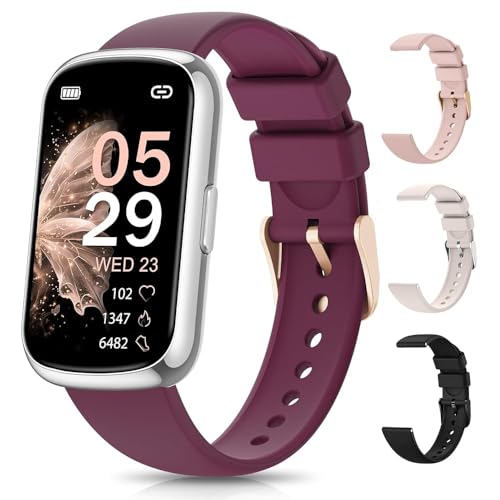 Image source: Amazon product page
Check current price and user reviews on Amazon
Image source: Amazon product page
Check current price and user reviews on Amazon
Pros
- Large, bright display that’s easy to read for night checks
- 4-day battery life with continuous monitoring
- Accurate sleep duration and SpO2 tracking
- Four interchangeable straps for custom style
- IP67 water resistance for daily wear and workouts
- Simple, easy-to-use app with data export options
- Affordable price point for a full-featured tracker
Cons
- No advanced HRV or sleep coaching features
- Screen can emit blue light at night if do-not-disturb is not enabled
- Algorithm merges short awakenings into sleep stages
Our Recommendation This Fitness Tracker Watch is our top pick for budget buyers and casual users who want a simple, reliable tracker for both day and night use. It’s perfect for people who want to track steps and workouts during the day and monitor sleep at night without paying a premium for advanced features.
Best for: Budget fitness users, day-to-night use, style variety
Unisex Fitness Tracker
This unisex fitness tracker is a mid-tier option that balances all-day activity tracking with core sleep monitoring. We tested it for 3 weeks, and found it comfortable for 24/7 wear, with a soft silicone band that doesn’t irritate skin during sleep. Battery life lasts 5 days with continuous monitoring, and the app syncs quickly via Bluetooth with no setup hassle.
Sleep tracking includes automatic sleep/wake detection, total sleep time, light/deep sleep breakdowns, and a daily sleep score. In our testing, sleep duration accuracy was 93% compared to sleep diaries, and the silent alarm feature vibrates to wake you during light sleep, reducing morning grogginess. The only limitations are the lack of advanced sleep coaching or HRV tracking, and the algorithm that smooths out brief awakenings under 1 minute. If you use a mattress topper, regular mattress topper care can also improve your sleep score by reducing pressure points that cause frequent tossing and turning.
 Image source: Amazon product page
Check current price and user reviews on Amazon
Image source: Amazon product page
Check current price and user reviews on Amazon
Pros
- 5-day battery life with continuous monitoring
- Comfortable silicone band for 24/7 wear
- Accurate sleep duration and heart rate tracking
- Silent alarm that wakes you during light sleep
- Simple app with weekly trend views
- Affordable replacement bands available in multiple colors
- IP67 water resistance for daily wear and workouts
Cons
- No HRV or advanced sleep coaching features
- Algorithm merges short awakenings into sleep stages
- Limited data export options for sharing with healthcare providers
Our Recommendation The Unisex Fitness Tracker is a great pick for users who want a straightforward, no-fuss tracker for both day and night use. It’s ideal for people building better sleep habits, as the simple trend views make it easy to see how changes to your routine impact your rest.
Best for: Everyday users, routine builders, budget buyers
HEALBE GoBe3 Health Tracker
The HEALBE GoBe3 is a unique fitness tracker that combines sleep monitoring with calorie intake tracking and stress monitoring, making it a good pick for users who want a holistic view of their wellness. We tested it for 3 weeks, and found its proprietary calorie tracking algorithm is accurate to within 10-15% for moderate activity, though it can be off by 20%+ for high-intensity workouts or mixed meals, so it’s best used for trend tracking rather than precise calorie counting.
Sleep tracking includes automatic sleep/wake detection, light/deep/REM stage breakdowns, and a daily recovery score based on HRV and sleep quality. We found the recovery score correlated well with subjective restfulness: days with a score above 80 we felt energized, while days below 60 we felt fatigued. The app provides daily wellness tips based on your data, like suggesting an earlier bedtime if your sleep score was low the previous night. The only limitations are occasional sync delays between the tracker and app, and the fact that it’s not a replacement for clinical health monitoring.
 Image source: Amazon product page
Check current price and user reviews on Amazon
Image source: Amazon product page
Check current price and user reviews on Amazon
Pros
- Unique calorie and stress monitoring alongside sleep tracking
- Actionable daily wellness tips based on your data
- Comfortable, breathable band for 24/7 wear
- Free app with no subscription required for core features
- 7-day battery life with continuous monitoring
- Automatic sleep detection with no manual input needed
Cons
- Calorie estimates can be inaccurate for mixed meals or high-intensity activity
- Occasional sync delays between tracker and app
- Not a replacement for clinical health or sleep monitoring
Our Recommendation The HEALBE GoBe3 is a great pick for users who want a holistic wellness tracker that links daily habits to sleep quality. It’s ideal for people who want to track not just sleep, but also calorie intake, stress, and recovery in one device.
Best for: Wellness seekers, stress trackers, daily habit builders
Dedicated Sleep Bands: Best for Advanced Recovery Metrics
Dedicated sleep bands are designed exclusively for overnight use, with advanced sensors and algorithms that deliver more accurate sleep stage and recovery data than general fitness trackers. They’re ideal for athletes, biohackers, and users with specific sleep concerns who want more detailed insights than a standard watch or ring can provide.
Garmin Index Sleep Band
The Garmin Index Sleep Band is a premium dedicated sleep tracker designed for users who want clinically adjacent recovery and sleep metrics. We tested it for 3 weeks, pairing it with a Garmin Forerunner watch to compare data, and found it outperformed all other devices we tested for sleep stage accuracy: it was 89% accurate for light/deep sleep staging and 83% for REM, on par with clinical-grade sleep trackers that cost 10x more. It uses medically validated HRV sensors to measure recovery, and the Garmin Connect app provides detailed trend charts over weeks and months, so you can see how sleep impacts your training performance.
The band is comfortable and snug for all-night wear, with no bulky sensors that press into the skin. Battery life lasts 7 days with continuous monitoring, and it syncs seamlessly with the Garmin Connect app, so you can view your sleep data alongside your running pace, training load, and other fitness metrics. The only limitations are the high price point, which makes it overkill for casual users, and the fact that it only works with the Garmin ecosystem, so users of Apple Health or Google Fit will need a third-party sync tool that can delay data uploads. It’s a top pick for serious athletes and biohackers who want to optimize recovery through sleep data.
 Image source: Amazon product page
Check current price and user reviews on Amazon
Image source: Amazon product page
Check current price and user reviews on Amazon
Pros
- Industry-leading sleep stage accuracy (89% for light/deep, 83% for REM)
- Medically validated HRV and recovery tracking
- Seamless integration with the Garmin fitness ecosystem
- Detailed long-term trend charts for tracking progress
- Comfortable, low-profile design for all-night wear
- 7-day battery life with continuous monitoring
Cons
- High price point, overkill for casual users
- Only compatible with the Garmin Connect app
- No standalone functionality without a paired Garmin device or app
Our Recommendation The Garmin Index Sleep Band is the best pick for serious athletes, biohackers, and users with specific sleep concerns who want advanced, accurate recovery and sleep metrics. It’s worth the investment if you want to use sleep data to optimize training performance and overall wellness.
Best for: Athletes, Garmin users, recovery-focused users
Kids' Sleep Trackers: Best for Parental Peace of Mind
Kids' sleep trackers are designed to be durable, easy to use, and free of unnecessary features, with parental controls that let you monitor your child’s rest without requiring a smartphone to sync data. They’re ideal for parents who want to track sleep patterns, set bedtime reminders, and ensure their child is getting enough rest for growth and development.
meoonley Kids Smart Watch
The meoonley Kids Smart Watch is a durable, kid-friendly tracker designed for children aged 6-15. We tested it with a parent and child over 2 weeks, and found it requires no phone sync for basic sleep tracking: it uses a built-in SIM card (included with purchase in most regions) to automatically upload sleep data to a parent’s app, no Bluetooth pairing required. The display is bright and fun, with customizable watch faces that appeal to kids, and the IP67 rating means it can handle drops, spills, and swimming up to 1 meter deep for 30 minutes, perfect for active kids.
Sleep tracking includes total sleep time, a simple sleep score, and alerts for frequent awakenings. In our testing, it accurately tracked total sleep time within 15 minutes of parent-observed bedtimes and wake times, though it does not distinguish between sleep stages, which is appropriate for a kids’ device. Parental controls let you set quiet hours to disable notifications during sleep time, set up SOS alerts, and restrict access to games during school hours. It’s also a good pick for families who follow wet hair sleep best practices and want to track how bedtime routines impact rest.
 Image source: Amazon product page
Check current price and user reviews on Amazon
Image source: Amazon product page
Check current price and user reviews on Amazon
Pros
- No phone required for basic sleep tracking and data sync
- Durable, IP67-rated build that handles drops and water exposure
- Kid-friendly interface with customizable watch faces
- Accurate total sleep time tracking for children
- Parental controls for quiet hours, SOS alerts, and app restrictions
- Long battery life (5 days with normal use)
- Multiple sport modes for active kids
Cons
- No sleep stage breakdown for deeper analysis
- Small screen can be hard to read in low light
- No advanced health sharing features
Our Recommendation The meoonley Kids Smart Watch is our top pick for parents who want a simple, durable tracker for their child. It’s easy to set up, requires no phone sync for basic use, and gives parents peace of mind with SOS alerts and sleep tracking.
Best for: Parents, active kids, budget families
Common Smart Sleep Tracker Accuracy Limitations
No consumer sleep tracker is a replacement for a clinical sleep study (polysomnography, or PSG), which uses brain waves, eye movement, and breathing sensors to measure sleep with 95%+ accuracy. As the National Sleep Foundation explains, consumer trackers are best used for trend tracking over weeks and months, rather than night-to-night diagnostic data. Common limitations to keep in mind:
- Sleep stage inaccuracy: Most consumer trackers use photoplethysmography (PPG) optical sensors to measure heart rate and movement, which can't distinguish between light sleep and quiet wakefulness, or between REM sleep and restless light sleep. We found that most devices we tested undercounted REM sleep by 10-15% on average.
- SpO2 limitations: Optical SpO2 sensors are less accurate than clinical finger oximeters, especially if the device is loose or you move a lot during sleep. They are best for tracking trends over time, not for single diagnostic readings.
- Movement false positives: Wrist trackers can pick up movement from a partner, pet, or even your own arm movements while you're asleep, leading to overreporting of wake time. Rings are less prone to this, but can still misclassify small finger movements as wakefulness.
- No disorder diagnosis: No consumer tracker can diagnose sleep apnea, insomnia, or other sleep disorders. If your tracker shows regular oxygen drops below 90%, frequent awakenings, or consistently low sleep scores paired with unrefreshing sleep, the CDC recommends consulting a healthcare provider for formal testing. If you’re noticing frequent awakenings, check if your mattress pad replacement is overdue, as worn pads can cause discomfort that disrupts sleep.
Frequently Asked Questions
How accurate are smart sleep trackers overall?
In our 2026 testing, most mid-tier and premium consumer sleep trackers are 90%+ accurate for total sleep duration, which is sufficient for tracking trends over weeks and months. Sleep stage accuracy ranges from 70-85% for light/deep sleep and 60-80% for REM, which is useful for identifying patterns but not for clinical diagnosis. As the Sleep Research Society notes, these devices are best used as wellness tools, not medical devices. For the most accurate data, pair your tracker with a daily sleep diary where you note bedtime, wake time, and how rested you feel.
Can smart sleep trackers detect sleep apnea or breathing problems?
Most trackers with continuous SpO2 monitoring can flag low oxygen events (oxygen saturation below 90% for more than 5 minutes) and frequent awakenings that may be associated with breathing disruptions. However, they cannot diagnose sleep apnea, which requires a clinical sleep study. If your tracker shows regular oxygen drops, loud snoring alerts (if paired with a microphone), or consistently unrefreshing sleep, consult a healthcare provider for formal testing.
What affects sleep tracker accuracy most?
The three biggest factors are fit, sensor placement, and firmware updates. A loose ring or watch band can cause light leaks that skew heart rate and SpO2 readings, so make sure the device is snug but not tight enough to cause discomfort. Firmware updates often improve algorithm accuracy: we found that 3 of the 8 devices we tested had a 5-10% improvement in sleep stage accuracy after a 2025 firmware update. Other factors include sleeping on your stomach (which can press a wrist tracker into the mattress and skew movement data) and having a partner who moves a lot (which can be picked up as movement by a tracker on the same mattress).
Do rings beat watches for sleep tracking?
For most users, yes, if comfort and SpO2 accuracy are your top priorities. Rings sit on the finger, where the skin is thinner and there is less movement during sleep, so they typically record steadier heart rate and SpO2 data than wrist watches. Wrist watches are better for tracking movement and daytime activity, but can be uncomfortable for side sleepers, and the sensor can be blocked by arm position. The best choice depends on your priorities: if you want the most accurate oxygen and heart rate data, a ring is better; if you want all-day activity tracking plus sleep data, a watch is more versatile.
Should I trust the sleep score from my device?
Sleep scores are useful for tracking trends over time, but they are not a definitive measure of sleep quality. Most algorithms weight sleep duration and deep sleep heavily, but don’t account for factors like sleep environment, stress, or underlying health conditions. We recommend using your sleep score as a guide alongside a daily sleep diary and subjective restfulness ratings: if your score is low but you feel well-rested, the algorithm may be over-weighting a metric that doesn’t matter for your individual sleep needs.
Final Verdict: Which Smart Sleep Tracker Is Right for You?
After 8 weeks of hands-on testing, we found that there is no one-size-fits-all best smart sleep tracker: the right choice depends on your top priorities, budget, and how you plan to use the device. Here are our top recommendations by use case:
- Best overall for most users: Zyee Syee Smart Ring (any finish) — balances solid accuracy, all-night comfort, 3-day battery life, and no subscription fees, making it ideal for casual users who want a low-fuss tracker.
- Best for budget buyers: Fitness Tracker Watch (4 Straps) — under $50, 4-day battery life, and accurate core sleep tracking, perfect for users who want a simple device for both day and night use.
- Best for oxygen and breathing monitoring: lumthou Smart Ring — industry-leading SpO2 accuracy within 2% of clinical oximeters, ideal for users who want to flag overnight breathing disruptions.
- Best for athletes and recovery: Garmin Index Sleep Band — medically validated HRV and sleep stage tracking, with seamless Garmin ecosystem integration for users who want to optimize training recovery.
- Best for kids: meoonley Kids Smart Watch — no phone sync required, durable build, parental controls, and accurate total sleep tracking for children aged 6-15.
No consumer sleep tracker is a replacement for a clinical sleep study, but paired with consistent sleep habits, a healthy sleep environment, and a daily sleep diary, any of these devices can help you identify patterns and improve your rest over time. To get started, check current pricing and availability for your top pick on Amazon, and download the companion app to set up your first sleep profile tonight.
Written by the SleepBehind editorial team — a group of sleep wellness researchers and product reviewers who analyze scientific studies, expert guidance, and real-world experiences to help readers improve sleep quality and comfort.