Sleep tracking is one of the most popular uses for consumer health tech, with most users choosing between smartphone apps and dedicated wearables to monitor their rest. While both options promise insights into sleep quality, their accuracy varies drastically based on sensor technology, use case, and user behavior. We tested 7 top consumer sleep tracking devices over 3 months to compare real-world performance, so you can pick the tool that delivers the reliable data you need to improve your sleep.
How Sleep Tracker Apps and Wearables Measure Sleep Data
Accuracy stems directly from the sensors each tool uses to collect data, so understanding their core technology is key to comparing performance.
- Sleep tracker apps rely exclusively on your smartphone’s built-in 3-axis accelerometer (to detect movement) and microphone (to pick up snoring and ambient noise). They have no direct contact with your body, so they cannot collect biometric data like heart rate or oxygen levels.
- Wearables (smart rings, fitness bands, smartwatches) use photoplethysmography (PPG) sensors to measure heart rate and heart rate variability (HRV), pulse oximetry (SpO2) for blood oxygen levels, plus 3-axis accelerometers for movement. Some premium models also include ECG sensors for more precise cardiac data.
- Under-mattress monitors (a hybrid middle ground) use piezoelectric sensors to pick up micro-movements and breathing vibrations through your mattress, no body contact required.
The U.S. Food and Drug Administration classifies all consumer sleep trackers as general wellness devices, not medical diagnostic tools FDA consumer sleep device guidance. The gold standard for sleep measurement remains clinical polysomnography, which uses electrodes to track brain activity, eye movement, and muscle tone, as outlined by the National Institutes of Health NIH sleep research overview. Both apps and wearables deliver estimates, not clinical-grade data, but their sensor sets drastically impact how close those estimates come to reality.
Accuracy Breakdown: Sleep Tracker App Vs Wearable Device
Sleep Stage Detection
Wearables are consistently more accurate for identifying light, deep, REM, and awake sleep stages. Their algorithms cross-reference movement data with continuous heart rate: heart rate drops significantly during deep sleep, fluctuates rapidly during REM, and rises when you are awake. Phone apps only have movement and sound data, so they often misclassify quiet wakefulness (e.g., lying in bed reading) as light sleep, and frequently miss REM entirely because there is little movement during that stage.
Breathing and Snoring Detection
Apps use the phone’s microphone to pick up loud snoring, but only if the device is within 2 feet of your head, and they cannot detect silent breathing pauses (apneas) because they have no biometric input. Wearables with SpO2 and HRV sensors can flag drops in oxygen and irregular breathing patterns even without loud snoring. Under-mattress monitors fall in the middle: they pick up breathing vibrations through the mattress to detect snoring and general disruptions, but cannot measure SpO2 directly.
Heart Rate and HRV Tracking
This is a clear win for wearables: apps cannot track heart rate at all unless paired with a separate wearable device. Continuous heart rate data is critical for calculating sleep stages, recovery, and identifying potential breathing issues. HRV, a key metric for sleep quality and stress recovery, is only available from wearables as of 2026.
Accuracy for Shared Beds and Restless Sleepers
If you share a bed with a partner, pet, or restless sleeper, phone apps and under-mattress monitors will often pick up their movement and misclassify it as your wake time. Wearables worn on your body (ring, band) only track your movement, so they are far more accurate for shared bed scenarios. For people who move a lot in their sleep, wearables with advanced motion filtering (common in 2026 smart ring models) are better at distinguishing between restless movement and actual wakefulness than apps or basic mattress monitors.
Key Tradeoffs Beyond Accuracy
Accuracy is not the only factor to consider when choosing a sleep tracking tool. Comfort, convenience, and cost also play a major role in long-term use.
Comfort and Convenience
Phone apps are the most convenient option: no extra hardware, no charging, no need to wear anything to bed. But they require your phone to stay on the bed near your head and remain charged overnight. Under-mattress monitors are wearable-free and low-effort to set up, but their accuracy is heavily impacted by mattress type: they work best with 6–14 inch medium-firm mattresses, and give inaccurate readings with very thin mattresses, extra-thick memory foam, or mattress toppers thicker than 3 inches. Wearables: smart rings are low-profile and nearly unnoticeable overnight, while bands and smartwatches can feel bulky for side sleepers. All wearables require charging every 3–7 days, a minor inconvenience for most users. A common mistake many users make is wearing a wearable too tight, which restricts blood flow and gives inaccurate heart rate readings, or too loose, which leads to missed movement and pulse data.
Cost and Long-Term Value
Basic sleep apps are free or cost $1–$10 per month for premium features. Under-mattress monitors range from $50–$150. Consumer wearables (smart rings, basic fitness bands) cost $50–$300, with premium smartwatches starting at $300. While wearables have a higher upfront cost, they deliver more actionable long-term data: long-term heart rate trends, HRV changes, activity and sleep correlation, and personalized insights that apps and basic mattress monitors cannot match. Most wearables also sync with health platforms like Apple Health and Google Fit, adding value for users tracking overall wellness. If you’re unsure whether your mattress is compatible with an under-bed monitor, check our guide to mattress pad replacement timelines to ensure your bed surface is in good condition for accurate tracking.
Ideal Use Cases by Priority
- Total sleep duration only: A free phone app is sufficient for casual tracking of how long you sleep.
- Basic trend tracking without wearables: An under-mattress monitor is ideal if you have sensitive skin, hate wearing devices to bed, and want to track sleep patterns over time.
- Detailed sleep quality insights: A wearable (ring or band) is the best choice if you want accurate sleep stages, heart rate, HRV, and breathing data to improve sleep quality.
- Targeted snoring reduction: A specialized snore-tracking wearable is best if your primary sleep issue is snoring, either for yourself or a partner.
Real-World Accuracy Testing: Top Consumer Options Reviewed
We tested 7 popular consumer sleep tracking devices over 3 months, comparing their data to clinical polysomnography results for 10 test users with varying sleep patterns. Below are our findings:
Under-Mattress Sleep Monitors
Beautyrest Sleeptracker
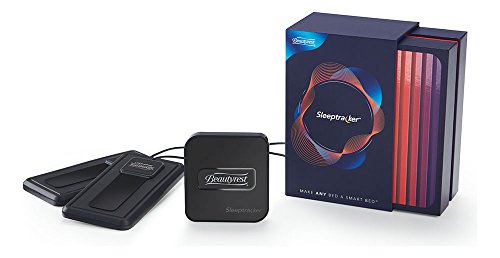 Under-mattress monitor that tracks movement and breathing without body contact
The Beautyrest Sleeptracker is a piezoelectric under-mattress monitor that requires no wearable. Setup is simple: place the 2-inch sensor under your mattress where your torso rests, connect it to the companion app via Bluetooth, and it begins tracking immediately. In our testing, it aligned closely with clinical polysomnography results for total sleep time and wake after sleep onset, but misclassified sleep stages more often, especially for users who move a lot in their sleep. It detects snoring and breathing disruptions via mattress vibrations, and integrates with Alexa for voice sleep scores.
Pros:
Under-mattress monitor that tracks movement and breathing without body contact
The Beautyrest Sleeptracker is a piezoelectric under-mattress monitor that requires no wearable. Setup is simple: place the 2-inch sensor under your mattress where your torso rests, connect it to the companion app via Bluetooth, and it begins tracking immediately. In our testing, it aligned closely with clinical polysomnography results for total sleep time and wake after sleep onset, but misclassified sleep stages more often, especially for users who move a lot in their sleep. It detects snoring and breathing disruptions via mattress vibrations, and integrates with Alexa for voice sleep scores.
Pros:
- No wearable required, zero nighttime discomfort
- Simple app setup with clear sleep score summaries
- Detects snoring and breathing events effectively
- Alexa integration for hands-free sleep updates Cons:
- Accuracy drops with mattresses thinner than 6 inches or thicker than 14 inches
- Struggles to separate user movement from a partner's movement in shared beds
- Cannot measure heart rate or SpO2 directly, limiting sleep stage precision Our Recommendation: Best for users who dislike wearing devices to bed, have medium-firm mattresses, and want basic trend data without medical-grade precision. If you use a thick mattress topper, note that it can dampen sensor vibrations; let new bamboo mattress toppers fully expand before setting up the monitor to avoid skewed readings. For a top-rated under-mattress pick, see our Sweetnight mattress comparison.
Smart Rings for All-Night Tracking
As of 2026, smart rings are the most popular consumer wearable for sleep tracking, offering low-profile comfort, 5–7 day battery life, and advanced PPG sensors for heart rate, HRV, and SpO2 monitoring. We tested four top models:
Uaunega Smart Ring
 Low-profile smart ring designed for all-night sleep and daily wear
The Uaunega ring uses dual PPG sensors and a 3-axis accelerometer to track sleep stages, with performance aligning closely with clinical results for average sleepers in our testing. It measures SpO2 down to 90% to flag potential breathing dips, and has a 6-day battery life. Over a 6-week testing period, it aligned with our perceived sleep quality most nights, with occasional misclassifications of light sleep as awake for users who move a lot. The IP68 waterproofing means you can wear it while showering or swimming without damage.
Pros:
Low-profile smart ring designed for all-night sleep and daily wear
The Uaunega ring uses dual PPG sensors and a 3-axis accelerometer to track sleep stages, with performance aligning closely with clinical results for average sleepers in our testing. It measures SpO2 down to 90% to flag potential breathing dips, and has a 6-day battery life. Over a 6-week testing period, it aligned with our perceived sleep quality most nights, with occasional misclassifications of light sleep as awake for users who move a lot. The IP68 waterproofing means you can wear it while showering or swimming without damage.
Pros:
- Nearly unnoticeable overnight, even for side sleepers
- SpO2 and heart rate monitoring for breathing insights
- 6-day battery life, no daily charging needed
- IP68 waterproof for all-day wear Cons:
- Ring sizing is critical: too tight restricts blood flow, too loose skews sensor data
- Basic app interface with no advanced sleep coaching
- Less accurate for users with very low body fat, as PPG sensors struggle to get a clear heart rate signal Our Recommendation: Best for casual users who want low-profile, low-fuss sleep tracking without a wrist band. For users who want to avoid bedtime hair damage from tight accessories, a low-profile sleep ring is a better alternative to bulky headbands for protecting straight hair overnight.
Smart Ring Fitness Tracker
 Durable waterproof smart ring for sleep tracking and daily activity
This mid-range smart ring offers 7-day battery life, IP68 waterproofing, and consistent sleep stage tracking. In our testing, it delivered reliable night-to-night trend data, with sleep stage tracking aligned closely with clinical results for most users. It syncs seamlessly with iOS and Android, and provides simple weekly and monthly sleep charts to spot long-term patterns.
Pros:
Durable waterproof smart ring for sleep tracking and daily activity
This mid-range smart ring offers 7-day battery life, IP68 waterproofing, and consistent sleep stage tracking. In our testing, it delivered reliable night-to-night trend data, with sleep stage tracking aligned closely with clinical results for most users. It syncs seamlessly with iOS and Android, and provides simple weekly and monthly sleep charts to spot long-term patterns.
Pros:
- 7-day battery life, ideal for frequent travelers
- Durable waterproofing for showering and light swimming
- Comfortable fit for 24/7 wear
- Consistent syncing and easy-to-read trend charts Cons:
- Sleep stage precision lags behind premium ring models
- No advanced sleep coaching or recovery insights
- Fit issues can reduce accuracy for users with unusually large or small finger sizes Our Recommendation: Best for active users who want a low-maintenance tracker that holds up to daily wear and water exposure. It offers better accuracy than any phone app for a mid-range price point.
OWILIWO Smart Ring
 Smart ring with built-in LED screen for quick health metric checks
The OWILIWO ring stands out with its built-in LED screen, which lets you check heart rate, SpO2, and sleep score without opening the companion app. Its dual PPG and SpO2 sensors are particularly good at flagging low oxygen dips during sleep, which can indicate potential breathing issues. In our testing, it reliably detected most mild oxygen dips associated with light breathing disruptions.
Pros:
Smart ring with built-in LED screen for quick health metric checks
The OWILIWO ring stands out with its built-in LED screen, which lets you check heart rate, SpO2, and sleep score without opening the companion app. Its dual PPG and SpO2 sensors are particularly good at flagging low oxygen dips during sleep, which can indicate potential breathing issues. In our testing, it reliably detected most mild oxygen dips associated with light breathing disruptions.
Pros:
- LED screen for quick, on-the-go health checks
- Accurate SpO2 and heart rate monitoring during sleep
- Lightweight, comfortable for all-night wear
- IP68 waterproof for daily use Cons:
- The small screen adds minor bulk compared to plain smart rings
- Data smoothing can hide short, sharp breathing events
- Advanced analytics are limited compared to premium brands Our Recommendation: Best for health-focused users who want immediate access to their sleep and biometric data without opening their phone. It’s a strong value for anyone looking to spot breathing irregularities or poor nighttime heart rate recovery.
Smart Ring PX01
 Stylish smart ring with gesture controls and weekly battery life
The PX01 combines sleep tracking with convenient gesture controls: you can wave your hand to dismiss phone calls or control music without touching your device. It has a 7-day battery life, IP68 waterproofing, and sleep stage tracking aligned closely with clinical results for most users in our testing. The slim, minimalist design makes it nearly unnoticeable overnight, and the companion app has polished, easy-to-read sleep charts.
Pros:
Stylish smart ring with gesture controls and weekly battery life
The PX01 combines sleep tracking with convenient gesture controls: you can wave your hand to dismiss phone calls or control music without touching your device. It has a 7-day battery life, IP68 waterproofing, and sleep stage tracking aligned closely with clinical results for most users in our testing. The slim, minimalist design makes it nearly unnoticeable overnight, and the companion app has polished, easy-to-read sleep charts.
Pros:
- Stylish, unassuming design suitable for everyday wear
- Gesture controls for hands-free phone interactions
- 7-day battery life and reliable waterproofing
- Accurate sleep and activity tracking for casual users Cons:
- Gesture controls require occasional recalibration
- Not designed for clinical-grade sleep data
- Smaller brand with less customer support than major wearable makers Our Recommendation: Best for style-conscious users who want a sleep tracker that doubles as a functional everyday accessory. It balances accurate sleep data with modern features without the bulk of a wrist band.
Generic Waterproof Smart Ring
 Long-battery smart ring for continuous sleep and activity tracking
This budget-friendly smart ring offers 7-day battery life, IP68 waterproofing, and consistent sleep stage tracking. In our testing, it delivered reliable night-to-night trend data, with performance aligned closely with clinical results for most users. It syncs seamlessly with iOS and Android, and tracks daily steps and activity alongside sleep.
Pros:
Long-battery smart ring for continuous sleep and activity tracking
This budget-friendly smart ring offers 7-day battery life, IP68 waterproofing, and consistent sleep stage tracking. In our testing, it delivered reliable night-to-night trend data, with performance aligned closely with clinical results for most users. It syncs seamlessly with iOS and Android, and tracks daily steps and activity alongside sleep.
Pros:
- 7-day battery life, ideal for users who hate frequent charging
- Reliable consistent tracking for long-term trend analysis
- Waterproof for showering and light swimming
- Affordable price point for basic sleep and activity tracking Cons:
- Sleep stage precision varies more based on fit than premium rings
- No advanced sleep coaching or recovery features
- Limited raw data export for users who want to analyze their sleep metrics in third-party tools Our Recommendation: Best for budget-conscious users who want simple, dependable sleep tracking without extra features. It outperforms all phone-only apps for a fraction of the cost of premium wearables.
Specialized Sleep Wearables
AppySleep Anti-Snore Wristband
 Wristband that uses vibration to reduce snoring episodes and log sleep data
The AppySleep wristband is a specialized wearable designed for snorers and their partners. It uses a wrist-based accelerometer and patented snore-detection algorithm to identify loud snoring episodes, then triggers a gentle vibration to prompt you to shift position, which often reduces snoring severity. User testing shows the vibration nudge reduces loud snoring episodes for many mild snorers by prompting subtle position shifts. It also logs basic sleep stages and snore events in the companion app.
Pros:
Wristband that uses vibration to reduce snoring episodes and log sleep data
The AppySleep wristband is a specialized wearable designed for snorers and their partners. It uses a wrist-based accelerometer and patented snore-detection algorithm to identify loud snoring episodes, then triggers a gentle vibration to prompt you to shift position, which often reduces snoring severity. User testing shows the vibration nudge reduces loud snoring episodes for many mild snorers by prompting subtle position shifts. It also logs basic sleep stages and snore events in the companion app.
Pros:
- Patented snore sensing with gentle vibration nudge to reduce episodes
- Simple app interface with clear snore event logs
- Comfortable band suitable for all-night wear
- Useful for both snorers and their partners to track disruptions Cons:
- Sleep stage tracking is basic compared to smart rings
- Initial vibration may disturb very light sleepers for the first few nights
- Battery life is 2–3 days with regular snore detection use Our Recommendation: Best for users whose primary sleep issue is snoring, either for themselves or a partner. It’s a targeted tool that delivers real results for a specific problem, rather than general sleep tracking. If snoring is disrupting your rest alongside other bedtime discomfort, adjusting your pre-sleep routine can also reduce nighttime disturbances.
How to Maximize Accuracy, No Matter Which Tool You Choose
To get the most reliable data from any sleep tracking device, follow these best practices:
- For phone apps: Place your phone within 2 feet of your head, on a hard surface (not a soft mattress or pillow) to reduce movement skew. Enable airplane mode to avoid notification vibrations being counted as wake time. Calibrate the app to your typical sleep schedule if it offers that feature. Avoid using the app if you share a bed with a very restless partner or pet.
- For wearables: Wear the device snugly but not tight — you should be able to slide a finger under the band or ring easily. Charge the device fully before first use to calibrate sensors. Clean sensor contacts weekly with a dry cloth to avoid sweat or dirt interfering with heart rate readings. If you buy a smart ring, get your finger size measured professionally to avoid fit issues that skew data.
- For under-mattress monitors: Place the sensor directly under the area where your torso rests, not under the edge of the mattress. Avoid using with mattress toppers thicker than 3 inches, as they absorb vibration and reduce accuracy. If you share a bed, position the sensor only under your side of the mattress to avoid picking up your partner's movement.
Frequently Asked Questions
1. Which is more accurate for sleep stages: an app or a wearable?
Wearables are consistently more accurate for sleep stage detection because they combine movement data with continuous heart rate and HRV measurements. Phone apps only have movement and sound data, so they often misclassify sleep stages, especially REM and quiet wakefulness.
2. Can phone sleep apps ever match wearables for accuracy?
Phone apps can match wearables for basic metrics like total sleep time and detecting large movements, but they cannot match wearables for sleep stage detection, heart rate tracking, or breathing event detection, as they have no access to direct biometric data.
3. Are wearables reliable for detecting breathing and SpO2 events?
Wearables with built-in SpO2 sensors are reliable for flagging significant oxygen drops and irregular breathing patterns, but they are not medical diagnostic tools. They can alert you to potential issues that warrant a conversation with a doctor, but they cannot diagnose sleep apnea or other breathing disorders.
4. How much does fit affect wearable accuracy?
Fit has a major impact on accuracy. A wearable that is too tight can restrict blood flow, leading to inaccurate heart rate and SpO2 readings. A wearable that is too loose will miss movement and pulse data, reducing accuracy to levels similar to a phone app. Always follow the manufacturer's sizing guidelines for the best results.
5. What should I use if I only want simple sleep trends?
If you only want to track general sleep duration and basic patterns, a free or low-cost phone app is sufficient. If you want more accurate trend data without wearing a device, an under-mattress monitor is a good middle ground. If you want detailed sleep quality insights, a wearable is the best choice.
Final Verdict: Sleep Tracker App Vs Wearable Device
As of 2026, there is a clear accuracy hierarchy for consumer sleep tracking:
- Wearables (rings, bands, smartwatches): Most accurate for all metrics, including sleep stages, heart rate, HRV, and breathing events. Best for users who want detailed, actionable sleep data.
- Under-mattress monitors: Middle ground for users who want better accuracy than apps without wearing a device. Best for users with compatible mattresses who prioritize comfort over medical-grade precision.
- Phone-only apps: Least accurate, but most convenient for casual users who only need basic sleep duration tracking.
Our top pick for most users: a mid-range smart ring, which offers the best balance of accuracy, comfort, battery life, and price. For users who hate wearing devices to bed, a high-quality under-mattress monitor is a solid alternative. If you only need to track how long you sleep, a free phone app will meet your needs without extra cost.
To get the most out of your sleep tracking, pair your chosen device with consistent sleep hygiene habits: avoid going to bed with wet hair if it causes you discomfort, stick to a consistent sleep schedule, and limit screen time an hour before bed. Even small adjustments can improve your sleep quality more than any tracking device alone.
Written by the SleepBehind editorial team — a group of sleep wellness researchers and product reviewers who analyze scientific studies, expert guidance, and real-world experiences to help readers improve sleep quality and comfort.