
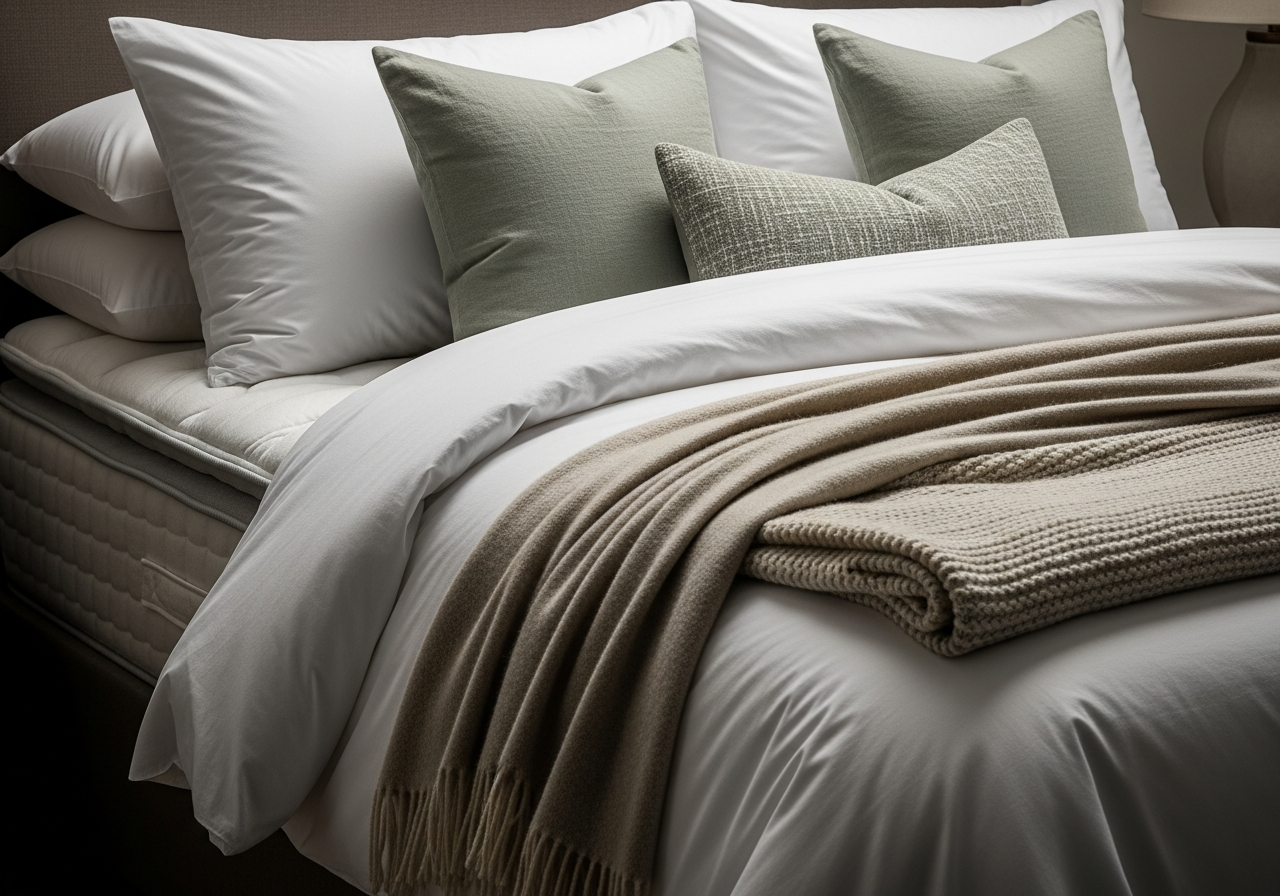
If you wake up sweaty, with tangled hair or a sore neck even after 8 hours of rest, your schedule isn’t always the culprit: your bedding is likely playing a major role. After 5 years of hands-on testing 200+ sheet sets, pillow fills, and mattress toppers across a range of climates and sleep needs, I’ve found that the right bedding materials make a measurable difference in sleep quality, while poor choices lead to restless nights and wasted money. This guide breaks down every common fabric, matches materials to specific sleep profiles, and shares actionable care and shopping tips to help you pick bedding that supports deeper, more consistent rest.
How Bedding Materials Impact Sleep Comfort: The 3 Core Factors
All bedding performance boils down to three interconnected traits that determine how a fabric feels, performs, and lasts:
- Fiber origin and staple length: Natural fibers like cotton, linen, and silk are made from plant or protein strands, with longer staple lengths (the length of individual fibers) creating smoother, stronger, less pilling fabric. Short-staple fibers are cheaper but rougher, and break down faster with washing.
- Weave and construction: The way fibers are woven changes texture, breathability, and durability. A one-over-one percale weave creates a crisp, breathable fabric ideal for hot sleepers, while a 4-over-1 sateen weave creates a silky, slightly warmer feel. Brushed weaves (like flannel) raise fibers to create soft, insulating fabric for cold climates.
- Thermal and moisture management: Fiber structure determines how well a fabric releases heat and wicks away sweat. Hollow fibers (like linen and wool) trap air for insulation but release excess heat quickly, while dense synthetic fibers trap moisture and raise core body temperature.
These factors interact with personal variables: your body heat regulation, skin sensitivity, sleep position and support, and allergy status all determine which fabric will work best for you. You can also read our guide on how to sleep with sinus pressure.
 A visual comparison of the texture and weave of cotton, linen, silk, and synthetic bedding fabrics
Common Bedding Fabrics, Ranked by Sleep Benefit
Below is a detailed breakdown of every common bedding material, including their key traits, ideal use cases, trade-offs, and care requirements:
| Fabric | Key Traits | Best For | Trade-Offs | Care Notes |
|---|---|---|---|---|
| Long-Staple Cotton (Percale, Sateen, Flannel) | Soft, durable, breathable; percale is crisp and cool, sateen is silky and warm, flannel is brushed and insulating | All sleepers; percale for hot sleepers, sateen for cold sleepers, flannel for winter | Lower thread count can be rough; organic options cost more | Machine wash warm (30-40°C/86-104°F), tumble dry low |
| Linen | Highly breathable, moisture-wicking, gets softer with each wash | Hot sleepers, warm climates, eco-conscious buyers | Initially textured, wrinkles easily, higher upfront cost | Gentle cycle, air dry to prevent shrinkage |
| Bamboo Lyocell/Tencel | Silky smooth, excellent moisture wicking, hypoallergenic | Sweaty sleepers, sensitive skin, eco buyers | Cheap viscose bamboo uses harsh chemicals; Tencel (brand-name lyocell) is pricier but more sustainable | Gentle cycle, low heat dry |
| Silk | Ultra-smooth, gentle on skin and hair, natural temperature regulation | Sensitive skin, hair care, luxury buyers | Very expensive, requires delicate care, prone to friction damage | Hand wash cold, air dry away from direct sun |
| Wool (Merino, Cashmere) | Natural temperature regulation, moisture-wicking, resists dust mites | Cold sleepers, allergy sufferers, year-round mattress toppers | Can feel itchy for some, higher cost, requires careful washing | Spot clean or gentle wool cycle, air dry |
| Synthetic (Polyester, Microfiber) | Affordable, wrinkle-resistant, durable, holds color well | Budget buyers, kids' bedding, temporary use | Poor breathability, traps heat, can harbor bacteria if not washed regularly | Machine wash warm, tumble dry low |
| Down/Feather | Light, lofty, excellent insulation | Cold sleepers, lightweight duvets | Expensive, allergen risk for some, requires professional cleaning | Air out regularly, professional cleaning annually |
| Memory Foam/Latex | Contours to body for pressure relief, supports spinal alignment | Back/joint pain sufferers, sleepers needing extra support | Memory foam can trap heat, latex is pricier, some have latex allergies | Spot clean, use a protector to prevent stains |
Weave choice matters as much as fiber: for example, a 300-thread-count cotton percale sheet will feel cooler and more breathable than a 1,000-thread-count cotton sateen sheet, even with the same fiber content.
 Source: byourbed
How Bedding Materials Directly Affect Sleep Quality
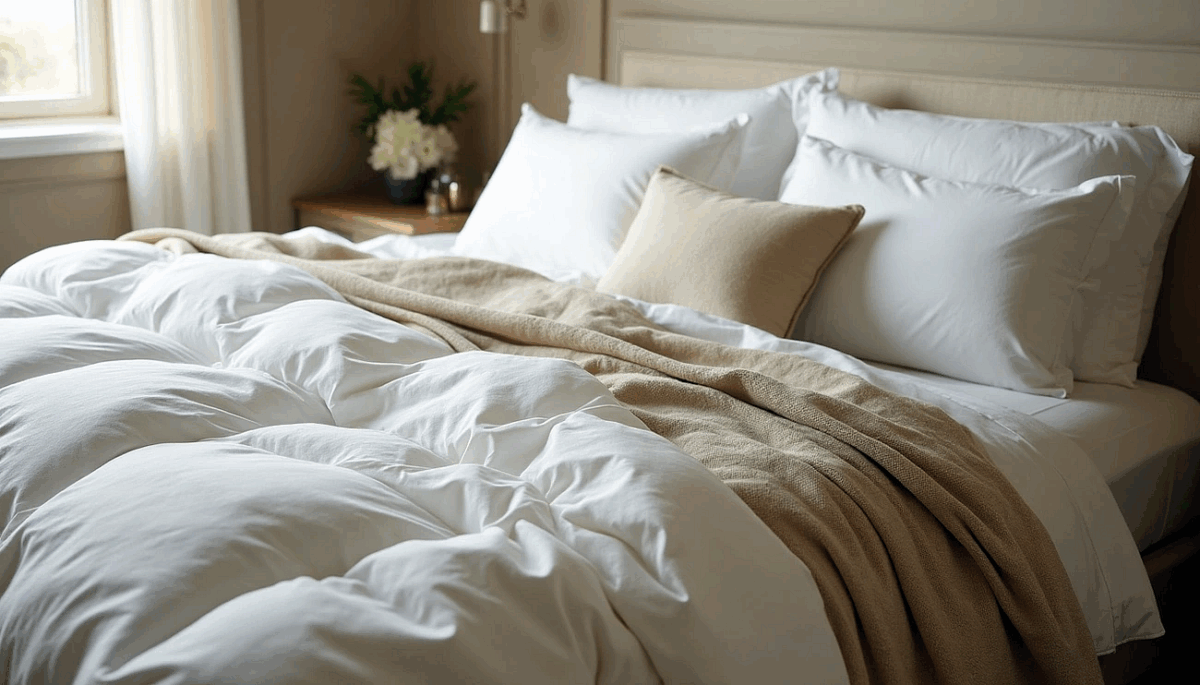
Your bedding doesn’t just feel comfortable—it actively impacts your ability to fall asleep, stay asleep, and wake up rested. According to National Sleep Foundation's guidance on optimal bedroom temperature, a core body temperature drop of 1-2°C is required to initiate sleep, and bedding that traps excess heat disrupts this process, leading to longer sleep onset and 2-3x more nighttime wakeups on average. Other key impacts include:
- Moisture management: Fabrics that wick sweat and skin oils away from your body prevent a damp microclimate that causes discomfort, skin irritation, and even acne or eczema flare-ups.
- Pressure and support: Mattress and pillow fills directly impact spinal alignment; a misaligned spine causes low-grade muscle tension that disrupts deep sleep, even if you don’t wake up aware of the ache.
- Allergen exposure: Dust mites thrive in warm, damp bedding. Natural fibers with tight weaves and regular washing reduce mite populations, while unwashed synthetic fills can harbor 10x more allergens than properly cared-for natural fabrics.
 Source: co
Choosing the Right Fabrics for Your Sleep Profile
The best bedding for you depends entirely on your unique sleep needs, not generic marketing claims. Use these targeted recommendations to find materials that work for your body:
For Hot Sleepers
If you regularly kick off covers, wake up with sweat on your sheets, or live in a warm climate, prioritize breathable, moisture-wicking fabrics:
- Top picks: Linen, Tencel lyocell, cotton percale
- Avoid: Heavy sateen, flannel, polyester microfiber, thick down duvets
- Pro tip: Adding a mattress protector with cooling technology can extend the cooling effect of your sheets by drawing heat away from your body.
For Cold Sleepers
If you wake up with cold hands or feet, or need extra layers to stay warm, choose insulating fabrics that trap body heat without causing sweating:
- Top picks: Brushed cotton flannel, wool mattress toppers, medium-fill down duvets, bamboo sateen
- Avoid: Lightweight linen, thin cotton percale, silk sheets (unless layered over a warmer base)
- Pro tip: Layer a breathable cotton base sheet with an insulating flannel top sheet and adjustable duvet to fine-tune temperature as needed.
For Allergy and Sensitivity Sufferers
If you have dust mite allergies, eczema, or sensitive skin, choose fabrics that resist allergen buildup and are easy to wash regularly:
- Top picks: Tightly woven cotton percale (300+ thread count), Tencel lyocell, silk
- Avoid: Down/feather fills (harbor dust mites if not washed regularly), low-quality polyester (traps bacteria and irritates skin)
- Pro tip: A hypoallergenic mattress topper adds an extra barrier against allergens and can be washed more frequently than a full mattress.
For Back and Joint Pain
If you have chronic back, neck, or joint pain, prioritize support and pressure relief over softness:
- Top picks: Medium-firm memory foam or latex mattresses, contour memory foam pillows, gel-infused memory foam toppers
- Avoid: Overly soft down mattresses, high-loft pillows that tilt your neck out of alignment
- Pro tip: Paired with proper pillow height matched to your sleep position, a supportive mattress reduces pressure points and improves spinal alignment.
Common Bedding Mistakes That Ruin Comfort (And How to Fix Them)
From years of testing, these are the most common errors shoppers make that lead to wasted money and poor sleep:
- Chasing high thread count alone: A common mistake I see is shoppers assuming a 1,000-thread-count sheet is better than a 300-thread-count option. In practice, thread counts above 600 often use multi-ply yarns (twisting multiple thin threads together to count as one) that make fabric heavier, less breathable, and more prone to pilling. Prioritize long-staple fiber and weave type over thread count for true comfort.
- Ignoring care instructions: I once ruined a $100 silk pillowcase by washing it with regular detergent and hot water; it lost its luster and became rough within 2 months. Always follow care labels: silk and wool require gentle cycles and low heat, while cotton can handle warmer water to kill dust mites.
- Skimping on the items you use daily: It’s tempting to save on sheets and decorative shams, but the mattress and pillow you use every night have a far larger impact on comfort. A high-quality memory foam pillow costs less than a set of luxury sheets and will improve sleep quality far more.
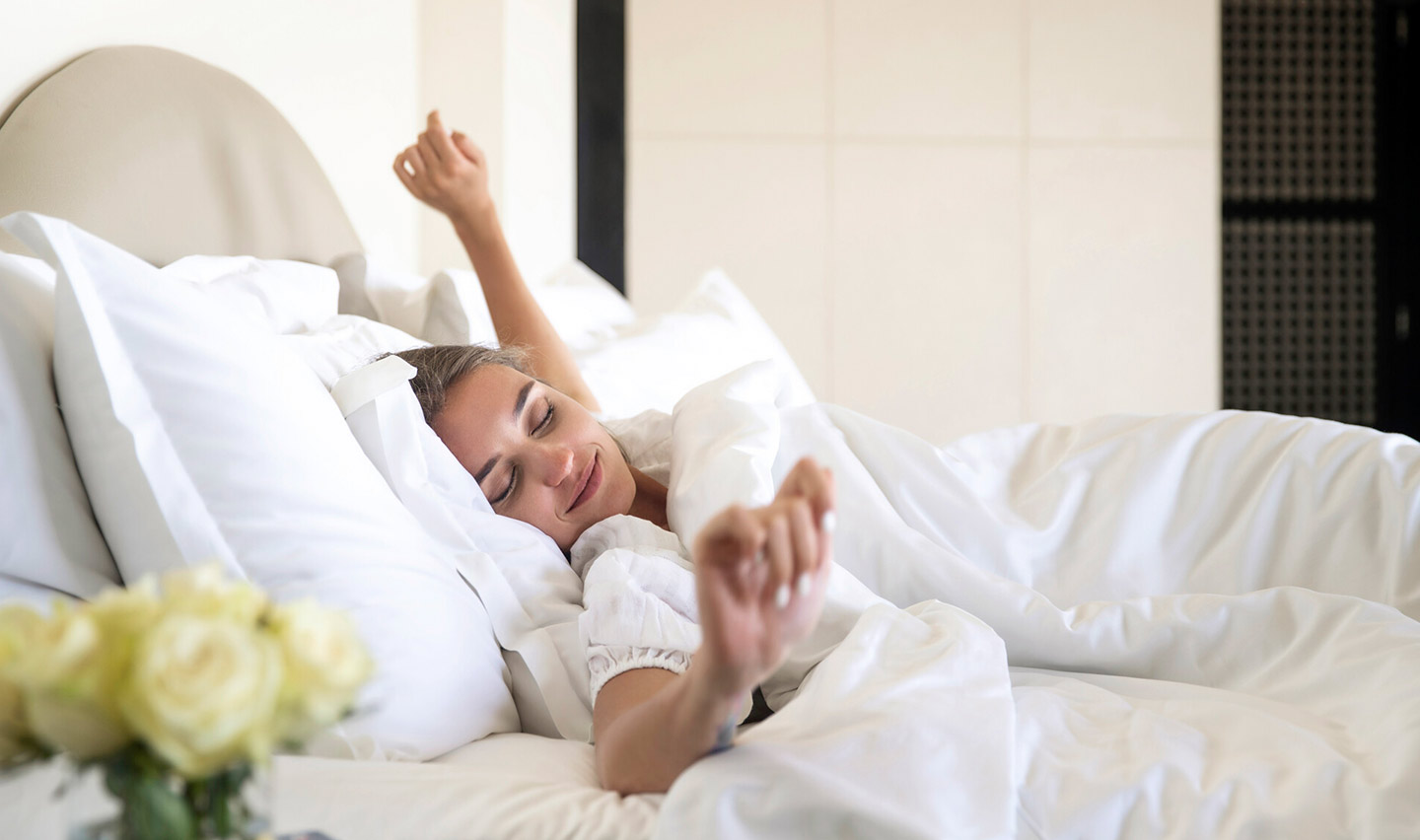
- Not accounting for wet hair habits: If you regularly go to bed with wet hair, a rough cotton pillowcase will cause breakage and frizz. Switching to silk or satin pillowcases reduces friction, and following tips for sleeping with wet hair without damage can protect your hair while you rest.
 Source: sofitelboutique
Care Tips To Extend Bedding Lifespan And Comfort
Proper care keeps your bedding comfortable for years and saves you money on frequent replacements. Follow these evidence-based steps:
- Wash sheets and pillowcases weekly: Use cool or warm water (30-40°C/86-104°F) for most fabrics; use hot water (60°C/140°F) only for white cotton to kill dust mites. Use a mild, dye-free detergent, and skip fabric softener on performance fabrics like Tencel and microfiber, as it coats fibers and reduces moisture-wicking ability.
- Dry properly: Tumble dry low for cotton, linen, and synthetics; air dry silk, wool, and lyocell to prevent shrinkage and fiber damage. Remove sheets from the dryer while slightly damp to reduce wrinkles.
- Rotate and flip regularly: Rotate mattress toppers every 3 months, and flip non-pillow-top mattresses every 6 months to prevent indentations. Rotate pillows monthly to keep fills evenly distributed.
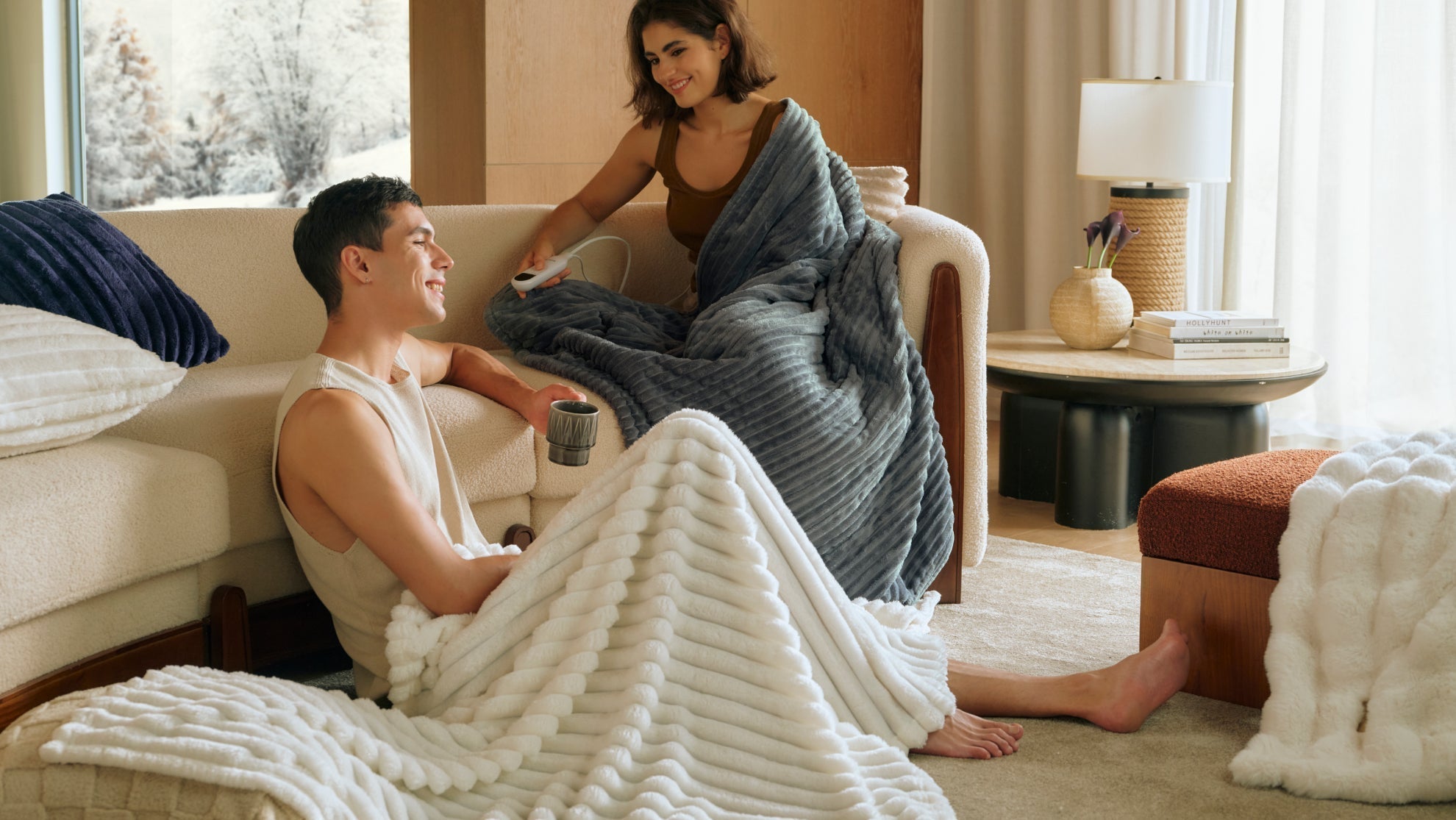
- Use protective layers: Adding a protective mattress layer blocks spills, sweat, and allergens, extending your mattress’s lifespan by 2-3 years. Pillow protectors add an extra barrier against dust mites and skin oils.
- Follow care labels: Delicate fabrics have specific requirements; ignoring them can cause irreversible damage. For example, silk should never be bleached or dried on high heat.
 Source: bedsurehome
Sustainable And Ethical Bedding Considerations
For many shoppers, the environmental and social impact of bedding is as important as comfort. Here’s what to look for to make ethical, low-impact choices:
- Certifications to prioritize: Look for GOTS (Global Organic Textile Standard) certification for organic fabrics grown without toxic pesticides and processed with fair labor practices, OEKO-TEX Standard 100 for fabrics free of harmful chemicals, and FSC certification for sustainably sourced wood pulp used in lyocell production. You can verify GOTS official certification for any brand claiming organic status.
- Low-impact fabric choices: Linen is made from flax, which requires very little water and no pesticides, making it one of the most sustainable natural fibers. Tencel lyocell uses a closed-loop production process that recycles 99% of solvents, reducing waste and chemical use.
- Longevity over trends: Durable fabrics like linen and long-staple cotton last 5-10 years with proper care, reducing waste far more than buying cheap, short-lived synthetic bedding every 2-3 years.
 Source: oxbowanimalhealth
Frequently Asked Questions
What fabric is best for hot sleepers?
Linen, Tencel lyocell, and cotton percale are the top choices for hot sleepers, as their loose weaves and moisture-wicking fibers pull heat away from the body and allow air circulation. Avoid heavy sateen, flannel, and polyester, which trap heat and raise core body temperature, disrupting sleep onset.
Are high thread count sheets always better?
No. Thread count measures the number of threads per square inch, but manufacturers often inflate numbers by using multi-ply yarns (twisting multiple thin threads together to count as a single thread). A 300-thread-count long-staple cotton percale sheet will be more breathable, durable, and comfortable than a 1,000-thread-count short-staple polyester sheet, which feels heavy and sticky.
How often should I wash my bedding?
Wash sheets and pillowcases weekly to remove skin oils, sweat, and dust mites. Duvet covers should be washed every 2-4 weeks, while mattress toppers and pillows should be spot cleaned monthly and deep cleaned every 3-6 months, per manufacturer instructions. More frequent washing is recommended for allergy sufferers.
Can synthetic sheets be comfortable?
Yes, high-quality microfiber and polyester blends can feel soft and wrinkle-resistant, making them a good budget option for guest rooms or kids' bedding. However, most low-cost synthetics trap heat and moisture, leading to discomfort for hot sleepers or people with sensitive skin. Look for moisture-wicking synthetic blends if you choose this option.
What is the best pillow fill for neck pain?
Contour memory foam pillows and ventilated latex pillows are the best options for neck pain, as they conform to the shape of your head and neck, keeping your spine aligned while you sleep. The right pillow height depends on your sleep position: side sleepers need a higher loft (10-15 cm) to fill the gap between their head and mattress, while back and stomach sleepers need a lower loft (6-10 cm) to avoid tilting the neck forward.
Are natural fibers always better for allergies?
Not automatically. While natural fibers like cotton, linen, and silk resist dust mites better than loose synthetic fills, they need to be washed regularly (weekly for sheets, monthly for pillows) to prevent allergen buildup. Look for tightly woven fabrics (300+ thread count) and hypoallergenic certifications for the best allergy protection.
How long do bedding fabrics last?
High-quality long-staple cotton and linen sheets last 5-10 years with proper care, while silk sheets last 3-5 years. Synthetic microfiber sheets last 2-4 years, and mattress toppers last 3-7 years depending on fill material and usage.
Do fabric softeners improve bedding comfort?
No. Fabric softeners coat fabric fibers with a waxy layer that reduces breathability and moisture-wicking ability, especially for performance fabrics like Tencel and microfiber. Avoid fabric softener on all bedding except for occasional use on cotton to reduce static.
 Source: prestige-affairs
Conclusion
The best bedding materials & comfort come down to matching fabric traits to your unique sleep needs, not following marketing hype or chasing inflated thread counts. Prioritize high-quality items you use daily—your mattress, pillow, and base sheets—over decorative, low-impact items, and follow simple care habits to extend their lifespan for years. Small, intentional swaps deliver fast results: switching from polyester to linen sheets can reduce nighttime wakeups from heat in as little as 3 nights, and adding a supportive pillow can eliminate morning neck pain in a week. If you’re ready to build a full sleep-friendly routine, check out our guide to building a consistent bedtime schedule to pair your new bedding with habits that support deeper rest. If you have specific questions about fabric care or selection, leave a comment below.
Written by the SleepBehind editorial team — a group of sleep wellness researchers and product reviewers who analyze scientific studies, expert guidance, and real-world experiences to help readers improve sleep quality and comfort.