

Wedge pillows promise relief from acid reflux, chronic snoring, post-surgical discomfort, and lower back strain, but many first-time users spend their first few nights sliding down the incline or waking up with a stiff neck. If you’ve struggled to get comfortable with your new wedge, you’re not alone — the wrong height, poor alignment, and incorrect positioning are the most common culprits behind restless nights. This guide breaks down exactly how to sleep with a wedge pillow safely and comfortably, with step-by-step instructions, position variations for specific health needs, mistakes to avoid, and care tips to make your wedge last for years.
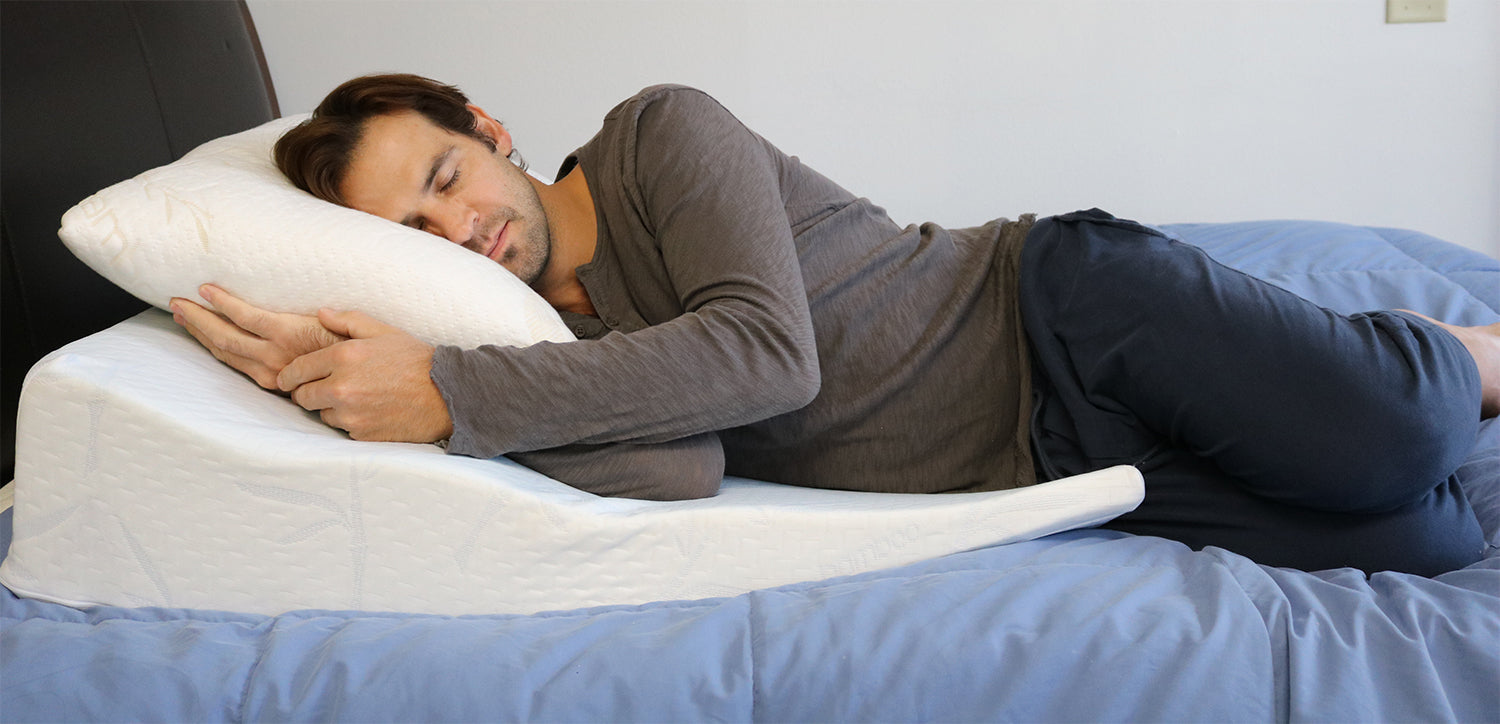
 Wedge pillows come in a range of heights and angles to suit different health needs
What Is A Wedge Pillow, And Who Benefits From Using One?
Wedge pillows are firm, angled foam supports designed to elevate part of your body while you sleep, unlike standard flat pillows that only support your head and neck. They come in two primary configurations: upper-body wedges that lift your torso, and leg elevation wedges that raise your lower body. You can also read our guide on brownmed imak eye pillow review.
People use wedge pillows for a wide range of health and comfort needs:
- Acid reflux (GERD): Elevating your upper body 6-12 inches uses gravity to keep stomach acid from flowing back into the esophagus, reducing nighttime heartburn and regurgitation. Clinical guidance from the National Institute of Diabetes and Digestive and Kidney Diseases recommends this elevation as a first-line non-medical intervention for mild to moderate GERD.
- Snoring and mild sleep apnea: An incline reduces soft tissue collapse in the throat, keeping the airway open and reducing the frequency and severity of snoring and apnea episodes. The American Academy of Sleep Medicine notes that inclined sleeping is a low-risk, non-invasive option for people with mild sleep-disordered breathing.
- Post-surgical recovery: Elevation reduces swelling and strain on incision sites for abdominal, cardiac, and bariatric procedures, and makes it easy to sit up briefly to take medication or eat without putting pressure on your core.
- Lower back pain and poor circulation: Leg elevation reduces pressure on the lumbar spine and improves blood flow to the legs, reducing stiffness and swelling for people who stand or sit for long hours, as well as those with pregnancy-related edema.
- General comfort: Some people use wedges simply to reduce pressure on their joints or to prop themselves up to read or watch TV in bed.
It’s important to note that wedge pillows manage symptoms, they do not cure underlying conditions. If you have chronic GERD, sleep apnea, or chronic pain, use a wedge as part of a broader treatment plan recommended by your healthcare provider.
How To Choose The Right Wedge Pillow For Your Needs
A poorly chosen wedge can cause more discomfort than it solves, so focus on these key factors when shopping:
- Height: 4-7 inches is ideal for mild snoring, occasional acid reflux, or general comfort. 7-12 inches is recommended for moderate to severe GERD, post-surgical recovery, or severe sleep apnea. Wedges taller than 12 inches often cause neck strain for most sleepers, so consult a clinician before purchasing one this tall.
- Incline angle: Most wedges have a 15-30 degree incline. 15-20 degrees works for mild snoring or general comfort, while 25-30 degrees is standard for GERD symptom relief. Steeper inclines increase risk of sliding and neck strain if not paired with proper support.
- Material: High-density memory foam contours to your body for pressure relief, while firm polyfoam offers more structured support for heavier users or post-surgical recovery. Look for CertiPUR-US certified foam to avoid harmful chemical off-gassing.
- Base design: Non-slip rubber bases prevent the wedge from sliding across the mattress, which is critical for people who move a lot in their sleep. Full-length wedges (which extend from the upper back to the lower legs) offer more stability than short, upper-body-only wedges.
- Cover quality: Removable, machine-washable covers made of breathable bamboo or cotton reduce allergen buildup and make cleaning easy. Waterproof covers are ideal for post-surgical use or people who sweat heavily at night.
In practice, I’ve used a 10-inch memory foam wedge after abdominal surgery, and it cut down on nighttime swelling and made it easy to sit up to take medication. The only catch? I needed a small cervical roll under my neck to keep my spine neutral, which is a common adjustment for taller wedges. If you’re unsure which height to choose, start with a 7-inch wedge — it works for most common use cases, and you can add a thin pillow under your head to adjust the angle if needed. If you prefer to sleep with wet hair to save time in the morning, choosing a protective wet hair style for bed can keep hair out of your face while you adjust to your new sleep setup. You can also read our guide on how to sleep with shoulder pain.
 Full-length wedges offer more stability for people who move frequently during sleep
Step-By-Step: How To Sleep With A Wedge Pillow Safely
Follow these steps to get comfortable on your wedge quickly and avoid common aches and strains:
- Prep your bed: Clear any loose pillows, blankets, or clutter from the area where you’ll place the wedge, and smooth out your fitted sheet to eliminate wrinkles that could cause the wedge to slip.
- Position the wedge correctly: For upper body elevation, place the wide, flat end of the wedge against your headboard or the top of your mattress, with the narrow slope pointing toward your feet. For leg elevation, flip the wedge so the narrow end is under your knees and the wide end supports your calves and lower legs.
- Test alignment before lying down: Sit on the edge of the bed where the wedge is placed, then slowly lie back. Your shoulder blades should rest flat against the highest point of the wedge, with your spine in a neutral, straight line from your hips to your head.
- Adjust head and neck support: Most wedge pillows are designed to support your torso, not your head, so you’ll likely need a thin, low-profile pillow (1-2 inches thick) to cradle your neck and keep your head aligned with your spine. Avoid thick, fluffy pillows that tilt your chin toward your chest, as this strains the neck and can worsen reflux or snoring.
- Secure the wedge to prevent sliding: If your wedge doesn’t have a non-slip base, place a non-slip rug pad or yoga mat under it to grip the mattress. For extra security, tuck the narrow end of the wedge between your mattress and headboard, or use a bed strap to hold it in place.
- Test comfort before committing for the night: Lie on the wedge for 10-20 minutes before you go to sleep to check for pressure points, sliding, or neck strain. Small adjustments — like adding a small rolled towel under your neck or shifting the wedge a few inches — can make a huge difference in comfort.
A common mistake first-time users make is lying too far up or down the wedge, which throws off spinal alignment. In practice, most people find the sweet spot is when their hips are at the lowest point of the incline and their shoulders are resting on the middle section of the wedge. Side sleepers who use a wedge between their knees for hip alignment may also benefit from adjusting their head and shoulder position to reduce shoulder pain during sleep for more consistent rest.
 Proper alignment keeps your spine neutral to avoid morning stiffness and strain
Position Variations For Specific Health Needs
Your ideal wedge position depends on the symptoms you’re trying to treat. Test these variations to find what works best for your body:
Upper Body Elevation For Acid Reflux (GERD) And Snoring
This is the most common wedge use case. For GERD, the 25-30 degree incline uses gravity to keep stomach acid from flowing back into the esophagus, reducing nighttime heartburn. For snoring and mild sleep apnea, the incline reduces soft tissue collapse in the throat, keeping the airway open. Pair this position with left-side sleeping to further reduce reflux symptoms, and avoid eating 2-3 hours before bed for maximum effectiveness.
Half-Sitting Position For Post-Surgery Recovery Or Reading
This position is ideal for people recovering from abdominal, cardiac, or bariatric surgery, as it reduces strain on incision sites and makes it easy to sit up to take medication or eat. It’s also great for people who like to read or watch TV in bed, as it reduces lower back pressure from sitting upright against a headboard. Place a small pillow behind your lower back for extra lumbar support if needed.
Leg Elevation For Swelling, Poor Circulation, And Lower Back Pain
Elevating your legs 6-12 inches above heart level reduces fluid buildup in the ankles and feet, which is ideal for people with pregnancy-related swelling, lymphedema, or jobs that require long periods of standing. For lower back pain, leg elevation reduces pressure on the lumbar spine by taking the weight of your legs off your pelvis. Place a small pillow under your calves if the wedge feels too steep behind your knees.
Side-Lying Support For Hip And Shoulder Pain
Side sleepers can place a small wedge (or half of a full-length wedge) between their knees to keep their hips aligned, reducing hip and lower back pain. A small wedge placed under the chest can also reduce pressure on the shoulder for side sleepers with shoulder pain. Pair with a medium-thickness pillow between your head and the main wedge to keep your neck aligned. If you’ve recently straightened your hair, our guide to protecting straightened hair overnight can help prevent frizz and breakage from friction against the wedge.
Combined Setups For Multiple Symptoms
If you have multiple issues (e.g., acid reflux and lower back pain), you can use a full-length wedge for upper body elevation and place a small pillow under your knees for extra lumbar support. Some users also pair a wedge with a body pillow for full-body support.
 Each position targets specific symptoms, so test a few to find what works for your body
Common Mistakes To Avoid When Using A Wedge Pillow
Avoid these errors to get the most from your wedge and avoid unnecessary discomfort:
- Using a pillow that is too thick under your head: A thick pillow tilts your chin toward your chest, straining your neck and worsening reflux and snoring. Solution: Use a 1-2 inch cervical pillow or folded thin towel under your neck, not a standard fluffy bed pillow.
- Choosing a wedge that is too tall or steep: Wedges taller than 12 inches or with an incline steeper than 30 degrees increase your risk of sliding down during the night and cause neck strain. Solution: Start with a 7-inch wedge with a 20-degree incline, and only increase height if you still have symptoms.
- Ignoring spinal alignment: If your hips are lower than your shoulders or your head is tilted forward, you’ll wake up with stiffness and pain. Solution: Adjust the wedge position or add small support pillows until your spine forms a straight, neutral line from your tailbone to the top of your head.
- Not securing the wedge: A slipping wedge can jolt you awake or cause you to fall out of position, defeating the purpose of the wedge. Solution: Use a non-slip pad under the wedge, tuck it between your mattress and headboard, or use a bed strap to hold it in place.
- Expecting a wedge to cure underlying conditions: Wedges manage symptoms of GERD, sleep apnea, and pain, but they don’t treat the root cause. Solution: Use a wedge as part of a broader treatment plan recommended by your healthcare provider, including medication, lifestyle changes, or other interventions.
A common mistake I see first-time users make is skipping the test period before committing to the wedge for the full night. In my experience, 10 minutes of testing before bed catches 90% of alignment and comfort issues before they ruin your sleep.

How To Care For Your Wedge Pillow To Make It Last
Wedge pillows are a significant investment, and proper care will extend their lifespan by 2-3 years. Follow these tips to keep your wedge in good condition:
- Always use a washable cover on your wedge to protect the foam from sweat, skin oils, and stains. Opt for a removable, machine-washable cover to make cleaning easy; if you’re unsure how to care for bamboo pillow fabrics, our guide to cleaning bamboo pillow fabrics has detailed instructions for maintaining soft, breathable covers.
- If your wedge doesn’t have a cover, spot-clean spills and stains with a damp cloth and mild soap. Avoid saturating the foam with water, as this can lead to mold and mildew growth.
- Never machine-wash memory foam or polyfoam wedges unless the manufacturer explicitly states it is safe to do so.
- Air out your wedge for 30 minutes once a month by removing the cover and placing it in a well-ventilated area, away from direct sunlight. This prevents odor buildup and keeps the foam from breaking down prematurely.
- Replace your wedge every 2-3 years, or sooner if it develops lumps, loses its firmness, or no longer provides adequate elevation. A worn-out wedge can cause more harm than good, leading to poor alignment and increased pain.
I once kept a memory foam wedge for 4 years, and it had developed a significant indent where my shoulders rested. It caused me to slide down during the night and wake up with lower back pain, so replacing it made an immediate difference in my sleep quality. A worn-out wedge is just one part of your sleep setup that can impact comfort — if your mattress topper has developed lumps or splits, it may be time to repair a split mattress topper to avoid pressure points. Keeping all parts of your bed clean, including your mattress topper, reduces allergens and improves overall sleep quality; our guide to washing a Cuddle Bed mattress topper has step-by-step instructions.
 Regular cleaning prevents allergen buildup and extends the life of your wedge
Frequently Asked Questions
What angle is best when learning how to sleep with a wedge pillow?
Start with a gentle 15 to 20 degree incline for mild snoring or general comfort, and increase to 25-30 degrees if you’re using the wedge for acid reflux. Most people find 30 degrees is the sweet spot for GERD symptom relief, but comfort is more important than hitting a specific number — if a 20-degree angle feels better and reduces your symptoms, that’s the right choice for you.
Can I use a wedge pillow every night?
Yes, many people use wedge pillows nightly for chronic acid reflux, sleep apnea, or post-surgical recovery. If you plan to use it long-term, invest in a high-density foam wedge with a removable cover for durability. Check in with your healthcare provider every 6-12 months to make sure the wedge is still meeting your needs, especially if your symptoms change. Pairing wedge pillow use with other pain-relieving sleep positions can further reduce discomfort for people with chronic pain.
How do I stop the wedge from slipping while I sleep?
The most effective fix is to place a non-slip rug pad or yoga mat under the wedge to grip your mattress. For extra security, tuck the narrow end of the wedge between your mattress and headboard, or use an adjustable bed strap designed to hold pillows in place. Avoid using thick blankets or sheets under the wedge, as these can bunch up and cause slipping. If you use a mattress protector under your wedge to prevent slipping, regular cleaning will keep it effective; our guide to cleaning a Hush mattress protector has easy, machine-washable tips.
Will a wedge pillow help with lower back pain?
Yes, when used for leg elevation, a wedge pillow reduces pressure on the lumbar spine by taking the weight of your legs off your pelvis. It also improves circulation to reduce inflammation and stiffness in the lower back. For best results, elevate your legs 6-12 inches above heart level, and pair the wedge with a supportive mattress and pillow.
Is it safe to use a wedge pillow after surgery?
In most cases, yes, but you should always follow your surgeon’s specific instructions first. Some procedures require a specific incline angle or additional support, so ask your care team for guidance before using a wedge. If you experience increased pain, swelling, or discomfort after using the wedge, stop using it immediately and contact your provider.
 These FAQs cover the most common concerns first-time wedge users have
Conclusion
Wedge pillows are a simple, low-risk tool for managing symptoms of acid reflux, snoring, post-surgical discomfort, swelling, and lower back pain when used correctly. The key to restful nights is choosing the right height and incline for your needs, positioning the wedge to keep your spine neutral, and making small adjustments to avoid common mistakes like neck strain or sliding. Start with the step-by-step guide and position variations we shared, test your setup for 10-20 minutes before bed, and consult your healthcare provider if you have chronic symptoms that don’t improve with wedge use.
Ready to test your wedge pillow tonight? Start with a 7-inch height and 20-degree incline, adjust your neck support with a thin cervical pillow, and note how your symptoms change over 3 consecutive nights. If you found this guide helpful, browse our library of sleep tips to improve every part of your nightly routine, from bedding maintenance to hair care, or leave a comment below sharing your experience with wedge pillows.

Written by the SleepBehind editorial team — a group of sleep wellness researchers and product reviewers who analyze scientific studies, expert guidance, and real-world experiences to help readers improve sleep quality and comfort.