
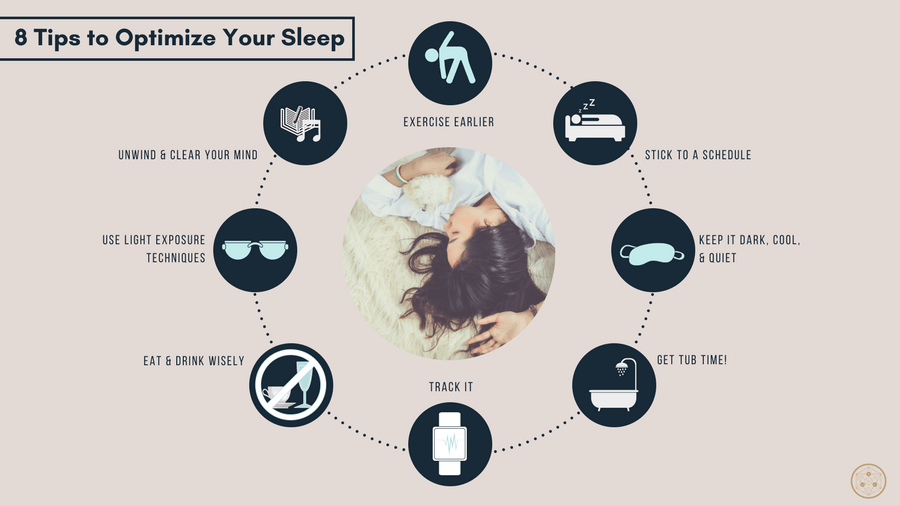
According to the CDC sleep guidelines, 1 in 3 U.S. adults regularly get less than the recommended 7 hours of sleep per night, a shortfall linked to chronic health conditions including diabetes, heart disease, and poor mental health. Sleep environment optimization isn’t about creating a luxurious, Insta-worthy bedroom — it’s about aligning your space with your body’s natural sleep drive, using small, research-backed adjustments to remove barriers to rest. This guide covers actionable, budget-friendly steps, common missteps to avoid, and real-world observations from working with people struggling with sleep, so you can start seeing improvements tonight.
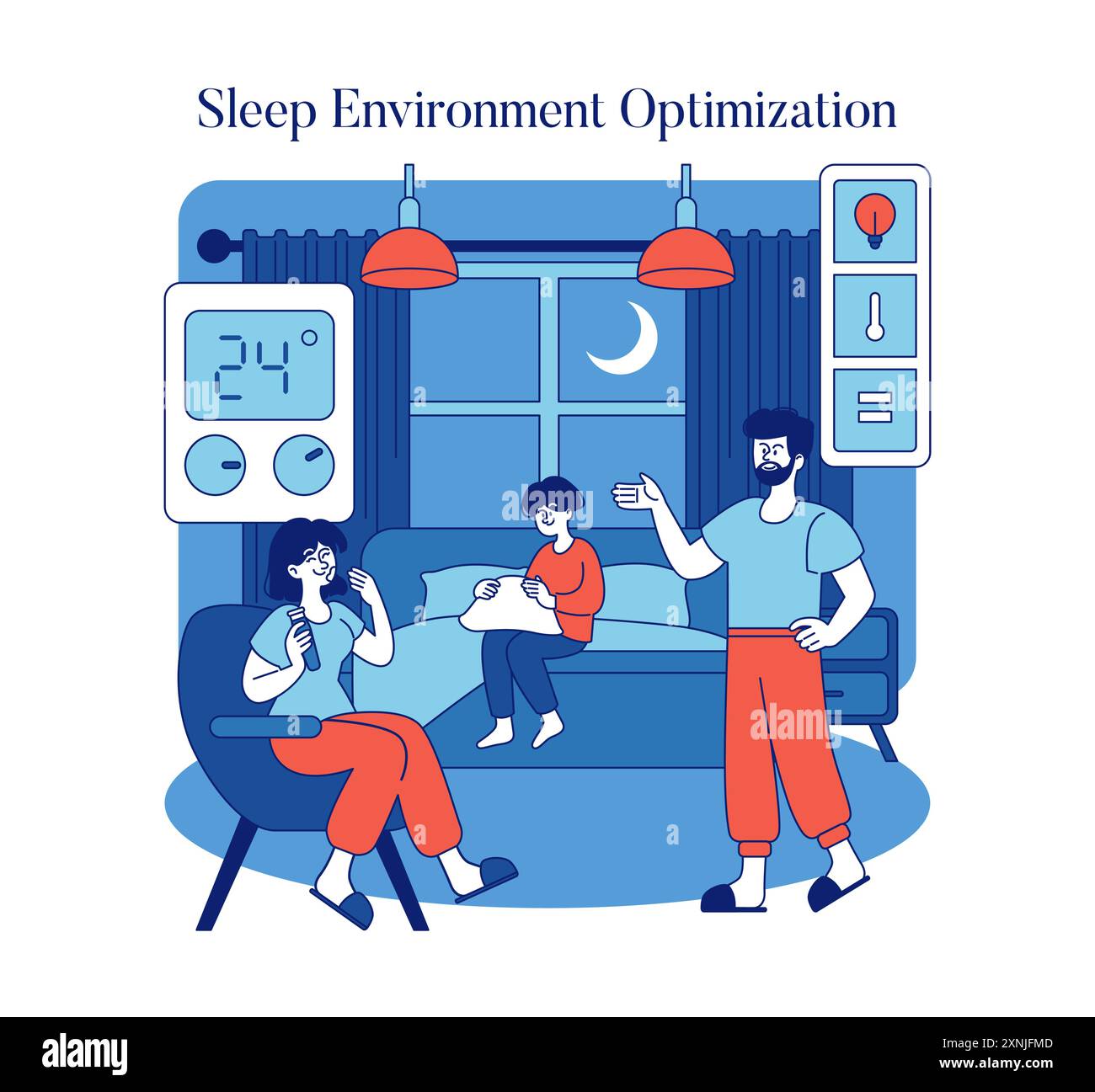 This illustration breaks down the key sensory inputs that impact your ability to fall and stay asleep.
Source: alamy
This illustration breaks down the key sensory inputs that impact your ability to fall and stay asleep.
Source: alamy
Why Sleep Environment Optimization Matters
Your brain relies on sensory cues from your bedroom to decide whether to produce melatonin, the hormone that signals sleepiness, or stay alert. Bright light, loud intermittent noise, high temperatures, and poor air quality all send "stay awake" signals that override your body’s natural sleep drive. Even small, unaddressed disruptions can add up to 30-60 minutes of lost sleep per night, leaving you groggy, unfocused, and more susceptible to illness. The good news? Optimizing your sleep environment delivers one of the highest returns on investment for better rest, with no pills or drastic lifestyle changes required. For many people, basic adjustments to light, temperature, and noise alone can cut sleep onset time in half within a week. You can also read our guide on deep sleep optimization guide.
 This textbook cover outlines evidence-based principles for sleep environment design used by clinicians and researchers.
Source: elsevier
This textbook cover outlines evidence-based principles for sleep environment design used by clinicians and researchers.
Source: elsevier
Core Elements of a Sleep-Positive Bedroom
These six foundational factors form the basis of every effective sleep optimization plan. Tuning them together creates a consistent, reliable cue for your body that it’s time to rest.
Temperature Control
Your core body temperature needs to drop 2–3°F to initiate sleep, which is why most people sleep best in a room between 60–68°F (15–20°C). A common mistake is cranking the heat because you feel cold at bedtime, but warm room temperatures raise core body temperature and cause fragmented, light sleep throughout the night. If you run hot, opt for breathable cotton or bamboo pajamas and moisture-wicking sheets instead of heavy duvets. For people who get cold easily, wear loose socks to bed — they help regulate peripheral temperature without raising your core heat. You can also read our guide on lc dolida sleep mask review.
Light Management
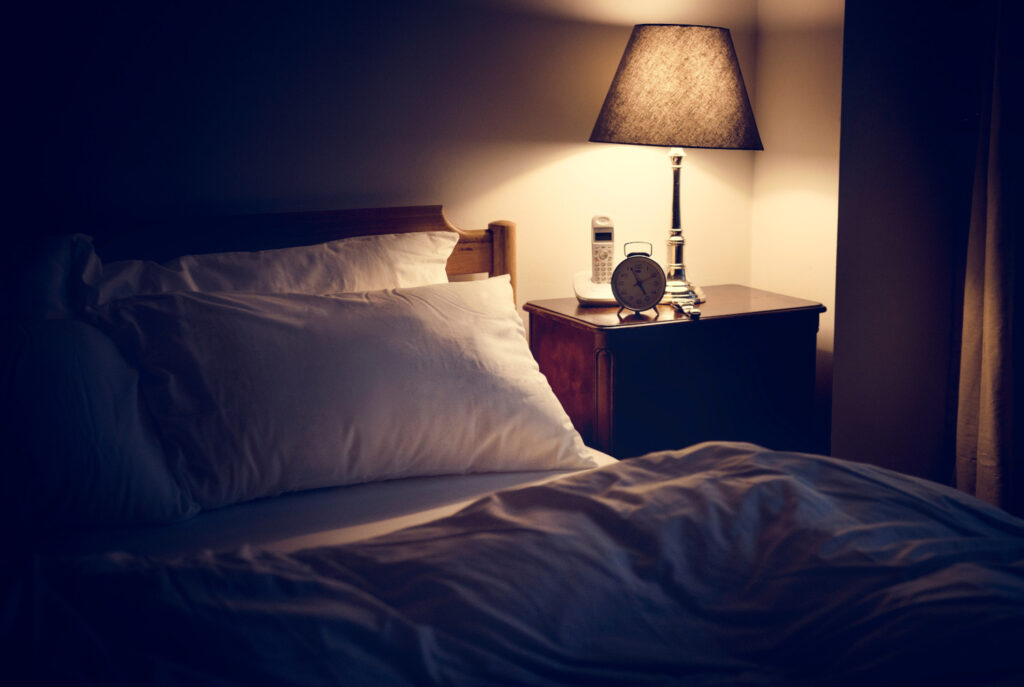
Even small amounts of blue light from device chargers, smart speakers, or streetlights can suppress melatonin production by up to 50% in the hour before bed. Total darkness is ideal for deep sleep: use floor-length blackout curtains that extend 4–6 inches beyond your window frame on all sides to block all external light, and cover or unplug any small LED lights in the room. For pre-sleep routines, use warm, dimmable bedside lamps with a color temperature under 2700K, and avoid bright overhead lighting entirely in the 90 minutes before bed.
Noise Reduction
Intermittent, unpredictable noises (like a car horn or a neighbor’s door slamming) are far more disruptive to sleep than constant, low-level background noise. White noise machines, fans, or sound apps mask these intermittent sounds by creating a consistent, low-level audio backdrop. If you prefer silence, opt for earplugs with a noise reduction rating (NRR) of 15–25, which are comfortable for long-term wear and block disruptive sounds without making you feel isolated. Seal gaps around windows and doors with weatherstripping to cut down on external noise if you live in a busy area. You can also read our guide on how to wake up refreshed.
Breathable, Supportive Bedding
Your mattress and pillows should support your spine in alignment with your natural sleep position: side sleepers need a thicker pillow to fill the gap between their head and shoulders, back sleepers need a medium-loft pillow, and stomach sleepers need a very thin pillow or no pillow at all to avoid neck strain. Replace synthetic pillows every 1–2 years and down/feather pillows every 3–5 years, as they lose loft and support over time. Opt for sheets made of natural, breathable fabrics like cotton, linen, or bamboo to regulate temperature and wick away moisture.
Air Quality and Humidity
The EPA indoor air quality recommendations note that maintaining humidity between 40–60% reduces mold growth, dry skin, and respiratory irritation, all of which can wake you during the night. Ventilate your bedroom for 10 minutes daily to flush out stale air and volatile organic compounds (VOCs) from cleaning products, furniture, or paint. A small HEPA air purifier is a worthwhile upgrade if you have allergies, asthma, or live in an area with high outdoor pollution. While houseplants can improve air quality slightly, limit them to 1–2 per 100 square feet to avoid excess humidity and mold risk. You can also read our guide on bedtime routine for better sleep.
Layout and Clutter
Your bedroom should be reserved for sleep and relaxation only: keep work laptops, televisions, and exercise equipment out of the space to reinforce the mental association between the room and rest. Position your bed away from noisy windows and direct morning sunlight if you sleep past dawn, and leave at least 2 feet of space on three sides of the bed to make it easy to get in and out without bumping into furniture. A cluttered bedside table or floor increases cognitive load and stress, so tidy the space each night as part of your pre-sleep routine.
 Use this checklist to tackle one adjustment per day for a full week of improvements.
Source: thesleepreset
Use this checklist to tackle one adjustment per day for a full week of improvements.
Source: thesleepreset
Align Your Space With Your Circadian Rhythm
Sleep environment optimization doesn’t stop at your bedroom door — your daily habits directly impact how your body responds to your sleep space. Get 10–30 minutes of natural sunlight within 30 minutes of waking each day to set your circadian rhythm, and avoid bright overhead lights and screens for 1–2 hours before bed to signal to your body that sleep is approaching. If you work night shifts or have an irregular schedule, blackout curtains are even more critical to block daylight during your sleep window, and a sunrise alarm clock can help simulate a natural wake-up light to avoid grogginess.
Sensory Comfort Beyond Light, Noise, and Temp
Small sensory details often make the difference between a good night’s sleep and a restless one. Light, calming scents like lavender or chamomile can reduce pre-sleep anxiety and improve sleep quality for people who enjoy fragrance, but avoid strong artificial air fresheners or candles that can cause headaches or respiratory irritation. Opt for soft, smooth sheets in a texture you find comfortable, and avoid scratchy fabrics that cause discomfort during the night. If you wash your hair before bed, choosing a low-friction cover prevents overnight breakage and discomfort that can disrupt deep sleep. For people with long or styled hair, using gentle overnight styles avoids tension headaches that can wake you mid-sleep.
Step-by-Step Bedroom Optimization Checklist
Tackle one adjustment per day to avoid overwhelm, and track your progress to see what works best for your unique needs:
- Day 1: Audit your current space — Note light leaks, noise sources, temperature, and any discomfort points. Track 3 baseline nights of sleep to compare later.
- Day 2: Control light — Install blackout curtains or use a contoured eye mask, replace bright overhead bulbs with warm dimmable options, and unplug or cover LED lights from chargers and electronics.
- Day 3: Adjust temperature — Set your thermostat to 65°F as a starting point, adjusting by 1 degree each night until you find your ideal range. Swap heavy pajamas for breathable cotton or bamboo.
- Day 4: Reduce noise — Test a white noise machine or fan for one night, try earplugs with a 15–25 NRR if noise persists, and seal gaps around windows with weatherstripping.
- Day 5: Improve air quality — Open windows for 10 minutes daily to ventilate, check humidity levels with a cheap hygrometer, and add a small HEPA air purifier if you have allergies or live in a high-pollution area.
- Day 6: Upgrade bedding — Test your mattress for sagging, replace pillows that have lost their loft, and add a breathable mattress topper if your current mattress is too firm or soft. Extend the life of your topper with regular care like reviving worn layers before they lose their support.
- Day 7: Create a pre-sleep routine — Avoid screens 60–90 minutes before bed, use low-light activities like reading, and keep all work materials out of the bedroom to reinforce the space as a sleep-only zone.
 These mindful practices complement physical environment adjustments to improve sleep quality.
Source: shutterstock
These mindful practices complement physical environment adjustments to improve sleep quality.
Source: shutterstock
Common Sleep Environment Mistakes to Avoid
These common traps waste time and money, and can even make sleep worse if left unaddressed:
- Changing too many variables at once — It’s impossible to know which adjustment is helping (or hurting) if you overhaul your entire bedroom in one weekend. Change one factor every 7–10 days to measure its impact.
- Overspending on tech first — Basic fixes like blackout curtains and temperature control deliver 80% of the benefits for 20% of the cost. Only invest in gadgets after you’ve optimized the basics.
- Ignoring daytime habits — 1 hour of morning sunlight and 30 minutes of daily exercise improve sleep quality as much as bedroom adjustments. If you’re not supporting your circadian rhythm during the day, no amount of bedroom tweaks will fully fix poor sleep.
- Buying bedding without testing — A mattress that works for your partner may not work for you. Always use a trial period when buying a new mattress or topper, and read user reviews of common topper issues to avoid costly returns from products that don’t fit your needs.
- Neglecting bedding maintenance — A dirty mattress protector or unwashed pillow can trap allergens, dust mites, and moisture that disrupt sleep. If you use a bamboo pillow, following proper washing guidelines keeps it supportive and free of allergens for longer.
 Avoid these common missteps to save time and money on ineffective fixes.
Source: sleepedu
Avoid these common missteps to save time and money on ineffective fixes.
Source: sleepedu
Measuring Your Progress and Return on Investment
The biggest ROI from sleep environment optimization isn’t monetary — it’s the cumulative impact of better mood, sharper focus, a stronger immune system, and lower risk of chronic disease over time. That said, small adjustments deliver fast, tangible benefits: low-cost fixes under $100 (blackout curtains, eye masks, new pillows, a fan) will deliver noticeable improvements for most people within a week, while mid-range upgrades ($100–$500, like a white noise machine, smart thermostat, or humidifier) add incremental benefits for people who still struggle after basic tweaks. High-end investments ($500+, like a new mattress or whole-home air purifier) are only worth it if you’ve already optimized the basics and still experience frequent sleep disruptions.
Track your progress with a simple sleep diary or a basic wearable tracker: note not just how long you sleep, but how long it takes to fall asleep, how many times you wake up during the night, and how energized you feel the next day. Change only one variable every 7–10 days so you can clearly isolate the impact of each adjustment. In practice, the highest-impact changes are almost always the simplest: for dozens of clients I’ve worked with, moving the bed away from a street-facing window and adding blackout curtains reduced night wakings by 30–50% within the first week, no extra purchases required.
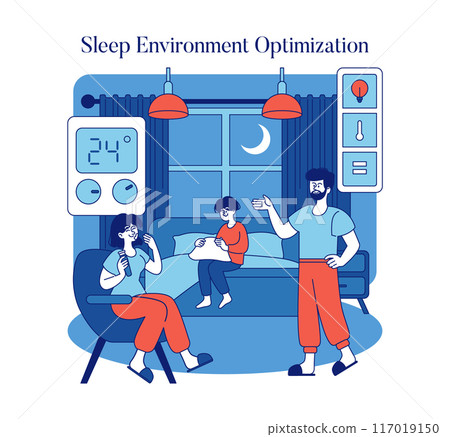 Small, consistent adjustments to your bedroom setup deliver far better results than expensive one-time purchases.
Source: pixtastock
Small, consistent adjustments to your bedroom setup deliver far better results than expensive one-time purchases.
Source: pixtastock
Advanced Tweaks for Persistent Sleep Issues
If you’ve optimized the basics and still struggle with sleep, these upgrades can help — but come with honest trade-offs to consider:
- Smart thermostats — Program a 2–3°F temperature drop 30 minutes before bed to align with your natural circadian rhythm, but only invest if you’ve already settled on your ideal baseline temperature.
- Sleep-friendly smart lighting — Programmable bulbs that dim and shift to warm tones at sunset help people with irregular schedules maintain consistent pre-sleep routines, but basic dimmer switches work just as well for most people at a fraction of the cost.
- Pillow speakers or bone conduction headphones — Let you listen to white noise, calming music, or podcasts without disturbing a partner, but can be uncomfortable for side sleepers if not properly fitted.
- Advanced air sensors — Monitor VOCs, CO2, and humidity levels in real time to help you adjust your environment proactively, but are unnecessary for most people unless you have severe allergies or asthma.
- Wearable sleep trackers — Help you measure the impact of your changes objectively, but avoid obsessing over small data fluctuations — focus on how you feel during the day first, as subjective energy levels are a more reliable metric than tracker data for most people.
 Consistent tracking helps you identify which adjustments deliver the biggest results for your unique needs.
Source: healthline
Consistent tracking helps you identify which adjustments deliver the biggest results for your unique needs.
Source: healthline
Frequently Asked Questions
What is sleep environment optimization, and why does it matter?
Sleep environment optimization is the process of adjusting your bedroom’s light, sound, temperature, air quality, and layout to align with your body’s natural sleep drive. It works because your brain uses sensory cues from your environment to decide whether to produce sleep-inducing melatonin or stay alert, so an optimized space removes barriers to falling and staying asleep.
How long does it take to see results from sleep environment changes?
Most people notice improvements in sleep onset time and night wakings within 3–7 days of making key adjustments like darkening the room and cooling the temperature. More subtle changes, like improving air quality or upgrading bedding, may take 2–4 weeks to show consistent benefits.
Can I optimize my sleep environment on a tight budget?
Absolutely. The highest-impact changes are almost always free or low-cost: closing blackout curtains, lowering your thermostat by a few degrees, unplugging bright electronics, and decluttering your bedside table can deliver dramatic improvements without any extra spending.
Is a cooler room always better for sleep?
For most adults, yes: a temperature between 60–68°F supports the natural 2–3°F drop in core body temperature needed to initiate sleep. That said, individual comfort varies: if you feel cold at 65°F, adjust up by 1–2 degrees, and prioritize breathable bedding over cranking the heat, which can cause fragmented sleep.
Do I need a sleep tracker to optimize my sleep environment?
No. While trackers can help you measure changes objectively, the most important metric is how you feel during the day: if you wake up energized, don’t feel drowsy in the afternoon, and don’t wake up multiple times at night, your environment is working for you. Trackers are only helpful if you’re struggling to identify which adjustments are making a difference. If you notice your mattress protector is trapping moisture and causing musty odors, replace or wash it immediately to improve air quality.
How does humidity affect sleep?
Humidity between 40–60% is ideal: lower humidity causes dry skin, scratchy throat, and respiratory irritation, while higher humidity increases mold risk and makes you feel hot and sticky. Use a cheap hygrometer to measure your bedroom’s humidity, and add a humidifier or dehumidifier as needed. If you struggle with sleeping on wet hair, our guide to healthy overnight hair routines covers low-effort fixes that won’t damage your hair or disrupt sleep.
 These are the most common questions we receive about optimizing your sleep environment.
Source: bestnightsleepguide
These are the most common questions we receive about optimizing your sleep environment.
Source: bestnightsleepguide
Conclusion
Sleep environment optimization is a practical, accessible path to better rest, no expensive gadgets or drastic lifestyle changes required. Start with the foundational basics: control light, keep your room cool, reduce noise, and improve air quality, changing one variable at a time to measure its impact. Prioritize low-cost fixes first, and only invest in upgrades if you’ve already optimized the basics and still struggle with sleep. Start with one small change tonight: close your blackout curtains 30 minutes before bed, set your thermostat to 65°F, and note how you feel when you wake up. For more evidence-based sleep guidance, explore our full library of sleep resources to build a routine that works for your unique needs.

Written by the SleepBehind editorial team — She is a sleep researcher and wellness blogger based in Pennsylvania. Passionate about helping people optimize their sleep.