
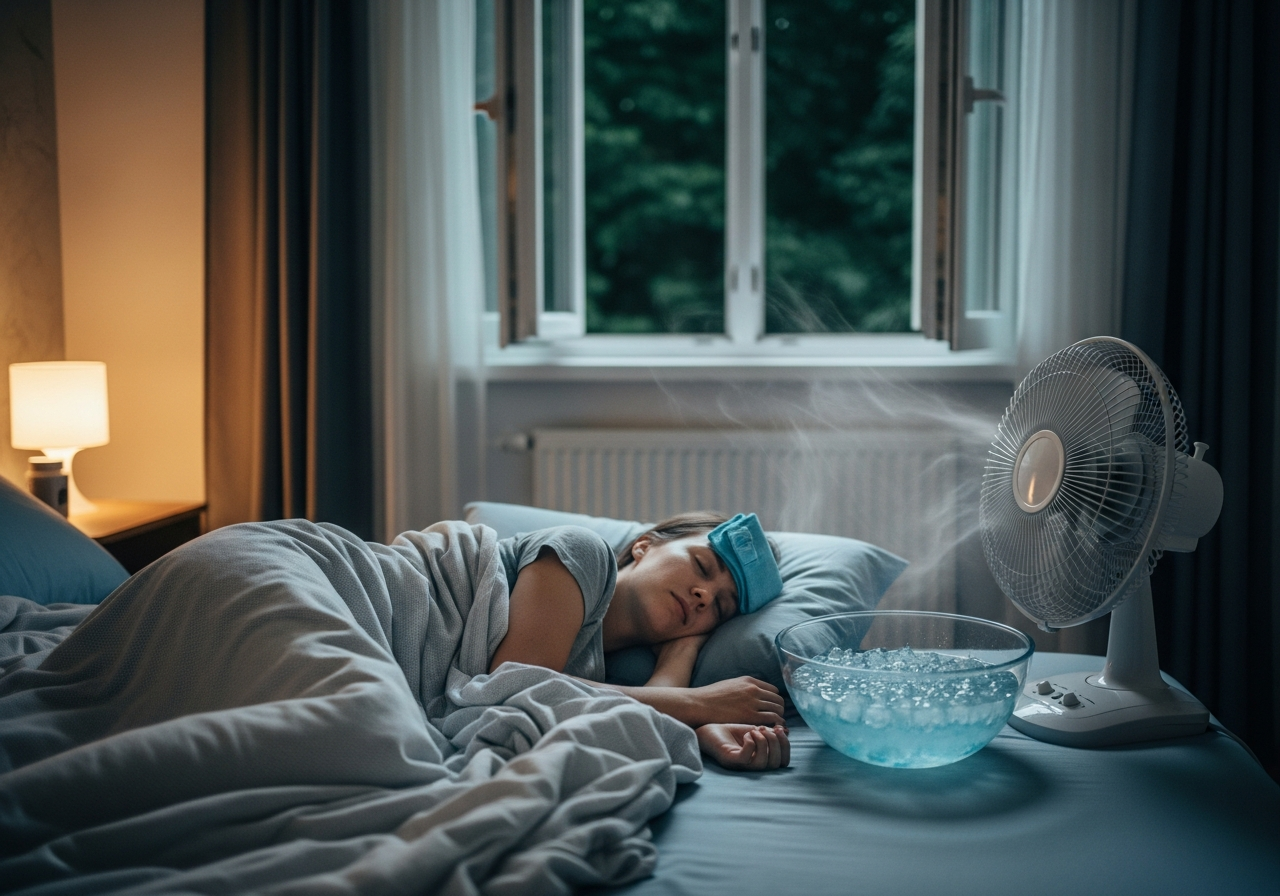
Rising energy costs and increasingly severe summer heatwaves have led more households to skip air conditioning in favor of low-cost, low-energy cooling methods — and sleeping comfortably without AC is far easier than you might think. Your body only needs a 1–2°F drop in core temperature to initiate sleep, and with small adjustments to your bedroom setup, daily habits, and cooling tools, you can achieve the same deep, restful sleep you’d get from AC without the high utility bills or environmental impact. This guide combines sleep science-backed guidance and real-world testing across humid and arid summer climates to help you build a personalized AC-free sleep routine that works for your home and body.
 Natural cooling methods can deliver the same restful sleep as AC without high energy bills.
Source: lifehacker
Natural cooling methods can deliver the same restful sleep as AC without high energy bills.
Source: lifehacker
Why Sleeping Without Air Conditioning Works
Air conditioning is a convenient way to cool a room, but it is not the only option for supporting healthy sleep. Sleep specialists consistently note that a 1–2°F drop in core temperature is the primary trigger for sleep onset, and AC units that overcool bedrooms can actually disrupt REM sleep cycles, leading to grogginess the next day. For people living in regions where AC is uncommon year-round (including parts of Southern Europe, South Asia, and rural North America), natural cooling methods are not just a backup — they are the standard for restful sleep. These methods work by supporting your body’s natural thermoregulation process, rather than forcing a temperature drop that can lead to rebound heating as your body tries to re-warm itself overnight. With attention to airflow, humidity, and personal cooling, you can sleep as well without AC as you do with it, often for a fraction of the cost. You can also read our guide on deep sleep tips.
Optimize Your Bedroom for Passive Cooling
The most effective AC-free cooling strategies start with preventing heat from entering your bedroom in the first place, then moving existing cool air where you need it most.
Block Daytime Heat Gain
Direct sunlight through windows is the single largest source of unwanted heat gain, accounting for up to 30% of a home’s total heat load in summer. For renters, removable static-cling reflective window film blocks 50–70% of solar heat gain without damaging windows, and blackout curtains add an extra layer of insulation. For homeowners, light-colored exterior awnings or shading trees on sun-facing sides of the house can reduce indoor temperatures by up to 20°F (11°C) according to U.S. Environmental Protection Agency energy-saving cooling guidance. Close all shades, curtains, and windows during the hottest part of the day (10am–6pm) to trap cool air inside. You can also read our guide on myhalos sleep mask review.
Boost Nighttime Cross-Ventilation
Once the sun goes down, take advantage of cooler outdoor air by creating cross-ventilation: open windows on opposite sides of your bedroom (or opposite sides of your home) to let cool air flow in from the shady side of your house and push hot air out the sunny side. This “stack effect” works because hot air rises and escapes through higher windows, while cooler air enters through lower ones. Place a box fan in a window on the hot side of your house facing outward to push hot air out faster, and a second fan on the cool side facing inward to pull cool air in. Avoid opening windows on the side of the house that gets direct afternoon sun, as this will pull hot air inside instead of cool air.
Eliminate Internal Heat Sources
Even small household electronics and lights emit heat that can raise bedroom temperature by 2–3°F overnight. Unplug idle electronics like phone chargers, laptops, and gaming consoles when not in use, as they draw power and emit heat even when turned off. Switch all bulbs to LED, which emit 90% less heat than incandescent bulbs, and avoid charging devices under your bed or near pillows, where their heat will be trapped against your body. These small changes add up to a noticeably cooler bedroom without any extra effort. You can also read our guide on lc dolida sleep mask with bluetooth headphones review.
Cross-ventilation and solar shading are the first line of defense for keeping a bedroom cool without AC.
Source: arloren
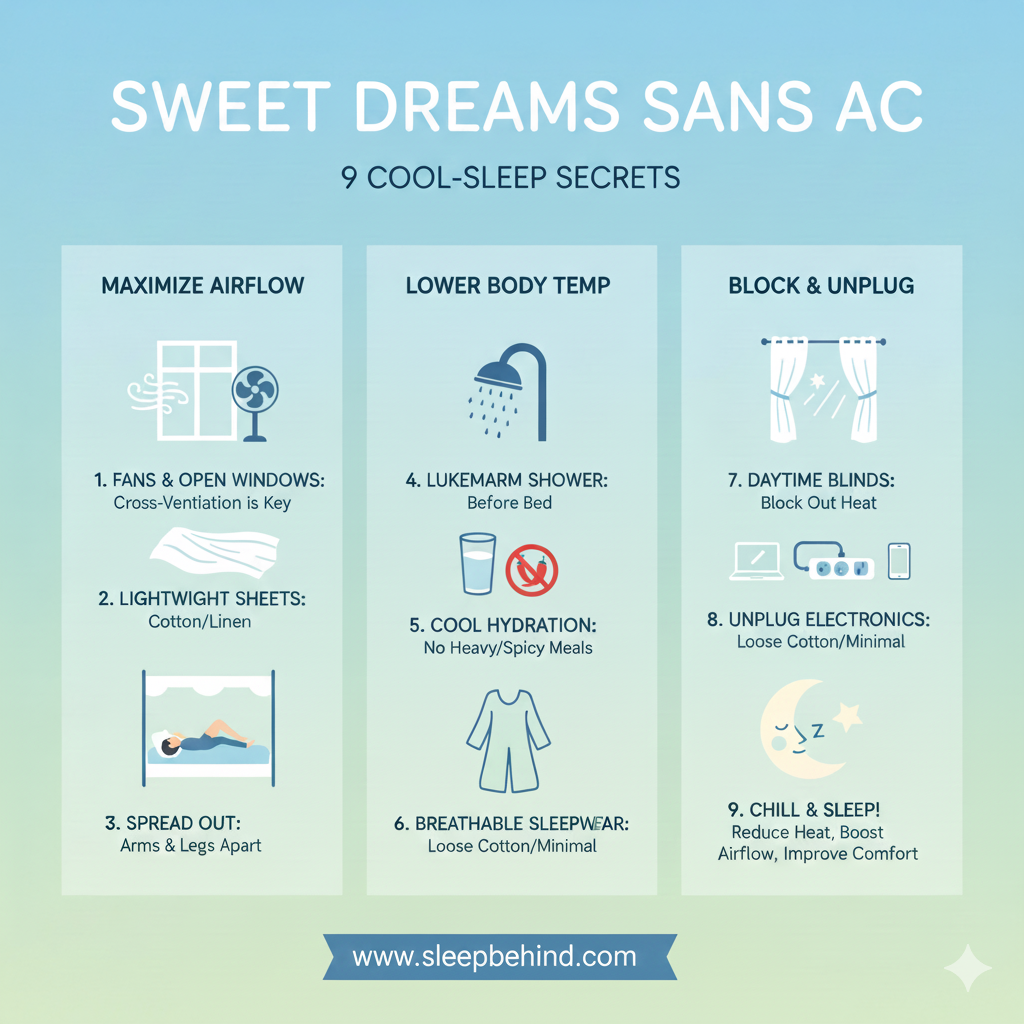 Combining passive cooling and targeted tools keeps bedrooms comfortable even during record heatwaves.
Image: Cooler for the Summer – Sweet dreams secrets
Combining passive cooling and targeted tools keeps bedrooms comfortable even during record heatwaves.
Image: Cooler for the Summer – Sweet dreams secrets
Choose Breathable Sleepwear and Bedding
The fabrics you wear and sleep on have a huge impact on how well your body can cool itself at night. Look for loose, lightweight fabrics with moisture-wicking properties that pull sweat away from your skin so it can evaporate quickly, cooling you in the process. The best options include linen (the most breathable natural fabric, ideal for humid climates), Tencel lyocell (a soft, moisture-wicking synthetic made from eucalyptus, great for sensitive skin), and lightweight cotton with a percale weave (which is more breathable than smooth sateen weaves). Avoid heavy flannel, dense memory foam, and synthetic polyester blends, which trap heat and moisture against your skin.
For bedding, choose a thin, breathable duvet or sheet set rated for 2–3 seasons warmer than your current winter bedding. A wool topper utility can regulate temperature year-round by wicking moisture away from your body, and shredded latex or kapok pillow fills are far cooler than dense memory foam. If your current mattress topper is flattened, lumpy, or split, it will trap heat instead of regulating it — for step-by-step guidance on repairing a worn topper, see our dedicated guide. Wash sheets and pillowcases weekly to remove sweat, dead skin, and moisture from wet hair that can trap heat and encourage mold growth; for guidance on healthy wet hair sleep practices, check our full guide. You can also read our guide on how to improve rem sleep quality.
 Natural, loose-weave fabrics allow air circulation and moisture evaporation to keep skin cool.
Source: arloren
Natural, loose-weave fabrics allow air circulation and moisture evaporation to keep skin cool.
Source: arloren
Targeted Body Cooling Techniques for Instant Relief
If your bedroom is still too warm for comfort, these targeted tricks lower your core temperature faster than cooling the entire room.
No-Tool Cooling Hacks
You don’t need any special equipment to cool your body quickly before bed. Try these science-backed no-tool tricks first:
- Cool your pulse points: Your wrists, inner elbows, neck, behind your knees, and inner ankles have large blood vessels close to the skin, so cooling these areas with a cool (not ice-cold) washcloth or ice pack wrapped in a thin towel lowers your core temperature 2–3x faster than cooling other parts of your body. Avoid ice-cold temperatures, as they cause blood vessels to constrict and trigger a rebound heating effect as your body tries to re-warm itself.
- Take a lukewarm shower 60–90 minutes before bed: A lukewarm (85–90°F / 29–32°C) shower dilates blood vessels and promotes steady cooling as water evaporates from your skin, dropping your core temperature by 1–2°F right as you get into bed — the exact window your body needs to initiate sleep. Cold showers, by contrast, trigger a rebound heating response that can make you feel warmer an hour later.
- Choose a loose sleep position: Curling into a tight fetal position traps heat against the mattress, while sleeping on your back with limbs loosely extended or on your side with a pillow between your knees reduces contact with the mattress and improves air flow around your body. Your sleep position impacts beyond temperature, including hair health and joint comfort, so pick a position that avoids trapping heat while supporting your body’s needs.
- Elevate your head slightly: Prop your head up 4–6 inches with an extra pillow to improve air flow around your face and reduce stuffiness, especially if you sleep on your back.
Low-Cost Cooling Tools
If no-tool hacks aren’t enough, these low-cost tools can provide extra cooling for under $20:
- Fan with frozen water bottle: Place a frozen 2-liter bottle (filled 90% with water and 10% with rubbing alcohol to lower the freezing point and keep it colder longer) 1–2 feet in front of a standard fan. The air passing over the bottle will cool by 10–15°F, creating a refreshing breeze without the high energy cost of AC. Replace the bottle with a fresh frozen one halfway through the night for all-night cooling.
- Under-sheet fan: These small, low-profile fans sit under your fitted sheet and blow cool air directly across your skin, cooling your body without blowing directly on your face (which can cause dry eyes or sinus irritation).
- Foot cooling pack: Since your feet have some of the highest blood flow in your body, placing a cool pack or frozen water bottle (wrapped in a thin towel) at the foot of the bed cools your entire core faster than cooling your torso. If you have ceiling fans, set them to rotate counterclockwise in summer to push cool air down from the ceiling, where hot air rises and gets trapped.
- Cool mist sprayer: Keep a small spray bottle of cool (not cold) water by your bed and mist your sheets lightly if you wake up hot in the middle of the night. The evaporation of the water from the fabric will cool your skin within minutes.
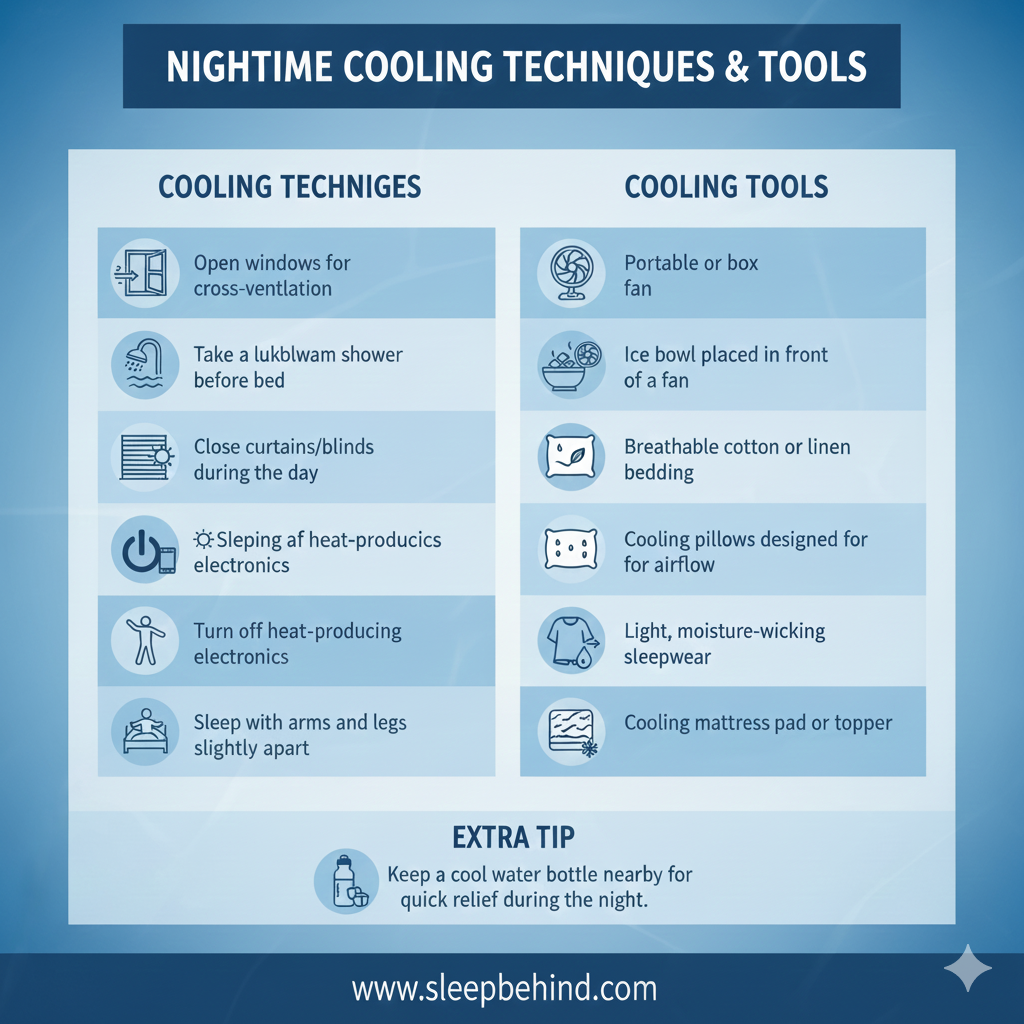 These low-effort tools target body heat directly for faster cooling than room-wide methods.
Adjust Your Evening Habits to Reduce Internal Heat
What you eat, drink, and do in the 2–3 hours before bed has a huge impact on your body’s ability to cool itself overnight. Even mild dehydration (a 1–2% loss of body weight) impairs your body’s ability to sweat and regulate temperature, so sip 8–12 oz of water 1–2 hours before bed, but avoid large amounts right before bed to prevent nighttime bathroom trips that disrupt sleep. Stick to light, low-fat meals in the evening, as digestion raises core temperature by 1–2°F for 2–3 hours after eating. Avoid spicy food (which contains capsaicin, a compound that raises body temperature and causes excessive sweating), alcohol (which disrupts thermoregulation and causes night sweats), and caffeine after 2pm, as caffeine raises metabolic rate and body temperature for up to 6 hours after consumption. As National Institutes of Health research on evening habits and sleep confirms, these substances raise core temperature and significantly delay sleep onset, making AC-free sleep far harder to achieve. You can also read our guide on what is circadian rhythm sleep wake disorder.
Sticking to a consistent sleep and wake time supports your consistent circadian rhythm, which regulates your body’s natural temperature drop at night. Going to bed and waking up at the same time every day (even on weekends) trains your body to start cooling down 1–2 hours before bed, making it easier to fall asleep without relying on AC. Avoid intense exercise within 2 hours of bed, as it raises core temperature for 2–3 hours after your workout; if you exercise in the evening, finish at least 3 hours before bed to give your body time to cool down.
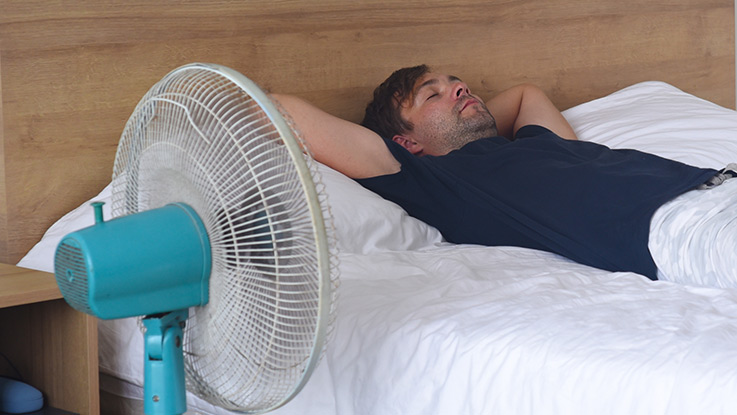 Staying hydrated and eating light, cooling foods in the evening reduces internal heat buildup.
Source: healthpartners
Staying hydrated and eating light, cooling foods in the evening reduces internal heat buildup.
Source: healthpartners
Low-Cost DIY Cooling Hacks for Every Climate
These no-install hacks work for renters and homeowners alike, and can be tailored to your local climate for maximum effect.
Evaporative Cooling Hacks
Evaporative cooling works by pulling heat from the air as water evaporates, and it is extremely effective in dry climates (under 40% relative humidity) but less useful in humid areas. In dry climates, hang damp linen sheets in front of an open window or drape a wet sheet over a box fan to lower room temperature by 5–10°F in 30 minutes. You can also lightly mist your sheets with cool water from a spray bottle right before getting into bed for an instant cooling effect. In humid climates, avoid adding extra moisture to the air, as it will make the room feel muggier and hinder sweat evaporation.
Heat Blocking Hacks
If you don’t have permanent window shading, there are several low-cost, no-install options to block heat from entering your home. Hang a light-colored, UV-blocking fabric sheet or even a reflective emergency blanket over sun-facing windows during the day to block solar heat gain. For renters who can’t install permanent film, removable static-cling reflective window film cuts heat gain by 50% without damaging windows, and costs as little as $20 per window. You can also create a temporary awning over a sun-facing window or balcony with a lightweight pop-up canopy to block direct sunlight.
Humidity Control Hacks
High humidity (above 60%) makes it almost impossible for your body to cool itself via sweat, and can also encourage mold growth on bedding and walls. Use a dehumidifier during the day to keep indoor humidity between 40–50% for optimal comfort. If you don’t own a dehumidifier, place open trays of calcium chloride (a natural desiccant available at most hardware stores) around the room to absorb excess moisture; replace the trays every 2–3 days as they saturate. Avoid running hot showers or boiling water on the stove during the day, as this adds excess moisture to the air that will make your bedroom feel muggy at night.
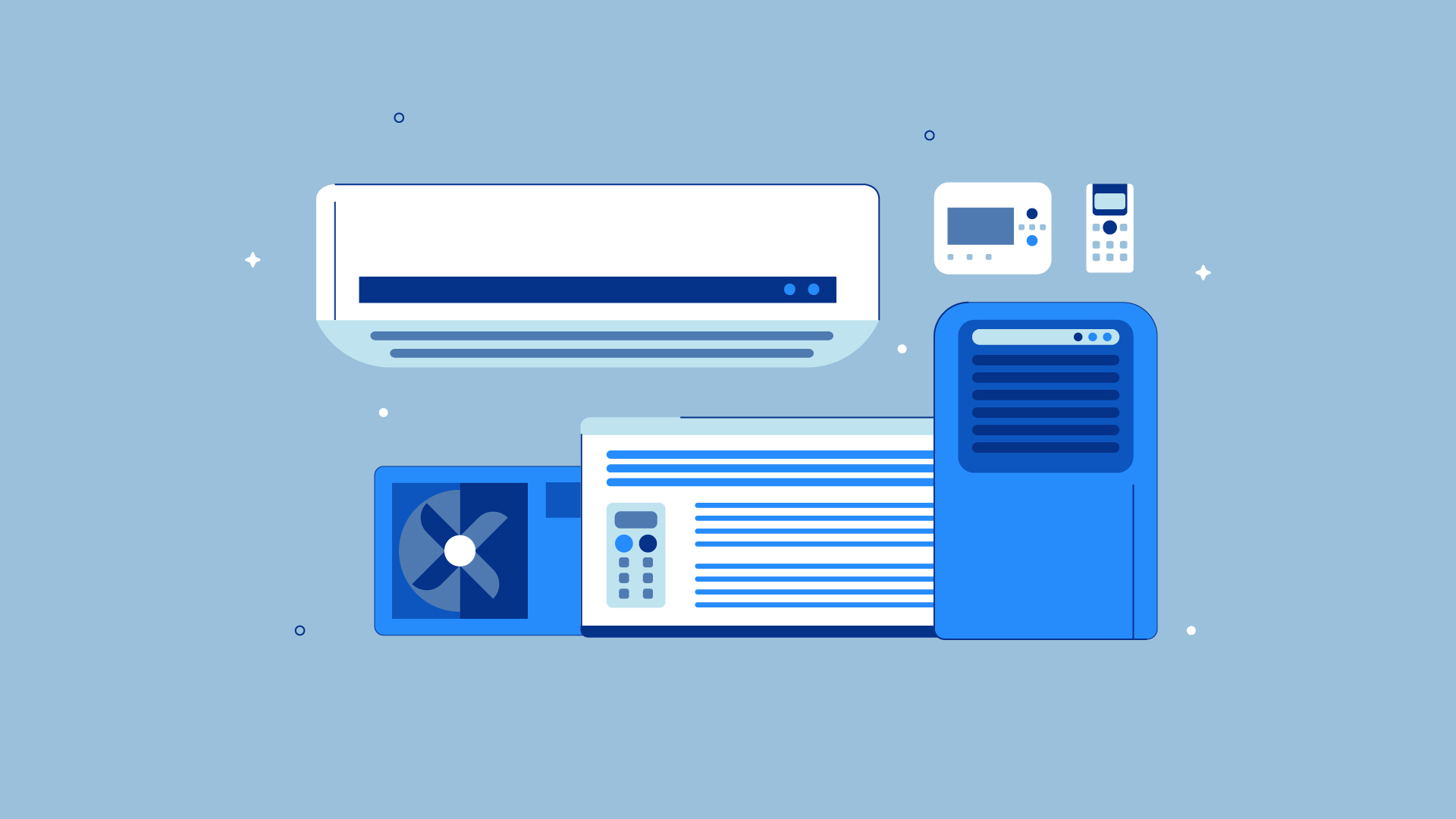 Low-cost, no-install hacks work for both renters and homeowners looking to avoid AC use.
Source: amerisleep
Low-cost, no-install hacks work for both renters and homeowners looking to avoid AC use.
Source: amerisleep
Health and Safety Considerations for AC-Free Sleep
Sleeping without AC is safe for most healthy adults, but vulnerable groups need to take extra precautions to avoid heat-related illness. Infants under 1 year old, adults over 65, and people with chronic conditions like heart disease, respiratory illness (asthma, COPD), diabetes, or obesity have impaired thermoregulation and are at higher risk of heat exhaustion and heat stroke during hot nights. If you or someone in your household falls into one of these groups, keep indoor temperatures below 75°F (24°C) at all times, and consider using a portable AC unit or sleeping in a cooler part of the home (like a basement) if temperatures stay high for multiple days in a row.
Know the signs of heat-related illness: heat exhaustion causes heavy sweating, cold/clammy skin, nausea, dizziness, and muscle cramps, and can be treated by moving to a cool space and sipping water. Heat stroke is a medical emergency, marked by a body temperature of 103°F (39.4°C) or higher, hot/red/dry skin, confusion, and loss of consciousness — if you suspect heat stroke, call emergency services immediately. High indoor humidity (above 60%) also encourages mold growth, which can trigger allergies and respiratory issues; use a $10 hygrometer to monitor humidity levels and run a dehumidifier if needed. If you have a diagnosed sleep condition like sleep apnea, overheating can worsen symptoms, so talk to your doctor before ditching AC to ensure it is safe for your specific needs.
 Vulnerable groups should take extra precautions to avoid heat-related illness during warm nights.
Source: youtube
Vulnerable groups should take extra precautions to avoid heat-related illness during warm nights.
Source: youtube
Common Mistakes to Avoid When Ditching AC
Testing AC-free cooling for the first time can lead to small, avoidable mistakes that make the process harder than it needs to be. Keep these tips in mind to build a reliable routine faster:
- Don’t apply ice packs directly to your skin: Wrapping ice packs in a thin towel prevents frostbite and avoids the blood vessel constriction that triggers rebound heating. Limit ice pack use to 15–20 minutes at a time.
- Don’t use too many fans at once: Multiple fans pointed at your face can cause dry eyes, sore throats, and stiff muscles. Instead, focus on one or two fans placed to create cross-ventilation or blow air across your body, not directly at your face.
- Don’t wear heavy pajamas: Even lightweight synthetic fabrics trap heat and moisture against your skin. Stick to loose, natural-fiber pajamas to allow air flow.
- Don’t test 5+ hacks at once: If you try multiple new strategies on the same night, you won’t know what works for your body. Test one change every 2–3 nights to build a personalized routine that fits your needs.
- Don’t ignore temperature forecasts: If a record heatwave is predicted for the next day, pre-cool your bedroom the night before by opening windows late at night (when temperatures are lowest) and closing them early in the morning to trap cool air inside.
Testing one cooling strategy at a time helps you build a reliable routine that works for your home and body.
Source: bedjet
Frequently Asked Questions About Sleeping Without AC
How can I cool my room at night without AC?
Open windows on opposite sides of your home to create cross-ventilation, use fans to pull cool air in from shady sides of the house and push hot air out of sunny sides, and block all direct sunlight during the day with blackout curtains or reflective window film. For an instant boost, place a frozen water bottle in front of a fan to cool passing air.
Will fans make it harder to sleep without AC?
No, fans improve sleep for most people by increasing air flow and enhancing sweat evaporation, which lowers skin temperature. The only exception is if you have sinus issues or dry eyes — in that case, point fans away from your face or use a humidifier alongside the fan to add moisture to the air.
Is it safe to use frozen water bottles near the bed?
Yes, as long as you wrap them in a thin towel to absorb condensation and place them on a water-resistant surface to avoid leaks. Frozen 2-liter bottles last 4–6 hours, and you can refill and refreeze them overnight for continuous cooling.
How does humidity affect sleeping without air conditioning?
High humidity (above 60%) slows sweat evaporation, making it much harder for your body to cool itself, and can also encourage mold growth on bedding. Use a dehumidifier or moisture-absorbing desiccants to keep indoor humidity between 40–50% for optimal comfort.
Can I still get deep sleep without AC?
Yes, as long as your core temperature drops 1–2°F before bed and your bedroom stays between 60–67°F (15–19°C). Many people report deeper, less interrupted sleep without AC, as overcooling from air conditioning can disrupt REM sleep cycles.
What temperature is too hot to sleep safely without AC?
If indoor temperatures stay above 75°F (24°C) for multiple nights, especially for infants, older adults, or people with chronic health conditions, consider using a portable AC unit or sleeping in a cooler part of your home (like a basement) to avoid heat-related illness.
Do cooling pillows work without AC?
Cooling pillows with gel inserts or breathable latex fills can lower the temperature of your head and neck by 2–3°F, which is enough to improve comfort for many hot sleepers. They work best when paired with room ventilation to prevent heat from building up around your head.
Will opening windows at night let in pollen or pollution?
If you live in an area with high pollen or air pollution, open windows only during low-pollen hours (usually early morning before 10am or late evening after 7pm) and use a HEPA air filter in your bedroom to remove particulate matter from the air.
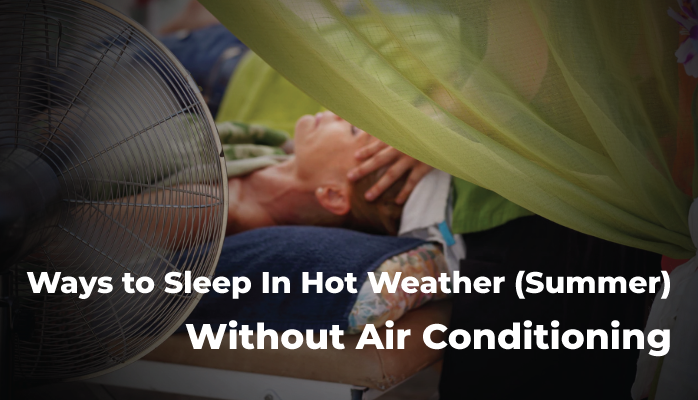 These FAQs address the most common concerns people have when trying AC-free cooling for the first time.
Source: ancsleep
These FAQs address the most common concerns people have when trying AC-free cooling for the first time.
Source: ancsleep
Final Thoughts
Sleeping without air conditioning is not only possible, but often more comfortable and energy-efficient than relying on forced cooling, especially when you tailor strategies to your climate, home layout, and personal preferences. Start with the highest-impact, lowest-effort changes first: block daytime sun, create cross-ventilation at night, switch to breathable bedding, and add one targeted body cooling trick like a frozen water bottle at your feet. Test one change every few nights to avoid overwhelm, and adjust your routine based on what works for your body.
For more guidance on optimizing your sleep environment, explore our full library of sleep science-backed guides to build a restful routine that works year-round, no AC required. If you have questions or tips of your own, leave a comment below to help other readers stay cool all summer long.
Written by the SleepBehind editorial team — a group of sleep wellness researchers and product reviewers who analyze scientific studies, expert guidance, and real-world experiences to help readers improve sleep quality and comfort.