
Body-oil patches and yellow sweat marks can often be lifted from the mattress surface. How to Clean Sweat and Body Oils From a Mattress starts with the care label, not stronger chemicals. The goal is to remove residue without soaking the foam or damaging its finish.
As of 2026, manufacturer instructions remain the most reliable guide for each model. Check the fill, cover, warranty, cleaner directions, and stain condition. EPA mold guidance uses 10 square feet as a general point to consider professional help, though porous foam can be difficult to remediate.
How to Clean Sweat and Body Oils Off Your Mattress
Quick Answer
How to Clean Sweat and Body Oils From a Mattress: Read the care label. Remove washable bedding, then blot fresh stains. Use a cleaner approved for the mattress.
Keep moisture low, remove residue, and let the mattress dry fully.
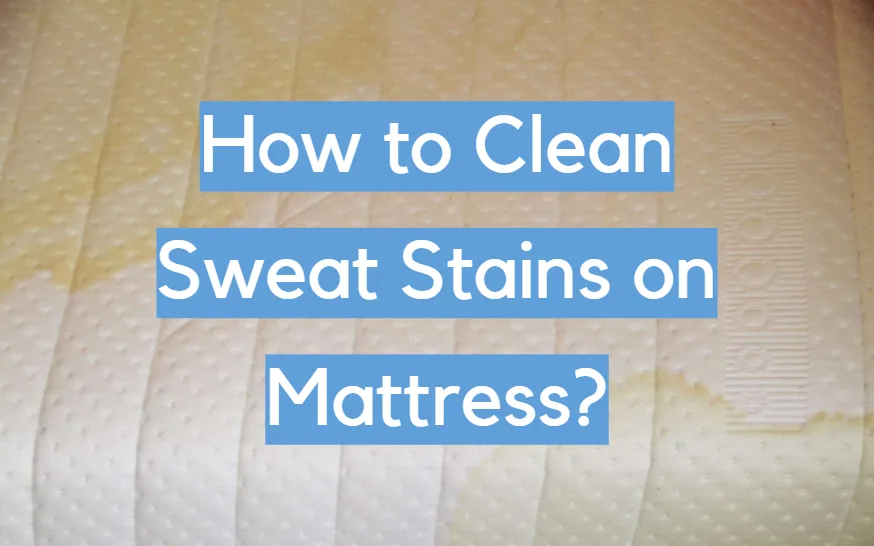
Image source: Web (Bing) / cleanerprofy.com (Web image (fair-use with source credit))
First, Identify Your Mattress and the Type of Stain
Image source: Web (Bing) / pinterest.com (Web image (fair-use with source credit))
Start with the care label because mattress materials don’t respond to water or cleaners in the same way. Memory foam and latex absorb moisture slowly. Innerspring and hybrid mattresses may have less absorbent cores, but their adhesives and comfort layers still need protection.
What does the care label control?
The care label controls the approved cleaning method. Look for terms such as “spot clean only,” “surface clean only,” or “water-based cleaning.”
Also check whether the cover is removable. A washable cover doesn’t mean the mattress core can be soaked. Save the care instructions and warranty terms before cleaning.
Is every yellow mark body oil?
No, not every yellow mark comes from body oil. Sweat can leave mineral salts, while detergent residue and foam aging can also discolor fabric.
| What you can see | Likely cause | Best first move |
|---|---|---|
| Fresh, damp patch | Recent sweat or spilled liquid | Blot from the outside inward |
| Greasy yellow patch | Set-in sebum mixed with sweat | Use an approved grease-cutting cleaner |
| Uniform yellowing | Foam oxidation or age | Clean the surface gently |
| Dark or fuzzy spots | Possible mold or mildew | Stop and inspect before cleaning |
Sebum is the body’s natural skin oil. It binds to fabric differently from sweat and may need a detergent-based cleaner to loosen it.
Choose the Right Cleaning Method for Your Mattress
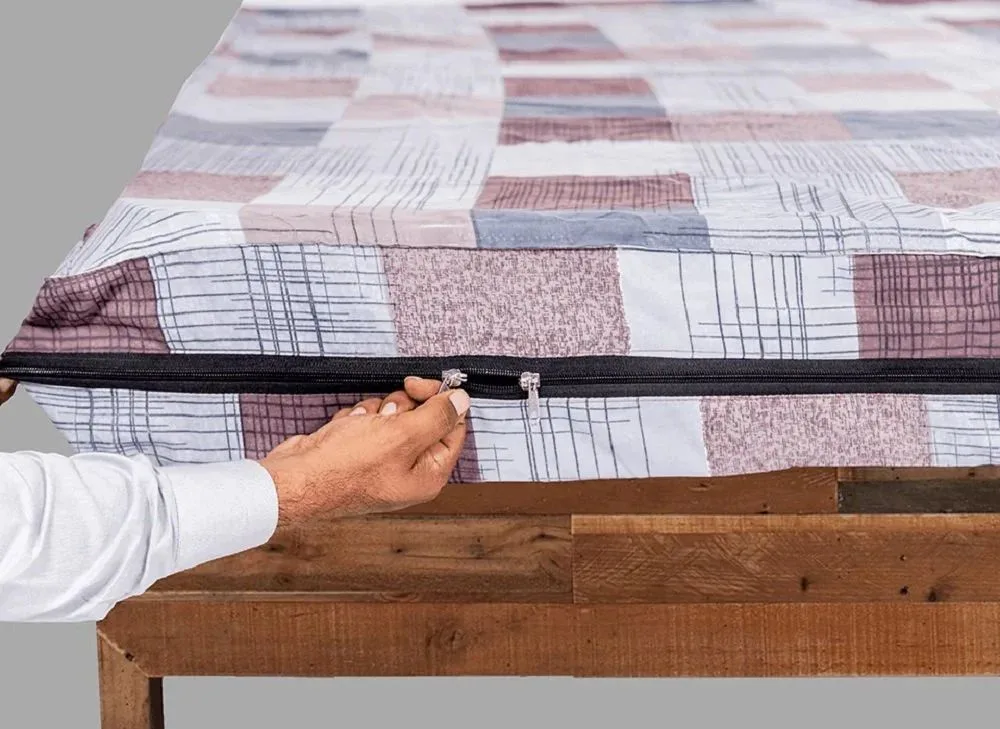
Image source: Web (Bing) / indiamart.com (Web image (fair-use with source credit))
Choose the least-wet method allowed by the manufacturer. If the label says spot clean only, keep all moisture within the stained area. Don’t assume an upholstery cleaner is safe for the mattress core.
| Situation | Best starting point | Avoid |
|---|---|---|
| Washable cover | Remove and launder it | Soaking the core |
| Fresh sweat or oil | Blot, then spot-treat | Hard rubbing |
| Set-in grease | Compatible detergent-based cleaner | Enzyme-only treatment |
| Musty odor | Clean removable layers and improve drying | Fragrance alone |
| Large soaked area | Professional assessment | More DIY wet cleaning |
Is the cover washable?
Yes, clean a removable, washable cover first. It often collects more sweat, oil, skin debris, and detergent residue than the mattress itself.
Follow the cover’s washing and drying instructions. Don’t reinstall it until both sides feel fully dry.
Is the stain fresh?
Blot fresh sweat or liquid with clean white cloths. Press firmly and work from the outside toward the center.
A dry absorbent may lift fresh surface grease if the manufacturer permits it. Vacuum the powder away completely after the stated contact time. Baking soda isn’t suitable for every mattress, so check the label first.
Is the oil set in?
Use a cleaner that can emulsify grease. A compatible, low-foam liquid detergent usually works better for sebum than an enzyme cleaner.
Most stain-removal enzymes target proteins. A product containing lipase may target fats, but you still need to follow its mattress directions.
Vinegar may help with some mineral residue or odors. It isn’t a reliable grease remover and may not suit every latex or coated cover. Oxygen-based cleaners can also bleach fabric, so patch-test first.
Should you wet-vacuum the mattress?
Only if the manufacturer allows wet cleaning. An upholstery extractor can remove cleaner residue from fabric, but each pass adds moisture below the cover.
Use several drier passes after extraction. Stop if water pools or the core feels heavy.
Step-by-Step: Clean the Mattress Without Soaking It
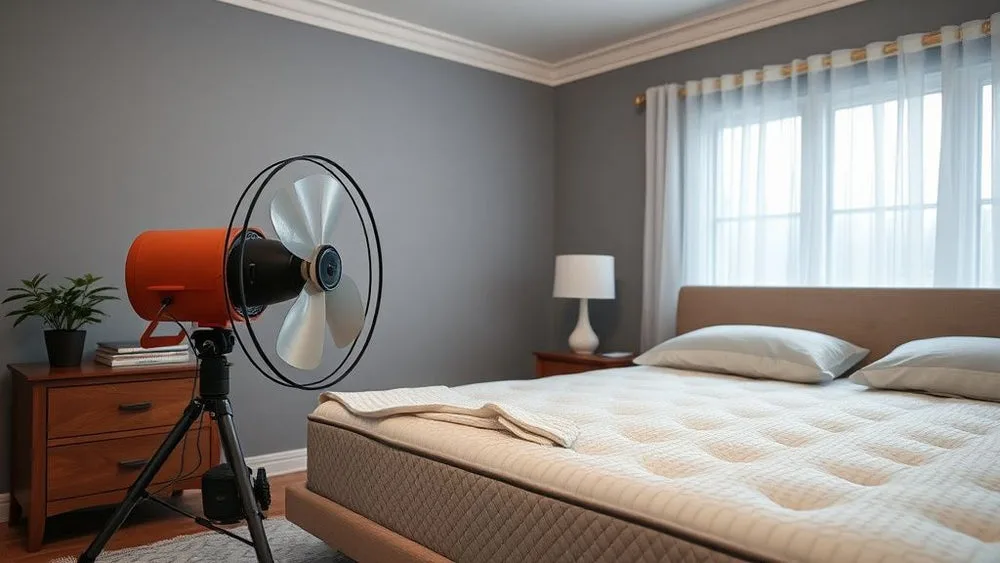
Image source: Bing (Web (fair-use with source credit))
Work in small sections and keep the cleaner close to the surface. Use controlled moisture rather than flooding the mattress.
| Tool or supply | Purpose | Key caution |
|---|---|---|
| Upholstery vacuum | Removes flakes and dry debris | Use gentle suction |
| White cloths | Blotting and residue removal | Change them often |
| Low-foam detergent | Loosen body oil | Confirm compatibility |
| Spray bottle | Control moisture | Spray the cloth, not the mattress |
| Fan and dehumidifier | Speed drying | Allow extra time in humid rooms |
1. Prepare the sleeping area
Remove the fitted sheet, mattress protector, mattress pad, and topper. These layers can hold the stain or odor even when the mattress looks clean.
Open nearby windows if the outside air is dry. Run a fan to improve airflow, and keep children and pets away from wet surfaces and cleaners.
2. Vacuum the mattress
Vacuum the top, sides, seams, and any accessible underside. Use an upholstery attachment and avoid aggressive suction around tufts or piped edges.
For dry powder, follow the cleaner’s waiting time before vacuuming. For wet cleaner, wait for the stated contact time before blotting.
3. Test and apply the cleaner
Patch-test the product on a concealed upholstered area. Check for dye transfer, fading, stiffness, or finish damage after the stated waiting period.
Blot fresh grease before treating it. For set-in oil, dampen a clean cloth with the approved detergent solution. Wipe the stained fabric without saturating it.
Never pour cleaner directly onto the mattress. Direct spraying can push water beneath the cover and into seams.
4. Remove the loosened residue
Use clean white cloths to lift the oil and detergent. Work from the stain’s outer edge toward the center, and change the cloth as it becomes dirty.
If wet cleaning is allowed, a clean damp cloth may remove remaining detergent. A wet vacuum is useful only when residue can’t be lifted with cloths.
Keep each pass controlled. Don’t repeat wet passes over the same area unless the surface remains visibly soiled.
5. Dry the mattress completely
There is no fixed safe drying time for every mattress. Light surface dampness may clear within several hours, while deeper foam can take 24 to 72 hours or longer.
Let the mattress dry flat with steady airflow. Don’t use high heat, and don’t cover it until several areas feel dry with a clean towel.
If the odor remains or the core still feels cold and damp, keep the mattress uncovered. Persistent moisture needs investigation rather than stronger cleaner.
Handle Special Problems Before Making the Bed
Some marks only resemble sweat or oil. Cleaning the wrong cause can set residue deeper or hide a moisture problem.
How should you treat persistent yellow stains?
Determine whether the area feels greasy or wet before choosing a treatment. Grease calls for a compatible detergent-based cleaner.
A strong ammonia odor may point to urine, which contains proteins. Use a product approved for that stain and for the mattress material.
Uniform yellowing across the sleeping area may come from foam oxidation. Cleaning removes surface dirt, but it won’t restore oxidized foam to its original color.
What if there’s odor without visible dirt?
Start with the removable layers. Sheets, mattress pads, protectors, and toppers often hold odors even when the mattress surface looks clean.
Then check the bedroom for high humidity, blocked airflow, or a nearby leak. Fragrance and deodorizing powder can mask a mild smell, but they don’t remove trapped oil or moisture.
What if mold or deep dampness is possible?
Stop wet cleaning if you notice fuzzy growth, dark spots, water marks, or persistent mustiness. Don’t seal damp foam beneath bedding or a mattress protector.
EPA indoor mold guidance says to consider professional remediation for affected areas larger than 10 square feet, or about 0.9 square meters. That figure is a general guideline, not a mattress-specific clearance test.
Porous foam can retain contamination inside its core. Repeated odor or deep dampness calls for qualified assessment rather than repeated scrubbing.
Mistakes That Can Damage Foam, Latex, or the Cover
Most mattress damage comes from excess moisture, heat, or incompatible chemicals. More cleaner doesn’t mean more removal.
Is steam cleaning safe for a foam mattress?
Usually, no. Don’t steam-clean memory foam or latex unless the manufacturer explicitly allows it.
Heat and moisture can warp foam, weaken adhesives, and slow internal drying. Hairdryers can also shrink fabric or dry out bonded layers.
Can baking soda, vinegar, or bleach clean any mattress?
No. Use any of these products only when the mattress and cleaner labels permit them.
- Baking soda can leave powder inside seams and may be too alkaline for some foams.
- Vinegar can affect certain latex materials or coated surfaces.
- Bleach can fade fabric, weaken fibers, or damage finishes.
- Peroxide can bleach colored covers and may irritate skin if the mattress remains damp.
Patch-test any cleaner on a hidden area first. Don’t combine bleach with ammonia, vinegar, or other cleaners. Dangerous gases can form.
Why does scrubbing make grease worse?
Rubbing spreads sebum across the fibers and drives it deeper. Aggressive brushes can also abrade the cover.
Blot instead. Use a soft-bristle brush only if the manufacturer recommends it and the fabric remains intact.
Keep cleaner off power strips and nearby electrical equipment. Follow the product label and Safety Data Sheet for handling and first-aid directions.
Keep the Mattress Clean and Decide When It’s Time to Move On
Good habits stop small spills from becoming set-in stains. Blot fresh moisture promptly and clean removable layers on their own schedules.
Establish a simple maintenance routine
Vacuum the mattress every few months to remove skin flakes and dry debris. Wash bedding and removable protectors according to their labels.
Use a mattress protector, but don’t treat it as a waterproof guarantee. Replace a soaked protector because trapped moisture can move into the foam beneath it.
Lower indoor humidity helps drying. A dehumidifier is useful in humid rooms, but it can’t replace source control or complete drying.
When is professional cleaning the better choice?
Use professional cleaning when the stain covers a large area or reaches beyond the surface. Ask how the provider identifies the mattress fill and controls extraction moisture.
| Finding | Best next step |
|---|---|
| Fresh, localized stain | Follow the care label and spot-clean |
| Old grease on a washable cover | Launder or professionally clean the cover |
| Deep dampness or persistent odor | Have the mattress inspected |
| Significant mold contamination | Stop DIY treatment and seek qualified help |
| Sagging, crumbling foam, or torn seams | Assess replacement |
Replace the mattress when the core stays contaminated, remains musty after complete drying, or has lost its structure. Foam oxidation and sagging are wear issues, so cleaning won’t correct them.
Frequently Asked Questions
Can I use baking soda on a mattress?
Use baking soda only if the mattress maker allows dry or alkaline products. For fresh surface grease, apply a thin layer, wait for the product’s stated time, then vacuum it away. Don’t use it on damp foam.
Baking soda absorbs surface oil, but it doesn’t reliably remove a deep, set-in stain.
Is vinegar safe for cleaning a mattress?
Vinegar is a conditional option, not a universal mattress cleaner. A diluted solution may help with some odors or hard-water residue, but it doesn’t emulsify heavy body oil well. Check the care label first, and don’t use it on latex unless the manufacturer confirms compatibility.
Can I steam-clean a memory foam mattress?
No, don’t steam-clean memory foam unless the manufacturer explicitly allows it. Heat and moisture can warp the foam, weaken adhesives, or leave moisture trapped below the cover. Spot-clean and air-dry instead.
High-heat devices can also shrink fabric or damage bonded layers.
How long does a cleaned mattress take to dry?
Light surface dampness may clear within several hours, while deep foam moisture can take 24 to 72 hours or longer. Don’t use a fixed waiting time as proof that the mattress is safe to cover. Press a clean towel into several areas and check for dampness, stiffness, and odor before replacing bedding.
Are enzyme cleaners good for body-oil stains?
Most enzyme cleaners work best on protein-based stains. Sebum is primarily fat, so a compatible detergent-based cleaner usually gives better emulsifying action. A product containing lipase may help with oils, but follow its label and patch-test it first.
Don’t assume an enzyme cleaner can remove deep grease.

Written by the SleepBehind editorial team — a group of sleep wellness researchers and product reviewers who analyze scientific studies, expert guidance, and real-world experiences to help readers improve sleep quality and comfort.