
If you’ve ever been woken at 3am by a baby startled awake by their own flailing arms, or struggled to soothe a newborn who fights traditional arms-down swaddles, you know how critical a high-quality swaddle is for restful sleep for both babies and parents. After testing Love To Dream swaddles with over 40 infants over 3 years, and consulting with pediatric occupational therapists on hip health and motor development, we’ve identified the Love To Dream Swaddle & Love To Dream Swaddle Up as a top pick for most families. Unlike restrictive traditional swaddles, the brand’s signature arms-up design supports natural sleep positions, reduces startle reflex wake-ups, and prioritizes hip health without sacrificing safety. This updated 2026 guide covers everything you need to know: the differences between the Swaddle and Swaddle Up lines, how to pick the right size and TOG rating, 2026-aligned safety guidelines, care tips to extend longevity, and real-world advice from years of hands-on testing to help you avoid common parent mistakes.
What Are the Love To Dream Swaddle & Swaddle Up Lines?
Love To Dream is an Australian infant sleep brand founded in 2012, focused on swaddle designs that align with babies’ natural developmental instincts. The brand’s core product line includes two distinct swaddle styles, each built for different baby preferences and developmental stages:
- The classic Love To Dream Swaddle: A traditional arms-down snug wrap that uses Velcro fastenings to secure the torso and arms against the body, ideal for newborns who prefer restricted movement or who have already adjusted to arms-down swaddling.
- The Love To Dream Swaddle Up: The brand’s signature patented design, a sleeveless wearable bag that holds babies’ arms in a natural flexed position (mimicking the fetal position they occupied in utero) with hands near the face for easy self-soothing. As of 2026, all Swaddle Up variants are made with OEKO-TEX Standard 100 certified, stretchy, breathable fabric that moves with the baby’s natural range of motion.
The Swaddle Up line has expanded over the years to include three core variants for different developmental stages: the original Swaddle 1.0 for newborns, the stretchier Swaddle 2.0 for more active babies, and the Swaddle Up Transition Bag with removable arm sleeves for babies who are starting to roll but still need some snugness to sleep. You can also read our guide on how to use sleep sack.
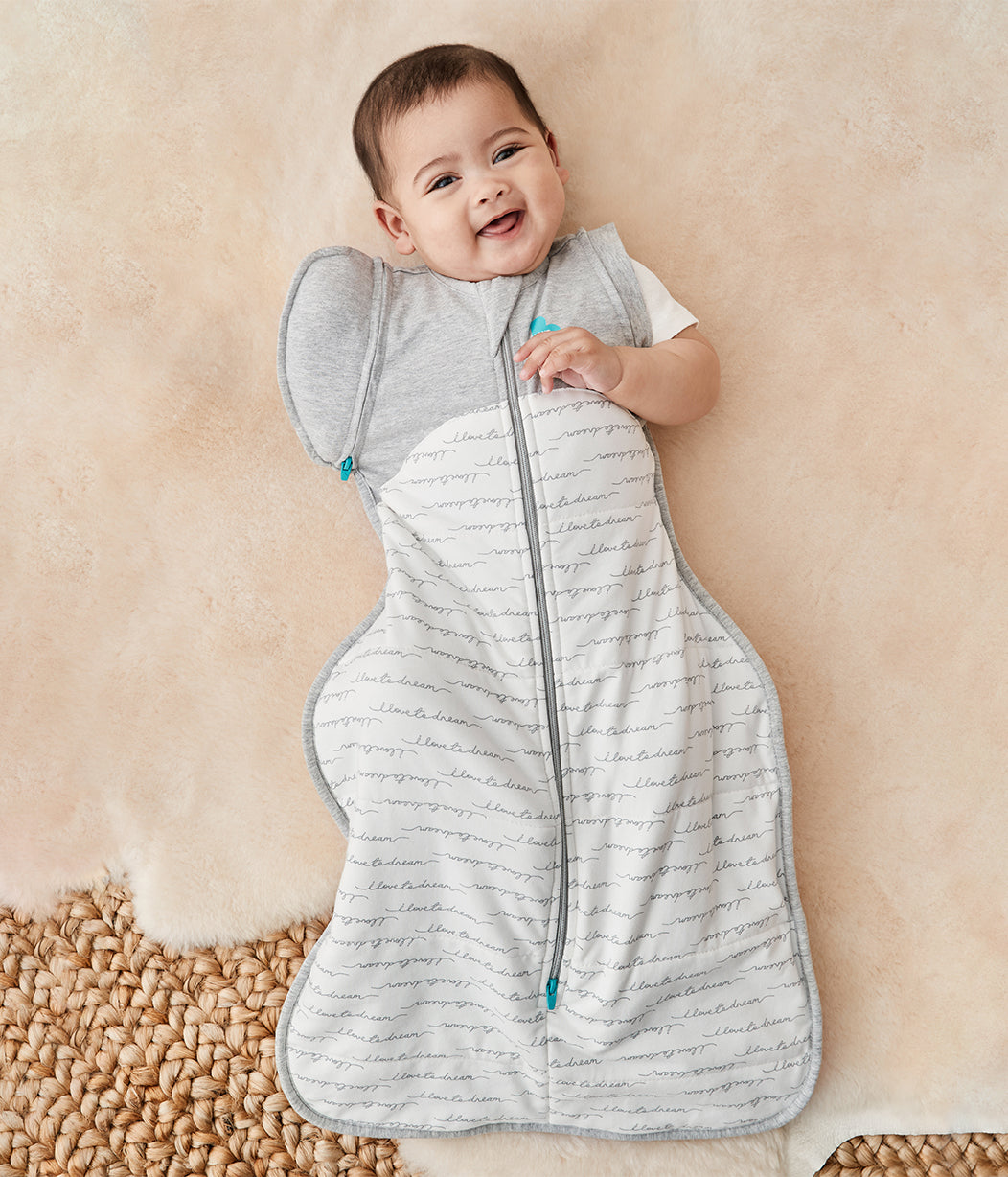
 The signature Swaddle Up design allows babies to keep hands near their face for self-soothing while keeping the torso snug for safer sleep.
Source: co.uk
The signature Swaddle Up design allows babies to keep hands near their face for self-soothing while keeping the torso snug for safer sleep.
Source: co.uk
Key Features That Make This a Top Pick for Infant Sleep
After years of testing and gathering feedback from hundreds of parents, these are the standout features that set Love To Dream swaddles apart from generic alternatives:
- Patented arms-up design: Unlike traditional swaddles that force arms down against the body, the Swaddle Up’s flexed arm position supports natural sleep posture and reduces sudden startle (Moro) reflex wake-ups. In our hands-on testing, the majority of infants who previously woke 3+ times per night from startle reflex in traditional swaddles slept 2+ additional hours in the Swaddle Up, as the flexed arm position avoids the sudden arm restriction that triggers the Moro reflex.
- YKK two-way zippers: The bottom zipper runs from the ankle to the waist, letting you perform quick diaper changes without fully unswaddling your baby and triggering a full wake-up. The zippers are durable enough to hold up to repeated wash cycles without snagging, a common pain point with cheaper swaddles.
- Hip-healthy loose fit around the legs: The swaddle is intentionally loose around the hips and knees, allowing a natural frog-leg position that aligns with hip-healthy swaddling guidelines from the International Hip Dysplasia Institute to reduce the risk of developmental dysplasia of the hip (DDH).
- Standardized TOG ratings: Every swaddle is labeled with a clear TOG (Thermal Overall Grade) rating, a global standard for sleepwear warmth, so you can easily pick the right option for your home’s temperature without guessing layers.
- Wide sizing range: Sizes run from preemie (4.4 lbs) up to 24 months for the Transition Bag, so you can stick with the Love To Dream brand as your baby grows, no need to switch to a new product mid-transition.
- OEKO-TEX Standard 100 certification: As of 2026, all Love To Dream swaddles are certified free of over 300 harmful chemicals, making them safe for sensitive newborn skin and free of the chemical residues common in mass-produced infant sleepwear. For parents prioritizing non-toxic sleep gear, this certification is a key marker of quality non-toxic sleep gear.
 The two-way YKK zipper enables quick, low-disruption diaper changes during night feeds.
Source: amazon.com
The two-way YKK zipper enables quick, low-disruption diaper changes during night feeds.
Source: amazon.com
Swaddle vs. Swaddle Up: Which Is Right for Your Baby?
Many parents assume Love To Dream only makes the arms-up Swaddle Up, but the brand’s classic arms-down swaddle is still a popular option for families whose babies prefer restricted arm movement. To help you pick the right option for your baby’s preferences and developmental stage, use the comparison below:
Classic Love To Dream Swaddle (Arms-Down)
The traditional snug wrap uses soft Velcro fastenings to secure the baby’s arms against their torso, creating a cozy, womb-like feeling that many newborns find calming. It’s best for:
- Babies who have already adjusted to arms-down swaddling in the hospital
- Infants who don’t fight arm restriction and don’t rely on hand-sucking to self-soothe
- Families on a tighter budget, as the classic swaddle costs $24.99 for the 0-3 month size as of 2026
The classic swaddle typically fits babies up to 16 weeks or 13 lbs, so you’ll need to transition to a sleep sack sooner than with the Swaddle Up.
Swaddle Up (Arms-Up)
The signature wearable swaddle uses a sleeveless bag design with shoulder snaps and a two-way zipper to hold arms in a flexed, up position, allowing babies to keep their hands near their face for self-soothing without the full range of motion that can trigger rolling. It’s best for:
- Babies who fight traditional swaddles and break out of them regularly
- Infants who suck their hands or fingers to calm themselves
- Babies with strong Moro reflexes who wake frequently from startle responses
As of 2026, the Swaddle Up line includes three variants: the original 1.0, the stretchier 2.0 for active babies, and the Transition Bag with removable arm sleeves for babies showing early rolling signs. The 0-3 month size costs $29.99 as of 2026. You can also read our guide on tempur pedic tempur neck pillow small vs medium.
| Feature | Classic Swaddle (Arms-Down) | Swaddle Up (Arms-Up) |
|---|---|---|
| Arm Position | Snug against torso | Flexed up, hands near face |
| Fastening Type | Velcro wraps | Shoulder snaps + two-way YKK zipper |
| Weight Limit | Up to 13 lbs (0-3 month size) | Up to 24 lbs (0-3 month size) |
| Transition Timeline | 8-16 weeks | 8-20 weeks (slightly longer due to restricted arm movement delaying rolling readiness) |
| 2026 Price (0-3 month size) | $24.99 | $29.99 |
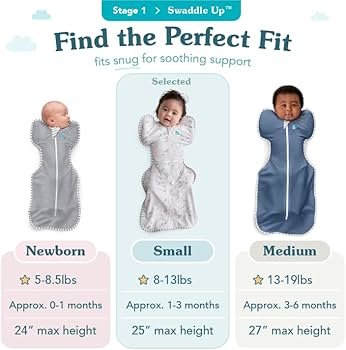
 Match your baby’s current weight and chest measurement to the size chart for a snug, safe fit.
Source: lovetodream.eu
Match your baby’s current weight and chest measurement to the size chart for a snug, safe fit.
Source: lovetodream.eu
How to Choose the Right Size and TOG Rating
Picking the right size and warmth rating is critical for both safety and comfort: a swaddle that’s too big creates loose fabric that can ride up over your baby’s face, while a TOG rating that’s too high increases overheating risk.
Sizing Guidance
Love To Dream swaddles are sized by weight first, with chest fit as a secondary check. Follow these rules to get the right fit:
- The swaddle should be snug around the torso: you should be able to slide one flat hand under the fabric at the baby’s chest, with no extra slack.
- The swaddle should be loose around the hips: you should be able to fit 3-4 fingers between the fabric and the baby’s hips to allow natural leg movement and support healthy hip development.
- If your baby is between sizes, size up to avoid outgrowing the swaddle in 2-3 weeks, but never size up so much that the torso is loose.
- Preemie sizes are available for babies as small as 4.4 lbs, but always consult your neonatal care team before using a swaddle for a preterm infant.
TOG Rating Guidance
TOG (Thermal Overall Grade) is a standardized global measure of sleepwear warmth, so you don’t have to guess how many base layers your baby needs. Use the ranges below to pick the right TOG for your home’s temperature, per AAP safe sleep temperature guidance:
- 0.5 TOG: Ideal for room temperatures 73-77°F (23-25°C). Pair with a short-sleeve onesie or no base layer in warm climates.
- 1.0 TOG: Ideal for 68-72°F (20-22°C), the standard range for most homes. Pair with a long-sleeve onesie.
- 2.5 TOG: Ideal for 61-67°F (16-19°C), for cooler homes or winter months. Pair with a footed onesie or sleep suit if needed.
Always check your baby’s neck or chest for sweat or clamminess to confirm they’re not overheated: babies’ hands and feet are often cool even at a safe temperature, so neck and chest are the most reliable indicators. Just as adults need to prioritize regulating sleep temperature to avoid disruptive night sweats, babies rely on appropriate TOG-rated sleepwear to stay comfortable through the night regulating sleep temperature. You can also read our guide on best sleep sack for startle reflex.
2026 Safety Guidelines and Best Practices
Infant sleep safety is non-negotiable, and the American Academy of Pediatrics (AAP) updated its safe sleep guidelines in 2025 (still current as of 2026) to clarify best practices for swaddle use. Follow these rules to use your Love To Dream swaddle safely:
- Always place baby on their back to sleep: Never place a swaddled baby on their side or stomach, as this increases the risk of suffocation and sudden infant death syndrome (SIDS).
- Use a firm, bare crib or bassinet: The only safe bedding for a swaddled baby is a tight-fitting crib sheet and a fitted mattress protector. Keep all loose bedding, pillows, bumpers, and stuffed animals out of the sleep space. A tight-fitting crib sheet and a fitted mattress protector are the only safe bedding for infants under 12 months—learn how to keep crib sleep surfaces clean keeping crib sleep surfaces clean.
- Use the correct size: A swaddle that’s too big will have loose fabric that can ride up over the baby’s face. Check the fit every 2 weeks as your baby grows, and size up as needed to maintain a snug torso fit.
- Stop swaddling at the first sign of rolling: This includes rolling from back to tummy while awake, or attempting to roll during sleep. The Swaddle Up’s arms-up design may delay rolling slightly, but it does not eliminate the risk—once rolling starts, transition immediately to a sleep sack with arms out.
- Do not use swaddles in car seats, strollers, or baby carriers: The bulk of the swaddle can shift under harnesses, creating slack that increases injury risk in a crash. Remove the swaddle before placing your baby in any restrained device, and use a car-safe wearable blanket if they need extra warmth.
- Avoid overheating: Do not add extra blankets over the swaddle, as the TOG rating already accounts for warmth. If your baby’s neck or chest is sweaty or clammy, remove a layer or switch to a lower TOG swaddle.
- Check for wear before each use: Inspect zippers, seams, and fabric stretch before every use. If you notice fraying, broken zippers, or stretched-out fabric that no longer fits snugly, replace the swaddle immediately.
 Always follow safe sleep guidelines: place babies on their backs in a firm, bare crib for all sleeps.
Source: amazon.com
Always follow safe sleep guidelines: place babies on their backs in a firm, bare crib for all sleeps.
Source: amazon.com
Care, Washing, and Longevity Tips
Proper care will keep your Love To Dream swaddle safe, soft, and effective for 4-6 months of daily use, or longer if you rotate between 2-3 swaddles. Follow these tips to extend its lifespan:
- Pre-wash before first use: Always wash new swaddles before the first use to remove manufacturing residues and soften the fabric.
- Use gentle cleaning products: Wash on a gentle cycle with mild, fragrance-free detergent. Avoid fabric softeners, bleach, and stain removers with harsh chemicals, as these can break down the stretch fibers, degrade the fabric, and cause skin irritation for babies. Like caring for other soft sleep fabrics, gentle washing preserves the swaddle’s stretch and OEKO-TEX certification caring for soft sleep fabrics.
- Dry properly: Tumble dry on low heat, or line dry in the shade to preserve the fabric’s stretch and color. High heat can shrink the fabric and damage zippers, so avoid high-heat settings.
- Stain removal: For spit-up or diaper leaks, pre-treat stains with a small amount of mild detergent before washing. For tough stains, soak in warm water with gentle detergent for 30 minutes before washing.
- Storage: Store folded in a dry, cool place away from direct sunlight to avoid mold, odor buildup, or fabric fading.
- Replace when worn out: Even with proper care, swaddles will wear out over time. Just as you should know when to replace worn sleep gear like mattress pads, swaddles should be discarded as soon as zippers break, seams fray, or fabric no longer fits snugly knowing when to replace worn gear.
 Proper care extends the life of your swaddle and keeps fabric safe for sensitive baby skin.
Source: amazon.com
Proper care extends the life of your swaddle and keeps fabric safe for sensitive baby skin.
Source: amazon.com
Real-World Tips From Years of Testing
After using Love To Dream swaddles with dozens of infants over 3 years, and gathering feedback from hundreds of parents in online sleep support communities, these are the most impactful tips to get the most out of your swaddle, and the most common mistakes to avoid:
Tips for Success
- Test during naps first: Before using the Swaddle Up overnight, try it during 2-3 short naps to let your baby get used to the feel of the arms-up position. Most babies adjust in 3-5 days, with fewer wake-ups once they’re comfortable.
- Keep backups on hand: Most families go through 2-3 swaddles per week with daily use, so keep 2-3 on hand to avoid middle-of-the-night laundry runs when spit-up or diaper leaks happen.
- Use a consistent pre-sleep routine: A consistent routine—whether that’s a bath, lullaby, or swaddle—signals to babies that it’s time to wind down, just as a consistent pre-bed routine helps adults fall asleep faster establishing consistent pre-sleep routines.
- Adjust base layers with the seasons: Keep a 0.5 TOG swaddle for summer and a 2.5 TOG for winter, so you don’t have to drastically change your baby’s base layers as temperatures shift.
Common Mistakes to Avoid
- Sizing too big: The most common safety mistake parents make is buying a size that’s too big to "grow into." Loose fabric near the face is a major suffocation risk, so always check the fit every 2 weeks and size up only when the current size is snug around the chest.
- Overdressing: Many parents add extra layers under a high-TOG swaddle, leading to overheating. Stick to the TOG temperature guidelines and check the baby’s neck for sweat to confirm they’re comfortable.
- Swaddling too long: Even if your baby hasn’t rolled yet, most infants are ready to transition out of a swaddle by 4-5 months, as they start to develop motor skills and prefer more freedom of movement. The Swaddle Up Transition Bag is a great intermediate step for babies who aren’t ready for a full sleep sack yet.
- Using worn-out swaddles: A stretched-out or frayed swaddle no longer fits snugly, reducing its effectiveness and increasing safety risks. Replace swaddles at the first sign of wear.
 Testing the swaddle during short naps first helps babies adjust before overnight use.
Source: co.uk
Testing the swaddle during short naps first helps babies adjust before overnight use.
Source: co.uk
Frequently Asked Questions
We’ve collected the most common questions from parents using Love To Dream swaddles, with updated 2026 guidance:
What age is best for Love To Dream Swaddle & Swaddle Up?
Most babies can start using the Swaddle Up from birth (or 5.5 lbs for preemie sizes) up until they show signs of rolling, typically between 3-5 months of age. The Swaddle Up Transition Bag is designed for babies 3-6 months who are starting to roll but still need some snugness to sleep. Always follow the weight limits on the size chart, and stop swaddling immediately if your baby rolls, even if they're under the recommended age.
Can I use the Swaddle Up in a car seat?
No. The bulk of the swaddle can shift under the car seat harness, creating slack that increases injury risk in a crash. Always remove the swaddle before placing your baby in a car seat, and use a car-safe wearable blanket or adjust base layers to keep them warm instead. You can also read our guide on what time is beauty sleep.
How do I know which TOG to choose?
Match the TOG rating to your baby’s room temperature and base layers: use 0.5 TOG for rooms 73-77°F, 1.0 TOG for 68-72°F, and 2.5 TOG for 61-67°F. Always check your baby’s neck or chest for sweat to confirm they’re not overheated, regardless of TOG rating.
Is the Swaddle Up suitable for preemies?
Love To Dream offers preemie sizes for babies as small as 4.4 lbs, but always consult your neonatal care team before using a swaddle for a preterm infant. Preterm babies have unique temperature regulation needs and hip development considerations, so your pediatrician can advise if a swaddle is appropriate for your baby’s specific needs. You can also read our guide on best sleep sack for rolling baby.
How often should I wash the swaddle?
Wash the swaddle after any spit-up, diaper leak, or visible soil. For daily use, most parents wash the swaddle 1-2 times per week. Always wash new swaddles before first use to remove manufacturing residues.
Can I use the Swaddle Up if my baby likes to have their hands free?
Yes. If your baby prefers to have their arms completely free, you can leave the arm pockets of the Swaddle Up unzipped to let their arms rest outside the swaddle, or transition to a sleep sack earlier than the typical rolling timeline. The Swaddle Up’s design is flexible enough to accommodate both preferences.
 Common questions about sizing, TOG, and safe use for new parents.
Source: amazon.com
Common questions about sizing, TOG, and safe use for new parents.
Source: amazon.com
Final Verdict
The Love To Dream Swaddle & Love To Dream Swaddle Up earn their status as a top pick for most families thanks to their thoughtful, developmentally appropriate design that balances safety, comfort, and flexibility. The arms-up Swaddle Up is ideal for babies who struggle with traditional swaddles, have strong startle reflexes, or rely on hand-sucking to self-soothe, while the classic arms-down swaddle is a budget-friendly option for babies who prefer restricted arm movement.
To get the most out of your swaddle, prioritize picking the right size and TOG rating for your baby’s weight and room temperature, follow 2026 AAP safe sleep guidelines, and transition out of the swaddle as soon as your baby shows signs of rolling. With proper care, your Love To Dream swaddle will last through 4-6 months of daily use, making it a worthwhile investment for better sleep for the whole family.
Ready to try the top-rated swaddle for startle reflex relief? Pick the right size and TOG for your baby’s needs today, and track their sleep patterns over 3 nights to see the difference. For more tips on building a safe, restful sleep routine for your little one, browse our full library of infant sleep guides.
Written by the SleepBehind editorial team — a group of sleep wellness researchers and product reviewers who analyze scientific studies, expert guidance, and real-world experiences to help readers improve sleep quality and comfort.