If you’ve upgraded your mattress, installed blackout curtains, and stuck to a consistent bedtime but still wake up feeling unrested, your bed’s orientation may be the missing piece of the puzzle. Sleeping direction—the position your bed and headboard face in the room—impacts everything from light exposure and air circulation to your sense of security and even subtle physiological factors like blood pressure regulation. Unlike expensive sleep gadgets, adjusting your bed placement is a zero-cost, low-risk tweak that can deliver noticeable improvements in sleep quality within a few weeks. This guide blends practical layout advice, cultural wisdom, and current sleep science to help you test and identify the best bed placement for your unique space, health needs, and comfort preferences.
Why Sleeping Direction Impacts Sleep Quality
Your bed’s position directly shapes your sleep environment in ways most people overlook. A headboard placed under a window exposes you to cold drafts, early morning light leak even through thick curtains, and outside noise from streets or neighbors—all of which disrupt deep sleep cycles. Placement in line with the bedroom door can trigger a low-grade sense of exposure, a primal response that keeps your nervous system slightly alert instead of relaxed. Even small shifts, like angling the bed 15 degrees away from a vent or a noise source, can reduce nighttime wakeups and help you stay in restorative deep sleep longer. As the CDC notes, minimizing environmental disruptions is one of the core pillars of good sleep hygiene, and bed orientation is a key, often underutilized, part of that setup. You can also read our guide on best white noise sleep earbuds side.
The Science and Cultural Context Behind Sleeping Direction
Scientific research on cardinal direction and sleep is still emerging, with large-scale studies limited by small sample sizes and individual variability. That said, existing small clinical studies have found links between head orientation and physiological markers: some research suggests that sleeping with your head facing north may temporarily increase blood pressure in people with pre-existing hypertension, while other studies have found that aligning the head away from high-traffic areas reduces nighttime cortisol spikes. Cultural traditions have long emphasized the importance of sleeping direction, with varying guidelines across regions: Vastu Shastra, the traditional Indian system of architecture, recommends placing the head facing east or south to align with the sun’s path and promote restful energy, while traditional feng shui advises against placing the bed in line with the door or under a window to avoid "energy drain." Many Indigenous cultures also have orientation rules tied to seasonal light patterns and land navigation. While these cultural guidelines are not universal rules, they offer a low-risk framework to test if specific positions improve your rest.
 Visual breakdown of how different bed orientations impact light exposure and air circulation
Key Factors to Evaluate When Choosing Your Bed Placement
There is no one "correct" sleeping direction for every person or space, but evaluating these core factors will help you narrow down options that align with your needs:
- Room layout and traffic flow: Place your headboard against a solid, load-bearing wall whenever possible. This creates a sense of security that helps your nervous system shift into rest mode, and blocks noise from adjacent rooms or hallways. If your bedroom is small, leave at least 2 feet of space on both sides of the bed for easy access, and avoid placing the bed directly in the path of the bedroom door to reduce feelings of exposure.
- Window and light exposure: Avoid placing your head directly under a window, as even blackout curtains can let in small amounts of light that disrupt melatonin production. If you live in a region with early sunrise, prioritize placement that keeps your head away from east-facing windows, or invest in 100% blackout curtain liners. North-facing windows typically provide the most consistent low light, making them ideal for light-sensitive sleepers.
- Health needs: If you have circulatory issues, hypertension, or chronic pain, test small adjustments to your head orientation to see if they reduce symptoms. For people with acid reflux, elevating the head of the bed 6-12 inches with bed risers or a wedge pillow can reduce nighttime discomfort, regardless of the cardinal direction the bed faces.
- Shared sleep spaces: If you share a bed with a partner, prioritize placement that minimizes disruptions for both people. For example, if one person is light-sensitive and the other is not, place the light-sensitive sleeper’s head away from windows, or use a sleep mask to block residual light.
| Room Layout | Optimal Bed Placement |
|---|---|
| Small studio apartment | Head against the farthest solid wall from the door and windows; use a room divider to block direct light if needed |
| Large primary bedroom | Centered on the main wall, at least 3 feet from all windows and doors |
| Shared bedroom | Head against a shared solid wall, angled to minimize light and noise exposure for both sleepers |
 Example of a bed placed to minimize direct morning light exposure for deeper sleep
Step-by-Step Guide to Testing New Sleeping Directions
The only way to find the best placement for your space is to test adjustments systematically, rather than relying on generic rules. Follow these steps to get clear, actionable results:
- Isolate one change at a time: In practice, the most common mistake people make when testing bed placement is changing multiple variables at once—rotating the bed, buying new blackout curtains, and adjusting their bedtime all in the same week, then attributing any improvement to the bed direction alone. Start by moving your bed to a new position, and keep all other sleep habits consistent: same bedtime, same room temperature, same pillow care routine, and no new sleep gadgets.
- Track your sleep data for at least 2 weeks per position: Sleep naturally varies night to night due to stress, diet, and other temporary factors, so short test periods (less than 7 days) can give you misleading results. Use a simple sleep diary or a trusted sleep tracking app to log sleep onset time, number of nighttime wakeups, and morning energy levels each day.
- Adjust for small discomforts before writing off a position: If a new position feels drafty, add a draft stopper or heavier curtains before deciding it doesn’t work. If the headboard feels unstable, add wall anchors to reduce that low-grade sense of alertness. Small fixes often turn a "bad" position into your optimal setup.
- Test 2-3 positions before settling: Most people find their ideal placement within 2-3 tests, but if you have chronic sleep issues, test a fourth position after 2 weeks to confirm your results.
Common Myths About Sleeping Direction Debunked
Misinformation about bed placement can lead to unnecessary stress or wasted time testing positions that don’t work for your space. Let’s clear up the most common misconceptions:
- Myth: There is one universal "best" sleeping direction for everyone. Fact: Individual factors like room layout, climate, and personal comfort mean the optimal direction varies widely. While Vastu and feng shui recommend head facing east or south, many people sleep better facing north or west if that position minimizes light and noise in their specific space.
- Myth: Sleeping north will cause long-term health problems. Fact: There is no peer-reviewed evidence that facing north causes universal harm. Some small studies have found temporary increases in blood pressure for people with pre-existing hypertension when facing north, but this effect is not consistent across all participants. Testing small adjustments is a low-risk way to see if a specific direction helps your symptoms.
- Myth: You need to sleep with your head exactly aligned to cardinal directions. Fact: Even small adjustments (10-15 degrees off a cardinal heading) can make a big difference if it helps you avoid a draft or noise source. The goal is to minimize disruptions, not hit an exact compass bearing.
- Myth: Changing bed direction will cure chronic insomnia. Fact: While better placement can reduce nighttime disruptions, chronic insomnia is usually caused by a combination of circadian rhythm disruption, chronic stress, and poor sleep hygiene. Bed placement is a helpful supporting tweak, not a standalone cure, and works best paired with a consistent sleep schedule.
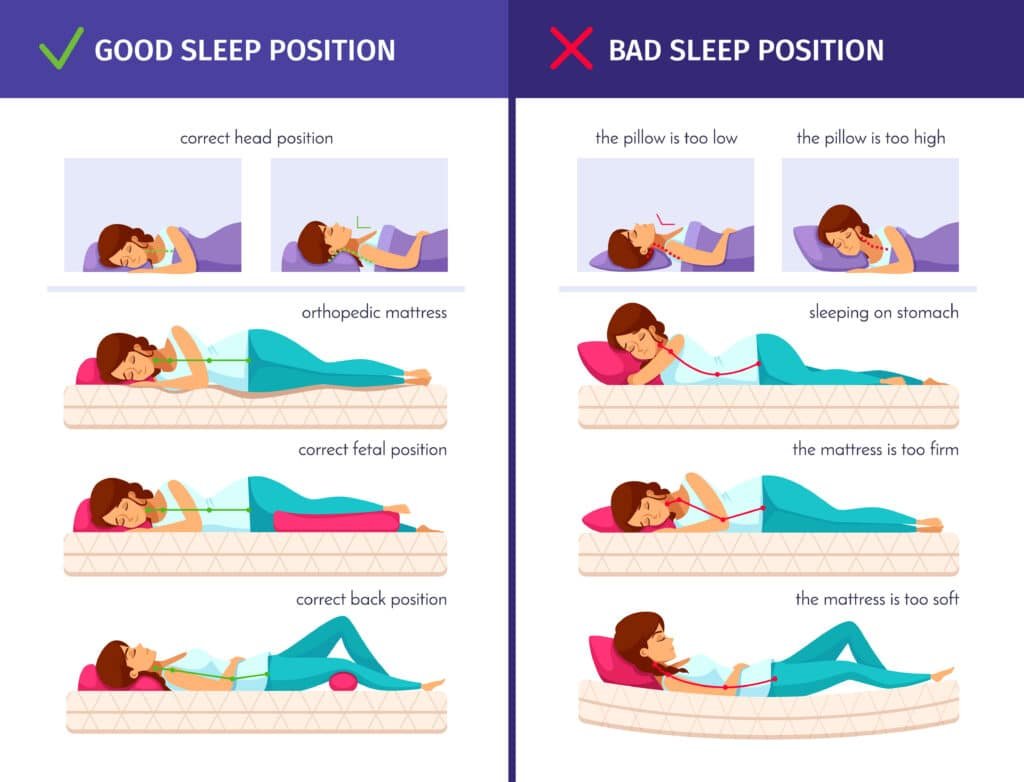
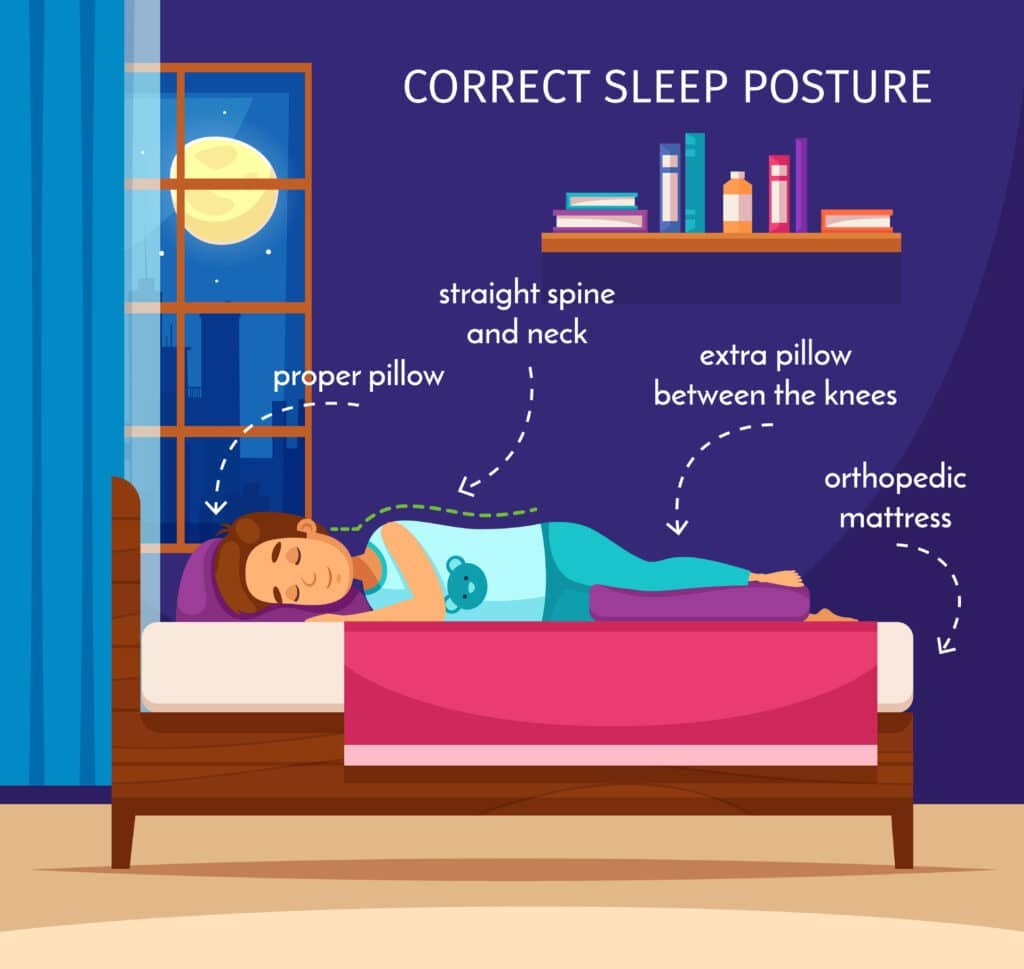 Proper sleep posture works in tandem with good bed placement to reduce nighttime discomfort
Special Considerations for Different Sleep Needs
Your ideal bed placement may shift based on specific health needs, lifestyle habits, or shared living situations. Keep these factors in mind when testing positions:
- For light sleepers: Prioritize placement away from windows, doors, and household traffic. If you can’t avoid a window, use blackout curtains and a white noise machine to mask outside sounds. Pair this with regular mattress protector cleaning to reduce allergen buildup that can cause nighttime discomfort even with perfect placement.
- For people with allergies or asthma: Avoid placing the bed directly under an air vent, as fluctuating temperatures and circulating dust can trigger symptoms. Keep the area under the bed clear of storage boxes to improve air circulation and reduce dust accumulation.
- For people who regularly sleep with wet hair: Avoid placing your bed directly under a heat vent, which can dry out hair strands and cause breakage over time. If you struggle with wet hair in your face at night, test placement that keeps your head away from direct vent airflow, and look into our guide on the healthiest way to sleep with wet hair for additional tips.
- For warm climate sleepers: If you don’t use AC regularly, prioritize placement that maximizes cross-ventilation, with windows on opposite sides of the bed to allow for natural airflow. Pair this with other sleeping without AC strategies to reduce night sweats and improve comfort.
- For people with worn bedding: Even optimal bed placement can’t fix discomfort from a lumpy, thin, or damaged mattress topper. If your topper is past its prime, look into options like reviving a feather topper to extend its lifespan and improve your comfort.
Frequently Asked Questions
What is the best sleeping direction for health?
There is no one-size-fits-all answer, as individual room layouts, health needs, and comfort preferences vary. The best direction for you is the one that minimizes light and noise exposure, keeps your head against a solid wall, and helps you fall asleep faster and stay asleep longer. For people with specific health conditions like hypertension, testing small adjustments to head orientation can help you identify if a specific direction reduces your symptoms.
Does sleeping direction affect blood pressure?
Small-scale studies have found that some people with pre-existing hypertension experience temporary increases in blood pressure when sleeping with their head facing north, but this effect is not universal. If you have high blood pressure, test different directions for 2 weeks at a time while tracking your blood pressure readings to see if a specific position helps stabilize your levels.
Should my head face east when I sleep?
Many cultural traditions, including Vastu Shastra and feng shui, recommend east-facing heads for improved energy and alertness, but this is not proven for everyone. If you struggle with morning grogginess, test east-facing sleep for 2 weeks to see if it helps you feel more alert when you wake up.
Can I improve sleep by rotating my bed?
Yes, especially if your current placement has your head under a window, in line with the door, or above an air vent. Rotating the bed to eliminate these disruptions can reduce nighttime wakeups and improve deep sleep quality, as long as you keep other sleep habits consistent while testing the change.
How long should I test a new sleeping direction?
Test each new position for at least 2 weeks, as sleep naturally varies night to night. Shorter test periods can be skewed by temporary factors like stress, diet, or caffeine intake, leading to inaccurate results.
Will sleeping direction help insomnia?
Sleeping direction alone is rarely a cure for chronic insomnia, which is typically caused by a combination of circadian rhythm disruption, chronic stress, and poor sleep hygiene. However, optimizing your bed placement to eliminate disruptions can be a helpful part of a broader insomnia treatment plan that includes consistent sleep schedules, stress management, and limiting screen time before bed.
Does mattress quality affect how bed placement impacts sleep?
Yes—even the perfect bed placement won’t fix discomfort from a worn-out, lumpy, or unsupportive mattress or topper. If your bedding is past its prime, optimizing your bed placement will have a much smaller impact on your sleep quality than replacing or refreshing your mattress first.
Conclusion
Optimizing your sleeping direction is one of the simplest, zero-cost changes you can make to improve your sleep quality. It doesn’t require new equipment or a major lifestyle overhaul—just a willingness to test small adjustments and track how your body responds. Start by evaluating your current bed placement against the key factors outlined above, test 2-3 alternative positions over 4-6 weeks, and stick with the position that leaves you feeling most rested in the morning. Pair this tweak with other small sleep hygiene improvements, like keeping your bedroom cool and dark, to maximize your rest. If you found this guide helpful, test one adjustment this week and track your results—then browse our full library of evidence-based sleep tips to optimize every part of your rest routine.

Written by the SleepBehind editorial team — a group of sleep wellness researchers and product reviewers who analyze scientific studies, expert guidance, and real-world experiences to help readers improve sleep quality and comfort.