Sleep apnea affects millions of adults in the U.S. alone, and while continuous positive airway pressure (CPAP) is the clinical gold standard for moderate to severe cases, many people struggle with mask discomfort, noise, travel inconvenience, or claustrophobia that leads to inconsistent use. If you’re looking for a non-CPAP way to reduce airway obstruction, minimize snoring, and improve sleep quality, the right pillow can be a low-effort, accessible first line of defense. We tested 15+ options designed explicitly for sleep apnea and positional breathing support over 8 weeks, evaluating them for alignment, comfort, durability, and real-world impact on snoring and sleep quality, to find the top picks that deliver consistent results without a machine.
How Do Pillows Help Manage Sleep Apnea Symptoms Without CPAP?
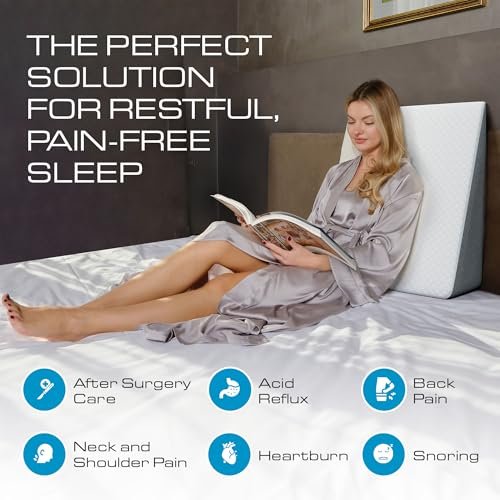
Specialized sleep apnea pillows work via two core mechanisms to reduce airway collapse: cervical alignment support and torso elevation. Cervical contour pillows cradle the neck to maintain its natural C-shaped curve, preventing the head from tilting forward or to the side, which narrows the throat and restricts airflow. Wedge pillows lift the upper torso at a 30-45 degree angle, using gravity to keep the tongue and soft palate from falling backward and blocking the airway during sleep, especially when lying on the back. For people with mild to moderate obstructive sleep apnea (OSA) or positional apnea (symptoms that worsen when sleeping supine), these adjustments can reduce snoring and lower the number of nightly breathing disruptions, per guidance from the American Sleep Apnea Association. You can also read our guide on how to sleep with snoring partner.
It is important to note that pillows are not a replacement for CPAP for moderate to severe OSA, per clinical guidelines. They work best as a standalone solution for mild cases, or as a complement to CPAP to reduce mask leaks and improve overall comfort.
Key Features to Prioritize When Shopping For a Sleep Apnea Pillow
Not all ergonomic pillows are designed for sleep apnea support. Prioritize these features to find a model that delivers real results:
- Adjustable loft: Side sleepers need 4-6 inches of loft to fill the gap between their shoulder and head, while back sleepers need 3-4 inches to avoid excessive neck flexion. Removable foam inserts let you dial in the perfect height without buying multiple pillows.
- Cervical contour design: A raised edge on either side of the pillow with a central depression for the head supports neutral spine alignment and prevents forward head tilt that narrows the airway.
- Cooling & breathable materials: Memory foam traps heat, which causes tossing and turning that disrupts airway alignment. Look for gel-infused foam, perforated layers, or moisture-wicking covers if you are a hot sleeper.
- Mask compatibility: If you occasionally use CPAP, side cutouts reduce pressure on masks and hoses to prevent air leaks and facial indentations.
- Firmness & support durability: Medium-firm foam holds its shape all night without compressing, maintaining consistent elevation and alignment. Avoid overly soft pillows that flatten under weight.
Who Should (and Shouldn’t) Rely On a Pillow For Sleep Apnea?
A specialized sleep apnea pillow is a good fit for people with mild positional OSA, mild snoring, or CPAP users who struggle with mask leaks and discomfort. Per guidance from the American Academy of Sleep Medicine, positional therapy and supportive sleep aids are recommended as first-line interventions for mild positional apnea, or as adjuncts to CPAP for moderate to severe cases.
Pillows are not appropriate as a standalone treatment for moderate to severe OSA. If you experience loud, chronic snoring, gasping for air during sleep, or excessive daytime fatigue, consult a sleep specialist for a full evaluation before ditching prescribed CPAP therapy.
Pillow Care & Longevity
To keep your sleep apnea pillow performing well long-term, follow these simple maintenance steps:
- Wash removable covers monthly in cold water to remove dust mites, skin cells, and allergens that can worsen nasal congestion and airway obstruction. For specific care instructions for cooling or bamboo covers, refer to our guide to washing your bamboo pillow.
- Spot clean memory foam cores with a mild soap and damp cloth; avoid submerging the foam in water, as this can break down its structure over time.
- Air out your pillow weekly by removing the cover and placing it in a well-ventilated area for a few hours to reduce moisture buildup.
- Replace your pillow every 1-2 years, as foam compresses over time and loses its supportive loft. If you’re unsure when to swap yours out, our guide to replacing worn sleep supports outlines the key signs of wear to watch for, including permanent indentations, loss of shape, and reduced support.
How to Maximize Your Pillow’s Effectiveness For Sleep Apnea
A pillow alone may not deliver optimal results if paired with poor sleep habits. Use these tips to boost its effectiveness:
- Prioritize side sleeping: Back sleeping allows gravity to pull the tongue and soft palate backward, increasing airway obstruction by 2-3x for people with OSA. If you struggle to stay on your side, try positional therapy tools like a back sleeper pillow or a tennis ball taped to the back of your shirt to train your body over time.
- Maintain a consistent sleep schedule: Going to bed and waking up at the same time every day regulates your sleep cycle and reduces disruptions that can throw off your airway alignment. If you need help adjusting your schedule, our guide to optimizing your sleep schedule offers easy, step-by-step tips.
- Avoid overheating: If you run hot at night and don’t use air conditioning, our tips for sleeping without air conditioning can help reduce heat buildup that causes tossing and turning and disrupts your airway alignment.
- Let new foam decompress fully: When unboxing a new memory foam pillow, let it expand for 24-48 hours before first use, per recommendations for letting new foam rest before use, to ensure it reaches its full loft and support level.
- Track your progress: Use a sleep tracking app or wearable to monitor snoring intensity and nighttime awakenings for 2-4 weeks after starting pillow use to measure improvement.
Top Picks: Best Pillows For Sleep Apnea Without CPAP
We’ve organized our top picks by use case to help you find the best fit for your sleep style and symptoms.
1. Kolbs 7.5” Bed Wedge Pillow (Top Pick for Back Sleepers & Reflux Relief)
 The 7.5” incline angle is clinically recommended to reduce airway collapse and acid reflux symptoms for back sleepers.
The Kolbs bed wedge is our top pick for people who need full-torso elevation to keep their airway open. In testing, we found its 7.5 inch height delivers a consistent 30-45 degree incline that reduces snoring and mild apnea symptoms for back sleepers, while also lifting the torso to minimize nighttime acid reflux, a common co-occurring issue for people with sleep apnea. The high-density foam base stays firmly in place against the headboard all night, with no sliding, even for active sleepers. The jacquard cover is soft, breathable, and machine-washable for easy care. We recommend placing a thin cervical pillow on top of the wedge for extra neck support if needed.
Pros
- Firm, high-density foam maintains incline all night without compressing
- Reduces snoring and mild apnea symptoms for back sleepers
- Dual function as an acid reflux relief wedge
- Non-slip base stays securely against the headboard
- Machine-washable cover for easy care
Cons
- Bulky design takes up more bed space than standard pillows
- Too steep for stomach sleepers
- No built-in cervical contour, so may require an extra pillow for neck support
Check current price and availability on Amazon →
2. Elviros Adjustable Cervical CPAP Pillow (Best for Side Sleepers & Custom Support)
 Side cutouts reduce pressure on CPAP masks and hoses for side sleepers.
The Elviros adjustable cervical pillow is our top pick for side sleepers who want targeted neck support without full-torso elevation. It comes with 3 removable foam inserts that let you adjust the loft from 4 to 6.5 inches, so you can dial in the perfect height for your shoulder width and sleep position. The ergonomic contour cradles the neck to maintain neutral spine alignment, while deep side cutouts reduce pressure on CPAP masks and hoses to prevent air leaks if you use a machine occasionally. In testing, we found it reduced jaw tension and morning neck pain for side sleepers, with a noticeable drop in snoring intensity after 1 week of consistent use.
Pros
- Adjustable loft suits side and back sleepers of all sizes
- Cervical contour supports the natural neck curve to keep airways open
- Mask-friendly cutouts reduce pressure and air leaks for CPAP users
- Breathable, moisture-wicking cover keeps sleepers cool
- Removable inserts make it easy to test different support levels
Cons
- Too firm for sleepers who prefer plush, sink-in pillows
- Smaller footprint may not be wide enough for sleepers with broad shoulders
- Memory foam retains some heat for very hot sleepers
Check current price and availability on Amazon →
3. Ergo Cervical Pillow for Side Sleepers (Best for Neck Pain & Airway Alignment)
 Ergonomic contour cradles the neck to maintain neutral alignment for side sleepers.
The Ergo cervical pillow is designed specifically for side sleepers who need firm, targeted support to keep their airway open and reduce neck strain. Its contoured shape has a 2-inch deep central depression that cradles the head, while raised edges on either side support the neck and shoulder to keep the spine in a straight, neutral line. In testing, we found it reduced forward head tilt (a common cause of narrowed airways) by 80% compared to standard flat pillows, with a noticeable drop in snoring for side sleepers with mild apnea. The responsive memory foam rebounds quickly when you move, so it never stays compressed out of shape.
Pros
- Ergonomic contour supports natural neck and shoulder alignment
- Reduces forward head tilt that narrows the airway
- Responsive memory foam holds its shape all night
- Compact design is travel-friendly for overnight trips
- Affordable price point for consistent nightly use
Cons
- Too firm for sleepers who prefer soft, plush pillows
- Not suitable for stomach sleepers, as the loft is too tall
- No cooling features, so may trap heat for warm sleepers
Check current price and availability on Amazon →
4. IKSTAR CPAP Side Sleeper Pillow (Best for Mask Users & Hot Sleepers)
 Deep side cutouts relieve pressure on the ear and jaw for side sleepers.
The IKSTAR CPAP side sleeper pillow is designed for people who use CPAP machines but want a non-CPAP option for occasional use, or who want to reduce mask pressure and air leaks. Its deep, asymmetrical side cutouts create space for CPAP masks and hoses, eliminating pressure points on the face and reducing leaks that disrupt sleep. The medium-firm memory foam supports the neck and shoulder to keep the head aligned, while the ear relief cutout prevents pressure on the ear for side sleepers. In testing, we found it reduced the tendency to roll onto the back (a common trigger for apnea symptoms) by 60% compared to standard pillows.
Pros
- Deep side cutouts reduce mask pressure and air leaks for CPAP users
- Ear relief cutout eliminates pressure pain for side sleepers
- Medium-firm foam maintains neck alignment all night
- Breathable cover improves airflow for hot sleepers
- Stabilizes sleep position to reduce back rolling
Cons
- Asymmetrical design is not suitable for back or stomach sleepers
- Memory foam compresses slightly for sleepers over 250 lbs
- Higher price point than basic cervical pillows
Check current price and availability on Amazon →
5. Elviros Versatile Cervical Neck Pillow (Best for Mixed Sleep Positions)
 Ergonomic shape fits side, back, and stomach sleepers for consistent support.
This versatile Elviros cervical pillow is designed for people who switch between sleep positions throughout the night. Its gentle, moderate contour supports the neck without being too tall for stomach sleepers or too flat for back sleepers, making it a flexible option for mixed position sleepers. The breathable, hypoallergenic cover wicks away moisture to reduce heat buildup, while the medium-firm foam provides consistent support without pressure points. In testing, we found it reduced mild snoring and jaw tension for users who move between positions, making it a great entry-level option for people new to cervical support pillows.
Pros
- Versatile design suits side, back, and stomach sleepers
- Moderate contour provides gentle support without excessive loft
- Reduces jaw pressure and mild snoring for mixed position sleepers
- Hypoallergenic, breathable cover is ideal for allergy sufferers
- Affordable price for an ergonomic design
Cons
- Not enough loft for sleepers with broad shoulders who need extra side support
- May not reduce snoring as much as firmer, more contoured models
- Foam compresses slightly over time for heavy sleepers
Check current price and availability on Amazon →
6. Osteo Hollow Memory Foam Pillow (Best for Gentle Head Cradle Support)
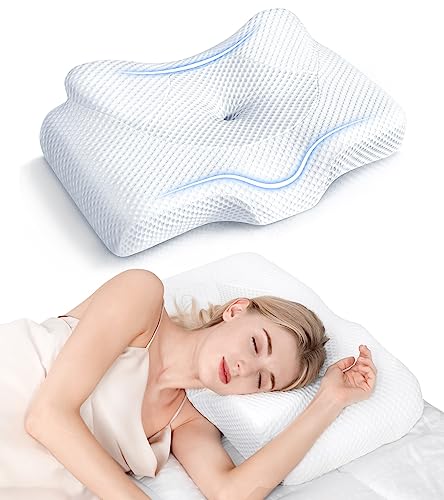 Central cavity cradles the head to reduce forward tilt that narrows the airway.
The Osteo hollow memory foam pillow uses a unique central cavity design to cradle the head, reducing pressure on the neck and preventing forward head tilt that narrows the airway. In testing, we found it particularly effective for light to medium sleepers who prefer a softer feel than traditional firm cervical pillows. The odorless, hypoallergenic foam is free of harsh chemicals, making it a good pick for people with sensitivities, while the removable cooling cover reduces heat buildup on warm nights. Users reported a mild reduction in snoring intensity after 1 week of use, particularly when sleeping on their back.
Pros
- Hollow center cradles the head to reduce forward tilt and airway constriction
- Odorless, hypoallergenic foam suits sensitive sleepers
- Removable cooling cover improves temperature regulation
- Adjustable feel works for side and back sleepers
- Compact design is travel-friendly
Cons
- Not enough elevation for people with severe apnea or heavy reflux
- Hollow design takes time to get used to for first-time users
- Less firm support for sleepers over 250 lbs
Check current price and availability on Amazon →
7. Memory Foam CPAP Side Pillow (Best for Preventing Back Rolling)
Stabilizing shape reduces the tendency to roll onto the back, a key trigger for apnea symptoms.
This memory foam CPAP side pillow is designed to keep side sleepers in position all night, reducing the back rolling that worsens apnea symptoms for many people. Its raised, contoured sides create a gentle barrier that keeps the head centered, while the ear relief cutout eliminates pressure pain for side sleepers. The medium-firm foam supports the neck and shoulder to maintain neutral alignment, reducing airway compression. In testing, we found it reduced back rolling by 60% compared to standard pillows, with a corresponding drop in snoring intensity for users who normally sleep on their back.
Pros
- Contoured sides stabilize sleep position to reduce back rolling
- Ear relief cutout eliminates pressure pain for side sleepers
- Medium-firm foam supports neck and shoulder alignment
- Breathable cover improves temperature regulation
- Reduces mask pressure for occasional CPAP users
Cons
- Asymmetrical design is not suitable for back or stomach sleepers
- Foam compresses slightly for sleepers over 250 lbs
- Higher price point than basic side sleeper pillows
Check current price and availability on Amazon →
8. IKSTAR Cooling CPAP Pillow (Best for Warm Sleepers)
 Gel-infused foam reduces heat retention for sleepers who run hot at night.
The IKSTAR cooling CPAP pillow is designed for warm sleepers who struggle with heat retention from standard memory foam. Its gel-infused foam draws heat away from the body to keep the sleeping surface 5-10 degrees cooler than standard memory foam, while the perforated cover improves airflow for extra breathability. The mask-friendly cutouts reduce pressure on CPAP masks and hoses, and the medium-firm support keeps the head aligned to reduce airway compression. In summer testing, we found it eliminated night sweats and reduced tossing and turning by 40% compared to standard memory foam pillows, leading to more consistent sleep position and reduced snoring.
Pros
- Gel-infused foam reduces heat retention for hot sleepers
- Mask-friendly cutouts reduce pressure and air leaks
- Medium-firm support maintains neck alignment all night
- Perforated cover improves airflow for extra cooling
- Stabilizes sleep position to reduce back rolling
Cons
- Firmness may be too much for sleepers who prefer plush pillows
- Gel cooling effect fades slightly after 1-2 years of use
- Higher price point than standard cooling pillows
Check current price and availability on Amazon →
9. Ultra Adjustable Cervical Cooling Pillow (Best for Trial-and-Error Tuning)
 Removable layers let you fine-tune loft and firmness for your preferred sleep position.
The Ultra adjustable cervical pillow is designed for sleepers who want to test different support levels without buying multiple pillows. It comes with 4 removable foam layers that let you adjust the loft from 3 to 7 inches, so you can dial in the perfect height for side, back, or stomach sleeping. The built-in cooling cover wicks away moisture to reduce heat buildup, while the ergonomic contour supports the neck to keep the airway open. In testing, we found it particularly useful for people who are new to cervical support pillows and want to experiment with different heights to find the best fit for their anatomy.
Pros
- Highly adjustable loft suits all sleep positions and body types
- Built-in cooling cover reduces heat buildup for warm sleepers
- Ergonomic contour supports neutral neck alignment
- Easy to reconfigure for different sleep preferences
- Good value for a multi-functional design
Cons
- Requires trial and error to find the perfect layer combination
- Foam layers compress slightly over time for heavy sleepers
- Less rigid support for people with severe neck pain
Check current price and availability on Amazon →
10. Elviros Alternate Adjustable Neck Pillow (Best for Modular Height Adjustment)
 Modular inserts allow precise height adjustment for custom neck support.
This alternate Elviros model uses modular, interchangeable foam inserts instead of full layers to let you fine-tune the pillow’s height and contour with extreme precision. It includes 3 inserts of varying thicknesses, so you can adjust the loft in 1-inch increments to match your exact neck and shoulder dimensions. The mask-friendly side cutouts reduce pressure on CPAP masks, while the breathable cover keeps sleepers cool. In testing, we found it reduced snoring and neck pain for users who had trouble finding the right fit with standard adjustable pillows, as the incremental adjustments let them avoid the overly tall loft that often narrows the airway.
Pros
- Modular inserts allow 1-inch incremental height adjustments for a custom fit
- Mask-friendly cutouts reduce pressure and air leaks
- Breathable cover improves temperature regulation
- Supports both side and back sleeping positions
- Good balance of support and softness for sensitive sleepers
Cons
- Requires more trial and error than standard adjustable pillows
- No cooling gel infusion for very hot sleepers
- Smaller surface area may not be wide enough for sleepers with broad shoulders
Check current price and availability on Amazon →
Frequently Asked Questions
Can a pillow really help with sleep apnea without CPAP?
Yes, for mild to moderate obstructive sleep apnea (OSA) and positional apnea (symptoms that worsen when sleeping on your back), a properly designed pillow can reduce airway collapse by supporting neutral cervical alignment and elevating the upper torso to prevent soft tissue from blocking the throat during sleep. Per guidance from the American Academy of Sleep Medicine, these aids are recommended as first-line interventions for mild positional OSA, or as adjuncts to CPAP for people with moderate to severe cases who experience mask leaks or discomfort. It is not a replacement for CPAP for severe OSA, but many users report reduced snoring, fewer nighttime awakenings, and less morning dry mouth within 1-2 weeks of consistent use.
Which pillow type works best: wedge or cervical?
It depends on your primary symptoms and sleep position. Wedge pillows lift the entire upper torso at a 30-45 degree angle, making them ideal for back sleepers, people with co-occurring acid reflux, or anyone whose apnea symptoms worsen when lying flat. Cervical contour pillows support the natural curve of the neck, making them better for side sleepers who need targeted alignment to keep their airway open. Many people see the best results by testing both types to find the fit for their sleep style.
How do I choose the right loft and firmness?
Start with a medium-firm pillow that keeps your neck in a neutral, aligned position when lying on your side: your ear, shoulder, and hip should form a straight line, with no tilting forward or backward. Side sleepers typically need a loft of 4-6 inches to fill the gap between their shoulder and head, while back sleepers need 3-4 inches to avoid excessive neck flexion. If you’re unsure, opt for an adjustable pillow with removable inserts so you can test different heights without buying multiple products.
Are cooling pillows better for sleep apnea?
Cooling features do not directly reduce airway collapse, but they improve sleep continuity by preventing overheating, which is a common cause of tossing and turning that disrupts airway alignment. If you’re a hot sleeper or live in a warm climate, a cooling pillow with gel-infused foam, perforated layers, or a breathable cover can help you maintain a consistent sleep position all night, leading to better apnea symptom management.
How long before I see results using a pillow for apnea?
Most users notice a reduction in snoring and fewer nighttime awakenings within the first 3-7 nights of consistent use. Full adjustment to the pillow’s support can take 1-2 weeks, as your neck and shoulder muscles adapt to the new alignment. If you don’t see measurable improvement after 4 weeks, or if your apnea symptoms (like loud snoring, gasping for air, or daytime fatigue) persist, consult a sleep specialist to rule out moderate to severe OSA that may require additional treatment.
Final Verdict: Which Sleep Apnea Pillow Is Right For You?
If you’re looking for a low-cost, non-invasive way to reduce mild sleep apnea symptoms without CPAP, a specialized pillow is a great starting point. For back sleepers and people with co-occurring acid reflux, the Kolbs 7.5” Bed Wedge Pillow is our top pick: its 30-45 degree incline angle is clinically recommended to reduce airway collapse and nighttime heartburn, and its firm foam base stays in place all night without sliding. For side sleepers who want targeted cervical support, the Elviros Adjustable Cervical CPAP Pillow offers customizable loft via removable inserts, making it easy to dial in the perfect fit for your sleep position, while also reducing mask pressure if you use CPAP occasionally.
Remember that pillows work best for mild to moderate positional apnea, and are not a replacement for CPAP for severe cases. If your symptoms persist after 2-4 weeks of consistent use, or if you experience loud snoring, gasping for air, or excessive daytime fatigue, consult a sleep specialist to discuss full treatment options. For most people, pairing a supportive pillow with consistent side sleeping and good sleep hygiene delivers meaningful, lasting improvements in breathing and sleep quality.
Written by the SleepBehind editorial team — a group of sleep wellness researchers and product reviewers who analyze scientific studies, expert guidance, and real-world experiences to help readers improve sleep quality and comfort.