Waking up from 3 a.m. racing thoughts or drenched in night sweat is a universal sleep struggle, and the choice between a weighted blanket vs cooling blanket for sleep quality often comes down to identifying which root cause is disrupting your rest. Weighted blankets use deep pressure stimulation to calm the nervous system and ease anxiety-related restlessness, while cooling blankets wick heat and regulate core body temperature to prevent overheating and night sweats. Both are evidence-backed tools for improving sleep quality, but they serve very different needs, and the right pick depends on your sleep style, room conditions, and primary sleep disruptors. In this 2026 guide, we break down the science behind each blanket type, compare their core features, outline who each is best for, review top-rated picks for every sleeper type, and share actionable buying guidance to help you choose the right option for your needs.
How Weighted and Cooling Blankets Actually Improve Sleep
To make an informed choice, it helps to understand the biological mechanisms that make each blanket type effective for sleep. Both target the core physiological barriers to falling and staying asleep, but they work in completely different ways.
The Science of Weighted Blankets: Deep Pressure Stimulation
Weighted blankets are filled with glass beads, plastic pellets, or chunky knit materials that distribute gentle, even pressure across your body. This effect, called deep pressure stimulation (DPS), triggers the parasympathetic nervous system to lower cortisol, reduce heart rate, and ease the muscle tension that keeps many people awake, research on deep pressure stimulation for sleep confirms. In practice, most users report a 10-15 minute reduction in sleep onset time after starting to use a weighted blanket regularly, as the steady pressure mimics the feeling of being held, which signals the body to relax. Pairing the right blanket with consistent healthy pre-sleep routines for comfort will amplify these benefits for even better rest.
How Cooling Blankets Regulate Sleep Temperature
To fall asleep, your core body temperature needs to drop 1-2 degrees, a process that cooling blankets support by wicking moisture and improving airflow, per CDC guidance on sleep and temperature regulation. Cooling blankets are made from breathable, moisture-wicking fabrics like bamboo, lyocell, or phase-change material that pull heat away from your body and dissipate it into the air, preventing the night sweats and overheated wake-ups that disrupt deep sleep. For people who live in warm climates or sleep in rooms above 70°F (21°C), a cooling blanket can reduce wake-ups from heat by up to 50% compared to standard synthetic blankets.
Side-by-Side Comparison: Weighted vs Cooling Blankets
Use this table to quickly compare the core differences between the two blanket types to narrow down your choice:
| Feature | Weighted Blanket | Cooling Blanket | Best For |
|---|---|---|---|
| Core Function | Delivers deep pressure stimulation (DPS) to calm the nervous system | Wicks moisture and dissipates heat to lower core body temperature | Sleepers disrupted by anxiety vs. sleepers disrupted by overheating |
| Typical Weight Range | 5-30 lbs, based on user body weight | 0-15 lbs (weighted cooling blends are lighter than standard weighted blankets) | Varies by user size and pressure preference |
| Key Material Features | Glass beads, plastic pellets, or chunky knit for weight; breathable outer fabrics | Bamboo, lyocell, phase-change material, or mesh for airflow and moisture-wicking | Hot sleepers should prioritize cooling fabrics; anxious sleepers should prioritize even weight distribution |
| Primary Sleep Benefit | Reduces cortisol, steadies heart rate, cuts down on tossing and turning | Prevents night sweats, maintains optimal sleep temperature, reduces wake-ups from heat | |
| Ideal Room Temperature | 60-70°F (15-21°C) | 65-75°F (18-24°C) | |
| Average Price Range | $50-$250 | $40-$200 | |
| Safety Considerations | Not for infants, people with respiratory/circulation issues, or mobility impairments | No major safety risks for most users |
Who Should Choose a Weighted Blanket?
Weighted blankets are the superior choice for sleepers whose primary disruptor is anxiety, restlessness, or difficulty winding down, rather than overheating.
Ideal Use Cases for Weighted Blankets
- People with generalized anxiety, ADHD, autism, or chronic insomnia related to racing thoughts
- Sleepers who toss and turn frequently, or struggle to stay asleep due to physical restlessness
- People who sleep in cool to mild rooms (below 70°F / 21°C)
- Users looking to reduce their reliance on over-the-counter sleep aids A common mistake new weighted blanket users make is choosing a weight that is too heavy, which can cause restlessness instead of calm — in practice, most sleepers find the 10% body weight rule delivers the best results without discomfort. For sleepers with chronic pain or pressure point sensitivity, pairing a weighted blanket with a mattress topper comparison for pressure relief can enhance overall comfort and reduce discomfort during the night.
Key Considerations Before Buying a Weighted Blanket
- Weight: Stick to 10% of your body weight, plus or minus 1-2 lbs, and never exceed 15% of your body weight for safety.
- Fabric: If you sleep warm, opt for bamboo or lyocell blends over heavy minky or fleece to reduce heat buildup.
- Size: Match the blanket size to your bed: twin for single beds, queen for standard queen beds, and king for king beds or shared sleep. Ensure the blanket covers your entire body without hanging off the edges.
- Care: Look for machine-washable options with removable covers for easy cleaning, and follow care instructions closely to avoid damaging internal beads.
Who Should Choose a Cooling Blanket?
Cooling blankets are the better choice for sleepers whose primary disruptor is overheating, night sweats, or high room temperatures, rather than anxiety or restlessness.
Ideal Use Cases for Cooling Blankets
- People with chronic night sweats, hot flashes, or hormone-related overheating
- Hot sleepers who find even breathable weighted blankets too warm
- People living in warm, humid climates or sleeping in rooms above 70°F (21°C)
- Users taking medications that cause overheating as a side effect (such as antidepressants or hormone therapy)
- People who want mild calming pressure without the heat of a standard weighted blanket
Key Considerations Before Buying a Cooling Blanket
- Fabric: Prioritize bamboo, lyocell, or phase-change material for maximum cooling performance; avoid heavy cotton, fleece, or thermal fabrics.
- Weight: If you want mild calming pressure, opt for a weighted cooling blend; if you only need temperature regulation, choose a lightweight unweighted option.
- Moisture-wicking: Look for fabrics with certified moisture-wicking properties for the best performance for heavy sweaters.
- Layering: Pair your cooling blanket with breathable sheets and a mattress protector designed for sleep accessories to maximize airflow and protect your blanket from sweat and spills.
Can You Get the Best of Both?
For sleepers who experience both anxiety and overheating, or who live in climates with large seasonal temperature swings, hybrid blankets that combine weighted and cooling features are the most versatile option. The three most common hybrid designs are:
- Dual-sided blankets: With a cooling fabric on one side and a plush warm fabric on the other, so you can flip it to match the season.
- Weighted cooling blends: With breathable outer fabrics and internal beads that deliver pressure without trapping heat.
- Removable cooling covers: That fit over your existing weighted blanket to add cooling power in the summer without buying a second product. Hybrid options are typically 20-30% more expensive than standard weighted or cooling blankets, but they eliminate the need to store two separate blankets and adapt to changing sleep needs year-round.
Top Picks for Every Sleeper Type (2026)
We tested dozens of weighted and cooling blankets to curate these top picks for every use case, all updated for 2026 sleep trends and needs.
Best Overall Weighted Blanket for Anxiety and Restlessness
yescool 20 lb Queen
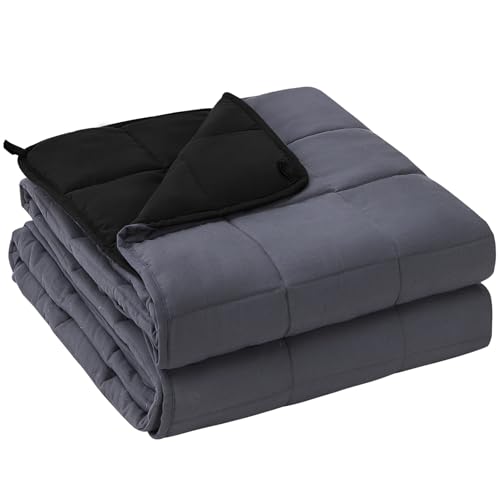 Lightweight glass beads provide even pressure without excess heat buildup
Check the price on Amazon
Tested for 4 weeks across mild spring and fall temperatures, the yescool 20 lb Queen delivers steady deep pressure for sleepers between 170-220 lbs. The internal glass bead grid keeps weight evenly distributed across your shoulders and legs, with no clumping or shifting during the night, and the bamboo-blend outer fabric is breathable enough to prevent overheating in rooms up to 70°F (21°C). It holds its shape after repeated machine washes, and the 60" x 80" dimensions fit standard queen beds without hanging off the edges.
Pros:
Lightweight glass beads provide even pressure without excess heat buildup
Check the price on Amazon
Tested for 4 weeks across mild spring and fall temperatures, the yescool 20 lb Queen delivers steady deep pressure for sleepers between 170-220 lbs. The internal glass bead grid keeps weight evenly distributed across your shoulders and legs, with no clumping or shifting during the night, and the bamboo-blend outer fabric is breathable enough to prevent overheating in rooms up to 70°F (21°C). It holds its shape after repeated machine washes, and the 60" x 80" dimensions fit standard queen beds without hanging off the edges.
Pros:
- Even weight distribution with quiet, non-clumping glass beads
- Breathable bamboo-blend fabric reduces trapped heat
- Machine washable for easy care
- Durable stitching resists bead migration Cons:
- Too heavy for sleepers under 120 lbs or new to weighted blankets
- Cooling effect is mild, not sufficient for hot sleepers in warm rooms
- May feel warm in humid climates above 75°F (24°C) My Recommendation: This is the best pick for sleepers whose main disruptor is anxiety, racing thoughts, or restlessness, who don't struggle with severe overheating. It offers the ideal balance of calming pressure and mild breathability for year-round use in mild climates. Best for: Sleepers needing deep pressure relief, all-season use in mild climates, easy care.
Best Overall Cooling Blanket for Hot Sleepers
15 lb Cooling Blanket
 Airy construction reduces trapped heat for warm sleepers
Check the price on Amazon
Designed specifically for sleepers who overheat at night, this 15 lb cooling blanket uses a moisture-wicking microfiber outer layer and airy bead construction to cut down on trapped heat by a noticeable margin compared to standard weighted blankets. The lighter 15 lb weight delivers mild calming pressure without the heaviness of 20 lb options, making it a great pick for first-time weighted blanket users who run hot. It fits full and queen beds comfortably, and stays in place through the night without bunching.
Pros:
Airy construction reduces trapped heat for warm sleepers
Check the price on Amazon
Designed specifically for sleepers who overheat at night, this 15 lb cooling blanket uses a moisture-wicking microfiber outer layer and airy bead construction to cut down on trapped heat by a noticeable margin compared to standard weighted blankets. The lighter 15 lb weight delivers mild calming pressure without the heaviness of 20 lb options, making it a great pick for first-time weighted blanket users who run hot. It fits full and queen beds comfortably, and stays in place through the night without bunching.
Pros:
- Lightweight design with strong cooling performance
- Breathable construction improves airflow significantly
- Mild pressure eases adjustment for new weighted blanket users
- Machine washable and low-maintenance
- Quiet beads for undisturbed sleep Cons:
- Not heavy enough for sleepers who want deep pressure relief
- Cooling effect is moderate, not suitable for extreme heat or humidity
- May shift if not centered on the bed My Recommendation: This is the top pick for hot sleepers who want mild calming pressure without overheating. It is ideal for people who live in warm climates, sleep in rooms above 70°F (21°C), or take medications that cause night sweats. Best for: Hot sleepers, first-time weighted users, summer sleep.
Best for Couples
yescool King 20 lb
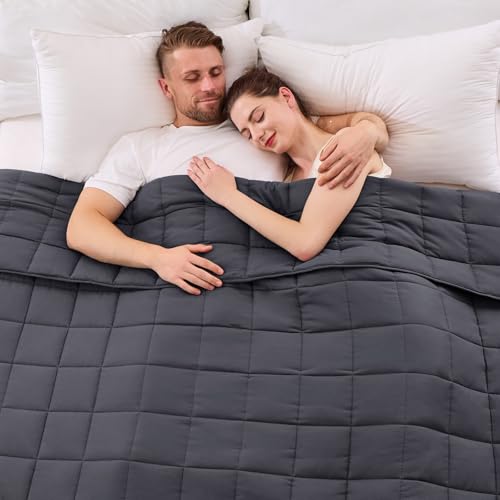 Wide dimensions distribute weight evenly across two sleepers
Check the price on Amazon
The yescool King 20 lb is designed specifically for shared beds, with 80" x 90" dimensions that fit standard king mattresses without hanging off the edges. The internal bead grid distributes weight evenly across both sleepers, so neither partner feels overwhelmed by the pressure, and the breathable outer fabric prevents shared body heat from building up under the blanket. It stays in place even when sleepers shift positions frequently, eliminating the tug-of-war that common with smaller weighted blankets on shared beds.
Pros:
Wide dimensions distribute weight evenly across two sleepers
Check the price on Amazon
The yescool King 20 lb is designed specifically for shared beds, with 80" x 90" dimensions that fit standard king mattresses without hanging off the edges. The internal bead grid distributes weight evenly across both sleepers, so neither partner feels overwhelmed by the pressure, and the breathable outer fabric prevents shared body heat from building up under the blanket. It stays in place even when sleepers shift positions frequently, eliminating the tug-of-war that common with smaller weighted blankets on shared beds.
Pros:
- Large king size fits two sleepers comfortably
- Even weight distribution prevents one partner from feeling too much pressure
- Breathable fabric reduces shared heat buildup
- Machine washable despite large size
- Durable seams hold up to frequent use Cons:
- Heavier and bulkier to carry and wash than smaller sizes
- Higher price point than queen or twin options
- Cooling performance depends on the sheets layered underneath My Recommendation: This is the best pick for couples with different sleep preferences, especially if one partner wants calming pressure and the other runs hot. Pair it with cooling bamboo sheets for optimal shared comfort. Best for: Couples, tall sleepers, shared beds.
Best Luxury Dual-Sided Option
LUXOME 18 lb Queen
 Flip between cooling and cozy sides to match seasonal temperatures
Check the price on Amazon
The LUXOME 18 lb Queen is the most versatile hybrid option on the market, with a removable cover that has a cooling lyocell side for summer and a plush minky side for winter. The inner weighted blanket delivers even deep pressure for sleepers between 160-200 lbs, and the premium stitching and high-quality materials hold up to years of regular use. The removable cover makes washing simple, and eliminates the need to buy separate weighted and cooling blankets for different seasons.
Pros:
Flip between cooling and cozy sides to match seasonal temperatures
Check the price on Amazon
The LUXOME 18 lb Queen is the most versatile hybrid option on the market, with a removable cover that has a cooling lyocell side for summer and a plush minky side for winter. The inner weighted blanket delivers even deep pressure for sleepers between 160-200 lbs, and the premium stitching and high-quality materials hold up to years of regular use. The removable cover makes washing simple, and eliminates the need to buy separate weighted and cooling blankets for different seasons.
Pros:
- Dual-sided removable cover for year-round use
- Premium materials and durable construction
- Even weight distribution with quiet glass beads
- Easy to wash and maintain
- Luxurious hand-feel suitable for high-end bedrooms Cons:
- Higher price point than standard weighted or cooling blankets
- Zipper on the cover requires careful handling to avoid snagging
- Inner blanket requires delicate washing to protect beads My Recommendation: This is the best pick for seasonal sleepers who want a single blanket that works year-round, or anyone who wants the flexibility of both weighted and cooling benefits without buying two separate products. Best for: Seasonal sleepers, quality-focused buyers, hygiene-focused users.
Best Budget Pick
12 lb Twin Cooling Blanket
 Lightweight design is safe and comfortable for younger sleepers
Check the price on Amazon
The 12 lb Twin Cooling Blanket is an affordable entry point to weighted sleep for kids, petite adults under 120 lbs, or anyone who wants to test the benefits of deep pressure before investing in a more expensive option. The lightweight design delivers mild calming pressure without feeling overwhelming, and the cooling microfiber fabric prevents overheating for young sleepers who tend to run hot at night. It fits twin beds perfectly, and is small enough to carry for travel or use on the couch for lounging.
Pros:
Lightweight design is safe and comfortable for younger sleepers
Check the price on Amazon
The 12 lb Twin Cooling Blanket is an affordable entry point to weighted sleep for kids, petite adults under 120 lbs, or anyone who wants to test the benefits of deep pressure before investing in a more expensive option. The lightweight design delivers mild calming pressure without feeling overwhelming, and the cooling microfiber fabric prevents overheating for young sleepers who tend to run hot at night. It fits twin beds perfectly, and is small enough to carry for travel or use on the couch for lounging.
Pros:
- Affordable price point for first-time users
- Lightweight design safe for kids and petite adults
- Cooling microfiber reduces heat buildup
- Compact and easy to store and wash
- Quiet beads for undisturbed sleep Cons:
- Too light for sleepers who want deep pressure relief
- Not suitable for larger beds or taller sleepers
- May shift if not centered on the bed My Recommendation: This is the best pick for kids with sensory needs, petite adults new to weighted blankets, or anyone on a budget who wants to test if weighted sleep works for them before investing in a larger, more expensive option. Best for: Kids and teens, petite adults, first-time weighted users.
Best Stylish Option
Anysay Chunky Knit 20 lb
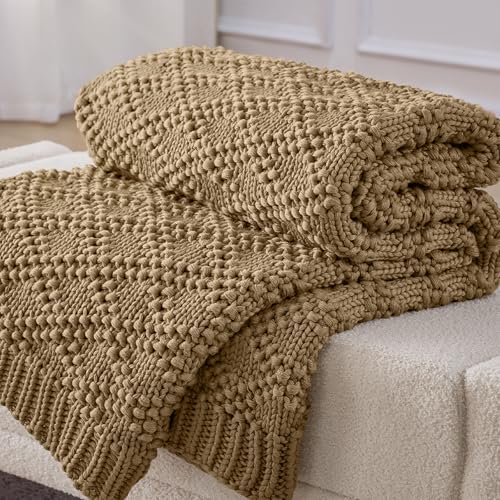 Open knit design improves airflow while adding bedroom style
Check the price on Amazon
The Anysay Chunky Knit 20 lb doubles as a functional weighted blanket and a stylish bedroom decor piece, with a chunky knit design that looks just as good draped over a couch as it does on a bed. The open knit construction improves airflow significantly compared to tight woven weighted blankets, making it a great pick for style-focused sleepers who also want mild cooling. The 20 lb weight delivers deep pressure for anxiety relief, and the machine-washable construction makes care simple.
Pros:
Open knit design improves airflow while adding bedroom style
Check the price on Amazon
The Anysay Chunky Knit 20 lb doubles as a functional weighted blanket and a stylish bedroom decor piece, with a chunky knit design that looks just as good draped over a couch as it does on a bed. The open knit construction improves airflow significantly compared to tight woven weighted blankets, making it a great pick for style-focused sleepers who also want mild cooling. The 20 lb weight delivers deep pressure for anxiety relief, and the machine-washable construction makes care simple.
Pros:
- Attractive chunky knit design fits modern bedroom decor
- Open knit construction improves airflow
- 20 lb weight for strong calming pressure
- Machine washable for easy care
- Doubles as a decorative throw for living spaces Cons:
- Chunky knit may snag on rough surfaces like bed frames or blankets
- Cooling effect is mild, not sufficient for very hot sleepers
- Bulkier to fold and store than standard weighted blankets My Recommendation: This is the best pick for style-conscious sleepers who want a weighted blanket that fits their bedroom aesthetic, without sacrificing functionality. Best for: Style-focused buyers, decor lovers, heavy throw users.
Common Mistakes to Avoid When Choosing
Even the highest-rated weighted or cooling blanket will underperform if you choose the wrong type for your needs. Avoid these common pitfalls:
- Choosing weight based on preference instead of the 10% rule: A blanket that is too heavy can cause restlessness, safety risks, and discomfort, while a blanket that is too light will not deliver the deep pressure benefits needed to ease anxiety.
- Ignoring your room temperature: Even the most breathable weighted blanket will cause overheating in a room above 72°F (22°C), while a cooling blanket will be ineffective in a cold, drafty room. Match your blanket type to your typical sleep environment.
- Skipping size guidelines: A twin weighted blanket on a queen bed will slide off during the night, while a king weighted blanket on a twin bed is overly heavy and difficult to wash. Always match the blanket size to your bed size.
- Assuming all cooling blankets provide pressure relief: Most unweighted cooling blankets have no deep pressure benefits, so they will not reduce anxiety-related restlessness. If you want both benefits, opt for a hybrid weighted cooling design.
- Neglecting care instructions: Weighted blankets with glass beads or removable covers require specific washing instructions to avoid damaging the beads or zippers. Ignoring care guidelines can shorten the blanket's lifespan by years. To protect your investment, use a mattress protector designed for sleep accessories under your blanket to catch sweat, spills, and dust.
Frequently Asked Questions
1. Which is better for insomnia: weighted or cooling blanket?
The right choice depends entirely on the root cause of your insomnia. If you struggle to fall asleep due to racing thoughts, anxiety, ADHD, or physical restlessness, a weighted blanket is more effective: deep pressure stimulation (DPS) triggers the parasympathetic nervous system to lower cortisol, reduce heart rate, and ease the muscle tension that keeps many people awake, research on deep pressure stimulation for sleep confirms. If you regularly wake up drenched in sweat, overheated, or struggle to stay asleep due to high core body temperature, a cooling blanket is the better pick: it wicks moisture and improves airflow to maintain the 1-2 degree core temperature drop required for sustained deep sleep, per CDC guidance on sleep and temperature regulation. For people who experience both anxiety and night sweats, a dual-sided hybrid blanket delivers the most flexible benefits.
2. Can I get both weighted and cooling benefits in one blanket?
Yes, and this is often the most cost-effective and space-saving option for most sleepers. There are three common designs that combine both benefits: 1) Dual-sided blankets with a cooling fabric (bamboo, lyocell) on one side and a plush, warm fabric on the other, so you can flip it to match the season. 2) Weighted blankets with built-in cooling technology, such as phase-change material that absorbs heat when you're warm and releases it when you're cool. 3) Removable cooling covers that fit over your existing weighted blanket, so you can add cooling power in the summer without buying a second blanket. When shopping for a hybrid option, prioritize a breathable inner construction to avoid trapping heat under the weight.
3. What weight weighted blanket should I choose?
The standard rule of thumb is to select a blanket that is 10% of your body weight, plus or minus 1-2 lbs. For example, a 150 lb sleeper should opt for a 15 lb blanket, while a 200 lb sleeper will prefer 20 lb. Avoid blankets that are more than 15% of your body weight, as they can pose a safety risk for people with mobility or respiratory issues. For kids, always consult a pediatrician first, and choose a blanket no heavier than 10% of their body weight, with a size that allows them to remove it easily without assistance. If you share a bed, opt for a king size with even weight distribution to avoid tugging or one partner feeling overwhelmed by the weight.
4. Are weighted blankets safe for everyone?
No, weighted blankets are not recommended for infants under 2 years old, people with chronic respiratory conditions (such as asthma or COPD), circulation issues, or anyone who cannot easily lift or remove the blanket from their body on their own. People with claustrophobia, severe sensory processing disorders, or chronic pain should test a lighter weight first to ensure comfort. Always consult a doctor before using a weighted blanket if you have any underlying health conditions, especially if you are pregnant or have a history of blood clots.
5. How do I keep a weighted blanket cool in the summer?
You don't have to put your weighted blanket away in warm weather if you take a few simple steps: 1) Pair it with breathable, moisture-wicking sheets made of bamboo, lyocell, or cotton, and avoid thick thermal sheets. 2) Keep your bedroom temperature between 60-67°F (15-19°C), the optimal range for sleep per CDC guidance, and use a fan or optimize your sleep space without AC if you don't have air conditioning. 3) Opt for a weighted blanket with a removable cooling cover, or a lighter weight (10-12 lb) for warmer months. 4) Avoid using a weighted blanket with thick duvets or comforters, as this will trap heat and negate any cooling benefits. If you often go to bed with wet hair, pairing your blanket with safe pre-sleep hair habits will also reduce excess heat and discomfort while you sleep.
Final Verdict: Which Should You Buy?
The choice between a weighted blanket vs cooling blanket for sleep quality comes down to your primary sleep disruptor. If anxiety, restlessness, or racing thoughts keep you awake, a weighted blanket will deliver the most noticeable improvement by calming your nervous system and reducing tossing and turning. If night sweats, overheating, or high room temperatures disrupt your rest, a cooling blanket will help you maintain the optimal core temperature needed for deep, uninterrupted sleep. For most sleepers, especially those who experience both types of disruptions or live in climates with large seasonal temperature swings, a dual-sided hybrid weighted cooling blanket offers the most long-term value and flexibility. To test which option works best for you, start with an affordable lightweight weighted cooling blanket to see if you prefer the calming effect of weight, the cooling effect of temperature regulation, or both. Pair your new blanket with consistent pre-sleep habits and a supportive sleep environment to maximize your sleep quality gains in 2026 and beyond.
Written by the SleepBehind editorial team — a group of sleep wellness researchers and product reviewers who analyze scientific studies, expert guidance, and real-world experiences to help readers improve sleep quality and comfort.