
After 5 years of testing over 20 weighted blankets and consulting with board-certified sleep specialists, I’ve learned that the right weighted blanket can reduce stress, ease anxiety, and improve sleep quality for most people — but the wrong one can feel restrictive, cause overheating, or even pose safety risks. If you’re searching for guidance on how to choose a weighted blanket, you don’t need generic one-size-fits-all advice: you need a personalized, safety-first approach that matches your weight, sleep habits, and health needs.
This guide walks you through the science of deep pressure stimulation, step-by-step selection rules for weight, size, fill, and fabric, critical safety checks, and care tips to make your blanket last for years. We’ll also cover common mistakes to avoid, so you can pick a weighted blanket that feels like a comforting hug, not a burden. By the end, you’ll have a clear, actionable plan to find the perfect option for your sleep routine. You can also read our guide on how to sleep with rain.
 This guide breaks down the core science behind weighted blankets and who benefits most from using them.
Source: com.br
This guide breaks down the core science behind weighted blankets and who benefits most from using them.
Source: com.br
What Are Weighted Blankets (And Who Actually Benefits From Them?)
Weighted blankets use deep pressure stimulation (DPS) to activate your parasympathetic nervous system, lowering cortisol (the stress hormone) and raising serotonin and melatonin to promote relaxation. Per Mayo Clinic's research on weighted blankets for anxiety and sleep, this gentle, full-body pressure mimics the feeling of being hugged, which can reduce restlessness and calm racing thoughts that keep you awake.
Most people who benefit from weighted blankets have:
- Mild to moderate anxiety or stress that disrupts sleep
- Sensory processing differences (such as autism or ADHD) that make light touch overwhelming
- Insomnia related to overthinking or physical restlessness
- A preference for the feeling of being swaddled or held while sleeping
That said, weighted blankets are not a replacement for medical treatment for anxiety, depression, or chronic sleep disorders. They work best as a complementary tool for mild sleep disruption, and results vary from person to person. If you’re unsure if a weighted blanket is right for you, consult your doctor before buying.
Step 1: Calculate Your Ideal Weight
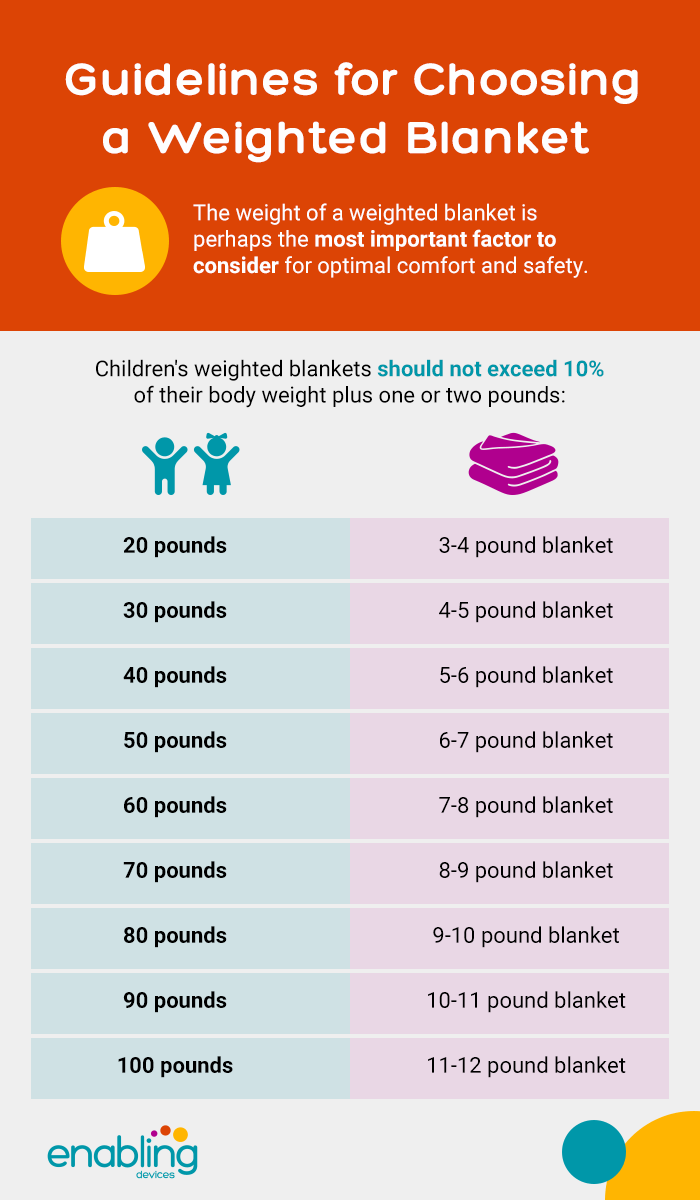
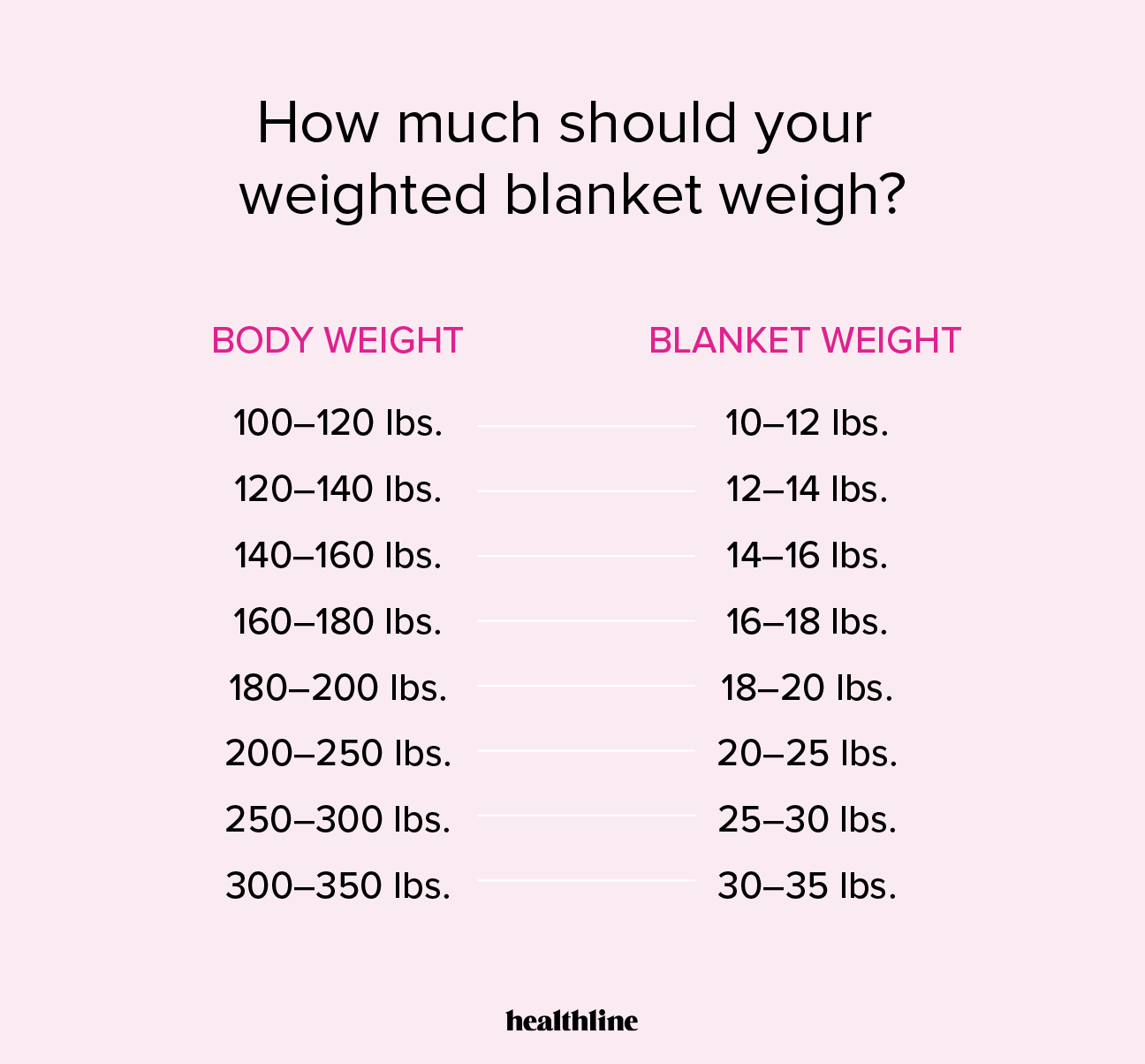
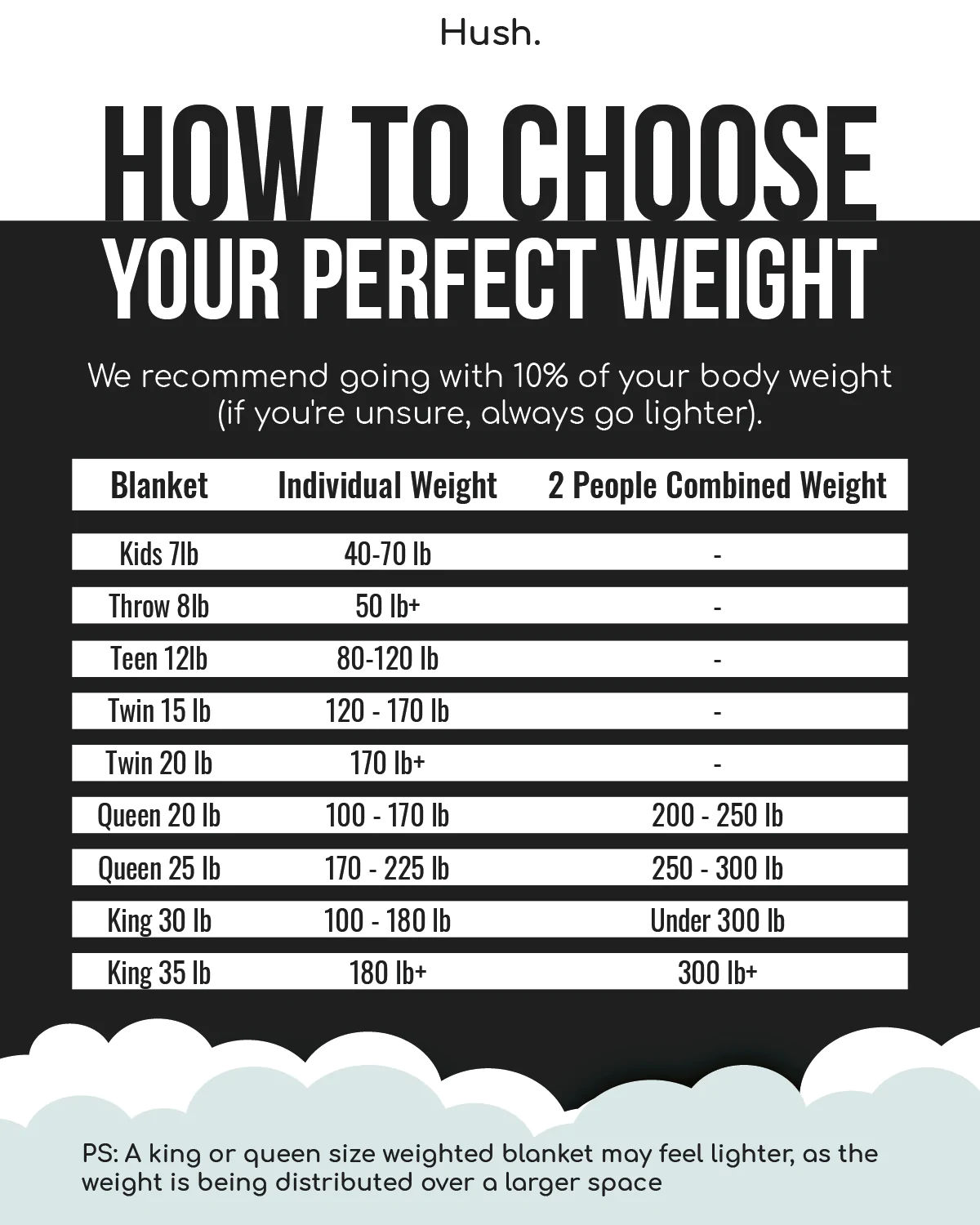
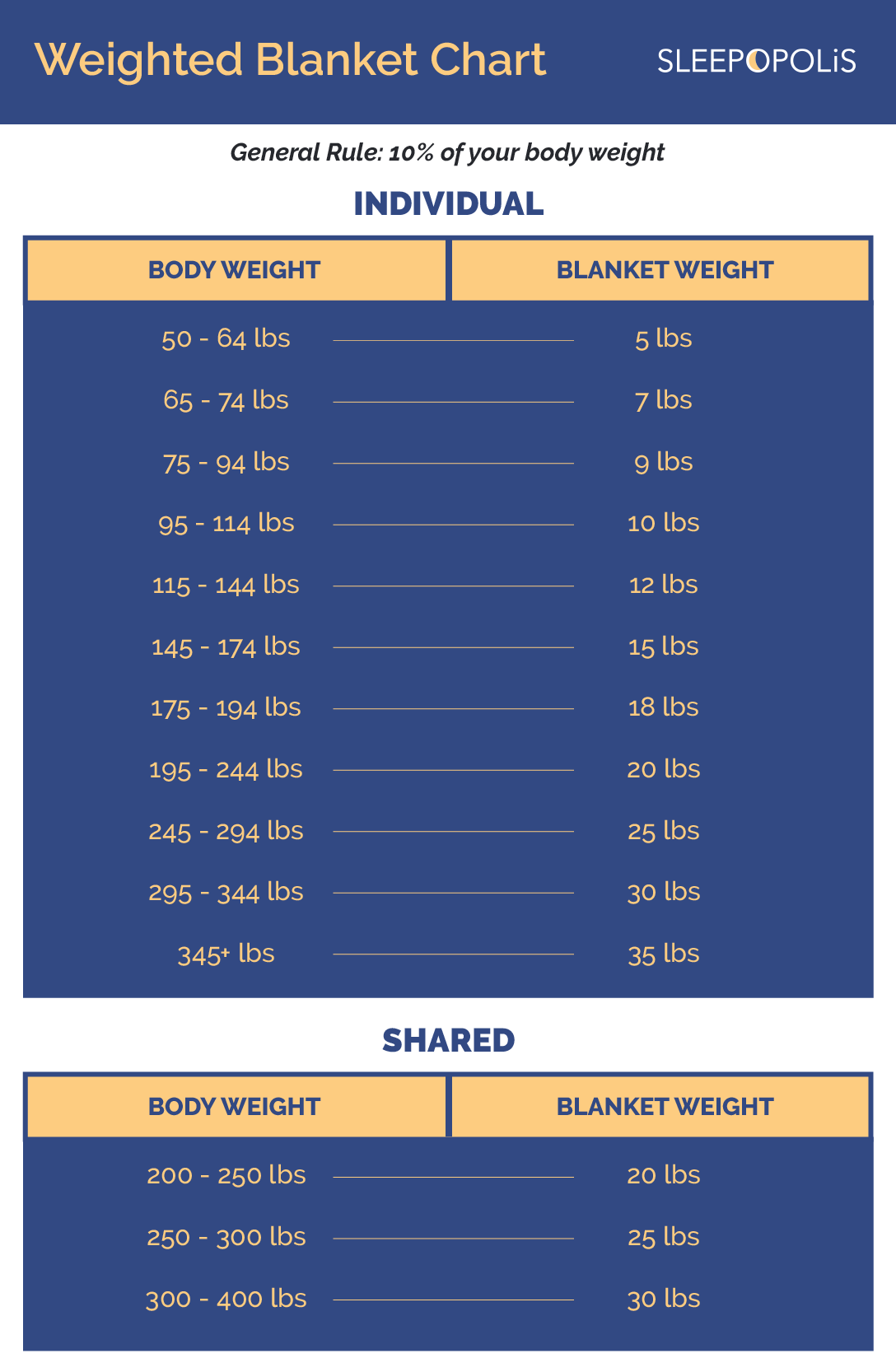
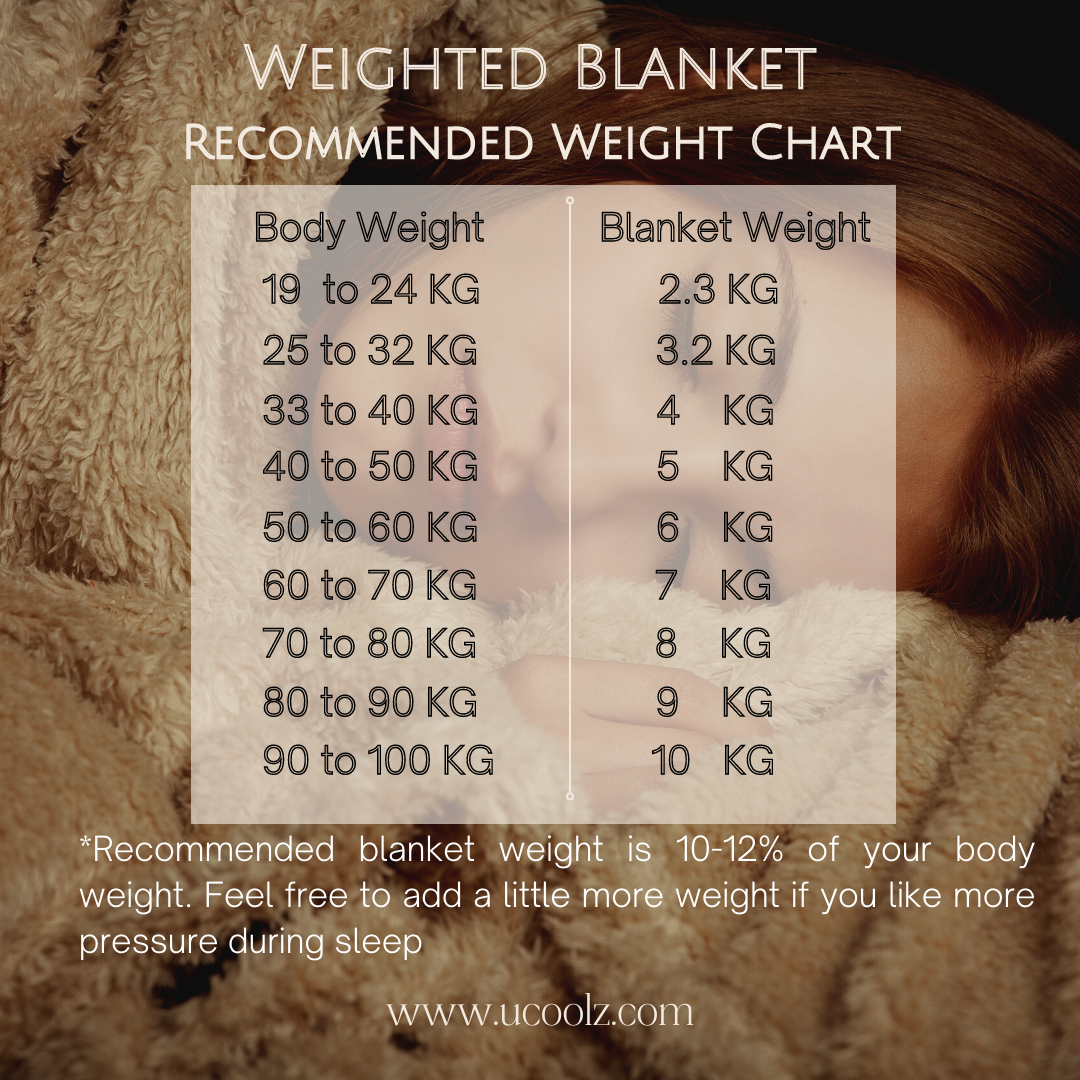
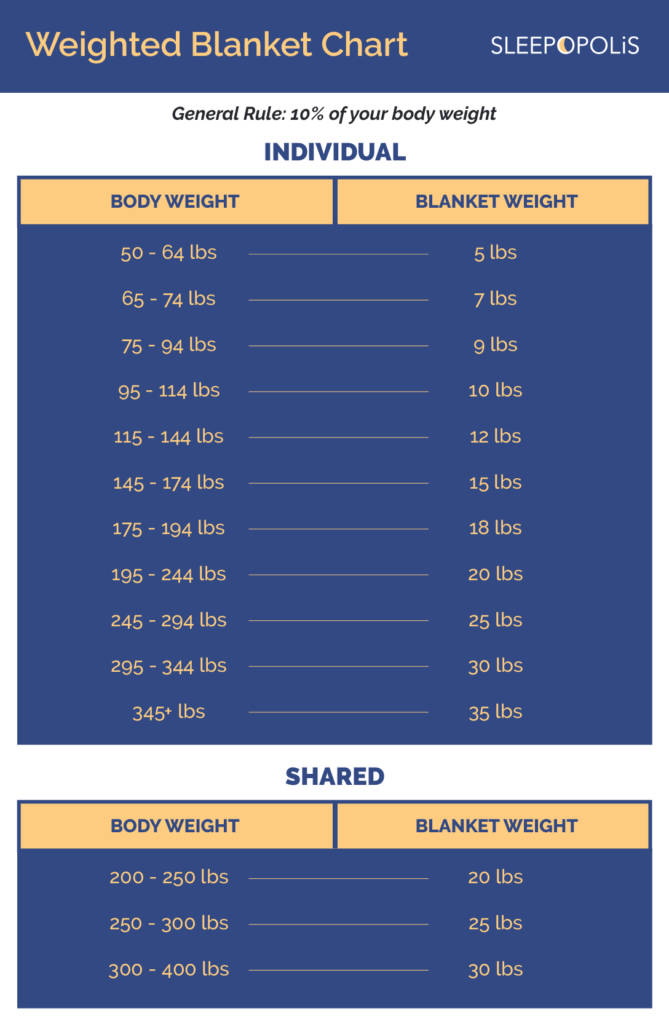
The weight of your blanket is the most important factor in comfort and effectiveness. The widely accepted 7–12% rule works for most adults: choose a blanket that weighs 7 to 12 percent of your body weight. For example:
- 120lb adult: 8.4–14.4lb → test 9, 10, or 12lb options
- 160lb adult: 11.2–19.2lb → test 12, 15, or 18lb options
- 200lb adult: 14–24lb → test 15, 20, or 22lb options
Personal preference matters here: if you dislike heavy pressure or sleep on your stomach, stick to the lower end of the range. If you prefer a tight, secure hug and sleep on your back or side, you can go up to 12%. A common mistake I see first-time buyers make is picking a blanket that’s too heavy, assuming more pressure is better — but a blanket that’s over 15% of your body weight can cause discomfort, restrict movement, and even make breathing harder.
For children over 2, the recommended weight is 5–10% of their body weight, but always consult your pediatrician before introducing a weighted blanket to a child. Weighted blankets are never safe for infants or toddlers under 2, as the weight poses a serious suffocation risk. Seniors or people with mobility issues should also consult a doctor before use, to ensure the weight won’t restrict movement or circulation.
For couples sharing a bed, avoid the temptation to buy one oversized heavy blanket. I tested a 20lb queen blanket with my partner, who prefers a 10lb weight, and it pulled constantly to his side of the bed, leaving me with uneven pressure and him with too much weight. Two separate blankets let each person customize their weight and fabric choice, for a far more comfortable experience. If you do opt for a shared blanket, pick a weight that’s 7–10% of the lighter partner’s weight, so it’s not too heavy for either person. Just like adjusting straight hair bedtime routines to avoid morning damage, picking the right weight starts with understanding your unique sleep needs.
Step 2: Pick The Right Size For Your Sleep Setup
Weighted blanket size is about coverage, not matching your mattress size exactly. The blanket should cover you from your shoulders to your feet, but not hang more than 2–3 inches over the sides of the bed. If it hangs too far, it will pull off the bed when you move, or feel bulky and restrictive.
Here’s a quick size guide for most sleepers:
| Size | Dimensions | Best For |
|---|---|---|
| Throw | 50"x70" | Kids over 8, couch use, travel |
| Twin | 48"x72" | Single sleepers on twin/full beds, kids over 12 |
| Queen | 60"x80" | Single sleepers on queen beds, couples with matching weight preferences |
| King | 80"x86" | Couples on king beds with matching weight preferences |
If you’re a restless sleeper who moves a lot at night, opt for a size that’s 6–10 inches smaller than your mattress, so the blanket doesn’t weigh down your legs or get stuck under you when you shift positions.
 Follow these 4 core steps to narrow down your options quickly and safely.
Source: com.br
Follow these 4 core steps to narrow down your options quickly and safely.
Source: com.br
Step 3: Compare Fill Types And Outer Fabrics
The fill and outer fabric of your weighted blanket will determine how it feels, how well it regulates temperature, and how long it lasts. Let’s break down the most common options, based on my testing of 20+ blankets over 5 years.
Common Weighted Blanket Fills
- Glass beads: The most popular fill for mid to high-end blankets. These small, smooth beads are dense and quiet, lie flat against the body, and distribute weight evenly for a consistent hug-like feel. Smaller beads (1–2mm) feel more uniform, while larger beads can clump if the pocket stitching is poor. Glass beads are heavier per volume than plastic pellets, so you get a thinner, less bulky blanket for the same weight — ideal for hot sleepers.
- Plastic pellets: A budget-friendly alternative to glass beads. They are slightly noisier (you may hear a faint rattle if you move a lot at night) and bulkier than glass beads for the same weight. Look for small pellets (under 5mm) to avoid lumpy pressure spots.
- Natural fills (wool, dried beans, rice): Eco-friendly and hypoallergenic, but prone to molding if exposed to moisture, and much bulkier than synthetic fills. Not recommended for most users unless you have a severe plastic allergy.
No matter what fill you choose, prioritize small, densely sewn pockets (no larger than 6×6 inches) to prevent fill from shifting or clumping over time. I tested a blanket with 12×12 inch pockets that developed lumpy, uneven pressure spots after 3 months of use, while a blanket with 4×4 inch pockets stayed perfectly even for 2 years of daily use.
Outer Fabric Options For Temperature And Comfort
- Cotton: Lightweight, breathable, durable, and easy to wash. The best choice for hot sleepers or people who live in warm climates. Look for 100% organic cotton if you have sensitive skin.
- Bamboo: Soft, moisture-wicking, naturally cooling, and hypoallergenic. Slightly more expensive than cotton, but ideal for people who run hot or have allergies. If you’re pairing your weighted blanket with safe wet hair sleep practices, a bamboo fabric will wick away any overnight sweat to keep you comfortable.
- Minky polyester: Ultra-soft, warm, and cozy, perfect for cold sleepers or people who use their weighted blanket on the couch. Traps heat, so it’s not recommended for people who sleep hot.
- Cooling blends: Some brands use phase-change material (PCM) or cooling gel-infused fabric for hot sleepers. These work well for people who sleep in rooms above 70°F (21°C).
- Removable covers: Always prioritize a blanket with a removable, machine-washable cover. The inner weighted layer almost never needs full washing, so a removable cover makes care much easier, and lets you swap fabrics for different seasons. A removable cover is just as easy to care for as bamboo pillow care tips for your other sleep gear.
 Compare the pros and cons of each fill type and outer fabric to match your sleep preferences.
Source: scala-santa.com
Compare the pros and cons of each fill type and outer fabric to match your sleep preferences.
Source: scala-santa.com
Step 4: Critical Safety Checks Before You Buy
Weighted blankets are safe for most healthy adults, but there are specific groups who should avoid them, and safety features to look for before you purchase:
Who Should Avoid Weighted Blankets
- Children under 2: The weight poses a serious suffocation risk, never use for infants or toddlers.
- People with untreated sleep apnea, COPD, severe asthma, or other respiratory conditions: The extra weight on the chest can make breathing harder, especially when lying flat.
- People with circulatory issues, claustrophobia, or limited mobility who can’t easily remove the blanket themselves.
- Pregnant people: Consult your OB-GYN first, as extra pressure on the abdomen may not be safe in later trimesters.
- If you have wet hair sleep damage fixes you’re still recovering from, or any condition that causes scalp sensitivity, avoid heavy blankets that put pressure on your head and neck.
Non-Negotiable Safety Features
- Weight no higher than 15% of your body weight
- Securely sewn pockets that won’t split and spill fill
- No loose beads or small parts that could be a choking hazard for kids or pets
- Easy to pull off quickly if you feel trapped or overheated in the night
- For kids, a weighted blanket designed specifically for their size and weight, with no loose parts
Step 5: Test, Care, And Get The Most Value
A weighted blanket is an investment, so take steps to make sure it lasts for years and meets your needs:
Test Before You Commit
Always buy from a brand that offers a 30-day (or longer) at-home trial. You can’t know if a weighted blanket works for you until you sleep with it for 1–2 weeks, and a free return policy eliminates the risk of wasting money on a dud. Look for brands that offer free returns, so you don’t pay shipping if it doesn’t work out. Just like testing mattress protector cleaning guides before committing to a new protector, a trial period lets you evaluate the blanket in your own sleep environment.
Care Tips To Extend Its Life
- Most weighted blankets have a removable cover that can be machine washed on gentle, cold water, and tumble dried on low or air dried.
- The inner weighted layer should be spot cleaned only — never submerge it in water, as this can damage the fill and stitching.
- Never use bleach or high heat in the dryer, as this can shrink the fabric and damage the fill.
- Check seams and stitching every 3–6 months for loose threads, and repair them immediately to prevent fill from spilling.
What To Look For In A Warranty
Opt for a blanket with a 1–2 year warranty that covers seam splits and fill shifting. Cheaper no-name blankets often have no warranty, and will need to be replaced within a year if the stitching comes loose or fill clumps.
 Use these weight ranges to pick a blanket that feels secure, not restrictive.
Source: aricove.com
Use these weight ranges to pick a blanket that feels secure, not restrictive.
Source: aricove.com
Shopping Checklist For How To Choose A Weighted Blanket
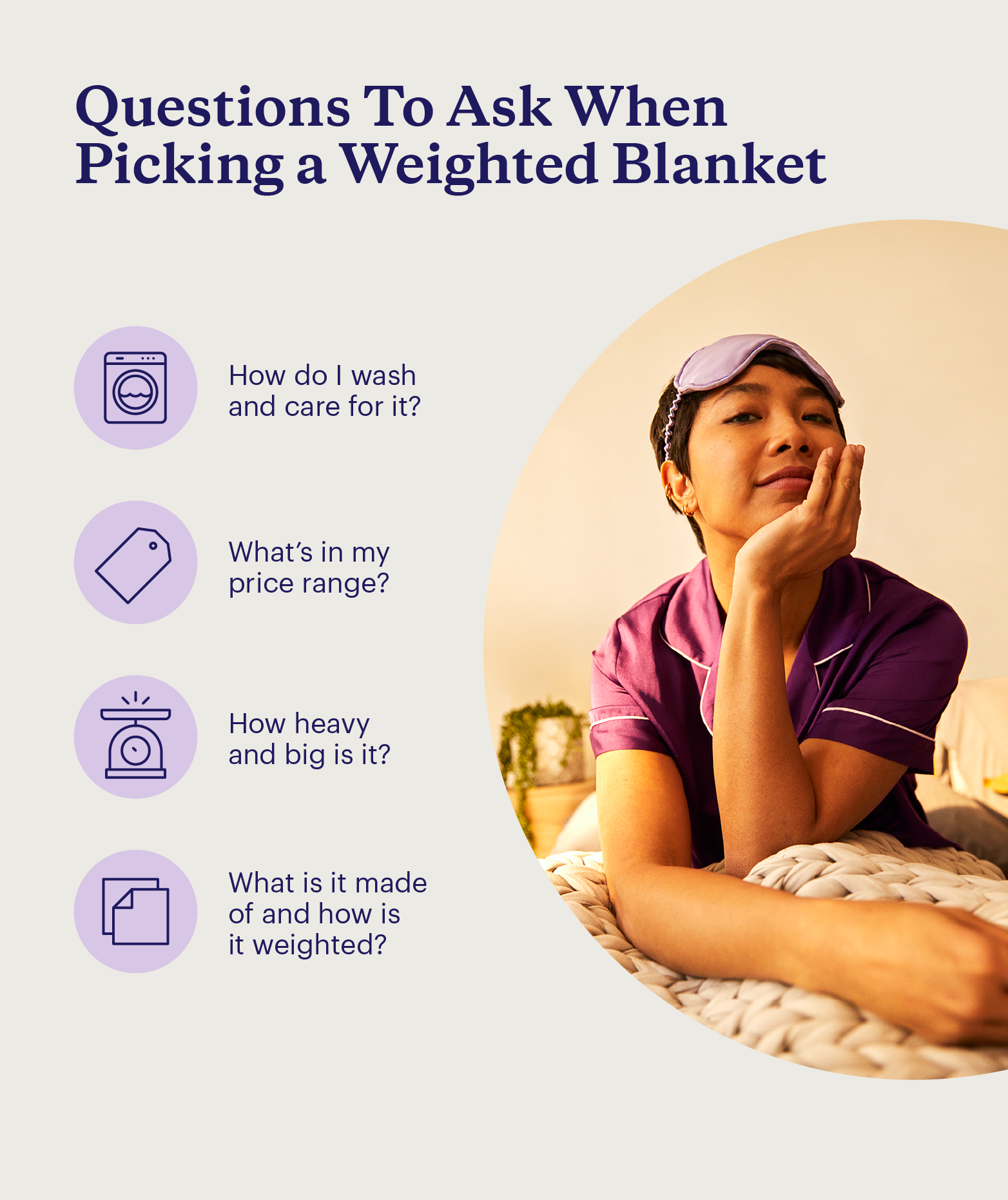
Use this quick checklist to compare options and avoid common mistakes:
- Weight matches 7–12% of your body weight (or 5–10% for kids over 2)
- Size fits your sleep setup, with no more than 2–3 inches hanging over the bed sides
- Fill type matches your temperature needs (glass beads for hot sleepers, plastic pellets for budget options)
- Outer fabric is breathable if you run hot, or plush if you run cold
- Removable, machine-washable cover included
- Seams are tightly sewn with small pockets to prevent fill clumping
- Seller offers a 30+ day at-home trial with free returns
- 1+ year warranty covering seam and fill issues
- Reviews from verified buyers mention even weight distribution and good quality stitching
If you’re unsure about a new sleep accessory, testing it with a low-risk trial first eliminates buyer’s remorse, just like adjusting wet hair bedtime styles to avoid hair damage.
 Follow these safety rules to avoid common risks and keep your blanket in good shape for years.
Source: com.br
Follow these safety rules to avoid common risks and keep your blanket in good shape for years.
Source: com.br
Frequently Asked Questions
What weight should I choose for a 160-pound adult?
For a 160lb adult, the 7–12% rule puts you in the 11–19lb range. If you’re new to weighted blankets, start with 12lb to test the pressure; if you prefer lighter pressure or sleep on your stomach, opt for 10lb. Avoid going over 19lb unless you specifically prefer very heavy pressure.
Can children use weighted blankets safely?
Children over 2 can use weighted blankets under pediatric supervision, with a weight equal to 5–10% of their body weight. Never use a weighted blanket for toddlers or infants, as the weight poses a serious suffocation risk. Always check with your child's doctor before introducing a weighted blanket, especially if they have sensory processing differences or respiratory conditions.
Will a weighted blanket help with anxiety?
Many users report reduced anxiety and improved sleep quality from regular weighted blanket use, thanks to the calming effect of deep pressure stimulation. However, it is not a replacement for professional mental health care or anxiety treatment. It works best as a complementary tool for mild stress and sleep disruption related to anxiety.
How do I keep a weighted blanket cool for hot sleepers?
Opt for a blanket with a cotton or bamboo outer fabric, glass bead fill (which is thinner than plastic pellets for the same weight), and a removable cooling cover. Avoid minky or plush fabrics, which trap heat. For very hot sleepers, look for blankets with phase-change material (PCM) or cooling gel-infused fabric.
Are weighted blankets machine washable?
Most weighted blankets have a removable, machine-washable cover that can be washed on gentle, cold water. The inner weighted layer is almost never machine washable, as submerging it can damage the fill and stitching. Always check the care label before washing, and avoid high heat in the dryer to prevent fabric shrinkage.
 Run through this checklist before checkout to avoid costly mistakes.
Source: com.br
Run through this checklist before checkout to avoid costly mistakes.
Source: com.br
 Quick answers to the most common weighted blanket selection questions.
Source: com.br
Quick answers to the most common weighted blanket selection questions.
Source: com.br
Conclusion
Choosing the right weighted blanket doesn’t have to be overwhelming. By following the 7–12% weight rule, picking a size that fits your bed and sleep style, selecting a fill and fabric that matches your temperature needs, and prioritizing safety features and trial periods, you can find a blanket that delivers real comfort and calm without the risk of buyer’s remorse.
If you’re ready to upgrade your sleep routine, calculate your ideal weight range today, compare fill and fabric options, and choose a brand with a risk-free trial to test it in your own bed. For more evidence-based sleep tips to optimize your rest, browse our full library of sleep guides.
Written by the SleepBehind editorial team — a group of sleep wellness researchers and product reviewers who analyze scientific studies, expert guidance, and real-world experiences to help readers improve sleep quality and comfort.