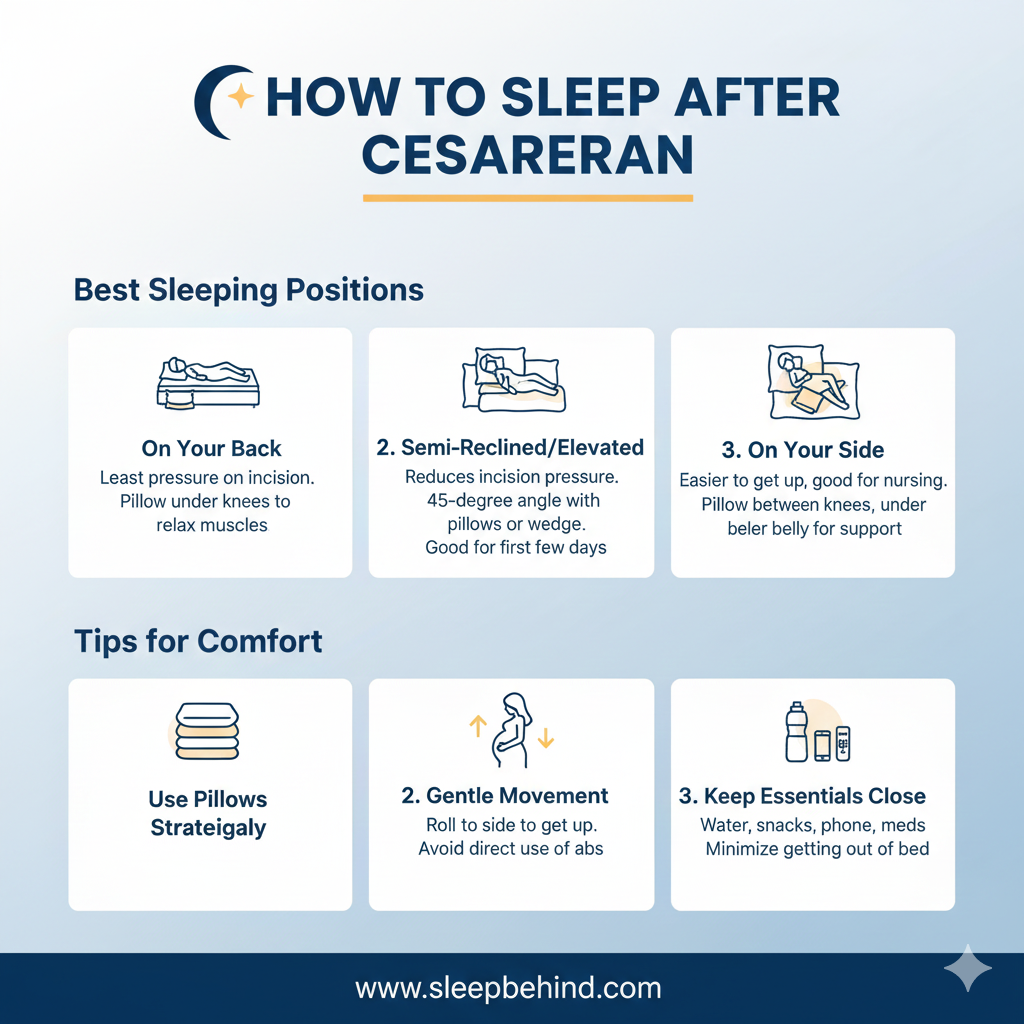
Recovering from a C-section is an intense, often overwhelming process: you’re healing from major abdominal surgery, adjusting to newborn care, navigating hormonal shifts, and managing incision pain that makes even simple movements like rolling over or sitting up feel strenuous. Many new parents describe the first few weeks of postpartum recovery as a "sleep puzzle," where finding comfortable, pain-aligned resting poses feels impossible even when you’re exhausted. The tips below align with current ACOG postpartum recovery guidelines and nursing best practices to help you get the rest your body needs to heal safely, no matter your birth experience.
Why Prioritizing Sleep After a C-Section Is Non-Negotiable for Recovery
Sleep is not a luxury after a surgical birth—it is a core part of your body’s healing process. Unlike regular recovery, postpartum healing requires balancing wound repair with the demands of caring for a newborn, making consistent rest even more critical for both physical and emotional well-being. You can also read our guide on the best sleep positions for pain relief.
Supports Physical Wound Healing
During deep sleep, your body releases growth hormones that accelerate tissue repair and strengthen the area around your incision. ACOG’s official postpartum recovery guidelines list adequate rest as a top priority for reducing scarring and preventing wound complications, as sleep is when your body directs the most energy to healing surgical sites.
Strengthens Post-Surgery Immune Function
Your immune system is working overtime after a C-section to prevent infection around your incision, and poor sleep how poor sleep stalls recovery by weakening the immune response you need to fight off bacteria and reduce inflammation. Even short, fragmented sleep stretches can slow this process, increasing your risk of post-surgical infection. You can also read our guide on wedge pillow.

Reduces Risk of Postpartum Mood Disorders
Consistent, uninterrupted rest is a key protective factor against postpartum depression and anxiety, two of the most common postpartum mood disorders. CDC’s maternal mental health resources note that parents who get less than 4 consecutive hours of sleep per night face significantly elevated risk of mood symptoms, including persistent sadness, irritability, and difficulty bonding with their baby. Prioritizing rest is not selfish—it is a critical part of keeping both you and your baby safe and healthy.
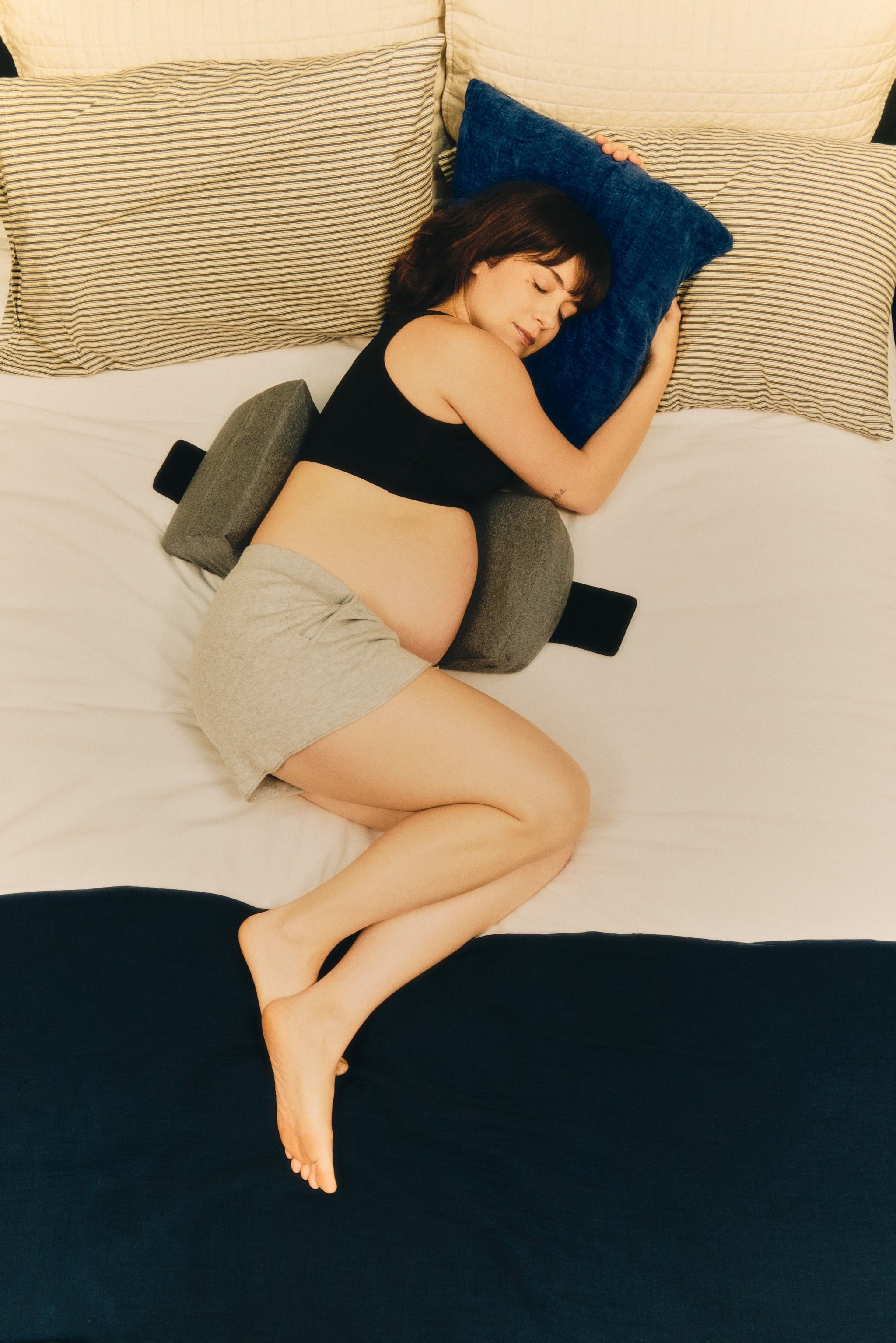 Proper pillow support reduces strain on your abdominal incision during sleep.
Source: Belly Bandit
Proper pillow support reduces strain on your abdominal incision during sleep.
Source: Belly Bandit
What to Expect From Your Sleep Timeline in the First 8 Weeks
There is no "normal" recovery timeline after a C-section, but most parents follow a general pattern of improving sleep comfort as their incision heals. You can also read our guide on how to improve rem sleep naturally.
Typical Healing Milestones
Most people begin to sleep more comfortably 2–4 weeks after surgery, with full clearance for unrestricted sleeping positions coming at your 6-week postpartum check-up. If you had a low-transverse (bikini-line) incision, you may feel comfortable trying mild stomach pressure as early as 6 weeks; if you had a vertical midline incision, full healing may take 8+ weeks, and you will need explicit clearance from your provider before sleeping on your stomach.
Factors That Extend Your Recovery Timeline
Your sleep comfort may take longer to return if you had an emergency C-section, additional procedures (such as uterine repair or treatment for infection), multiple births, or pre-existing conditions like chronic pain or sleep apnea. It is normal to have good days and bad days during recovery—listen to your body and avoid pushing yourself to sleep in positions that feel painful. You can also read our guide on stacked pillows.
Managing Common Post-Cesarean Sleep Disruptors
Even with safe positioning, many new parents struggle with specific sleep disruptions tied to post-surgical recovery. Addressing these common issues first can make your 9 core sleep tips far more effective.
Gas Pain and Bloating
Anesthesia used during a C-section slows gut function, leading to painful gas buildup that can wake you up repeatedly in the first week. To reduce this: take slow, gentle walks around your home for 5–10 minutes before bed, avoid carbonated drinks and high-fiber foods in the evening, and place a warm (not hot) compress on your lower abdomen for 10 minutes before lying down. You can also read our guide on how to improve rem sleep quality.
Nighttime Feeding Strain
Breastfeeding or bottle-feeding a newborn requires twisting and leaning, which can pull on your incision and cause stiffness that makes it hard to fall back asleep. To reduce strain: keep all feeding supplies (diapers, wipes, bottles, nursing pillows) within arm’s reach of your bed, and use a nursing pillow that props your baby up to your breast level without pressing against your abdomen.
Incision Pain and Discomfort
Sudden twinges of pain when you roll over, cough, or laugh are common in the first two weeks, and can make it hard to stay asleep. Pillow splinting (covered in Tip 5) and taking prescribed pain medication on schedule (covered in Tip 6) are the most effective ways to reduce these disruptions.
9 Safe, Doctor-Backed Tips for Better Sleep After a Cesarean
These tips are designed to work together to reduce incision strain, manage pain, and help you get longer stretches of restorative rest as you heal.
Tip 1: Sleep on Your Back With Proper Support
Back sleeping is the lowest-risk position in the first 1–2 weeks of recovery, as it places zero direct pressure on your incision and makes it easiest to get in and out of bed using the log roll technique. To do it safely: place a firm pillow under your knees to reduce lower back strain from the shifted weight of your healing abdomen, and add a small wedge pillow under your upper torso only if you struggle with acid reflux (a common postpartum issue). Avoid propping your head with multiple thick pillows, as this can cause neck strain and make it harder to sit up when you need to care for your baby.
A common mistake new parents make is lying completely flat without knee support, which increases lumbar pain and makes rolling over more painful. If you find back sleeping uncomfortable after the first week, transition to side sleeping as your pain decreases.
 Back sleeping with a pillow under your knees minimizes abdominal pressure in early recovery.
Image: YouTube
Back sleeping with a pillow under your knees minimizes abdominal pressure in early recovery.
Image: YouTube
Tip 2: Try Left Side-Sleeping With Strategic Pillow Placement
Once your incision pain begins to improve (usually 1–2 weeks after surgery), left side-sleeping is a safe, comfortable option that improves uterine blood flow, reduces acid reflux, and takes pressure off your incision. To do it correctly: place a firm pillow between your knees to keep your hips and spine aligned, add a small rolled towel under your waist to fill the gap between your mattress and the dip of your healing abdomen, and hug a body pillow to prevent you from rolling onto your stomach accidentally in your sleep.
Pair your side sleeping position with side-sleeper-friendly light masks to block out light without pressing on your face. A common error here is skipping the knee pillow, which twists your pelvis and causes hip pain that can disrupt sleep more than incision discomfort.
Tip 3: Use a Slightly Elevated Recliner Position for Early Recovery
If back or side sleeping feels too painful in the first few days, a slightly elevated recliner position can be a game-changer. A 30–45 degree torso elevation reduces abdominal strain, eases gas pain, and minimizes incision tugging when you breathe deeply. To do it safely: use an adjustable recliner set to 30–45 degrees, or stack two to three firm couch pillows behind your upper back (soft bed pillows will collapse overnight and leave you slouched, which increases strain). Add a small pillow under your knees to reduce lower back pressure.
A firm wedge pillow can help you maintain a consistent elevated position without stacking multiple pillows that shift overnight. For a well-rated, hospital-approved option, check this wedge pillow on Amazon.
A common mistake is propping your head too high (over 45 degrees), which can cause neck stiffness and make it harder to transition to side sleeping as you heal.
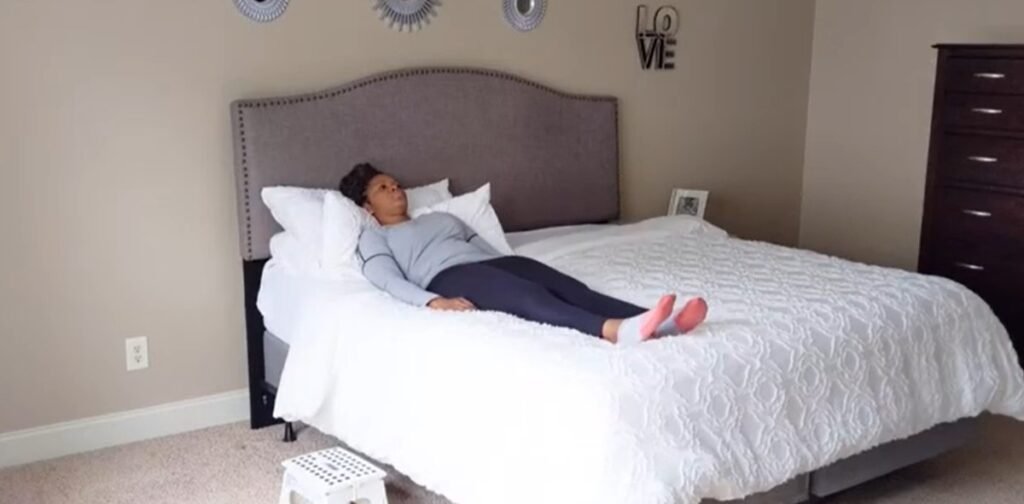 A slightly elevated recliner position eases gas pain and reduces incision tugging.
Image: YouTube
A slightly elevated recliner position eases gas pain and reduces incision tugging.
Image: YouTube
 Firm, non-slip stacked pillows work as a low-cost alternative to an adjustable recliner.
Image: Amazon
Firm, non-slip stacked pillows work as a low-cost alternative to an adjustable recliner.
Image: Amazon
Tip 4: Master the Log Roll Technique to Move Without Straining Your Incision
Twisting or jerking your body when getting in or out of bed is one of the most common causes of post-cesarean incision pain and delayed healing. The log roll technique is a simple, doctor-recommended method to move without putting strain on your abdomen:
- Bend your knees and keep your feet flat on the bed.
- Tighten your abdominal muscles gently as you roll your entire upper body (shoulders, hips, and core) as one unit, like a log, to your side. Avoid twisting your torso or lifting your shoulders off the bed separately.
- Use your arms to push your upper body up into a seated position, keeping your core tight the entire time.
- To lie back down, reverse the process: lower yourself to your elbow first, then gently lower your back to the bed while rolling your core as one unit.
Practice this movement a few times during the day when you are not tired to make it feel natural when you need to get up for nighttime feeds.
Tip 5: Support Your Incision With a Pillow (Splinting)
Pillow splinting is a simple, highly effective way to reduce pain when you move, cough, laugh, or sit up. To do it: hold a small, soft pillow gently over your incision area with one hand while you adjust your position, cough, or get out of bed. This stabilizes the healing tissue and prevents it from pulling or stretching.
Many parents find specialized support cushions like small wedge pillows work better than standard bed pillows for splinting, as they are firm enough to provide support without slipping. Avoid pressing hard on your incision, as this can irritate healing tissue.
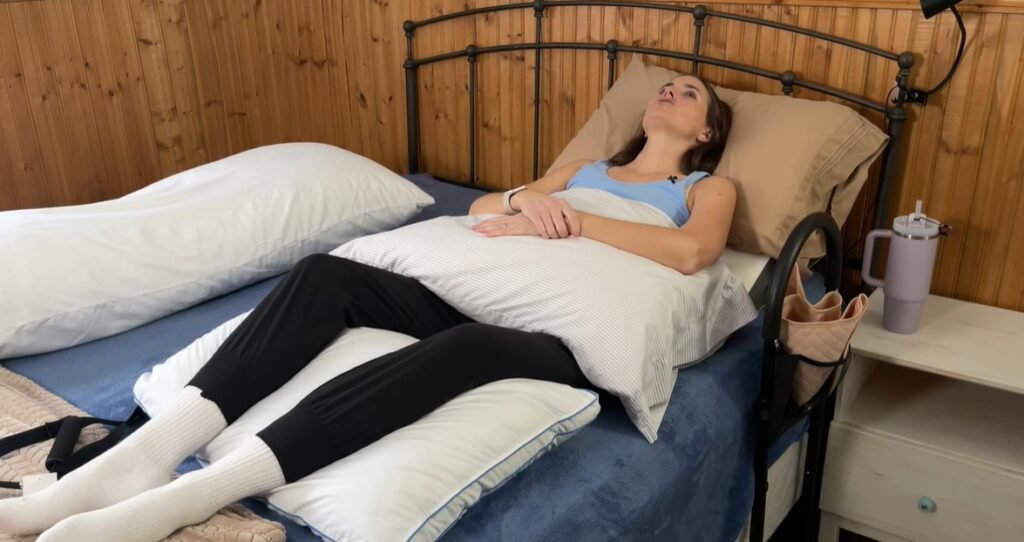 Pillow splinting protects your incision when coughing, laughing, or sitting up.
Image: YouTube
Pillow splinting protects your incision when coughing, laughing, or sitting up.
Image: YouTube
Tip 6: Use Prescribed Pain Medication as Directed for Better Rest
Unmanaged pain is the single biggest barrier to sleep after a C-section, and skipping doses to avoid "drug buildup" while breastfeeding is a common mistake that leaves you in more pain and more sleep-deprived. Most prescribed post-cesarean pain relievers (including ibuprofen and acetaminophen) are safe for nursing parents when taken as directed, and your provider will prescribe a dosage that balances pain relief with minimal risk to your baby.
To maximize sleep benefits: take your scheduled pain medication 30 minutes before bed, and keep a dose and a glass of water on your nightstand so you don’t have to get up to find it if you wake up in pain. If over-the-counter medication is not enough, talk to your provider about short-term prescription options that are safe for breastfeeding.
Tip 7: Practice Gentle Mobility Before Bed
Light movement before bed improves circulation, reduces gas pain, and eases the stiffness that makes it hard to get comfortable. Safe options for early recovery include: slow 5–10 minute walks around your home, gentle seated pelvic tilts (if your provider approves them), and slow, gentle stretches for your upper back and neck (avoid any stretches that pull on your abdomen).
Avoid strenuous exercise, heavy lifting, or any movement that causes sharp incision pain, as this can delay healing and make sleep harder.
Tip 8: Optimize Your Sleep Environment for Uninterrupted Rest
Your sleep environment plays a huge role in how much rest you get, especially when you are waking up every 2–3 hours to feed your baby. Stick to evidence-based sleep hygiene habits like keeping your room completely dark with blackout curtains, maintaining a temperature of 18–20°C (65–68°F), and using a white noise machine to block out household sounds. Ask your partner or support person to handle all non-feeding nighttime tasks (like diaper changes) for the first few weeks so you can focus on resting.
If frequent nighttime waking is a struggle, our guide to cut down on unnecessary nighttime waking offers practical strategies to extend your rest stretches even with a newborn. You can also achieve more restorative deep sleep by avoiding screens for 30 minutes before bed and sticking to a consistent pre-sleep routine, even when your schedule is unpredictable.
Tip 9: Delegate Nighttime Tasks to Reduce Physical Strain
Trying to handle all nighttime care on your own is one of the fastest ways to delay your incision healing and increase your risk of injury. To reduce strain: ask your partner or support person to bring the baby to you for feeds, handle all diaper changes, and manage any older siblings’ nighttime needs. Keep a bassinet that opens from the side next to your bed so you don’t have to bend or twist to reach your baby, and place all supplies (diapers, wipes, burp cloths, water) on a nightstand within arm’s reach so you never have to get out of bed unnecessarily.
A common mistake new parents make is refusing help because they want to "do it all" for their baby, but overexertion will only make your recovery longer and leave you too exhausted to care for your little one. Delegating is not a sign of weakness—it is a practical step to help you heal faster.
 Strategic sleep aids reduce discomfort and help you get longer stretches of rest.
Source: YouTube
Strategic sleep aids reduce discomfort and help you get longer stretches of rest.
Source: YouTube
Red Flags: When Sleep Problems Signal a Medical Issue
While some discomfort and sleep disruption is normal in the first few weeks after a C-section, certain symptoms require immediate medical attention. Contact your provider right away if you experience:
- Fever over 100.4°F (38°C), which can signal incision infection
- Redness, swelling, pus, or increasing warmth around your incision
- Sharp calf pain, leg swelling, or warmth, which can be a sign of deep vein thrombosis (DVT), a rare but serious post-surgical complication
- Shortness of breath, chest pain, or dizziness when lying on your back, which can signal a pulmonary embolism
- Persistent sadness, hopelessness, panic attacks, or thoughts of harming yourself or your baby, which are signs of postpartum depression or anxiety
If you are having thoughts of harming yourself or your baby, call the 988 Suicide & Crisis Lifeline immediately for free, confidential support.
 Proper pain control is one of the most effective ways to improve sleep after surgery.
Source: FirstCry
Proper pain control is one of the most effective ways to improve sleep after surgery.
Source: FirstCry
Frequently Asked Questions
Is it safe to sleep on my back after a C-section?
Yes, short periods on your back are safe in the first 2 weeks of recovery, and it is the recommended position for early rest. Place a pillow under your knees to reduce lower back strain, and avoid lying on your back for long periods if you feel dizzy or short of breath, as the weight of your uterus can press on major blood vessels in some cases.
How soon can I sleep on my stomach after a C-section?
Most providers recommend waiting 6–8 weeks, or until your 6-week postpartum check-up confirms your incision is fully healed. If you had a vertical incision, you may need to wait longer for explicit clearance. When you do try stomach sleeping, start by lying on your stomach for short periods during the day to test comfort before trying it overnight.
Should I use a belly binder at night?
Belly binders can provide daytime support for your abdomen, but many parents find them uncomfortable for overnight wear. If you want to use one at night, choose a soft, breathable binder that does not restrict your breathing, and only use it if your provider has approved it for your recovery.
Can I use a heating pad on my incision at night?
Only use a heating pad on your incision if your provider has approved it, and never place it directly on your incision site. Use it on the lowest setting for 10–15 minutes at a time to relieve muscle soreness, and place a thin towel between the heating pad and your skin to avoid burns.
Is cosleeping safe with my newborn after a C-section?
Cosleeping is not recommended for the first 6–8 weeks after a C-section, as your limited mobility, pain medication, and exhaustion can increase the risk of accidentally rolling onto your baby. Instead, place a bassinet or co-sleeper next to your bed to keep your baby close for feeds without sharing a sleep surface.
Can I use sleep aids or sedatives while breastfeeding?
Only use sleep aids that your provider has explicitly approved, as some pass into breast milk. Most providers recommend non-drug strategies first, such as optimizing your sleep environment and managing pain, before considering prescription sleep aids. Over-the-counter sleep aids like melatonin are not recommended for breastfeeding parents without provider approval, as their effects on breast milk are not well studied.
Conclusion
Recovering from a C-section is a non-linear journey, and getting enough sleep will feel like a challenge for the first few weeks—but it is one of the most important things you can do for your healing. There is no "perfect" sleep strategy, and it is okay to adjust these tips to fit your body and your baby’s needs. Prioritize pain management, use supportive positioning, delegate tasks whenever possible, and don’t hesitate to reach out to your provider if you are struggling with pain, sleep disruption, or mood symptoms.
You are not being a bad parent for prioritizing your rest—you are giving your body the fuel it needs to heal, and giving your baby the healthy, present parent they need. With time, patience, and the right support, sleeping after a cesarean will become easier, and you will find a routine that works for your family.

Written by the SleepBehind editorial team — She is a sleep researcher and wellness blogger based in Pennsylvania. Passionate about helping people optimize their sleep.