
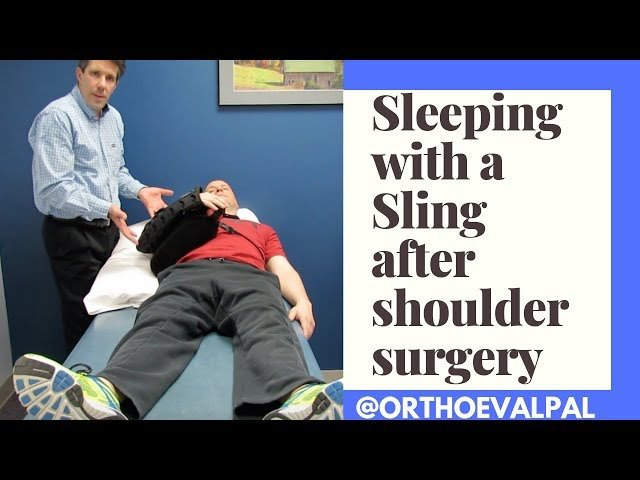
Waking up with sore shoulders and disrupted sleep is one of the most common, frustrating parts of recovery from rotator cuff repair, frozen shoulder, dislocation, AC joint separation, or other upper body injuries. Learning how to sleep with a shoulder sling comfortably isn’t just about getting rest — it’s a core part of protecting healing tissues, reducing inflammation, and avoiding re-injury in the first 4–6 weeks of recovery. Clinical guidance consistently notes that disrupted sleep is a top complaint for sling wearers, but most discomfort is preventable with small, targeted adjustments to your setup and habits. This guide breaks down evidence-based, physical therapy-vetted tips to help you get deep, restorative sleep while wearing your sling, no extra gadgets or complicated routines required.
Why Proper Sleep With a Shoulder Sling Is Critical for Healing
Poor sleep doesn’t just leave you groggy — it actively slows your recovery. During deep sleep, your body releases growth hormones that repair damaged muscle, tendon, and bone tissue, and reduces systemic inflammation that can prolong pain. Waking repeatedly due to sling discomfort disrupts this repair process, and can increase your pain sensitivity by significant margins the next day, making daily tasks and physical therapy sessions harder. You can also read our guide on how to sleep without neck pain. Most orthopedic care teams also advise keeping your sling on at all times, including while sleeping, for the first 1–4 weeks after injury or surgery, unless you are explicitly given permission to remove it for hygiene or prescribed exercises. A properly fitted sling limits sudden arm movement, holds the shoulder in a safe, supported position, and reduces your risk of catching, pulling, or re-injuring the area while you sleep. Skipping sling use at night, even for a few hours, can lead to unexpected strain that sets back your recovery timeline.
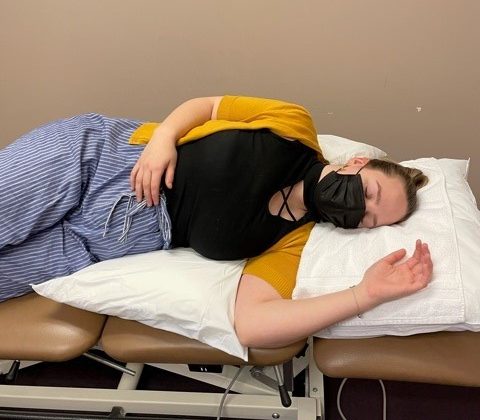 Proper sleep positioning reduces strain on healing shoulder tissues.
Image source: akhandrehab
Proper sleep positioning reduces strain on healing shoulder tissues.
Image source: akhandrehab
How to Choose a Sling That Works for Sleep
Not all slings are designed for overnight wear, and picking the right one for your injury will eliminate a lot of common discomfort:
- Wide, padded straps reduce pressure on your neck and collarbone, which is critical for back sleepers who rest their head on a pillow. Thin, unpadded straps are the top cause of overnight neck pain for sling wearers.
- Abduction slings (which hold the arm slightly away from the body) are often recommended for rotator cuff repairs, as they reduce strain on the healing tendon. Standard forearm slings work well for less severe injuries like dislocations or AC joint sprains.
- Removable padding lets you adjust the sling’s firmness for sleep vs. daytime use, and quick-release buckles make one-handed adjustments easy if you need to reposition during the night. If you’re unsure which sling is right for your injury, ask your physical therapist for a recommendation tailored to your specific recovery plan.
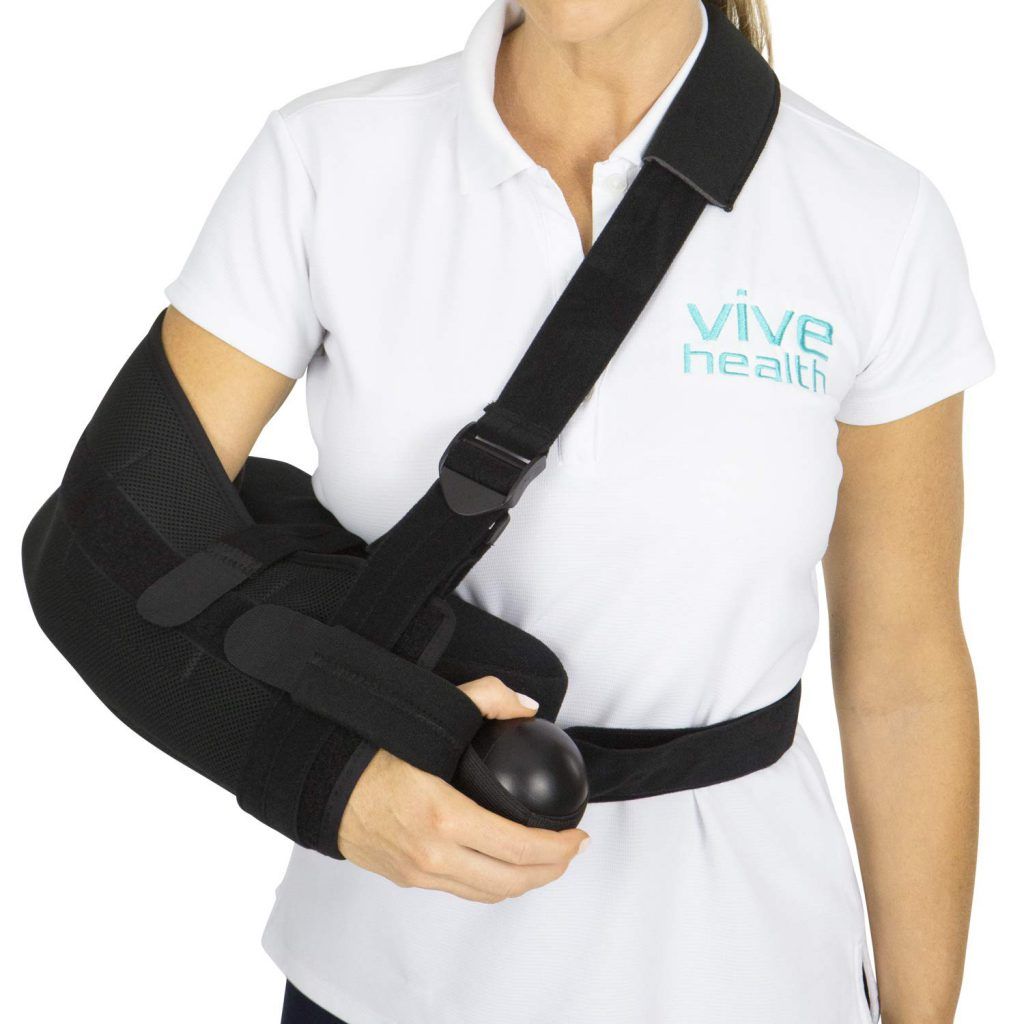 Padded slings reduce pressure on the neck and shoulder for longer sleep sessions.
Image source: equipmeot
Padded slings reduce pressure on the neck and shoulder for longer sleep sessions.
Image source: equipmeot
Pre-Sleep Sling Adjustment for All-Night Comfort
A sling that fits perfectly for daytime wear will often feel too tight or misaligned when you lie down, as gravity and body position change how it sits. Adjust it right before bed with these steps:
- Loosen all straps 10–15% from your daytime tightness to account for reduced swelling when lying flat, and to avoid digging into your collarbone.
- Make sure your elbow is fully tucked into the sling’s pocket to prevent it from slipping out overnight and putting strain on your shoulder.
- Confirm the sling holds your forearm slightly elevated, with your elbow positioned 6–12 inches higher than your shoulder, to reduce swelling.
- Add a small foam pad or folded washcloth between any straps that press against your neck or collarbone for extra cushioning. The American Academy of Orthopaedic Surgeons notes that a properly fitted sling reduces strain on healing tissues by a significant margin compared to a loose or overly tight fit AAOS shoulder sling guidance.
Safe Sleep Positions for Shoulder Sling Wearers
Choosing the right sleep position is the single most impactful change you can make to reduce discomfort and protect your healing shoulder. Below is a breakdown of safe and unsafe positions, with setup tips for each:
| Sleep Position | Suitability for Recovery | Key Setup Requirement |
|---|---|---|
| Back (supine) | Ideal for all recovery stages | Firm pillow under elbow/forearm to keep arm elevated 15–20 degrees above shoulder level |
| Uninjured side | Good for those who can't sleep on their back | Full-length body pillow hugging the front, sling arm resting on a separate pillow to avoid internal rotation |
| Stomach (prone) | Not recommended at any stage | Forces shoulder into extension and rotation, risking strain or re-injury |
| Recliner | Helpful for first 3–7 days post-surgery | Use a neck pillow to support the head, and a small pillow under the elbow to maintain elevation |
A common mistake people make when sleeping on their uninjured side is letting the sling arm hang at their side, which forces the shoulder into internal rotation and can strain a rotator cuff repair. Always rest the sling arm on a pillow in front of your torso, not next to your body, to keep the shoulder in a neutral, safe position. Stomach sleeping is never recommended, even with a sling, as it forces the shoulder into awkward extension and rotation that can pull on healing tissues.
 Avoid stomach sleeping, as it twists the injured shoulder and risks re-injury.
Image source: youtube
Avoid stomach sleeping, as it twists the injured shoulder and risks re-injury.
Image source: youtube
Pillow and Bed Setup for All-Night Stability
The right pillow setup will keep you from rolling, reduce swelling, and eliminate pressure points that cause waking. Use these evidence-based combos for your preferred sleep position:
For back sleepers
Place a firm foam wedge or folded pillow under your upper back for gentle elevation, then add a second firm pillow directly under your sling-supported elbow and forearm. This keeps your arm elevated without straining your neck. Opt for a firm, supportive pillow that holds its shape all night, and if you use a bamboo pillow, follow proper easy-care cleaning steps to keep it free of allergens that can disrupt sleep. If you add a mattress topper for extra cushioning, opt for one that doesn’t require long pre-use rest periods, like low-maintenance topper options that are ready to use right out of the package.
For uninjured side sleepers
Hug a full-length body pillow against your chest to keep you from rolling onto your injured side, and place a separate thin pillow under the sling arm to keep it supported at chest level. Add a small pillow between your knees to keep your hips aligned and reduce lower back strain.
For recliner users
Use a contoured neck pillow to support your head, and a small rolled towel under your elbow to maintain elevation. Avoid recliners that force you to hunch forward, as this can pull on your healing shoulder. In practice, most patients find that setting up all pillows while sitting upright in bed, before lying down, is far easier than fumbling with pillows once they’re already trying to get comfortable.
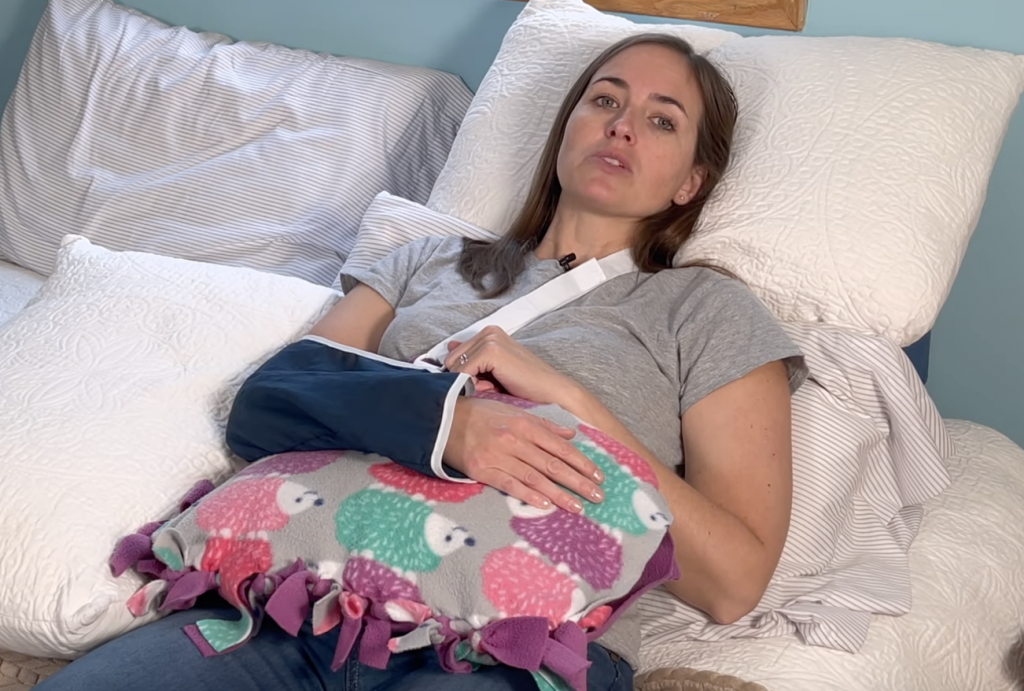 A firm pillow under the elbow keeps the arm elevated to reduce swelling.
Image source: equipmeot
A firm pillow under the elbow keeps the arm elevated to reduce swelling.
Image source: equipmeot
Step-by-Step Pre-Sleep Routine to Reduce Pain and Prevent Rolling
A consistent pre-sleep routine will lower your overall tension, manage pain before it spikes, and set you up for uninterrupted rest. Follow this sequence each night:
- Adjust your sling first: Follow the pre-sleep adjustment steps outlined above to ensure a comfortable, secure fit.
- Manage pain proactively: Take any prescribed pain medication 30–60 minutes before getting into bed, so it takes effect before you lie down. If over-the-counter pain relievers are part of your prescribed plan, follow FDA dosing guidance to avoid adverse side effects FDA pain reliever safety.
- Apply temperature therapy as advised: If your care team recommends it, apply an ice pack wrapped in a thin towel to the shoulder for 10–15 minutes before bed to reduce swelling, or use a warm compress to loosen stiff muscles. Never apply ice directly to the skin, and avoid heat if you have open surgical wounds.
- Set up your sleep space: Place a glass of water, your phone, pain meds, and a small flashlight on your uninjured side, within easy reach, so you don’t have to stretch or roll to grab them during the night. If you wash your hair before bed, secure long hair in a loose braid or silk scrunchie to keep it from wrapping around the sling straps or pulling on your neck while you move in your sleep hair restraint options.
- Practice 2–3 minutes of slow, deep breathing to lower your overall tension and reduce pain perception. Inhale for 4 counts, hold for 4, exhale for 6, and focus on keeping your sling arm still and supported. Sticking to a consistent pre-sleep routine supports your body's natural circadian rhythm, which can reduce pain perception at night daily sleep rhythm.
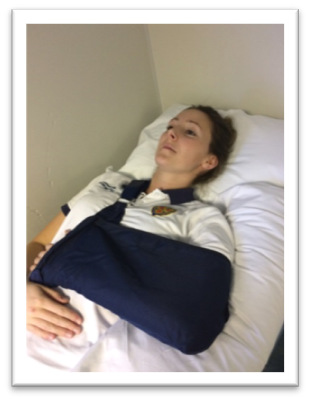 Keep the elbow slightly higher than the shoulder to minimize pressure.
Image source: co
Keep the elbow slightly higher than the shoulder to minimize pressure.
Image source: co
Managing Nighttime Pain, Swelling, and Discomfort
Even with the perfect setup, you may experience occasional pain, swelling, or discomfort during the night. Use these tips to manage symptoms without disrupting your rest:
- Maintain arm elevation: Keep your elbow 6–12 inches above heart level at all times to promote lymphatic drainage and reduce swelling. If you wake up and your arm feels heavy, gently add another pillow under your elbow.
- Use ice strategically: If swelling is a problem, apply a gel ice pack wrapped in a thin towel for 10–15 minutes before bed, or set a timer for 15-minute intervals if you wake up with swelling. Never ice for longer than 20 minutes at a time, as this can reduce blood flow to healing tissues.
- Avoid removing the sling unless your care team has explicitly given you permission. Even if you feel comfortable, sudden movements during sleep can strain healing tissues and set back your recovery.
- Protect your bedding: If you’re prone to night sweats or have post-surgical drainage, use a washable mattress protector, and follow simple care guidelines to keep it fresh and functional.
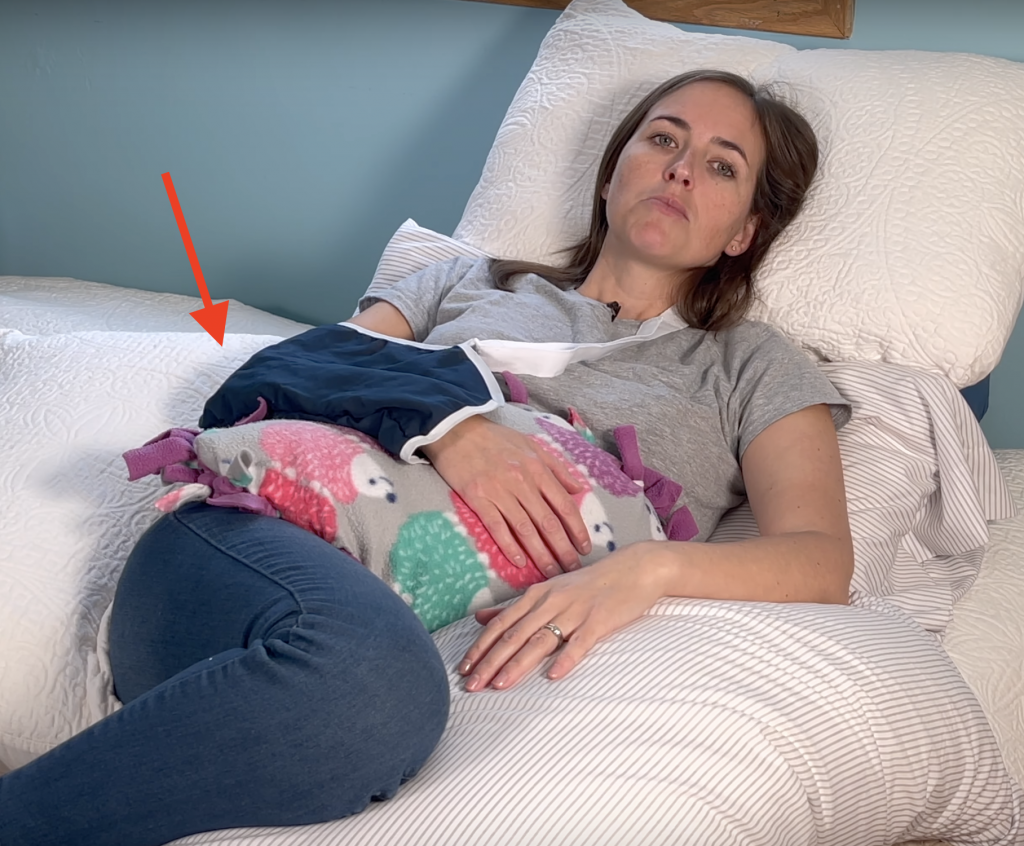 Keep the sling arm resting on a pillow in front of your body to avoid internal rotation.
Image source: equipmeot
Keep the sling arm resting on a pillow in front of your body to avoid internal rotation.
Image source: equipmeot
Common Nighttime Problems and Fast Fixes
Even with the best setup, small issues can pop up as you adjust to sleeping in a sling. Here are fixes for the most common problems:
Problem: You roll onto your injured side during the night
Fix: Tuck a long body pillow firmly behind your back before lying down to create a physical barrier. For extra security, you can place a small, lightweight alarm (like a phone set to vibrate) on your uninjured side to alert you if you roll too far.
Problem: Your hand or fingers tingle or feel cold
Fix: First, check that your sling isn’t too tight, and that your wrist is positioned higher than your elbow to promote blood flow. Loosen the strap slightly, then retighten it just enough to hold your arm in place. If tingling persists for more than 10 minutes after adjusting, contact your care team.
Problem: Sling straps dig into your neck or collarbone
Fix: Add a small foam pad or folded washcloth between the strap and your skin, or adjust the strap position so it sits higher on your shoulder rather than your neck. Padded slings are designed to eliminate this issue entirely for long-term use.
Problem: You wake up with stiff shoulders or neck pain
Fix: Adjust your neck support with a cervical pillow to keep your spine aligned, and add a small rolled towel under your sling arm to reduce tension on your shoulder. If you wake up with stiff shoulders in the morning, gentle range-of-motion exercises (only if approved by your care team) and a consistent rest schedule can reduce stiffness over time.
 A long body pillow behind your back prevents rolling onto the injured side.
Image source: youtube
A long body pillow behind your back prevents rolling onto the injured side.
Image source: youtube
When to Contact Your Healthcare Provider
Most sling-related discomfort is normal and manageable with the tips above, but some symptoms require prompt medical attention. Contact your orthopedic care team or physical therapist immediately if you experience any of the following:
- Numbness, tingling, or coldness in your fingers that does not go away after adjusting your sling
- Severe, unrelenting pain that does not improve with your prescribed pain medication
- Swelling, redness, or warmth around the shoulder that worsens overnight
- Skin breakdown, blisters, or sores under the sling straps
- Fever over 100.4°F (38°C) or unusual drainage from a surgical site These symptoms can indicate circulation issues, infection, or other complications that need professional evaluation to avoid long-term damage.
Frequently Asked Questions
How long should I sleep with the sling on?
Follow your surgeon’s explicit instructions. Most people wear the sling full-time for the first 2–6 weeks after injury or surgery, only removing it for hygiene, prescribed exercises, or if your care team gives you permission to wean off it overnight.
Can I sleep on my injured side with a sling?
No, sleeping directly on the injured side is not recommended at any stage of recovery, even with a sling. The pressure can strain healing tissues, disrupt surgical repairs, and increase pain. Stick to back sleeping or sleeping on your uninjured side with full arm support.
Should I elevate my shoulder or arm while sleeping?
Yes. Elevating your elbow 6–12 inches above shoulder level reduces swelling by promoting lymphatic drainage, and eases pain by reducing pressure on the healing area. A firm pillow under your forearm is the easiest way to maintain this position all night.
Is it okay to take pain meds to sleep?
Taking prescribed pain medication 30–60 minutes before bed is a common, effective way to reduce pain spikes that disrupt sleep. Always follow dosing guidance from your doctor to avoid side effects like drowsiness the next day or dependency.
What if my hand goes numb during the night?
First, adjust your sling to loosen it slightly and elevate your hand higher than your elbow to improve blood flow. If numbness persists for more than 10 minutes after adjusting, contact your healthcare provider promptly, as it can indicate circulation issues or a sling that is too tight.
Can I remove the sling while sleeping if my pain is low?
No, unless your surgeon or physical therapist has explicitly given you permission. Even if you feel minimal pain, sudden movements during sleep can strain healing tissues and cause re-injury without you noticing.
 Image source: youtube
Conclusion
Mastering how to sleep with a shoulder sling takes 3–7 nights of adjusting your setup and routine, but the payoff is faster healing, less daily pain, and a smoother overall recovery. Start with one small change tonight: add a firm pillow under your elbow and tuck a body pillow behind your back to prevent rolling. If you have specific concerns about your injury or recovery plan, always check with your orthopedic care team for personalized guidance. For more evidence-based sleep tips to support your recovery journey, browse our full library of sleep health guides.

Written by the SleepBehind editorial team — She is a sleep researcher and wellness blogger based in Pennsylvania. Passionate about helping people optimize their sleep.