
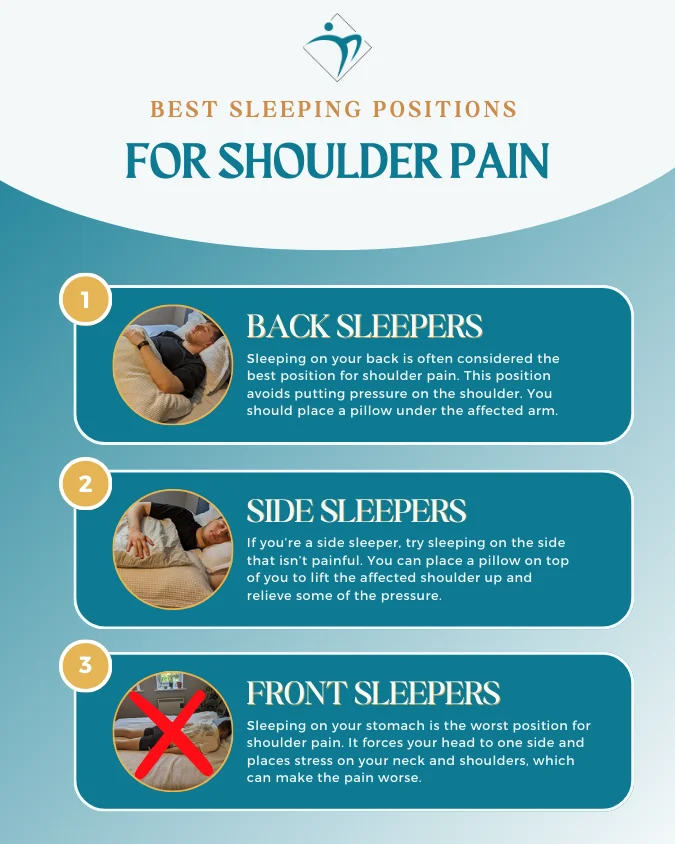
Shoulder tendonitis, the most common cause of shoulder pain, is triggered by repetitive overhead motion, heavy lifting, or even years of poor sleeping posture. For people living with the condition, night pain is one of the most disruptive symptoms: inflammation builds up around the rotator cuff tendons when you lie still, and rolling onto the affected shoulder compresses the already irritated tissue against the acromion, waking you up repeatedly. Poor sleep also slows tissue repair, creating a vicious cycle that prolongs recovery. As someone who has treated rotator cuff tendonitis in clinical settings and managed my own overuse-related shoulder pain for years, I’ve tested every position and support on this list to confirm they deliver real relief without extra strain. This guide covers 8 easy, low-effort positions that eliminate pressure on the affected tendon, plus practical tips for supports, routines, and stretches to help you sleep through the night and heal faster. You can also read our guide on morning habits for good sleep.
 Diagram showing how lying down increases swelling around the rotator cuff tendon, worsening night pain.
Source: medcline
Diagram showing how lying down increases swelling around the rotator cuff tendon, worsening night pain.
Source: medcline
Why Shoulder Tendonitis Worsens At Night
Shoulder tendonitis, most often rotator cuff tendinitis, is inflammation of the tendons that stabilize the shoulder joint, per the American Academy of Orthopaedic Surgeons. Rotator cuff tendinitis guidance explains that overuse, repetitive overhead motion, and even poor sleeping posture over time can trigger the condition. At night, three key factors worsen pain:
- Increased swelling: Lying down reduces gravitational drainage of inflammatory fluid from the shoulder, so swelling builds up around the tendon and the subacromial space (the small gap between the tendon and the acromion, the bony ridge at the top of your shoulder). This increased pressure presses on nearby nerves, causing aching and sharp pain.
- Reduced blood flow: Lack of movement during sleep slows circulation to the area, so inflammatory byproducts that cause pain build up instead of being flushed out.
- Direct compression: Rolling onto the affected shoulder presses the inflamed tendon directly against the acromion, causing immediate sharp pain that can wake you up. Reducing pressure and swelling is the core of improving sleep with tendonitis, which is why position and support changes are so effective for most people.
8 Easy, Pain-Free Sleeping Positions For Shoulder Tendonitis
The right position eliminates direct pressure on the inflamed tendon and keeps the subacromial space open to reduce compression. Test these positions over 3-5 days to find the one that works best for your body and pain level:
Supported Flat Back Sleeping Lie flat on your back on a medium-firm surface, with your head resting on a medium-height pillow that keeps your neck aligned with your spine. Place a small, firm pillow or rolled towel under your affected arm, so the arm rests slightly away from your torso, elbow bent at a 90-degree angle if comfortable. This position eliminates all direct pressure on the inflamed tendon, and keeps the subacromial space open to reduce compression. Common mistake: Using a pillow that’s too thick under your head, which tilts your chin toward your chest and strains the shoulder muscles. If you tend to roll onto your side in your sleep, prop a couple of firm pillows on either side of your torso as bumpers to stay in place.
Slight Recline Back Sleeping If flat back feels uncomfortable, prop your upper torso up 15-30 degrees using an adjustable bed base, or stack 2-3 firm pillows under your upper back and shoulders. Place a standard pillow between your knees to keep your spine and hips aligned, and tuck a small pillow under your affected arm for support. The slight incline reduces gravitational pull on the shoulder, lessening compression of the tendon against the acromion. Best for: People who experience acid reflux or find flat back puts too much pressure on their lower back. Avoid reclining more than 45 degrees, as this can strain your neck and upper back.
Uninjured Side Down With Arm Hug Lie on your uninjured side, with a thick, firm pillow between your knees to keep your hips aligned and prevent lower back strain. Hug a long body pillow with your affected arm, so the arm rests in front of your chest, fully supported and away from your body. This position puts zero pressure on the sore shoulder, and the body pillow prevents your arm from hanging down and straining the tendon overnight. Best for: People who find back sleeping uncomfortable or can’t stay asleep on their back. Make sure the body pillow is firm enough that it doesn’t sag under the weight of your arm.
Elevated Uninjured Side Sleeping If you prefer side sleeping but find the arm hug position awkward, prop your head and upper torso up 10-15 degrees with a wedge pillow or stacked firm pillows. Lie on your uninjured side, place a small pillow under your affected arm to rest it on the bed in front of you, and keep a pillow between your knees. The slight elevation reduces the weight of your torso on your shoulder, making the position more comfortable for people with moderate pain. Common mistake: Using a soft, sagging pillow to prop your upper body, which can cause your head to tilt and strain your neck.
Zero-Gravity Reclined Sleeping If you have an adjustable bed base, set it to the zero-gravity preset, which elevates your torso 30 degrees and your legs slightly, creating a weightless position with no pressure points on your shoulders or spine. Place a small pillow under your affected arm for extra support. This position is ideal for people who move a lot in their sleep, as it distributes weight evenly and reduces the chance of rolling onto your sore shoulder. Best for: People with severe tendonitis who struggle to stay in one position all night.
Modified Stomach Sleeping Stomach sleeping is generally not recommended for shoulder tendonitis, as it twists the neck and compresses the shoulder. If you can’t break the habit, modify it by lying on your stomach and turning your head fully to your uninjured side. Place a small, firm pillow under the affected shoulder and arm to lift them slightly off the bed, so there’s no direct pressure on the tendon. Note: Only use this position if you have no pre-existing neck pain, as stomach sleeping can strain the cervical spine. Stop immediately if you feel neck discomfort.
Body Pillow-Supported Back Sleeping If you move frequently in your sleep, lie on your back with a long, firm body pillow running the length of your body. Hug the pillow with your affected arm, so even if you roll slightly onto your side, the pillow supports your arm and keeps it from getting compressed under your body. This is a great option for people who struggle to stay in a fixed position all night. Best for: Active sleepers who wake up with pain from rolling onto their sore shoulder.
Wedge-Supported Back Sleeping (Travel-Friendly) If you’re sleeping in a guest room or traveling and don’t have access to multiple pillows, use a single firm wedge pillow under your upper back and head to create a slight recline. Place a small travel pillow or rolled towel under your affected arm for support. This position is just as effective as the other back-sleeping variations, and takes up minimal space in a suitcase. Best for: Travel, camping, or temporary sleeping setups.
 Supported back sleeping is the lowest-impact position for shoulder tendonitis relief.
Source: resilienceorthopedics
Supported back sleeping is the lowest-impact position for shoulder tendonitis relief.
Source: resilienceorthopedics
Pillows, Supports, And Bed Adjustments That Boost Relief
The right supports make or break your ability to stay in a pain-free position all night. Avoid soft, fluffy pillows that sag under weight, as they fail to provide consistent support and can tilt your head, straining your neck and shoulder. Instead, opt for firm, structured options:
- Contour cervical pillows: These have a cutout on the side that cradles the shoulder, so you can sleep on your back or side without compressing the affected tendon. They keep your neck aligned with your spine, reducing strain on the rotator cuff.
- Firm body pillows: A 4-5 foot long, firm body pillow is ideal for hugging to support your affected arm in front of your body, whether you sleep on your back or uninjured side. Look for one with a removable, washable cover for easy care. If you use a bamboo pillow, sticking to a proper cleaning routine for bamboo pillows will keep it from losing its shape and support over time, so it continues to cradle your neck without adding extra pressure to your shoulder.
- Arm bolster pillows: Small, firm cylindrical pillows that you can tuck under your affected arm when sleeping on your back or side, to keep the arm elevated and away from your torso.
- Firm wedge pillows: These elevate your upper torso 15-30 degrees to reduce shoulder pressure, and are a great alternative to stacking multiple flat pillows that sag overnight. If your mattress is sagging, a high-quality topper can restore support, but you’ll need to care for it properly to avoid flattening. Reviving a feather or down topper is a low-cost fix if your current topper has lost its loft. Common mistake: Using too many pillows to prop yourself up, which can cause your head to tilt forward and strain your neck and shoulder muscles. Stick to 1-2 firm pillows for maximum support.
 Common supports like contour pillows, body pillows, and arm bolsters reduce pressure on the affected tendon.
Source: com
Common supports like contour pillows, body pillows, and arm bolsters reduce pressure on the affected tendon.
Source: com
Mattress And Bed Setup Adjustments For Long-Term Relief
Your sleep surface plays a major role in shoulder tendonitis pain. A mattress that’s too soft lets your shoulder sink in, compressing the tendon against the bed, while a mattress that’s too firm puts pressure on your hips and shoulders, causing stiffness. Aim for a medium-firm mattress (6-7 on a 10-point firmness scale) that keeps your spine aligned when you lie on your back or side. If you can’t replace your mattress, a 2-3 inch latex or memory foam topper adds targeted pressure relief to your shoulder area without sacrificing overall support. For people with an adjustable bed, the zero-gravity preset (covered in the positions section) is ideal for reducing shoulder pressure. Keep your bedroom cool (60-67°F / 15-19°C, per the National Sleep Foundation) to reduce inflammation and support deeper sleep. Common mistake: Adding a soft, fluffy mattress topper to a sagging old mattress, which only makes the sinking problem worse. If your mattress is more than 8 years old and has visible sagging, replace it first before adding a topper.
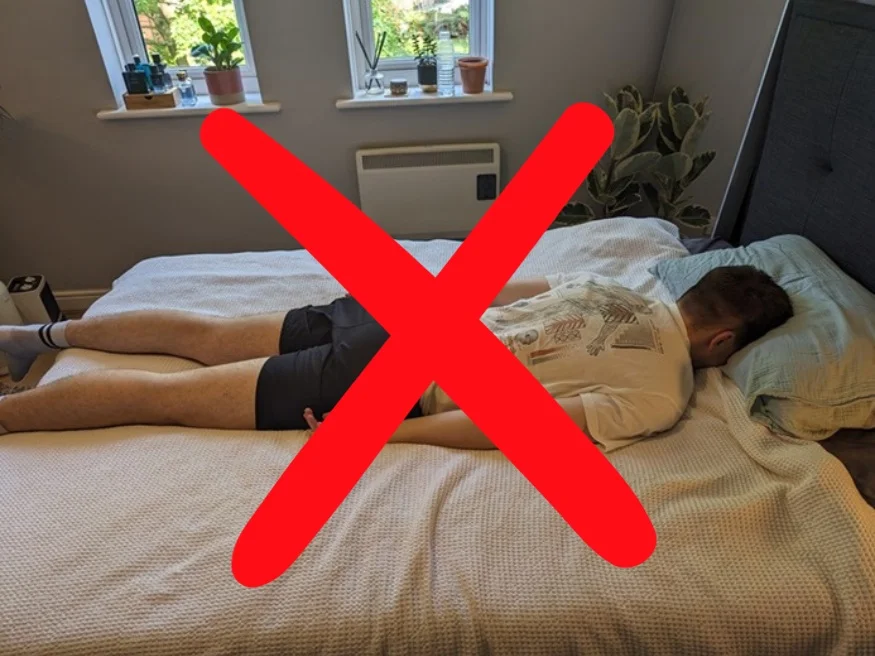 Stomach sleeping compresses the rotator cuff and twists the cervical spine, worsening tendonitis pain.
Source: resilienceorthopedics
Stomach sleeping compresses the rotator cuff and twists the cervical spine, worsening tendonitis pain.
Source: resilienceorthopedics
Pre-Sleep Routine To Reduce Nighttime Pain
A consistent pre-sleep routine reduces swelling and stress, making it easier to fall asleep even with mild shoulder pain. Follow this simple 30-minute routine before bed:
- Ice your shoulder: Apply an ice pack wrapped in a thin cloth to the affected area for 10-15 minutes, 60-90 minutes before bed. The 60-90 minute window lets the cold reduce swelling without lowering your core temperature too much right before sleep, which can make it harder to fall asleep. Don’t ice for longer than 15 minutes, as this can cause tissue damage.
- Gentle warm-up (optional): After icing, use a warm (not hot) heating pad on the shoulder for 5 minutes to relax tight surrounding muscles. Avoid heat if you have active swelling, as it can temporarily increase blood flow and inflammation.
- OTC pain relief (if needed): If your pain is severe, take an over-the-counter pain reliever like acetaminophen or ibuprofen with food, following the label directions. Don’t take these medications for more than 2 weeks without talking to your doctor.
- Sleep hygiene: Dim lights, avoid screens for 1 hour before bed, and keep your bedroom cool to support deeper sleep. Small adjustments to your bedtime routine, like avoiding habits that cause unnecessary discomfort, can make it easier to drift off even with mild shoulder pain. Tips for sleeping comfortably with wet hair are a good example of small, low-effort changes that prevent bedtime disruptions. Common mistake: Icing right before bed, which can leave your shoulder too cold and make it harder to fall asleep, or using heat first, which can increase swelling before you try to sleep.
 Icing the affected shoulder 60-90 minutes before bed reduces swelling and numbs pain for easier sleep.
Source: youtube
Icing the affected shoulder 60-90 minutes before bed reduces swelling and numbs pain for easier sleep.
Source: youtube
Gentle Daytime Stretches To Speed Up Healing
Gentle, low-impact stretches during the day improve blood flow to the tendon, reduce stiffness that worsens night pain, and support long-term healing. Do these 1-2 times per day, stopping immediately if you feel sharp pain:
- Pendulum swings: Lean forward, placing your uninjured hand on a counter for support. Let your affected arm hang loose, and gently swing it in small circles for 1 minute clockwise and 1 minute counterclockwise, for 2 total sets. This gentle movement pumps fluid out of the shoulder to reduce swelling.
- Wall finger walks: Face a wall, placing the fingertips of your affected arm on the wall at shoulder height. Slowly walk your fingers up the wall as high as you can go without pain, hold for 2 seconds, then slowly walk back down. Do 10 reps, 2 sets. This improves range of motion without straining the tendon.
- Shoulder blade squeezes: Sit or stand tall, squeezing your shoulder blades together like you’re holding a pencil between them. Hold for 5 seconds, then release. Do 15 reps, 3 sets. This improves posture, which reduces forward shoulder strain that compresses the rotator cuff.
- Doorway chest stretch: Stand in a doorway, placing your forearms on the doorframe at shoulder height, elbows bent at 90 degrees. Gently step forward through the doorway until you feel a stretch in your chest, hold for 20 seconds, 3 reps. Tight chest muscles pull the shoulders forward, compressing the rotator cuff tendons, so this stretch reduces that tension.
- Gentle external rotation: Lie on your back, with your affected arm bent at 90 degrees and your elbow resting on the bed. Hold a 1-2 lb water bottle or dumbbell in your hand, and slowly rotate your arm outward as far as you can without pain. Hold for 2 seconds, then slowly rotate back in. Do 10 reps, 2 sets. This strengthens the rotator cuff muscles to support the healing tendon.
 Gentle daily stretches improve blood flow to the tendon and reduce stiffness that worsens night pain.
Source: youtube
Gentle daily stretches improve blood flow to the tendon and reduce stiffness that worsens night pain.
Source: youtube
Nighttime Braces And Supports: When To Use Them
Braces and tape are useful for people with moderate to severe pain, or who can’t stop rolling onto their affected shoulder in their sleep. They provide extra support and remind you to keep your arm in a neutral position:
- Soft night sling: A lightweight, breathable sling holds your arm close to your torso in a neutral position, preventing you from rolling onto the affected shoulder or stretching the tendon while you sleep. It’s the best option for people with severe pain or who are active sleepers. Don’t wear it too tight — you should be able to slide a finger under the strap easily.
- Kinesiology tape: Applied correctly by a physical therapist, kinesiology tape provides light support to the tendon and can help remind you to avoid awkward shoulder positions. It’s less restrictive than a sling, but not as supportive for severe pain.
- Night shoulder splint: For more severe cases, a night splint holds the arm in a fixed position to prevent any movement that strains the tendon. Only use this if recommended by a clinician, as prolonged immobilization can cause stiffness and muscle atrophy. If you use a soft sling at night, make sure it’s breathable and not too tight to avoid skin irritation or restricted circulation. Cleaning guidelines for mattress protectors can also help keep your sleep surface free of irritants that might worsen shoulder discomfort. Common mistake: Wearing a brace or sling too tight, which cuts circulation and causes more pain, or wearing it all day, which leads to muscle weakness. Use supports only at night, and follow a physical therapist’s guidance for fitting and taping technique.
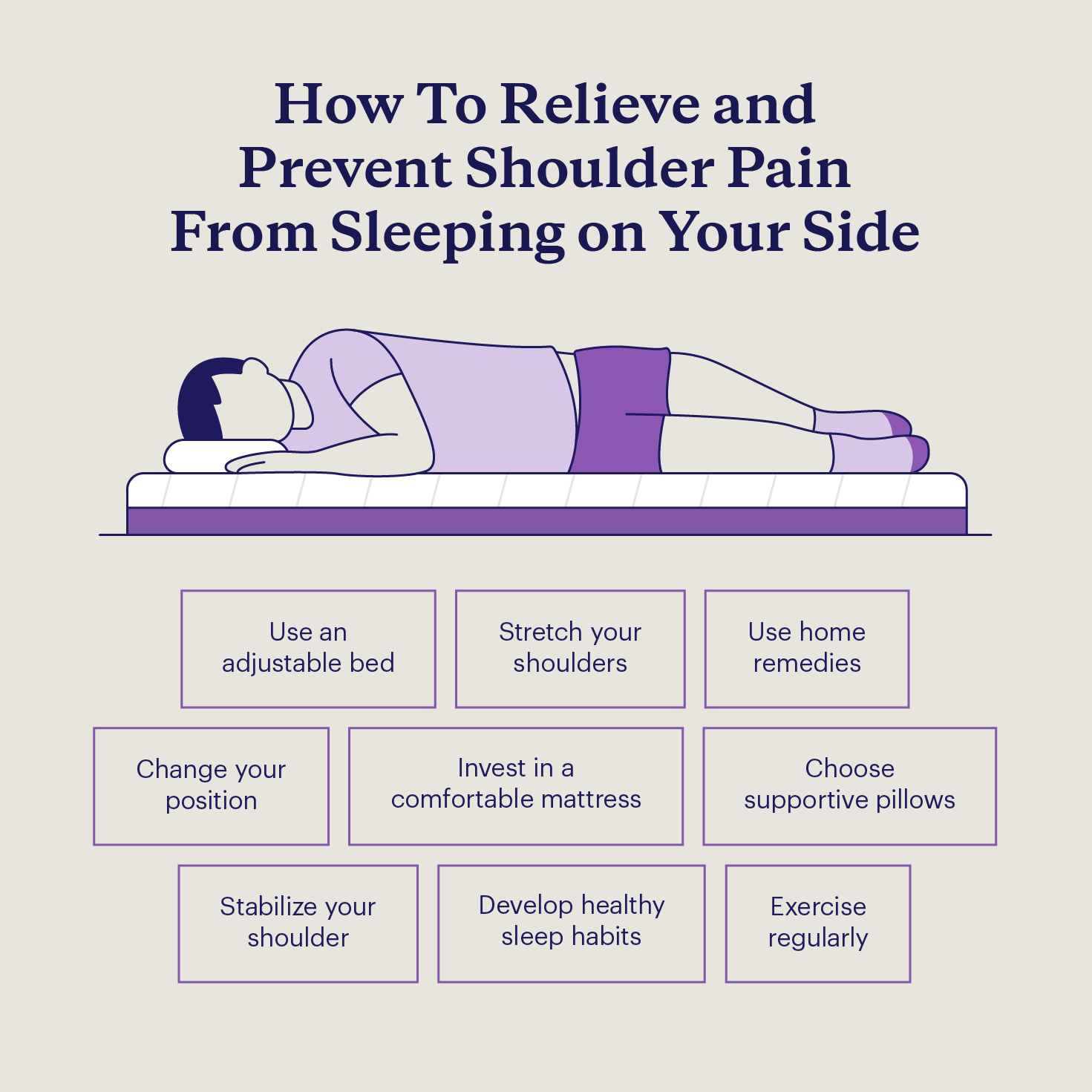 Soft night slings hold the arm in a neutral position to prevent rolling onto the affected shoulder.
Source: purple
Soft night slings hold the arm in a neutral position to prevent rolling onto the affected shoulder.
Source: purple
Practical Tips From Clinical And Personal Experience
As someone who has treated rotator cuff tendonitis in clinical settings and managed my own overuse-related shoulder pain for years, I’ve tested every position and support on this list to confirm they deliver real relief without extra strain. Here are the most impactful, low-effort tips I recommend to patients and use myself:
- Keep a small travel pillow in your bag for naps, car rides, and travel, so you never have to sleep without arm support.
- Train your body to new positions gradually: use the new position for 20-minute naps first, then build up to full nights over 3-5 days to avoid discomfort.
- Keep ice packs, a soft sling, and your preferred support pillow within arm’s reach of your bed, so you don’t have to get up to grab them if you wake up in pain.
- Track your pain levels, sleep positions, and what you did before bed in a simple sleep log for 1-2 weeks, to spot patterns in what reduces your pain. Tracking small changes to your routine, including adjustments to your sleep environment and daily habits, helps you identify what works best for your pain. Wet hair sleep habit tips are one example of small, intentional choices that improve overall sleep quality without adding strain to your body.
- Avoid lifting heavy objects or doing overhead movements (like reaching for items on high shelves) during recovery, as these strain the healing tendon and worsen inflammation.
 Simple, consistent adjustments to sleep position and routine reduce night pain for most people with tendonitis.
Source: casper
Simple, consistent adjustments to sleep position and routine reduce night pain for most people with tendonitis.
Source: casper
When To See A Doctor For Persistent Pain
Most shoulder tendonitis improves with 4-6 weeks of consistent self-care, but some symptoms require prompt medical attention. See a clinician if you experience any of the following:
- Severe, constant pain that wakes you up multiple times a night, even after trying position changes and ice for 2 weeks.
- Weakness in the arm, especially when lifting or reaching, or numbness/tingling that radiates down the arm (this could indicate nerve compression, not just tendonitis).
- Visible swelling, redness, or warmth around the shoulder, especially with fever (a sign of infection or inflammatory conditions like bursitis or arthritis).
- No improvement after 6-8 weeks of consistent self-care (position changes, ice, stretches, OTC meds). A clinician can perform a physical exam, order imaging (X-ray, MRI) to rule out rotator cuff tears or other issues, and recommend treatments like physical therapy, corticosteroid injections to reduce severe inflammation, or, in very rare cases, surgery if there is a full tear or chronic tendonitis that doesn’t respond to conservative care. Early intervention prevents chronic pain and long-term damage to the tendon.
 See a clinician if pain persists beyond 6-8 weeks of self-care, or if you experience weakness or numbness.
Source: youtube
See a clinician if pain persists beyond 6-8 weeks of self-care, or if you experience weakness or numbness.
Source: youtube
Practical Checklist To Try Tonight
Use this quick, no-fuss checklist to reduce your shoulder pain and get better sleep starting tonight:
- Choose one of the 8 positions above that feels most comfortable for you.
- Place a small, firm pillow or rolled towel under your affected arm to keep it supported and elevated.
- Ice your shoulder for 10-15 minutes (wrapped in a thin cloth) 60-90 minutes before bed to reduce swelling.
- Use a supportive pillow that keeps your neck aligned with your spine, avoiding extra-thick fluffy pillows that tilt your head forward.
- If you roll onto your side in your sleep, prop firm pillows on either side of your torso as bumpers to stay in position.
- Do 1-2 minutes of gentle pendulum swings before bed to loosen tight muscles.
- Keep your bedroom cool and dark, and avoid screens for 1 hour before bed to support deeper sleep.
- If you have severe pain, wear a soft night sling for the first few nights to prevent rolling onto your shoulder.
Try this checklist for 7 days, and note any changes in your pain levels and sleep quality. Small, consistent changes add up to big improvements over time.
Frequently Asked Questions
How long will shoulder tendonitis keep me from sleeping well?
Most people see night pain ease significantly within 2-4 weeks of consistent self-care, including position changes, icing, and gentle stretches. Full recovery typically takes 6-12 weeks, depending on the severity of the tendonitis. If your pain doesn’t improve after 6-8 weeks of following the steps in this guide, schedule an appointment with a physical therapist or orthopedist.
Can I sleep on my side with shoulder tendonitis?
Yes, but only if you sleep on your uninjured side, with your affected arm fully supported in front of your body with a pillow or body pillow. Never sleep directly on the affected shoulder, as this compresses the inflamed tendon against the acromion, increasing pain and swelling.
Should I use heat or cold before bed for shoulder tendonitis?
Cold is the best choice before bed, as it reduces inflammation and numbs pain, making it easier to fall asleep. Use an ice pack wrapped in a thin cloth for 10-15 minutes, 60-90 minutes before bed. You can use a warm heating pad for 5-10 minutes after icing to relax tight surrounding muscles, but avoid heat right before bed if you have active swelling, as it can temporarily increase blood flow and inflammation.
Will wearing a sling at night make my shoulder stiff?
Wearing a soft sling for 8-10 hours a night for short periods (1-2 weeks) will not cause significant stiffness, especially if you do gentle stretches during the day. Avoid wearing the sling all day, as this can lead to muscle atrophy and reduced range of motion. If you notice stiffness when you take the sling off, do 1-2 minutes of pendulum swings first thing in the morning to loosen the joint.
Are sleeping pills a good option for shoulder tendonitis pain?
Over-the-counter sleep aids can help you fall asleep in the short term, but they do not treat the underlying tendon inflammation, and many cause next-day drowsiness or dependency with long-term use. Focus on position changes, pain relief, and sleep hygiene first. If you’re struggling to sleep even after making adjustments, talk to your doctor about short-term, safe options that won’t interact with any pain medications you’re taking.
Is surgery needed if I can’t sleep due to shoulder tendonitis?
Surgery is extremely rare for uncomplicated shoulder tendonitis. It’s only considered if you have a full-thickness rotator cuff tear, or if 6-12 months of consistent physical therapy, injections, and self-care have not improved your symptoms. Most people recover fully with non-surgical care.
Can I do shoulder stretches before bed if my tendonitis is severe?
Yes, but only very gentle, low-impact stretches like shoulder blade squeezes or pendulum swings. Avoid any stretch that causes sharp pain, and stop immediately if you feel increased discomfort. If you’re unsure which stretches are safe for your specific injury, ask a physical therapist for a personalized routine.
Conclusion
Sleeping with shoulder tendonitis doesn’t have to mean nights of constant pain and disrupted rest. The 8 positions outlined above are low-effort, require no special equipment, and work for most people by eliminating pressure on the affected tendon and reducing swelling. Pair these positions with supportive pillows, a consistent pre-sleep routine, and gentle daily stretches to speed up healing and improve your sleep quality fast. Start with one small change tonight — whether that’s propping a pillow under your affected arm or icing before bed — and build from there. Track what works for you in a simple sleep log, and don’t hesitate to reach out to a physical therapist or orthopedist if your pain persists beyond 6 weeks of consistent self-care. With small, consistent adjustments, you can get the restful sleep your body needs to heal.

Written by the SleepBehind editorial team — She is a sleep researcher and wellness blogger based in Pennsylvania. Passionate about helping people optimize their sleep.