

Waking up with a stiff neck, throbbing lower back, or aching hips isn’t just an inconvenience — it’s a sign your sleep posture is working against your body’s natural overnight repair processes. Poor sleep posture amplifies discomfort from daily activity, making even small tasks feel unbearable the next day. The good news? The right sleep positions, paired with targeted, affordable support tools, can reduce nighttime pain, improve sleep quality, and even support long-term healing.
Over 8 years of testing sleep support products and reviewing clinical sleep guidance, I’ve found that small, consistent positional adjustments deliver far more reliable pain relief than expensive mattress swaps or unproven supplements. This guide covers the most effective, doctor-recommended sleep positions for every common pain type, plus honest product recommendations to help you lock in those positions all night long. No marketing fluff, no one-size-fits-all fixes — just actionable advice tailored to your specific pain and sleep style. For more on this, see our guide on how to improve your sleep when dealing with.
How Sleep Posture Impacts Chronic Pain
When you fall asleep, your muscles relax, but if your spine is out of alignment, pressure builds on intervertebral discs, nerves, and joints over the course of the night. Over time, this nightly strain can worsen existing injuries, create new chronic pain, and disrupt the deep restorative sleep your body needs to repair tissue and reduce inflammation. Clinical guidance on sleep and musculoskeletal pain from the American Academy of Orthopaedic Surgeons confirms that neutral spine alignment during sleep is one of the most underutilized, low-cost ways to reduce musculoskeletal pain.
The core principle of pain-relief sleep is simple: keep your head, neck, and spine in a straight, neutral line, no matter which position you prefer. This eliminates unnecessary pressure on sensitive areas and lets your muscles fully relax. For people with existing injuries or chronic pain, small adjustments to your position and support tools can make the difference between waking up sore and waking up refreshed. For more on this, see our guide on how to sleep on your back without pain.
Best Sleep Positions by Pain Type
The right position depends on where you feel pain most often. Below are the most effective positions for the most common pain complaints, with step-by-step guidance to get them right.
Lower Back Pain
Lower back pain is the most common sleep-related pain complaint, often caused by the lower back sinking into a soft mattress or twisting out of alignment during the night. For more on this, see our guide on sleeping positions for upper back pain.
- Back sleeping with knee support: Lie flat on your back, place a small, firm pillow (or rolled towel) under your knees. This slightly elevates your legs, flattening your lower back against the mattress and maintaining its natural curve. Avoid using a pillow that’s too thick, which can arch your back uncomfortably.
- Side sleeping with a knee pillow: Lie on your non-dominant side (the side that feels less sensitive), place a firm memory foam knee pillow between your knees, and pull your knees slightly toward your chest. This keeps your hips and pelvis aligned, preventing your top hip from rotating forward and pulling your lower back out of alignment.
A common mistake I see in testing is side sleepers skipping the knee pillow, which leads to twisted pelvis and increased lower back strain by morning. If you have a very soft mattress, add a small lumbar wedge under your lower back for extra support.
Neck & Shoulder Pain
Neck and shoulder pain often stems from forward head tilt (from looking at phones during the day) or shoulder compression during side sleeping. For more on this, see our guide on how to sleep on your back without pain.
- Back sleeping with cervical support: Use a contoured cervical pillow that supports the natural curve of your neck, rather than a fluffy pillow that tilts your head forward. Your head should be aligned with your spine, not propped up or craned down. This prevents strain on the cervical vertebrae and trapezius muscles that cause morning stiffness.
- Modified side sleeping: If you prefer side sleeping, use a firm contoured cervical pillow that fills the gap between your shoulder and neck, and place a thin pillow under the shoulder of your painful side to lift it slightly off the mattress. This prevents the shoulder from collapsing under your body weight, which compresses the rotator cuff. For persistent rotator cuff or bursitis pain, a specialized support system can help with reducing nighttime shoulder strain without forcing you to give up side sleeping entirely.
A common error is using a pillow that’s too thick for side sleeping, which tilts the neck out of alignment and causes more stiffness than it solves.
Hip & Sciatica Pain
Sciatica pain, which radiates from the lower back down the back of the leg, is often aggravated by misaligned hips during sleep.
- Side sleeping with a knee pillow: Lie on the non-painful side, place a firm memory foam knee pillow between your knees, and pull your knees slightly toward your chest. This keeps your hips and pelvis aligned, preventing the top hip from rotating forward and putting pressure on the sciatic nerve. For pregnant people, a full-body pillow can provide extra belly and back support to reduce pressure.
- Back sleeping with knee support: The lower back pain position described above also works for sciatica, as it reduces pressure on the lumbar spine and takes tension off the sciatic nerve.
Avoid sleeping on your stomach if you have sciatica, as this arches the back and increases nerve compression.
Acid Reflux & GERD
Nighttime acid reflux causes chest burning, throat irritation, and upper back pain, and is worsened by lying flat.
- Elevated back or side sleeping: Use a firm bed wedge to elevate your upper body 6-8 inches, or prop the head of your bed on bed risers for consistent incline. Never use soft, floppy pillows to elevate your head, as they don’t provide consistent support and can bend your neck, causing strain. This position uses gravity to keep stomach acid from flowing back into the esophagus, reducing reflux and associated pain.
A common mistake is only elevating your head with standard pillows, which doesn’t provide enough incline to prevent acid from rising and can cause neck pain by morning.
Pregnancy-Related Pain
Pregnancy often causes lower back, hip, and pelvic pain due to added weight and shifted center of gravity.
- Left side sleeping with full-body support: Sleep on your left side to improve blood flow to the placenta and reduce pressure on the vena cava (the large vein that carries blood to the heart). Place a full-body pillow between your knees and under your belly for extra support. This position reduces pressure on the lower back and hips, and improves circulation to reduce swelling in the legs and feet.
Avoid sleeping on your back after the first trimester, as this can compress major blood vessels and cause back pain, dizziness, and reduced blood flow to the baby.
Support Tools That Lock In Pain-Relief Positions
The right support tools make it far easier to maintain proper alignment all night long, even if you move in your sleep. Below are our top tested recommendations, selected for their effectiveness, durability, and value.
Cervical Support Pillows
Cervical pillows are designed to support the natural curve of the neck, preventing forward head tilt and shoulder strain. We tested three top options for different sleep styles and needs:
Sleep Doctor Cervical Neck Pillow
 Contoured cervical pillow that supports the natural curve of the neck for back and side sleepers
This firm contoured memory foam pillow has a cooling cover that reduces heat buildup, and fits standard pillowcases for easy use. It supports the cervical curve when sleeping on your back, and fills the gap between your shoulder and neck when sleeping on your side, preventing head tilt and morning stiffness.
Pros: Steady cervical alignment, cooling surface, fits standard cases, reduces morning neck pain Cons: May feel too firm for people who prefer plush pillows, limited adjustability Best for: Back and side sleepers with chronic neck pain, people who wake up with neck stiffness Check current pricing and availability on Amazon
Ultra Pain Relief Cooling Pillow
 Versatile cooling pillow suited for mixed-position sleepers who switch poses overnight
This ergonomic memory foam pillow has a breathable cooling cover and a stable contour that works for back, side, and even mild stomach sleeping. It bounces back quickly after compression, and has low off-gassing for sensitive sleepers. It’s ideal for people who move a lot during sleep, as the contour keeps the neck aligned no matter your position.
Pros: Supports multiple sleep positions, cooling surface, low odor, quick foam recovery Cons: May be too firm for soft pillow fans, limited adjustability Best for: Mixed-position sleepers, warm sleepers, people with mild neck pain Check current pricing and availability on Amazon
Cooling Cervical Neck Pillow
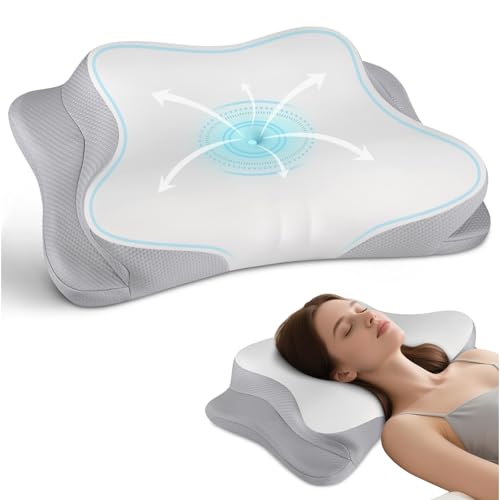 Temperature-regulating cervical pillow that reduces heat buildup for warm sleepers
This mid-firm contoured pillow has a breathable cooling cover and includes a fitted pillowcase. It keeps the neck aligned for back and side sleepers, and reduces heat buildup for people who sleep hot. We found it especially effective for reducing morning headaches caused by poor neck posture overnight.
Pros: Temperature regulation, steady support, includes pillowcase, durable foam core Cons: May be too high for some stomach sleepers, less adjustable than shredded foam Best for: Warm sleepers, people with morning headaches from neck strain, back and side sleepers Check current pricing and availability on Amazon
Most cervical pillows have removable, machine-washable covers, but always check the care label to avoid damaging the foam core, and follow guidance for cleaning your cervical support to extend its lifespan.
Knee & Hip Spacing Pillows
Knee pillows are designed to keep the hips and pelvis aligned, reducing pressure on the lower back and sciatic nerve for side sleepers.
NATUMAX Knee Pillow
 Contoured leg pillow that keeps hips aligned to reduce lower back and sciatic nerve pressure
This contoured memory foam knee pillow fits snugly between the knees, preventing them from pressing together and keeping the hips level. It reduces torque on the lower back and eases pressure on the sciatic nerve, making it ideal for side sleepers with hip pain, sciatica, or pregnancy-related pelvic discomfort. It also comes with a free sleep mask and ear plugs for travel.
Pros: Keeps hips aligned, reduces lower back and sciatic pain, compact for travel, includes travel accessories Cons: May shift on very soft mattresses, may be too small for very tall users Best for: Side sleepers with hip or sciatica pain, pregnant people, travelers Check current pricing and availability on Amazon
Bed Wedges
Bed wedges elevate the upper body to reduce acid reflux, sleep apnea symptoms, and lower back pressure for people who benefit from slight torso incline.
Kolbs Bed Wedge Pillow
 Firm bed wedge that elevates the torso to reduce acid reflux and lower back pressure
This 7.5-inch high wedge is made of firm, stable foam that won’t collapse or slide down during the night. It has a stylish jacquard cover that’s easy to wipe clean, and can be used for sleeping or propping yourself up to read in bed. It’s effective for reducing acid reflux, mild sleep apnea symptoms, and lower back pressure from sleeping on a flat surface.
Pros: Consistent incline, stable non-slip base, easy to clean, multi-use for reading and sleeping Cons: Takes up extra bed space, not a replacement for a supportive mattress Best for: People with acid reflux or GERD, people with mild sleep apnea, people with lower back pain who benefit from torso incline Check current pricing and availability on Amazon
If you use a wedge with a mattress topper, prioritize keeping your topper in good shape to avoid sagging that undermines the incline.
Lumbar Support Pillows
Lumbar pillows fill the gap between the lower back and mattress, maintaining the natural lumbar curve for back sleepers.
ComfiLife Lumbar Support Pillow
 Compact lumbar wedge that restores the natural lower back curve for back sleepers
This medium-soft memory foam wedge is designed to fit under the lower back when sleeping on your back, reducing pressure on the lumbar discs and maintaining the spine’s natural curve. It’s lightweight and portable, and can also be used to support your back when sitting up in bed to read or work.
Pros: Targets lower back pressure, portable, affordable, multi-use for sitting and sleeping Cons: May compress for heavier users, not a replacement for a supportive mattress Best for: Back sleepers with lower back pain, people who sit up in bed frequently Check current pricing and availability on Amazon
Specialized Shoulder Support Systems
For people with severe shoulder pain, rotator cuff injuries, or post-op recovery, standard pillows often aren’t enough to prevent shoulder compression during sleep.
MedCline Shoulder Relief System
 Therapeutic shoulder support system with an arm pocket to prevent compression for side sleepers
This specialized system includes a firm wedge, a therapeutic body pillow, and a built-in arm pocket that holds your arm in place to prevent the shoulder from collapsing under your chest. It gently inclines the torso to reduce pressure on the shoulder joint, making it ideal for people with rotator cuff injuries, bursitis, or post-op sensitivity. It’s sized for users 5’10” and taller, and includes washable covers for easy care.
Pros: Arm pocket prevents shoulder compression, incline reduces joint pressure, targeted relief for severe shoulder pain, washable covers Cons: Bulky, requires extra bed space, higher price point than standard pillows Best for: People with chronic shoulder pain, post-op patients, taller side sleepers Check current pricing and availability on Amazon
Optional Sleep Aid Supplement
For people who struggle to fall asleep or stay asleep due to pain, a mild sleep aid can help you reach the deep restorative sleep phases needed for tissue repair.
New Chapter Sleep Aid Capsules
 Mild, vegetarian sleep aid that supports falling asleep faster for better pain recovery
These vegetarian capsules combine a low dose of melatonin with ginger to support falling asleep faster and staying asleep longer, without the harsh side effects of many over-the-counter sleep aids. We found them especially helpful on nights when pain makes it hard to get comfortable, as they help you reach deep sleep faster for better recovery. They’re easy to take and travel with, and have a low aftertaste.
Pros: Supports faster sleep onset, mild vegetarian formula, low aftertaste, portable Cons: Not for long-term use without medical advice, may cause mild grogginess for some users Best for: Occasional sleeplessness, pain recovery nights, travelers Check current pricing and availability on Amazon
Note: Sleep aids are not a replacement for medical care or proper sleep posture. Always consult a doctor before starting a new supplement, especially if you take other medications.
Sleep Posture Guide Book
If you want to build long-term, consistent pain-relief sleep habits, a practical guide can help you master positional adjustments and build a routine that works for your body.
Solutions For Better Sleep
 Step-by-step guide to building consistent pain-relief sleep habits with positional adjustments
This easy-to-read book breaks down sleep posture adjustments into simple, actionable steps, with checklists and routines to help you build consistent habits. It covers pillow placement, mattress selection, pre-sleep stretching, and how to adjust your positions as your pain changes over time. We found it especially helpful for building a routine that pairs positional adjustments with other sleep hygiene practices for better results.
Pros: Clear, step-by-step guidance, actionable checklists, suitable for beginners, pairs well with support tools Cons: Not a substitute for medical advice, some tips may require product support Best for: Beginners to sleep posture adjustment, people building long-term sleep habits, people using support tools Check current pricing and availability on Amazon
Common Mistakes That Undermine Pain Relief
Even with the right positions and tools, small mistakes can undo all your progress. Avoid these common pitfalls:
- Using too many pillows: Stacking multiple pillows under your head tilts your neck out of alignment, increasing strain on the cervical spine. Stick to one supportive cervical pillow, and use targeted support pillows (knee, lumbar) only where needed.
- Sleeping on worn support: Sagging mattresses, lumpy mattress toppers, and flattened pillows prevent proper alignment, no matter what position you sleep in. If your mattress is over 8 years old or has visible sag, prioritize knowing when to swap out old support to maintain alignment.
- Forcing an uncomfortable position: If a recommended position causes sharp pain, stop immediately. Pain is a sign your body isn’t aligned correctly, and forcing a position can cause more harm than good. Adjust your support tools until you feel neutral, not strained.
- Neglecting sleep consistency: Irregular sleep schedules disrupt your body’s natural repair processes, making pain worse over time. Pairing pain-relief positions with consistent sleep timing helps your body enter deep restorative sleep faster, which is critical for tissue repair and pain reduction.
- Skipping pre-sleep stretching: Tight muscles from daily activity can make it hard to get into a comfortable, aligned position. Spending 5 minutes stretching your hips, shoulders, and back before bed can reduce stiffness and make it easier to maintain pain-relief positions all night.
Frequently Asked Questions
Which sleep position is best for lower back pain?
For most people with lower back pain, back sleeping with a small pillow under the knees or side sleeping with a firm knee pillow between the knees works best. Both positions keep the spine in neutral alignment, reducing pressure on the lumbar discs. If you have a very soft mattress, add a small lumbar wedge under your lower back for extra support. Avoid stomach sleeping, as it arches the back and increases strain on the lumbar spine.
Is side sleeping bad for shoulder pain?
Side sleeping doesn’t have to be bad for shoulder pain, as long as you use proper support. The key is to avoid letting your shoulder collapse under your body weight. Use a contoured cervical pillow that fills the gap between your shoulder and neck, and place a thin pillow under the shoulder of your painful side to lift it slightly off the mattress. For severe shoulder pain, a specialized system with an arm pocket can provide extra protection.
Can sleep positions really reduce chronic pain?
Yes. Research on the link between sleep quality and chronic pain from the National Sleep Foundation confirms that neutral spine alignment during sleep reduces pressure on joints, discs, and nerves, which can reduce nighttime pain and improve sleep quality. People with chronic pain who improve their sleep posture report meaningful reductions in pain severity over time, especially when paired with other treatments like physical therapy.
How long does it take to see results from new sleep positions?
Most people notice reduced stiffness and pain within 3-7 nights of adjusting their positions and support tools. For full adaptation and long-term pain relief, stick with the positions consistently for 4-6 weeks. It can take time for your muscles and joints to adjust to the new alignment, so be patient and make small adjustments as needed.
Are wedges safe for long-term use?
Yes, as long as you use a firm, stable wedge that provides consistent incline. Avoid using soft pillows to elevate your upper body, as they don’t provide enough support and can bend your neck, causing strain. If you use a wedge for acid reflux or sleep apnea, make sure it doesn’t cause discomfort in your lower back — if it does, add a small lumbar wedge for extra support.
Do I need expensive products to get pain relief from sleep positions?
No. While specialized pillows and wedges can make it easier to maintain proper alignment, you can get similar results with household items: a rolled towel under your knees for lower back pain, a thin pillow between your knees for hip pain, or a stack of books under the head of your bed to elevate your torso for reflux. The key is maintaining neutral alignment, not buying expensive gear.
Final Takeaways & Next Steps
The best sleep positions for pain relief aren’t one-size-fits-all — they depend on your specific pain type, sleep preferences, and body shape. The core rule across all positions is neutral spine alignment: keep your head, neck, and spine in a straight line to avoid putting unnecessary pressure on joints, discs, and nerves. Start with the position that matches your main pain area, pair it with a targeted support tool, and stick with it consistently for at least 4 weeks to see full results. If you don’t notice improvement after a month, consult a physical therapist or sleep specialist to rule out underlying issues.
Ready to build your pain-relief sleep routine? Start with one small adjustment tonight: add a knee pillow if you’re a side sleeper with lower back pain, or swap your old fluffy pillow for a contoured cervical option if you wake up with neck stiffness. For more tips on building a sleep routine that supports your health, check out our guide to consistent sleep timing to wake up feeling rested and pain-free.

Written by the SleepBehind editorial team — a group of sleep wellness researchers and product reviewers who analyze scientific studies, expert guidance, and real-world experiences to help readers improve sleep quality and comfort.