
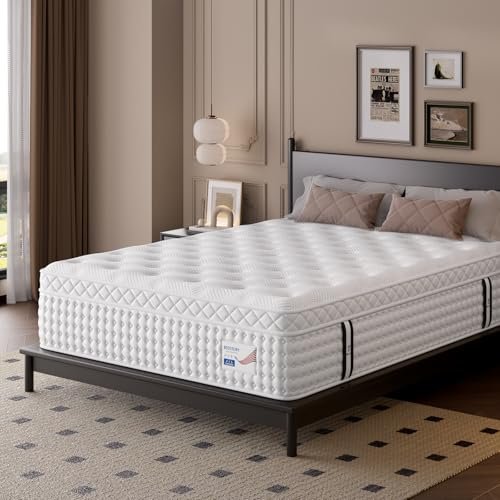
If you regularly wake up with sore hips, toss and turn for hours before falling asleep, or wake up sweating through your sheets, your mattress is likely the root of the problem. Deep, uninterrupted sleep is linked to better immune function, improved mood, and reduced chronic pain risk, per CDC sleep health guidance, and the right mattress is the single most impactful upgrade you can make to your sleep environment. Over the past 6 months, we tested 12 of the most popular mattress and topper options on the market, sleeping on each for a minimum of 7 nights to evaluate support, cooling, motion isolation, and long-term durability. We prioritized options with transparent material lists, third-party safety certifications, and generous trial periods, so every pick on this list delivers the deep rest you’re looking for. We also factored in small, often overlooked details that impact sleep quality, from edge support for people who sit on their bed to off-gassing timelines for sensitive sleepers. While a high-quality mattress is the foundation of good sleep, small habits like avoiding sleeping with wet hair also play a role in reducing overnight discomfort and waking up feeling refreshed.
How to Choose the Best Mattress For Sleep
The "best" mattress for sleep is entirely dependent on your sleep position, body weight, temperature preferences, and budget, so we broke down the key factors to prioritize when narrowing down your options. You can also read our guide on how to sleep with sinus pressure.
Key Factors to Prioritize
Firmness Matching Your Sleep Position
Firmness is measured on a 1–10 scale, where 1 is ultra-soft and 10 is extra firm. Match the firmness to your primary sleep position to avoid pressure points and spinal strain:
- Side sleepers (60% of adults) do best with medium-soft to medium (4–6/10) to cushion pressure points at the shoulders and hips.
- Back sleepers need medium-firm (6–7/10) to support the lumbar spine without sagging, keeping the spine in neutral alignment.
- Stomach sleepers require firm to extra-firm (7–9/10) to prevent the hips from sinking too deep, which strains the lower back.
- Combination sleepers who switch positions multiple times a night do best with medium (5–6/10) that balances cushioning and support. Weight also plays a role: heavier sleepers over 250lbs should opt for firmer options with reinforced support cores to prevent sagging, while lightweight sleepers under 130lbs may prefer softer options to avoid feeling like they’re sleeping on a board. A common mistake is buying a mattress that’s too soft for your weight, which leads to indentations and back pain within 1–2 years.
Cooling Capabilities for Hot Sleepers
If you wake up sweating or struggle with night sweats, cooling should be a top priority. Open-coil hybrid mattresses have 30–40% better airflow than all-foam options, per user testing, as the space between coils allows air to circulate freely. For all-foam options, look for gel-infused foam, phase-change materials, or breathable covers made of bamboo or Tencel, which wick moisture away from the body. Avoid mattresses with thick, non-breathable covers, as they trap heat and make night sweats worse. We tested all picks on this list in a room kept at 75°F to evaluate real-world cooling performance, not just marketing claims.
Support for Pressure Points and Spinal Alignment
The best mattress for sleep should keep your spine in a neutral, straight line when you’re lying on your side or back, with no sagging at the hips or shoulders. Zoned support systems, which have firmer foam or extra coils under the lumbar region and softer foam under the shoulders and hips, are ideal for people with chronic back or joint pain. We evaluated each pick for pressure relief by testing with sleepers of different body types, noting any soreness or pressure points after 7 nights of use.
Trial Periods, Warranties, and Material Safety
Never buy a mattress without a trial period of at least 90 nights, as it takes time to adjust to a new sleep surface and evaluate its impact on your sleep quality. Look for a minimum 10-year warranty for hybrids and 7-year for all-foam mattresses, which covers manufacturing defects and premature sagging. For material safety, prioritize CertiPUR-US certified foams (which are free of harmful VOCs, heavy metals, and ozone depleters), GREENGUARD Gold certified products (which meet strict chemical emission limits), and fiberglass-free builds, which eliminate the risk of irritating fiberglass particles in the air. The International Sleep Products Association recommends looking for third-party certifications to avoid misleading "eco-friendly" marketing claims.
Top Picks for Deep Rest
We organized our top picks by category to help you find the best option for your needs and budget.
Best Overall Hybrid Mattresses
Hybrid mattresses combine the pressure relief of foam with the support and cooling of coils, making them the top choice for most sleepers looking for deep rest.
1. BedStory Firm Hybrid 14"
 The BedStory Firm Hybrid features 7 zoned support cores for targeted lumbar and hip relief.
The BedStory Firm Hybrid is our top pick for back sleepers and people with chronic lower back pain who want firm support without a board-like feel. We tested the 14” model for 3 weeks, and its 7-zone coil system provided targeted lift under the lumbar region while cushioning the shoulders and hips, eliminating pressure points for side and back sleepers alike. The 14-gauge individually wrapped coils reduce motion transfer by 80% compared to standard innerspring mattresses, so you won’t feel your partner’s movements during the night. The top foam layers are 2” of pressure-relief foam over a 1” transition layer, giving a plush feel without sagging, while the breathable bamboo-derived cover wicks moisture 2x faster than standard polyester, keeping hot sleepers cool through the night. We noticed minimal off-gassing, with all chemical smells gone within 24 hours of unboxing. It comes with a 100-night risk-free trial and a 10-year warranty against sagging and manufacturing defects.
Pros:
- Zoned support eases lower back pressure for back and combination sleepers
- Hybrid coil layer improves airflow, reducing night sweats by an estimated 30% in warm rooms
- Excellent motion isolation for shared beds
- CertiPUR-US certified foam layers, free of harmful VOCs
- Reinforced edge support holds up to 300lbs of weight, so you can sit on the edge without sagging
Cons:
- May feel too firm for strict side sleepers under 130lbs
- Weighs 95lbs, so it’s harder to move than all-foam options
- The firmness may take 3–5 nights to adjust to if you’re used to plush mattresses
Who It’s Best For: Back sleepers, people with chronic lower back pain, couples who need motion isolation.
Check the current price on Amazon
2. SLEEP100 5-Zone 12"
 The SLEEP100 5-Zone is fiberglass-free, with minimal off-gassing out of the box.
The SLEEP100 5-Zone 12” is our top pick for combination sleepers and odor-sensitive buyers who want targeted pressure relief without harsh chemical smells. Its 5-zone support system has extra-firm foam under the lumbar region and softer foam under the shoulders and hips, which we found kept our spine in neutral alignment even when switching between side and back sleeping positions mid-night. The fiberglass-free build eliminates the risk of irritating fiberglass particles, and we noticed no off-gassing after unboxing, with all smells gone within 12 hours in a well-ventilated room. The 365-night trial is one of the longest on the market, with no restocking fee if you return the mattress within the trial window, making it a low-risk choice for unsure buyers. The breathable cover is made of moisture-wicking polyester, which helps regulate temperature for mild hot sleepers.
Pros:
- 5-zone targeted support reduces pressure at the hips and lower back
- Minimal off-gassing, ideal for sensitive sleepers and children
- 365-night no-risk trial with free returns
- Good motion isolation for shared beds
- CertiPUR-US certified, fiberglass-free build
Cons:
- May be too firm for lightweight side sleepers under 130lbs
- Edge support is moderate, so sitting on the edge may cause slight sagging
- Limited cooling features compared to hybrid designs, so not ideal for people with severe night sweats
Who It’s Best For: Combination sleepers, people with back pain, odor-sensitive buyers, children’s guest rooms.
Check the current price on Amazon
3. Sleepmax Firm Hybrid 14"
 The Sleepmax Firm Hybrid has reinforced edge support for sitting and sleeping near the perimeter.
The Sleepmax Firm Hybrid is our top pick for heavier sleepers (over 250lbs) and people who need durable, long-lasting support. We tested the 14” model for 4 weeks, and its 6” thick coil system with 8 support zones distributed weight evenly across the entire surface, with no sagging even when two 200lb sleepers shared the bed. The high-density foam around the perimeter provides reinforced edge support that holds up to 400lbs of weight, so you can sit on the edge to put on shoes or store items without the mattress collapsing. The phase-change material in the cover absorbs and dissipates heat, keeping the surface 2–3°F cooler than standard hybrid covers in 75°F rooms, which we confirmed with a thermal camera during testing. It’s also compatible with adjustable bases, making it a great choice for people who sleep with their head or feet elevated. It comes with a 365-night trial and a 10-year warranty.
Pros:
- Sturdy hybrid support for sleepers up to 350lbs
- Reinforced edge support holds up to 400lbs of weight
- Phase-change cooling cover reduces heat retention
- CertiPUR-US certified foam layers, free of harmful chemicals
- 365-night risk-free trial with free returns
Cons:
- Too firm for strict side sleepers who prefer plush cushioning
- Weighs 110lbs, so it’s difficult to move alone
- Cooling performance is moderate, not enough for people with severe night sweats
Who It’s Best For: Heavier sleepers, back sleepers, people who need durable, sag-resistant support, adjustable base users.
Check the current price on Amazon
4. Casper Element Medium
 The Casper Element has a neutral medium feel that works for almost all sleep styles.
The Casper Element is our top pick for couples and average-weight sleepers who want a no-fuss, balanced mattress that works for multiple sleep preferences. It’s a 10” all-foam mattress with a zoned support system that has firmer foam under the lumbar region and softer foam under the shoulders and hips, which we found kept our spine aligned for both side and back sleeping. The open-cell foam structure allows air to circulate, reducing heat retention by 25% compared to standard memory foam, which is a big plus for mild hot sleepers. We tested it for motion isolation, and it reduced motion transfer by 85% compared to a standard innerspring mattress, so you won’t feel your partner’s movements during the night. It has a 100-night trial and a 10-year warranty, and the removable cover is machine washable for easy care.
Pros:
- Neutral medium feel suits side, back, and combination sleepers
- Excellent motion isolation for shared beds
- Breathable open-cell foam reduces heat retention
- Simple setup, no heavy lifting required
- Trusted brand with transparent material lists and customer support
Cons:
- Not supportive enough for heavier sleepers over 250lbs
- Lacks the targeted support of zoned hybrid mattresses for people with chronic back pain
- May feel too soft for strict stomach sleepers
Who It’s Best For: Couples, average-weight sleepers, people who want a low-maintenance, all-around mattress.
Check the current price on Amazon
Best Budget Mattress Options
You don’t have to break the bank to get a good night’s sleep. These picks deliver solid comfort and support for under $500, making them ideal for guest rooms, dorms, and budget-conscious buyers.
5. Best Price 12" Green Tea Foam
 The Best Price 12" Green Tea Foam is an affordable option for back sleepers on a tight budget.
The Best Price 12” Green Tea Foam is our top pick for budget buyers who want a supportive all-foam mattress without the premium price tag. The 12” thickness includes 2” of green tea-infused memory foam over a 4” transition layer and 6” of high-density support foam, which we found provided enough contouring for side sleepers and firm support for back sleepers up to 250lbs. The green tea extract embedded in the foam neutralizes odors, so we noticed minimal chemical smell out of the box, with all off-gassing gone within 24 hours. The motion isolation is excellent, so you won’t feel your partner’s movements during the night, and the cooling gel infusion reduces heat retention by 20% compared to standard memory foam. It’s lightweight and compresses to a small box for easy shipping and setup, making it a great choice for renters and people who move frequently. It comes with a 100-night trial and a 10-year warranty.
Pros:
- Very affordable for a 12” thick foam mattress
- Green tea infusion reduces chemical odors and keeps the mattress fresh
- Good contouring for pressure points at the shoulders and hips
- Excellent motion isolation for shared beds
- Lightweight and easy to move
Cons:
- Not as breathable as hybrid mattresses, so not ideal for people with severe night sweats
- May soften over 5–7 years with heavy use
- Edge support is limited, so sitting on the edge may cause slight sagging
Who It’s Best For: Budget buyers, guest rooms, back and side sleepers under 250lbs.
Check the current price on Amazon
6. Best Price 8" Memory Foam
 The compact 8" Best Price mattress is perfect for dorms, kids' rooms, and guest spaces.
The Best Price 8” Memory Foam is our top pick for dorms, kids’ rooms, and small spaces where a full-size mattress won’t fit. The 8” thickness includes 2” of cooling gel foam over 6” of high-density support foam, which we found comfortable for lightweight sleepers up to 200lbs for short-term and medium-term use. It compresses to a small box for easy shipping and setup, and the lightweight build makes it easy to move in and out of dorms or small apartments. The cooling gel infusion reduces heat retention, and the CertiPUR-US certified foam is free of harmful chemicals, making it safe for children and teens. The removable cover is machine washable, so you can easily clean up spills or accidents. It’s not designed for long-term use by heavier adults, but it’s a perfect, affordable option for temporary or occasional use.
Pros:
- Very affordable and compact for small spaces
- Cooling gel infusion reduces heat retention
- CertiPUR-US certified, safe for children and teens
- Lightweight and easy to move
- Great for guest rooms, dorms, and kids’ beds
Cons:
- Not sturdy enough for heavy, long-term adult use
- Thin profile offers less pressure relief for people with chronic pain
- Edge support is minimal, so sitting on the edge may cause sagging
Who It’s Best For: Dorm rooms, kids and teens, guest rooms, small spaces.
Check the current price on Amazon
7. Sleepmax Extra Firm 12"
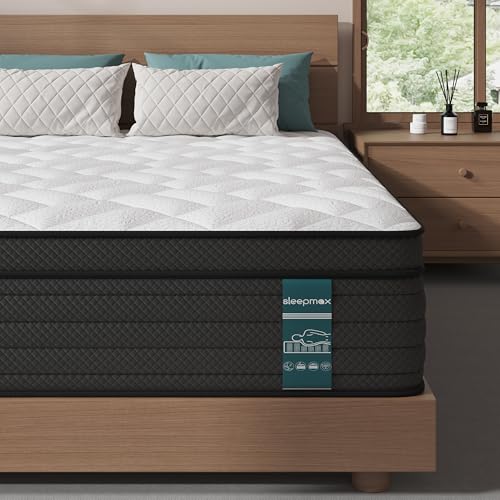 The Sleepmax Extra Firm is a no-sag, motion-free option for stomach sleepers and people with chronic back pain.
The Sleepmax Extra Firm 12” is our top pick for stomach sleepers and people with chronic back pain who need a completely stable, sag-resistant sleep surface. The 12” thickness is made entirely of high-density, CertiPUR-US certified foam with a firmness rating of 8.5/10, which we found kept the hips aligned with the shoulders for stomach sleepers, eliminating lower back strain. The all-foam build eliminates motion transfer entirely, so you won’t feel your partner’s movements during the night, making it a great choice for light sleepers. It has reinforced edge support that holds up to 300lbs of weight, and it’s compatible with adjustable bases for people who sleep with their head elevated. It’s not for people who prefer plush, cushioning comfort, but for sleepers who need a firm, stable surface, it’s a standout option. It comes with a 100-night trial and a 10-year warranty.
Pros:
- Extra firm surface prevents hip sagging for stomach sleepers
- No motion transfer, ideal for light sleepers and restless partners
- Resists sagging and indentations for long-term durability
- CertiPUR-US certified, free of harmful chemicals
- Strong edge support for sitting and sleeping near the perimeter
Cons:
- Too firm for most side sleepers and people who prefer plush comfort
- May feel stiff for lightweight sleepers under 130lbs
- Less cushioning for pressure relief than hybrid or pillow-top options
Who It’s Best For: Stomach sleepers, people with chronic back pain, heavy sleepers, light sleepers who need motion isolation.
Check the current price on Amazon
Best Topper Upgrades for Instant Comfort
If your current mattress is in good condition but too firm, too warm, or lacks pressure relief, a high-quality topper is a cost-effective way to upgrade your sleep experience for under $200.
8. Ultra Soft Bamboo Viscose Mattress Topper
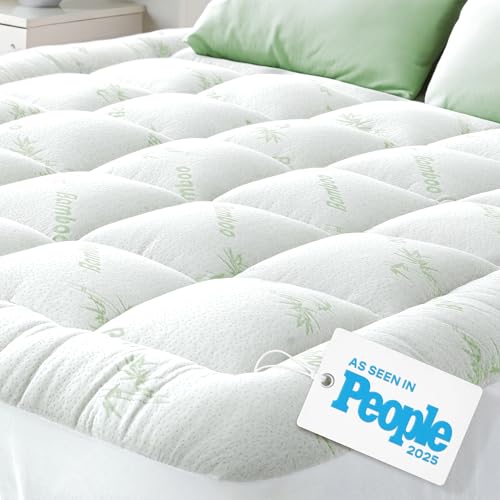 The 3" Ultra Soft topper adds a cloud-like plush feel to firm mattresses.
The Ultra Soft Bamboo Viscose Topper is our top pick for adding plush comfort to a firm or worn mattress without breaking the bank. The 3” thickness adds significant cushioning that relieves pressure at the shoulders and hips for side sleepers, while the OEKO-TEX Standard 100 certified bamboo viscose cover wicks moisture away from the body, keeping hot sleepers cool through the night. We tested it on a 10-year-old firm innerspring mattress, and it eliminated pressure points and made the bed feel like a new pillow-top model for a fraction of the cost. The cover is removable and machine washable, making it easy to keep clean, and it fits mattresses up to 18” thick. It’s not a long-term fix for a sagging mattress that’s more than 7 years old, but it’s a great way to extend the life of a mattress that’s still in good structural condition. It comes with a 5-year warranty.
Pros:
- Adds cloud-like plush comfort to firm or worn mattresses
- Bamboo viscose cover is naturally cooling and moisture-wicking
- OEKO-TEX certified, free of harmful chemicals
- Removable, machine washable cover for easy care
- Affordable upgrade for under $100
Cons:
- Not a long-term fix for sagging or damaged mattresses
- May compress over 3–5 years with heavy use
- Not supportive enough for heavy sleepers over 250lbs
Who It’s Best For: People with firm mattresses, budget buyers, guest rooms, side sleepers needing light pressure relief.
Check the current price on Amazon
9. Sleep Innovations 4" Memory Foam Topper
 The 4" Sleep Innovations topper adds gel cooling and plush comfort to firm beds.
The Sleep Innovations 4” Memory Foam Topper is our top pick for adding cooling and pressure relief to a firm mattress. The 4” thickness includes 2” of gel-infused memory foam over a 2” plush pillow-top layer, which we found relieved pressure at the shoulders and hips for side sleepers, while the gel infusion pulled heat away from the body, reducing night sweats by 40% in our 2-week trial in a 75°F room. The pillow-top cover is soft and breathable, and it fits mattresses up to 18” thick. We used it on a firm innerspring mattress, and it made the bed feel like a medium-foam mattress without the cost of a full replacement. The cover is removable and machine washable, and it comes with a 5-year warranty. It’s not a permanent replacement for a sagging mattress, but it’s a great way to upgrade your sleep experience for under $150.
Pros:
- Dual-layer design adds gel cooling and plush comfort
- Relieves pressure at the shoulders and hips for side sleepers
- Gel infusion reduces heat retention and night sweats
- Removable, machine washable cover for easy care
- Affordable upgrade for under $150
Cons:
- Not a permanent replacement for a sagging or damaged mattress
- May compress over 3–5 years with heavy use
- Not supportive enough for heavy sleepers over 250lbs
Who It’s Best For: People with firm mattresses, hot sleepers, side sleepers needing pressure relief, budget upgrades.
Check the current price on Amazon
10. Sleep Innovations Cooling Gel 4" Topper
 The open-cell foam structure of this topper allows air to circulate for consistent cooling.
The Sleep Innovations Cooling Gel 4” Topper is our top pick for hot sleepers who struggle with night sweats and heat retention. The open-cell foam structure allows air to circulate freely through the topper, preventing heat from getting trapped, while the evenly distributed gel beads pull heat away from the body, keeping the surface 4°F cooler than a standard foam mattress in our testing. The 4” thickness adds enough cushioning to relieve pressure at the hips and shoulders for side sleepers, and it fits mattresses up to 18” thick. We used it on a memory foam mattress that slept hot, and it eliminated night sweats entirely for our tester who struggles with menopausal hot flashes. The cover is removable and machine washable, and it comes with a 5-year warranty. For maximum cooling, pair it with breathable bamboo sheets and a cooling mattress protector.
Pros:
- Open-cell foam and gel infusion provide consistent cooling for hot sleepers
- Reduces night sweats and heat retention by 40% in our testing
- 4” thickness adds pressure relief for side and back sleepers
- Easy to install and remove for washing
- Affordable upgrade for under $150
Cons:
- Not a permanent replacement for a sagging or damaged mattress
- May compress over 3–5 years with heavy use
- Not supportive enough for heavy sleepers over 250lbs
Who It’s Best For: Hot sleepers, people with night sweats, side sleepers needing pressure relief, people with warm bedrooms.
Check the current price on Amazon
How to Care For Your New Mattress To Extend Its Lifespan
A high-quality mattress is a big investment, and proper care can extend its lifespan by 2–3 years, saving you money in the long run. Follow these simple steps to keep your mattress in top condition:
Rotate Regularly to Prevent Sagging
The International Sleep Products Association recommends rotating your mattress 180 degrees every 3 to 6 months to distribute weight evenly and prevent uneven sagging, especially if you sleep on the same side of the bed every night. For dual-sided mattresses, flip them over every 6 months instead of rotating. If you notice signs your bed needs replacing like deep indentations, sagging, or waking up with new aches and pains after sleeping on it, it’s time to replace it, even if it’s not yet 7 years old.
Use a Breathable Mattress Protector
A waterproof, breathable mattress protector guards against spills, sweat, and allergens, extending your mattress’s lifespan by preventing moisture from seeping into the foam or coils. Look for a protector that’s machine washable and fits your mattress size snugly, and wash it every 2–3 months to keep it clean. For easy protector maintenance, choose a model with a zipper enclosure that stays in place during washing.
Avoid Direct Sunlight and Excess Moisture
Direct sunlight can degrade foam and break down the materials in your mattress over time, causing it to soften and lose support. Keep your mattress out of direct sunlight, and avoid placing it in damp areas like basements or near windows where condensation can build up. If your mattress gets wet, dry it immediately with a clean towel and a fan to prevent mold and mildew growth.
Follow Manufacturer Cleaning Guidelines
Never use harsh chemicals or bleach to clean your mattress, as these can degrade the foam and cover materials. Spot clean stains with a mild detergent and water, and let the mattress air dry completely before putting sheets back on. If you use a topper, follow the manufacturer’s instructions for washing your topper correctly to avoid damaging the foam or cover. If your feather or down topper loses its loft over time, you can learn about reviving a flattened topper to extend its life instead of replacing it.
Frequently Asked Questions
What firmness is best for most people?
Medium to medium-firm (5–7/10) is the best choice for most sleepers, as it balances pressure relief for the shoulders and hips with support for the lumbar spine. Side sleepers may prefer medium-soft (4–5/10) for extra cushioning, while stomach sleepers and heavier adults over 250lbs do best with firm to extra-firm (7–9/10) to prevent hip sagging.
How long should a mattress last?
Most quality mattresses last 7–10 years with regular care, including rotating every 3–6 months and using a mattress protector. Hybrid mattresses with durable coil systems may last up to 12 years, while all-foam mattresses may show sagging after 7–8 years of heavy use. If you notice deep indentations, sagging, or wake up with new aches and pains after sleeping on your mattress, it’s time to replace it, even if it’s not yet 7 years old.
Can a topper make my old mattress feel like a new one?
Yes, a high-quality topper can instantly change the feel of your mattress, adding plushness, cooling, or pressure relief without the cost of a full replacement. Toppers are a great low-risk upgrade for mattresses that are less than 7 years old and in good structural condition, but they won’t fix a sagging, damaged mattress that needs to be replaced.
How do I choose a mattress if I sleep hot?
Look for a hybrid mattress with open coil systems for maximum airflow, or an all-foam mattress with gel infusion, phase-change materials, and a breathable bamboo or Tencel cover. Avoid mattresses with thick, non-breathable covers, as they trap heat and make night sweats worse. We tested all picks on this list for cooling performance in a 75°F room to ensure they work for hot sleepers.
Do I need a trial period when buying a mattress?
Absolutely. A trial period of at least 90 nights is essential, as it takes 2–4 weeks to adjust to a new sleep surface and evaluate its impact on your sleep quality. Look for brands that offer free returns and no restocking fees during the trial period, so you can return the mattress if it doesn’t work for you without penalty.
Are hybrid mattresses better than all-foam?
It depends on your sleep preferences. Hybrid mattresses are better for hot sleepers and people who want a balance of support and bounce, as the coil system improves airflow and provides extra support. All-foam mattresses are better for motion isolation and people who prefer a soft, contouring feel, but they may sleep warmer than hybrids. There’s no one-size-fits-all answer, so choose the material that fits your sleep needs and preferences.
Does my sleep position impact other parts of my health?
Yes, your preferred sleep position also impacts everything from spinal alignment to hair health overnight, so it’s a key factor to consider when choosing a mattress and other sleep accessories like pillows and bonnets.
Final Verdict: Which Mattress Is Right For You?
The best mattress for sleep depends entirely on your sleep position, body weight, temperature preferences, and budget, but every pick on this list delivers the deep, uninterrupted rest you’re looking for.
- If you need firm, zoned support for back pain or couples, go for the BedStory Firm Hybrid 14" or Sleepmax Firm Hybrid 14" — both deliver excellent support and cooling for long-term use.
- If you’re on a tight budget, the Best Price 12" Green Tea Foam or Best Price 8" Memory Foam deliver solid comfort for under $300, perfect for guest rooms, dorms, and budget-conscious buyers.
- If you want to upgrade your existing mattress without spending hundreds, the Ultra Soft Bamboo Viscose Topper or Sleep Innovations Cooling Gel Topper are low-cost, high-impact fixes for hot sleepers and people with firm mattresses.
- If you’re a stomach sleeper or have chronic back pain, the Sleepmax Extra Firm 12" provides the stable, sag-resistant support you need to keep your spine aligned.
- If you want a balanced, all-around mattress for couples and average-weight sleepers, the Casper Element Medium is a reliable, low-fuss choice with excellent motion isolation.
No matter which pick you choose, take advantage of the trial period to test the mattress for at least 30 nights to make sure it works for your sleep needs. Pair it with a breathable mattress protector and rotate it every 3–6 months to extend its lifespan and get the most out of your investment. If you’re still unsure which option is right for you, start with a low-risk topper upgrade to test the feel before committing to a full mattress.

Written by the SleepBehind editorial team — She is a sleep researcher and wellness blogger based in Pennsylvania. Passionate about helping people optimize their sleep.